Tag: Klimawandel

  • For the first time, some of Switzerland’s largest cities are meeting for a dialog

    For the first time, some of Switzerland’s largest cities are meeting for a dialog

    Since 2019, Swiss cities, municipalities, companies and organizations have been sending out a clear signal for the 17 Sustainable Development Goals every autumn. Raising the SDG flag stands for the commitment to the 2030 Agenda and the will to tackle global challenges together. In Lugano, Federal Councillor Ignazio Cassis opened the event with a video message and emphasized Switzerland’s key role in sustainable development at national and global level. A special feature of this year, the SDG Flag Day was used as a platform for metropolitan exchange, from administration to innovation promotion

    Exchange, practical examples and youth visions
    The dialog revolved around the status of the 2030 Agenda in cities, best practices and the role of international networks for urban transformation. The delegations discussed challenges ranging from climate change to biodiversity, but also opportunities arising from cooperation between science, business, politics and civil society. The presentations by high school students from Lugano, who presented their visions for urban development in 2030 in the “Laboratori di cultura urbana – Mediazione Giovani”, were particularly impressive. Their “Summer Islands” project was implemented together with the city and the Institute of Architecture and stands for youth engagement and participatory urban development

    Framework and principles of the 2030 Agenda
    With its 17 SDGs, the 2030 Agenda, which was adopted by the UN member states in 2015, defines the international framework for action to tackle challenges such as climate change, resource consumption and social inequality. Their aim is to reconcile prosperity and the planet through partnership, peace and progress and to create sustainable living realities worldwide. Flag Day is part of the UN Global Compact and is used in Switzerland and internationally as a symbol of commitment and exchange

    The SDG Flag Day in Lugano was the starting signal for more intensive and networked cooperation between cities in the area of sustainable development. The lived practice of dialog, exchange and participation at several levels makes it clear. The implementation of the SDGs is not a competition, but a joint project for the future of society throughout Switzerland and beyond its borders.

  • Construction industry at the center of future flood protection

    Construction industry at the center of future flood protection

    The intensity of heavy precipitation increases as temperatures rise. Warmer air stores more moisture, which can be discharged in a short time. Local thunderstorms in particular trigger massive surface runoff that cannot seep away or be absorbed by the sewage system. Cellars, underground garages and streets are thus regularly flooded, even far away from rivers or lakes.

    According to analyses by the Mobiliar Lab, 62% of all buildings in Switzerland are already potentially affected. Two thirds of all flood damage in the last ten years is due to surface runoff and the trend is continuing upwards, especially in urban areas.

    Structural measures with major benefits
    The key lies in prevention. Property protection measures such as raised light wells, sloping ramps at underground garage entrances, water-resistant building materials or targeted terrain adjustments prevent damage and offer an exceptionally good cost-benefit ratio. Many cantons provide financial support for such investments.

    Building technology also holds considerable potential. In future, intelligent systems could use environmental data and precise weather forecasts to automatically activate mobile protective elements. A flexible addition where permanent structural solutions cannot be implemented.

    Construction industry as a key player
    The construction industry is involved in every construction project in Switzerland and is therefore indispensable for the widespread implementation of such protective measures. Only through close cooperation between planners, architects, construction companies and building technicians can decentralized solutions be implemented on a large scale.

    The Mobiliar Lab for Natural Risks therefore calls on the construction industry to play an active role. Not just as an implementer of contracts, but as a strategic partner in the fight against the consequences of climate change. With innovative strength, practical experience and responsibility for the built environment, the industry can make a significant contribution to ensuring that flood damage remains insurable in the future.

  • Property funds and solar contracting: a response to the specific needs of property owners

    Property funds and solar contracting: a response to the specific needs of property owners

    How does solar contracting work?
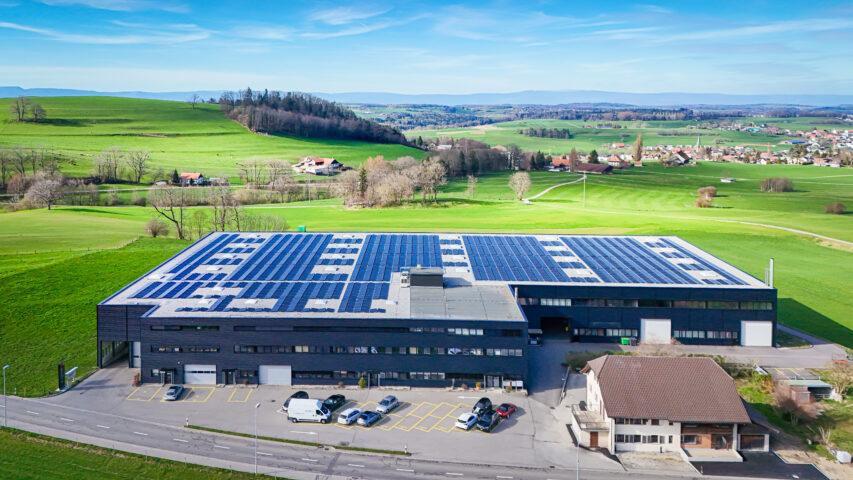
    Solar contracting is based on a simple principle: we install our own photovoltaic panels at your company’s site. Within this framework, we take over the complete planning and project realisation, as well as the financing and management of the system.

    This offer not only enables you to upgrade your property, but also fulfils the legal requirements and the expectations of your investors and tenants. It also enables the creation of new rental space.

    Your unused space as a capital investment
    As a property owner, you probably have areas that are suitable for the installation of photovoltaic panels. At Romande Energie, we offer installation on the following surfaces:

    • On a roof
      Turn unused space into a power plant – from 500m2.
    • On a car park
      Use your car park to generate electricity with a solar carport – from 2,000m2.
    • On a greenfield site
      Set up a ground-mounted solar power system on an unused plot of land – from 2,000m2.

    Stoneweg: a concrete example

    The Stoneweg Group, which specialises in real estate investment, turned to Romande Energie to equip several buildings with solar panels.

    We have realised several projects with Romande Energie and have always greatly appreciated their reliability and their solutions to specific challenges.” Diana Oblak, Managing Director at Stoneweg

    Click here for the interview

    What are the advantages of contracting?
    Contracting makes it possible

    • the creation of new rental stock and therefore an increase in your returns.
    • guarantee the conformity of your properties.
    • increase the value of your property.
    • reduce theCO2 emissions of your property portfolio.
    • Providing your tenants with clean and locally generated electricity at a competitive price.
    • participate in reducing the risk of electricity shortages at a national level.
    • participate in the fight against climate change.

    To make an appointment or for further information, please contact us at

    www.romande-energie.ch/solar

    0800 233 825 | solar@romande-energie.ch

  • Zug adopts sustainable energy targets

    Zug adopts sustainable energy targets

    Energy consumption in the canton of Zug amounts to almost 3,000 gigawatt hours per year, with buildings and mobility accounting for the largest share. The cantonal government’s new energy and climate strategy (EKS) aims to reduce energy consumption and rely more heavily on renewable energies. At the same time, the government wants to strengthen security of supply in the canton and reduce greenhouse gas emissions to net zero by 2050. With clear interim targets up to 2030, the government is concretising the path to these ambitious goals.

    Investments in solar power and energy storage
    A central component of the strategy is to increase the production of solar power in the canton. At the same time, investments in innovative energy storage technologies such as hydrogen are planned. “We want to shape the energy infrastructure of the future through close collaboration with industry and science,” explains Construction Director Florian Weber. Buildings in the canton should also increasingly serve as energy producers and thus become an energy hub.

    Sustainability in agriculture and negative emission technologies
    As part of the KERB sustainability project, the canton is focussing on measures in agriculture to reduce CO2 emissions. Forests and moors play a central role in CO2 sequestration. For unavoidable emissions, the canton is focussing on negative emission technologies that are intended to permanently remove CO2 from the atmosphere. A study is to determine the potential of these technologies in the canton.

    Adapting to climate change
    In addition to reducing emissions, the canton of Zug is also preparing for the effects of climate change. A cantonal natural hazard strategy aims to minimise climate-related risks such as heat and invasive pests. At the same time, investments are being made in climate-adapted road surfaces and sustainable forest management to ensure both protection and recreational areas.

  • Study shows opportunities for façade greening and solar panels

    Study shows opportunities for façade greening and solar panels

    As part of the GreenPV project, a research team from Lucerne University of Applied Sciences and Arts has developed innovative solutions for the design of building façades. The aim was to explore the potential of photovoltaic systems (PV) and greenery in order to meet the increasing challenges posed by global warming. A brochure specially developed for planners and building owners summarises the findings and recommendations of the project.

    The importance of this research becomes clear when you look at the forecasts of the National Centre for Climate Services: The average annual temperature in Switzerland could rise by up to 5.4 degrees by the end of the 21st century. This will not only significantly increase energy requirements, particularly for cooling, but will also affect comfort levels in buildings. Photovoltaic systems can supply energy precisely when it is needed most, namely when the sun is shining intensely. At the same time, green façades offer a sensible alternative in urban areas where new green spaces are scarce.

    Façades as untapped potential
    “While the benefits of PV systems and greenery are already increasingly being used on roofs, façades have so far remained largely unused,” explains Dr Silvia Domingo, researcher at HSLU. Yet façades offer an excellent opportunity for energy generation and greening without taking up additional space. PV systems on south-facing façades are particularly efficient in the cold season, as they can make optimum use of the low angle of inclination of the sun.

    However, the study also shows that there are obstacles that stand in the way of a wider application of these technologies. These include financial challenges, a lack of guidelines and concerns about fire safety. These factors often cause uncertainty among building owners. To counteract this, the research team has produced a brochure with practical recommendations for the use of PV systems and greenery on façades.

    Visual aspects and functional synergies
    Another obstacle identified by Dr Domingo is the aesthetic perception of solar panels on building façades. Black solar panels often do not meet the visual expectations of building owners. However, research shows that solar panels in different colours and textures could also be available in the future without any significant loss of efficiency.

    In addition to PV systems, green façades offer numerous advantages that go far beyond the cooling effect. They contribute to biodiversity, improve air quality, reduce sound propagation and promote rainwater retention. These benefits are particularly important in densely built-up urban areas, where they can significantly improve the quality of life.

    The combination of greenery and PV systems
    The HSLU study shows that greenery and PV systems on façades can often be combined well in order to utilise synergies. While PV systems on unshaded, higher façade areas ensure maximum energy generation, green areas near the ground have a cooling and noise-absorbing effect. This combination contributes to a more pleasant neighbourhood climate and climate-friendly electricity production.

    Completion of the GreenPV project
    The GreenPV project, which started in December 2021 and ran until mid-2024, was funded by a broad network of supporters, including the Swiss Federal Office of Energy (SFOE) and various foundations. The project team, led by Gianrico Settembrini, gained valuable insights, which are recorded in a brochure and are now available to planners, building owners and interested parties.

    With the results of the GreenPV project, the HSLU is making an important contribution to sustainable development in the construction industry and demonstrating how greenery and solar panels on façades can be combined to effectively meet the challenges of climate change.

  • Green hydrogen: Study identifies Canada as a top location

    Green hydrogen: Study identifies Canada as a top location

    Researchers at the Paul Scherrer Institute(PSI) have focussed on the question of where hydrogen can be produced efficiently and cost-effectively with the aim of stopping climate change and emitting no more greenhouse gases in the future. According to a press release, the researchers have compiled geographical and economic data and forecasts to describe the development of a hydrogen economy. To do so, they analysed four scenarios with a hydrogen demand of between 111 and 614 megatonnes per year. The study can currently be read in the scientific journal “Nature Communications“.

    There are various technologies for producing hydrogen. In polymer electrolyte membrane electrolysis (PEM), hydrogen is extracted from water in an electrolyser. The great advantage of this process is that the energy for the conversion can be obtained from green electricity. The question to be resolved is where the high demand for green electricity can best be met.

    “We primarily applied economic criteria,” says Tom Terlouw, PhD student at PSI and lead author of the study, quoted in the press release. “In other words, where is production most favourable?” Two focal points crystallised: Where is there enough wind or sun to cover the enormous demand for green electricity? And where is there enough free space to set up the plants required for production? Canada proved to be ideal here. “There are many open areas there that are very windy and therefore ideal for setting up wind turbines,” adds Terlouw. The central USA, parts of Australia, the Sahara, northern China and north-west Europe are also ideal locations. Central European countries such as Switzerland, on the other hand, are less suitable as there is neither open space nor sufficient sunlight. The researchers also point out that the production of green hydrogen still generates residual greenhouse gas emissions from the production and transport of the required materials. In order to compensate for these residual emissions, corresponding quantities of carbon dioxide would have to be filtered out of the atmosphere, according to the study.

  • Containment of HFC-23 emissions

    Containment of HFC-23 emissions

    Hydrofluorocarbons (HFCs) are among the most potent greenhouse gases, and HFC-23 is the most potent of them all. One kilogram of HFC-23 causes the same warming in the atmosphere as 12,000 kilograms of CO₂ and remains in the atmosphere for around 200 years. As part of the Kigali Amendment to the Montreal Protocol, over 150 countries have committed to drastically reducing emissions of HFC-23. The main sources of this gas are the industrial production of coolants and polytetrafluoroethene (PTFE), better known as Teflon.

    Since 2020, Teflon manufacturers have been required to destroy HFC-23 before it can be released into the atmosphere. The reported emissions show progress. according to official figures, only 2,000 tons of HFC-23 were released worldwide in 2020. However, actual measurements indicate around 16,000 tons, which shows a significant discrepancy.

    New findings from tracer gas measurements
    In order to explain this difference, researchers from Empa, the University of Bristol and TNO investigated HFC-23 emissions from a Teflon factory in the Netherlands. Their results, which were published in the scientific journal Nature, are based on an innovative method. The researchers released a tracer gas that does not occur in the atmosphere and is rapidly degraded. They recorded the concentrations of HFC-23 at a distance of 25 kilometers and compared them with the tracer values. In this way, they were able to precisely calculate the actual emissions from the factory.

    The results show that the factory’s emissions are higher than the reported figures, but still low. “The containment measures are working well, but there is potential for optimization,” explains Martin Vollmer from Empa. Co-author Kieran Stanley from the University of Bristol summarizes: “The results are encouraging and show that emissions of HFC-23 can be significantly reduced with the right measures.”

    Global challenges in the reduction of HFC-23
    The study makes it clear that the containment of HFC-23 is technically possible, but is not consistently implemented everywhere. “The high emissions measured in the atmosphere indicate that the measures reported do not always correspond to reality,” warns Vollmer. The researchers are calling for independent reviews of emissions from the production of fluoropolymers and refrigerants in order to close the gaps in our understanding of the sources of emissions and ensure that international climate agreements are adhered to.

    Next steps in research
    In October 2024, a further study will be carried out in Seoul to measure emissions of halogenated substances in the South Korean capital. This method could also be useful for monitoring other greenhouse gases. “Through continuous monitoring and precise measurements, we can better identify the sources of emissions and make emission reduction measures more effective,” says Arnoud Frumau from TNO.

  • Innovations for the Swiss energy system

    Innovations for the Swiss energy system

    The RECIPE consortium has been awarded the contract for the 2023 round of the SWiss Energy Research for the Energy Transition(SWEET) funding program, the Swiss Federal Office of Energy(SFOE) announced in a press release. The call for proposals was entitled Critical Infrastructures, Climate Change and Resilience of the Swiss Energy System and was launched by the SFOE in collaboration with the National Center for Climate Services(NCCS). RECIPE is made up of the Swiss Federal Institutes of Technologyin Zurich(ETH) and Lausanne(EPFL), the University of Applied Sciences and Arts Northwestern Switzerland(FHNW) and the Lucerne University of Applied Sciencesand Arts (HSLU) as well as the business partners Swisscom, Infras and Zoï. The ETH is in charge of the project.

    As part of SWEET, RECIPE will analyze the dangers that threaten the Swiss energy infrastructure as a result of the restructuring of the energy system and climate change. At the same time, the associated risks for the economy, society, resources and the ecosystem will be examined. Based on this, RECIPE intends to develop measures to increase resilience and draw up specific recommendations for stakeholders.

    SWEET was set up to promote innovations that can make a significant contribution to implementing the Energy Strategy 2050 and achieving Switzerland’s climate targets. The program, which runs until 2032, is managed by the SFOE and carries out rolling calls for proposals on key topics of the energy strategy and long-term climate strategy. Only projects from consortia are funded. In the case of RECIPE, the funding program covers CHF 8 million of the total budget of CHF 10.5 million.

  • New Master’s programme for urban change

    New Master’s programme for urban change

    From the start of the 2025 autumn semester, the School of Architecture, Civil and Environmental Engineering(ENAC) at the Swiss Federal Institute of Technology Lausanne(EPFL) will be offering a Master’s degree in the challenges of urban change. A Master’s degree in Urban Systems will enable ENAC students to become specialists in adapting cities and surrounding areas to climate change, according to a press release from EPFL.

    In view of climate change, Switzerland needs to equip itself with experts in urban management in the broadest sense, according to the EPFL. The new Master’s degree programme has been developed in collaboration with practitioners. It offers graduates of the ENAC Bachelor’s degree programmes in Civil Engineering and Environmental Engineering the opportunity to specialise in the sustainable transformation of cities and surrounding areas. The Master’s programme is also open to other related disciplines, including architecture, provided they submit an application.

    The programme has three specialisations: Mobility and Transport in a Changing Climate, Sustainable Transitions in Urban Systems and Health and Wellbeing in the Urban Environment.

    At the end of the programme, students receive an EPFL Master of Science MSc in Urban Systems. This diploma entitles them to use the title EPF qualified engineer.

  • The art of interior design – Zurich’s path to the future

    The art of interior design – Zurich’s path to the future

    You are the Director of Spatial Planning for the City of Zurich. Can you give us an overview of your responsibilities?
    Together with my staff, as director of the office I help plan the future of the city of Zurich. In order to make the most of the opportunities offered by a city in transition, we have specialist departments such as architecture and planning, including archaeology, monument preservation, the architectural history archive and a competence centre for geoinformation. The exchange gives us a very precise view of Zurich – from its prehistory to 2040.

    What are the goals of urban and spatial development in Zurich and what roles do you play in site and area development?
    We not only want to maintain the high quality of life in the city of Zurich, but also expand it. It should be able to improve selectively, both ecologically and socially sustainably. This requires suitable utilisation planning instruments – and we are in charge of developing and refining them.

    The municipal structure plan for settlement, landscape, public buildings and facilities is essential in this regard. We use it to specify which areas are suitable for building densification. We also designate areas for the provision of public open spaces as well as for communal public buildings and facilities – such as for primary schools or sports facilities. It is also an important coordination tool, as it shows how building density must be coordinated with transport and the supply of renewable energy, and it sets guidelines for other spatial aspects of environmentally and socially compatible urban development.

    What challenges does urban development face compared to other Swiss cities and what advantages does Zurich offer?
    Zurich shares many challenges with other cities in Switzerland and Europe. The focus is on growth and the associated demand for living space, whereby affordable housing in particular must be secured in the city. Demographic change and the pluralisation of lifestyles are leading to a variety of housing types and housing needs – which we need to address.

    In addition to socio-spatially compatible densification, the climate is a key issue. Around a quarter of all CO2 emissions come from the building sector. Urban planning and architecture today must be climate and environmentally friendly, conserve resources and preserve landscapes. In addition to climate protection, we need to curb heat island effects.
    What we no longer have, unlike other cities, are vacant industrial sites for conversion. Density reinforces the various interests in land and buildings in a city. In addition, as the economic engine of Switzerland, Zurich is under particular public scrutiny. Planning decisions require political discussion – participation is demanded. If there is no debate, a number of new buildings are appealed.

    What are the most important construction projects in Zurich and how do they contribute to the city and spatial development?
    I include planning in this. For example, the Josef site, the Schlachthof site, the Wollishofen lakeside and the Papierwerd site. They are important for Zurich’s urban development due to the previously mentioned shortage of space. This results in the challenging task of utilising these sites sustainably and efficiently in terms of planning.
    The city is also building itself – particularly affordable housing. The Leutschenbach and Tramdepot Hard housing estates alone will offer over 550 flats. In the case of Thurgauerstrasse or the Koch site, the city is allocating building land to non-profit housing developers.

    In connection with such large-scale projects, it is important to plan the associated social infrastructure. In particular, the provision of sufficient school space and cultural buildings such as the theatre and opera house are important for the city as a whole.
    In addition to the site developments and buildings mentioned above, the updating of the high-rise guidelines and the revision of the building and zoning regulations are among the most important tasks entrusted to Zurich’s urban planning department. The aim of these planning instruments is to find a way of dealing with monument protection, the inventory and the ISOS and to reconcile this with the planned building developments.

    Which areas in Zurich are particularly attractive for companies and why?
    This is highly dependent on the size and type of company; each company defines its own individual requirements for the choice of location. For a corporation that wants to develop and expand its own site in the long term, other locations are certainly considered attractive than for an SME that aims to develop within the neighbourhood.

    In principle, all neighbourhoods in Zurich are attractive, as there are good public transport connections everywhere. There has been a positive development here compared to recent years and decades – Zurich no longer has a real “periphery”.

    Where do you still see development potential and how could this be tapped?
    There is potential in cooperation with neighbouring municipalities. One of the special features of spatial planning is that it does not end at the city boundary, even if this boundary means a political change. Examples of this are the Limmat region or the Glattal with its shared public transport service. In these areas, it is important to coordinate planning across borders in order to secure the services and networking of the neighbourhoods.

    There is also potential in coordinating with the canton or federal government on issues such as noise and ISOS. Federal or cantonal regulations have a major impact in a city like Zurich. I see great potential in closer coordination with the association of cities.

    How is Zurich positioning itself in the area of mobility development and planning?
    In the municipal structure plan, the focus for urban mobility is on efficient and well-developed public transport and the further development of functional and attractive urban and street spaces. We are striving for a city of short distances. Neighbourhood centres will be strengthened and new ones developed. It will become more attractive for residents to shop locally, and retailers will open new shops in the neighbourhood as they can count on customers.

    The mobility figures show that the urban population is increasingly relying on bicycles and public transport. The city is specifically promoting walking and cycling in particular. The city provides targeted advice to companies and property managers through the “Impuls Mobilität” programme.

    Has the pandemic brought about changes in Zurich’s planning?
    Public spaces have become more important during the coronavirus pandemic. Especially for children and young people, who are dependent on open spaces in their immediate neighbourhood. On the whole, individual transport modes such as walking, cycling and driving have become more important, while public transport has been avoided due to the potential risk of infection. It is important to take the positive effects of the pandemic, such as the use of bicycles and the smoothing of traffic peaks through increased working from home, into the future.

    The pandemic and mobile working have brought about changes whose effects on urban planning we will only see in a few years’ time. In Zurich, neighbourhood centres in particular are also benefiting from the home office trend. During the pandemic, quick access to shopping, healthcare facilities, sports centres, restaurants and green spaces that did not require public transport was key. More attention must be paid to the need for liveable urban spaces in the future.

    What factors make Zurich an attractive place to live?
    Zurich is attractive and offers a high quality of life. There are many reasons for this: For example, the wide and attractive range of childcare and cultural facilities, attractive open spaces, educational centres, good infrastructure and high architectural quality. The location by the lake and the proximity to nature are also attractive. Despite lively building activity, the urban neighbourhoods have not lost their identity. In my opinion, this is a great strength of our city.

    How do you envisage the ideal development of the city of Zurich?
    What would be the core elements?

    Ideal is the wrong phrase in this context; there is no such thing as ideal development. Rather, urban planning is dynamic and is significantly influenced by political decisions. It must continuously respond to current and future socio-spatial and ecological concerns. It is important that we have a common vision of what Zurich should be and how it should develop in the future. The municipal structure plan formulates a target image, from differentiated structural densification and sufficient open spaces for recreation to the city’s centres and infrastructure. Below this, there are countless smaller levels, projects and events that are part of the city in transition. Zurich has a lot of potential that needs to be secured and utilised through urban planning. Not overnight, but for future generations of Zurich residents.

  • ABB invests 500 million euros in electrification

    ABB invests 500 million euros in electrification

    ABB and the European Investment Bank(EIB) have signed a financing agreement for a loan totalling 500 million euros, ABB announced in a press release. The Zurich-based technology company intends to use the funds to develop semiconductor-based circuit breakers, environmentally friendly switchgear and technologies to improve efficiency and automation in buildings. The funds will be channelled into corresponding research by ABB in Switzerland, Germany, Italy, the Czech Republic, Finland, Norway, Poland and other European countries.

    “Electrification is crucial in the fight against climate change,” EIB Vice-President Ambroise Fayolle is quoted as saying in the press release. “With our loan to ABB, we are supporting a company with a long history of developing electrical products and a strong commitment to promoting practical solutions that make the European economy greener.”

    The new power distribution solutions are intended for use in functional buildings, industrial operations and microgrids, for example. The development and commercialisation of technologies is a high priority in ABB’s growth strategy. Last year, the company invested around 1.67 billion dollars, or around 4 per cent of its consolidated sales, in research and development.

  • Using climate simulation to combat heat islands

    Using climate simulation to combat heat islands

    The heating of asphalted city centres – so-called heat islands – is a well-known problem in urban development. However, it can be noticeably improved with smart measures. This is demonstrated by the city of Winterthur in cooperation with the spatial planning office Berchtoldkrass Space & Options and the office GEO-NET Umweltconsulting GmbH, which specialises in climate analyses, by means of a computer-assisted climate modelling for the Lokstadt. The current planning status was compared with two climate-optimised scenarios. Thanks to the simulation, it is possible to see how the design of the buildings and open spaces affect the outside temperatures and thus influence the quality of stay in the area. At the same time, it was tested which measures are particularly feasible and effective. The pilot study is part of the Smart City Winterthur programme and was made possible by its innovation loan. It was commissioned by the Office of Urban Development.

    Numerous residential units and workplaces will be built on the Lokstadt planning perimeter. In order for the neighbourhood to have a high quality of life later on, planning based on climate aspects makes sense. A climate-adapted and thus heat-tolerant design is possible despite dense construction: bioclimatically effective compensatory measures in Lokstadt include trees, unsealed, light-coloured and greened surfaces and shaded areas. Large green roofs – ideally in combination with shady photovoltaic systems – have a positive effect on the urban climate. In addition to façade greening, water areas and drinking fountains improve the quality of stay.

    The evaluation shows: The Lokstadt was already well positioned in terms of urban climate in the original planning in the design of the public space. In order to further optimise the climate, additional tree locations as well as light-coloured, infiltration-capable surfaces are being examined. The technology offers all the prerequisites for optimising the urban design of the future in terms of climate.

  • Insight into the climate strategy of the Canton of Lucerne

    Insight into the climate strategy of the Canton of Lucerne

    Climate change is a global challenge. The Canton of Lucerne also expects drier summers, more hot days, more heavy precipitation and winters with less snow in the future.

    Lucerne pursues a dual strategy
    In its climate policy, the Canton of Lucerne aims to reduce greenhouse gas emissions in the canton to net zero by 2050, in line with the objectives of the federal government and the Paris Climate Agreement. Net zero means that although greenhouse gas emissions will continue to be produced in certain areas, they will be removed from the atmosphere to at least the same extent.

    Since the effects of climate change will continue to increase in the coming years – even with climate protection measures – the Canton of Lucerne intends to implement additional measures to adapt to climate change.

    The Lucerne cantonal government has set out this dual strategy and corresponding measures in its planning report “Climate and Energy Policy 2021 of the Canton of Lucerne”. in 2022, in its “Measures and Implementation Planning for Climate and Energy 2022-2026”, it showed specifically how which measures are to be implemented in the coming years.

    Measures from spatial development to education
    An overview of measures shows a total of 134 measures for climate protection and adaptation in various areas such as spatial development, buildings, mobility and transport, dealing with natural hazards, energy, waste disposal and recycling, water management, forestry, agriculture, health, industry and education.

    As concrete measures for climate protection, the Canton of Lucerne wants, for example, to adapt energy regulations for new buildings, promote environmentally friendly building materials, launch programmes for the efficient use of resources in agriculture or examine innovative approaches to waste avoidance in trade and industry.

    In order to adapt to climate change, the Canton of Lucerne is planning spatial planning measures for flood protection, raising the awareness of vulnerable population groups in the event of heat waves, promoting reforestation or legal foundations for climate-adapted settlement development.

    All measures are described in detail in the measures and implementation planning of the Canton of Lucerne.

  • SUPSI has new competence center for climate change

    SUPSI has new competence center for climate change

    SUPSI has inaugurated a new competence center that will deal with issues related to climate change. It was created by the Department of Environment, Construction and Design ( DACD ) in Mendrisio. According to a media release , it will focus on three main areas: exploring the scientific basis of climate change, adapting to climate change and mitigating climate change.

    According to a press release, around 50 researchers will work at the Centro competenze cambiamento climatico e territorio (CCCT). For example, they will develop measures to combat mosquitoes or monitoring systems for the warming of permafrost in the Ticino Alps. Many of the researched topics also revolve around renewable energies.

    Overall, the CCCT is intended to strengthen and coordinate the interdisciplinary competencies at the SUPSI. It will also work with cantonal institutions and associations. The center’s partners also include the association TicinoEnergia in Bellinzona, with which SUPSI is already collaborating on projects for climate-friendly buildings.

  • Superblocks make cities more livable

    Superblocks make cities more livable

    A study by the Swiss Federal Laboratories for Materials Testing and Research ( Empa ) examined which cities have the potential to be transformed using superblocks. This means of urban planning can counteract increasing heat, noise and air pollution and dwindling green spaces due to climate change or population growth. Urban planning is key, study author Sven Eggimann is quoted in a statement by Empa: “The design and use of street space influences the quality of life of residents and has the potential to significantly improve the urban climate.”

    Barcelona is a model for the formation of superblocks. There, ideally, 3 by 3 blocks and their inner courtyards are combined into a super block. The development traffic is routed around the outside, the inside remains completely car-free. Instead of streets and parking lots, bicycle paths and footpaths, green areas and meeting zones will be created. In addition, heat-reducing measures can be implemented.

    According to Eggimann, the potential of this urban design is so high because streets make up a significant part of the total area in today’s urban areas. In European cities, this is typically between 15 and 25 percent.

    Eggimann calculated the superblock potential of individual cities with values between 1 percent and a third of the streets. Cities such as Mexico City, Madrid and Tokyo showed the greatest potential. However, according to Eggimann’s study, cities whose streets are laid out less grid-like than in Barcelona are also suitable for super blocks: “This offers the opportunity to make urban districts more attractive by putting people and not vehicles at the center.”

  • Daiwa House Modular Europe names four trends that will be essential for the real estate industry in 2022

    Daiwa House Modular Europe names four trends that will be essential for the real estate industry in 2022

    Global scarcity of resources
    The prices of many building materials are currently skyrocketing. This will not change this year either – insulating materials, steel, everything will become more expensive and scarce. Construction prices are rising accordingly and threaten to make many projects unprofitable. In addition, the emerging countries in particular are currently asking for a lot of material and are buying the market empty. So the situation will continue to worsen. In the long term, only improved project planning with a greater focus on reusability can help, because circular economy and resource protection already begin in the planning phase. If entire buildings, parts of buildings and building materials can be recycled or found a subsequent use, this not only reduces the material requirement, but also contributes to greater sustainability at the same time. It is important to think big about Cradle to Cradle in the future.

    Sustainability not only through energy savings in the usage phase
    The German construction industry in particular has an urgent need to catch up when it comes to sustainability. In the Netherlands there is already a CO 2 cap per square meter of new construction. With the new government with green participation, it is quite conceivable that such a cap will also become the new guideline in Germany. In addition, disposal costs will remain a major issue and will increase proportionately. Due to the still immature framework conditions for recycling processes and the low landfill capacities, waste is becoming a further driver of construction costs. This shows how important it will be in the future to use building materials and building parts for a long time and to reuse them later – as is already possible in modular construction by refurbishing reused modules. The circular economy should therefore be the focus of the project early on in the planning.

    Digitization and AI also in construction
    In order to increase sustainability across the entire industry and to counteract the scarcity of resources, both planning and production must be optimized. Both must become more intelligent overall and network. The use of “artificial intelligence” is ideal for this. It supports construction projects, for example, through generative design, proactive problem detection and the avoidance of delays and cost overruns. But it also has to be used in production. An example: Digitizing the cut leads to less offcuts and waste. Thanks to good advance planning and the use of an AI, the remaining material from a cut can be used for further use in other future projects. This not only saves material, but also additional work steps and thus increases the efficiency of the entire production process. After all, residual materials are also resources.

    Industrialized manufacturing as in the automotive industry
    The advance of digitization within the construction industry also enables the use of semi- or fully automated processes. They reduce sources of error and make production more efficient. Affordable living space can be optimally realized with robot-supported construction processes in connection with the necessary digital management of the construction data – from planning to construction site. In view of the acute shortage of skilled workers, which will not be solved in the next few years, this development is the logical consequence. Daiwa House Modular Europe will also rely on automated processes in the already planned German gigafactory.

    These four trends should encourage the construction industry to rethink. In addition, there are a number of other changes such as a generational change in the ranks of managers as well as political and social change. Builders are now open to standardized building solutions. Modularly planned and built buildings offer a short construction time and high quality thanks to around 90 percent prefabrication in the factory. In the residential, care, hotel and education segments in particular, there are similar needs despite the different locations – so not every building has to be a prototype.

  • Supporting the science-based 1.5-degree goal

    Supporting the science-based 1.5-degree goal

    In 2021, Pictet’s investment experts developed the Group’s own “Climate Investment Beliefs” as part of a comprehensive process. This initiative is based on two beliefs: Climate change has a significant impact on asset prices. Given its leadership position in the investment industry, it is important for the bank to understand these implications to support performance. As a manager and owner of assets with your investment activities influence on the consequences of climate change. It is therefore the responsibility of the company to find out how it can promote positive effects and mitigate negative ones.

    Dealing with the great ecological and social challenges of our time will require more cooperation and transparency. Joining the Net Zero Asset Managers Initiative and the SBTi’s commitment to the “Business Ambition for 1.5 ° C” reflect these convictions.

    The company is aware that achieving these goals is tantamount to a Herculean task and that efforts can only be successful if all financial actors pull along. It requires fundamental change, as well as long-term commitment and persistence and the contribution of all economic actors. Pictet wants to publish a climate action plan with concrete targets for 2030 in 2022.

    The group looks back on over two hundred years of history, based on a long-term and responsible approach to its own business and the management of its clients’ assets. In doing so, the company not only takes into account the interests of today’s, but also those of future generations. This is the core of responsible thinking and the most effective contribution we can make to a sustainable future on our planet.

  • Lucerne University of Applied Sciences is dedicated to climate-friendly building

    Lucerne University of Applied Sciences is dedicated to climate-friendly building

    The study “Ready for Climate Change?” By the Lucerne University of Applied Sciences and Arts (HSLU) aims to sensitize building owners to building climate-friendly. But it should also help buyers and tenants to evaluate a property.

    The study suggests that in the future not only heating, but also cooling concepts will have to be taken into account. "The architecture of Switzerland is still too focused on making apartments pleasant and energy-efficient in winter", Gianrico Settembrini from the Institute for Building Technology and Energy at the Lucerne University of Applied Sciences is quoted in a media release. The decisive factor, however, is that buildings are planned with future climate data and not, as is the case today, with data based on past values.

    The building stock consumes around 40 percent of Switzerland's final energy requirements, the HSLU continues. This must be further reduced. However, if the increased use of air conditioning equipment were necessary, this value could instead increase even further. "The use of cooling or air conditioning devices should be avoided, technical solutions may only be used when the passive options have been exhausted," says Adrian Grossenbacher from the Federal Office of Energy . It provided financial support for this study.

    In total, the study team identified eleven parameters that have an impact on energy consumption as well as the thermal and visual comfort of a living space. These parameters, such as the properties of the windows, sun protection and shading elements, were simulated in a reference building in Basel-Binningen, which is typical for the Mittelland.

    The HSLU provides guidelines for planners online for download . In order to accelerate the precipitation of available knowledge in the new architecture, the university will bring experts up to date with the three-day advanced training course “Building in Climate Change – Effective Measures for Builders and Planners” in September.

  • Film about the Knonauer Amt energy region celebrates its premiere

    Film about the Knonauer Amt energy region celebrates its premiere

    The Knonau office is “ten years ahead of its time”, said Government Councilor Dr. Martin Neukom in August on the occasion of the tenth anniversary of the Knonauer Amt energy region. “A driving force for the energy transition,” said Andrew Darrell, a member of the New York Sustainability Advisory Board. He thought that the world should find out about this pilot project, writes the “Affolter Anzeiger”. Together with the Swiss Pro Evolution Foundation and WWF Switzerland , he initiated a film about the exemplary work of the Knonauer Amt energy region. It premiered on Thursday. Its title: ” Full of energy into the future – a region relies on renewables “.

    The film reports on the initiatives that the 14 communities in this region in the canton of Zurich have undertaken and are undertaking to curb climate change: the energy-saving house in Stallikon, where children can experience energy in a playful way, the planned solar power plant above the A4, the Circular economy of the biogas plant in Rickenbach, the above-average number of CO2-neutral wood district heating plants. In 2010 the municipalities integrated the key project Energy Region Knonauer Amt into the location promotion. Their goal is to generate 80 percent of their energy needs by 2050 themselves and with renewable energies.

    Numerous experts have their say in the film, including Andreas Fischlin, member of the Intergovernmental Panel on Climate Change ( IPCC ) and professor at the Swiss Federal Institute of Technology in Zurich ( ETH ). “We have the same CO2 concentration as 3.5 million years ago,” he warns. At that time, there was a tropical flora and fauna in Switzerland. ETH professor Anton Gunzinger advocates greater use of local energies. That ensures more independence and that more money stays in the regional cycle: “We need more tax offices in Switzerland!”