Tag: Klimaziele

  • Global ranking confirms long-term climate strategy

    Global ranking confirms long-term climate strategy

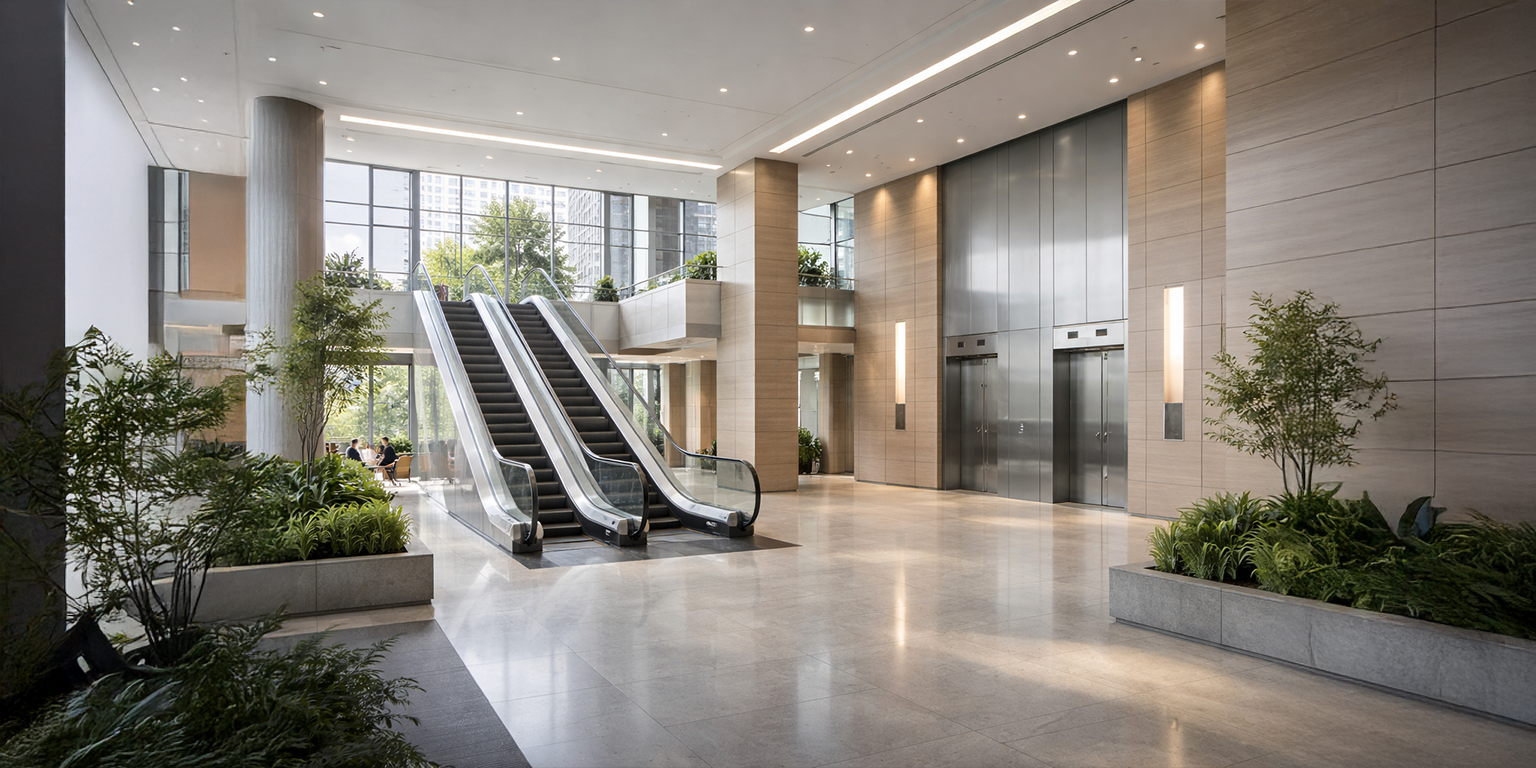
    KONE ranks 54th in this year’s Global 100 Most Sustainable Corporations in the World ranking by Corporate Knightsin Toronto, Ontario, Canada. In the Machinery industry group, the lift and escalator manufacturer even ranks second among 397 companies worldwide. In Finland, where KONE has had its headquarters in Espoo since 1910, it is the highest-ranked engineering company, as it is in Switzerland, where KONE (Switzerland) AG has been operating since 1996. The company employs over 60,000 people in more than 70 countries.

    In 2024, KONE was awarded the German Sustainability Award as the most sustainable company in the lifting and conveyor technology category. KONE is the first company in its industry to define ambitious and scientifically based climate targets for 2030, according to a press release. “For KONE, leadership in the industry always means leadership in sustainability,” said Kirsi Simola-Laaksonen, Senior Vice President for Sustainability and Environment. “This ranking is clear, independent proof of the progress we are making.”

    The company is committed to aligning its activities with the goal of limiting global warming to 1.5 degrees Celsius. “We understand that sustainable business is good business for our customers, their customers and for us,” said Simola-Laaksonen. “We continuously monitor how sustainable solutions impact our business and are increasing the share of our revenue from products and services that contribute to climate protection. Together with our customers, we develop smart and sustainable buildings, enabling better urban living.”

  • More living space from the system

    More living space from the system

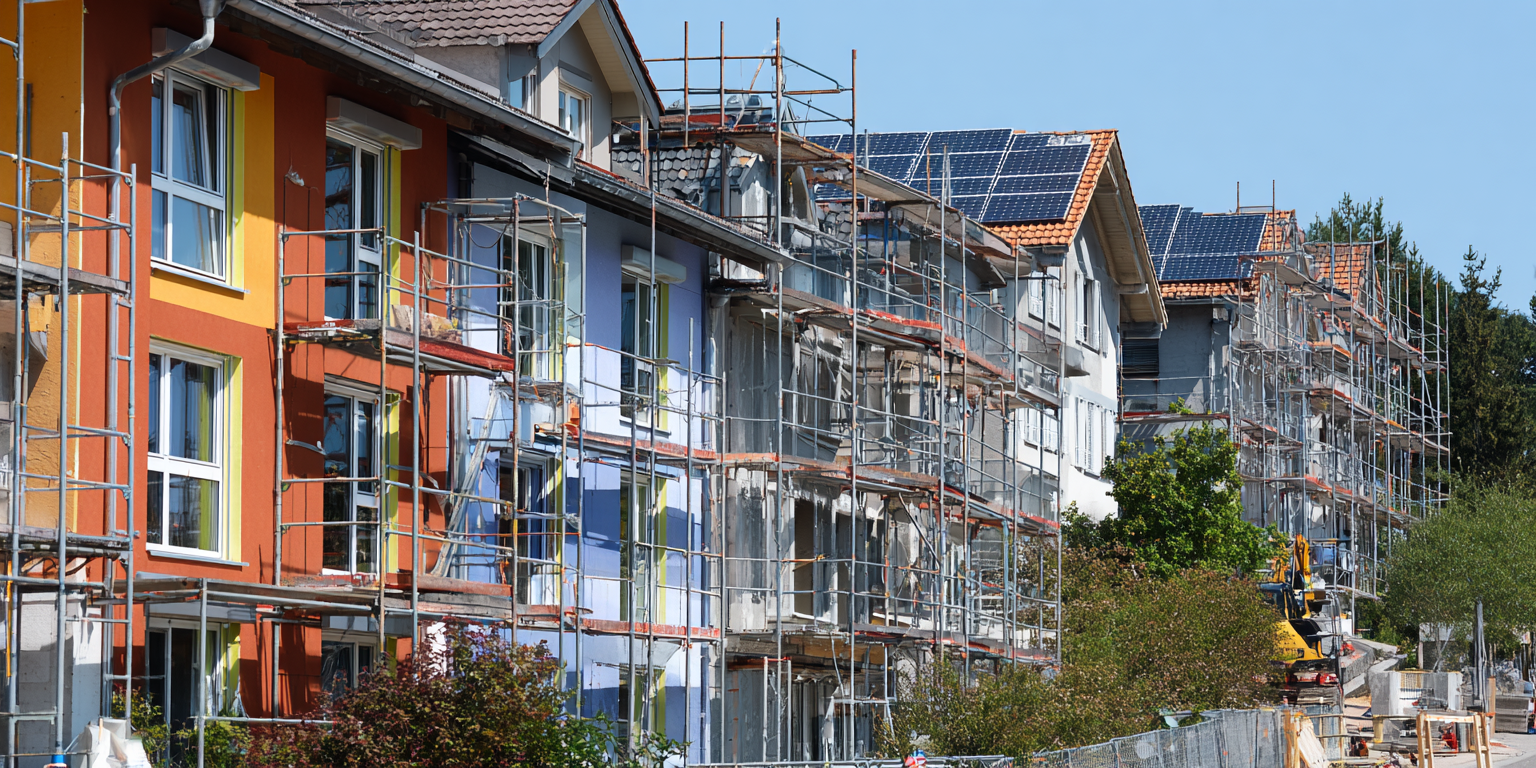
    The construction and real estate industry is under pressure. Construction costs are rising, there is a shortage of skilled workers, the population continues to grow and climate targets set clear limits for CO₂ emissions. Serial construction provides answers to these challenges.

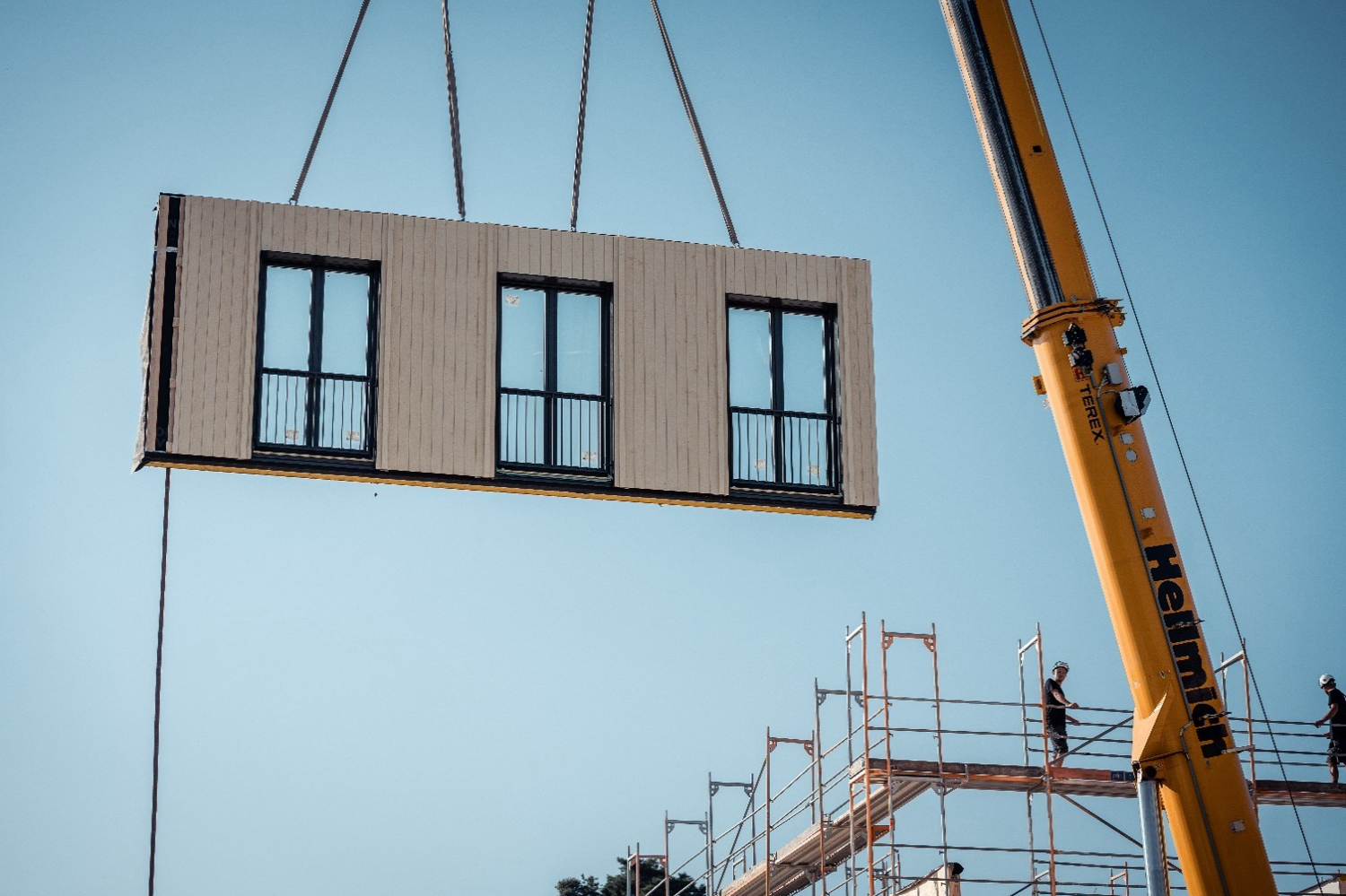
    Thanks to industrial prefabrication and standardized processes, construction times are shortened, workflows are more predictable and projects are more economical. The construction site becomes an assembly site, with less noise, less impact on the neighborhood and higher quality workmanship.

    What serial construction is all about
    Serial construction sees the building as a product, not as a one-off prototype. A system is intensively developed, thought through and used in many projects. Elements are largely created in the factory and assembled on site. This allows for precise costs and continuous improvement based on experience. Classic problem areas such as connections, thermal and sound bridges can be specifically mitigated.

    From prefabricated buildings to the “Teslamoment
    Serial construction methods have a long history, from the early timber systems of the 1920s to the “Göhnerbauten” in Switzerland and prefabricated housing estates in the East. The efficiency was high, the design quality often not and the image still suffers today.

    The topic is currently experiencing a new wave. Hybrid systems combine room modules and 2D elements, offer more flexibility for different plots and regulations and are bringing architecture and urban planning back on board. Projects such as the student-oriented “Woodie” in Hamburg show that serial construction and architectural quality do not have to be mutually exclusive.

    Strengths: Time, costs, quality, climate
    Serial systems shorten construction times and increase cost certainty. Because components and details are standardized, budgets and deadlines can be set early and reliably.

    At the same time, industrial production opens up new scope for sustainability. Specifications for CO₂ reduction, material selection and energy efficiency can be consistently written into the system. Material passports and platforms are used to document installed components, making them visible as a resource for subsequent conversions or dismantling.

    Acceptance determines the future
    The big challenge is perception. In many people’s minds, serial construction stands for monotonous architecture and social problem districts. As long as current projects are only partially convincing in terms of design, this skepticism will persist.

    To be widely accepted, buildings need to deliver more than just efficiency. Good floor plans, a high quality of stay, differentiated outdoor spaces and careful integration into the urban space. Standardization should be seen as the basis on which diversity is created.

    Serial construction can become a central component of the building turnaround, faster, more plannable, more resource-efficient and circular. The technical prerequisites are in place, as are successful pilot projects.

    Whether the approach experiences its “Tesla moment” now depends on whether the industry and cities manage to combine industrial processes with high quality living and design and thus show that repetition does not mean uniformity, but can be the basis for sustainable, diverse neighborhoods.
  • Switzerland signs agreement with Denmark on CO2 storage

    Switzerland signs agreement with Denmark on CO2 storage

    Switzerland signed two agreements with Denmark on 3 September that will enable the export and permanent storage of Swiss CO2 in Denmark. Future cooperation in the area of negative emissions technology (NET) and carbon capture and storage (CCS) is also planned, according to a press release. The Federal Council had already approved the two agreements on 27 August 2025.

    The partnership with Denmark joins the existing partnership with Norway, which was signed on 17 June 2025 and also enables CO2 storage and bilateral emissions trading. “CO2 storage will also be important for Switzerland on the way to the net-zero target,” said Federal Councillor Albert Rösti in the press release on the agreement with Norway. “This technology complements our existing instruments for decarbonisation.”

    The agreements with Denmark and Norway were signed against the backdrop of the Climate and Innovation Act (CIE), which commits Switzerland to reducing its greenhouse gas emissions to net zero by 2050. Net zero is to be achieved primarily by reducing emissions, while emissions that are difficult to avoid, such as those from the cement industry or agriculture, must be offset by CCS or NET technologies. The federal government has been promoting the use of such technologies since 1 January 2025 as part of the CIG.

  • Insight into building permits and renovation dynamics

    Insight into building permits and renovation dynamics

    With the white paper “Retrofitting the Future”, the CRML at HEC Lausanne, together with E4S, is presenting a sound basis for assessing progress in the building sector. The analysis of over 45,000 building permits issued in 2024 provides a precise picture of how the Swiss real estate sector is progressing towards climate neutrality and where it is still encountering obstacles.

    Lots of potential, little energy efficiency
    The study shows that significant trends are emerging in the renovation of buildings. However, only a small proportion of renovations are directly aimed at improving energy efficiency. Although the transition to low-emission buildings has begun, it is not yet sufficient to achieve the ambitious climate targets.

    Financial challenge for real estate funds
    The report also highlights the role of real estate investment vehicles (REIVs). In order to achieve the climate targets by 2050, they would have to mobilize an average of 13 percent of their net assets, a total of CHF 28.3 billion, for energy-efficient renovations. Some market players will have to invest far more than this average, as the authors emphasize.

    Data-based perspective for the future
    “By combining current data and detailed project typologies, we create a bridge from theoretical analysis to a concrete basis for action,” explains Dr. Nathan Delacrétaz, co-author of the white paper. Together with Professors Eric Jondeau and Fabio Alessandrini, he is thus providing a decisive impetus for the urgently needed real estate turnaround in Switzerland.

  • Energy City Gold for Zurich

    Energy City Gold for Zurich

    The city of Zurich has been awarded the Energy City Gold label for the sixth time in 2024, the city administration announced in a press release. Every four years, the Energy City Association awards the label to cities and municipalities that are committed to ambitious energy and climate protection goals. In the current evaluation, the city of Zurich achieved its best result to date.

    Across Switzerland, 109 cities and municipalities have been awarded the Energy City Gold label. “As the largest city in Switzerland, the city of Zurich serves as a role model for other energy cities that also want to consistently achieve their ambitious energy and climate policy goals,” Katrin Bernath, President of the Energy City Association, is quoted in the press release from her speech at the award ceremony. The award was accepted by City Councillor Michael Baumer. “The top score for the city of Zurich shows that we are on the right path to net zero,” said the head of the City of Zurich’s industrial operations.

    In the current re-audit, the City of Zurich’s energy and climate targets also included the area of climate adaptation for the first time. Zurich scored highly here with its specialised planning for heat reduction and urban trees. The city has also launched a programme for urban greening. This programme supports and financially promotes the ecologically valuable upgrading of outdoor spaces, green roofs and vertical greening by providing advice.

  • Buildings as carbon sinks

    Buildings as carbon sinks

    The construction industry is one of the largest CO2 emitters in the world. However, projects such as “Beyond Zero” and the “Mining the Atmosphere” initiative could turn the tide. The aim is not only to reduce the harmful greenhouse gas, but to actively bind it in building materials. These materials, which are being tested in the new NEST unit, could revolutionise concrete and insulation materials and have the potential to make the construction industry climate-neutral or even CO2-negative.

    Technology undergoing practical testing
    Nathalie Casas from Empa explains that “negative emissions technologies” (NET) are the key to achieving climate targets: “We need to remove excess CO2 from the atmosphere in order to achieve the 1.5-degree target. NETs, which already work in the laboratory and are now being used in the construction industry, will help us achieve this.” Casas emphasises the urgency of taking action as emissions continue to rise.

    Sustainability in the construction industry
    Corinne Reimann from Implenia sees NET as a great opportunity for the construction industry: “The new materials will finally enable us to make decisive progress in the area of sustainability. The industry has enormous leverage here, but also challenges. Price and acceptance will be crucial.” Reimann emphasises that the functionality and cost-effectiveness of new materials must be ensured in order to enable their widespread use.

    The contribution of architects and planners
    Christoph Kellenberger, co-founder of OOS, sees the early involvement of architects and planners as a decisive factor: “With our knowledge, we can help develop the right building materials from the outset and integrate them into construction practice. We also need to publicise the potential of CO2-storing materials in the industry and show what effects can be achieved with them.” For Kellenberger, the key to success lies in transparent knowledge transfer and practical solutions.

    Political framework conditions and social responsibility
    In addition to technological innovation, the construction industry also requires political and economic framework conditions. According to Casas and Kellenberger, clear cost transparency is necessary in order to promote the widespread use of NET. CO2 emissions must be priced fairly and subsidies could help to offset the initial higher costs of the new materials. “The transformation will only succeed if everyone pulls together – politics, business and society,” says Casas.

    The “Beyond Zero” project shows that it is possible to turn buildings into carbon sinks. However, this requires not only technological solutions, but also the will of politics, business and society to break new ground. The construction industry has the opportunity to develop from one of the largest CO2 emitters into a pioneer of the climate transition – and the potential to do so already exists today.

  • Sustainability & profitability – achieving returns with climate-friendly, intelligent energy solutions.

    Sustainability & profitability – achieving returns with climate-friendly, intelligent energy solutions.

    Integrated and intelligent
    Integrated energy solutions combine different energy sources and technologies to achieve high energy efficiency and flexibility. Intelligent energy management systems are used to optimise energy consumption and reduce CO2 emissions. They help to reduce operating costs and increase property value. IWB offers companies in the construction and real estate sector carefree packages for a high return on investment. Customers can choose between centralised, decentralised or combined solutions depending on their location and portfolio strategy. To achieve an optimal sustainable energy supply and use, the early involvement of the energy partner is crucial.

    Sustainable and economical
    Implementing renewable energies and intelligent energy management systems not only saves costs and increases the value of properties, but also achieves environmental sustainability. A good ESG score is becoming increasingly important and can also influence financing options.
    Property owners can reduce CO2 emissions and optimise the energy consumption of buildings by using photovoltaic systems and climate-friendly heating solutions such as heat pumps or district heating from renewable sources. Intelligent energy management systems monitor energy consumption in real time and regulate it by automatically controlling heating, ventilation and cutting off energy peaks.

    Sensible and profitable
    Investing in good energy solutions and intelligent energy management is sensible and profitable for a sustainable real estate portfolio. With IWB as a partner in the field of energy and sustainability, companies in the real estate sector can benefit from customised, efficient and smart solutions. The focus is on developing individual solutions tailored to the specific needs and goals of the customers. Together, they can invest in a sustainable future that offers not only ecological but also economic benefits.

  • Five technologies on the way to net zero

    Five technologies on the way to net zero

    The TA-Swiss study aims to inform policy-makers and the public about the opportunities, limits and risks of different methods for CO2 extraction and storage. Aspects such as feasibility, climate effectiveness, costs, resource consumption and impacts on the environment and population were considered.

    The five technologies are:

    • the storage of CO2 as biomass in forests and the use of wood
    • storage in the form of humus in the soil and the use of plant carbon
    • capture and storage of CO2 from biomass combustion (BECCS)
    • removal from the air and storage (DACCS)
    • the accelerated weathering of demolition concrete and rock (carbonation)

    Each of the five NETs was assessed based on the current state of knowledge and with the help of expert interviews. Potential opportunities, risks, synergies and conflicts were identified and considered from a system perspective. Based on this, general and specific, technology-related options for action and recommendations were derived and reflected on together with selected stakeholders.

    The most important general recommendations of the study
    In order for NET’s contribution to the net-zero target to be implemented in an environmentally and socially compatible manner, politics and society should address the issue at an early stage. This requires in particular that the public is involved in shaping the conditions of use of NET by means of fact-based and comprehensible information.

    There is a need for an overarching strategy for the use of limited resources, such as renewable energy, water, biomass and soil, and for financing for the development and implementation of NET.

    Further research is needed to determine the potential of the different technologies.

    It must be possible to record the amount of CO2 removed from the atmosphere in the long term in a transparent and simple way to create a reliable assessment framework and avoid counting the same CO2 more than once.

    The minimum period of CO2 fixation from which a technology or NET project is recognised in terms of the Climate Strategy should be reflected.

    NETs can only be used as a supplement to the priority reduction of greenhouse gas emissions when achieving the net zero target. Therefore, it is important that separate targets apply to the reduction of CO2 emissions and to CO2 removal.

    Switzerland currently has a pioneering role in the development of NET. This competitive advantage should be further strengthened by promoting the relevant research and development, as well as demonstration projects.

  • Holcim creates 1.5 degree frames for cement industry

    Holcim creates 1.5 degree frames for cement industry

    Holcim announces the launch of the world’s first science-based framework for decarbonizing the cement industry . This emerged from a partnership with the Science Based Targets Initiative ( SBTi ). Previously, Holcim independently of the SBTi, together with a group of experts from academia, civil society and industry, had developed such a framework to achieve the decarbonization of the industry “in a rigorous and science-based way”. The building materials producer has realigned its own net zero climate targets for 2030 and submitted them to the SBTi for validation.

    For the first time, cement companies have a clear plan “on how to align their decarbonization strategies with climate science,” Alberto Carrillo Pineda, co-founder and CTO of SBTi, is quoted in the release. “The shift to low-carbon technologies is critical to the long-term viability of the industry.” That’s why the SBTi encourages all cement manufacturers to “set science-based targets and play their part in building a climate-resilient economy.”

    “With the growing population and increasing urbanization, the construction sector has a key role to play in building a net-zero future,” says Holcim CEO Jan Jenisch. It’s about “building better with less effort”. Holcim encourages all colleagues to “join us to increase our impact together”. mm

  • Builders' Association pleads for replacement new buildings

    Builders' Association pleads for replacement new buildings

    At its annual media conference, the Swiss Builders’ Association ( SBV ) presented its action plan for the aggressive modernization of buildings . In order to achieve the climate goals, the pace of building renovation must be tripled, the SBV explained in a statement at the media conference. In its action plan, the association advocates new replacement buildings in particular. They are “an integral part of the circular economy and save much more energy and pollutants than old buildings,” says the statement.

    In the action plan, the SBV calls, among other things, for the establishment of a utilization bonus of 30 percent for replacement new buildings. They should also be put on an equal footing with energy-related refurbishments when it comes to funding. In addition, the SBV pleads for a limit to the number of protected buildings and for the equal importance of densification with the protection of the townscape. The recycling of building materials, which is still being tested, should also “not be slowed down by over-regulation”, according to the action plan.

    At the annual media conference, the SBV also addressed the situation in the construction industry. It “proved to be an important and stable pillar of the Swiss economy during the two years of the corona pandemic,” the statement said. Last year, with more than 91,500 full-time positions, the level before the outbreak of the pandemic was reached again.

    Your association sees delivery problems and increased prices for many building materials as a risk for the industry. The SBV explains that six out of ten construction companies have been affected by them in the past few months. The industry is also assuming high prices for building materials for the current year. A rise in interest rates is also expected in the medium term, which could make real estate less attractive as an investment.

  • ewz implement 100 climate-neutral real estate projects

    ewz implement 100 climate-neutral real estate projects

    Ewz is aiming for an ambitious goal by 2030: "Individual projects are not enough to achieve the national climate targets," ewz director Benedikt Loepfe is quoted in a media release. Instead, ewz understands the flagship Fischermätteli quarter in Burgdorf BE, which is currently under construction, "as a starting point for an ambitious goal: 100 real estate projects – 100% climate-neutral".

    Because the construction and maintenance of buildings generate a good third of all pollutant emissions, energy-efficient buildings and a climate-neutral energy supply are among the most important levers for Switzerland's climate goals, the press release said. For example, the combination of heat pumps, solar power, storage and electromobility leads to the greatest possible self-sufficiency with low resource consumption. In doing so, local, renewable energy sources are consistently used.

    "With the comprehensive implementation of such climate-neutral real estate projects – both new buildings and renovations – ewz is making a significant contribution to environmental and climate protection and the energy transition," said Loepfe. "As one of the first energy supply companies, ewz is committed to a pioneering commitment to a CO2-free Switzerland."

  • Swiss photovoltaics will record record expansion in 2020

    Swiss photovoltaics will record record expansion in 2020

    Photovoltaics in Switzerland was expanded significantly in the past year 2020. According to a press release, according to the Swiss Association for Solar Energy, this was not enough to achieve the climate targets. The professional association Swissolar represents the interests of 740 association members with around 6000 jobs in the solar energy industry. In the announcement from Swissolar, the additional photovoltaic capacity installed in 2020 is estimated at an output of 430 to 460 megawatts. The final annual figures will not be available until the middle of the year.

    The new installations correspond to a growth of 30 to 39 percent compared to 2019. According to Swissolar, the number of registrations at the Pronovo certification and funding agency suggests that the growth not only occurred in small systems, but also in those with an output of over 100 kilowatts.

    From the point of view of the association, however, more needs to be done. "In order to replace the nuclear power that is no longer available and to cover the additional electricity demand for the electrification of traffic and heating, the annual expansion must be increased to around 1500 megawatts over the next few years – almost four times as much as last year," said Swissolar CEO David Stickelberger quoted. This is also provided for in the recently published Energy Perspectives 2050+ by the Federal Office of Energy.

    From the perspective of the solar industry, a number of political measures are required to achieve this. Greater support for systems without self-consumption is therefore necessary. This requires state incentives so that the roofs of stables, warehouses, parking lot canopies, noise barriers and other infrastructures are equipped with solar systems. Often this is not the case because the electricity cannot be consumed on the spot. Further measures are the obligation to generate electricity for new buildings, the removal of hurdles in the construction of open-space systems, which often only get a building permit with difficulty.

    From Swissolar's point of view, there is also a need for federal and cantonal funding for solar thermal systems. The contribution of solar heating to the energy transition is still underestimated.

  • Lausanne bans combustion engines from 2030

    Lausanne bans combustion engines from 2030

    The city of Lausanne presented its climate plan for 2050 on Thursday. Its motto is “0% CO2, 100% solidarity”. The climate goals are to be flanked by strong social measures, for example for tenants and users of public transport. As stated in a communication from the city administration, they want to lead “a real debate” on the most important goals and measures with “broad-based consultations and participatory processes”.

    From 2030, Lausanne will ban all vehicles with internal combustion engines from the urban area. In the course of this, the city administration is proposing a significant reduction in local public transport tariffs as well as an expansion of the pedestrian zone in the center and main bicycle routes from every point of the compass into the city center.

    In addition, the annual renovation rate for old buildings is to be increased from 1 to 3.3 percent. Gas and oil heating systems are to be replaced gradually. In order to achieve CO2 neutrality of buildings by 2050, investments of 1 billion Swiss francs are necessary. At the same time, studies would be carried out, for example to analyze the effects of a building renovation policy on rents. Strong social measures must ensure that climate policy is supported by the entire population.

    The area of the leaves of trees is expected to grow by 50 percent by 2040. "The resilient city of the 21st century will then be lavishly landscaped," says the message. Overall, direct greenhouse gas emissions are expected to fall by 49 percent by 2030 and by 71 percent by 2040. The goal of zero emissions is to be achieved in 2050.

    The implementation of this policy will change the city radically, so the city leaders. In order to be successful, it must become a collective project and should not leave out any population groups.

  • Canton Uri provides 3 million energy-saving renovations

    Canton Uri provides 3 million energy-saving renovations

    The canton of Uri has adopted its Energy Uri 2021 funding program. In the coming year he wants to make a total of 3.1 million francs available for energy-efficient renovations. This means that the funds available are roughly as high as in the current record year 2020.

    The focus of the support program is the renovation of building envelopes, as the canton explains in a press release. These make a major contribution to ensuring that the federal and cantonal energy and climate targets can be achieved. With a subsidy rate of 60 francs per square meter, a high incentive will continue to be set for the renovation of the building envelope, it is said. The canton also offers advice in this area. In addition to the non-binding initial consultation at the Uri Energy Office, more detailed advice is now being launched.

    In addition to the renovation of buildings, the program also supports the replacement of old oil heating systems or solar energy.