Tag: Kostenmiete

  • Wolf-Areal Basel affordable apartments

    Wolf-Areal Basel affordable apartments

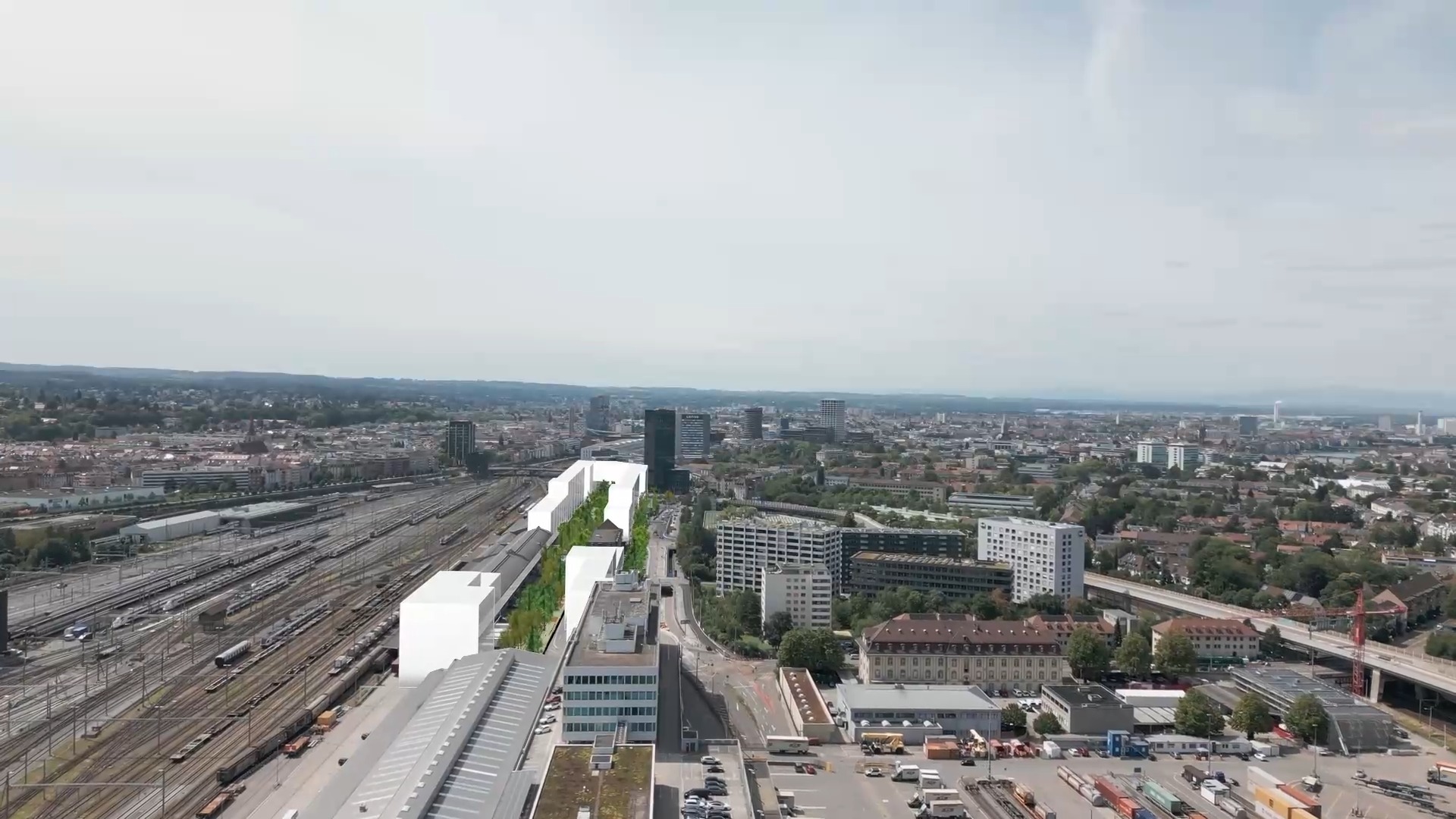
    SBB is pressing ahead with the transformation of the former Wolf freight station into an urban living and working quarter. As with the Volta Nord project, former railroad areas are being opened up for living, working and leisure.

    from 2028, around 270 apartments will be built on two building plots in the heart of the site, specifically positioned in the affordable segment.

    low-cost rent and contemporary forms of housing
    The Basler Wohngenossenschaft is planning around 150 cooperative apartments, while Vivanta is planning around 120 additional affordable units. All apartments will be built according to the cost-rent principle, which allows for moderate rents in the long term.

    the concepts are based on contemporary forms of living for different phases of life, from families to singles to older people. Communal areas and meeting zones are intended to strengthen neighborhood life and promote social networking.

    Non-profit partners with a clear mission
    BWG and Vivanta pursue an explicitly non-profit mission. To secure affordable living space while maintaining high quality and sustainability standards. The projects should demonstrate that ecological construction methods are compatible with affordable rents.

    building rights as a development instrument
    Building plots are allocated on the basis of a partnership-based building rights agreement developed jointly by SBB, the Federal Office for Housing and the Swiss Housing Association. This model creates reliable conditions for non-profit developers and accelerates the realization of affordable housing in city centers.

    with the development of the Wolf site, SBB is continuing to pursue its strategy of opening up areas that are no longer required for operational purposes for modern urban use and making a substantial contribution to affordable housing.
  • Cost rent and rising land prices

    Cost rent and rising land prices

    The cost rent model is based on the cost-covering return on the total investment costs of a new building. In many cities, building land now accounts for up to half of these costs. In Zurich in particular, land prices have risen massively in the last 15 years, from CHF 1,419 per square metre in 2007 to over CHF 5,800 in 2023.

    Even with a conservative calculation, the share of land value in the total investment costs is currently just under 50 %. This means that a reduction or increase in the land price has a direct impact on rental costs. To compensate for a 10 % increase in the land price, the cost rent would have to rise by around 5 %.

    Cost rent compared to market rent
    An analysis of the Werdwies housing estate in Zurich Altstetten shows that construction costs have risen by 32.5 % since 2007. The cost rent of a newly constructed housing estate would currently be barely below the market rent.

    According to a calculation with a gross yield of 4.25 %, the market rent for a 70 m² flat would be CHF 2,567 per month. Reducing the gross yield to 4 % could lower the rent, but without subsidisation it would only be affordable for 56.6 % of local households.

    Subsidies as a control instrument
    Various subsidy models are conceivable to reduce the rent burden.

    Land subsidies: A public subsidy of 20% of the land value could increase affordability by 7.1 percentage points.

    Subject subsidies: Direct subsidies to households could provide targeted relief to those who need it most.

    Object promotion: A reduction in value-added taxes could promote the development of affordable housing, provided that clear control mechanisms are in place.

    Spatial planning and planning certainty are key
    A decisive lever for controlling housing costs is the early and transparent definition of building regulations. Uncertainty about future rental regulations or value-added levies can lead to bad investments.

    In order to ensure affordable housing in the long term, municipalities should consistently use planning surplus values to reduce rents or subsidise subjects. In addition, measures must be aimed at getting a grip on rising land prices, as cost rents will increasingly rise to market levels without intervention.