Tag: Kriens

  • Pilatus Arena: progress in construction and new ownership structure

    Pilatus Arena: progress in construction and new ownership structure

    The Schlieren-based Halter Group is to become the majority shareholder of Pilatus Arena Sports & Events AG (PASE) in Kriens, according to a press release. Halter will become the majority shareholder with a 70 per cent stake. caranto AG from Lucerne, which specialises in real estate management and stadium catering, holds 30 percent. The Pilatus Arena is being built in the Mattenhof neighbourhood of Kriens and will provide space for sporting and other events. The arena has space for a maximum of 4,500 spectators and is scheduled to open in the fourth quarter of 2025. The interior work is currently underway.

    The project was launched by Toni Bucher and Nick Christen in 2011 and has been under the lead management of Halter AG since 2018, according to the press release. Pilatus Arena Sports & Events AG (PASE) was founded in November and will be responsible for operating the arena.

    The arena will be the new home of handball club HC Kriens-Lucerne. According to Halter’s press release, the focus will also be on international matches, national finals, world and European championships, concerts, corporate events, congresses and school and university sports. As general tenant of the arena, the operating company PASE is responsible for the organisation and marketing of these events.

    “The fact that the Halter Group is now also significantly responsible for the operation of the Pilatus Arena is an ideal constellation. The cooperation between the partners is well-established and the competences complement each other perfectly,” says Toni Bucher, Chairman of the Board of Directors of the client Pilatus Arena AG.

  • Kriens: Old brickworks to shine in new splendour

    Kriens: Old brickworks to shine in new splendour

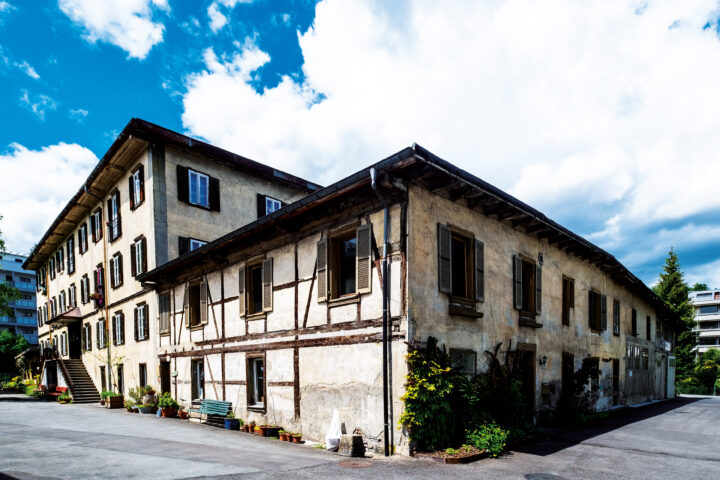
    The Old Brickworks below Bellpark in Kriens is well-known in the city. It was built during the economic boom at the end of the 19th century. Between 1889 and 1899, Lucerne expanded its housing stock by 25 percent, and the demand for fired bricks was high. However, insufficient clay deposits and unsteady management led the brickyard into bankruptcy in 1900.

    After several changes of ownership, the building was converted into a residential house in the 1920s. Since then, it has undergone several structural changes and has grown historically as a result. In the meantime, it has been included in the list of buildings worthy of protection in the Canton of Lucerne. Until recently, young families, creative people, craftswomen and artists lived and worked in the Old Brickworks.

    The building is in great need of renovation. As the landowner, Schmid Immobilien AG decided to redevelop the Alte Zieglei and develop a building project in an accompanied process.

    The Alte Ziegelei is well-known in the city and has been in Kriens for over 100 years.

    An expert committee consisting of representatives of the client, the preservation of historical monuments and the city of Kriens as well as external architects and engineers evaluated the project designs of four invited architectural teams. The projects were to fulfil the reference to the history of the Old Brickworks, implement the interests of the preservation of historical monuments and take into account the economic interests of the owner. The winning project was designed by Seiler Linhart Architekten from Lucerne.

    It envisages the removal of the historically grown three-sided extensions to the building and the reconstruction of the Old Brickworks to its core. The historic façades are to be renovated and the central element of the naturally lit inner courtyard restored. On the east and west sides, the residential building is to be supplemented with an arcade construction. A total of 18 flats are planned, distributed over the three upper floors, and four studios on the ground floor. Even after the renovation, the focus will be on communal living under one roof in the Old Brickworks.

    Construction work will start in spring 2023 and should last until the end of 2024. The investment amounts to around eleven million Swiss francs.