Tag: Lehm

  • Tried and tested building materials reinterpreted

    Tried and tested building materials reinterpreted

    Sustainable building materials such as clay, wood and straw have a positive climate footprint. As they grow, they absorb CO₂ and store it in the long term. Around fifty million tons of excavated material containing clay are produced in Switzerland every year, a potential that is only used to a limited extent as most of it is landfilled. If this soil could be used as a building material, the material cycle could be closed directly. Saving resources, less transportation and lower disposal costs are the result. Wood is equally sustainable. Swiss forests provide a fast-growing, robust building material that now accounts for up to seventeen percent of load-bearing structures in new buildings, particularly in urban housing construction and additions.

    Prefabrication and hybrid construction
    The modern rediscovery of traditional materials is based on high-tech production methods. Prefabricated modules, the targeted use of robots and the addition of natural additives allow faster and more efficient processes. Nowadays, clay can be poured into formwork as liquid clay like concrete or used as rammed earth with reinforcements for multi-storey buildings. Combining clay and wood in hybrid wall or façade elements creates sustainable and climate-friendly structures. Researchers are working on optimizing materials to make clay and straw even more efficient. For example, through natural additives such as trass lime or innovative reinforcements.

    Challenges and development prospects
    The market penetration of clay and straw throughout Switzerland is still low, mainly due to a lack of industrial development, insufficient standardization and high start-up costs. Wood, on the other hand, is already widely accepted, although the forestry industry is struggling with climate change. Softwoods are coming under pressure, hardwoods are gaining in importance, but need new processing technologies. At the same time, environmental standards must be ensured and biodiversity preserved in the forests so that CO₂ storage is maintained. Research projects are investigating how wood can be made more resistant to environmental influences using biological substances such as shellac or plant-based tanning agents.

    Circular economy, health and acceptance
    Innovative building materials offer not only ecological but also health benefits. Natural materials improve the indoor climate, reduce allergy risks and avoid pollutants. Production is often low-energy and the components can be recycled at the end of their life. Web platforms such as the “Atlas of Regenerative Materials” network companies and projects in order to increase acceptance of and confidence in bio-based buildings.

    Innovation as a driver
    The combination of traditional expertise, modern research and digital prefabrication creates new opportunities for sustainable construction. Only by combining natural materials, recyclable structures and ecological responsibility can the construction industry make a positive contribution to climate protection. The opportunities for this have never been better and the building material of the future lies in the soil, in the forest and in the fields of Switzerland.

  • Empa researches clay as a sustainable building material

    Empa researches clay as a sustainable building material

    Clay releases significantly less CO2 than concrete, explains the Swiss Federal Laboratories for Materials Testing and Research(Empa) in a press release. Ellina Bernard from Empa’s Concrete & Asphalt Laboratory in Dübendorf and the Chair of Sustainable Construction at the Swiss Federal Institute of Technology Zurich is working to establish clay as a sustainable alternative to concrete. Their project is supported by the Swiss National Science Foundation(SNSF) with an Ambizione grant.

    Clay is found in different geological compositions all over the world. The sustainable building material could replace concrete in non-load-bearing structures as well as in load-bearing walls of residential buildings. For large-scale use, Bernard and her team want to define standards for composition and mechanical strength. On the other hand, additives must be found that increase the load-bearing capacity of the material. Conventional cement is currently still used here, but this pushes the ecological footprint of clay “back into the red zone”, Empa writes.

    Bernard, in collaboration with geologist Raphael Kuhn, has found a promising approach in magnesium oxide. In initial laboratory experiments with clay formulations, a compressive strength of up to 15 megapascals was achieved, Empa informs. Clay with added cement achieves up to 20 megapascals.

  • Kriens: Old brickworks to shine in new splendour

    Kriens: Old brickworks to shine in new splendour

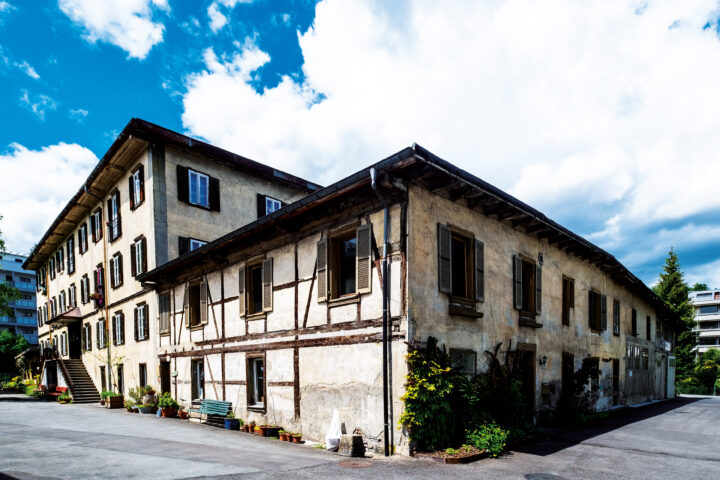
    The Old Brickworks below Bellpark in Kriens is well-known in the city. It was built during the economic boom at the end of the 19th century. Between 1889 and 1899, Lucerne expanded its housing stock by 25 percent, and the demand for fired bricks was high. However, insufficient clay deposits and unsteady management led the brickyard into bankruptcy in 1900.

    After several changes of ownership, the building was converted into a residential house in the 1920s. Since then, it has undergone several structural changes and has grown historically as a result. In the meantime, it has been included in the list of buildings worthy of protection in the Canton of Lucerne. Until recently, young families, creative people, craftswomen and artists lived and worked in the Old Brickworks.

    The building is in great need of renovation. As the landowner, Schmid Immobilien AG decided to redevelop the Alte Zieglei and develop a building project in an accompanied process.

    The Alte Ziegelei is well-known in the city and has been in Kriens for over 100 years.

    An expert committee consisting of representatives of the client, the preservation of historical monuments and the city of Kriens as well as external architects and engineers evaluated the project designs of four invited architectural teams. The projects were to fulfil the reference to the history of the Old Brickworks, implement the interests of the preservation of historical monuments and take into account the economic interests of the owner. The winning project was designed by Seiler Linhart Architekten from Lucerne.

    It envisages the removal of the historically grown three-sided extensions to the building and the reconstruction of the Old Brickworks to its core. The historic façades are to be renovated and the central element of the naturally lit inner courtyard restored. On the east and west sides, the residential building is to be supplemented with an arcade construction. A total of 18 flats are planned, distributed over the three upper floors, and four studios on the ground floor. Even after the renovation, the focus will be on communal living under one roof in the Old Brickworks.

    Construction work will start in spring 2023 and should last until the end of 2024. The investment amounts to around eleven million Swiss francs.