Tag: Lehmbau

  • Swiss construction project focuses on sustainable earthen architecture abroad

    Swiss construction project focuses on sustainable earthen architecture abroad

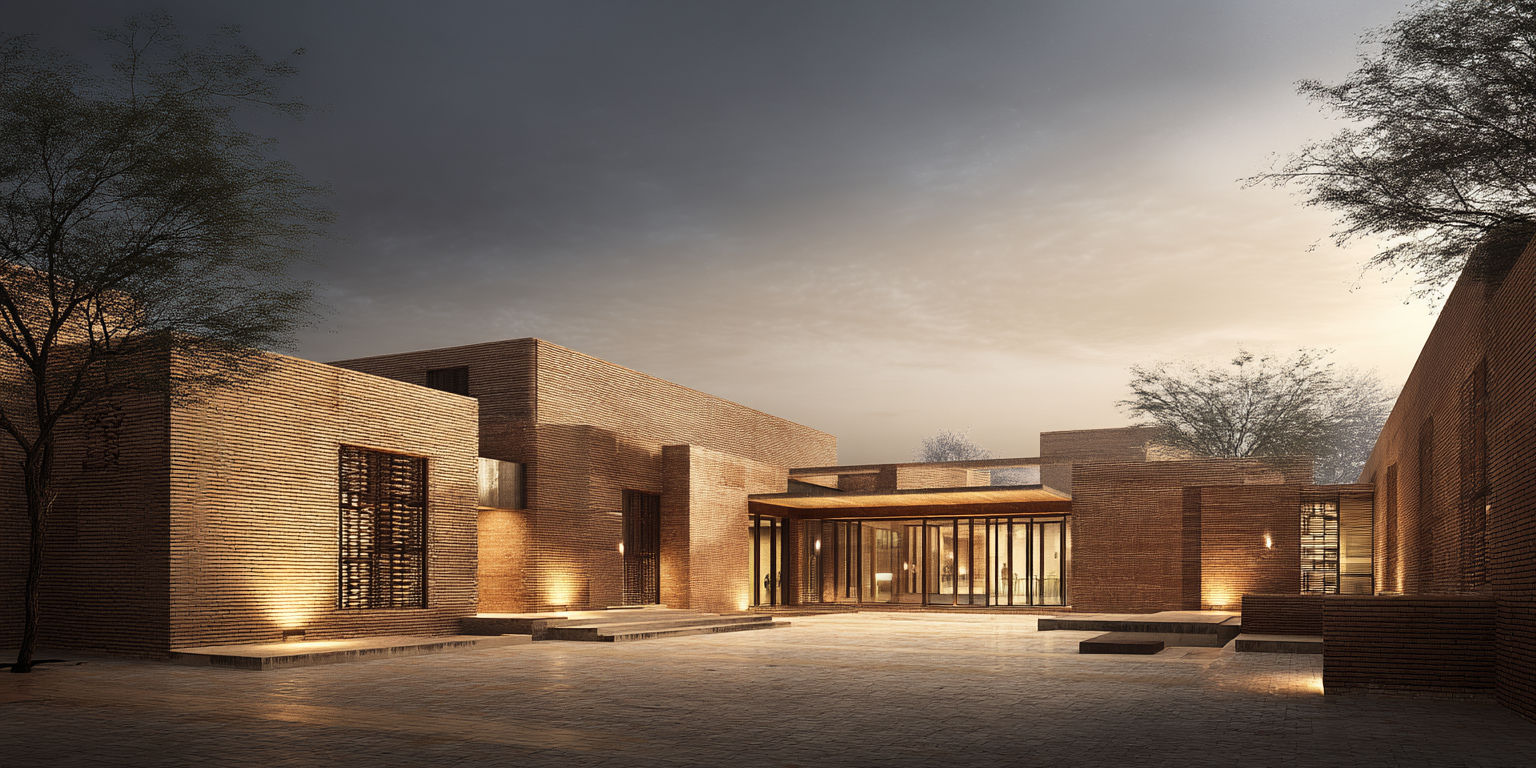
    The go-ahead has been given for the construction of the new Swiss Embassy in the Cameroonian capital, Yaoundé, and according to a press release, Dietikon-based Oxara AG is playing a key role in the project. The public building will be constructed using pressed clay bricks. Oxara is supplying its Oxabrick Loko stabiliser for the red raw material, which is available in abundance locally.

    The design for the embassy building is by the Basel-based architectural firms Caesar Zumthor Architekten and Nord Architekten and comprises an office block, a residence and a connecting building, all grouped around a courtyard. The buildings are to be constructed sustainably using local resources.

    On its website, Oxara – a company founded in 2019 – has launched a series reporting on the progress of the construction work. “In West Africa, clay is perceived as a sign of poverty and rurality, whilst concrete dominates in cities as a status symbol,” Oxara’s project manager Jonathan Ensslin is quoted as saying there. “It therefore sends a strong signal that the new Swiss embassy is being built with clay.”

    Oxara’s non-toxic mineral activator transforms clay into a stable and water-repellent building material. According to the company, this makes clay construction faster, less labour-intensive and scalable. At the same time, it is circular and low-carbon.

    Tests in the Oxara laboratory had shown that the material is well suited for use with Oxabrick Loko. However, the laboratory results could not initially be replicated on site. With the help of local materials researcher Berardin Beauderic Kenne Diffo, who had already got to know Oxara during his PhD at the Swiss Federal Institute of Technology Zurich, the mixing ratios were adjusted. A test wall comprising around 7,000 clay bricks is currently being completed. Construction work on the new embassy is then set to begin.

  • Clay celebrates its comeback

    Clay celebrates its comeback

    Clay has been tried and tested for thousands of years, consists of local clay, silt and sand, can be used without energy-intensive firing processes and is available in almost unlimited quantities. In contrast to concrete, the production of which causes considerable CO₂ emissions by burning limestone, loam scores points with its minimal energy consumption during extraction and processing. According to estimates from various sources, the production of concrete generates an average of 800-900 kg of CO₂ per tonne, whereas clay often only produces a tenth of this and usually none at all, provided it is dried naturally

    The clay pavilion in Horw
    As part of the “Think Earth” programme, ETH Zurich, HSLU and industrial companies are working together to bring clay and wood into innovative applications as a material base. One milestone is the clay pavilion in Horw, where clay and wood elements are combined in hybrid form with recycled Oulesse, a mixed demolition material developed by Oxara. The prototypes are created in close collaboration with the construction industry and students. The aim is to create modular, prefabricated clay building components with reliable strength, versatile and deconstructable, for multi-storey residential construction and flexible architecture

    Advantages, challenges and recycling potential
    Earth is not only energy-saving, but can also store CO₂, especially when organic additives are added – it can even have a climate-positive effect. Earth building materials can be easily separated and reused when buildings are dismantled. The recycling process is not costly and enables a genuine circular economy.

    Clay is already available in abundance regionally as excavated clay or as a by-product (“filter cake”) from gravel and excavation washing. So far, widespread use has failed mainly due to a lack of standardisation and market maturity. The “Think Earth” project partners are now working intensively on this

    Clay construction hybrid solutions are still more cost-intensive than conventional concrete construction, but advances in industrial production, material mixing and quality assurance are increasingly bringing them within reach for the masses

    From niche to standard?
    Researchers at HSLU and ETH Zurich are working on the standardisation of the new hybrid earth building elements, so that market entry in the next ten years is realistic. The industry is showing great interest. Especially because “waste” from excavations is becoming a key raw material. With clay, wood and intelligent hybrid technologies, a building principle is available that conserves natural resources, offers climate benefits and still enables architectural diversity. Clay is experiencing an innovation and image revival. “Think Earth” and the earth pavilion show how research and the construction industry are working together to deliver solutions for the building revolution. A small ecological footprint, circular potential and healthy living are more than just a trend – they mark the path to urban building culture in the 21st century.

  • Into the future with wood and clay

    Into the future with wood and clay

    Wood and clay, two proven building materials, are at the centre of the “Think Earth – Regenerative Building” project. Under the leadership of ETH Zurich and in collaboration with Empa and other universities and industrial partners, modern construction techniques are being developed to reduce the environmental impact of the building industry. While wood provides load-bearing capacity and rigidity, clay provides additional mass that contributes to thermal regulation, fire safety and vibration damping.

    Reusable wood connections strengthen the circular economy
    In order to use wood sustainably, its reusability must be increased. Currently, it is only 10 per cent. The project aims to increase this figure to 90 per cent by developing efficient, flexible wood joints. Researchers at Empa and ETH Zurich are working on methods for the simple dismantling of timber structures and developing digital tools that promote the reuse of timber components.

    Crack-free clay construction methods using green additives
    Clay is available in almost unlimited quantities and has an excellent carbon footprint. However, shrinkage during drying is a common problem, resulting in cracks. Researchers at Empa and ETH Zurich are investigating bio-based and biodegradable additives that prevent shrinkage without impairing recyclability. These innovative additives are being tested on a large scale in collaboration with BASF Schweiz AG and Eberhard Bau AG to enable the use of clay in building construction.

  • Partnership for the development of sustainable earth building materials

    Partnership for the development of sustainable earth building materials

    ERNE AG, headquartered in Laufenburg, and Oxara AG from Dietikon are joining forces to develop sustainable building materials based on clay. The two companies have already signed a letter of intent to this effect, ERNE announced in a press release. Through the partnership with the spin-off of the Swiss Federal Institute of Technology in Zurich(ETH), the construction company aims to change the Swiss construction landscape and set a new standard for sustainability.

    “ERNE’s company history is characterised by innovation and creative solutions,” said Markus Meier, Managing Director of ERNE AG Bauunternehmung, in the press release. “Oxara is therefore the ideal partner for us to make a contribution to CO2 reduction in the industry with the joint development of sustainable building materials.” According to ERNE, it has been interested in clay construction for some time, but has not yet found a suitable binding agent.

    This shortcoming is to be remedied with Oxara. The company’s founders have developed a patented technology for additives and binders that can be used to produce recyclable, cement-free and unfired building materials from building rubble and excavated material. Compared to conventional bricks and concrete, they have up to 90 per cent lower CO2 emissions and are suitable for the construction of three to six-storey buildings.