Tag: LIfe Sciences

  • Basel Area has developed into a life sciences supercluster

    Basel Area has developed into a life sciences supercluster

    Specifically, Basel Area Business & Innovation works on the one hand to attract foreign companies that are expanding to the Basel region. On the other hand, the non-profit organization supports innovative start-ups in their foundation. In both areas of activity, the focus is on the region’s leading industries of life sciences, healthcare technology and production technology.

    As a third pillar, Basel Area Business & Innovation operates the Switzerland Innovation Park Basel Area, which is also home to its own accelerator programs BaseLaunch and DayOne. At its three locations on the Main Campus in Allschwil, the Novartis Campus in Basel and in the canton of Jura, the Innovation Park offers a large number of start-ups a state-of-the-art infrastructure and a wide range of services so that they can concentrate on research and promising projects.

    The Basel Area has undergone enormous economic development in recent decades. The constant transformation of the business location has been decisive. Silk ribbon production in the 19th century gave rise to the chemical and pharmaceutical industries. At the end of the 20th century, the chemical and pharmaceutical industries finally went their separate ways and the pharmaceutical companies Roche and Novartis subsequently left their mark on the location. Over the past 20 years, small, agile biotech start-ups and private research institutions have enriched the ecosystem. Today, the Basel Area is regarded as Europe’s most important location for pharma and biotech and as an actual life sciences supercluster, in which the healthtech and medtech sectors are also strongly represented.

    The Basel Area’s life sciences ecosystem currently consists of more than 800 companies, over 1,000 research groups and around 35,000 specialists. It is unique in Europe that the entire value chain is represented in the Basel Area. From basic research at university institutes to the further development of innovations in the laboratory by start-ups or the research and development departments of established pharmaceutical companies through to the market launch, production and distribution of medicines.

    The Basel Area also offers the opportunity to conduct clinical trials at local hospitals and to be supplied with active ingredients by various pharmaceutical suppliers. CDMO Lonza, Bachem, Primopus, Celonic, Corden Pharma and ten23 health are all present in the Basel Area. There are also plenty of local service providers that are necessary for the functioning of the life sciences industry, for example in the areas of logistics, consulting and ICT.

    The academic landscape has developed in parallel with the growth of the industry. While the University of Basel has long focused on life sciences, the Department of Biosystems Science and Engineering at ETH Zurich was added a few years ago. It expands the research capacities of privately financed institutes such as the Friedrich Miescher Institute, Roche’s Institute of Human Biology and the Botnar Institute of Immune Engineering.

    Finally, the infrastructure is another ace up the Basel Area’s sleeve. Additional laboratory space has been created in recent years, and more will follow in the coming years. Companies that need laboratories can now choose from numerous providers such as Superlabs, iCITY Reinach, Tech Park Basel or Switzerland Innovation Park Basel Area. Office space with meeting rooms is also easy to find, whether in a coworking area, a dedicated office or an open-plan office.

    In short, the Basel Area boasts a uniquely high density of companies and specialists in the life sciences sector. No other location in the world has so much to offer in so little space.

    Find out more:
    www.baselarea.swiss
    www.baselsupercluster.com

  • Switzerland Innovation Park Basel Area Main Campus

    Switzerland Innovation Park Basel Area Main Campus

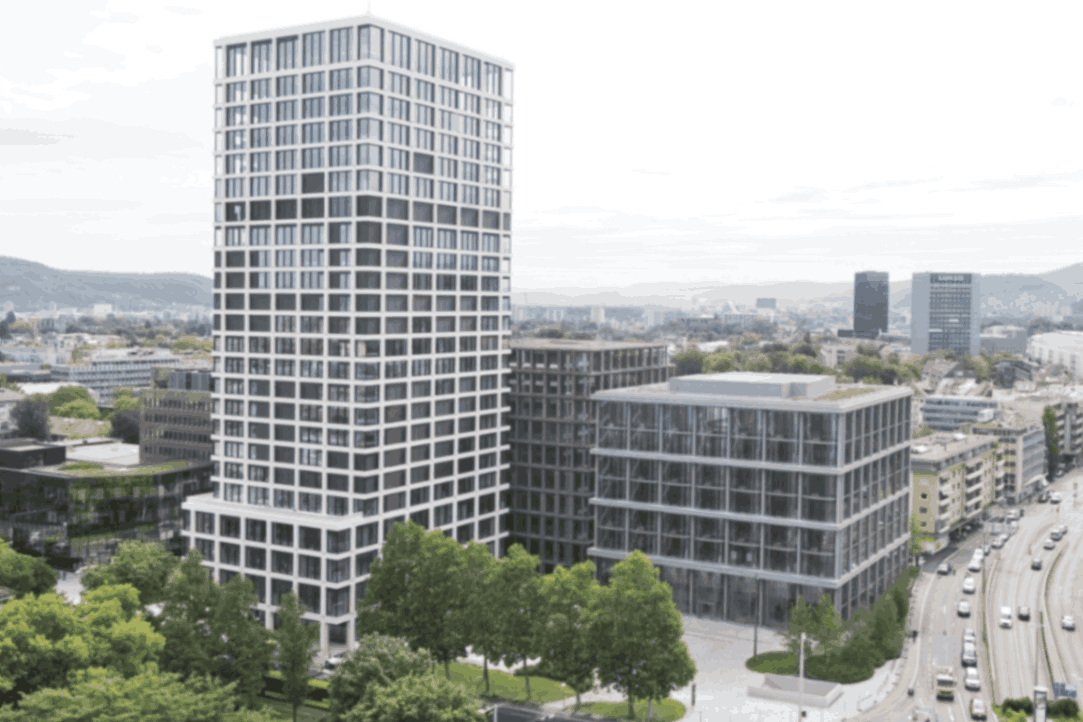
    The site extends over 115,000 square meters, structured around a central park that acts as a social and creative heartbeat, promoting communication and creating encounters. The striking main buildings, Main Campus HQ, HORTUS, ALL, SCALE, HOPE, Swiss TPH, ALBA Haus, Innovation Garage, Holiday Inn Express and the parking garages, create a visionary structure. Each building is more than just space. HORTUS is a prime example of the circular economy and sustainable urban development, ALL combines flexible working and laboratory landscapes in a new architectural idea, SCALE and HOPE are aimed at growing biotech and medtech industries, while Swiss TPH and ALBA Haus combine expertise in public health and research.

    Sustainability and community
    The cluster offers more than just space. Radically sustainable construction, energy recovery from photovoltaics, green roof landscapes and a self-regenerating campus park set new standards for urban development. With coworking, intellectual exchange zones and gastronomy, innovations are created in everyday life. Up to 8,000 workplaces will be created on the site and supplemented with sports, educational and leisure facilities.

    The Botnar Institute of Immune Engineering
    In 2027, the Botnar Institute of Immune Engineering (BIIE) will move into a new building on the campus. Endowed with one billion dollars by the Fondation Botnar, BIIE will focus on international immune-based research and therapies, especially for children and adolescents. As an anchor tenant in the ALL building, the institute will attract up to 300 researchers, putting Basel on the global map for cutting-edge research. The decision in favor of Basel was made against major international applicants from the USA, England, Israel and Singapore and underlines the importance of the research cluster in the region.

    Innovation, networking and prospects
    More than 100 companies, universities and international teams from biotech, digital health and medtech are working here on the challenges of tomorrow. Accelerator programs such as BaseLaunch, open community platforms and physical proximity establish a dynamic workspace in which knowledge transfer is lived directly. One third of the usable space is reserved for start-ups and founders and the link between science and entrepreneurial practice is promoted.

    The Switzerland Innovation Park Basel Area Main Campus brings a new quality of collaboration, spatial concept and scientific excellence. Basel’s vision of becoming a model city for circular innovation and applied research can become a reality here, internationally visible and locally rooted.

  • BeOne Medicines anchors itself in the Basel Area

    BeOne Medicines anchors itself in the Basel Area

    BeOne Medicines, formerly BeiGene, has officially relocated its headquarters to Switzerland. Already present in Basel since 2018, the global oncology company is now permanently anchored in the heart of one of Europe’s most innovative biotech hotspots. Basel not only boasts more than 30,000 highly qualified life sciences specialists, but also excellent conditions for regulatory cooperation and international networking.

    Strategic impetus for research and development
    BeOne pursues a vertically integrated innovation strategy that combines basic research, clinical development and production under one roof. The company has one of the most extensive oncology pipelines in the world. With more than 50 investigational compounds, including a BTK inhibitor already approved in 75 countries, BeOne addresses both hematological diseases and solid tumors. Development is based on future technologies such as multispecific antibodies and protein degradation products.

    Site selection as part of a global expansion strategy
    The Basel Area will thus become the European hub of BeOne’s clinical activities. As early as 2024, 13 new drug candidates were transferred to clinical trials. A peak value even compared to Big Pharma. More than 40 trials are currently underway in Europe, involving over 3,000 patients. BeOne employs more than 11,000 people worldwide on six continents, with a rapidly growing proportion in Switzerland.

    A gain for the location and for investors
    For Basel as a location, BeOne’s decision means a clear gain in international visibility, jobs and investment momentum. For investors and project developers in the life sciences, there are new opportunities along the entire value chain, from laboratory space to clinical study centers and production. The proximity to science, talent and regulatory authorities creates ideal conditions for further growth.

  • Foundation stone laid for cutting-edge biomedical research

    Foundation stone laid for cutting-edge biomedical research

    On May 23, the University of Basel celebrated the laying of the foundation stone for the new biomedicine building on the Schällemätteli Life Science Campus together with project partners and guests from politics and science. From 2030/31, around 700 researchers will have access to a state-of-the-art infrastructure here, the University of Basel announced in a press release. “With this building, we are not only creating space for excellent research, but also promoting close spatial networking between the university, clinics and industry,” Rolf Borner, Director of Infrastructure & Operations at the University of Basel, is quoted as saying in his speech at the laying of the foundation stone.

    In the new Biomedicine building, the University intends to bring together the units of the Department of Biomedicine, which are currently spread across six different locations. It conducts research at the interface between basic science and medical application, mainly on tumor diseases, the immune system, regenerative medicine and neurosciences.

    Construction work on the building, which is over 40 meters high and has eleven floors, has been underway since 2023 and the shell is due to be completed next year. In addition to laboratories, the plans include lecture halls, seminar rooms and a lounge to promote scientific exchange. The project is being realized by the construction and real estate company Implenia from Opfikon as total contractor.

    At the groundbreaking ceremony, the University of Basel also launched the new Basel BioMed Symposium conference series. The first edition on May 23 was dedicated to the value chains of biomedical research.

  • Freiburg defies global uncertainties

    Freiburg defies global uncertainties

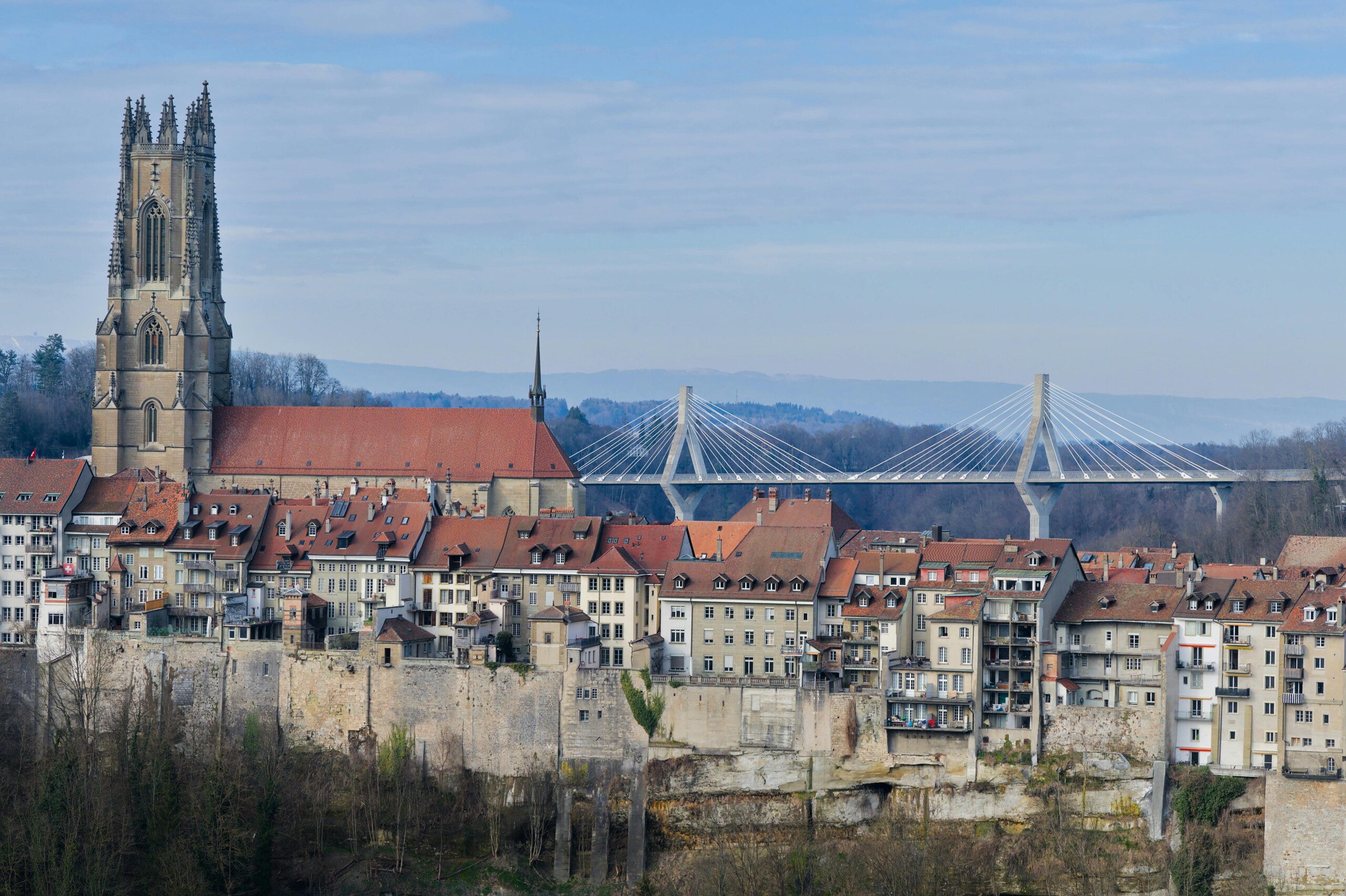
    Despite global turbulence, increased protectionism and new tariffs imposed by the US government, Fribourg’s economy is holding its own with impressive stability. The Economic Development Agency of the Canton of Fribourg supported a total of 32 business projects in 2024, including 16 new relocations. These projects secure over 1,000 jobs and create 527 new jobs in the medium term, combined with investments of CHF 116 million.

    Employment growth in the canton is now outstripping population growth. Fribourg’s gross domestic product rose by 27.5 % between 2011 and 2024. A clear sign of sustainable value creation despite global uncertainties.

    Successful location development and investments
    The new settlements are equally divided between Swiss and international companies, including those from Belgium, Brazil, Germany, France, Ireland, Italy and the USA. At the same time, the new cantonal implementation program 2024-2027 of the new regional policy was launched, which sets strategic priorities in the bioeconomy, digital transformation, Industry 4.0, tourism and entrepreneurship with 19 funded projects.

    For Olivier Curty, State Councillor and Director of Economic Affairs, these results underline the relevance of a consistently pursued economic strategy that strengthens Fribourg as a business location even in challenging times.

    bluefactory and EPFL as engines of growth
    The bluefactory innovation quarter is developing rapidly. With the inauguration of Building B and its almost complete occupancy by 17 companies and 340 workplaces, Fribourg is being further strengthened as a technology hub. At the same time, EPFL is expanding its commitment – six new chairs in the field of sustainable construction are to be created by 2030. Construction of the new Smart Living Lab experimental building is scheduled to begin in 2025.
    This dynamic consolidates Fribourg’s position in the field of the built environment and underlines the canton’s commitment to sustainability and innovation.

    Strategic successes in the life sciences sector
    A milestone in 2024 was the establishment of Cellap Laboratoire AG in Châtel-Saint-Denis. With more than 4000 m² of production space and ambitious growth targets in international markets, the company is providing new impetus in the cell cosmetics sector. The life sciences are becoming the mainstay of Fribourg’s economy and already account for 10% of the canton’s GDP – a result confirmed by a study by BAK Economics.

    Jerry Krattiger, Director of the WIF, emphasizes that the bioeconomy and life sciences remain strategic priorities. At the same time, other key areas such as Industry 4.0 are being actively promoted in order to further expand the canton’s economic diversity and resilience.

    Vigilance and adaptability as success factors
    The Department of Economic Affairs and Vocational Education and Training remains vigilant in the face of global uncertainties. With proven instruments such as short-time work compensation, Fribourg is able to react quickly to economic fluctuations and ensure the stability of the economic structure.

  • Aargau reapplies for membership of the GZA

    Aargau reapplies for membership of the GZA

    The canton of Aargau has applied for renewed membership of the GZA. According to the cantonal state chancellery in a press release, rejoining the regional marketing organisation would offer the best effect in terms of presenting Aargau as a business location abroad at the lowest risk. The alternatives considered were the establishment of an own presence abroad and the expansion of existing marketing activities.

    The canton of Aargau was already a member of the GZA from 2007 to 2010 as part of a trial membership. However, the membership was not extended as the regional location promotion “focused on tax-optimising companies at the time”, “for which the canton of Aargau was of no interest”, according to the press release. However, the GZA is now “focussing on innovative sectors that are already strongly represented in the canton of Aargau”. The canton of Aargau hopes to attract new companies from sectors such as life sciences, energy technology, mechanical engineering and digital technologies by rejoining the GZA.

    “We don’t want growth at any price, but rather to attract companies with high added value, good jobs and innovative products,” said Dieter Egli, Mayor of the Canton of Aargau, in the press release. “For this to succeed, we must be able to address companies directly in the foreign target markets.” To this end, the GZA aims to publicise Aargau as a business location abroad and find companies interested in setting up in Switzerland. The Canton of Aargau’s location promotion organisation will then suggest specific potential locations and clarify further questions.

  • ICT and life sciences dominate company settlements

    ICT and life sciences dominate company settlements

    The Conference of Cantonal Directors of Economic Affairs (VDK) reports that the promotion of Switzerland as a business location by the federal government, the regions and the cantons can look back on another positive year. Once a year, the VDK compiles statistics on the number of new foreign companies settling in Switzerland. According to the VDK’s current survey, a total of 265 foreign companies settled in Switzerland in 2022. They have already created a total of 1199 new jobs in the first year of operation. Over the course of three years, this figure is expected to rise to over 3100 jobs.

    “Even though, with 265 companies, 17 fewer companies were settled compared to the previous year, the development of settlements has remained relatively stable over the last 10 years,” writes the VDK. And as in previous years, most of the new settlements in 2022 are active in the ICT and life sciences sectors. Regionally, around half come from the USA, Germany or France.

    The focus on future technologies set out in the national location promotion strategy 2020-2023 is to be maintained in the years 2024 to 2027, the VDK explains further in the press release. Such companies also contribute “with their innovative know-how in their network to strengthening regional and local value creation as well as the SME landscape”. In addition, the VDK points to the cooperation of the Confederation and the cantons with the official Swiss organisation for export promotion and location promotion, Switzerland Global Enterprise, and its representations abroad managed as Swiss Business Hubs.

  • GZA draws a positive conclusion for 2022

    GZA draws a positive conclusion for 2022

    The number of new companies from abroad settling in the Zurich economic region has stabilised at a high level in 2022, according to GZA. Together with its location promotion partners, the location marketing organisation supported 108 companies in establishing new branches in the nine associated cantons, the city of Zurich and the Winterthur region, according to the 2022 annual report presented on 30 March. In the previous year, there had been 129 companies, in 2020 only 89, and in 2019 a total of 109.

    The 108 companies newly established last year created 516 jobs, 19 per cent fewer than in the previous year. This downward trend reflects the use of new technologies, the increasing automation of production processes and the cross-border division of labour among international companies, according to the media release accompanying the annual report. However, the companies that have settled in the region are planning to create a further 1292 jobs in the next five years.

    The front-runner among the new settlements in 2022 was the life sciences with 22 companies, followed by 20 companies from fintech and blockchain, 16 from information technologies and 12 from artificial intelligence and computer vision.

    The majority of the newly established companies come from the USA (33), Germany (14) and Italy (9). According to GZA, their internationality increases the networking of the business location and contributes to its resilience. “We want to attract attractive companies to the Zurich economic region that can create something new for a sustainable future here and throughout Switzerland,” says Balz Hösly, Chairman of the Board of Directors, as quoted in the media release.

    The focus of the 2022 Annual Report is the circular economy. GZA AG is a founding member of the recently launched Workshop for the Circular Economy CE123, an initiative from the business community that aims to pave the way for circularity, especially for SMEs. “Alongside digitalisation, the circular economy is becoming a big business prospect,” says Managing Director Sonja Wollkopf. It will “lead to more innovation and prosperity”.

  • Basel Area location promotion posts record number of company start-ups

    Basel Area location promotion posts record number of company start-ups

    Basel Area Business & Innovation supported a total of 96 start-ups in 2022. This represents a new record, the location promotion agency of the cantons of Basel-Stadt, Basel-Landschaft and Jura informs in a statement. Compared to the previous year, 20 more start-ups were supported by Basel Area Business & Innovation.

    The number of companies newly established in the Basel Area cantons in 2022 remained stable at 35 compared to 2021. “The Basel Area economic region has had another highly satisfactory year,” Christof Klöpper, CEO of Basel Area Business & Innovation, is quoted as saying in the statement. “Both in terms of newly established companies and company start-ups, we achieved excellent figures in 2022.”

    Of the total of 96 newly founded companies, 21 are active in the pharmaceutical and medical sectors. This is followed by services with 18, construction with eleven and ICT with ten start-ups. Many of the start-ups were able to benefit from the location promotion’s venture monitoring programme. In the press release, Basel Area Business & Innovation singles out the cleantech company Kuori. Since its founding in spring 2022, it has already raised around 2.3 million euros in investor funding.

    Of the total of 35 settlements, 24 were in the pharmaceutical and medical sectors. In terms of regions of origin, Europe leads the way with 14 companies. This is followed by Asia with seven and the USA with six newly established companies in Switzerland. A total of eight companies from other cantons moved to the Basel Area last year.

  • Settlements reach pre-corona level

    Settlements reach pre-corona level

    Company settlements are increasing again after the Corona dip. The Greater Zurich Area AG (GZA), as the location marketing organization for nine cantons, was able to settle a total of 125 companies in 2021, an increase of 36 companies compared to the first Corona year 2020. According to a statement by the GZA, 42 companies came from the USA (+20 ), 19 from Germany (+4), ten from Italy (+5) and five each from China (-6), Great Britain and Singapore.

    Overall, the companies created 582 jobs in the economic area, an increase of 11 percent compared to the previous year. In the next five years there should be a total of 1843 jobs.

    The ICT sectors are most strongly represented with 42 companies, followed by the life sciences with 25 companies and the machine industry with 18 and financial services with 13 companies. The life sciences companies created 235 jobs, followed by the ICT companies with 154 jobs.

    However, the importance of the companies for the location goes beyond the number of new jobs. “We specifically address those companies that achieve high added value and strengthen the existing ecosystem,” said GZA Managing Director Sonja Wollkopf Walt at a digital media conference.

    One of the newly settled companies is Benchling . The American provider of cloud solutions for life sciences wants to create up to 150 jobs in the Circle at Zurich Airport. The Chinese pharmaceutical company Hengrui already has its European headquarters in Basel and is now setting up a research and development site in Zurich.

    The German RegTech company targens will sell its software for compliance solutions to banks in Switzerland and Liechtenstein from Schwanden GL. Ruedi Becker, the Swiss head of the Landesbank Baden-Württemberg subsidiary, was able to convince his superiors of the advantages of Glarus together with the GZA.

    That pleases the Glarner location promoter Christian Zehnder. So far, Glarus has been strong in manufacturing and food production. “We want to get away from our traditional image,” he said. “When companies settle here, however, we depend on the strong partner GZA, who markets the location internationally.”

    Sonja Wollkopf Walt sees it similarly: the settlement of targens strengthens the ecosystem as a whole and sends the signal that the economic area extends beyond Zurich and Zug. “In the Greater Zurich Area there is the ideal location for every company.”

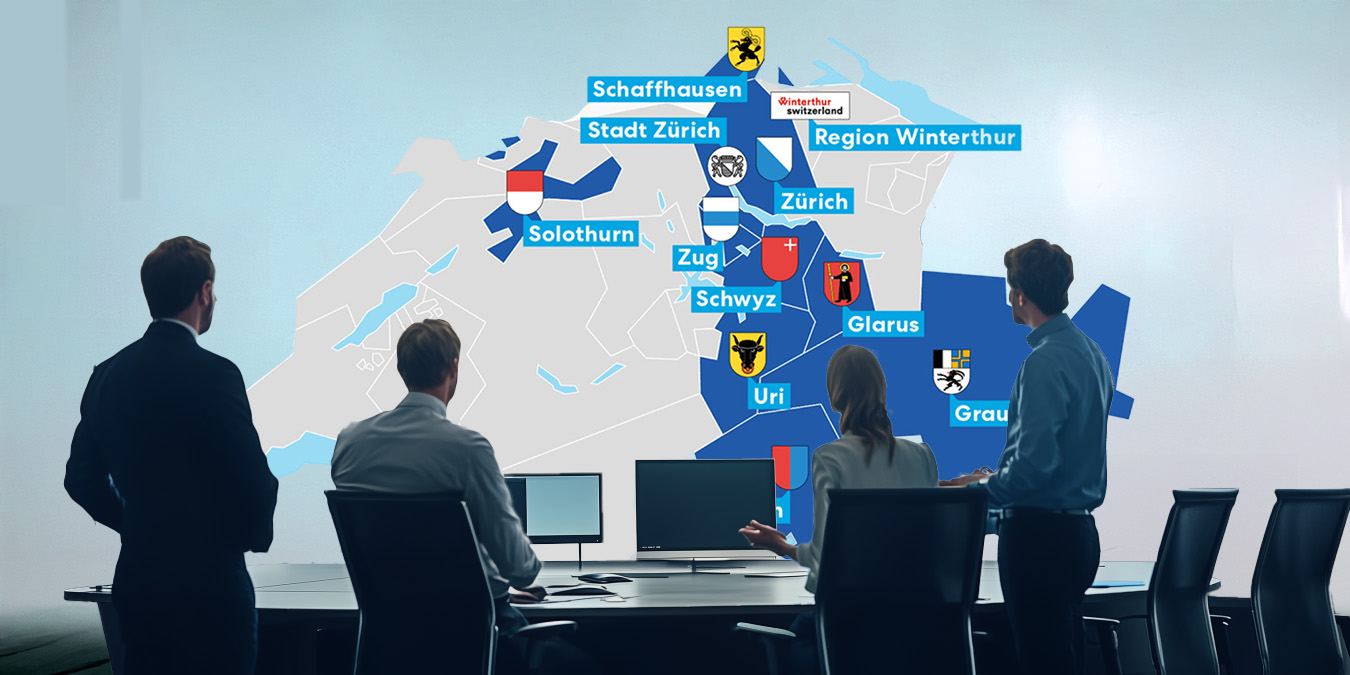
    The Greater Zurich Area includes the cantons of Glarus, Graubünden, Schaffhausen, Schwyz, Solothurn, Ticino, Uri, Zug and Zurich.

  • CondenZero wins Swiss Innovation Challenge

    CondenZero wins Swiss Innovation Challenge

    The Swiss Innovation Challenge has been decided, the three winners come from Zurich: on Thursday the main prize of CHF 20,000 was awarded to condenZero . The spin-off of the University of Zurich ( UZH ) received this award virtually when the award ceremony was broadcast from the Haus der Wirtschaft in Pratteln. According to a press release , a message from Federal Councilor Guy Parmelin was leaked.

    The physicists at condenZero develop and produce scientific sample holders that work at low temperatures of around minus 270 degrees. The innovative cooling principle was originally developed at the Swiss free-electron laser at the Paul Scherrer Institute . In the start-up phase, the team will concentrate on introducing the new technology to the cryo-electron microscopy market. The condenZero technology can hold cryogenic temperatures for up to 24 hours. With the current cryo-microscopy solutions, this is only possible for 15 minutes. CondenZero is also in the final round of the start-up CERN BIC incubator .

    Second place and the special life sciences prize of CHF 5,000 went to MyLeg . This is a “unique” device that recovers sensory information about the touch and movement of a prosthetic leg. It does this through non-invasive electrical stimulation. The device does not have to be used surgically and can be added to any existing prosthesis.

    Third place and the special construction prize were awarded to Oxara . The spin-off from the Swiss Federal Institute of Technology in Zurich converts construction waste into sustainable and affordable building materials with self-developed and patented mineral additives, thus promoting the circular economy. The company’s goal is to significantly reduce “the immense footprint” of conventional building materials.