Tag: Luzern

  • New event arena for Central Switzerland inaugurated

    New event arena for Central Switzerland inaugurated

    The Pilatus Arena is preparing for its grand opening: On 25 October, the “most modern midsize arena in Switzerland” will be unveiled to the public in front of a sold-out crowd with an opening show followed by a home match between handball club HC Kriens-Lucerne and HSC Suhr Aarau, Halter Gruppe AG announced in a press release. The property developer from Schlieren owns 70 per cent of Pilatus Arena AG. The remaining 30 per cent is held by Caranto AG from Lucerne, which specialises in property management and stadium catering. Both companies are also responsible for the operation of the facility via Pilatus Arena Sports & Event AG.

    On 14 October, invited guests from the worlds of politics, sport and culture were given their first exclusive glimpse of the facility at a pre-opening event. The Pilatus Arena offers space for 4,500 visitors and will serve as the new home of HC Kriens-Lucerne as well as a “hub for sport, events and culture in Central Switzerland and beyond”, according to the press release. At the pre-opening, Lucerne Councillor of States Damian Müller (FDP) described the project as a “promise of sport, culture, sustainability, community and emotion in Lucerne and the whole of Central Switzerland”.

  • Canton of Lucerne plans measures for successful location promotion

    Canton of Lucerne plans measures for successful location promotion

    In response to global tax developments, the canton of Lucerne is planning a package of measures from 2026 to improve the framework conditions for companies and the quality of life of the population. According to a press release, the investment package comprises 250 million francs in the first year and 300 million francs annually from 2027 and is to be channelled into “a broad range of measures”.

    According to the press release, global developments could lead to massive losses in competitive advantage. Developments such as the OECD minimum taxation could lead to the canton losing its advantage in the form of low corporate profit taxes. This could lead to large international corporations no longer investing in Lucerne – at the expense of local jobs and tax revenue. There is talk of a loss of fiscal revenue totalling CHF 1100 million for the federal government, canton and municipalities.

    By promoting innovation, improving the tax burden, increasing digitalisation, developing economic areas, the availability of commercial and residential space and a customer-oriented administration, the aim is to create more attractive conditions for large global companies based here.

    The population should benefit from a lower tax burden, a better work-life balance, culture and digitalisation. The vote of the electorate is due to take place in September 2026.

  • Lucerne presents structure plan to the public

    Lucerne presents structure plan to the public

    According to forecasts, the population of Lucerne will increase by around 120,000 people by the middle of the century and reach the 560,000 mark. In order to manage this growth in an orderly manner, the spatial development strategy sets out clear objectives in the structure plan. Priority should be given to compact, efficient settlement structures based on public transport.

    The plan ensures the economical use of land and coordinates the canton’s development plans with those of the federal government and the municipalities. It is intended to create the basis for spatially harmonizing living, working and mobility.

    Focus on inner development and affordable living space
    The central element of the revision is the creation of living space without endangering valuable cultivated land. The structure plan focuses on inward densification, for example through minimum densities and higher building densities in locations with good transport links, and allows selective extensions to building zones where they make sense for affordable housing construction.

    The so-called center areas create planning instruments for the targeted development of central locations with high densities. In future, municipalities will be able to make their housing supply binding. In addition, measures are needed in other policy areas, such as land policy or support programs for non-profit housing construction.

    Work zones and economic development
    The structure plan strengthens the local scope for action for economic areas. Municipalities are given the opportunity to expand their own work zones in order to promote new settlements with a regional connection and to link living and working more closely.

    The canton assumes a coordinating role with the program for development priorities. In addition, the structure plan creates the basis for an active land policy in order to develop areas in the canton’s interest. Such as strategic employment areas or infrastructure projects.

    Integration of overarching sustainability goals
    The structure plan revision links spatially relevant topics with overarching strategies. Aspects relating to climate protection, energy production and mobility development from cantonal projects such as “Future Mobility Canton of Lucerne” or the Climate and Energy Planning Report are anchored spatially. In this way, planning integrates ecological, economic and social developments.

    Procedure and political responsibility
    Since the revision of the Planning and Building Act in 2018, the Cantonal Council has been more closely involved in structure planning. It defines the strategic objectives in the spatial development strategy, while the cantonal government is responsible for operational coordination and the concrete spatial definition in the structure plan maps.

    The current revision is based on feedback from the 2023 consultation and the preliminary federal review in 2024. After the public consultation, all submissions will be evaluated before the revised version is forwarded to the Cantonal Council, probably in summer 2026, and then submitted to the Federal Council for approval.

  • State-of-the-art logistics project strengthens Lucerne as a business location

    State-of-the-art logistics project strengthens Lucerne as a business location

    Imbach Logistik AG from Schachen, a subsidiary of Galliker Transport AG from Altishofen LU, has opened a new logistics centre in Lucerne-Littau, according to a press release. The centre, which was designed to meet modern Industry 4.0 requirements, is “a strong sign for Lucerne as a business location” with its fully automated high-bay warehouse and a highly flexible small parts warehouse, according to the company. Imbach Logistik will create a total of 60 new jobs with the new centre following its completion in two construction phases.

    A special feature of the new centre is the spatial arrangement of the warehouses: in contrast to the horizontal positioning that is customary in the industry, the small parts warehouse is positioned vertically above the high-bay warehouse in order to maximise the use of space. Warehouse automation is made possible by the use of state-of-the-art shuttle technologies and an integrated warehouse management and material flow system developed by partners SSI Schäfer AG and EPG. Together with EPG’s LFS software, the Schäfer Flexi-Shuttle system coordinates storage and retrieval as well as upstream pick-and-pack processes with a high level of efficiency.

    Sustainability is also a focus at the site: the building, which has a volume of 215,000 cubic metres, is fully powered by a photovoltaic system with a capacity of 1,000 kilowatt peak, which produces around 1,150,000 kilowatt hours of electricity per year. The heating and cooling supply is environmentally friendly thanks to a groundwater heat pump in combination with a freecooling system. “With the new Lucerne logistics centre, we are creating the basis for even more efficient and sustainable services for our customers. Industrial companies in the region in particular will benefit from state-of-the-art technology and customised logistics concepts,” says Christian Kempter-Imbach, Managing Director of Imbach Logistik AG, in the press release.

  • Lucerne is voted the most beautiful old town in Switzerland

    Lucerne is voted the most beautiful old town in Switzerland

    Lucerne has won the TRAVELBOOK AWARD 2025 for the most beautiful old town in Switzerland. According to the press release, the award ceremony on 23 September in Berlin was the fourth time that trend destinations in various categories were honoured. The award is organised by TRAVELBOOK, the largest online travel magazine, which is part of the BOOK Family of the Berlin-based Axel Springer publishing house. For the first time in 2025, it was mainly TRAVELBOOK readers who determined the winning destinations. In an online vote, 150,000 votes were cast across all categories.

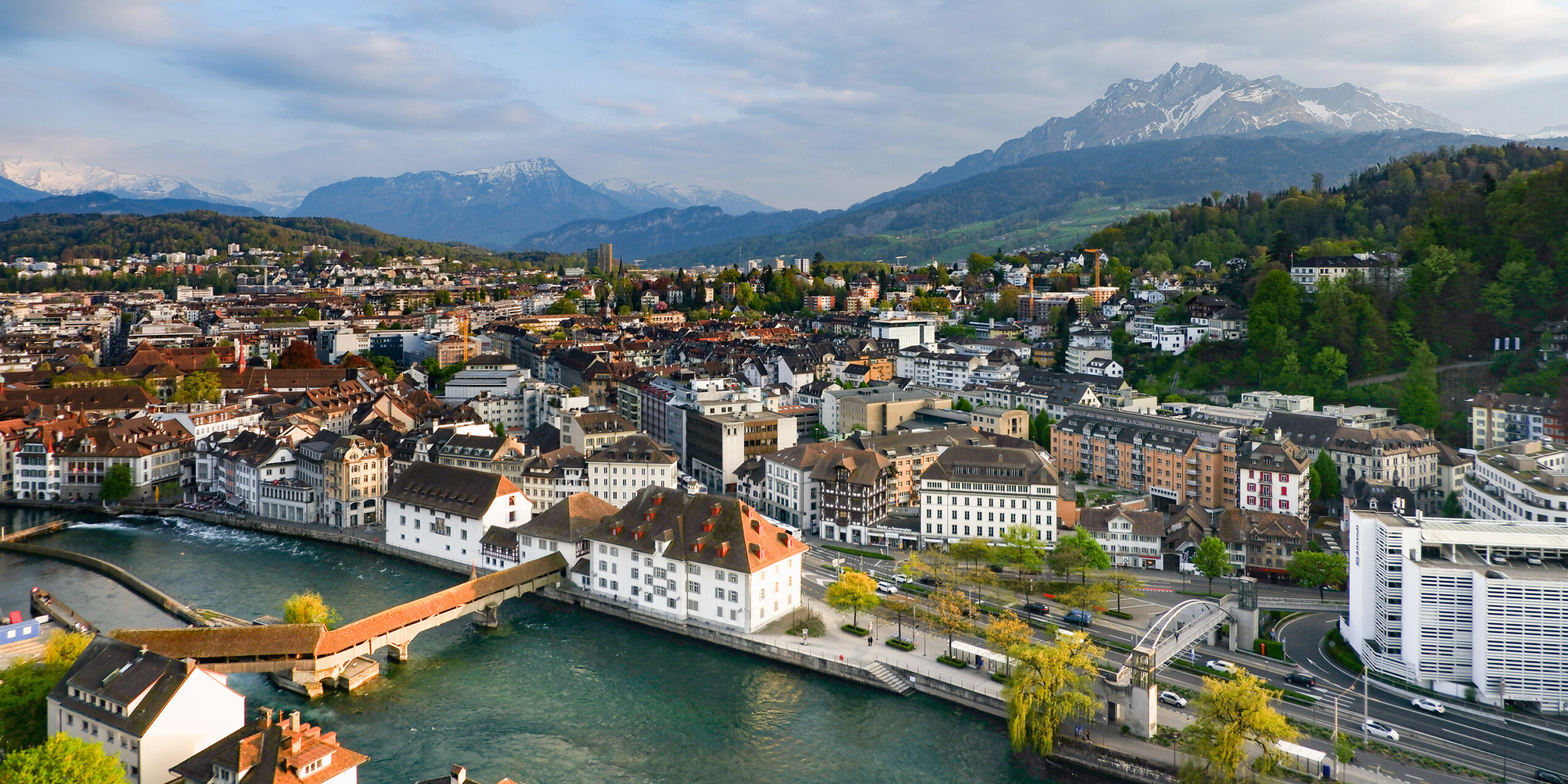
    The accompanying text on Lucerne emphasises that the city centre with its sights and impressive mountain panorama is easy to explore on foot. The highlight of a visit is not just the world-famous Chapel Bridge, which connects the old and new town centres. Visitors can discover several spacious squares such as the wine market with its fountain or historic paintings on the facades of houses.

    Bad Wimpfen in Baden-Württemberg was chosen as the most beautiful old town in Germany, while Salzburg can claim the title for Austria. According to the 2025 poll, Greece is the most hospitable country in the world. Other prizes went to Auvergne in France as the best camping region in Europe and to the Okavango Delta in Botswana as the best destination for a sustainable safari. This year’s insider tip region in Europe is the High Tatras in the Polish-Slovakian border region.

    “The results not only reflect the knowledge and desires of our readers, but also provide interesting impulses for the industry,” says BOOK Family Editor-in-Chief Nuno Alves. TRAVELBOOK has been inspiring millions of people to discover new places for years.

  • Investment strengthens business location with 60 new jobs

    Investment strengthens business location with 60 new jobs

    Emmen-based SME Technik AG has broken ground on the construction of a new company building. With the construction of the new production facilities, the CNC manufacturing specialist aims to strengthen its location in the canton of Lucerne, according to a press release. With an investment of 7 million Swiss francs, a three-storey work and production building is being constructed. It will also create 60 new jobs.

    The building, with 1,200 square metres of production space and 1,100 square metres of office space, is primarily intended to optimise the CNC production of small parts or series for the aviation and railway industries. In a first step, two new CNC machines will be installed. The move is scheduled for spring 2026.

    The building, planned and realised by Cerutti Partner Architekten AG from Rothenburg, is designed for sustainability and energy efficiency. A solar system on the roof and air-to-water heat pumps were installed to ensure resource-conserving operation.

    “With the new building, SME Technik is creating modern workplaces that are attractive for both existing and future employees,” said Jan Kottucz, investor, owner and Chairman of the Board of Directors of SME Technik AG, in the press release. “At the same time, we can manufacture CNC parts for our customers with the highest precision and to Swiss quality standards in the modern production halls with new systems.” Ramona Gut-Rogger, Mayor of Emmen, sees the new investment by SME Technik as a “strong signal for the future of our business location.”

  • Lucerne is building a public network of charging stations

    Lucerne is building a public network of charging stations

    A public network of around 30 charging stations for electric cars is to be created in Lucerne by 2035. According to a press release, the focus will be on charging in neighbourhoods. To this end, the city will provide third-party providers with public land and the basic infrastructure, including network access, in return for a concession fee. It intends to refinance its investment of CHF 960,000 through the concession fees in line with the polluter-pays principle.

    By 2040, all vehicles registered in the city of Lucerne are to be electric or powered by renewable energy. In order to achieve this goal of the climate and energy strategy, the city of Lucerne and Energie Wasser Luzern(ewl) launched the Green Zones pilot project in April 2024. As part of this, the first public charging stations were installed on Bergstrasse and Eichmattstrasse. The city describes the experience of the five-year project as “consistently positive”.

    The measures are part of the overall concept for renewable drives in mobility. It was developed by the Zurich-based consulting and engineering company EBP Switzerland on behalf of the city of Lucerne. The scope of the concept also includes funding programmes for basic and charging infrastructure, which will be financed from the city of Lucerne’s energy fund, or that only emission-free taxis will be granted operating licences from 2033. In addition, parking permits for long-term parking on public land will only be issued for emission-free vehicles from 2040.

  • Robust market in Lucerne

    Robust market in Lucerne

    The commercial property market in the canton of Lucerne is proving resilient, even in the international context of economic uncertainty. Switzerland’s gross domestic product grew by 1.3 per cent in 2024 and is expected to rise to 1.5 per cent in 2025. The canton of Lucerne benefits from its broadly diversified economic structure with strong sectors such as construction, finance and services.

    Bottleneck meets demand
    Demand for office space remains high, fuelled by continued employment growth in the service sector. At the same time, the construction volume of around CHF 50 million is well below the long-term average. This reluctance to construct new buildings is further reducing supply, causing rents to rise moderately but continuously – by an average of 10 per cent since 2015.

    Structural change weighs on
    Despite stable consumption indicators, the market for retail space remains under pressure. Online retail, changing consumer behaviour and geopolitical uncertainties are putting pressure on even highly frequented locations. Falling asking rents point to a prolonged period of weakness – there is currently no recovery in sight.

    Solid basis, new risks
    At less than one per cent, the vacancy rate for industrial space is well below the national average. Demand is stable and projects such as new business parks in Lucerne and the surrounding area are signalling momentum. However, trade tensions, particularly with the USA, could slow down this trend and cause a slowdown in the medium term.

    Plenty of potential, but growing pressure
    The new study by Luzerner Kantonalbank and Wüest Partner paints a differentiated picture. Office and industrial space is benefiting from Lucerne’s attractiveness as a location and the strong domestic economy. Retail space, on the other hand, remains the problem child. Future developments will be largely determined by international conditions.

  • Project planning credit for Lucerne theatre rejected

    Project planning credit for Lucerne theatre rejected

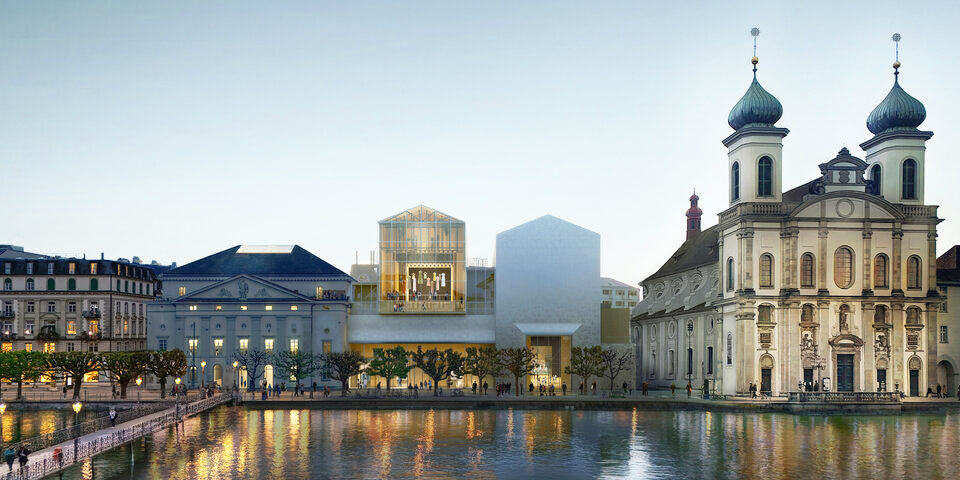
    With 15,033 votes against compared to 10,914 votes in favour, the project planning loan for the planned Lucerne Theatre was clearly rejected on 9 February 2025. The turnout was 49.67 per cent. The result spells the end for the “überall” project by Ilg Santer Architekten, which was intended as a new stage for music, spoken word and dance theatre.

    City Council expresses disappointment
    The City Council notes the vote with great regret. The planned further development of the Lucerne Theatre cannot be realised with this decision. City President Beat Züsli emphasises: “We have always said that there is no Plan B. What happens next is completely open. This result is a great disappointment for Lucerne’s culture.”

    The location and construction volume of the planned theatre in particular were repeatedly criticised in the public debate. Nevertheless, it is still too early to draw any definitive conclusions. The city council intends to carefully evaluate the results of the vote together with the partner organisations involved.

    Consequences for cultural policy
    The rejection of the loan presents the city of Lucerne with new challenges. The previous plans have been halted and it remains unclear how the future of Lucerne’s theatre can be shaped. Nevertheless, the city council emphasises the importance of dealing constructively with the vote: “It is now our joint task as a city community to find a new solution for theatre culture in Lucerne.”

    Despite the defeat, the city council would like to thank everyone who was involved in the project. The existing partnerships will continue to be cultivated and the impact of the result of the vote on cultural policy will be carefully examined.

  • Rental prices in Switzerland rise slightly again

    Rental prices in Switzerland rise slightly again

    The monthly rental index compiled by the digital property marketplace Homegate in collaboration with Zürcher Kantonalbank closed at 128.1 points in November. Compared to the previous month, the index rose by 0.3 per cent, Homegate reported in a press release. This means that “the brief decline in October has levelled out again and the advertised rental prices are once again at the level of September 2024”. A year-on-year increase in advertised rents of 3.1 per cent was observed across Switzerland.

    Within the cantons, Homegate’s experts only identified major changes compared to September in individual cases. The canton of Graubünden stands out the most with a 4.4 per cent decline in asking rents. However, “such outliers” are mostly short-term changes, according to the press release. Only the canton of Nidewalden reported an increase in rents of more than 2 per cent month-on-month at 2.1 per cent.

    The experts attest that the eight Swiss cities included in the index are returning “to the expected normality”. They attribute this primarily to the 1.6 per cent growth in asking rents in Zurich and Lausanne. The other six cities analysed showed only marginal changes compared to September. In a year-on-year comparison, however, significant growth was observed in all eight cities. This was strongest in the city of Lucerne at 7 per cent.

    Homegate is a division of SMG Swiss Marketplace Group AG. This combines the digital marketplaces of TX Group, Ringier and Mobiliar.

  • Lucerne promotes circular construction projects

    Lucerne promotes circular construction projects

    The canton of Lucerne is joining forces with the Lucerne University of Applied Sciences and Arts to promote circular construction. The two partners have launched the Eco-Design in Building Construction tender, the cantonal state chancellery announced in a press release. Circular building projects are to be subsidised with a total of 200,000 Swiss francs in the coming year. Particularly innovative projects will also receive a material passport and consultancy services.

    Building owners from the private and public sectors as well as planners can apply for funding digitally from 13 January until 16 May. It does not matter whether the projects have already been realised or are still in the planning or implementation phase. However, the prerequisite for funding is that it is a construction project in the canton of Lucerne.

    We are looking for projects that follow the eco-design approach. According to this approach, buildings are designed to be durable and circular. In order to receive funding, the project should also have the character of a lighthouse, according to the press release. The canton and university want to use this to raise the profile of opportunities for sustainable construction and the circular economy and provide planners with the relevant knowledge.

  • Pilatus Arena: progress in construction and new ownership structure

    Pilatus Arena: progress in construction and new ownership structure

    The Schlieren-based Halter Group is to become the majority shareholder of Pilatus Arena Sports & Events AG (PASE) in Kriens, according to a press release. Halter will become the majority shareholder with a 70 per cent stake. caranto AG from Lucerne, which specialises in real estate management and stadium catering, holds 30 percent. The Pilatus Arena is being built in the Mattenhof neighbourhood of Kriens and will provide space for sporting and other events. The arena has space for a maximum of 4,500 spectators and is scheduled to open in the fourth quarter of 2025. The interior work is currently underway.

    The project was launched by Toni Bucher and Nick Christen in 2011 and has been under the lead management of Halter AG since 2018, according to the press release. Pilatus Arena Sports & Events AG (PASE) was founded in November and will be responsible for operating the arena.

    The arena will be the new home of handball club HC Kriens-Lucerne. According to Halter’s press release, the focus will also be on international matches, national finals, world and European championships, concerts, corporate events, congresses and school and university sports. As general tenant of the arena, the operating company PASE is responsible for the organisation and marketing of these events.

    “The fact that the Halter Group is now also significantly responsible for the operation of the Pilatus Arena is an ideal constellation. The cooperation between the partners is well-established and the competences complement each other perfectly,” says Toni Bucher, Chairman of the Board of Directors of the client Pilatus Arena AG.

  • Additional loan for administration building at Seetalplatz Lucerne

    Additional loan for administration building at Seetalplatz Lucerne

    In 2021, the people of Lucerne voted in favour of the construction of an administration building on Seetalplatz and approved a special loan of CHF 177.4 million. Due to staff growth and unexpected construction requirements, the cantonal government is now requesting an additional credit of CHF 14.25 million. In particular, the increased number of employees in the cantonal administration, especially in the Asylum and Refugee Service, requires an expansion of office space.

    In addition to the increase in space, structural adjustments will be made in order to fulfil the ecological requirements of Lucerne’s climate policy. These include an extension of the photovoltaic system from the roof area to the building façade as well as a possible extension of the building in the inner courtyard, which will lead to an improved utilisation of the property. In addition, further cost increases will arise due to building permit requirements.

    Central point of contact for the population
    Once completed in 2026, the administration building will house more than 2,000 cantonal employees and offer centralised services for the population at an easily accessible location in Lucerne North. The ground-breaking ceremony took place in September 2023 and construction work is progressing according to plan.

    The Cantonal Council will decide on the additional loan in the October session.

  • New career opportunities for career changers in the property industry

    New career opportunities for career changers in the property industry

    A career change opens up exciting opportunities for many career changers. Claudio Kuhn, an experienced business administrator with a Master of Science in Business Administration from HSLU, sees the property industry as his new challenge. Motivated by the prospect of intensive customer contact and diverse marketing activities, he is focusing on a career in property sales, particularly in the Zurich economic area and the Lucerne region.

    Targeted further training for entry
    Despite his extensive specialist knowledge, Kuhn realised that specific basic knowledge was essential for property sales. He therefore decided to enrol on the intensive course for career changers at SVIT Zurich, which he successfully completed. The course provides essential knowledge and skills to gain a foothold in the dynamic property sector.

    Support from SVIT Zurich
    In addition to specialist training, SVIT Zurich offers comprehensive support for professional integration into the property industry. Pascal Stutz, CEO of SVIT Zurich, supports course participants in developing successful job search strategies. As a result, graduates not only acquire in-depth knowledge, but also valuable skills for a successful job application.

    Networking and practical experience
    Kuhn and other course graduates also have the opportunity to present themselves to potential employers via dossiers and personal references such as skills. These documents, which can also be requested by non-SVIT members, enable companies to access qualified candidates directly (mail to: pascal.stutz@svit.ch).

    Outlook for interested lateral entrants
    SVIT Zurich’s current range of courses for lateral entrants in the fields of property management or property sales can be viewed on the svit-bildung.ch website. With targeted programmes and supportive guidance, the SVIT offers ambitious career changers like Claudio Kuhn a solid basis for a successful career start in the real estate sector.

    The intensive training and close support provided by SVIT Zurich offer a promising opportunity to increase the attractiveness of the property industry for career changers and pave the way for a successful career.

  • New procurement hub for floor coverings opened in Lucerne

    New procurement hub for floor coverings opened in Lucerne

    Mohawk, which claims to be the world’s largest manufacturer of floor coverings and is based in the US state of Georgia, has established a centre of excellence for its procurement activities in Lucerne. According to a press release, the company intends to increase its presence in the DACH countries. With its central location, Lucerne offers favourable opportunities to optimally organise and exploit all supply chains in terms of the movement of goods and services, according to the press release.

    Mohawk has already begun recruiting local employees to build up the team for the new competence centre. This process will continue, according to the press release.

    Mohawk sells its products in 170 countries worldwide, with around 30 per cent of its trade being handled in Europe. Its products include floor ceramics, wood and parquet flooring as well as vinyl products and carpets. The best-known names under the Mohawk umbrella include Marazzi, Ragno, EmilGroup, Kai, Quick-Step, Pergo, Moduleo, Unilin Panels and Unilin Insulation.

  • Luzerner Theaterprojekt wird aktualisiert und extern überprüft

    Luzerner Theaterprojekt wird aktualisiert und extern überprüft

    Nach signifikanten Änderungen am Entwurf für das neue Luzerner Theater, wird parallel das Betriebskonzept, das ursprünglich im Jahr 2020 erstellt wurde, überarbeitet. Vor der Entscheidung über den Projektierungskredit ist eine Aktualisierung des Konzepts notwendig, um die Wirtschaftlichkeit des Projekts adäquat zu reflektieren. Der Luzerner Regierungsrat hat daraufhin beschlossen, ein entsprechendes Postulat aus dem Kantonsrat als erheblich zu erklären.

    Die Stadt Luzern und der Kanton Luzern haben eine Aufgabenteilung für den Bau des neuen Theaters vereinbart. Während die Stadt für die Realisierung und Finanzierung des Neubaus verantwortlich ist, wird der Kanton einen Teil der höheren Betriebskosten übernehmen. Der Regierungsrat legt Wert darauf, dass die künftigen Betriebskosten nicht mehr als zehn Prozent über dem aktuellen Niveau liegen und dass das Luzerner Theater seinen Eigenfinanzierungsgrad substanziell verbessert.

    Angesichts der fortgeschrittenen Entwicklung des Siegerprojekts ist es nun erforderlich, das Betriebskonzept zu aktualisieren. Der Regierungsrat unterstützt dieses Vorgehen in der Beantwortung des Postulats P 35 von Adrian Nussbaum. Ebenso hat der Stadtrat von Luzern einem zweistufigen Überprüfungsprozess zugestimmt. In der ersten Phase wird das Konzept extern evaluiert, um vor der Entscheidung über den Projektierungskredit zu fundierten Aussagen über den veränderten Betrieb zu gelangen. Die zweite Phase umfasst eine umfassende externe Überprüfung nach Vorliegen des endgültigen Projekts und der städtischen Abstimmung.

    Die externe Überprüfung wird aufzeigen, ob das geplante Theater die vorgegebenen Grenzen der Betriebskostenerhöhung einhalten kann und klärt zudem, wer zukünftig als Eigentümer des Gebäudes fungiert und damit für die Unterhaltskosten verantwortlich ist. Der Auftrag für beide Phasen der Überprüfung wird vom Zweckverband Grosse Kulturbetriebe erteilt.

  • “The central location is a big plus”

    “The central location is a big plus”

    Mr. Zettel, what are the goals of the Lucerne Economic Development Agency?

    We pursue three main goals. The first is exciting and good jobs for our population. The second is to generate tax revenue for the services provided by the canton and municipalities. And the third is the positive perception of Lucerne as a business location, both internally and externally.

    What are your responsibilities as Head of Corporate Development?

    As Head of Corporate Development, my main focus is on the existing companies of the Canton of Lucerne. We have just over 30,000 companies and support them in developing positively. Most of our projects with companies revolve around their location. For example, when a company grows, its needs change. In this context, questions about expansions or a change of location may arise. What are currently the biggest challenges facing companies? Issues around limited resources such as building land and commercial space often pose challenges to businesses. Another major issue is currently the shortage of skilled workers and labour. There are currently major uncertainties, such as the Ukraine war or inflation. This also includes issues such as energy prices and supply bottlenecks. These challenges show us once again how dependent we are on what happens outside Switzerland.

    What are currently the most important construction projects in the canton of Lucerne?

    The entire canton of Lucerne has a high level of construction dynamism. A lot is currently going on in the two development focal points of Lucerne North and Lucerne South. The new central cantonal administration is being built in the Smart City Lucerne North. In Lucerne South, many projects are already underway, such as the Nidfeld site or the Pilatus Arena with the Pilatus Tower, Lucerne’s tallest skyscraper. The Horw campus of the Lucerne University of Applied Sciences and Arts will be expanded and renovated by the end of this decade.

    What makes Canton Lucerne an attractive place to live?

    In Canton Lucerne there is something for everyone. We have great places to live and very different regions and landscapes. We have a great city with a wonderful cultural offer. We have lakes, mountains and a tourist offer that is also available to the population. All this makes Lucerne an attractive overall package. Moreover, Lucerne is a manageable place in terms of size. You can integrate well here, we have many clubs and great events. Overall, the quality of life in Lucerne is outstanding.

    What about free and affordable housing in the
    Canton of Lucerne?

    Housing is also an issue in Lucerne. We have a vacancy rate of just under one percent. That is an average value: some communities have practically no vacant flats, in others there are definitely offers. It’s the same with prices: while housing in the city of Lucerne, for example, is relatively expensive, there are also municipalities where there are cheaper offers. At the same time, a lot is being built. That is also the most important thing at the moment: that construction projects are realised and new flats come onto the market quickly.

    Besides the city of Lucerne, which municipalities are particularly popular with companies?

    We have 80 great municipalities in the canton of Lucerne, and each municipality has its own strengths. In terms of the number of companies, the large municipalities in the agglomeration such as Emmen, Kriens, Horw and Ebikon are important locations in addition to the city of Lucerne. Sursee, the second centre of the canton, is also attractive for companies due to its location. But there are also many great companies in regions such as Willisau or Hochdorf, especially in industry. This broad and diverse economic structure is one of Lucerne’s strengths.

    Why should a company come to Lucerne instead of Zurich, Bern or Basel?

    The central location in the middle of Switzerland is a big plus. You can get to Basel or Zurich quickly, but also to Italy or Germany. In addition, we have very attractive corporate taxes, a broad educational landscape and a good skilled workforce.

    Where does Canton Lucerne stand in terms of digitalisation?

    I look at the topic primarily from the perspective of the economic structure. For example, we have many IT service providers who specialise in digitalisation. For most companies, the topic has been around for a long time. But digitisation doesn’t stop there. The transformation into a digital business model is ongoing, and new topics are constantly being added. We also take up these topics. Last year, for example, we co-founded a hub for artificial intelligence. This makes the topic of AI visible and helps companies in its application. We also support companies in networking with suitable partners for digitalisation projects.

    As an economic developer, you have a relatively young profession. What distinguishes this profession for you?

    I come into contact with an incredible number of interesting people – be it from companies, from politics or from the administration. In addition, we are at the source of new ideas and projects. Professionally, this job also has many facets: from business administration to spatial planning and real estate to politics and communication. For me, it is a privilege to be able to do this work.

  • 96. immoTable Lucerne

    96. immoTable Lucerne

    [smartslider3 slider=”14″]

    Monika Schärer welcomed Cantonal Government Councillor Reto Wyss, who informed us about current issues in the Canton of Lucerne. Mr. Zettel, Head of Corporate Development, Lucerne Economic Development, gave an insight into current business and presented current real estate projects. Markus Weber HSLU Co-Director of the Digital Construction course, President of Bauen digital Schweiz showed the potential of BIM, IoT and Lifecycle Data Management. Sabine Ruoss, overall coordinator, and Massimo Guglielmetti, project manager for the Lucerne through station, showed us what is planned and will be built for the through station over the next 20 years. Finally, Clemens Högger from Energie360° showed us a forward-looking and economical energy solution with regard to the energy strategy challenge. At the Apéro Riche, the opportunity to exchange ideas and learn more with the speakers and partners was actively used.

  • Lucerne University of Applied Sciences and Arts locates fossil heating systems

    Lucerne University of Applied Sciences and Arts locates fossil heating systems

    Experts from the Thermal Energy Storage Competence Center at the Lucerne University of Applied Sciences and Arts(HSLU) want to promote the climate-friendly replacement of fossil-fuel heating systems. To this end, the team worked with geoimpact AG, based in Lüterkofen SO, to use machine learning to calculate models that locate fossil fuel heating systems.

    This is because around 80 percent of oil and gas heating systems are currently being replaced by new fossil-fuel heating systems, according to a media release from the HSLU. “A new heating system needs planning,” HSLU energy expert Esther Lindner is quoted as saying. “Of course, if the old one breaks in the winter, you don’t have time for that, and then you just quickly replace what you had before with the same system again.” To counteract this, the project aims to provide these households with timely information about alternatives and counseling services.

    First, a model was created for 1957 municipalities, then one for 158 districts, and finally another for all of Switzerland. At the community level, the model is reported to be the most accurate, with close to 80 percent accuracy. The artificial intelligence of these models was trained with publicly available data from the building and housing register.

    Now the model is being developed into a referral program for a Sweet Edge project supported by the Federal Office of Energy. This is intended to assist communities with energy planning. “Communities that want to use the model and develop it at the same time,” Lindner said, “are welcome.” The project will also be presented at this year’s Evening of Business of the Department of Engineering & Architecture. It will take place on October 20, 2022.

  • HSLU develops recommendations for sustainable high-rise buildings

    HSLU develops recommendations for sustainable high-rise buildings

    Researchers from various departments of the HSLU have dealt with the question of how a high-rise building can be designed in a socially sustainable manner, the HSLU informs in a press release . Architectural, social and economic aspects were examined for this purpose. The researchers have derived planning and action recommendations from their findings. The interdisciplinary university project was funded by the Swiss Agency for Innovation Promotion, Innosuisse .

    A sustainable high-rise offers “both a high individual and collective quality of life and has an eye on community life today and for future generations,” project initiator Alex Willener is quoted as saying in the statement. In order to meet these requirements, the building must be of use to both its occupants and those around it, promote social cohesion and also be economically viable, writes the HSLU.

    In a skyscraper, people with different lifestyles and expectations live under one roof. The researchers recommend that these differences be taken into account as early as the planning stage and promoted in the completed building. In order for a high-rise to be accepted in the area, it should offer something for the entire district. Doctors’ surgeries, crèches or a neighborhood meeting point are given as examples in the communication. In order to be able to adapt the high-rise to changing needs, the researchers recommend making sure during construction that rooms can be combined or re-divided with little effort. hs

  • SVIT Swiss Real Estate Forum 2022 – focus on digitization, disruption and flood of data

    SVIT Swiss Real Estate Forum 2022 – focus on digitization, disruption and flood of data

    After the official SVIT delegates’ meeting on Thursday morning, the strategy and innovation consultant Maks Giordano gave a lecture in the conference room of the Swiss Museum of Transport in Lucerne. He showed what happens and how one can react “when the future comes in exponential steps”. Giordano is convinced that after mobile communications and the World Wide Web, our industries are now being fundamentally changed again by the third wave of digital disruption and its exponential developments in technology. “In these times of hyper-innovation and hyper-growth, it is imperative that we all learn the necessary skills to manage this change,” he said.

    Comedy and political gossip
    Afterwards, comedian Kaya Yanar offered a “best of” of his previous work in the television and comedy scene, before the first panel discussion took place in the afternoon. SVIT Forum moderator Urs Gredig welcomed the politicians Hans Egloff (SVP, President HEV Switzerland) and Michael Töngi (Greens, Vice President of the Swiss Tenants’ Association) as well as Martin Tschirren , Director of the BWO Federal Office for Housing, on stage. Together they analyzed the current political and social mood with regard to a possible total revision of Swiss tenancy law, which dates back to 1990. In general, given the majority in the National Council, they only consider minor changes to be possible, even if Egloff and Töngi demanded fundamental modifications and partial revisions. Federal Office Director Tschirren pointed out that the housing shortage is threatening to worsen in the period ahead. This is primarily to be seen in the large cities and centers.

    The Federal Council sees a need for action on rents
    At the end of the first day of the SVIT Forum 2022, Federal Councilor Guy Parmelin , Head of the Federal Department of Economics, Education and Research and President of the Swiss Confederation in 2021, addressed a message of welcome to the SVIT delegates and guests. He emphasized the new meaning for living as a result of the corona pandemic. In view of home office and video conferencing from home, office workers in particular have now given more thought to their living situation. Today it is important to react to sharply rising housing and energy prices. In addition, the home ownership rate in Switzerland is again in reverse gear: While it was still 38.4 percent in 2015, it was only 36.4 percent in 2019, Parmelin quoted from the figures from the BFS and the Federal Office for Housing. He sees a “certain need for action” when it comes to structuring rents. Specifically, he was in a possible review of the site and neighborhood customary. There will soon be a group of experts to deal with this topic. Regarding the latest developments on the interest side, Parmelin said: “The Swiss National Bank is getting back to normal.”

    Boat ride and roller coaster
    The first day of the event was rounded off with a boat trip on Lake Lucerne on the MS Diamant. The second day of the SVIT Forum 2022 on Friday began with an impressive keynote speech by the former AMD boss and current start-up investor Carsten Maschmeyer , who described the ups and downs of his business career and shared his “success formula through opportunities and crises for a fulfilled life» revealed.

    Data rights of digitized service providers
    The second panel discussion, moderated by “Immobilia” editor Ivo Cathomen , dealt with the future of real estate service providers. He had invited Oliver Hofmann , CEO of Wincasa AG, Béatrice Schaeppi , head of the family company of the same name, and Severin Krebs , managing director of Pfannenstiel Immobilien AG, to the podium. The three company leaders described how digitization influences and determines the work of the manager in many ways today. They identified data sovereignty and data protection as well as the satisfaction of different customer needs and the recruitment of specialist staff as the most important construction sites for services in the real estate industry.

    The SVIT Swiss Real Estate Forum 2022 ended on Friday afternoon in the Verkehrshaus Luzern with a farewell by SVIT President Andreas Ingold and finally with a Thai stand-up lunch in the foyer, while the first major thunderstorm of the day fell outside.

  • Hug inaugurates a climate-neutral bakery

    Hug inaugurates a climate-neutral bakery

    Hug inaugurated his bakery in Malters in the presence of numerous guests. According to a press release , it is one of the most modern and energy-efficient production centers for baked goods in Switzerland. The planning time for this “generation project” was five years, the construction time three years. It creates 100 new jobs on a production area that has now been doubled. Hug has invested a total of 63 million francs in the expansion of the production building, the move from Trimbach SO and in systems.

    “I am proud to have this innovative and sustainable family business here in the Canton of Lucerne and I would like to thank the Hug family for their loyalty and their connection to the Malters location,” said government councilor Fabian Peter, Director of Construction, Environment and Economics of the Canton of Lucerne , at the inauguration. “I am pleased that the Hug company creates jobs here, produces in a modern and energy-efficient manner and thus makes its contribution to achieving our climate goals.”

    According to the Chairman of the Board of Directors, Andreas Hug, the energy concept dispenses entirely with fossil fuels. Groundwater and operational waste heat are used to generate heat and cold. By the end of 2022, Hug will build more photovoltaic units on the roof of the bakery.

    On the occasion of the inauguration, the fourth generation, represented by the previous managing director Andreas Hug, handed over the operational management of the company to Anna Hug. She will run it in the fifth generation together with Marianne Wüthrich Gross. This is the first time since the company’s founding in 1877 that it will be conducted by two women.

  • ewl opens a climate-neutral underground data center

    ewl opens a climate-neutral underground data center

    The energy service provider ewl has opened an ecological data center underground, according to a media release . The building is based on state-of-the-art technology and sustainability through the use of renewable energies and can use the waste heat from the server park efficiently.

    Because the data center is ideally connected to ewl’s own lake energy and communication network, ecological electricity can be used during ongoing operations. Lake water from Lake Lucerne is used for cooling. The waste heat from the computers is used to heat buildings in the vicinity.

    In this combination, the data center is energy-efficient and sustainable and is “one of the most ecological data centers in Switzerland”, Patrik Rust, CEO of ewl, is quoted in the press release.

    Important and sensitive data from various organizations are stored and secured in the data center. The IT infrastructure required for this consists of 600 server racks on an area of more than 1,600 square meters in a tunnel in Lucerne’s Wartegg hill. More than 50 years ago, there was a civil protection facility for the government council and the students of the canton school in Lucerne.

    During construction, the rock was partially blasted. Thanks to the hard rock at the underground location, the data center can guarantee the “highest level of physical protection”. State-of-the-art technologies such as biometric access controls and non-stop video surveillance also contribute to data security.

  • Walo installs new flooring in the Gübelin Museum

    Walo installs new flooring in the Gübelin Museum

    Walo Bertschinger has installed a new floor covering in Lucerne’s Gübelin Museum. According to a message from the Dietiker construction company on Facebook, the order was placed in the summer of 2021. The work is in the final phase, the message says. The goal is a floor covering that adorns the museum as an additional work of art.

    The client imagined a warm floor with various rubber granules and a wooden frieze, according to the Walo report. The company ‘s own HALTOPEX rubber granulate was recommended to her. According to the company, this covering is particularly suitable for conversions, is very elastic, hard-wearing and easy to maintain. The optics are also inviting.

    After inspecting a similar property, the client placed the order. From this April, work was carried out in the museum. The sub-floor was reprofiled and reinforced and a new sub-layer of epoxy mortar installed. The final installation of the HALTOPEX covering began in May. The work is nearing completion.

  • Konnex Baden wins two more tenants

    Konnex Baden wins two more tenants

    On behalf of the co-ownership, SPGI Zurich AG has rented two additional areas in the Baden connection . The Konnex building complex in the center of Baden is currently being completely renovated. According to themedia release , a “city in a city” offer will be available there by mid-2023. A total of around 35,000 square meters of space will be rented for this purpose.

    According to the press release, the new tenants are Casino Davos AG and SkySale. Casino Davos has already moved in as an interim tenant and will move into its new 495 square meter space once the refurbishment is complete. SkySale Schweiz GmbH, better known under its apple box brand, is also a new tenant. It will move into around 814 square meters of space in early summer 2023.

    The interest in the innovative multi-tenant concept of the Konnex is great and negotiations are currently taking place for many other areas. The city-in-city concept envisages a range of services and amenities, including restaurants, convenience stores, fitness, childcare and co-working.

    SPGI Zurich AG, based in Zollikon, is a subsidiary of the Intercity Group , an independent real estate service provider with group companies in Zurich, Lucerne, Bern, Basel, St.Gallen, Olten SO and Zug. Since 1993, SPGI Zurich AG has been an alliance partner of Cushman & Wakefield , a leading global provider of real estate services with headquarters in Chicago and 53,000 employees in 60 countries worldwide.

  • Zurich is the second best city in Europe for real estate investments

    Zurich is the second best city in Europe for real estate investments

    Zurich gained two places in the European Thematic Cities Index (TCI) compared to the previous year and is now in second place. London is in first place and Stockholm is in third place. According to a press release , this index from Swiss Life Asset Managers measures 135 European cities in 28 countries. He evaluates them on five core themes that shape a city’s real estate market: Change and Disruption, Climate and Environment, Communities and Clusters, Consumers and Lifestyle, and Connectivity. He wants to offer a comparability for real estate investments.

    The six Swiss cities in the ranking are all in the top 50 of the TCI. Among them, Zurich remains “the most dynamic and healthy city with the best networks”. Despite the lack of an international airport, Bern’s 9th place is now “the third most accessible city in the entire ranking”. Basel gains one place compared to the previous year and is in 7th place, Lausanne in 15th place. Geneva has gained the most with 16 places and is listed in 31st place. Due to its “less environmentally friendly mix of sectors and above-average car use”, Lucerne lost nine places and ended up in 41st place.

    According to the TCI, all six Swiss cities promise little growth potential despite their stability and attractiveness. According to this analysis, they are all among the eleven worst European cities in terms of this criterion. And as in the TCI 2021, this year’s analysis rates health as the weakest issue in Swiss cities.

  • Employees demand location-independent work

    Employees demand location-independent work

    New Work has arrived in Switzerland and the nine-to-five model with an office presence has had its day. The demand of employees for more flexibility and work-life blending is constantly increasing and presents companies with new challenges such as empty office space and the loss of efficiency and creativity due to decentralized and isolated teams. So far, the question has always been “Working in the office or in the home office?” in the foreground. A flexibly bookable offer for external meeting rooms to shorten distances and boost creativity is rarely considered. This is exactly where Workspace2go comes in.

    Flexible, varied and easy to book jobs

    The Swiss start-up Workspace2go offers companies a simple and transparent way to rent their unused space by the hour or day to freelancers or employees of other companies who are looking for an external meeting room or workspace – even if they actually have their own offices. For example, field staff can spontaneously book a meeting room at Zurich main station for an upcoming call before boarding the next train, or combine a creative workshop with colleagues with a customer meeting in a beautiful old office building in Lucerne. Freelancers, on the other hand, have the opportunity to rent flexibly at their desired location as needed.

    Turn vacant office space into capital

    “The need for externally rented rooms is currently increasing, which we notice on our platform. On the one hand, our portfolio is constantly growing: more than 500 companies are now offering their vacant premises for rent. On the other hand, the demand is high: Hundreds of companies use what our customers have to offer every month,” says Manuele Fumagalli, founder and CEO of Workspace2go. One reason for this is the desire for creativity and motivation that a change of scenery brings with it, as well as the opportunity to plan one’s everyday life more efficiently and based on location. And empty and unused office and meeting rooms, conference rooms and workplaces are suddenly becoming lucrative again for companies. “Companies can capitalize on vacant spaces while at the same time meeting the demands of our modern working world,” says Manuele Fumagalli.

  • Planning for the burn-out clinic in Vitznau goes into the next round

    Planning for the burn-out clinic in Vitznau goes into the next round

    The plans for a burn-out clinic in the spa town of Gruebisbalm in the Vitznau municipality are entering the next round. A completely revised design plan that takes into account the concerns of the Federal Commission for Nature and Cultural Heritage ( ENHK ) can now be viewed at the municipality of Vitznau . It was implemented to a large extent by the time period planning AG and Roman Hutter architecture . Both are based in Lucerne. The Basel architects Miller & Maranta were also involved.

    The clinic, located at an altitude of 900 meters, will offer space for 80 patients with exhaustion depression. The initiator of this major project is the Basel-based entrepreneur Paul Schaub. According to an article in the “Luzerner Zeitung”, around 120 million Swiss francs are estimated for its construction. The present local planning revision was accepted on February 13 by the Vitznau voters with a large majority. Accordingly, the clinic location is no longer in the spa and sports zone, but now in the tourism zone. The canton of Lucerne still has to approve this.

    The ENHK had objected to the extension of the health center with its originally planned five larger buildings to the south-east as a “serious impairment” of the protection goals. Two of them are too close to the Rigiweg and the Rigi-Bahn. In the new planning, these merge into a single complex with six connected wings.

    The future clinic will only be accessible via the Rigi railway, no parking spaces will be built. Paul Schaub assumes that construction will start in autumn at the latest, “and we expect the opening of operations in 2025”.

  • Demand for condominiums is highly dependent on region and price

    Demand for condominiums is highly dependent on region and price

    The latest edition of the Online Home Market Analysis from the real estate portal Homegate and the Swiss Real Estate Institute (SwissREI) examines the advertisement data for condominiums for 2020 and 2021. The evaluated advertisements come from the four largest Swiss Internet portals and thus comprise around 85 percent of all online advertisements during the period under review. Detailed reports on the study for all regions can be found here in the online media release .

    For Martin Waeber, Managing Director Real Estate, SMG Swiss Marketplace Group, the latest online home market analysis shows how heterogeneous the Swiss condominium market is: “Overall, the demand for condominiums throughout Switzerland developed somewhat less dynamically last year due to the corona. However, certain market segments have seen lively demand over the past year, particularly in cities.” On average, the duration of advertisements in the low price segment has increased significantly in the cities examined, while it has remained practically unchanged in the higher price segment, although the number of advertisements has increased. “Similar to the rental apartment market, preferences in the condominium market have shifted away from smaller and cheaper to larger and more expensive properties during the Covid19 pandemic,” said Waeber, summarizing the study results.

    Longer advertisement duration despite smaller offer
    The significant increase in the average tendering period for condominiums from 61 to 84 days in 2020 compared to 2019 due to the Covid19 pandemic was confirmed at a high level in 2021 with 85 days. In comparison, the length of listings for single-family homes has fallen from just over 61 days in 2019 to pre-pandemic levels.

    On the other hand, around 20 percent fewer condominiums were offered online across Switzerland in 2021 than in the previous year. With such a severe shortage of offers, one would expect that the average duration of advertisements would also be correspondingly shorter. However, the fact that this has not shortened, but actually lengthened slightly, is evidence of a declining demand for condominiums across Switzerland for 2021.

    Prof. Dr. Peter Ilg, head of the SwissREI institute, sees several reasons for the weaker demand for condominiums: “Condominium prices in Switzerland rose by more than 8 percent on average in 2021. This is the strongest price increase in ten years. Such a significant increase in prices is likely to have had a dampening effect on demand in general. Increasing demand can only be seen in selected regions and in individual upper price segments, in which the buyers were probably able to increasingly resort to advance inheritances». This can be deduced, for example, from the distribution of taxable assets and homebuyers by age group. In the canton of Zurich, for example, the over-54s have more than half of the taxable assets, while across Switzerland the majority of home buyers are under the age of 55, Ilg continues. 

    Regional differences in the duration of advertisements are increasing
    From a regional perspective, the differences in the duration of advertisements in the eight major regions examined in 2021 have become more pronounced. In the Zurich region, where sellers have to advertise a condominium for the shortest time in Switzerland, the duration of the advertisement was reduced significantly by around a quarter to just 43 days (minus 14 days). In the two regions with the longest average duration of advertisements for a condominium, on the other hand, they continued to rise significantly, each at around 22 percent; the Vaud/Valais region recorded an increase of 18 to 98 days, Ticino by 25 to 139 days.

    In absolute terms, the greatest reduction in the length of advertisements was seen in the Central Switzerland region. After a decline of 19 days (minus 27 percent) for 2021 with 51 days, this region now has the second shortest advertisement duration of all eight regions surveyed, right after the Zurich region. The Geneva region, on the other hand, which still had the shortest advertisement duration in Switzerland at 52 days in 2020, fell back to third place in 2021 after an increase of 12 percent (plus 6 days).

    Increasing demand only in three out of eight regions examined
    The combination of the change in the duration of advertisements and the change in the number of advertisements allows conclusions to be drawn about the change in demand in the regions examined. In the three regions of Ticino, Vaud/Valais and Geneva, for the year 2021, despite a shortage of supply (i.e. a declining number of advertisements), there has been a significant increase in the duration of advertisements in some cases and thus a shrinking demand for condominiums. For the three regions of Central Switzerland, Northwestern Switzerland and Zurich, on the other hand, increasing demand (larger percentage decline in the length of advertisements than in the number of advertisements) can be observed. The other two regions (Eastern Switzerland and Espace Mittelland) show constant demand for 2021.

    Growth in demand for city apartments, especially in the upper price segment
    In addition to the eight regions, the Online Home Market Analysis also examines eight Swiss cities. When analyzing the demand for condominiums, a closer look at the price segment shows that demand in Basel, Lausanne, Geneva and Lugano in particular has increased. Both in the high price segment (CHF 1.5 million – CHF 3.0 million) and in the low price segment (CHF 0.3 million – CHF 0.5 million). In the high price segment, demand increased overall in six of the eight cities surveyed – in addition to Basel, Lausanne, Geneva, also in St. Gallen and Lucerne – while in the low price segment, the remaining four cities recorded constant or falling demand. This increased demand in the high price segment is now taking very different forms; While in Basel the declining length of advertisements in particular led to higher demand, in Geneva a much higher increase in the number of properties on offer compared to the length of advertisements indicated this conclusion.

  • Finalists for the Enterprize have been determined

    Finalists for the Enterprize have been determined

    The three projects Holzbau-LAB, Swiss Mobility Program and Entrepreneurial Thinking and Acting at Vocational Schools in Switzerland are in the final of this year’s Enterprize , the SVC Foundation for Entrepreneurship and the Swiss Federal College for Vocational Training ( SFIVET ) inform in a statement . With the Enterprize, they honor outstanding projects in professional training and further education every year. Around 30 projects applied for the prize this year.

    Finalist Holzbau-LAB imparts practice-oriented knowledge and activities in the timber construction industry. The digital learning and theme worlds of the project of the Swiss timber construction industry association are open to learners, management employees, entrepreneurs, educational providers and teachers alike.

    The Swiss Mobility Program was launched in 2015 by the cantons of Lucerne and Ticino. Here, apprentices in all professions can complete an internship in the partner canton. The canton of Vaud has also been a partner since 2018.

    With the project Entrepreneurial Thinking and Acting at Vocational Schools in Switzerland, the Swiss Directors’ Conference of Vocational Schools wants to anchor the myidea.ch program in general education classes. Myidea.ch imparts entrepreneurial skills for learners at vocational schools. The program is currently being implemented by the four pilot cantons of Bern, Solothurn, Valais (French-speaking part) and Ticino.

    The winning project will be able to receive the Enterprize on May 31 at the EMS anniversary conference. The award ceremony takes place under the patronage of Federal Councilor Guy Parmelin.