Tag: Masterplan

  • Mollis airfield on the upswing

    Mollis airfield on the upswing

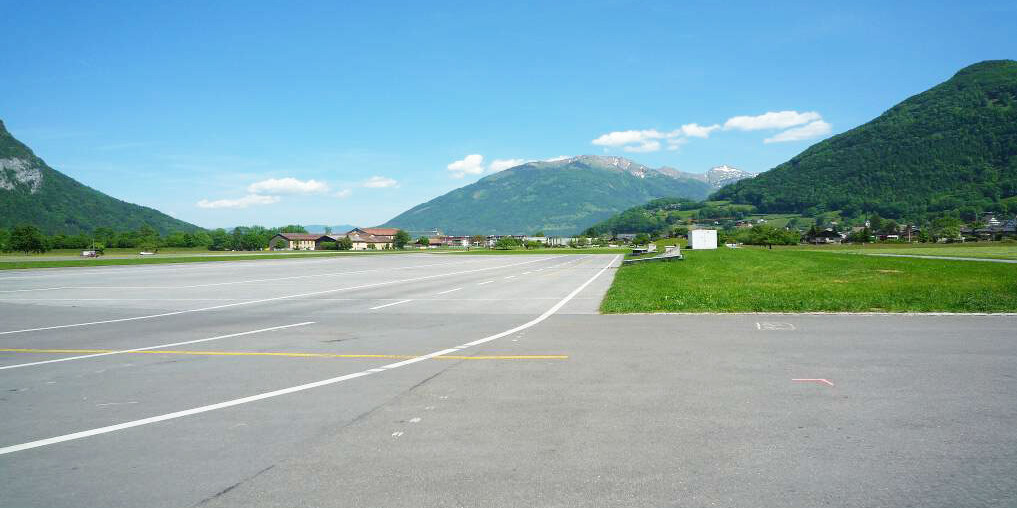
    Parcel no. 2487 at Mollis airfield is an undeveloped plot of land with an area of over 18,000 m². As part of the new utilisation planning, it was designated as work zone A. The Glarus North municipal council has commissioned a masterplan for this area, which is being drawn up by KCAP Architects and Planners in Zurich. The focus is on aviation-related businesses in particular, which should complement the existing ecosystem in a meaningful way.

    A site with a multifaceted identity
    Mollis airfield is much more than just an airfield. It is also a business location, home to innovative aviation companies, a meeting place for dedicated aviation clubs and an important local recreation area in the Glarus region. The six companies based there today, including Rega, Heli Linth and Kopter Group AG, provide over 150 jobs and stand for technological expertise in the field of aviation and rescue. This economic profile is complemented by the active use of the site by the Mollis motorised flight group, the Glarnerland gliding group and the model flying group.

    Past as a foundation for the future
    Mollis airfield can look back on over 100 years of history. Since the first landing in 1916, the site has repeatedly been the scene of significant developments – from Walter Mittelholzer’s pioneering flights to its use by the Swiss Air Force. Today, the site is used for civilian purposes and is committed to safe, balanced and economically viable operations. The history of the airfield creates an emotional bond and is an essential part of its identity.

    Sustainable development through a clear strategy
    The common goal of the municipality of Glarus Nord and Mollis Airport AG is to drive forward the development of the site while taking economic, ecological, agricultural and public interests into account. The masterplan takes into account both infrastructural requirements and potential for events, leisure use and security of supply. The well-connected location and the special combination of aviation, industry and recreational space make the Mollis site a promising development location in the canton of Glarus.

    A location with a signal effect for the region
    The Mollis Airfield Masterplan provides a strategic basis for attracting new companies, strengthening existing structures and harmonising usage interests in the long term. The close collaboration between the municipality, owners and MAAG is a prime example of co-operative regional development. Mollis airfield is not just a place for aviation, but a future-oriented location with charisma, diversity and responsibility – far beyond the canton.
  • Master plan for the Jenny site

    Master plan for the Jenny site

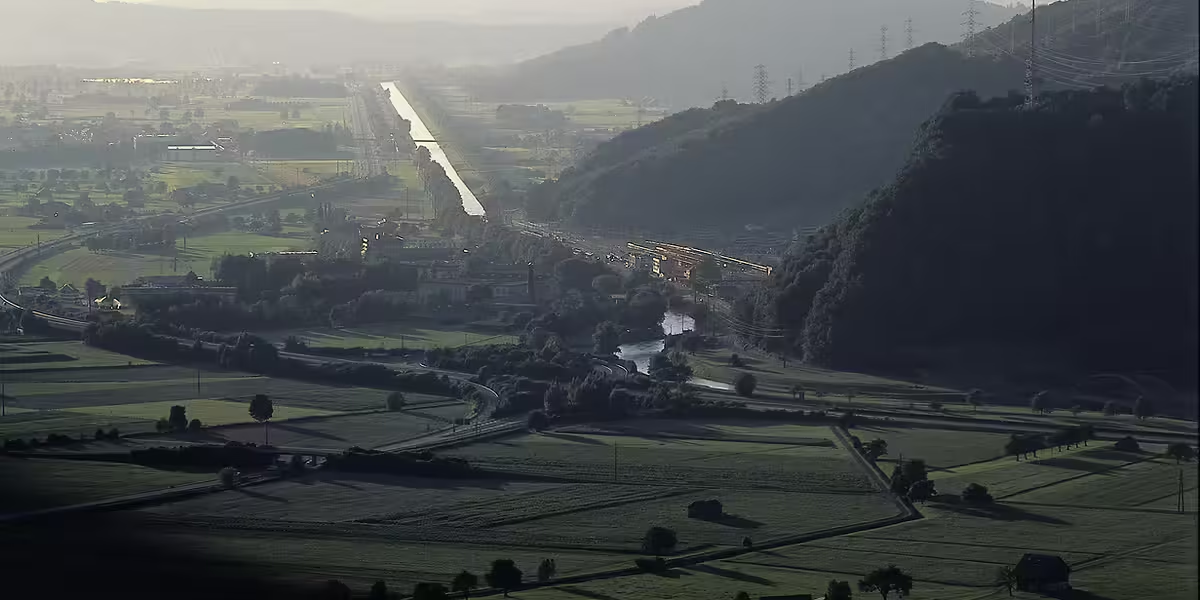
    The approximately 30-hectare Jenny site of Fritz Caspar Jenny AG is deeply rooted in the industrial history of the Glarus region. Where textile production has taken place since 1834, a multi-layered site with new prospects is being created today. The proximity to Ziegelbrücke railroad station, the size of the site and the existing infrastructure make the area a key location for economic and urban development in the canton.

    Planning with vision and participation
    A strategic master plan was developed as part of a multi-stage process, based on comprehensive test planning with four interdisciplinary teams. The resulting findings form the basis for a long-term development that is aligned with regional spatial planning, economic potential and social diversity. The winning design by Blättler Dafflon Architekten with Tony Fretton Architects and Studio Vulkan impressed with its strong combination of nature, building culture and open spaces.

    Diverse use as a location strategy
    The site already combines a variety of uses. From the Carlsberg Supply Company to creative work and residential forms such as Loft Z25 and the Glarus cantonal vocational school. The master plan builds on this diversity and expands it to include new educational, service and residential facilities. A hotel project is also being examined. The aim is to permanently establish and sustainably revitalize the Jenny site as a business, residential and educational location.

    Building culture as an identity-forming element
    Respectful treatment of the architectural heritage is central to the development. The site is part of the inventory of sites worthy of protection in Switzerland. Existing buildings of architectural and historical significance are to be preserved and integrated in a targeted manner. The listed riding stable, for example, is intended to enrich the new site concept as a defining element and contribute to the identity of the location.

    Focus on the legal framework
    The implementation of the master plan requires adapted land use planning. The project is currently awaiting the legal validity of land use planning II of the municipality of Glarus Nord. The first steps towards rezoning have been taken, but key legal requirements are still outstanding. Once this process has been completed, the development potential of the Jenny site can be fully exploited. A decisive step for the future of the site.

  • Commercial use and solar energy: development of the Papieri site is progressing

    Commercial use and solar energy: development of the Papieri site is progressing

    Property developer HIAG is expanding the transitional use of the Papieri site in Biberist. By the end of the year, around 6,000 square metres of space in the western section will be prepared for commercial use, as HIAG project developer Dominik Ulrich explained at an event organised by the Standort Schweiz network. Padelta AG is one of the users of the additional space. The company plans to operate eight modern courts there for the sport of padel, the Mexican version of tennis. The leisure facilities will be complemented by the Jump Factory trampoline park. Speed-E GmbH moved into the site in February with its workshop and showroom for electric bikes.

    In the industrial eastern part of the site, HIAG Solar AG, a joint venture between HIAG and aventron, installed a solar power system with a capacity of 620 kilowatt peak on the roof of a new building due for completion at the end of 2023 in mid-April. The electricity generated there will be used on site by the start-up Librec, which intends to recycle lithium-ion batteries here on an industrial scale. The second photovoltaic system on the site is already being planned.

    The approximately 270,000 square metre site on the River Aare was used as a paper mill from 1862 to 2011. HIAG took over the site in 2012 and the 2015 master plan envisages mixed use with a residential component in the western part of the site and commercial/industrial use in the eastern part. The property developer is currently working on the partial zoning plan, which covers the entire perimeter of the site. Temporary uses already occupy around 30 per cent of the site. The major users include Sieber Transport and Vigier.

  • The next step towards realising the vision of the Davos medical campus

    The next step towards realising the vision of the Davos medical campus

    The new research building “Research II” marks a step forward in the masterplan for the Davos medical campus designed by OOS. This plan aims to establish Davos as a centre of innovation with research activities, particularly in the fields of allergies, asthma and cardiology. Various structural measures have been undertaken to date, including the reorganisation of existing buildings and the introduction of a new therapy and catering wing.

    The Research II building creates additional space for various research activities and complements the existing campus building, which already serves as a training campus and research laboratory with offices. In addition, Research II offers space for external partners who benefit from the expertise and innovative atmosphere. Research II will thus be used by a large number of different institutions to pool their strengths with the aim of translational research.

    The project was developed taking into account the diverse requirements of various research projects such as CK-CARE, Cardio-Care and Davos BioSciences. The architecture and interior fittings were designed to be flexible and modular in order to facilitate future changes of use. Particular attention was paid to incorporating the needs of all users into the planning process, using a fixed budget as a guideline.

    The design is kept as flexible as possible to allow for a variety of uses. Although the building is currently designed for offices and laboratories, other uses can also be easily integrated. In addition, the interior design allows for flexible division into up to three separate areas.

    Aesthetically, “Research II” integrates seamlessly into the existing medical campus. One striking element is the cascading staircase that runs vertically through the building and encourages encounters between users. In addition, the use of shared labs and shared facilities encourages dialogue between different user groups and reduces investment costs. The BSL-2 laboratories are flexible and tailored to the needs of the users.

    Overall, “Research II” not only expands the capacities of the Davos Medical Campus, but also helps to realise the vision of the master plan step by step.