Tag: Materialien

  • Revolution in materials technology

    Revolution in materials technology

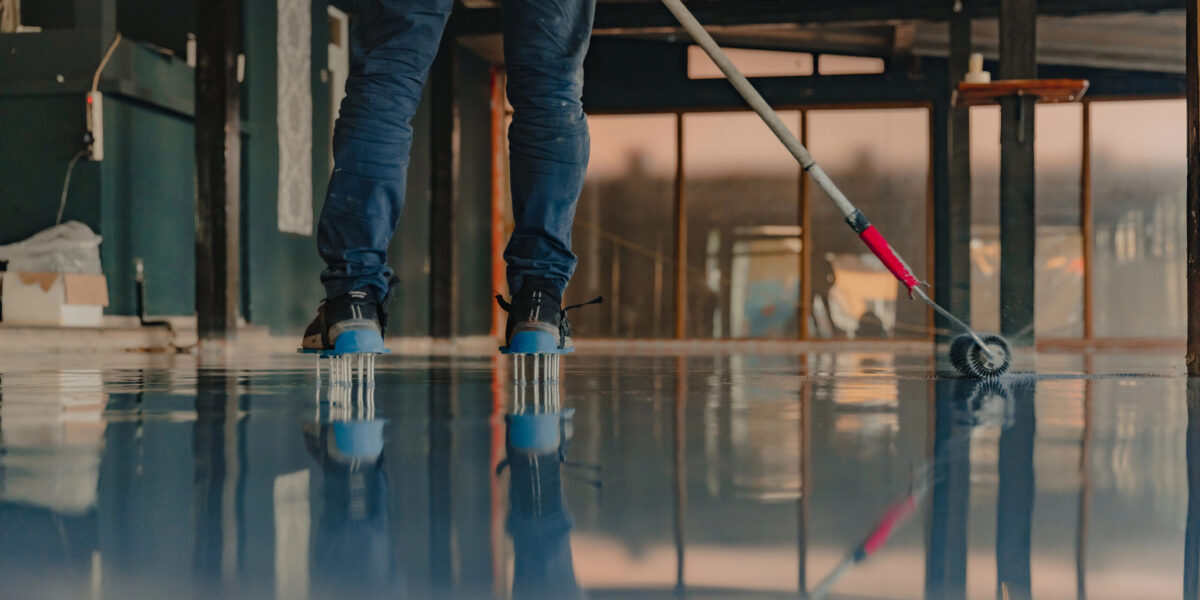
    Epoxy resins are indispensable for numerous industrial applications, from adhesives to coatings and composites. While conventional two-component epoxy resins require precise mixing and fast processing, one-component epoxy resins offer simplified handling and consistent quality.

    However, previous solutions had weaknesses. They could often only be stored at low temperatures and had insufficient flame-retardant properties. This limited their potential applications in safety-critical areas such as the construction, electronics and telecommunications industries.

    Breakthrough from Korea
    A research team from the Korea Institute of Science and Technology in collaboration with Sungkyunkwan University has overcome these hurdles. Under the leadership of Dr Jaewoo Kim and Professor Chongmin Koo, they developed the “Epoxy/MXene One-Component Solution”, a combination of epoxy resin, a new type of latent hardener and the two-dimensional nanomaterial MXene.

    This innovation enables a storage stability of over 180 days at 60 °C, a significant advance compared to previous products, which lose their properties within 40 days at room temperature of 25 °C.

    MXene as the key to stability and safety
    MXene, a state-of-the-art nanomaterial, not only improves the thermal and mechanical resistance, but also makes a decisive contribution to the flame retardancy (V0 class) and electrical conductivity of the new epoxy resin. This opens up a wide range of applications in the high-performance industry, particularly for electromagnetic shielding materials, industrial coatings and adhesives.

    Industrial applications and future potential
    The combination of extended durability, improved safety features and easy handling makes the new 1-component epoxy resin particularly attractive for industries with high demands on material stability and fire protection.

    Possible areas of application

    • Electronics: Protective coatings for components and printed circuit boards
    • Construction industry: flame-retardant adhesives for safety applications
    • Telecommunications: high-performance materials for antennas and shielding housings

    With this innovation, the South Korean research team could have a lasting impact on materials technology and set new standards for single-component epoxy resins.
  • AI accelerates perovskite solar cells for the mass market

    AI accelerates perovskite solar cells for the mass market

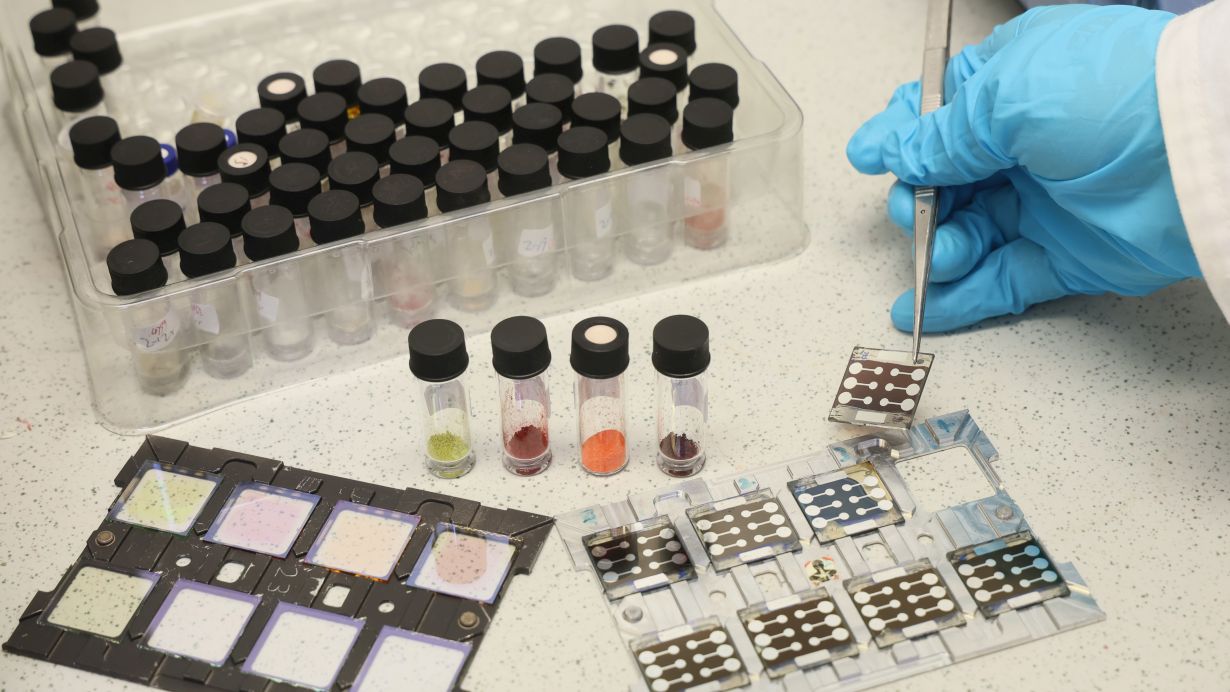
    Perovskite solar cells already achieve efficiencies of over 26% and are light, flexible and inexpensive to produce. They are considered a promising alternative to conventional silicon modules. However, challenges such as long-term stability and scalability still stand in the way of industrial utilisation.

    AI as the key to optimising production
    The Karlsruhe Institute of Technology (KIT) is researching how machine learning can improve the manufacturing process for perovskite cells. Deep learning models analyse material properties in real time and optimise the parameters for maximum efficiency.

    Detecting errors before they occur
    AI uses in-situ imaging techniques to monitor thin-film formation and detect errors at an early stage. This allows process deviations to be corrected immediately and expensive rejects to be avoided.

    Simulations for maximum efficiency
    AI-supported simulations allow production conditions to be precisely adapted. The control of the vacuum quenching time in particular plays a decisive role. AI optimises this process to ensure the best possible material structure.

    The path to market maturity
    The KIT study shows that AI is a key driver for the further development of perovskite photovoltaics. The technology could revolutionise the solar energy market and become industrially usable faster than ever with AI.

  • Opening of the “STEP2” NEST unit

    Opening of the “STEP2” NEST unit

    On 29 August 2024, the latest building module “STEP2” was officially opened in Empa’s NEST research and innovation building. This two-storey module in the south-east of NEST brings together a large number of innovations, all of which are aimed at significantly reducing material and energy consumption in the construction industry and promoting resource-saving construction methods.

    In Switzerland, the construction sector is responsible for the majority of raw material consumption, waste generation and a third of CO2 emissions. With the NEST building, Empa, together with over 150 partners, is pursuing the goal of developing new technologies and materials to the point where they are ready for the market. The “STEP2” unit is the latest example of how this vision is being turned into reality.

    From the digital staircase to the adaptive façade
    When you enter the “STEP2” unit, the innovative ribbed filigree ceiling immediately catches the eye. This was developed by an interdisciplinary team and enables spans of up to 14 metres, ideal for office and high-rise construction. Thanks to digital planning methods and 3D-printed formwork, it was possible to reduce the amount of material used by 40% without compromising on stability. The ceiling also fulfils important functions in terms of room acoustics and as a thermal storage mass.

    Another technological masterpiece is the curved “Cadenza” concrete staircase, which forms the centrepiece of the building. It was realised using computer-aided design and 3D printing technologies, which enabled an extremely material-efficient construction method. This staircase is an impressive example of how digital manufacturing technologies can contribute to innovative and sustainable design solutions in the construction industry.

    Holistic energy concept and innovative materials
    The “STEP2” unit is based on an integrated energy and comfort concept that was developed in collaboration with leading engineers. The innovative double skin façade, which is equipped with modern shading technology and controlled natural ventilation, plays a central role in the building’s energy efficiency. This façade also serves as a test platform so that new technologies can be easily integrated in the future.

    STEP2″ also focusses on innovation and sustainability when it comes to the materials used. For example, wall and floor panels were made from recycled waste materials such as denim fibres, paper cups and coffee grounds. These materials not only reduce the need for new raw materials, but also help to reduce greenhouse gas emissions.

    Co-creation and market readiness
    The “STEP2” unit was developed using a co-creation approach in which all partners involved worked closely together from the outset. This approach made it possible to develop marketable solutions that have a real future in the construction industry. For BASF, the main partner in the project, “STEP2” provides the ideal environment to translate its chemical expertise into concrete, sustainable construction solutions.

    “STEP2” is more than just a building module – it is a real innovation environment that demonstrates how research and industry can successfully work together to bring sustainable technologies to market. In future, the unit will serve as a workplace and innovation workshop to achieve further progress in sustainable construction.

  • Empa entwickelt recycelbaren Kunststoff für die Industrie

    Empa entwickelt recycelbaren Kunststoff für die Industrie

    Forschende der Eidgenössischen Materialprüfungs- und Forschungsanstalt (Empa) haben eine neue Art von Kunststoff entwickelt. Ihr Epoxidharz lässt sich sowohl reparieren als auch wiederverwerten. Das ist einer Medienmitteilung zufolge ein Novum. Bisher war die Wiederverwertung bei Epoxidharzen nicht möglich. Bei dieser Art von Kunststoffen sind die Polymerketten engmaschig miteinander vernetzt, was das Schmelzen verunmöglicht. „Haben sie einmal ausgedient, werden sie verbrannt oder in Deponien entsorgt”, erklärt Wenyu Wu Klingler vom Empa-Labor Advanced Fibers in St.Gallen.

    Epoxidharze haben allerdings ausgezeichnete mechanische und thermische Eigenschaften, wie die Empa in ihrer Mitteilung schreibt. Entsprechend werden sie vielseitig in der Industrie eingesetzt – etwa bei der Herstellung von Bauteilen für Flugzeuge, Autos, Züge, Schiffe und Windkraftanlagen.

    Mit dem besonderen Epoxidharz der Empa soll also unter anderem der Einsatz von faserverstärkten Kunststoffen in der Industrie nachhaltiger werden. „Die Herstellung von Kohlenstofffasern benötigt sehr viel Energie und setzt enorm viel CO2 frei”, erklärt Sabyasachi Gaan vom Empa-Labor Advanced Fibers. Wenn sie nach ihrer Nutzung in den Stoffkreislauf zurückgebracht werden können, könne der ökologische Fussabdruck verbessert und auch der Preis gesenkt werden, so Gaan.

    Faserverstärkte Kunststoffe, wie sie im Bau von Flugzeugen, Zügen, Booten, Autos und Velos eingesetzt werden, sind laut der Empa aber nicht die einzige Anwendung für den neuen Kunststoff. Er könnte beispielsweise zur Beschichtung von Holzböden eingesetzt werden –  als eine transparente, widerstandsfähige Schicht, die gute flammhemmende Eigenschaften aufweist.

  • Holcim acquires Minerales y Agregados in Guatemala

    Holcim acquires Minerales y Agregados in Guatemala

    Holcim expands its commitment in Central America. The building materials producer, headquartered in Zug, is establishing its first subsidiary in Guatemala with the purchase of Minerales y Agregados. According to a media release, the acquired company is based in Sanarate and specialises in the production and supply of mortar and other solutions for construction and agriculture. Minerales y Agregados was founded in 2014 by the Coronado family.

    “With Minerales y Agregados, we continue to expand our geographic presence while broadening our range of modern construction solutions. The construction sector in Guatemala is highly specialised and demands world-class solutions,” Oliver Osswald, Head of Latin America Region at Holcim, is quoted as saying. “Minerales y Agregados is a perfect fit to help us meet these requirements,” Osswald added.

    Holcim’s production facility in Guatemala will add a new line of business to its “Solutions & Products” offering in the region, the statement said. Holcim expects synergies from the expansion of the Minerales y Agregados offering through supply from its plants in Metapán in El Salvador, as well as from the expansion of the range of advanced mortars and adhesives from the Disensa supply chain, which is part of the Holcim Group. This includes more than 1,000 retail outlets across Latin America.

    With this acquisition, Holcim is advancing its “Strategy 2025 – Accelerating Green Growth”, the company statement said. This strategy aims to expand the Solutions & Products business to 30 percent of Group net sales by 2025.

  • BAU celebrates a successful comeback

    BAU celebrates a successful comeback

    “BAU has once again proven that it is and remains the most important stage for innovations and premieres in the building sector. Despite the four-year forced break, more companies presented themselves in Munich than ever before. This underpins the very positive response to trade fairs and, in particular, to leading world trade fairs, as was already evident in 2022,” say the two heads of the trade fair Reinhard Pfeiffer and Stefan Rummel, summing up BAU 2023.

    Dieter Schäfer, Chairman of the BAU Exhibitors’ Advisory Council, agrees that BAU 2023 was a great success: “We did everything right by moving BAU 2023 to April. Fully occupied halls and a high proportion of international visitors underline the relevance of BAU. It was all the more important that the fair took place again after more than four years. In future, BAU will return to its usual January date.”

    In addition to the Federal Minister of Construction, Klara Geywitz, Bavaria’s Minister of Economic Affairs, Hubert Aiwanger, also took a look at the innovations and trends in the building industry at BAU: “The largest construction and architects’ trade fair is a successful networking platform for planners and building tradesmen. We need the very innovations presented there on how to reconcile climate protection and the challenges such as affordable building and housing. The fair stands for progress, growth and competitiveness and sets the course for the future in building and urban planning.”

    For Felix Pakleppa, General Manager of the Central Association of the German Building Trade (Zentralverband des Deutschen Baugewerbes), BAU sends a trend-setting signal to the building industry after the long forced break: “With the key themes of digital transformation, the future of living, resources and recycling, as well as modular building, the biggest challenges and trends of the moment have been perfectly mapped out. This year, BAU thus once again offers a great platform for creating future perspectives.”

    Katharina Metzger, President of the Federal Association of the German Building Materials Trade, also considers the return after more than four years a success: “We are more than satisfied with BAU 2023, because such an important sector cannot afford to be without a trade fair platform for six years. Even if important manufacturers for our specialist dealers with their craftsmen were unfortunately not on board this time, we hope that we can count on the old presence of suppliers again in January in 2025.”

    Andrea Gebhard, President of the Federal Chamber of Architects, emphasised the important significance of personal exchange: “BAU 2023 reflects the current issues of the building industry. It is the ideal meeting place for architects and planners to discuss both innovative materials of the future and social issues such as affordable housing.”

    BAU project manager Matthias Strauss is already looking forward to the upcoming events in the BAU Network: “After the successful BAU, the entire team is already very much looking forward to the digitalBAU conference & networking premiere next July as well as the next digitalBAU in February 2024.”

    Internationality of visitors reaches record level
    At the top of the international visitor ranking of BAU are Austria, Italy and Switzerland. Thanks to strong growth, Poland and Turkey take fourth and fifth place. Overall, the international share is almost 80,000 visitors. This corresponds to 40 percent of the total number of visitors and marks a record figure. In percentage terms, the international share is thus still a good deal higher than the previous record result from 2019 (37 per cent).

    The number of Chinese visitors is particularly noteworthy. With 1,600 people, China is one of the top 10 visitor countries at BAU 2023, a positive surprise after the Corona restrictions on travel from China to foreign countries were only recently relaxed.

  • Catalog recommends materials against urban heat islands

    Catalog recommends materials against urban heat islands

    The federal government has presented a reference work for new buildings and buildings to be renovated that shows the effect of building materials on the heat in urban and densely populated areas. It was created by the University of Applied Sciences Northwestern Switzerland on behalf of the Federal Office for Housing ( BWO ).

    According to a media release by the BWO, the catalog compares materials for outdoor use such as floor coverings and facades and explains their effect on the outside temperature. It also takes into account other properties of the materials, such as how they reflect sunlight or how much water floor coverings allow to seep away.

    The BWO calls on planners, developers and house owners to consult this material catalog when choosing suitable materials. In addition, the Office invites the scientific community to further develop and research the topic. Because according to the latest climate scenarios, the average temperatures in Switzerland will be 2.5 to 4.5 degrees higher by 2060 than in the period from 1981 to 2010. This means that the buildings that are being built or renovated today will be the microclimate of tomorrow shape.

  • Look to the future of construction technology

    Look to the future of construction technology

    It is a long way from the idea to marketable innovation – especially in the construction industry. There is a gap between technologies that work in the laboratory and the market that demands well-engineered and reliable products. The modular research and innovation building NEST of the Swiss research institutes Empa and Eawag aims to close this gap.

    The NEST (Next Evolution in Sustainable Building Technologies) was opened in 2016 and is located on the Empa campus in Dübendorf. The building consists of a building core with three cantilevered platforms. Temporary, thematically different building modules, so-called units, can be installed on it. In this way, research teams, architectural offices and companies from the construction industry can test and develop materials, technologies, products, energy concepts and usage concepts together at NEST. In the sense of a “living lab”, the installed units are actually used living and working environments.
    The “HiLo” unit is currently under construction on the top platform of NEST. Construction started in summer 2019. The unit is intended to demonstrate the possibilities in lightweight construction. In addition to an innovative roof construction, material-saving lightweight floors and an adaptive solar facade are used. During operation, the building technology is to be continuously optimized with the help of machine learning. The unit will officially open on October 6, 2021.

    The two-story “STEP2” unit is also being planned. Business and research partners implement them together in an open innovation approach. After its completion, which is planned for summer 2022, it will serve as an interdisciplinary innovation workshop and office environment. The unit’s central projects include a spiral staircase in the shape of a human spine, a building envelope that adapts to the external conditions, and a floor ceiling made with 3D printing.