Tag: Mieter

  • More transparency, more clarity in tenancy law

    More transparency, more clarity in tenancy law

    With the amendment to the ordinance, which comes into force on 1 October 2025, the Federal Council is responding to ongoing criticism of the lack of transparency in the determination of the initial rent. The most recent values of the reference interest rate and the national consumer price index must now be shown on the form for new lettings in cantons where forms are mandatory.

    The aim is to make it easier for tenants to recognise whether a rent is justified or contestable. This not only increases confidence in the rental housing market, but also makes it easier for investors and institutional landlords to plan ahead.

    Urban centres are particularly affected
    The change affects cantons with mandatory forms such as Zurich, Geneva, Basel, Lucerne and Zug. These are regions in which the majority of new tenancies are concluded. There, the official and private forms must be adapted and approved by 1 October 2025 at the latest. Failure to do so could result in the tenancy agreement being classed as invalid with regard to the initial rent. This is a legal risk that professional property owners should not ignore.

    At the same time, the Federal Council is easing the administrative burden for graduated rents. A simple written notification of the rent increase is now sufficient; an official form is no longer required.

    Foundation for a future-proof rent model
    The existing calculation model for rent adjustments, which dates back to the 1980s, is to be fundamentally revised. This is a political response to studies that judge the current model to be outdated. In future, the focus will be on realistic cost assumptions for capital, maintenance and administration, another development that is particularly important for institutional investors and project developers.
  • A success story of balcony power plants in Germany

    A success story of balcony power plants in Germany

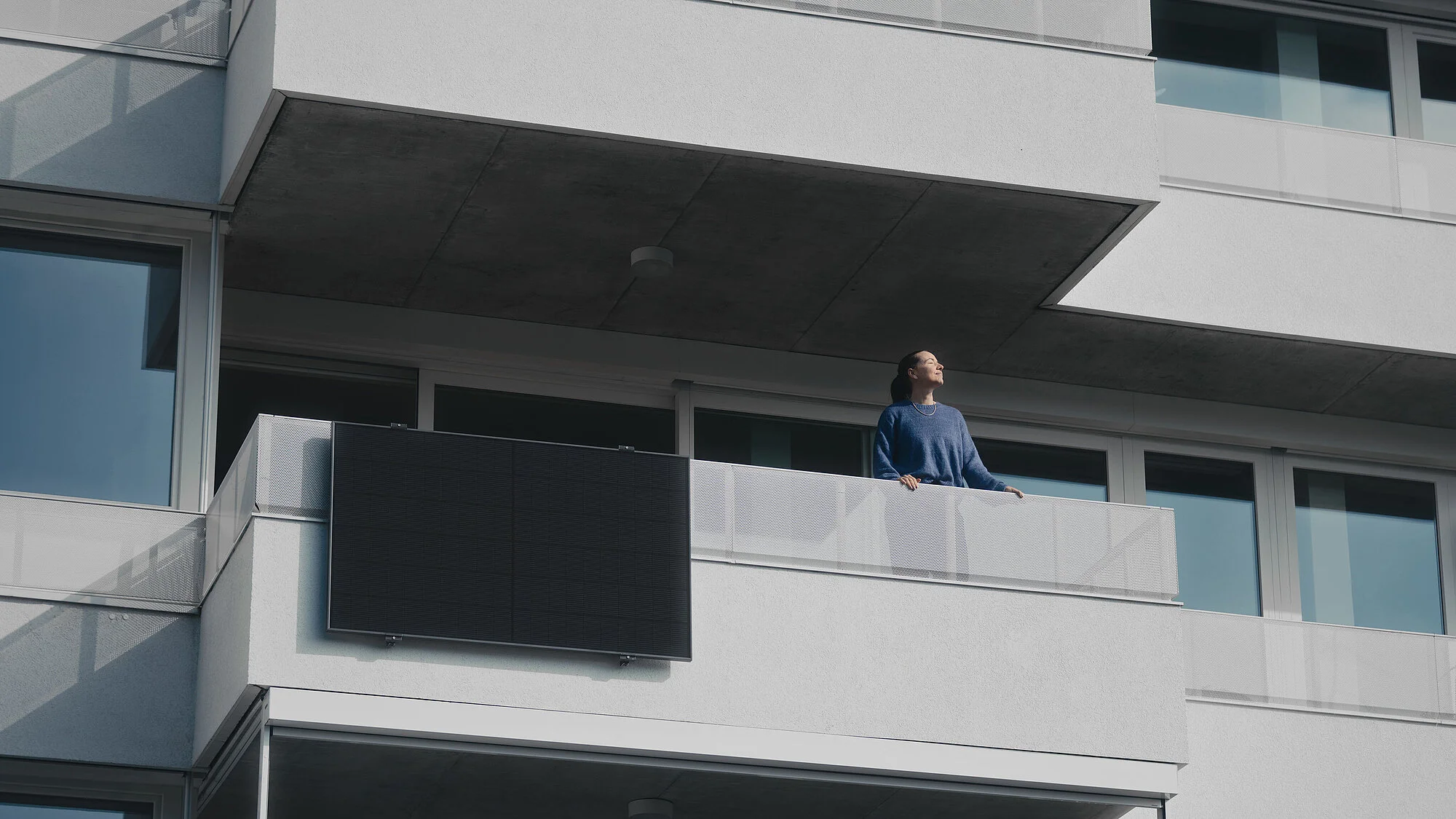
    In 2024, Germany experienced an impressive doubling of balcony power plants. According to the Federal Network Agency, over 780,000 systems are now registered, with a combined output of almost 0.7 gigawatts. The record figures from the previous year of over 430,000 new devices could rise even further due to late registrations. According to forecasts, the millionth balcony power plant could be installed as early as the first half of 2025.

    Legislation and technology are fuelling development
    The boom is being significantly supported by improved legislation. Since autumn 2023, landlords and flat owners have been obliged to approve the installation of balcony power plants. At the same time, falling prices and a larger selection of high-performance models have made it much easier to access your own solar energy. This makes it attractive for more and more people to make their own contribution to the energy transition.

    Stability despite political uncertainties
    Even a possible change of government after the general election is unlikely to halt the trend. According to Carsten Körnig, Managing Director of the German Solar Industry Association, there is a cross-party consensus to further improve the framework conditions for balcony power plants. Reducing bureaucracy and lowering costs remain key objectives in order to enable tenants and homeowners to play an active role in the energy transition.

    Germany as an international role model
    With over 780,000 systems, Germany is the leading market for balcony power plants. The German model is attracting international attention, as regulatory and technical standards here promote safe use. This success story could serve as inspiration for other countries to create their own framework conditions for the energy transition.

    Regional differences in expansion
    A look at the federal states reveals major differences in distribution. North Rhine-Westphalia leads the way with 157,000 installations, followed by Bavaria with 119,000, while Lower Saxony and Baden-Württemberg each have around 103,000 balcony power plants. At the lower end of the scale are the city states of Bremen and Hamburg as well as Saarland, each with fewer than 10,000 systems.

  • New home for senior citizens Greencity 2026

    New home for senior citizens Greencity 2026

    A visionary residential project is being built in the south of Zurich that offers older people a lively and safe environment. The development on construction site B6 in Greencity combines private and municipal involvement. Losinger Marazzi AG is developing the project for the investment foundations of Pensimo Management AG, which are providing a total of 179 flats for older people. Of these, the City of Zurich Retirement Homes Foundation (SAW) will take over 60 flats, while the remaining 119 flats will be let by Pensimo to tenants aged 55 and over. This collaboration represents a new partnership and gives all tenants access to SAW’s services.

    A green centrepiece for Greencity
    Construction site B6 is the latest chapter in the sustainable development of the Greencity district. Since 2014, Losinger Marazzi has been transforming the site of the former Sihl paper factory into Switzerland’s first 2000-watt site. The inner courtyard of the new building will feature green areas, trees and seating, inviting people to linger. Arcades on the ground floor create sheltered access areas to commercial spaces, which could offer facilities such as a medical centre, a fitness studio, a bakery or a café on 3,500 square metres, says René Büchi, the portfolio manager responsible at Pensimo.

    Comprehensive services from SAW
    The City of Zurich Retirement Homes Foundation provides all tenants with a comprehensive service package. This includes a 24-hour emergency call service, extended caretaking, laundry service, social services and various events on the estate. If required, tenants can also take advantage of home help and outpatient care services. Andrea Martin-Fischer, Director of SAW, emphasises: “Our aim is to enable tenants to live independently and safely well into old age.”

    Focus on sustainability
    Greencity’s sustainability goals are consistently applied to the new retirement housing project. Herbert Heinen, Project Manager at Losinger Marazzi, explains: “An optimised load-bearing structure, lightweight walls, a wooden façade and an energy concept with 100 percent renewable energy significantly reduce CO2 emissions and bring the building close to the net-zero target in operation.” Pensimo and Losinger Marazzi are also aiming for certification with the SNBS Gold label. Construction started in March 2024 and the building, designed by JSWD Architekten from Cologne, is scheduled for completion at the end of 2026.

    With this pioneering project, Greencity is setting new standards for sustainable, age-appropriate living and demonstrating how private and public partnerships can create forward-looking solutions.

  • Mortgage reference interest rate stable at 1.75 per cent

    Mortgage reference interest rate stable at 1.75 per cent

    The mortgage reference interest rate, which is decisive for setting rents throughout Switzerland, will remain at 1.75 per cent. This was announced on 3 June 2024 and is based on the volume-weighted average interest rate for domestic mortgage receivables, which stood at 1.72% on 31 March 2024. This average interest rate has not changed since the last quarter, meaning that the reference interest rate relevant under tenancy law remains at 1.75 per cent, rounded to the nearest thousandth of a percentage point. This stability will be maintained until there is a significant change in the average interest rate of below 1.63 per cent or above 1.87 per cent.

    Significance for rent claims
    The reference interest rate of 1.75 percent has remained unchanged since 2 December 2023. Tenancy agreements based on a higher reference interest rate of 2.00 per cent or more are still entitled to a rent reduction. Conversely, landlords are entitled to a rent increase if the underlying reference interest rate is 1.50 per cent or lower, in accordance with the provisions of tenancy law, which stipulate an increase of 3 per cent per quarter of a percentage point.

    Exceptions and additional influencing factors
    There are exceptions for certain rental agreements such as indexed or graduated rents and turnover rents for commercial premises. Subsidised flats are also often subject to special regulations. In addition, other cost factors such as the change in the national consumer price index and maintenance and operating costs can influence the rent structure. Inflation can account for 40 per cent of the rent calculation, which can lead to adjustments.

    Regular publication and legal basis
    The mortgage reference interest rate and the underlying average interest rate are published quarterly by the Federal Office for Housing (BWO), with the next publication on 2 September 2024. Since 10 September 2008, the uniform reference interest rate has served as the basis for setting rents in Switzerland, in accordance with Article 12a of the Ordinance on the Rent and Lease of Residential and Commercial Premises (VMWG). This regulation replaced the interest rates for variable mortgages previously applicable in the individual cantons and ensures a standardised and transparent rent calculation throughout the country.

  • Crowdlending für mehr Wohnraum in Zürich

    Crowdlending für mehr Wohnraum in Zürich

    Mit dem Ziel, die Wohnungsknappheit in Zürich zu bekämpfen, hat Foxstone kürzlich ein neues Crowdlending-Angebot vorgestellt. Das Projekt, mit einer Laufzeit von 24 Monaten, wird die Entwicklung von über 90 neuen Studios im Zentrum von Zürich unterstützen. Diese Initiative soll bis zu hundert Mietern hochwertigen Wohnraum bieten und stellt eine direkte Reaktion auf die niedrige Leerstandsquote in der Region dar.

    Das Unternehmen, das bereits eine Community von über 21.000 Mitgliedern versammelt, bietet Investitionsmöglichkeiten ab CHF 10.000 an. Die Plattform, ursprünglich in der Westschweiz etabliert, hat ihre Aktivitäten in der Deutschschweiz ausgebaut und im Jahr 2023 60% ihrer Crowdlending-Projekte in diesem Teil des Landes abgeschlossen.

    Das aktuelle Crowdlending-Angebot umfasst ein Gesamtvolumen von CHF 7,9 Millionen und verspricht eine jährliche Rendite von 6%. Die Mittel aus diesem Angebot werden für den Umbau eines Bürogebäudes in Seefeld in 29 Studios und den Neubau eines Gebäudes mit 62 Studios in Oerlikon verwendet. Beide Projekte, für die Baugenehmigungen vorliegen, sollen Anfang 2024 starten.

    Die Projekte, geführt von einem erfahrenen Immobilienentwickler mit über 30 Jahren Erfahrung, werden nicht nur dringend benötigten Wohnraum schaffen, sondern auch attraktive Mietobjekte an erstklassigen Standorten bieten.

    Dan Amar, CEO, hebt die Doppelrolle des Projekts hervor, indem es sowohl wertvollen Wohnraum schafft als auch stabile, attraktive Renditen für die Investorengemeinschaft generiert. Der Beginn der Bauarbeiten markiert einen entscheidenden Schritt zur Verbesserung der Wohnsituation in einer der am stärksten von Wohnungsmangel betroffenen Regionen der Schweiz.

  • Innovation Park Innovaare is ready for occupancy

    Innovation Park Innovaare is ready for occupancy

    The overall contractor ERNE AG handed over the buildings of the Switzerland Innovation Park Innovaare to the investor CPV/CAP Pensionskasse Coop and the operating company innovAARE AG on 20 December. Completion of the innovation park has therefore been completed on budget and on schedule, innovAARE AG announced in a press release. “The lighthouse project Park Innovaare is a joint project and confirms the commitment of all partners involved in the canton of Aargau to invest in the innovative strength and competitiveness of our companies,” Christian Brönnimann, Chairman of the Board of Directors of innovAARE AG, is quoted as saying in his speech at the opening.

    In his speech, Daniel Erne, Chairman of the Board of Directors of ERNE AG, explained that the realisation of cleanrooms and laboratories had brought with it practically every conceivable challenge. Danilo Zampieri from the CPV/CAP Coop pension fund drew attention to the building’s façade made of wood and solar panels.

    The first tenants temporarily housed at the neighbouring Paul Scherrer Institute(PSI) and other companies are due to move into the Innovation Park buildings as early as January 2024. The PSI will occupy around two thirds of the space. The remaining space will be allocated to companies specialising in photonics and quantum technology, life sciences, advanced manufacturing and semiconductor technology as well as energy and the environment. With an occupancy rate of 85 per cent already achieved, the innovation park is “making very good progress”, explains Brönnimann.

  • National Council against nationwide introduction of mandatory rental forms

    National Council against nationwide introduction of mandatory rental forms

    On Tuesday, the Grand Chamber rejected the initiative by former National Councillor Natalie Imboden (Greens/BE) – by 116 votes to 71 with 4 abstentions. A bourgeois majority from the SVP, FDP and Centre Party prevailed. The parliamentary initiative is now dead.

    Michael Töngi (Greens/LU) argued unsuccessfully that the rental form requirement would improve transparency in the rental sector. Today, prices are often increased when tenants change – resulting in a “far too high return”. By systematically disclosing the amount of the previous tenant’s or landlord’s rent, tenants would be able to defend themselves more easily against abusive rents.

    Philipp Matthias Bregy (centre/VS) stated on behalf of the majority of the committee that the cantons are already free to introduce a form for the initial rent of the previous tenant for their canton. Regulating the question of forms at federal level would contradict the idea of federalism.

    “All in all, the proposal creates more bureaucracy,” says Bregy. Tenants already have legal instruments at their disposal to contest the initial rent. He also pointed out that even in the cantons with mandatory forms, there had been no fall in rents or increased transparency.

  • Capital raising of the “Vertina Wohnen” investment group

    Capital raising of the “Vertina Wohnen” investment group

    The foundation, which was established in March 2022, was able to notarise 6 properties within a year. The portfolio, which focuses primarily on new buildings, has a market value of around CHF 60 million as of 31 December 2023. After completion of the projects, the market value will be around CHF 117 million. The new capital will be used for the focused expansion of the portfolio. Two real estate projects with an investment volume of CHF 70 million were secured for this purpose.

    With its strategy, the Vertina Investment Foundation reconciles the requirements of investors and the needs of tenants. It has the knowledge and experience to combine high-yield real estate with responsibility for the environment. With its focus on future-oriented residential buildings in well-developed locations, the foundation aims for maximum sustainability.

    Details on capital raising

    Target volumeCHF 50 million
    Subscription volumeMinimum CHF 0.5 million
    Issuing premium1.0% (in favour of assets) Relevant NAV as of payment date
    Security number / ISIN116 503 599 / CHE116 503 599 4
    Allocation processSubscriptions up to CHF 20 million will receive a full allotment. The remaining subscriptions may be reduced proportionally in case of oversubscription.
    Subscription periodStart: 20 March 2023, End: 26 May 2023


    Existing and new investors who are permitted to invest in tax-exempt foundations in accordance with Swiss legislation and the Articles of Association of Vertina Investment Foundation may participate in the capital raising.

    Detailed information on the investment foundation and the “Vertina Wohnen” investment group can be found at: www.vertina.ch

  • 5. Global Real Estate Run- act locally, act globally

    5. Global Real Estate Run- act locally, act globally

    On 30 and 31 March 2023, the 5th Global Real Estate Run will take place, an event dedicated to promoting innovation, sustainability and energy efficiency in the real estate and construction industry. Participants can jog or walk a freely selectable distance of 6 km within a 48-hour time window. The organiser will plant a tree for every kilometre completed.

    The event format is ideal as a fun team event and is aimed at tenants, owners and real estate professionals who want to get moving for a more generation-friendly real estate and construction industry.

    “We believe that every individual has a contribution to make towards a more generationally friendly future. The Global Real Estate Run is an opportunity for the real estate and construction industry to come together and make a mark together,” says Mario Facchinetti, initiator of the event.

    The participation fee for individuals is free, for teams it is CHF 37 per person. In return, the team receives a tree planting certificate for each tree that is walked in the team. The event now has over 4000 participants from around 57 countries and is supported by various companies that are committed to a more sustainable real estate and construction industry.

    The event is an example of how tenants, owners and real estate professionals can play a part in reducing environmental impact and creating a more generation-friendly future.

    Interested parties can register now at www.globalrealestaterun.com and look forward to a sporty and fun activity.

  • Swiss Prime Site lays the foundation stone for the JED site

    Swiss Prime Site lays the foundation stone for the JED site

    The JED (Join.Explore.Dare) in Schlieren will receive a “sustainable keystone”, as stated in a press release from Swiss Prime Site . On September 22, the real estate company from Zug laid the foundation stone for a new building with office and laboratory space, which should be ready for the first tenants to move into from mid-2024. In addition to representatives from Swiss Prime Site and other project participants, Stefano Kunz, Head of the Construction and Planning Department of the City of Schlieren , also took part in the ceremony.

    JED is the site of the former NZZ printing works. Swiss Prime Site has already converted existing buildings there and thus “turned the area into a think and work tank for business, industry and trade”, as CIO Urs Baumann said on the occasion of the laying of the foundation stone. The existing buildings are used by the anchor tenants Halter and Zühlke . The new building will now add office and laboratory space to the area on five floors with a rentable area of 14,000 square meters. Anchor tenants could also be won with Superlab Suisse and FlexOffice .

    The new building will be built according to the principles of the circular economy, and certification according to SNBS Gold (Swiss Sustainable Building Standard) is being sought. “Swiss Prime Site has successfully managed to give the former self-contained NZZ area new life and flair through new paths and the open and spacious architecture,” City Councilor Stefano Kunz is quoted as saying.

  • A year to forget? Not for homeowners and tenants!

    A year to forget? Not for homeowners and tenants!

    2021 is unlikely to be remembered as a bright year – the never-ending pandemic sends its regards. However, a reliable source of positive news has been the real estate market. Owners of condominiums were able to post an increase in value of 7.3 percent over the course of the year, while the increase in single-family houses was almost as high at 6.9 percent. This is shown by the evaluation of sales advertisements as part of the Swiss Real Estate Offer Index, which is collected by the Swiss Marketplace Group in cooperation with the real estate consultancy IAZI.

    The reason for the significant increases in value is probably not solely due to the changes in living requirements due to the pandemic. The economy is also developing solidly, immigration is continuing and the supply of land is becoming increasingly scarce. At the same time, consumer prices have risen sharply, which further increases the attractiveness of tangible assets such as home ownership as protection against inflation.

    No bad news for tenants either
    2021 also meant it with tenants: inside not bad. Anyone looking for a new apartment was able to benefit from a minimal decline in asking rents of 0.3 percent over the year on average. The fact that the rent trend tipped into the red is thanks to a veritable year-end spurt: In December, a nationwide drop of 0.9 percent was registered.

    What will 2022 bring for the Swiss real estate market? “Under the current conditions, the new year should also come up with rising property prices. Whether the trend turns around is largely up to the monetary authorities: The American central bank (Fed) has announced that it will raise the key interest rate faster than planned. If the European (ECB) and Swiss monetary authorities (SNB) join in, prices would also fall in this country, ”says Martin Waeber, Managing Director Real Estate, Swiss Marketplace Group.

  • Tenant platform shows data on electricity consumption

    Tenant platform shows data on electricity consumption

    The Basel company Allthings offers a digital platform for tenants, via which they can communicate with property management and roommates, for example. Allthings is now teaming up with the Bern-based company Blockstrom , according to a press release . A solution from Blockstrom for measuring energy consumption in real time will be integrated into the Allthings platform. This means that tenants can also use the platform to track their electricity consumption.

    "The interface between the two systems enables an overview of the consumption data in real time," explains David Gundlach, Product Manager at Allthings. “The cooperation with Blockstrom not only creates added value for the tenants, but also allows us to make a contribution to the very relevant topic of sustainability,” he adds.

    The joint solution of the two companies is initially being tested as part of a pilot project on the Schöngrün residential area in the canton of Solothurn. There, AXA has converted a former penal institution into a housing estate. The new building with 160 apartments places a high value on sustainability. District heating from the waste incineration plant is used for heating. A solar system on the roof also provides 200,000 kilowatt hours of electricity per year. The apartments and shops on the site are supplied with solar power as part of an association for self-consumption (ZEV).