Tag: Mietmarkt

  • New study emphasises the importance of new replacement construction for relieving housing pressure

    New study emphasises the importance of new replacement construction for relieving housing pressure

    “Unloved but necessary replacement new builds” is the title of Raiffeisen Switzerland ‘s study “Real Estate Switzerland – 2Q 2025“. According to the study, replacement new builds create an average of four new flats for every demolished flat. “Despite criticism, there is often no alternative to replacement construction in order to combat the housing shortage without further urban sprawl, as gentler forms of densification, such as conversions and extensions, are not sufficient to maximise the use of scarce building land,” Raiffeisen Switzerland’s Chief Economist Fredy Hasenmaile is quoted as saying in a press release issued by the banking group on the study. He recommends paying “greater attention to social and ecological compatibility” in order to maintain social acceptance of new replacement construction.

    According to the authors of the study, the situation on the rental housing market remains characterised by excess demand. Falling interest rates could boost construction activity, according to the press release. “However, it is questionable whether the high construction levels of the past can be achieved again even under negative interest rates, as regulatory hurdles and the very limited availability of building land continue to dampen the potential,” says Hasenmaile.

    The study identifies an increase in demand on the owner-occupied property market as a result of falling interest rates. The banking group’s experts have also observed a rising demand for office space. This is due to employment growth and an increased office presence. “After several years of rather mixed prospects, the outlook for office properties has recently brightened noticeably,” says Hasenmaile.
  • Real estate monitoring 2025

    Real estate monitoring 2025

    The residential construction balance will be lower than expected in 2025. Replacement new builds and extensions are increasingly replacing traditional new builds on greenfield sites. Although the number of building permits rose in 2024, net additions due to demolition projects will remain limited. The canton of Zurich is particularly affected, where only 73% of new construction projects actually lead to more living space.

    At the same time, the supply rate for rental flats has fallen to a historic low of 3.7 %. Demand clearly exceeds supply in almost all regions.

    Price increases due to boom in demand
    The reduction in interest rates and the rising net wealth of households are stimulating demand for residential property, particularly in the upper price segment. Transaction prices are continuing to rise. The momentum is particularly pronounced in Central Switzerland. An increase of 3.6 % for condominiums and 3.8 % for single-family homes is forecast for 2025. Rents on offer will also rise, albeit at a more moderate rate ( 1.7 %), while existing rents are likely to fall slightly due to the lower reference interest rate.

    Office space market stable with regional impetus
    Developments in the office segment are more subdued. Following moderate employment growth of 1.1 % in 2024, demand for space is expected to slow slightly in 2025. Although construction activity rose by 51.5 % in nominal terms, this was due to a small number of major projects. Growth across the board is significantly lower.

    Asking rents rose by an average of 2.4 %, in major centres by as much as 4.4 %. In Zurich and Geneva, prime rents fell slightly, while Bern saw an increase of 5.3 %.

    Building construction Trend reversal and renovation as the key
    After six years of decline, a new phase of growth in building construction will begin in 2024, with an expected increase of just under 5 % in 2025. The renovation sector in particular is becoming a growth driver ( 7.2 %), driven by the shortage of building land, the energy transition, tax incentives and the high need for renovation.

    Investment in apartment blocks is rising significantly, while traditional single-family house construction continues to decline. Investment activity is increasingly focussing on inner-city densification, renovation of existing buildings and energy-efficient refurbishments.

    Intermediate spurt with uncertainties
    The economic environment remains volatile. The Swiss economy is expected to grow by 1.3 % in 2025, driven by consumption and construction investment. Global trade continues to suffer from geopolitical tensions and customs conflicts, which is weighing on the export industry with the exception of the pharmaceutical sector.

    Inflation remains low ( 0.3 %), the key interest rate cut to 0.25 % is supporting the economy, but could exacerbate deflationary tendencies. At the same time, the labour market is cooling. Population and household growth is slowing, which could have an impact on demand for housing in the medium term.

  • Basel property market under pressure

    Basel property market under pressure

    Despite moderate price trends compared to the rest of German-speaking Switzerland, residential property in the Basel region remains in demand. Prices are rising significantly in rural communities in particular, which is increasingly prompting potential buyers to extend their search radius. According to Marco Pirelli from Basellandschaftliche Kantonalbank, the fall in mortgage interest rates over the past two years has also fuelled demand. However, this has been accompanied by growing affordability problems. While prices for detached houses have remained stable, condominiums have risen slightly. The result is a 35 per cent increase in mortgage enquiries within one year.

    Examine financial options at an early stage
    Pirelli advises prospective buyers to consider financing at an early stage. “The choice of mortgage products and terms varies from person to person. Clarifying the financial scope with the bank in good time creates planning security.” For many people today, this is crucial in order to be successful in the tense market environment.

    Despite housing protection, prices are rising
    The rental market in Basel is also showing signs of continuing inflation. Fabian Halmer from Holinger Moll Immobilien AG points to structural causes such as an outdated building stock with a high need for renovation. Despite housing protection, rents are continuing to rise, particularly in Basel-Stadt, where 84 per cent of the population live in rented accommodation. Although the situation is not as tense as in Zurich or Geneva, the low vacancy rate of 0.7 per cent signals an acute housing shortage.

    Bottleneck due to too few building applications
    The number of building applications submitted in the canton of Basel-Stadt is particularly alarming. While an average of 784 building applications were recorded each year from 2014 to 2020, the figure fell to just 190 between 2021 and 2023. Halmer believes the new Housing Promotion Act is one of the causes. It protects existing tenants, but hinders new construction projects and makes it more difficult to move in or relocate. The resulting supply bottleneck is likely to lead to further increases in rents.

    Need for reform in legislation and planning
    The experts agree that without targeted adjustments to the Housing Promotion Act and accelerated authorisation procedures, the housing market in Basel is at risk of coming under further pressure. Development sites such as Klybeckplus or Dreispitz Nord could provide relief. Provided they are pursued consistently. A sustainable housing policy must not only focus on protecting existing properties, but also actively consider future growth.

  • Housing situation of older people in Switzerland

    Housing situation of older people in Switzerland

    Low residential mobility despite changing needs
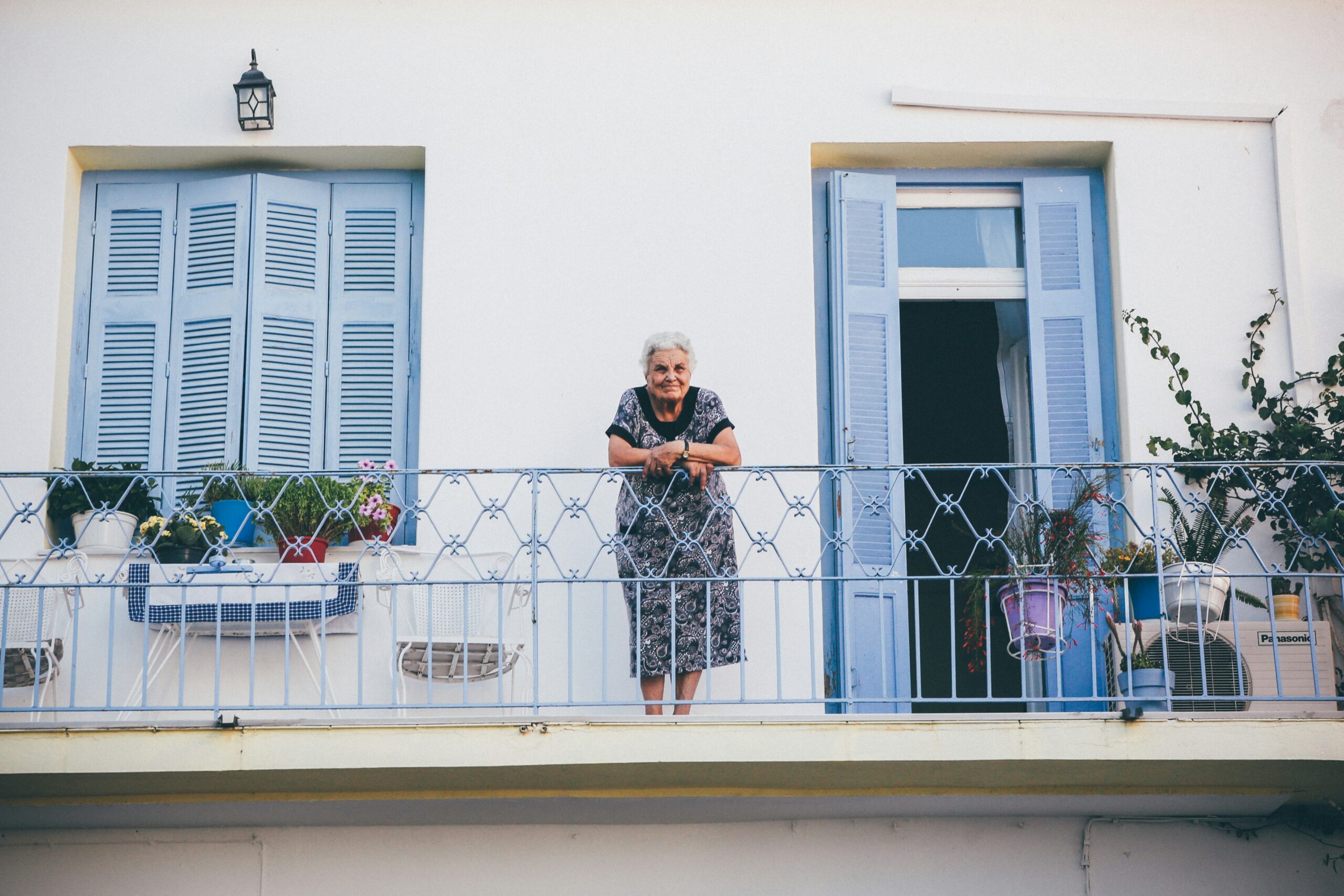
    The majority of over 75-year-olds remain in their homes despite changing housing requirements. Only 5.1 per cent of this age group moved in 2022. The reasons for this are long-term, favourable rental agreements, central residential locations and emotional attachment to the home. High market rents and relocation costs also act as a deterrent. If a move does take place, it usually remains within the region or leads to a care facility.

    Barriers in older residential buildings make everyday life more difficult
    Over 60 per cent of people over the age of 66 live in buildings that are not barrier-free. Stairs, narrow doors or a lack of lifts can make everyday life more difficult and increase the risk of falls and health problems. Necessary renovations are often difficult to realise.

    Loneliness as a key challenge
    77 per cent of older people live alone or with people of the same age, which increases the risk of social isolation. Older women, who are more likely to be single, are particularly affected. Loneliness has a negative impact on physical and mental health and increases the need for support in everyday life.

    Barrier-free housing and better support
    The study recommends better integrating older people into the regular housing market and creating barrier-free housing in a targeted manner. In addition to age-appropriate renovations, new forms of housing close to care facilities are needed. Social networks and support services should also be expanded to enable people to live independently.

    Data-based findings for the future
    The study is based on extensive data analyses on residential buildings, households, income and tenancies. These allow precise insights into the housing situation of older people and provide a scientific basis for future measures.

  • Prices for residential property move in opposite directions

    Prices for residential property move in opposite directions

    April brought strong price increases for single-family homes, SMG Swiss Marketplace Group(SMG) announces in a press release on the current Swiss Real Estate Offer Index. Specifically, SMG’s experts observed prices that were on average 1.2 per cent higher than in March. The SMG Swiss Marketplace Group brings together the digital marketplaces of TX Group, Ringier and Mobiliar.

    “Although the dream of owning a home is still widespread among the population, prospective buyers have become more selective”, Martin Waeber, Managing Director Real Estate at SMG Swiss Marketplace Group, is quoted as saying in the press release. It therefore remains to be seen “whether the increased asking prices can actually be realised”.

    By contrast, prices for condominiums in April were on average 1.2 per cent lower than in March. A year-on-year increase of 1.1 per cent was thus measured. According to SMG experts, this is the lowest annual growth rate since the beginning of 2020.

    A decline of 0.2 per cent was recorded for asking rents compared to the previous month. Compared to April 2023, however, asking rents were 2.7 per cent higher. SMG experts observed particularly sharp month-on-month declines in Eastern Switzerland and Central Switzerland. In north-west Switzerland and the Lake Geneva region, on the other hand, asking rents rose.