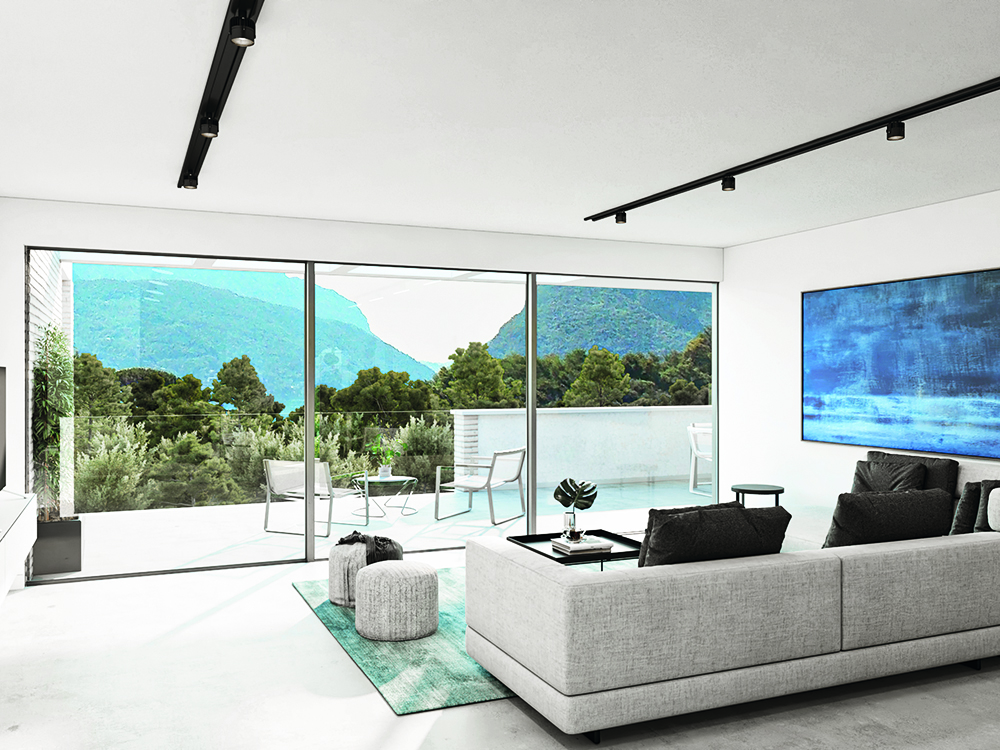
The Schlieren-based real estate and construction company Halter is transforming the Clochettes site in the Champel district of Geneva. As part of the project, Halter was commissioned by Baloise to carry out the energy-efficient renovation, conversion and addition of storeys to three residential buildings from the 1970s. According to the press release, a total of 70 existing apartments will be modernized by January 2029 and 15 new apartments will be created by adding two more floors. The work will start in May and will take place while the apartments are occupied.
As part of the refurbishment, Halter will replace the technical systems and refurbish the façades. Heat recovery and the installation of photovoltaic systems are also planned, according to the project description. The aim is to obtain a Minergie renovation label.
The architectural design by the Grenier Coretra architecture firm maintains continuity with the existing buildings and harmonizes with the neighbouring residential complex. The new apartments will offer a variety of floor plans and room concepts tailored to modern living.
New areas for residents and neighborhood-related uses will be created on the first floor of the buildings. The outdoor areas will also be enhanced with wooded areas to promote quality of life and biodiversity.
Denner opened its third distribution centre for chilled products in Mägenwil on 2 February 2026. This is the food retailer’s response to the strong demand for these goods. According to a press release, it is the first chilled distribution centre to be certified according to the Minergie standard. Denner is creating 70 additional jobs there.
The additional location will supply 250 of the 872 stores with fresh produce. Together with the three distribution centres for non-chilled goods, Denner will in future supply its branch network from six logistics locations.
Denner is working on expanding its branch network and wants to add more fresh products to its range. The new building took two years to construct and, according to CEO Torsten Friedrich, “symbolises the growth” of Denner. The aim is to secure the logistics for the growing demand for fresh food. In addition, travel distances have been reduced. This could save 120,000 transport kilometres per year. A 10,000 square metre storage area has been created in Mägenwil. It allows more than 700 products to be stored and cooled at between 2 and 5 degrees Celsius.
The Minergie certificate attests to the new building’s energy efficiency during operation. Waste heat from the energy-intensive operation of the cooling system is used for heating. The entire electricity requirement is generated by photovoltaic systems on the roof and on the south façade. In addition, eight charging stations for trucks and ten for passenger cars can be powered. Another new building for uncooled products is scheduled to go into operation in Aclens VD in 2027.
Switzerland is one step ahead with the harmonisation of labels. Minergie-Areal focuses on energy efficiency, comfort and climate-friendly mobility and, with its streamlined certification process, is ideal for smaller, manageable sites. It sets clear specifications, for example for building quality and monitoring. SNBS-Areal is convincing for large, complex sites of 10,000 m² or more and covers social, economic and ecological aspects in equal measure. With 30 tested criteria and a broad sustainability assessment, it also serves as a basis for ESG reporting and special utilisation planning
The example of Kraftwerk1 in Zurich Kraftwerk1 demonstrates the value of self-organisation, diversity and solidarity in urban areas. Democracy, low-car living, social rental models and flexible spaces ensure sustainability in practice. The cooperative structure combines individual appropriation with neighbourhood cohesion and strong environmental responsibility
Life cycle, costs and sufficiency as levers Costs are reduced in the long term where product life cycles are extended, recycling is promoted and resources are optimally utilised. Beat Salzmann explains how life cycle management and the circular economy influence financial planning. Sustainable buildings are investments in the future. Sufficiency, as Boris Szélpal explains, means targeted reduction and conscious use of materials and energy. It expands the understanding of sustainability to include the aspect of voluntary renunciation, the development of resilient living spaces and social structures
Sustainable site development is a coordinated process. Standards create clarity, cooperatives live values and sufficiency opens the way to resilient neighbourhoods with a high quality of life and low environmental impact. The future lies in the balance between comfort and indulgence and in the openness to consistently develop new models
The Basel-based Minergie association presented its new Minergie Betrieb certificate in Bern on May 22. It is awarded to property owners who make a contribution to climate protection with low energy consumption and low operating costs, explained Minergie in a press release on the launch. While the existing Minergie building standard certifies structural energy efficiency, Minergie operation is intended to prevent incorrect or inefficient settings in building technology.
“The new Minergie Operation certificate now bridges the gap between planning, construction and operation by checking and certifying the settings of the building technology and the associated energy consumption based on automatically recorded energy data and evaluations,” Sabine von Stockar, Head of Education and Development at Minergie, is quoted as saying in the press release. “This ensures that the potential for energy efficiency is guaranteed during ongoing operations.”
For the first time, Minergie operation can be awarded after the building technology has been in operation for at least one year. The certificate is aimed in particular at “property owners with large portfolios and sustainable ambitions”, explains Minergie. In addition to the Minergie building standard, the certification process for Minergie operation can result in energy savings of 15 percent across the entire portfolio. The association recommends recertification after three years.
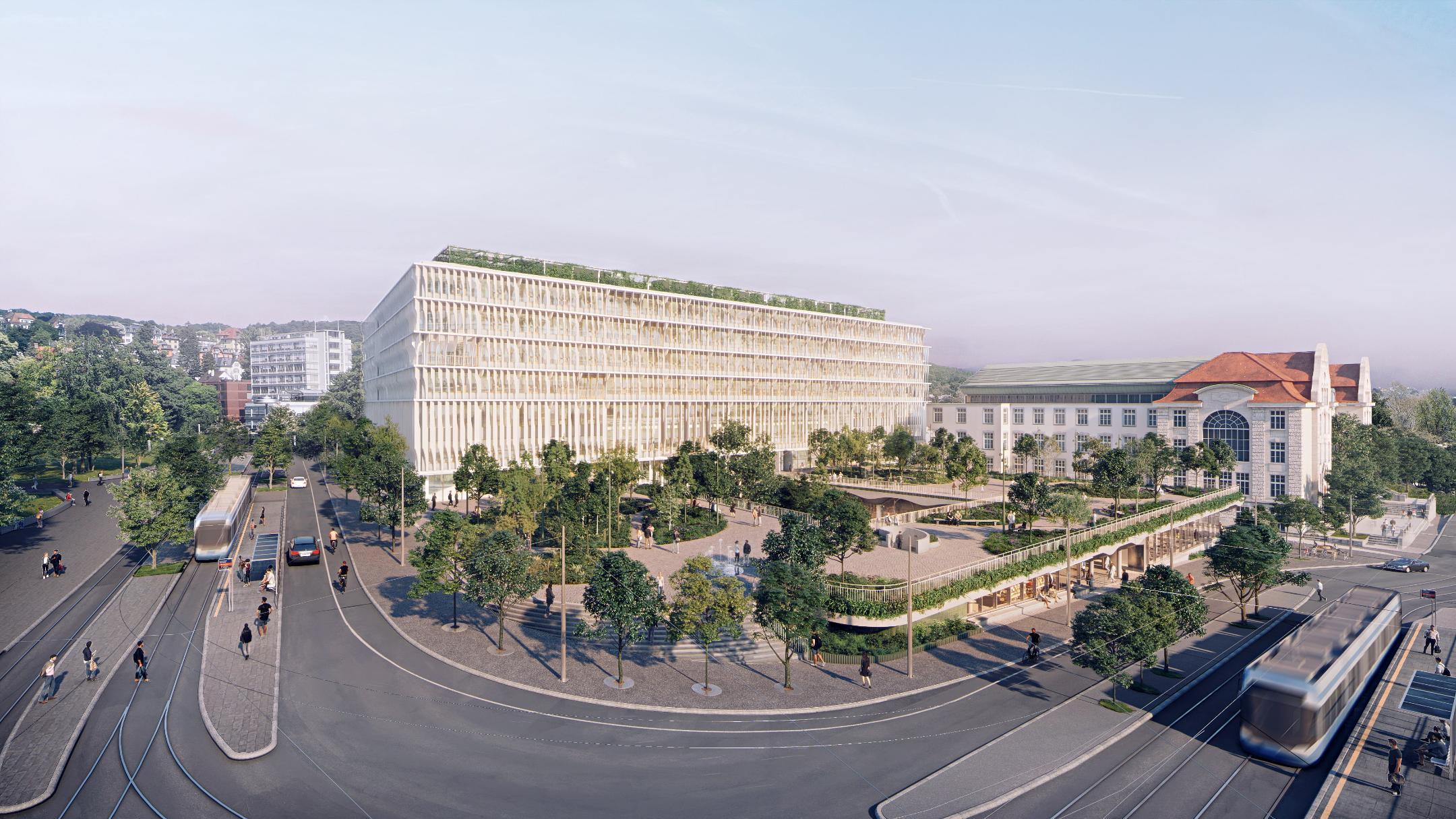
The FORUM UZH is a milestone for the structural and academic development of the University of Zurich. The new building comprises a total of 37,000 m² of usable space and will not only accommodate the predicted growth in student numbers, but also set new standards in teaching, research and sustainability. The new centre will bring together the faculties of law, economics and modern philology. These will be complemented by modern libraries, sports facilities for secondary schools and the Academic Sports Association as well as publicly accessible cafeterias and commercial areas.
Architecture and spatial concept The FORUM UZH consists of a terraced base for teaching and university life, a trapezoidal structure hovering above for research and a central courtyard. The structure is set back from Rämistrasse to create a spacious front zone with city balconies that blends in with the urban surroundings. The façade design with horizontal ceiling panels and vertical brise soleils gives the building a striking depth effect and allows for flexible light regulation inside.
At the centre of the building is the eponymous Forum, a light-flooded hall that is a lounge, meeting and work space all in one. It connects all levels and can be used for university and public events for up to 2,000 people.
Flexible learning environment and modern infrastructure The FORUM UZH offers a variety of innovative teaching and learning spaces. Five lecture theatres and several seminar rooms can be used flexibly and are equipped with state-of-the-art technology to enable hybrid teaching models. There will also be a spacious teaching and learning centre with over 700 student workstations. The university library will be united under one roof on the upper floors.
Sustainability and innovative construction The FORUM UZH is based on a sustainable timber-concrete hybrid construction method that reduces CO² emissions while offering a high quality of stay. The intensively greened roof not only serves as a fifth façade, but also as an ecological compensation area with a habitat for flora and fauna. A photovoltaic system supplies its own electricity, while over 50 large trees on the redesigned town square have a positive impact on the microclimate.
Thanks to the modular design, UZH saves as much CO² as would be released by the construction of 77 detached houses. The building will be certified in accordance with the SGNI Gold standard and Minergie P.
Integration into the urban environment The FORUM UZH will not only be open to the university community, but also to the city’s population. The libraries, catering areas and neighbourhood shops will be open to the public and the Gloriaterrasse will be a green meeting place where people can linger. The urban design will create a direct link between the university quarter and the surrounding neighbourhoods.
Construction schedule and next steps Following the completion of the preliminary project, construction work began in August 2024. Completion is scheduled for 2028 and the building will be occupied in 2029. Until then, students and researchers at the University of Zurich will be able to follow the development of this project of the century at close quarters.
The Fischermätteli residential construction project in Burgdorf has been awarded Minergiesite certification. This is the first time that an entire site has been certified in accordance with the requirements of the Swiss building standard, according to a statement from StrübyUnternehmungen, the company responsible for the project. The residential construction project with ten apartment buildings, which will be completed in fall 2023 after three and a half years, will reach “a new level” in sustainable residential construction, according to Strüby.
According to the information provided, the site is characterized by the use of 6,600 cubic meters of renewable Swiss wood, as well as by its very low energy consumption and maximum self-sufficiency with renewable energies. Greenhouse gas emissions during construction and operation have been minimized. The buildings also have above-average heat insulation and controlled air exchange. The design of the outdoor space increases climate resilience and the quality of stay, for example through suitable planting and shading. The overall concept also includes an environmentally friendly mobility concept.
The fact that the climate-friendly overall concept was well received was already evident during the completion of the quarter: “Demand was so pleasing that all apartments were sold by the time construction was completed,” Didier Pichonnaz, Head of Architecture at Strüby Unternehmungen, is quoted as saying.
New rules for certification will apply from 2023. Unlike before, not only a single building but also an entire site can be certified.
Minergie and LEED certification has been an integral part of planning and construction at the Circle for 12 years. In the presence of Christian Appert, CEO Amstein + Walthert AG, Martin Kull, CEO and owner HRS Real Estate AG, Daniel Scheifele, Chief Real Estate Officer, Flughafen Zürich AG, Giorgio Engeli, Head Real Estate Portfolio Management Switzerland, Swiss Life Asset Managers, and Stefan Feldmann, Head The Circle, Flughafen Zürich AG, the team around The Circle celebrated on Monday, June 27, 2022, the goal they have now achieved.
Beautiful, functional, climate-optimized With a good 200,000 m 2 energy reference area, the circle accounted for 6% of the certified Minergie area in the year of provisional certification, but was only one of around 1,900 buildings. This shows the size and importance of this extraordinary building in the Swiss context. The Circle is the largest Minergie-certified building in Switzerland. According to government councilor Marc Mächler, the Minergie certificate means that – in addition to all other requirements and uses – the building is also climate-optimized. Climate-optimized means «that this building does not accelerate climate change and that it uses resources carefully. It is efficient and works almost entirely with renewable energy instead of fossil energy.”
Thanks to intensive cooperation between the Minergie certification body and those responsible for the circle, the high requirements of the Minergie quality label for the building envelope and ventilation could also be met. Andreas Meyer Primavesi, Managing Director of Minergie, is pleased that the result ultimately benefits everyone: “Especially with today’s energy prices, every kilowatt hour of energy saved is worth it – not only for the climate, but also financially”.
Into the net-zero energy future With the leading Swiss building label Minergie, more than 12 million tons of CO 2 and 67 million megawatt hours of energy have been saved since 1998 thanks to over 53,000 Minergie buildings compared to the minimum legal requirements. Minergie certifies around 3 million m 2 of energy reference area per year. In close coordination with the cantons, Minergie always leads the way and is therefore a pioneer in cantonal energy laws. This interaction has worked since the beginning and continues successfully. Minergie is currently looking very closely at the energy used and the greenhouse gas emissions in the construction of a building. And secondly, Minergie is striving to improve the operating phase: Extensive, digitized building data is used to measure the energy flows during operation in order to then carry out operational optimization where necessary on the basis of the monitoring. For years, fossil-free operation – even with modernization – Minergie is moving more and more towards net zero. The Minergie-A-ECO standard comes closest to the Swiss net-zero building.
Minergie and LEED certification has been an integral part of planning and construction at the Circle for 12 years. In the presence of Christian Appert, CEO Amstein + Walthert AG, Martin Kull, CEO and owner HRS Real Estate AG, Daniel Scheifele, Chief Real Estate Officer, Flughafen Zürich AG, Giorgio Engeli, Head Real Estate Portfolio Management Switzerland, Swiss Life Asset Managers, and Stefan Feldmann, Head The Circle, Flughafen Zürich AG, the team around The Circle celebrated on Monday, June 27, 2022, the goal they have now achieved.
Beautiful, functional, climate-optimized With a good 200,000 m 2 energy reference area, the circle accounted for 6% of the certified Minergie area in the year of provisional certification, but was only one of around 1,900 buildings. This shows the size and importance of this extraordinary building in the Swiss context. The Circle is the largest Minergie-certified building in Switzerland. According to government councilor Marc Mächler, the Minergie certificate means that – in addition to all other requirements and uses – the building is also climate-optimized. Climate-optimized means «that this building does not accelerate climate change and that it uses resources carefully. It is efficient and works almost entirely with renewable energy instead of fossil energy.”
Thanks to intensive cooperation between the Minergie certification body and those responsible for the circle, the high requirements of the Minergie quality label for the building envelope and ventilation could also be met. Andreas Meyer Primavesi, Managing Director of Minergie, is pleased that the result ultimately benefits everyone: "Especially with today's energy prices, every kilowatt hour of energy saved is worth it – not only for the climate, but also financially".
Into the net-zero energy future With the leading Swiss building label Minergie, more than 12 million tons of CO 2 and 67 million megawatt hours of energy have been saved since 1998 thanks to over 53,000 Minergie buildings compared to the minimum legal requirements. Minergie certifies around 3 million m 2 of energy reference area per year. In close coordination with the cantons, Minergie always leads the way and is therefore a pioneer in cantonal energy laws. This interaction has worked since the beginning and continues successfully. Minergie is currently looking very closely at the energy used and the greenhouse gas emissions in the construction of a building. And secondly, Minergie is striving to improve the operating phase: Extensive, digitized building data is used to measure the energy flows during operation in order to then carry out operational optimization where necessary on the basis of the monitoring. For years, fossil-free operation – even with modernization – Minergie is moving more and more towards net zero. The Minergie-A-ECO standard comes closest to the Swiss net-zero building.
The handling of the Ecobau requirements, which sometimes formed the basis for the Minergie ECO label, has apparently not yet been finally clarified. As is well known, they have largely been included in the SNBS (Swiss Sustainable Building Standard), as they include topics that will become even more important in the future, namely the circular economy, gray energy, etc. – sustainable buildings are not just buildings that have been optimized in terms of operational energy .
And yet, this consolidation creates clarity in the market and is also a clear commitment to the SNBS, as a key benchmark in the Swiss construction and real estate market and an important instrument for implementing the Energy Strategy 2050.
A few days ago, HRS handed over the Residenza Step Tower in Locarno to CS Asset Management (Switzerland) AG as the client, the real estate service provider from Frauenfeld informed in a press release . The project consists of a nine-storey and a three-storey building, which house a total of 44 apartments, the Lidl branch, offices and storage rooms. HRS is pleased “that a compact structure could be implemented here that makes optimal use of the available space and is self-confident but also harmoniously integrated into the neighborhood,” writes the real estate service provider.
All units in the Step Tower have digital controls, and the apartment doors have digital locks. HRS explains that communication with property management can also take place digitally. Both buildings meet the Minergie and Greenproperty standards.
The aging Hardau I housing estate is located between Hardstrasse and the striking residential towers of Hardau II. It has existed since 1964 and was designed by the architect Eberhard Eidenbenz. Today’s 80 apartments are small-scale with a modest standard of fit-out. Noise protection, energy efficiency and accessibility leave a lot to be desired. Since the area has potential to be used and more family apartments can be built as a result, the City of Zurich has decided to replace it.
In 2018, the Office for Buildings of the City of Zurich selected the winning project by means of an architecture competition: Graber Pulver Architekten AG won over the jury with their “Laurel & Hardy” project. Two structures of different shapes and heights are planned. The six-storey courtyard building is clearly separated from the Hardau park. A seven-storey building block complements the existing block edge along Hardstrasse. Most of the apartments in the courtyard are oriented on three sides.
122 predominantly spacious rental apartments are planned for residents with low to medium incomes. Single rooms, studios and music practice rooms can be rented individually. Areas for services and a personal registration office are also being built along Hardstrasse on the ground floor. In addition, a kindergarten, studios and a youth shop of the Open Youth Work Zurich (OJA) are planned at Hardaupark. Together with the existing Hardau high-rises, which mostly comprise smaller apartments, a well-mixed urban housing supply is to be created.
At Hardau I, energy parameters of the Minergie-P standard in the sense of the 2000-watt society have top priority: Nevertheless, only the construction on the noise-polluted Hardstrasse is certified according to the Minergie-P-Eco standard. Because no controlled ventilation is installed in the quieter courtyard building. The mobility concept provides for a neighborhood with little cars: The number of parking spaces will be significantly reduced to 31 instead of the previous 249. Energy is generated directly on the property by a photovoltaic system planned and financed by the city of Zurich’s electricity company. So that the electricity produced on the roofs of the property can be used on site, tenants and property developers form a self-consumption community.
Light modulation is an important element The transition between the external and internal space of the building is obtained with a series of filters that regulate the light transmitted inside the premises: brise soleil, translucent grilles and overhanging slabs, are characteristic elements that allow correct modulation of natural light.
The organization of the spaces is optimized to allow natural light to be diffused inside the apartments, generating an interesting play of light and visual relationships towards the surrounding landscape. In fact, the living area extends over the entire depth of the building, opening towards the two main facades to the east and west.
Historical building elements re-proposed in a contemporary vision For this project, brick, typical of Lombard architecture, was used as the basic element; the construction technique is resumed without imitating its past, proposing a new reading of it. The horizontal texture that testifies to the laying process of the base element is emphasized in the texture, thanks to the particular module (narrow and long) and the horizontal rear joint. The white paint changes the appearance of the brick itself, making it lighter and at the same time highlighting the precise play of shadows that characterize the texture of the facade.
The static structure of the building is made up of pillars while the internal divisions are resolved with plasterboard walls so as to allow greater flexibility of the interior spaces, ensuring freedom of composition and customization by the individual owners. The facades, which are ventilated for better energy efficiency, are composed of an internal structure, an insulation, an air layer and to finish an external cladding, in this case a very particular brick, painted white.
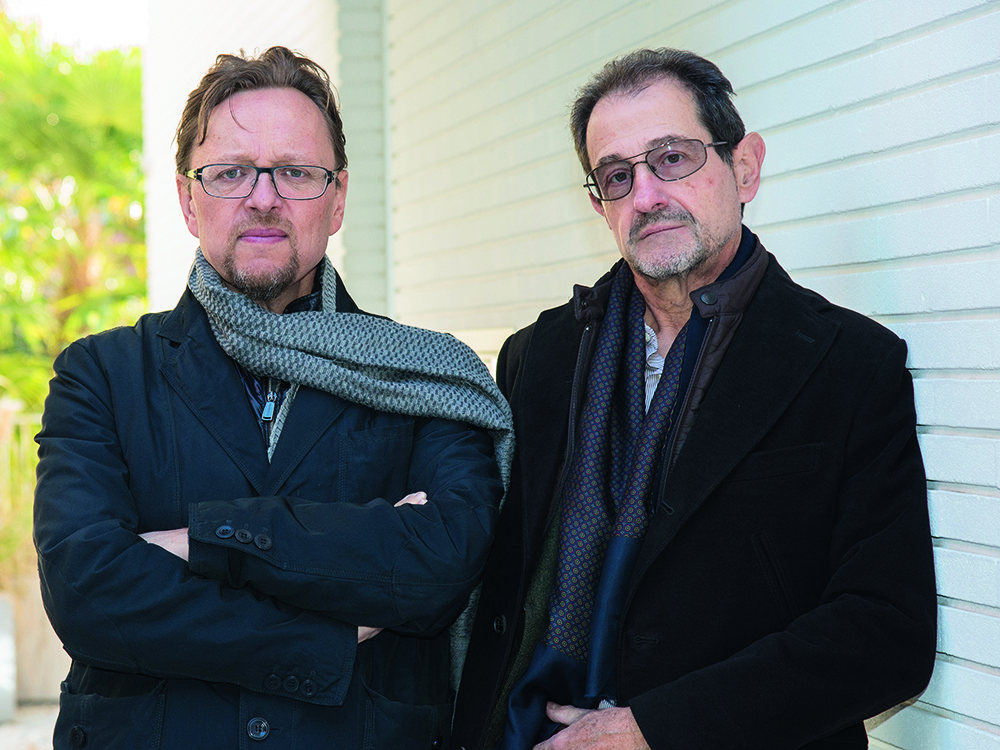
Architects Ugo Frueh and Luca Pagnamenta
A large green space that enhances the buildings The housing complex leaves plenty of space for greenery allowing the struito to integrate delicately into the living environment. The driveway is characterized by the presence of a green filter, which guarantees privacy for the rooms on the ground floor and which lightens the visual impact of the built volumes. To the east are a series of gardens flat private dines in front of the living rooms of the apartments on the ground floor while to the north, towards the playground of Savosa, there is an area for common use, embellished with a row of Japanese cherry trees.
The project meets the Minergie requirements The project is based on the concept of a building oriented to the minimum energy requirement, which also presupposes a better use of passive sources such as solar radiation to cover the heat demand. During the summer, to avoid excessive overheating, an automatic system provides for the lowering of the darkening systems for the facades most exposed to the sun.
The electricity produced by the photovoltaic panels is primarily destined for the common parts of the building, including the heat pumps for the production of domestic hot water and for heating. In case of excess energy production, it will be distributed to the owners of the apartments as “self-consumption”.
The production of domestic hot water is centralized and the heat is distributed through floor coils. There is also a gentle mechanical ventilation system that guarantees automatic air exchange in the rooms, recovering heat in the winter and cold in the summer: the centralized system allows light cooling, sending fresh water into the coils and guaranteeing a greater comfort thanks to the free-cooling system.
The interiors can be customized according to the taste of the buyer.
LICASA: a cooperative of artisans LICASA (Cooperativa Liberale per la Casa) is a non-profit organization founded over the years Ninety in order to collaborate in the control of the housing market in Ticino. A consolidated organization of local artisans who have decided to join together to give a guarantee of quality to the projects carried out. All members of the cooperative have a proven track record and work at competitive prices.
The statutes indicate the actions to favor its members access to housing with moderate rents according to the ad hoc public laws, as well as the purchase of housing at non-speculative market prices; where possible, members will also be favored for professional services regarding construction, thus guaranteeing the quality and reliability of the operation.
According to a press release , the aim of this study is to measure air quality in classrooms and to provide tools to improve it, which reduce pollution. The starting point was a study by the Federal Office of Public Health . Samples in 200 classrooms showed that the limit of 2000 ppm (parts per million) CO2 in the room air was exceeded in two thirds.
This study showed that the concentration is lower in Minergie-certified buildings with systematic air exchange. During the measurements, cases were also found in which volatile organic and microbial compounds exceeded the safety limit or were very close to it. The recommendations of the study authors range from air monitoring systems in classrooms to the use of air purifiers and the replacement of windows and doors.
On September 15 and 16, SUPSI is holding a further training course on the subject for specialists from the construction sector. Registration is required for this. There will also be a public conference on the subject on September 16.
Wir verwenden Cookies zur Unterstützung und Verbesserung unserer Dienste. Mit der Nutzung dieser Website erklären Sie sich mit der Verwendung von Cookies einverstanden. Weitere Informationen finden Sie in unserer Datenschutzerklärung.