Tag: Mischnutzung

  • The city shapes the traffic and the traffic shapes the city

    The city shapes the traffic and the traffic shapes the city

    Researchers from ETH Zurich and the University of Wisconsin-Madison have correlated geoinformation data from 30 major cities worldwide with traffic congestion data. For the first time, they were able to demonstrate not just correlations, but genuine cause-and-effect relationships between urban changes and traffic flow. The study was published in April 2026 in the journal “Nature Communications”.

    Three factors, one traffic jam
    The research team led by first author Yatao Zhang distinguished three dimensions. The structure of the road network, the spatial form of the city and the function of individual areas, i.e. whether people live, shop or work there. Surprisingly, it is not only the road network that determines the flow of traffic. An urban sprawl structurally generates more traffic. The concentration of leisure activities in a neighborhood drives up weekend traffic. Mixed-use developments, on the other hand, bring living and working close together, shorten commuting distances and reduce the volume of traffic. “Traffic is created by what people do, not just by the existence of roads,” Zhang sums it up.

    Singapore versus Zurich
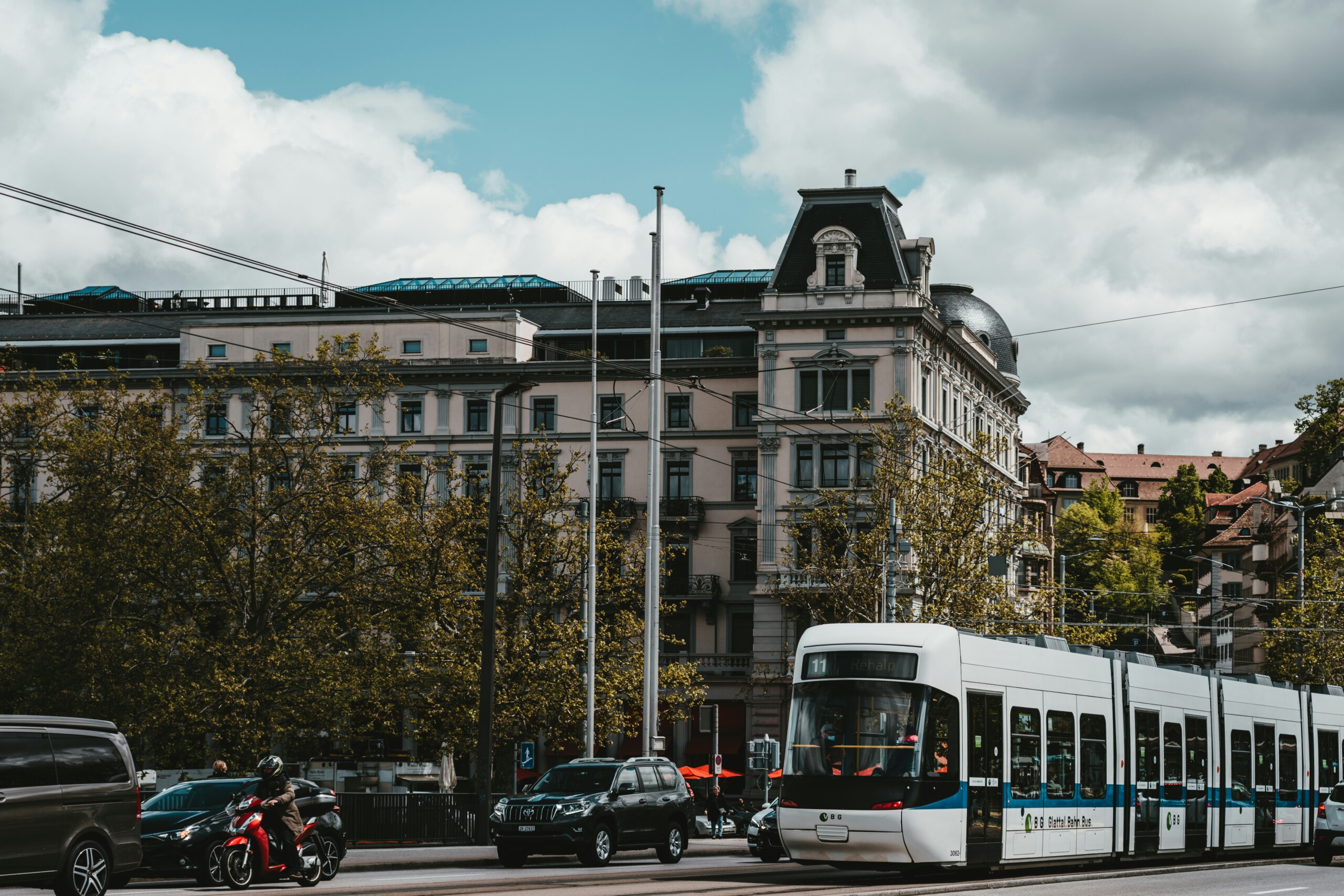
    An international comparison shows major differences. In Singapore, residential areas are clearly separated from the service center and structural changes have a direct impact on commuter flows. In Zurich, this link is much weaker because apartments are spread across the entire city and commutes are shorter and more diverse. Such differences can now be systematically measured and compared for the first time.

    What this means for planning
    ETH Professor Martin Raubal, who supervised the study, sees great potential for urban and transportation planning. The new method makes it possible to forecast how an intervention, such as the construction of a large shopping center, will affect traffic in the medium term. Cities could use it to better simulate measures before they are implemented. However, more in-depth detailed analyses are still needed before concrete recommendations can be made in Zurich or other cities.

    Data from open sources
    Open Street Map was the main source of data, supplemented by traffic congestion data from Here Technologies, which is updated every five minutes worldwide. For Los Angeles alone, the congestion values of over 18,000 road sections were included in the analysis. The fact that such a study is based on publicly accessible geodata makes the approach reproducible and scalable.
  • Beer, concrete and living – Baden builds on its history

    Beer, concrete and living – Baden builds on its history

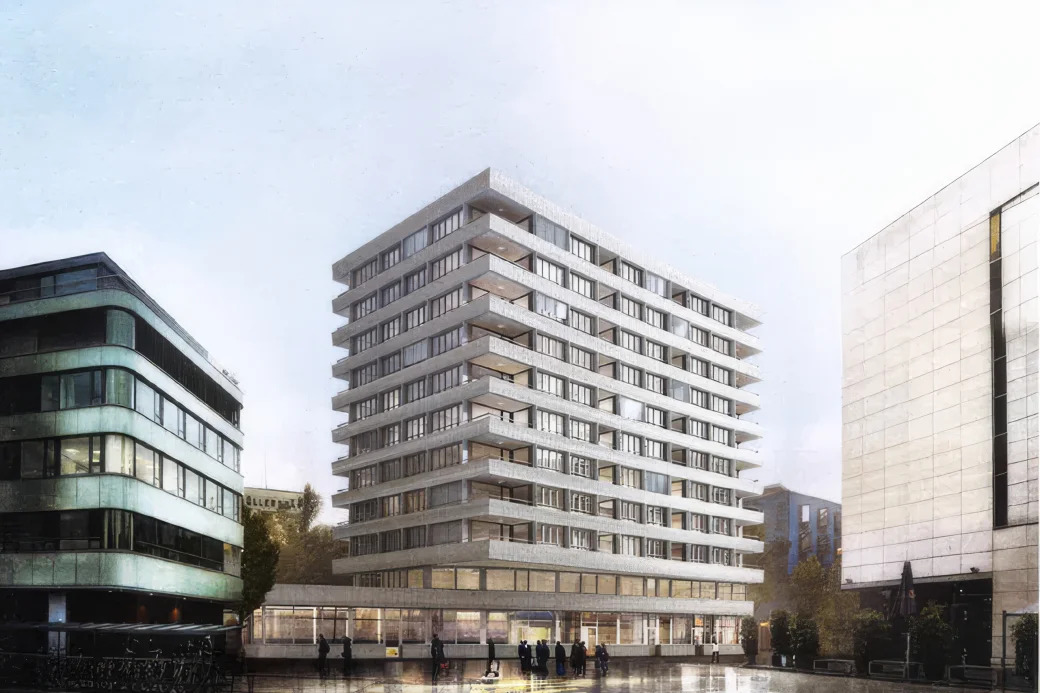
    Four new buildings are being constructed on around 8,000 square meters directly next to Baden train station, divided into two construction sites. Building site A is the responsibility of Frei Architekten AG from Aarau, building site B is the responsibility of the renowned Harry Gugger Studio from Basel. The volume is considerable: 81,888 cubic meters of enclosed space, 22,914 square meters of floor space and an investment of around 64.5 million Swiss francs. The general contractor is Gross AG from Brugg.

    Living where malt used to steam
    136 rental apartments with 1.5 to 4.5 rooms are being built in the heart of the city. On the first floor, a total of 2268 square meters of retail and restaurant space will characterize the quarter. In the inner courtyard, a 900 square meter beer garden invites you to linger. The motto of the building owner, the fourth-generation brewery H. Müller AG, sums it up: “brew – live – enjoy”.

    History remains visible
    Not everything makes way for the new building. The boiler house, brewhouse and malt silo remain as architectural witnesses to a brewing history that began in 1897. The Müllerbräu beer itself is now produced by the Falken brewery in Schaffhausen. However, there is still a specialty brewery on the site. The site’s past thus not only remains visible, it can still be experienced.

    Timetable and marketing
    The building permit dates from October 2023, with demolition starting in April 2024. The facades of the new high-rise buildings have been visible for the first time for a few days now. A milestone for the project. Marketing of the apartments is scheduled to start in summer 2026, with first occupancy planned for June 2027.

  • Foundation stone laid for mixed-use building in Frenkendorf

    Foundation stone laid for mixed-use building in Frenkendorf

    According to a statement, Halter AG has laid the foundation stone for the Park3project. Also involved were the client Zurimo “B” Immobilien AG, represented by UBS Fund Management (Switzerland) AG, representatives of Reuter Architekten, the municipality of Frenkendorf and the planning, marketing and implementation teams involved.

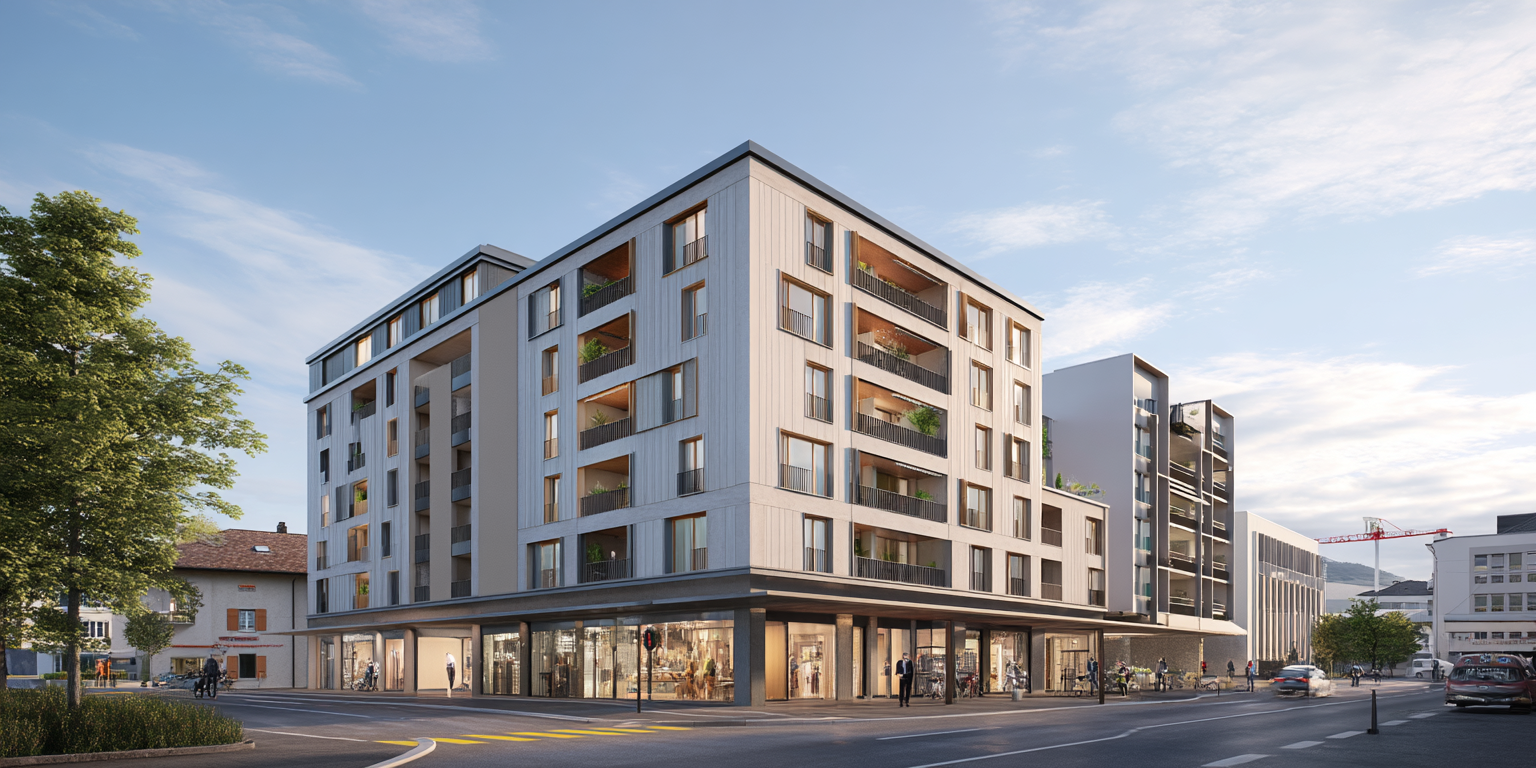
    The mixed-use residential and commercial building will be a five-storey structure with an attic, combining living, working and commercial space under one roof. The plot size is 2,607 square metres and the construction costs amount to 14 million Swiss francs. Flexible commercial space will be created on the ground floor, with modern office units on the first floor. The upper floors will feature 22 apartments with 2.5 and 3.5-room floor plans. The project is being developed in an area with good infrastructure connections, which is increasingly gaining urban quality as part of urban development. The site is currently used primarily for commercial purposes.

    The building plans for the project, a UBS annual report and the current issue of the Halter Group’s KOMPLEX magazine were placed in the foundation stone as contemporary documents and permanently anchored in the foundations.

    The focus is now on the construction of the shell, which is scheduled for completion by the summer. The project is scheduled for completion in spring 2027.

    Halter AG is a real estate and construction company operating throughout Switzerland. The company handles a construction volume of around CHF 800 million per year at seven locations and currently has around 320 projects in development and execution.