Experts from the Thermal Energy Storage Competence Center at the Lucerne University of Applied Sciences and Arts(HSLU) want to promote the climate-friendly replacement of fossil-fuel heating systems. To this end, the team worked with geoimpact AG, based in Lüterkofen SO, to use machine learning to calculate models that locate fossil fuel heating systems.
This is because around 80 percent of oil and gas heating systems are currently being replaced by new fossil-fuel heating systems, according to a media release from the HSLU. “A new heating system needs planning,” HSLU energy expert Esther Lindner is quoted as saying. “Of course, if the old one breaks in the winter, you don’t have time for that, and then you just quickly replace what you had before with the same system again.” To counteract this, the project aims to provide these households with timely information about alternatives and counseling services.
First, a model was created for 1957 municipalities, then one for 158 districts, and finally another for all of Switzerland. At the community level, the model is reported to be the most accurate, with close to 80 percent accuracy. The artificial intelligence of these models was trained with publicly available data from the building and housing register.
Now the model is being developed into a referral program for a Sweet Edge project supported by the Federal Office of Energy. This is intended to assist communities with energy planning. “Communities that want to use the model and develop it at the same time,” Lindner said, “are welcome.” The project will also be presented at this year’s Evening of Business of the Department of Engineering & Architecture. It will take place on October 20, 2022.
In the case of complex and challenging construction and real estate projects, partner companies can provide valuable support – be it by taking on the coordination and overall responsibility for the project or by accompanying individual project phases.
The providers of such services can be roughly divided into the categories: overall provider, total contractor and general contractor. But which model of cooperation is the right one for which project? The information brochure "With the right cooperation model for successful project implementation" aims to help clarify this question. It provides an overview of the three models, shows which model is best suited for what, and lists important points when working together. The information brochure was prepared by the Swiss Development Industry Association. He represents companies that offer overall services in the development, planning and realization of construction and real estate projects. «We are convinced that a project with a common goal and shared responsibility can be implemented more successfully. That's why we want to show the possibilities and services of the existing cooperation models and draw attention to their potential," says Managing Director Franziska Bürki.
The three cooperation models at a glance: Overall providers take over the development, planning and realization of construction and real estate projects. With interdisciplinary teams, they work on tasks throughout the process through to execution or operation. The service can have different characteristics and include, for example, usage planning, design competitions, preliminary studies and the legally prescribed approval procedures. Because a full service provider is involved early on, the potential for innovation and optimization is high. Opportunities and risks can be better identified, defined and controlled at an early stage and together. The client has the guarantee that his project will be developed, planned and implemented from a single source.
Total contractors take on the planning and implementation of construction and real estate projects. Within a given framework, the client leaves the responsibility for the planning and implementation to the total contractor, with more or less narrow specifications. Total contractors take over a construction project either from the project planning or at least from the implementation planning. The responsibility for the tasks up to handover (including pre-existing planning) remains with the client. The potential for innovation and optimization in this model of cooperation depends heavily on how much planning and design freedom the client gives the general contractor. General contractors take on the realization of ready-to-execute construction and real estate projects. The aim is to realize a building. They assume responsibility for the turnkey realization of a construction project, their influence is essentially limited to the optimized construction process. Within this area they are responsible for quality, deadline and price. The overall and planning responsibility remains with the client. Cooperation with a general company is particularly suitable for professionally managed projects with a specifically formulated order for the general contractor.
The content of contracts with a partner company can vary. It depends on the client's wishes, on the choice of cooperation model, but also on when the cooperation begins. "The partner company can take on more responsibility the earlier and more integrated the client involves them in the cooperation," says Franziska Bürki.
Development Switzerland is convinced: If you want to successfully implement a project, you have to take a holistic view of it, involve all stakeholder groups and decide on the right cooperation model at an early stage and adapt it to the specific project situation.
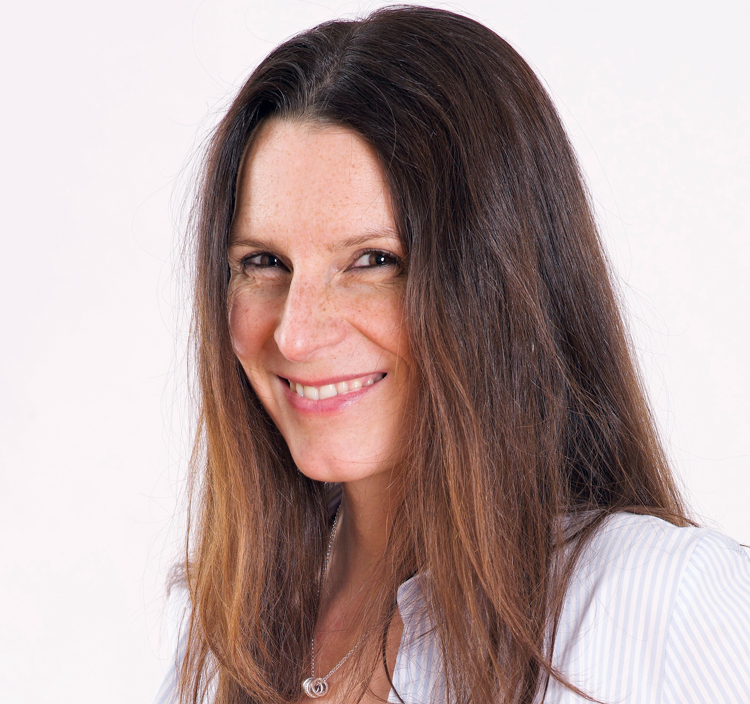
Franziska Burki, Managing Director Development Switzerland
Wir verwenden Cookies zur Unterstützung und Verbesserung unserer Dienste. Mit der Nutzung dieser Website erklären Sie sich mit der Verwendung von Cookies einverstanden. Weitere Informationen finden Sie in unserer Datenschutzerklärung.