Tag: nachhaltige Mobilitaet

  • Intercantonal development project focuses on mobility and efficiency

    Intercantonal development project focuses on mobility and efficiency

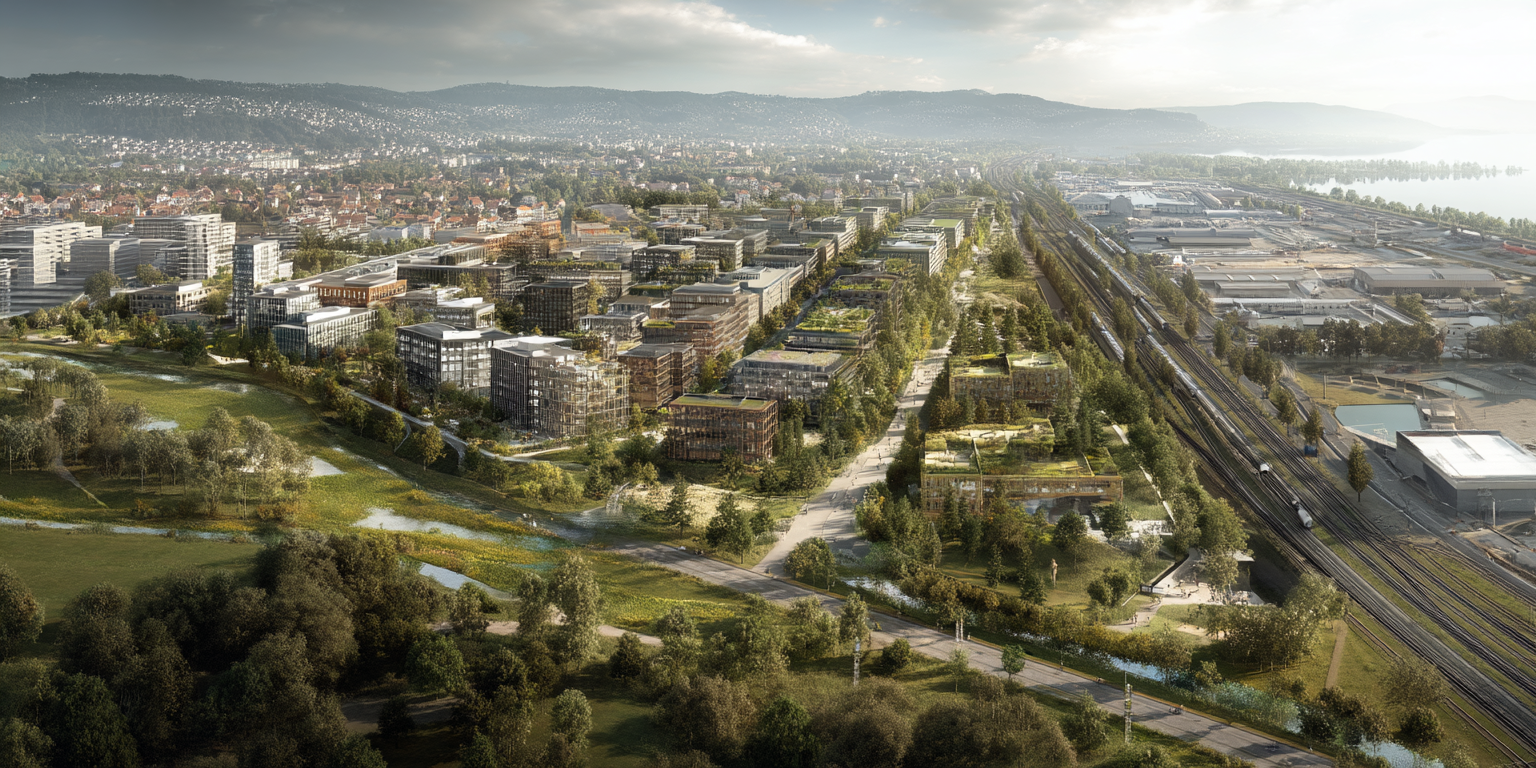
    Voters in St. Gallen have approved the sale of two plots of land owned by the Canton of St. Gallen to the Canton of Thurgau, as well as the provision of compensation in the form of crop rotation areas. According to a statement from Regio Wil, this is a “landmark decision” for the Wil region. The plots are to form the WILWEST development area, which is intended to combine environmentally friendly mobility, energy efficiency and regional cooperation as a sustainable economic zone. At the heart of the project is a new junction with the A1 motorway, complemented by improved bus, rail and cycle connections for the entire region.

    For the Wil region, the project creates prospects for new jobs, reduced traffic congestion and coordinated, sustainable spatial development, the statement says. The decision by St. Gallen’s voters is also a strong signal for intercantonal cooperation between St. Gallen and Thurgau, as well as for the 22 municipalities of Regio Wil.

    The St. Gallen electorate had initially rejected a special loan for the WILWEST project in September 2022. The project was subsequently comprehensively revised, particularly in the area of sustainability. Among other things, land use was optimised, soil sealing reduced, and car traffic and the number of parking spaces cut.

    The priority now is to ensure sustainable implementation, to develop the area in a land-conserving manner and in phases, and to continue to take the concerns of the public into account. Regio Wil intends to remain actively involved in the process in the future.

  • New cable car technology strengthens sustainable mobility in metropolitan areas

    New cable car technology strengthens sustainable mobility in metropolitan areas

    The Câble C1 urban cable car system has been in operation in the south of Paris since 13 December, using ropes and a magnetic induction monitoring system from Fatzer AG in Romanshorn. Fatzer claims to be the global market leader in the field of transport ropes and is part of the Brugg Group based in Brugg. According to a press release, the new railway is the longest urban cable car in France. In the densely populated Val-de-Marne department, which is part of the Paris metropolitan area, it is intended to relieve the public bus and metro system and reduce individual traffic. The project was realised by Doppelmayr France, a subsidiary of the Doppelmayr ropeway technology group based in Wolfurt, Austria.

    According to Fatzer, the cable car serves a 4.5 kilometre route with five stations and a journey time of 18 minutes, connecting the suburb of Créteil with the municipalities of Limeil-Brévannes, Valenton and Villeneuve-Saint-Georges. A total of 105 cabins travel over 30 supports with the help of three rope loops. Fatzer supplied three ropes with a total weight of around 90 tonnes for this project. The Performa DT rope type was used, which Fatzer developed especially for use in densely populated areas and high loads. It is characterised in particular by its long service life and quiet, smooth running.

    The rope condition is monitored using the Fatzer TRUscan solution to ensure that the operating times of 18 to 19 hours a day can be reliably guaranteed without interruption. According to the company, magneto-inductive measurements provide those responsible with real-time data. Irregularities are detected immediately, making maintenance work easier to plan.

    It is stated that the Performa-DT rope is already being used in numerous highly frequented urban installations, including in La Paz in Bolivia, Medellín in Colombia, Guayaquil in Ecuador, La Réunion and Ajaccio in France, Mexico City and, soon, Uruapan in Mexico.