Tag: Nachhaltige Stadtentwicklung

  • Roche site development Basel

    Roche site development Basel

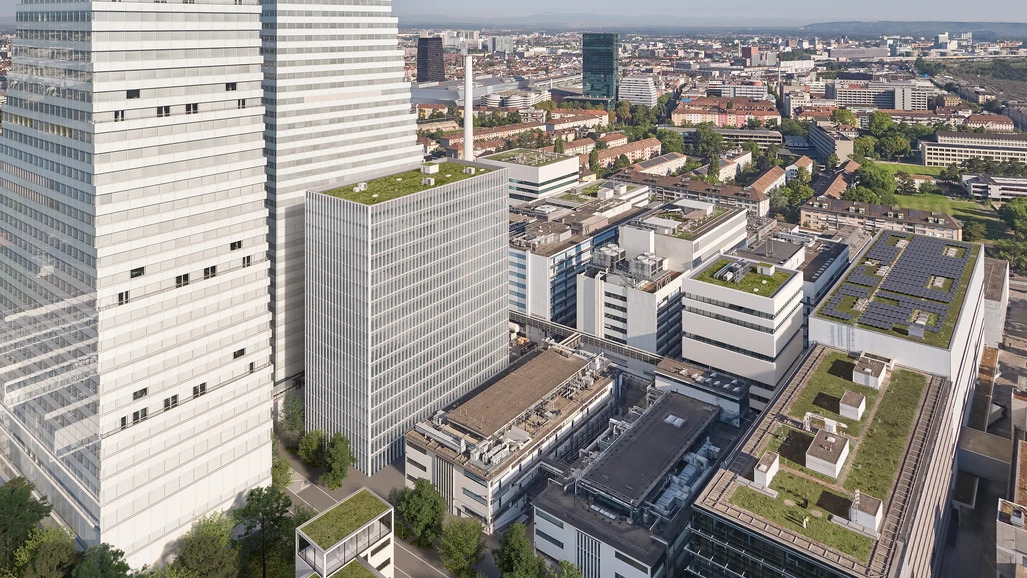
    The first development phase of the Roche site was completed at the end of 2023, and now a new stage follows. One of Europe’s most important research infrastructures will be built on the north site by 2030. The core project is Building 12, a 72-metre-high research and development building with space for around 450 researchers. The new building will replace the outdated infrastructure and create optimal conditions for developing novel active ingredients from basic research to production maturity. With an investment volume of around 500 million Swiss francs, Building 12 will become the central interface between research and clinical development.

    At the same time, the Institute of Human Biology in Building 92 will be expanded into a new center for biological model research. Around 100 million francs are being invested in the modernization and conversion. The aim is to link academic and industrial research in order to make complex human cell models usable for drug development.

    Production is also undergoing a fundamental overhaul. State-of-the-art facilities for the development and commercialization of synthetically produced active ingredients will be built in buildings 50 and 51 by 2028. A new era of pharmaceutical process innovation will be ushered in here with a modular design, digital control and high energy efficiency. The investment framework for these projects is around CHF 570 million.

    Sustainable urban development on the south site
    Parallel to the research on the north side, Roche is pursuing a long-term sustainable development strategy on the south site. The site on the Rhine is being redesigned in close consultation with Basel politicians. The revised development plan provides for generous green spaces, ecological networking along the banks of the Rhine and integration into Solitude Park. Old building structures will be gradually dismantled and building materials reused according to the principle of the circular economy.

    The Canton of Basel-Stadt is actively supporting this process. The cantonal government and the Grand Council support the approach of upgrading the southern area in terms of urban development without providing for public thoroughfares or expropriation. This means that the site will remain within the company’s own control, but will be opened up in the future through landscaping connections and new open space concepts.

    Signal for Switzerland as a business location
    Since 2015, Roche has invested around eight billion Swiss francs in its Swiss sites and over 33 billion in national research and development. In Basel alone, further facilities for research, production and infrastructure will be built by 2029, including a new underground heating and cooling center to ensure security of supply for the entire site. The construction work on the north and south sites is emblematic of sustainable, resource-conserving site development that combines business, the city and science.

    The next few years will be characterized by intensive construction phases, urban planning coordination and technological innovations. With the ongoing development of the site, Roche is not only strengthening Basel as a pharmaceutical location, but is also sending out a strong signal of its long-term commitment to Switzerland as a place for cutting-edge research, sustainable architecture and shaping the urban future.

  • Europe’s largest construction project takes shape

    Europe’s largest construction project takes shape

    The ambitious Ellinikon project is being built on the disused Hellinikon airport site south of Athens. Here, Greece is building a new city from the ground up that will serve as a model for sustainable and digitally networked urban development. In just a few years, this area is set to become a living space for over 10,000 people, a place of work for up to 80,000 employees and a destination for millions of tourists. The aim is to create a city that meets the ecological, technological and social requirements of the 21st century.

    From ghost airport to beacon of hope
    The site of the former Hellenikon International Airport, once the gateway to the world, was unused and dilapidated for decades. The debt crisis got the project moving. in 2014, Lamda Development was awarded the contract to lease and develop the site for 915 million euros over 99 years. The planning was in the hands of renowned architectural firms, including Foster Partners from London. The excavators have been rolling since 2020 and everything should be ready by 2036.

    A city of short distances
    Ellinikon is designed as a so-called “15-minute city”. Everything you need to live – school, doctor’s surgery, grocery store, sports field or café – should be within 15 minutes on foot or by bike. The planners want to significantly reduce motorized private transport. Local public transport, micromobility with e-scooters, bike sharing and a modern network of footpaths and cycle paths will replace the traditional car.

    Europe’s largest coastal park
    In the middle of the new urban area, a park is being created that will set new standards. 2.6 million square meters of green space, more than London’s Hyde Park. Ellinikon Park offers space for walks, sport, cultural events and nature observation. Around 80 % of the water used comes from natural sources already present on the site.

    Reusing instead of wasting
    Before the high-rise buildings could rise into the sky, the first step was to dig deep. More than 300 reinforced concrete pillars with a depth of up to 55 meters support the foundations of the new Riviera Tower landmark. The concrete from the former runways will be recycled on site and reused for roads and slope stabilization. A central goal of the project is net-zero emissions. Buildings are certified according to the LEED standard.

    The tallest residential building in Greece
    207 meters high, 53 floors, 169 apartments, the Riviera Tower will be the tallest building in the country. In addition to the Riviera Tower, another high-rise is being built, the Vouliagmenis Mixed Use Tower with a height of 150 meters. It offers office space, a hotel for business travelers and direct access to two subway stations.

    Smart City Ellinikon
    Ellinikon sees itself as a smart city. Data, sensors, networking and digital services play a central role. Intelligent street lighting, sensors for air quality and noise, apps for navigation, booking and payment as well as 5G and fiber optic networks for high connectivity are just a few examples. Intelligent power grids, energy-efficient architecture and microclimate analyses are intended to optimize energy consumption.

    Social commitment and tourism
    Ellinikon should not only be chic, but also social. The first completed building, a center for people with disabilities, was handed over in 2023. Further public facilities are being planned, such as kindergartens, schools, a clinic, cultural centers and sports facilities. Two large shopping centers, the Vouliagmenis Mall and the Riviera Galleria, are expected to attract an international audience. Even more spectacular, however, is the casino complex, which is being realized together with Hard Rock International.

    Economic boost for Greece
    The project is expected to contribute 2.4% to Greece’s gross domestic product in the long term. 70,000 to 80,000 direct and indirect new jobs are planned and tourism is expected to grow by over one million additional guests per year. The expected tax revenue amounts to 14 billion euros over the duration of the project.

    What happens next
    The first major construction phase should be completed by 2026/2027. Central infrastructure facilities such as transport routes, the first residential buildings, green spaces and educational facilities should then be in place. Full completion will follow by 2036. Ellinikon will not only be a new district of Athens, but a showcase for what urban development can look like in the future.

  • The new Lokstadt: urban, versatile, steeped in history

    The new Lokstadt: urban, versatile, steeped in history

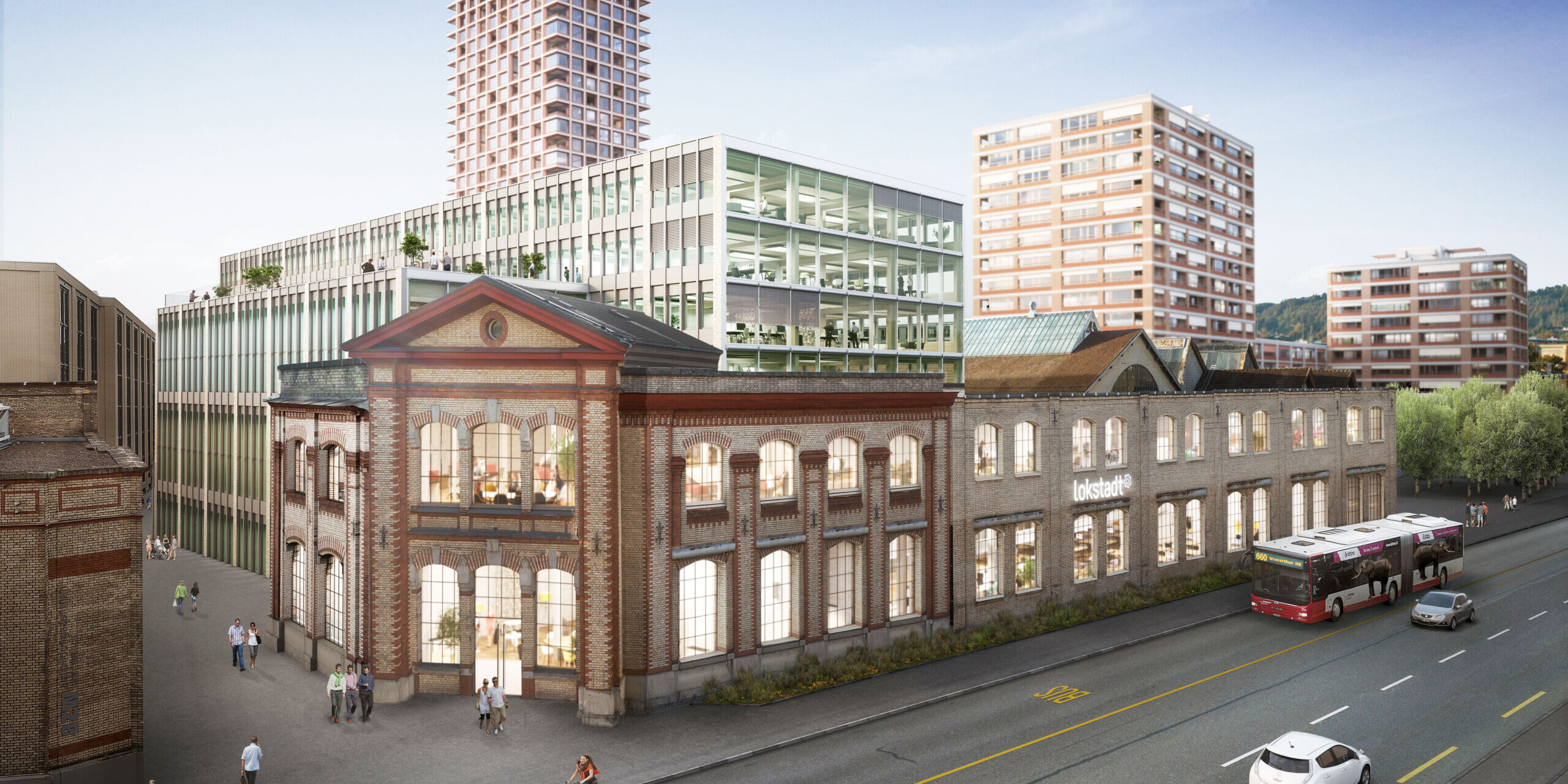
    The “Rocket” high-rise is one of the tallest timber residential buildings in planning. With Lokstadt, Implenia is developing a new, urban and diverse district with 750 apartments for around 1500 people. Lokstadt is located south-east of Winterthur railroad station. In the past, this area was home to the workshops of the Swiss Locomotive and Machine Factory (SLM) – the most important locomotive forge in Switzerland. The neighboring Sulzer factory took over SLM in the 1960s.

    Some of the locomotives produced by SLM bear the names of the various construction fields. For example, the “Tender”: condominiums were built here, which have been occupied since mid-2023, as well as commercial space. There were also 11 “townhouses” for sale: these are four- to five-storey maisonette apartments that have already been completed. In a second construction phase, six four-storey “townhouses” were built: these comprise a total of 24 apartments and have been ready for occupancy since spring 2023. The “Elefant” office building, which is located directly on Zürcherstrasse, has also been occupied since summer 2024.

    The central Dialogplatz will be framed by three buildings in future. The first is the “Krokodil” in timber construction. Here, 254 apartments have been created to meet the diverse housing needs of three cooperatives and individual homeowners. Vertical bands of windows are reminiscent of the former industrial halls and give the building a clear structure. BIGBOY” is located at the front of Dialogplatz. The 50 meter high building with 16 floors houses 125 rental apartments as well as office and commercial space between 55 and 370 square meters. The roof terrace offers a unique view over Lokstadt and the whole of Winterthur. The industrial past of the site is reflected in the brick façade. BIGBOY was ready for occupancy in summer 2023. The third building is still under development and is currently one of the tallest planned timber residential buildings: “Rocket”, developed and realized on behalf of Ina Invest, will be 100 meters high and with 33 floors will be the landmark of the new district and the Winterthur skyline. There are plans for 272 apartments. Charitable apartments are also planned in the “Tigerli” base building. A hotel is also planned. The move-in date is planned for 2028.

    Lokstadt stands for the sustainable use of resources, a carefully planned variety of uses and the innovative revitalization of listed buildings. These include the former factory buildings. Under the leadership of Implenia, these are being transformed into spaces that reflect local history and modern city life. The district is being developed step by step in accordance with the SIA Efficiency Path 2040. Despite the dense construction, emphasis is placed on sufficient open spaces and a high quality of stay. The site will be developed with an underground car park for motorized traffic across all building plots. Above ground, pedestrians and cyclists have priority thanks to a generously designed pedestrian zone.

    With Lokstadt, Winterthur connects the 19th century with the 21st century. Here, the city’s industrial history is brought together with Winterthur’s future as a residential and service city. The district is being built for people who love city life and care about sustainability.

  • Future for Munich’s city centre

    Future for Munich’s city centre

    THE VERSE is setting new standards in sustainable urban development. Herzog & de Meuron and ACCUMULATA Real Estate Management are transforming the neighbourhood with a comprehensive approach that integrates social, ecological and economic aspects. The aim is to transform the former Postbank-Karree into a lively, future-oriented centre that offers added value not only to future tenants, but also to residents and passers-by.

    Green space as a green lung
    The centrepiece of the plans is a 2,700 square metre green space inside the quarter. This park-like oasis will not only improve the microclimate, but also create space for recreation and socialising. Clearly structured passages connect the green space with the surrounding streets and make the area accessible and inviting.

    Innovation on the roofs
    The roof landscape of THE VERSE offers much more than just energy efficiency. In addition to photovoltaic systems, there are versatile utilisation areas such as sports fields, terraces and a running track. These areas encourage use by employees and provide a unique view over Munich. The concept seamlessly integrates technology into the design and contributes to LEED Platinum certification.

    Diversity and urban dynamism
    A mix of retail, catering and sports facilities will be created on the ground floor. This diversity revitalises the neighbourhood and supports the local economy. The reduced arcade depth along Paul-Heyse-Strasse creates attractive spaces that attract residents and visitors alike.

    Focus on mobility and resources
    THE VERSE combines a modern mobility concept with resource-conserving construction methods. 900 bicycle parking spaces with showers and optimal public transport connections promote sustainable mobility. At the same time, the partial preservation of the building shell reduces the environmental impact through less demolition work and grey energy.

    A hotspot for working and meeting
    With a conference area for up to 600 people, modern co-working areas and an auditorium, THE VERSE will become a meeting place for companies and professionals. The high-quality digital infrastructure and flexible building technology fulfil the requirements of tomorrow’s working world. THE VERSE shows how sustainable densification can improve urban quality of life. The project integrates modern architecture, green energy and social diversity and makes Munich’s railway station district a pioneer in urban development.

  • Successes, prospects and highlights of the 100th immoTable in Zurich

    Successes, prospects and highlights of the 100th immoTable in Zurich

    As part of the 100th immoTable at Ambassador House, one of the top events for the real estate industry, not only was progress celebrated, but topics such as sustainable urban development and the shortage of skilled workers were also addressed. Sabine Billeter briefly summarized the developments of the last five years. Arun Banovi then presented the new industry-specific job platform, which is an important resource for skilled workers. ImmoMedia is responsible for several media vehicles, such as the immoNewsletter, www.immo-invest.ch, immobilienJobs.ch, immoTermine.ch, the magazine immo!nvest a platform for locations and real estate.

    The focus of the event was the discussion on Zurich’s development strategies, which were presented by Fabian Streiff, Head of the Canton of Zurich’s Department of Economic Affairs. He emphasized Zurich’s strong position compared to other European cities and outlined innovative projects such as the research being carried out by universities, colleges and ETH on topics such as drone infrastructure, regulating the last mile and connecting with co-working and meeting zones for pedestrians and cyclists as well as the public transport network. The increasing shortage of skilled workers and demographic challenges were also the focus of the discussion.

    Martin Schneider, Deputy Director of the City of Zurich’s Office for Urban Development, highlighted the need to create living space for the city’s predicted growth. He referred to the importance of flexible housing concepts and the need to adapt land use to noise protection and climate targets. He also spoke about urban expansion and densification in the context of ISOS, which illustrates the complexity of urban development.

    Sustainable construction was also discussed, represented by Jura Cement-Fabriken AG, which has set itself the goal of building sustainably with concrete by 2030. Reducing CO2 emissions by changing material compositions was highlighted as an important factor in future construction practice. EWZ has also set itself the goal of 100% climate-neutral heating and cooling. The approach was illustrated to the participants using the Guggach and Greencity projects.

    Finally, Stefan Fahrländer, owner of Fahrländer Partner Raumentwicklung, emphasized the need for political measures to speed up the construction process and thus improve responsiveness to market needs. His comments underlined the need for faster and more efficient implementation of construction projects in Switzerland.

    The event was rounded off with a performance by rapper and beatboxer Knackeboul, who summarized the content of the event in a dynamic rap. In this way, the combination of specialist knowledge and cultural integration was illustrated in an entertaining way.