Tag: nachhaltige Wärmeversorgung

  • Heat from a depth of 2000 meters planned

    Heat from a depth of 2000 meters planned

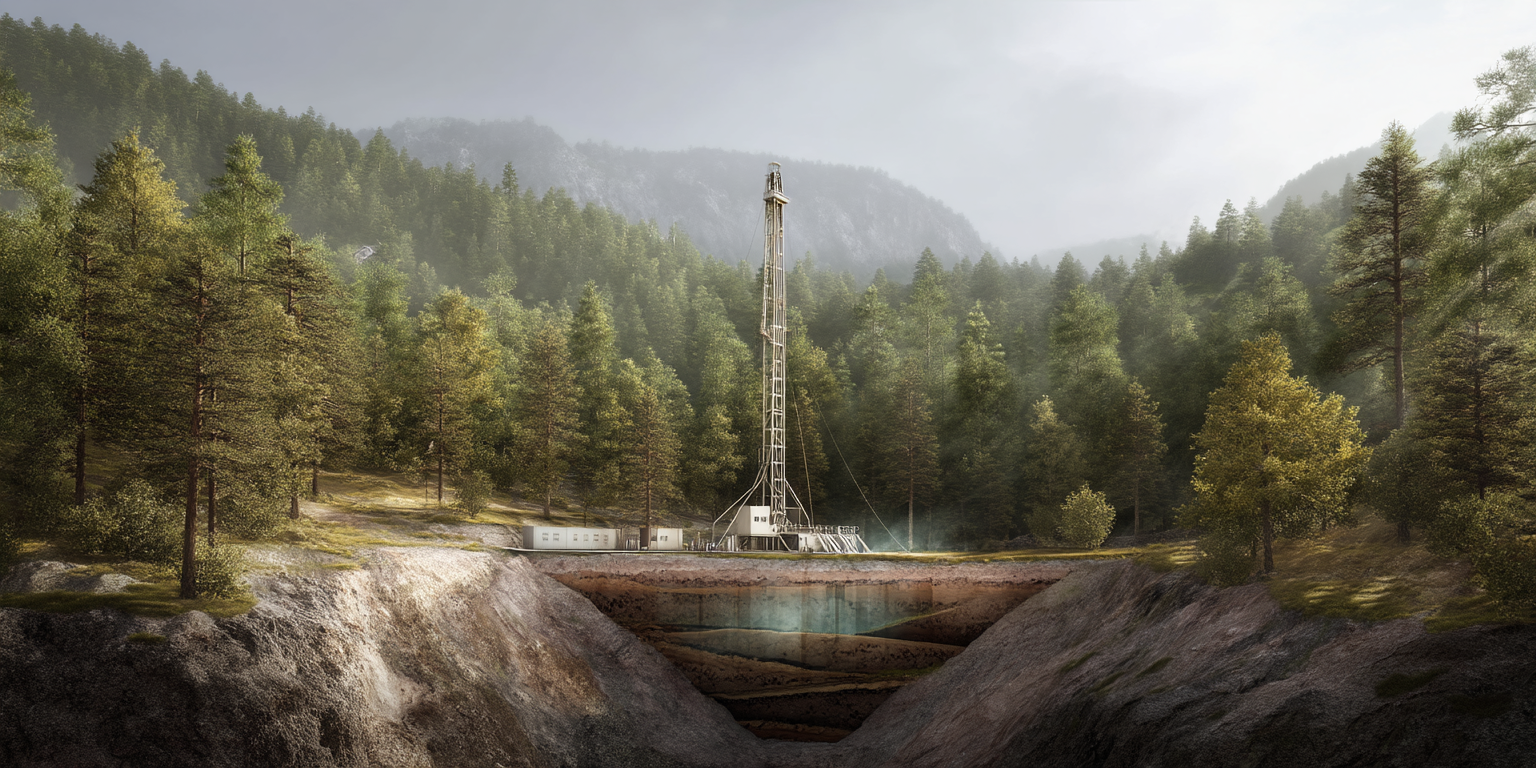
    The Federal Office for Buildings and Logistics (BBL) has announced an exploratory borehole for a planned geothermal project in Magglingen. Provided the necessary credit approval from the Federal Assembly and drilling permits from the cantonal authorities are obtained, deep water should be detected at a depth of around 1,500 to 2,300 meters.

    According to a press release, “several potential deep water reservoirs” are suspected there, which are to be used for a geothermal plant at the Magglingen National Sports Center of the Federal Office of Sport (FOSPO). The plant could supply heat there from 2029.

    This was preceded by underground investigations in 2023 by the FOBL. These were intended to help obtain a “geological image of the subsoil that is as precise as possible”. The exploration step that has now been announced is intended to further clarify whether the deep water is suitable for the economic use of a geothermal plant in the event of positive evidence.

    Seismic investigations are the basis of many geothermal projects to clarify the exact location of the deep water and because key figures such as water temperature, water volume and flow rate are lacking. The planned exploratory drilling reduces uncertainties and project risks.

  • A step towards a fossil-free future

    A step towards a fossil-free future

    The city of Zurich’s energy planning envisages making better use of renewable energy sources in future. With an approval rate of 88 per cent, the voters of Zurich said yes to the CHF 128 million project loan for the Altstetten and Höngg energy network.
    The urban areas of Altstetten and Höngg offer ideal conditions for an energy network. They have a high heat consumption density and are close to the heat source, the Werdhölzli sewage treatment plant. The commissioning of the Altstetten and Höngg energy network makes it possible to utilise the previously unused heat potential of the Werdhölzli wastewater treatment plant.

    The temperature of the treated wastewater is between 11 degrees Celsius in winter and around 25 degrees Celsius in summer. Entsorgung + Recycling Zürich treats up to 80 million cubic metres of wastewater every year. Before the purified water flows into the Limmat, it passes through the waste heat utilisation building, where the heat is extracted. In the energy centre, heat pumps raise the temperature to the level required for useful heat.

    Another heat supplier is the sewage sludge utilisation plant, which is also located on the site. The waste heat generated during the incineration of the sewage sludge is a valuable source of energy. Verbund utilises both the direct excess heat from the sewage sludge utilisation plant and the condensation heat from the exhaust gases. As the sewage sludge utilisation plant has temperatures of 70 to 80 degrees Celsius, it can be fed directly into the system without having to go through a heat pump.

    In addition, the waste heat from ice production at the ZSC Lions’ new Swiss Life Arena is fed into the anergy network. From summer 2022, the Swiss Life Arena’s energy centre will produce cooling for the connected properties, which will be used to cool the offices and commercial premises. The cooling is produced using highly efficient heat pumps.

    The Altstetten and Höngg energy network consists of various sub-perimeters. The Höngg and Altstetten Nord areas are largely connected to the energy network. In the Höngg-Zentrum and Altstetten Ost areas, implementation will take place from 2023 to 2032.