Tag: Nationalrat

  • Protect property more effectively against squatters

    Protect property more effectively against squatters

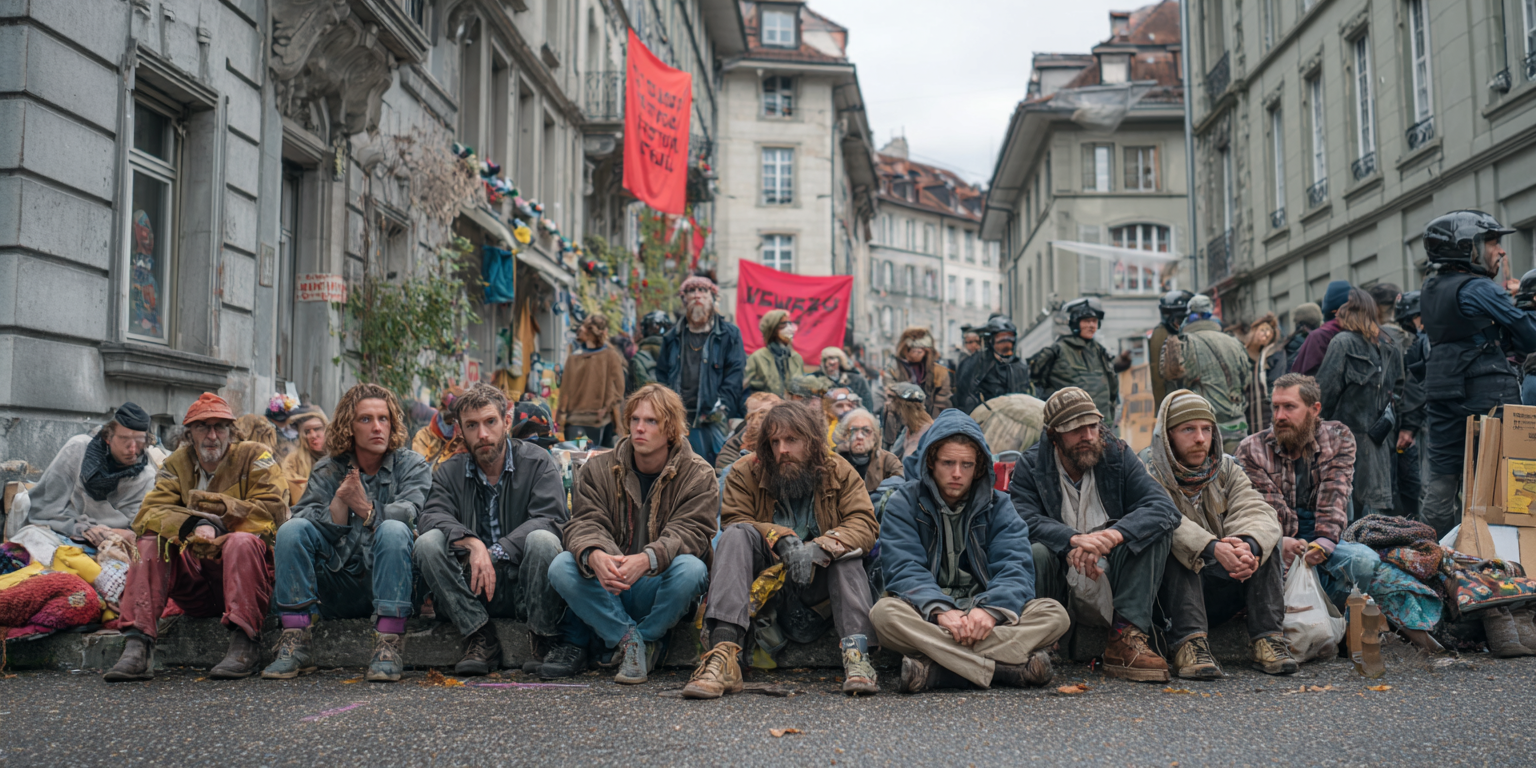
    On Monday, the Council of States adopted the Federal Council’s proposal to amend the Civil Code by a large majority. Owners should now be able to reclaim their property themselves within a “reasonable period” after becoming aware of an occupation. Previously, the condition “immediately” applied. This change gives owners more flexibility and room for maneuver in the event of unlawful occupation.

    Rapid eviction even in the case of unknown squatters
    The second key amendment to the law is also intended to enable homeowners to obtain an eviction more quickly, especially if the number or identity of the squatters is unclear. This should prevent unlawful occupations from continuing in the long term and owners from having to bear high follow-up costs.

    Controversial voices from the Council of States
    However, the bill was not uncontroversial. Carlo Sommaruga, SP member of the Council of States from Geneva, criticized the tightening of the law as superfluous, as many squats are regulated by interim use agreements anyway. According to Sommaruga, rising rents and the housing shortage are much more relevant in this context.

    Further process in parliament
    Although there is still a small difference of opinion between the two chambers, the way has basically been paved for a stronger position for owners in the case of squatting. The bill now returns to the National Council for finalization.

  • Commission supports selective changes to tenancy law

    Commission supports selective changes to tenancy law

    The National Council’s Legal Affairs Committee has passed two important bills aimed at improving the legal situation in tenancy law. One of the bills stipulates that in future, initial rents can only be contested if the renting party was in an emergency situation at the time the contract was concluded. This is intended to reduce legal uncertainty and avoid lengthy proceedings.

    The second bill deals with making it easier to prove the so-called “local and neighbourhood custom”. This is intended to lower the requirements for the proof of comparative rents and enable the admission of industry-established statistics as evidence. The aim is to improve the comparability of rents and thus prevent abusive rent demands.

    Decision following consultation
    The Commission’s decision is based on the results of the consultation on the parliamentary initiatives of former National Councillor Hans Egloff. Despite the minority motions tabled, the committee was clearly in favour of implementing the initiatives in accordance with the wording.

    The bills that have now been adopted are expected to be debated in the National Council in the 2025 spring session.

  • Easier building in noisy areas

    Easier building in noisy areas

    As part of the revision of the Environmental Protection Act, the UREK-N would like to simplify building in noise-polluted areas. In principle, at least half of the noise-sensitive rooms in new homes should have a window that complies with the noise limits. Relaxations are possible if controlled ventilation systems are installed or a quiet, private outdoor space is available. These regulations are intended to create a balance between densification and noise protection.

    Positions of the National Council and the Council of States
    The Council of States proposes that the limit values no longer have to be complied with at any open window in flats with controlled ventilation. However, the UREK-N considers the National Council’s version to be more balanced, as it offers a pragmatic solution to the housing shortage. The committee emphasises that building permits will only be granted if the buildings meet stricter noise protection requirements and measures to limit noise emissions are still prescribed.

    No reduction in noise protection regulations in aircraft noise areas
    The UREK-N dispenses with specific aircraft noise limits and agrees with the Council of States. This means that no further legal amendments should be necessary to allow construction near airports. The Commission does not envisage any additional restrictions for municipalities with regard to lowering the speed limit.

    Remediation of contaminated sites and VOC steering levy
    In the area of remediation of contaminated sites, the UREK-N maintains that owners must pay for the costs of investigating and remediating private playgrounds and gardens. The committee also requests that alternatives to the VOC incentive tax be examined and calls for an in-depth analysis by the Federal Council.

    Geoinformation Act and energy research
    The UREK-N has decided to refer the draft amendment to the Geoinformation Act back to the Federal Council for a thorough review. In the area of energy research, the aim is to harmonise the credit period of the SWEETER programme with the four-year period of validity of the ERI Dispatch.

    Approval of the electricity reserve
    The Commission supports the amendment to the Electricity Supply Act without a dissenting vote and emphasises the importance of a secure electricity supply even in extreme situations. It will examine the concept of the electricity reserve in depth and analyse various options in order to guarantee security of supply while minimising the environmental impact and costs.

    The UREK-N also recommends that the Federal Council provide stronger incentives for the formation of local electricity communities and relieve them of grid utilisation fees. The meeting took place under the chairmanship of National Councillor Christian Imark and partly in the presence of Federal Councillor Albert Rösti.
  • Legal need for action in the event of construction defects

    Legal need for action in the event of construction defects

    The current legal situation is proving to be disadvantageous for buyers of new builds and private developers. Problematic contractual clauses that have developed in practice put them at a considerable disadvantage. The existing law assumes two equally strong negotiating partners, which is not the case in reality. Professional contractors and sellers dictate the terms of the contract, while private developers have no negotiating power due to the high demand in the real estate market. This “eat or die” mentality puts them under massive pressure.

    The National Council’s proposals: Abolition of the separatenotice period
    The National Council has created a practicable proposal, the core of which is the abolition of the separate notice period for defects. Currently, buyers and builders have to observe two deadlines: the notice period and the limitation period. The notice period requires a detailed notification of defects to the right person within a short period of time. If this deadline is missed, buyers and builders lose all warranty rights. The limitation period is the second requirement. The abolition of the notice period would solve the main problem that many lose their statutory liability claims because they are unable to give notice of construction defects in good time. HEV Switzerland supported this decision by the National Council.

    The position of the Council of States: Extension of the notice period, but no abolition
    The Council of States recognizes the need for action to improve liability for construction defects, but maintains the notice period, albeit extended to 60 days. However, this extension does not solve the fundamental problem that private buyers and builders lose their rights in the event of defects if they do not comply with the legal requirements of a notice of defects within the deadline.

    No extension of the limitation period
    The Council of States is also adamant about the limitation period. The existing period of five years remains in place and can be shortened further by contract. The National Council had called for this period to be extended to ten years in order to do justice to the buyer’s claims for defects. For homeowners and condominium owners, the onset of the limitation period means that they can no longer enforce their rights in the event of construction defects and must bear the costs themselves. In view of the long service life of many building components, this short limitation period is problematic. HEV Switzerland is disappointed that private lay purchasers and building owners continue to be disadvantaged.

    Referral back to the National Council
    The bill will now be referred back to the National Council. HEV Switzerland remains committed to improving the legal situation of private home and condominium owners in the event of construction defects. The hope remains that further discussions and adjustments will lead to a solution that meets the needs and rights of private builders and property buyers.

  • National Council sets new priorities for the environment, spatial planning and energy

    National Council sets new priorities for the environment, spatial planning and energy

    The National Council’s Committee for the Environment, Spatial Planning and Energy (UREK-N) has decided to restrict the right of appeal of environmental protection organisations in smaller residential construction projects. The amendment to the Federal Act on the Protection of Nature and Cultural Heritage aims to adapt the legal framework for small and medium-sized residential construction projects in order to equalise unequal financial resources between parties.

    In addition, the Commission has begun discussing the Federal Act on Supervision and Transparency in Wholesale Energy Markets in order to ensure appropriate supervision and transparency. As part of the discussion on an electricity market agreement with the EU, the Commission discussed the economic importance of a secure electricity supply and the need to harmonise Swiss regulations with those of the EU.

    In the area of the circular economy, the Commission resolved most of the differences with the Council of States, particularly with regard to the relaxation of the municipal waste monopoly. However, there is still disagreement on the question of whether unsold biogenic products should be unpackaged.

    Further discussions by the committee included the partial revision of the Environmental Protection Act, which focuses on noise protection and the remediation of contaminated sites. The motion “Combating the housing shortage with densification and non-profit housing construction” was rejected by the committee, as it is of the opinion that the existing legal basis is already sufficient. A postulate on optimising the use of energy wood was also submitted.

    The committee meetings on 22 and 23 January 2024 were chaired by National Councillor Christian Imark and were partly held in the presence of Federal Councillor Albert Rösti in Bern.

  • Nationalrat setzt neue Akzente für Umwelt, Raumplanung und Energie

    Nationalrat setzt neue Akzente für Umwelt, Raumplanung und Energie

    Die nationalrätliche Kommission für Umwelt, Raumplanung und Energie (UREK-N) hat beschlossen, das Beschwerderecht von Umweltschutzorganisationen bei kleineren Wohnbauprojekten einzuschränken. Die Änderung des Bundesgesetzes über den Natur- und Heimatschutz zielt darauf ab, den Rechtsrahmen für kleinere und mittlere Wohnbauprojekte anzupassen, um ungleiche finanzielle Mittel zwischen Parteien auszugleichen.

    Darüber hinaus hat die Kommission die Beratung des Bundesgesetzes über die Aufsicht und Transparenz in den Energiegrosshandelsmärkten begonnen, um eine angemessene Aufsicht und Transparenz sicherzustellen. Im Zuge der Diskussion über ein Strommarkt-Abkommen mit der EU erörterte die Kommission die volkswirtschaftliche Bedeutung einer sicheren Stromversorgung und die Notwendigkeit, die Schweizer Regelungen mit denen der EU in Einklang zu bringen.

    Im Bereich der Kreislaufwirtschaft hat die Kommission die meisten Differenzen mit dem Ständerat ausgeräumt, insbesondere bezüglich der Lockerung des Siedlungsabfallmonopols. Es bleibt jedoch noch Uneinigkeit in der Frage, ob unverkaufte biogene Produkte entpackt werden sollen.

    Weitere Diskussionen der Kommission umfassten die Teilrevision des Umweltschutzgesetzes, die sich auf den Lärmschutz und Altlastensanierungen konzentriert. Die Motion «Mit Verdichtung und gemeinnützigem Wohnungsbau gegen die Wohnungsnot» wurde von der Kommission abgelehnt, da sie der Meinung ist, dass die bestehenden gesetzlichen Grundlagen bereits ausreichend sind. Zudem wurde ein Postulat zur Optimierung der Nutzung von Energieholz eingereicht.

    Die Sitzungen der Kommission am 22. und 23. Januar 2024 standen unter der Leitung von Nationalrat Christian Imark und wurden teilweise in Anwesenheit von Bundesrat Albert Rösti in Bern abgehalten.

  • National Council against nationwide introduction of mandatory rental forms

    National Council against nationwide introduction of mandatory rental forms

    On Tuesday, the Grand Chamber rejected the initiative by former National Councillor Natalie Imboden (Greens/BE) – by 116 votes to 71 with 4 abstentions. A bourgeois majority from the SVP, FDP and Centre Party prevailed. The parliamentary initiative is now dead.

    Michael Töngi (Greens/LU) argued unsuccessfully that the rental form requirement would improve transparency in the rental sector. Today, prices are often increased when tenants change – resulting in a “far too high return”. By systematically disclosing the amount of the previous tenant’s or landlord’s rent, tenants would be able to defend themselves more easily against abusive rents.

    Philipp Matthias Bregy (centre/VS) stated on behalf of the majority of the committee that the cantons are already free to introduce a form for the initial rent of the previous tenant for their canton. Regulating the question of forms at federal level would contradict the idea of federalism.

    “All in all, the proposal creates more bureaucracy,” says Bregy. Tenants already have legal instruments at their disposal to contest the initial rent. He also pointed out that even in the cantons with mandatory forms, there had been no fall in rents or increased transparency.

  • Parliament agrees on expansion of renewable energies

    Parliament agrees on expansion of renewable energies

    On 26 September, the National Council cleared the way for an agreement with the Council of States on the federal law on a secure electricity supply with renewable energies. The so-called Energy Decree sets binding target values for the expansion of renewable energies and extends previously limited support instruments. Special emphasis is placed on securing the electricity supply after the phase-out of nuclear power and, in particular, on the electricity supply in winter.

    Lastly, Kurt Egger (GP/TG) had cleared the way for agreement. According to the minutes of the National Council, he withdrew a motion by the minority that would have prescribed the construction of photovoltaic systems on new car parks from a size of 500 square metres from 2030. Egger also regretted that the new law only stipulates a solar obligation for new buildings from a floor area of 300 square metres.

    Previously, the Council of States had accommodated the large chamber. For example, less residual water in hydroelectric power plants may only be permitted if there is an imminent shortage of electricity. The small chamber also approved the introduction of a market for energy efficiency measures proposed by the National Council.

    Federal Councillor Albert Rösti thanked both chambers for their ability to compromise. He said he hoped that Parliament had thus achieved a “medium level of satisfaction” on all sides. He said that the law would lead to Switzerland generating 3 to 5 terawatt hours more winter electricity in the next five to ten years. “Then we will be back on the safe side,” Rösti said. But this would require new hydropower projects, namely Grimsel, Trift and Gorner, as well as alpine solar plants.

    The new federal law is to come into force on 1 January 2025. But the political debate continues. Kurt Egger pointed out that the Greens would launch their solar initiative for compulsory solar energy on roofs and facades of new buildings.

  • Councils agree on CHF 646 million for location promotion

    Councils agree on CHF 646 million for location promotion

    In the years 2024 to 2027, a total of around CHF 646 million is to flow into the promotion of the location. The two chambers of parliament have agreed on this, the parliamentary services inform in a press release. Specifically, the Council of States withdrew its vote for an increase in funding for tourism promotion and the contribution to the Regional Development Fund. Both areas are to receive the same amount of funding for the coming years as for the expiring period.

    The Federal Council had already set out the goals for location promotion for the years 2024 to 2027 in January. According to these, the framework conditions for SMEs are to be improved, the regions strengthened and the opportunities of digitalisation exploited. Furthermore, location promotion should contribute to sustainable development and strengthen the attractiveness of business and tourism.

    The Swiss Tourism Association(STV) has mixed feelings about the agreement of the councils. On the one hand, the stakeholders of the tourism sector were relieved “that the proposals of the Federal Council regarding the financial means for the tourism promotion instruments could be maintained”, according to a corresponding statement of the STV. On the other hand, it is feared that planned commitment to sustainability and digitalisation in particular will fall victim to the red pencil. Due to high inflation in some source markets, the unchanged funding level also means “a substantial reduction in funds for foreign marketing”, the association writes.

  • Parlament einigt sich bei Solarpflicht für Gebäude

    Parlament einigt sich bei Solarpflicht für Gebäude

    Der Nationalrat entschied am Montag wie der Ständerat, auf Antrag einer Minderheit bei der Bereinigung des Energie-Mantelerlasses. Die Mehrheit der Kommission für Umwelt, Raumplanung und Energie (Urek-N) hatte indes auf der generellen Solarpflicht für Dächer und Fassaden bestanden, unterlag aber knapp.

    Energieminister Albert Rösti hatte vor dieser Formulierung gewarnt und gemahnt, die Vorlage mehrheitsfähig zu halten. Noch nicht einig sind sich die Räte bei der Solarpflicht für Parkplätze. Der Nationalrat will sie für grosse Flächen, der Ständerat nicht. Er hat nun wieder das Wort zur Vorlage.

  • National Council wants more photovoltaic systems on condominiums

    National Council wants more photovoltaic systems on condominiums

    On Wednesday, it adopted a motion by Ticino SP National Councillor Bruno Storni with this demand. Storni also wants to make it easier to carry out energy-efficient renovations and install electric car charging stations in condominium buildings.

    To this end, the Federal Council should adjust the necessary quorums in the condominium law when passing resolutions on such projects. In order to achieve the goals of the federal government’s Energy Strategy 2050, it is important that the energy efficiency of condominium buildings increases, says Storni.

    With 119 votes in favour, 66 against and 6 abstentions, the large chamber accepted Storni’s proposal. It will now go to the competent committee of the Council of States for consideration.

    The Federal Council rejected the motion. The current law contains a differentiated and balanced regulation of the decision-making of condominium owners’ associations. It should be left to the condominium owners, within the framework of their private autonomy, to decide on renovation and conversion projects by means of the proven rules of decision-making.

  • National Council decides on offensive for wind energy

    National Council decides on offensive for wind energy

    The National Council has joined the amendments of the Council of States and followed it with regard to the bill on the accelerated approval of wind power plants by 136 votes to 53. Originally, this bill came from the National Council’s Committee for the Environment, Spatial Planning and Energy. The background to this is the goal of making Switzerland less dependent on electricity imports in times of low sunshine.

    According to a parliamentary press release, energy minister Albert Rösti (SVP) said that an increase in capacity was therefore necessary. However, this would have to be realised “without severely eroding the usual rights of co-determination”. According to the information, there was fundamental opposition to the wind power offensive in parliament only on the part of the SVP. The other parliamentary groups agree that wind energy makes a valuable contribution to the electricity supply in the winter months.

    Therefore, the tenor was that it was unacceptable that projects had to wait more than 20 years for approval. The bill stipulates that the accelerated procedures may only be applied if the municipalities have already approved the installation as part of the land-use planning. According to Rösti, this applies to 39 turbines that are to supply 250 gigawatt hours of electricity annually. These include the Grenchenberg wind farm in the canton of Solothurn, the Eoljorat Sud and Sur Grati projects in the canton of Vaud and the Crêt Neuron project in the canton of Neuchâtel.

    The accelerated procedures are to be applied to wind energy projects in the national interest until an additional capacity of 600 megawatts has been installed. For these projects, the canton will now be responsible for the building permit. In addition, the legal remedies against this decision will be limited: it will only be possible to challenge it before the highest cantonal court.

  • Milestone for the further development of CH energy policy

    Milestone for the further development of CH energy policy

    Particularly important decisions of the Commission meeting of 20-23.2.2023

    • A regulation for solar plants in the national interest: This will make it possible to build Alpine solar power plants even after the expiry of the urgent federal decree (“Solar Express”).
    • The obligation of operators of larger storage hydropower plants to participate in the energy reserve: Photovoltaics (PV) in combination with hydropower enables a secure power supply in winter, provided the reservoirs are not emptied prematurely for economic reasons.
    • The possibility of loans in case the resources of the grid surcharge fund are not sufficient for the intended promotion of renewable energy production: This can avoid a “stop-and-go”.
    • Data from smart metering systems are to be made available to end consumers in real time: This promotes the optimal coordination of electricity production (e.g. from PV systems) and consumption at the local level, which can reduce investments in electricity grids.
    • Storage facilities without end consumption are to be exempted from the grid fee for an unlimited period. And storage facilities with end consumption should also be able to benefit from a refund of the grid fee for the energy fed back into the grid from these storage facilities: This promotes the grid-serving use of stationary storage facilities as well as the bidirectional charging of electric vehicles.
    • The framework conditions for local electricity communities (LEG) have been significantly improved compared to the resolution of the Council of States: this is also a significant contribution to the intelligent use of the grids.
    • In rural areas, high costs for grid reinforcements often lead to PV projects being suspended. A cost pass-through is intended to provide relief here.
    • The parliamentary initiative by Swissolar President Jürg Grossen’s initiative to harmonise the taxation of the sale of solar electricity was unanimously approved. This is an essential contribution to clearing up the “patchwork” of framework conditions for solar plants.


    Detailed information at www.parlament.ch

  • The federal government wants to develop a concept for energy-efficient measures in buildings

    The federal government wants to develop a concept for energy-efficient measures in buildings

    In his motion of September 26, 2019, the then National Councilor Christoph Eymann (LDP/BS) asked the Federal Council to “submit an implementation concept for energy-efficient Minergie-P measures to reduce the 80 percent energy losses in the building sector and also the use of roof and facade surfaces for solar energy production”. The National Council approved the initiative in June last year. At its meeting on May 31, the Council of States also approved the motion, the parliamentary services inform in a statement .

    However, because the Council of States has made an addition to the text, the motion will first go back to the National Council, is explained further in the communication. Specifically, the cantons should be involved in the development of the concept. This was recommended by the State Council Commission for the Environment, Spatial Planning and Energy ( Urek-S ) due to major cantonal differences in the existing building program.

    The Federal Council supports Eymann’s motion. “In view of the increased energy prices, for example because of the Ukraine war, the concern is not only important in terms of climate policy, but also economically,” quoted the Parliamentary Services Environment Minister Simonetta Sommaruga. “The population can be relieved in this way.”