Tag: öffentlicher Verkehr

  • Pilot project for intelligent automated mobility is progressing

    Pilot project for intelligent automated mobility is progressing

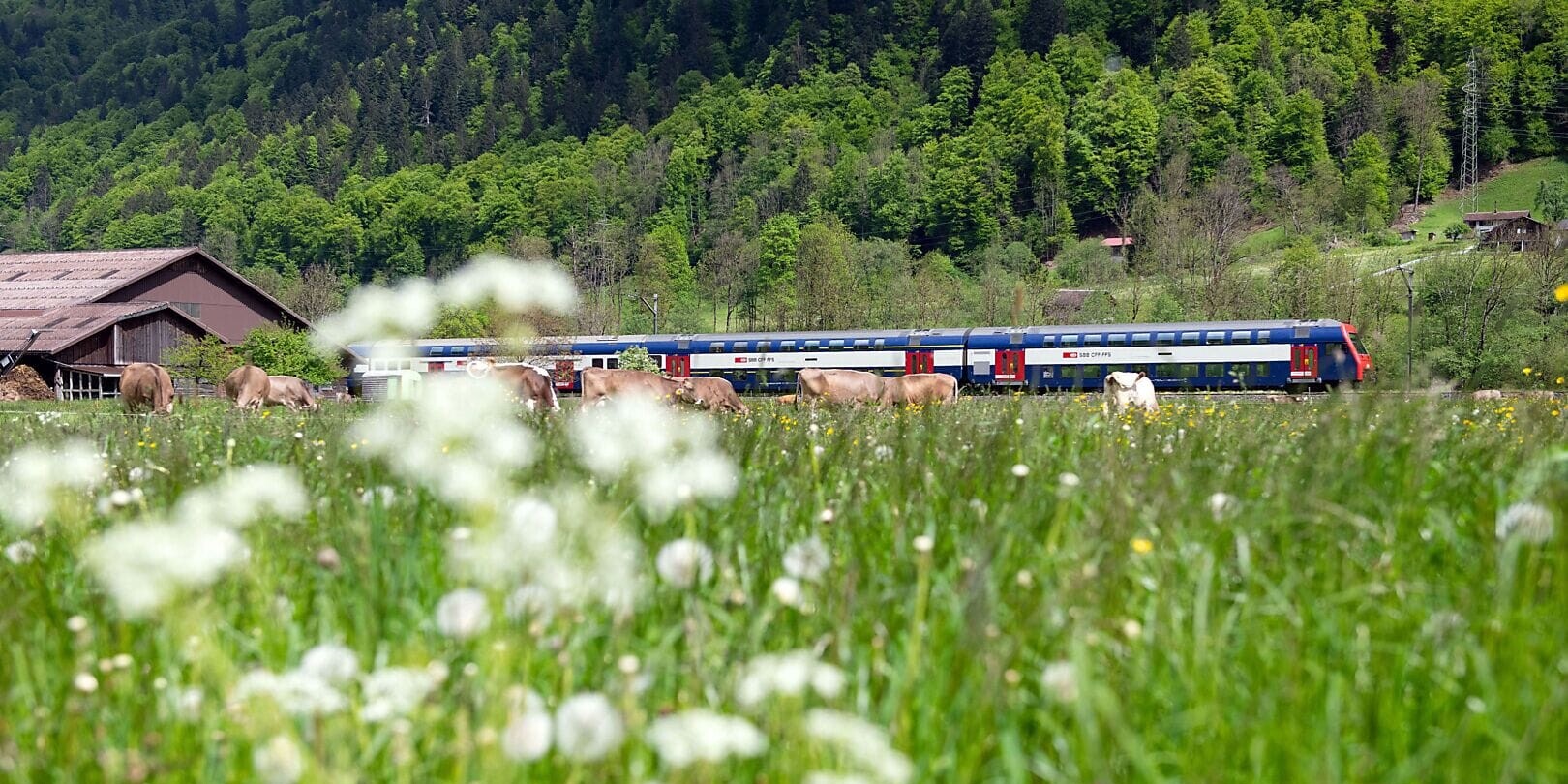
    The Swiss Transit Lab(STL) from Schaffhausen, the cantons of Zurich and Aargau and SBB have started the mapping phase of the intelligent automated mobility (iamo) pilot project. With the creation of a digital map of the region, the use of self-driving vehicles in the Furttal is being prepared, according to a press release. Before the service can be used in the Furttal, a training phase and a test phase will be carried out following the mapping.

    As part of the project, the project partners want to make automated vehicles available to travellers and find out how this could further develop public transport in the future. Two electric cars equipped with WeRide technology are now on the road in the Furttal valley for the first time. However, these are still being driven by a driver for the time being.

    During the mapping phase, the roads in the pilot area are now being travelled manually. The vehicle sensors record the surroundings and create a digital map that will contain more information than a classic navigation map. In addition to real-time images, the map will provide the basis for the safe navigation of self-driving vehicles in the future. As soon as this phase has been completed and the exceptional authorisation for automated driving has been granted by the Federal Roads Office(FEDRO), the training and test phase will follow. The vehicles will learn the traffic rules and typical situations in the pilot area and then drive automatically, initially under the supervision of a safety driver.

    The public launch of the vehicles is scheduled for the first half of 2026. Up to four passenger cars can then be ordered for a fee via an app and take passengers from a defined stop to another stop in the pilot region. Various measures are intended to ensure data protection and data security. The fleet is also to be expanded to include minibuses in future.

  • Intelligent mobility for public transport in Bogotá

    Intelligent mobility for public transport in Bogotá

    Schindler is the sole supplier of lifts and escalators for Line 1 of the new elevated railway system in Bogotá. The metro line will use fully automated, driverless railway systems to provide modern, reliable local transport in the Colombian capital. The Schindler systems will therefore be customised to meet the special requirements of public transport, the company announced in a press release. The lifts will be equipped with easily accessible control buttons to enable barrier-free access to the stations.

    The Schindler Technical Operations Centre (TOC) in Medellín will monitor each lift and escalator remotely around the clock. The Schindler ActionBoard will also provide real-time status reports of all lifts and escalators, helping to optimise uptime and ride quality for passengers.

    “We are incredibly proud to be part of this historic project with our lifts and escalators,” said Vikén Martarian, responsible for the Americas and Escalators region, in the press release. “Bogotá will become more accessible for the people who live, work and visit the capital. Thanks to our lifts and escalators, they will be able to move around the metro stations more easily and comfortably.”

    From 2028, Line 1 of the Bogotá Metro will be the first metro line in the Colombian capital to transport over 1 million passengers a day. The line comprises 16 stations over a length of 23.9 kilometres.

  • Expansion of the S-Bahn infrastructure in Frankfurt

    Expansion of the S-Bahn infrastructure in Frankfurt

    DB InfraGO AG has commissioned Implenia to build the inner-city section of the Nordmain suburban railway in Frankfurt. Specifically, the construction and real estate company from Opfikon is to realise the underground section of the S-Bahn from Konstablerwache via the new S-Bahn station Frankfurt (Main) Ost (tief) to Fechenheim for the Deutsche Bahn subsidiary. The contract is worth over 200 million euros, Implenia announced in a press release.

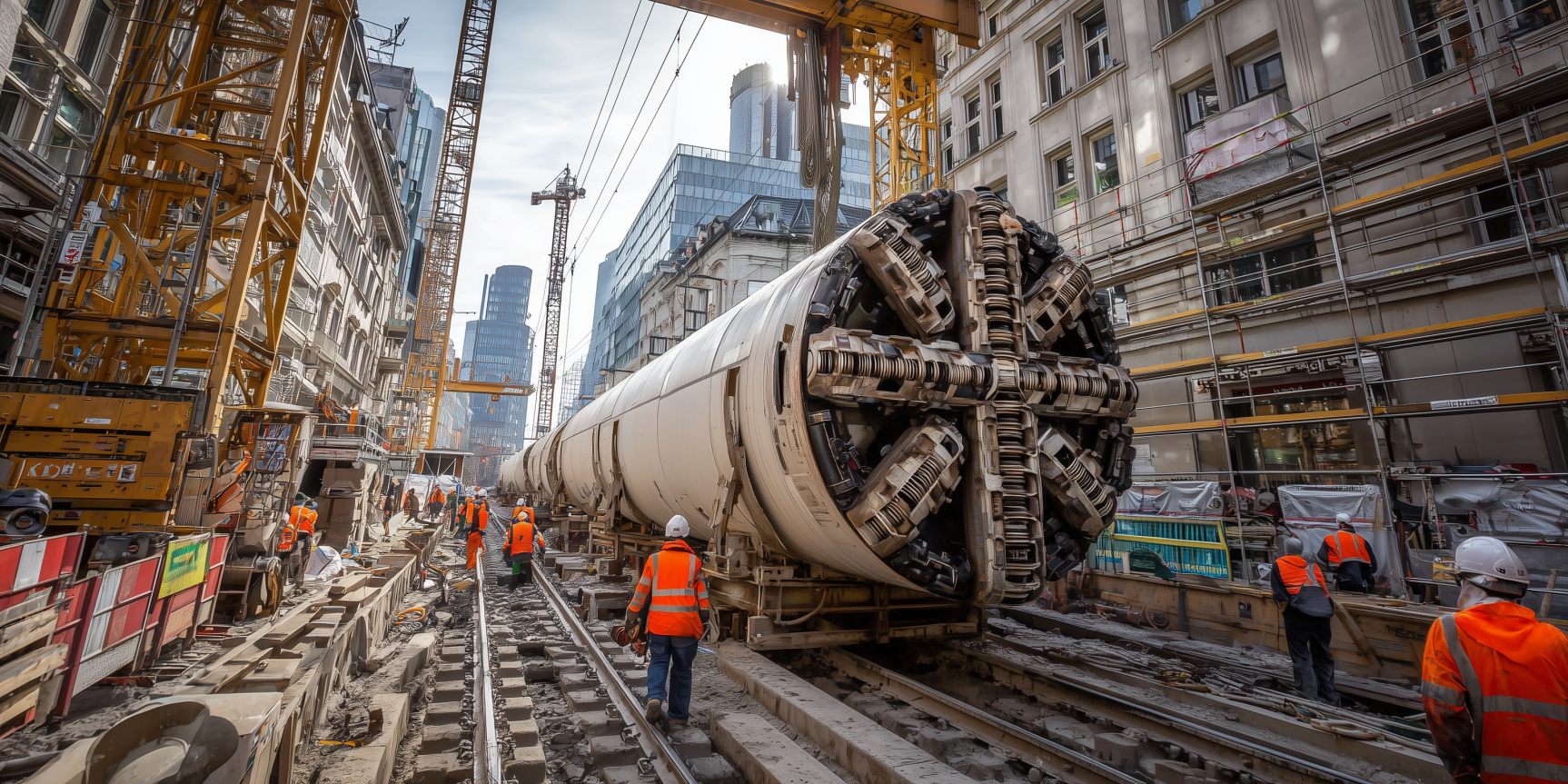
    The contract includes the starting excavation pit Trog and the excavation pit for the underground S-Bahn station Frankfurt (Main) Ost (tief), a series of ancillary excavation pits and engineering structures, as well as two tunnel tubes approximately 1.2 kilometres long. They will be constructed by mechanised tunnelling. Implenia will also carry out extensive dewatering measures and provide a range of specialised civil engineering services. Work is scheduled to start at the beginning of 2026 and be completed by 2031.

    “The further expansion of a functioning transport infrastructure is central to the sustainable development of our cities,” said Erwin Scherer, Head Division Civil Engineering at Implenia, in the press release. “I am delighted that Implenia, with its many years of experience and extensive expertise, is able to contribute to improving public transport in the densely populated Rhine-Main region.”

  • Glarus renews public transport

    Glarus renews public transport

    With the total revision of the Public Transport Act (öVG), the canton of Glarus is setting a strategic milestone. The new law comprehensively regulates the organization, planning and financing of public transport. The aim is to create a comprehensive, demand-oriented and legally clear mobility infrastructure that is central to the economic development and attractiveness of Glarus as a business location.

    The previous law from 1996 was no longer up to date. Changes in federal requirements, new regulations on compensation for regional passenger transport and technological developments required a fundamental revision. The Government Council therefore involved the Public Transport Commission at an early stage, whose recommendations have now largely been implemented.

    Clear responsibilities, clear perspectives
    One of the main aims of the revision is to clarify the often unclear responsibilities. All public transport matters are now clearly assigned to a competent authority. In future, the cantonal council will have comprehensive planning and management powers via a new public transport concept, which will serve as a strategic guiding document. The Government Council, in turn, can decide on adjustments within its financial competence. The public transport commission will remain in place as an advisory body.

    In future, the actual ordering of transport services will be the responsibility of the relevant department, which must be guided by the adopted public transport concept. The reorganization creates efficiency, transparency and a modern governance structure.

    Relief for municipalities and investment in mobility
    A fundamental system change concerns financing. The canton will now assume all public transport costs that are not borne by the federal government. This means that co-financing by the municipalities is no longer required, including for local and excursion traffic. This means an annual reduction in the burden on municipal coffers.

    At the same time, an important transport and settlement policy principle will be enshrined in law. All villages in the canton should remain accessible by public transport. In addition, the principle of a half-hourly service is assumed, with the possibility of defining exceptions in the public transport concept depending on the situation.

    Rethinking transport – opportunities for the future
    The new law takes account of changing mobility needs. New technologies, changes in leisure and work behavior and demand are fundamentally changing mobility behavior. Even if such services are not yet legally considered public transport, the new Public Transport Act provides scope for innovative developments and their possible integration into future strategies.

    The will to shape the development of Braunwald is particularly evident. Braunwald should continue to be accessible by funicular. Although this is not yet project approval, the direction has been set – a strong signal for tourism too.

    The law comes into force on January 1, 2026. Glarus is thus opening a new chapter in mobility policy. Clearly structured, sustainably financed and ready for the demands of the future.

  • Overall transport concept 2040 for the Baden area

    Overall transport concept 2040 for the Baden area

    Following an intensive planning and participation process from 2022 to 2024, the delegation of authorities has adopted an overall transport concept that aims to sustainably improve mobility in the Baden region. The range of measures with a time horizon of 2040 includes the expansion of public transport with bus priority and optimised junctions.

    For pedestrians and cyclists, the cycle network will be expanded and additional bicycle parking spaces created. In terms of the road network, short-term measures are planned for the eastern bridgehead and improvements along Bruggerstrasse in Baden. At the same time, the upgrading of local thoroughfares and the strengthening of neighbourhoods as a “city of short distances” should promote urban and open spaces. In addition, transport demand is to be better controlled by municipalities and the canton through targeted mobility management. Long-term options for the period after 2040 were also considered.

    In addition to the short-term measures, options for the period after 2040 were also discussed. These include securing routes for important public transport corridors and possible measures for the eastern bridgehead.

    Centre relief as a central component
    The “ZEL long” variant, a road relief option with a bypass around Untersiggenthal, was also decided as a long-term option. The implementation of this variant is to be examined as soon as the impact assessment of the initial measures indicates a need.

    Participation and broad consensus
    The concept was developed in a participatory process that included mobility conferences, online participations and support group meetings. The broad involvement of municipalities, experts and the population led to a consensus-based package of measures that is now to be implemented step by step.

    With the adopted overall transport concept 2040, the Baden region is laying the foundations for sustainable and future-oriented mobility development. The coordinated measures promote public transport, non-motorised traffic and the quality of life of the population and offer a clear perspective for the coming decades.