In the first half of 2025, CHF 1.47 billion flowed into Swiss start-ups, an increase of 36 per cent compared to the previous year. This is the third-best result since measurements began. However, growth was driven by a small number of startups that raised large sums from international investors. The number of financing rounds fell for the third time in a row to 124, which corresponds to a decline of ten per cent.
Biotech as a growth driver The biotech sector in particular produced a strong result. It set a new record with an inflow of CHF 705 million in capital. The previous record of CHF 436 million from 2021 was clearly surpassed. The reasons for this success lie in highly qualified start-up teams and technological developments based on excellent research.
Recovery in ICT and fintech The recently weakening ICT and fintech sectors were also able to recover. General ICT start-ups recorded investment growth of 86 per cent to CHF 247 million. Fintech companies received CHF 153 million, which corresponds to an increase of 93 per cent. The number of transactions remains low, which indicates continued investor selectivity.
Swiss startup ecosystem remains resilient Despite the uncertain market environment, the Swiss startup ecosystem is able to produce internationally competitive companies. One example of this is Sygnum Bank, which became Unicorn in the first half of 2025. The bank, which specialises in digital assets, was valued at over 1 billion dollars, a signal of the potential of innovation outside of the healthcare sector.
Gloomy outlook among investors A broad-based survey shows that expectations for the coming twelve months are subdued. Fundraising and more difficult exit opportunities are of particular concern. International trade barriers, on the other hand, only play a subordinate role. Access to capital is likely to remain challenging for many start-ups, despite individual success stories.
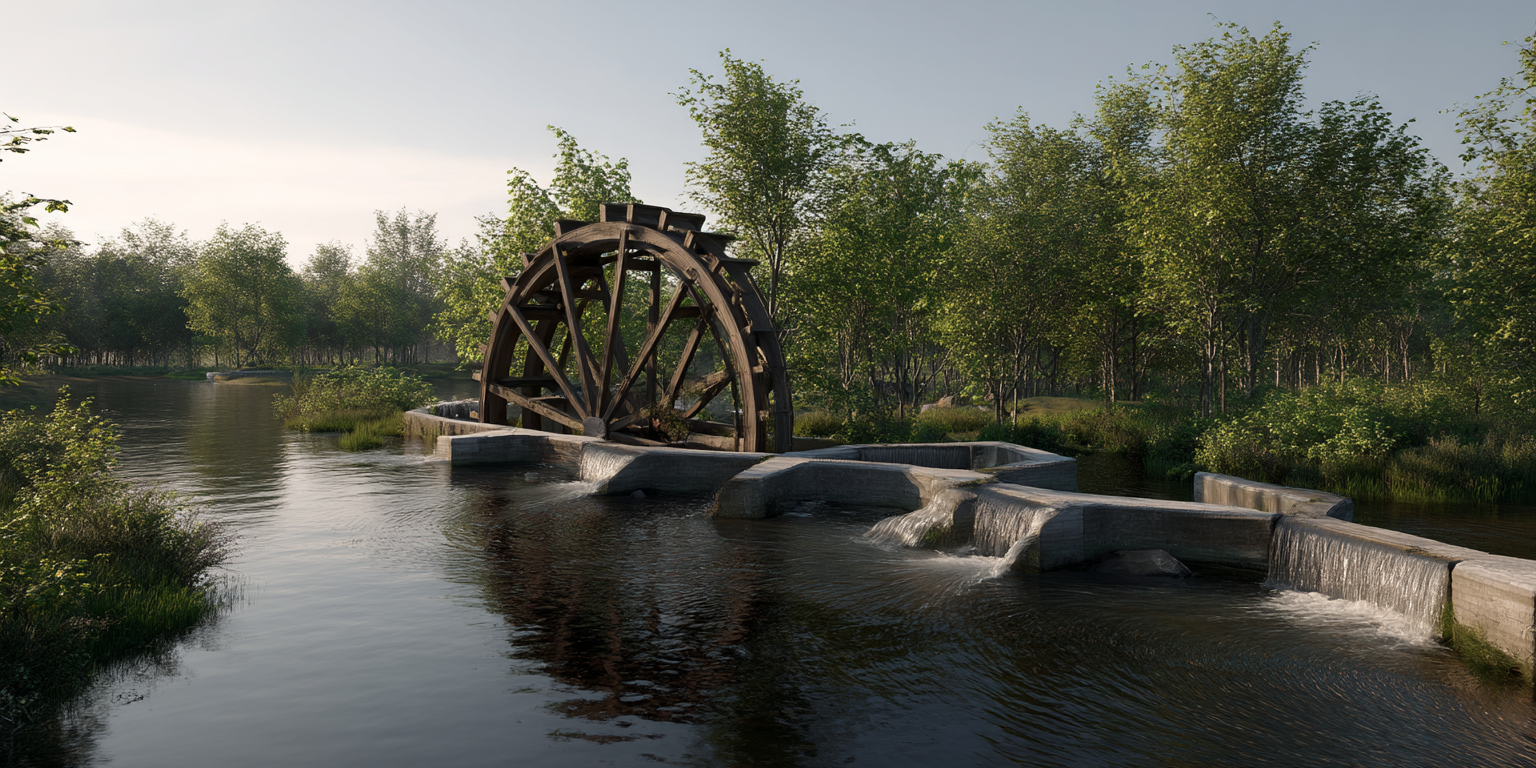
Researchers from the Mechanical Systems Engineering department of the Swiss Federal Laboratories for Materials Science and Technology (Empa) in Dübendorf have been involved in the construction of a water pumping wheel in Steffisburg. According to a press release, the construction became necessary after the Zulg was lowered by two meters to protect the village from flooding. The Mühlebach stream, which had supplied Steffisburg’s businesses with water energy for centuries, was in danger of drying up, as was the surrounding ecosystem.
The challenge was to adapt the plant to the requirements near Steffisburg. “With a minimum Zulg outflow of one cubic meter per second, it must feed at least 125 liters of water into the Mühlebach,” Silvain Michel, project manager at Empa, is quoted as saying in the press release, “and even with lower inflows, at least 100 liters per second must still be pumped in order to preserve the biotopes.”
The model for the water pumping system was the pumping wheel developed by Walter Zuppinger in 1849. The water wheel, whose efficiency was scientifically confirmed in extensive tests in 2016, has already been used in the Glattfelden project installed by Empa.
In the current project in Steffisburg, the water wheel was modified again and fitted with a separate drive wheel. In addition to Empa, the EKZ design office in Thun and CFD-Schuck GmbH were involved in the technical implementation.
The Fribourg construction sector is part of the bioeconomy, one of the two axes of the canton’s economic strategy. It is proving to be very robust and is prepared for the major upheavals that will result from the challenges of climate change, resource scarcity and digital progress.
“Whether in the fields of wood construction, metal construction, concrete, plastics, civil engineering or energy efficiency, Fribourg companies enjoy an excellent reputation throughout the country and beyond thanks to their know-how,” says a delighted Olivier Curty, Director of Economic Affairs and Vocational Training for the Canton of Fribourg.
The players in the sector are supported in their projects and activities in particular by the Building Innovation Cluster, which plays an important role in dynamising the sector, and by the Smart Living Lab, the leading centre of excellence for the future of the built environment. Jerry Krattiger, Director of the Fribourg Economic Development Agency (WIF): “The environment is favourable for the development of partnerships and innovative projects. The framework conditions are excellent, the skills and the will are there… we just have to use them to shape our future!
Presentation of the magazine The 2023 edition of Fribourg Network Fribourg was presented at a panel discussion organised by the WIF in the bluefactory innovation quarter. In the presence of Jacques Boschung, President of Bluefactory Fribourg-Fribourg SA, and Remo Daguati, President of the Swiss Association for Site Management (SVSM), representatives of the Smart Living Lab research and development centre, the companies JPF Holding SA and Lutz Architectes, and the founder of Mobbot shared their experiences and discussed trends, innovation opportunities and challenges in the construction sector.
The Implenia Real Estate Division has examined 36 of its own development projects in Switzerland to get to the bottom of the question of how climate-neutral buildings can be realised. From this study, the most important levers for decarbonising buildings over their entire life cycle can be derived, in terms of emissions during construction as well as during operation. These influencing factors have been incorporated into a white paper.
The real estate sector is responsible for around 36% of primary energy consumption and 37% of greenhouse gas emissions. In order to achieve the 1.5 degree target by 2050 set in the Paris Agreement and to reduce global greenhouse gas emissions, decarbonisation must become equally central to the development and construction of real estate.
The analysis of real estate development projects has shown that the most effective levers for decarbonisation can be found in the early planning phase, starting with site selection. If the site conditions are unfavourable from a renewable energy perspective, it is much more difficult to achieve net-zero use. Building parameters established early on, such as shape, compactness, orientation, basement and support structure, also have a significant impact on emissions targets.
“With the right combination of location, design, the use of renewable energies, intelligent systems and ecological materials, we develop buildings in which future generations can live and work sustainably,” says Marc Lyon, Head Real Estate Development Switzerland at Implenia.
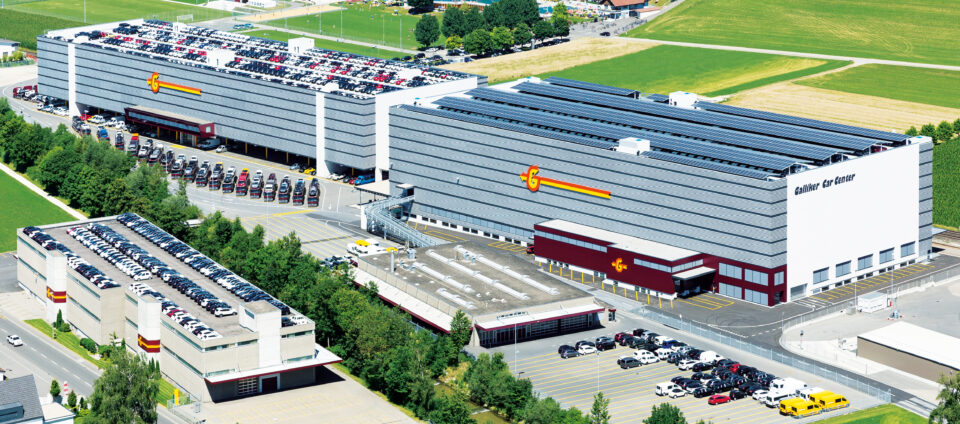
An energy ecosystem unique in Switzerland is to be created in Dagmersellen over the next few years. The transport company Galliker, the milk processor Emmi, the producer of biogas PanGas and the energy supplier CKW have signed a joint declaration of intent at the end of 2022.
For the partners, the project is an important step towards achieving the energy strategy goals of the companies involved and of Switzerland. “Together we want to drive forward the energy transition and make a significant contribution to the decarbonisation and diversification of the energy supply with the planned energy ecosystem,” explains Martin Schwab, CEO of CKW.
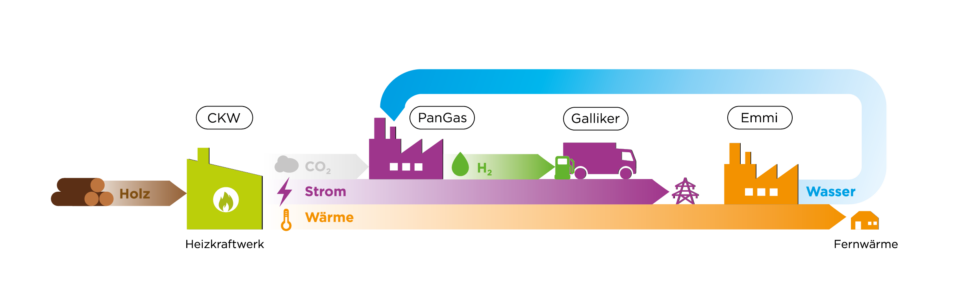
The energy ecosystem will start with a wood-fired power plant operated by CKW to produce heat and electricity. PanGas will use part of the electricity to produce hydrogen to supply Galliker’s fleet of trucks. In addition, PanGas will extract green CO2 from the combustion process; for use in the food industry, for example.
“At PanGas, we have always been involved with hydrogen. We are very pleased that we can make a significant contribution to CO2 reduction with this project and come a big step closer to the Swiss decarbonisation target”, says Roger Britschgi, Managing Director PanGas.
With the renewable energy from the wood-fired power plant, Emmi covers part of the thermal energy required at the Dagmersellen production site for the production of fresh cheese specialities such as mozzarella or ricotta as well as milk powder. With a view to closing the loop, Emmi also supplies demineralised water from the production of dairy products for hydrogen production.
The energy ecosystem is intended to function as a closed loop.
“This unique energy ecosystem, designed in conjunction with three regionally based national partners, enables more sustainable production of our dairy products and reduces our dependence on fossil fuels,” says Marc Heim, Head of Emmi Switzerland.
The wood-fired power plant will produce electricity and heat when fully operational. Emmi will use a good third of the heat. Other possible heat consumers are local industry and heating networks in the surrounding villages. As far as possible, the wood-fired power plant will be operated with regional forest chips and waste wood. This will require up to 200,000 tonnes of wood per year.
The four companies plan to invest a total of about 200 million Swiss francs in the production, distribution and use of renewable energy. Before the energy ecosystem can be built, further planning and approval steps are needed. In the detailed planning, the entire value chain is to be organised. Before building applications can be submitted, the zoning plan of the municipality of Dagmersellen must also be adapted.
The population will be regularly informed about the project status. The current planning anticipates commissioning in 2027 at the earliest.
V-Zug employs around 2000 people at the Zug location. A few years ago, the former subsidiary of Metall Zug – Metall Zug is still the largest shareholder – was faced with an all the more serious decision: Where should production be in the future? The choices were a land reserve in Risch-Rotkreuz or moving abroad. In the end, the decision was made in favor of the previous location in Zug; a strong commitment with a vision: on the 80,000 m2 site, the production of V-Zug and other Metall Zug subsidiaries will be concentrated on around a third of the total area. In the coming years, a tech cluster is to be built on the free space. When completed, the area will offer around 3,000 jobs and living space for 300 people. The goal is an actual ecosystem of innovative technologies and services. The future users should come from areas such as cleantech, simulation technology or sensor technology or be related to the core competencies of Metall Zug – i.e. building technology, kitchen, food and cleaning.
Climate neutrality as a goal Now the idea of such a cluster is neither new nor groundbreaking. On the other hand, the goal that Metall Zug has set itself for the realization is innovative: the area should be largely energy self-sufficient. Therefore, together with the local energy supplier, a separate energy system, the so-called Multi Energy Hub, is being implemented. The various areas of the energy sector and industry are linked – a holistic approach in which the areas interact and are connected to one another. Thanks to this sector coupling, the Tech Cluster Zug is not only supplied with energy, but also generates some of it itself. The area will have its own power grid for medium and low voltage. Several water networks with different temperatures enable the generation of cold and heat from the groundwater. The waste heat from industrial production is used to heat the apartments on the one hand and the seasonal groundwater and earth storage tanks on the other. In addition, comprehensive photovoltaics ensure a further step towards CO2 neutrality. Incidentally, the Tech Cluster Zug will be car-free: An intelligent mobility and parking system – the Mobility Hub Zug Nord – is intended to create sustainable solutions for urban areas.
At the beginning of this year you took over the management of location promotion. What measures have you taken to settle in well and quickly? Fabian Streiff: An important point for me was networking with cantonal actors, representatives from business and science. Due to the circumstances, this first had to be done virtually. But even more relevant for me was the question of how we can support companies – especially during the pandemic. The companies’ need for information was enormous. Especially in times when instruments such as short-time work and hardship aid were used.
What exactly have you done to support the companies? The Office for Economy and Labor sought an intensive exchange with entrepreneurs early on in order to find out which issues we need to address at national level and which we can solve within the canton. We have also set up a hotline for companies and continuously updated various websites. Now we are looking to the future and addressing the question of how we can positively influence the attractiveness of Zurich as a business location.
What is this plan like? Discussions with Zurich-based companies confirmed that we should focus even more on an attractive innovation location. Innovations are increasingly emerging in networks, which is why strong innovation ecosystems make a significant contribution to the future success of Zurich’s economy. This needs to be strengthened. A central theme are new hybrid forms of work such as home offices or working from co-working spaces. We have to ask ourselves what this means for the location and its development. It is also exciting to see how Zurich can remain an attractive business location for companies. Are there opportunities to improve access to talent and specialists, especially in the context of mobile working? What role can the state play in making a contribution here? These are all open questions – we are already seeing trends, but of course also the consequences of them, such as the discussion about making labor law more flexible.
Is Zurich really losing its attractiveness as a business location? Many companies answer this question with a resounding no. But shifts are becoming apparent. Large companies are forecasting a concentration on individual locations within the next two years. This means that certain properties could become vacant. On the other hand, these could quickly be used again for new forms of work such as co-working spaces. Rural centers are likely to be revitalized thanks to home office options. The business location Zurich is also strengthened by the universities, which do a great job with their successful spin-offs and research work and are right at the top of the rankings. The companies in the canton of Zurich were also able to attract risk capital on a large scale last year, which is very gratifying.
How did this positive development come about despite the pandemic? Zurich has positioned itself well in recent years, especially with a view to digital transformation. Top talent is needed here and can be found at the Zurich location. This is thanks to the universities and the talent pool, which has been able to develop significantly in recent years. At first the banks had a magnetic effect, now it is the large companies from the information and communication technology sector. The interaction of the various industries is very promising for the future. We are also registering positive developments in the area of research. The points mentioned are becoming more and more relevant in the location competition. But other locations don’t sleep and have positioned themselves very well nationally and internationally, which is why the leading position of the Canton of Zurich cannot be taken for granted. It must continue to be strengthened in the area of innovation.
The canton of Zurich is Switzerland’s leading business location. Why? The attractiveness of Zurich is based on various factors. Starting with education, through a highly qualified workforce, to strong sectors from the financial sector and increasingly from the areas of life science technology, cleantech and information and communication technology. This diversity of competencies enables strong ecosystems, which strengthen cross-industry learning and innovation. The quality of life per se also speaks in favor of Zurich as a location.
What are you doing to secure this status in the future? Our new strategy has three focal points: The first is the strong focus on innovation topics in the areas of financial technology, digital health, biotech, cleantech and new mobility. Here we want to create more networking and opportunities for cooperation. The second focus is on cooperation with regional location subsidies in order to strengthen the diversity of the industry. The size of the Canton of Zurich requires networked work in order to do justice to the diversity of the individual regions. In this way, we can also support exciting regional projects, such as was the case with the Bio-Technopark in Schlieren. We are currently also seeing this at the Digital Health Center in Bülach. The third focus is on creating attractive framework conditions, especially in the area of innovation. Here we can work to ensure that the regulations at federal level are adapted for specific innovation topics.
Which regulations are in urgent need of adjustment? With Zurich as a strong innovation location, the focus is currently on the consequences and solutions following the failed framework agreement with the EU. The exclusion from Horizon Europe weighs heavily. Adjustments to labor law due to changed needs must also be checked – such as when working on the move.
Which areas are companies currently looking for the most? From the customer side, we see a need for space in well-developed locations that are integrated into an ecosystem. Connections to universities are being sought more and more. Biotech laboratories are also becoming increasingly important. Schlieren was able to develop enormously in this area. Nevertheless, we are registering a demand here that cannot yet be satisfied nationwide.
What is the problem? In the biotech sector, the space that comes onto the market is occupied again very quickly. More and more investors are needed who are willing to invest in laboratories. Such a project usually takes two years or more to develop. Appropriate foresighted planning is imperative.
How do you see the future for the office buildings in the canton of Zurich in light of the changing work models? We are currently grappling with this question. In general, employers want to become even more attractive. The demands on an office workplace will therefore increase. But whether that means that more space is required for each employee, or whether there will be mergers, we will only see in one or two years. But we believe that co-working will become even more important. However, in a more comprehensive form than today – in the sense of a meeting place where an in-depth exchange with science, the authorities and other actors in the ecosystem can take place. Quasi a co-working plus.
Which locations are most desirable? The city of Zurich and the airport region remain very attractive. At the airport, we are seeing high demand for the newly built The Circle. And the Limmattal has become even more attractive with the Limmattalbahn and the Bio-Technopark. The city of Winterthur and the Zimmerberg region are also popular locations thanks to the ZHAW.
Which companies are interested in The Circle? The Circle not only attracts companies from the information and communication technology sector such as Microsoft or Oracle, but also from the life sciences sector. Digital health is an important topic here. After a difficult start-up phase caused by Corona, the business on the Circle is now picking up, and 85 percent of the space is already rented.
What are the most important source markets for the Canton of Zurich? The USA is still by far the strongest market. Europe, especially Germany, as well as China and Japan are also important. We are now concentrating on Korea and Israel. Companies are increasingly thinking in terms of research and development hubs. For many companies, Zurich is not only an international business location, but also such a hub. Marketing abroad is handled by the Greater Zurich Area location marketing organization for us.
How should Zurich as a business location develop over the next 10 years? It should become even stronger as an innovation location. Zurich has a long history and is well known as a financial center. That is important – also with a view to future settlements in the area of financial technology. Zurich should also distinguish itself in the areas of artificial intelligence and new mobility, such as the development of autonomous systems. We believe in a move away from the traditional Zurich financial center towards a business location that will be very strong in the new topics mentioned and in digitization. The Zurich economy is already well positioned and is resistant to crises – but in the future Zurich should become even more innovative, attractive and thus even stronger.
An ecosystem is basically the interaction between different stakeholders in a defined area of a human need – for example mobility, health or living. The increasing trend towards ecosystems can be seen in different areas of life. Depending on their relationship with the end consumer, the various players in an ecosystem can assume three different roles: that of the “orchestrator”, that of the “implementer” or that of the “enabler”.
The orchestrator has direct contact with the end customer and takes over the management of the customer interface via a digital B2C platform. Well-known examples are Amazon or Airbnb. Put simply, these companies are responsible for identifying the needs of customers and matching them with the right products and services from companies. In this context, the latter are the implementers – in the “living” ecosystem, for example, providers of PropTech solutions or insurers and banks themselves with their respective products and services. The companies that act as supporters for the other two groups are enablers . These do not come into direct contact with the end consumer. In fact, most companies in an ecosystem are enablers – such as suppliers of product components or software. They form the backbone of the ecosystem, so to speak.
This interaction is essential in the increasing battle for market share. That is why more and more insurance companies and banks are also participating directly in PropTech companies – among other things, in order to be able to offer their services in a more user-friendly and cost-efficient manner by means of digitizing their own value chain. The extent to which insurers and banks will play the role of orchestrators in the future remains to be seen. What is certain is that you can secure customer interfaces through a functioning ecosystem – because many experts agree: In the future, the focus will be on digital ecosystems.
The major bank UBSand the Baloise insurer from Basel are entering into a strategic partnership. According to almost identical media releases, both are planning to merge their respective solutions and services for property owners.
The joint ecosystem Home & Living is to emerge from the Atrium and key4 mortgage platforms from UBS and Home from Baloise, which broadly covers the living and everyday needs of its customers. In addition, the partners intend to include existing and possible company holdings of both companies. In addition, they also express their intention to integrate the offers of various start-up companies.
"Baloise has in recent years greatly in expanding its ecosystem Home invested", is Yannick Hasler, Head of Retail Banking Baloise Switzerland, cited . "With the cooperation and investments in innovative Swiss start-ups such as Houzy , Devis , MOVU , Bubble Box or Batmaid , the foundation stone was laid for a service network that makes our customers' everyday lives easier."
With Atrium and key4, UBS laid the foundation for its platform business in Switzerland, says Sabine Magri, COO of UBS Switzerland AG. “The continuous expansion through partnerships with and investments in innovative start-ups and intermediaries is central to the further development of our ecosystem. The planned strategic partnership with Baloise is complementary, we can complement each other perfectly. "
Wir verwenden Cookies zur Unterstützung und Verbesserung unserer Dienste. Mit der Nutzung dieser Website erklären Sie sich mit der Verwendung von Cookies einverstanden. Weitere Informationen finden Sie in unserer Datenschutzerklärung.