Tag: Planungssicherheit

  • Easier to build?

    Easier to build?

    The motion by Councillor of States Benedikt Würth (center/SG) demands that the federal government should in future only be responsible for objects of national importance. While the protection of sites will be transferred entirely to the cantons. This would remove the national inventory of sites worthy of protection as a common basis for assessment. The result would be different cantonal regulations, lengthy conversions and more legal disputes.

    The National Council’s Committee for Science, Education and Culture considers the path taken by the Federal Council to be more expedient. The measures agreed at the ISOS Round Table strengthen efficiency and clarity without abandoning proven standards.

    Reform instead of rupture
    Specific simplifications have already been agreed. Such as a more precise application of ISOS to federal tasks, clearer discretionary powers for cantons and municipalities and simplifications for projects with photovoltaics. These steps shorten procedures without sacrificing quality and are supported by the cantons, cities and municipalities.

    The central problem is not the ISOS itself, but the lack of coordination and the fact that interests are weighed up too late. If this is done at an early stage, conflicts can be avoided and projects accelerated.

    Proven examples from practice
    Successful models already exist. In Geneva, the “Patrimoine-Paysage-Territoire” platform significantly reduces the number of objections through joint project development. Neuchâtel shows how densification can be reconciled with ISOS through clear zoning and high-quality planning. These approaches strengthen transparency, acceptance and building culture.

    Accelerate with substance
    Instead of creating legal uncertainty, the ongoing ISOS development should be implemented consistently. Quality and planning security are the key to faster, sustainable construction, not federal patchwork. Only those who combine the two will achieve the goal of building simply without endangering our established building culture.

  • Owner participation “Ziegelbrückstrasse” in Glarus North

    Owner participation “Ziegelbrückstrasse” in Glarus North

    The municipality of Glarus Nord would like to motivate developers to carry out participatory processes for more complex construction projects. Its “Participation and communication guidelines for planning processes” outline how the needs of the population and future users can be anticipated at an early stage for various planning situations. To set a good example, the municipality initiated a participatory process for the “Ziegelbrückstrasse” development area between Ziegelbrücke railroad station, the Jennyareal and the village center of Niederurnen: between October 2024 and February 2025, it involved the affected owners in the development of a mission statement, which served as the basis for the development of an outline plan for the area.

    Shaping the framework conditions for development
    The mission statement was intended to define the structural dimensions and the mix of uses. As the area is one of the densification and upgrading areas that characterize the village, qualitative key points of a development that does justice to the character and history of the area were also up for discussion. The municipality also saw the public sector as having a duty and therefore set out its expectations regarding the design and upgrading of the cantonal road that runs through the area. This provided the municipality with a broad-based basis for discussions with the canton, which is responsible for the renovation of the road.

    The jointly developed model served the municipality as the basis for a binding framework plan. The framework plan in turn defines the guidelines for how buildings may be constructed along Ziegelbrückstrasse in future under the new owner-binding land-use plan. The owners involved helped to shape how and what they can build on their properties in the future by participating in the master plan.

    A streamlined participation process
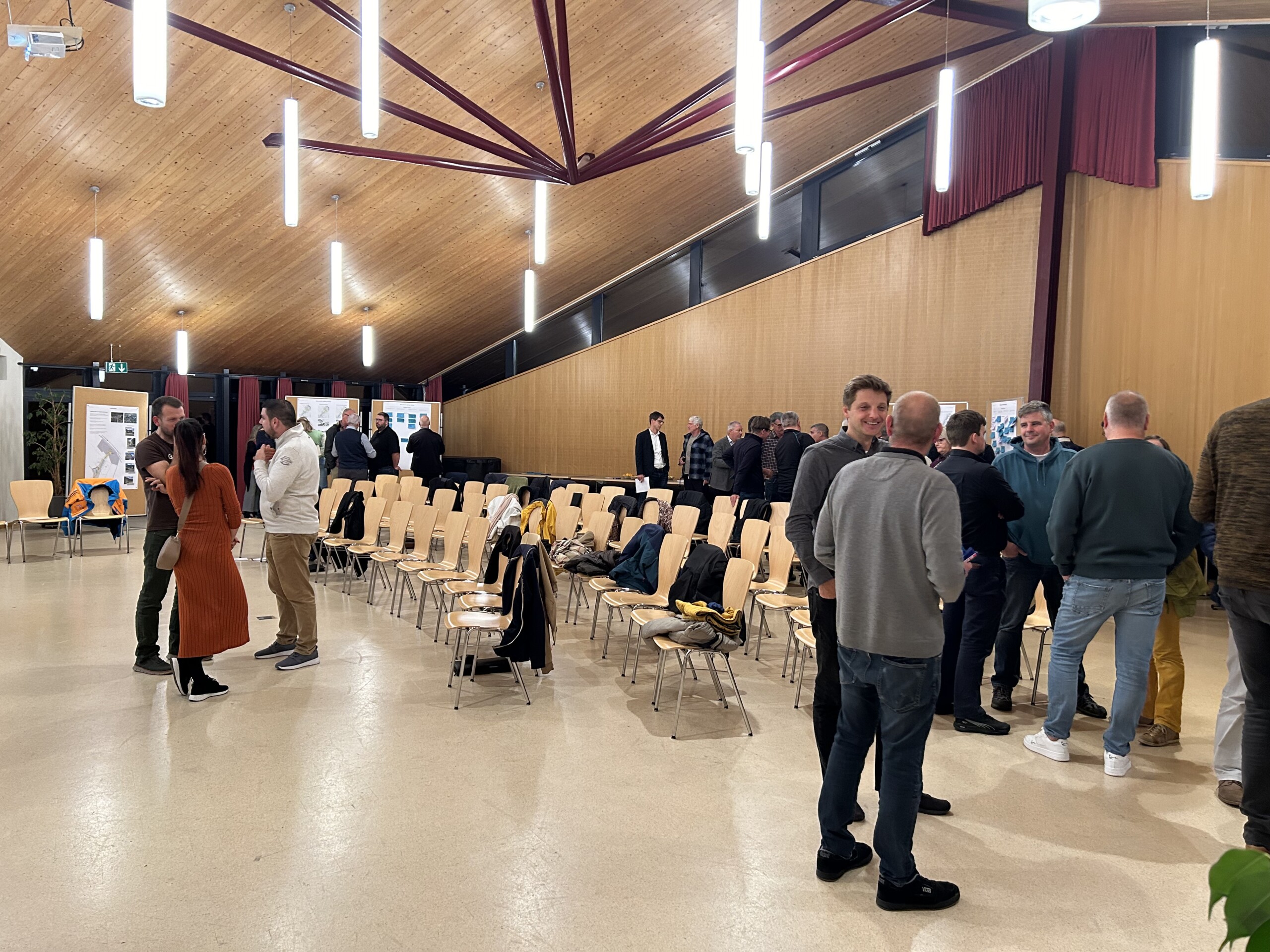
    The owners in the area were invited to take part in two evening events with the municipality. The first evening was for information and participation, the second for the presentation of the results. Over 56 owners of 127 plots took the opportunity to participate in the events themselves or with a representative.

    In the first workshop, they were given an insight into the planned planning instrument and were consulted on various options for future development possibilities. By prioritizing the options, they were able to influence the decision on the desired model. In the second workshop, the municipality presented the framework plan developed on the basis of the desired variant.

    A worthwhile effort for the municipality
    Participatory processes are complex and cost time, money and political capital. For the municipality, the time-consuming process was worthwhile because it increases the chances of owners becoming active: By being informed about more construction options at an early stage, they can adjust their investment planning and align any existing intentions with the municipality’s development plans.

    The discussion about the vision helps to orient owners towards a common vision of the future of the densification and development area and to convey to them that issues such as the addressing of buildings to the street, the granularity of the development, the design of the base storey or the materialization are not just private matters, but also have an effect on the image of the district and thus influence the attractiveness and value of the location for everyone.

    The participatory process offered the municipality the opportunity to draw attention to its building advice and increase the likelihood that landowners with investment intentions will discuss and coordinate their plans with the municipality at an early stage, before they have drawn up a preliminary or construction project that can hardly be adapted. In the best-case scenario, the process encourages some owners to think bigger and enter into cooperation with other landowners or jointly tackle issues such as the provision of parking spaces in construction projects.

    The municipality was also able to use the events to coordinate upgrades on public land with the needs and ideas of the owners and to test the acceptance of measures such as greened medians on the road or a speed reduction on certain road sections.

    More planning security for landowners
    Participatory processes also cost the participants time. In the case of Ziegelbrückstrasse, the effort was worthwhile for the property owners simply because they were able to influence decisions on issues that are binding for the property owners by participating in the framework plan that is binding for the authorities: the fundamental question of the design of the density and mix of uses possible with the new land use planning. The framework plan also offers owners more planning security, as it strengthens equal treatment in the approval process.

    As part of the process, the owners gained a better understanding of what the municipality expects from structural developments and were able to gain inspiration as to what contributions they can make to neighborhood upgrading in addition to structural developments – for example with the design of gardens and street front zones or smaller renovation projects. The opportunity to find out about their neighbors’ plans at the event ultimately gives owners more certainty that they are not alone in their investments.

  • More clarity for building lines in the canton of Zurich

    More clarity for building lines in the canton of Zurich

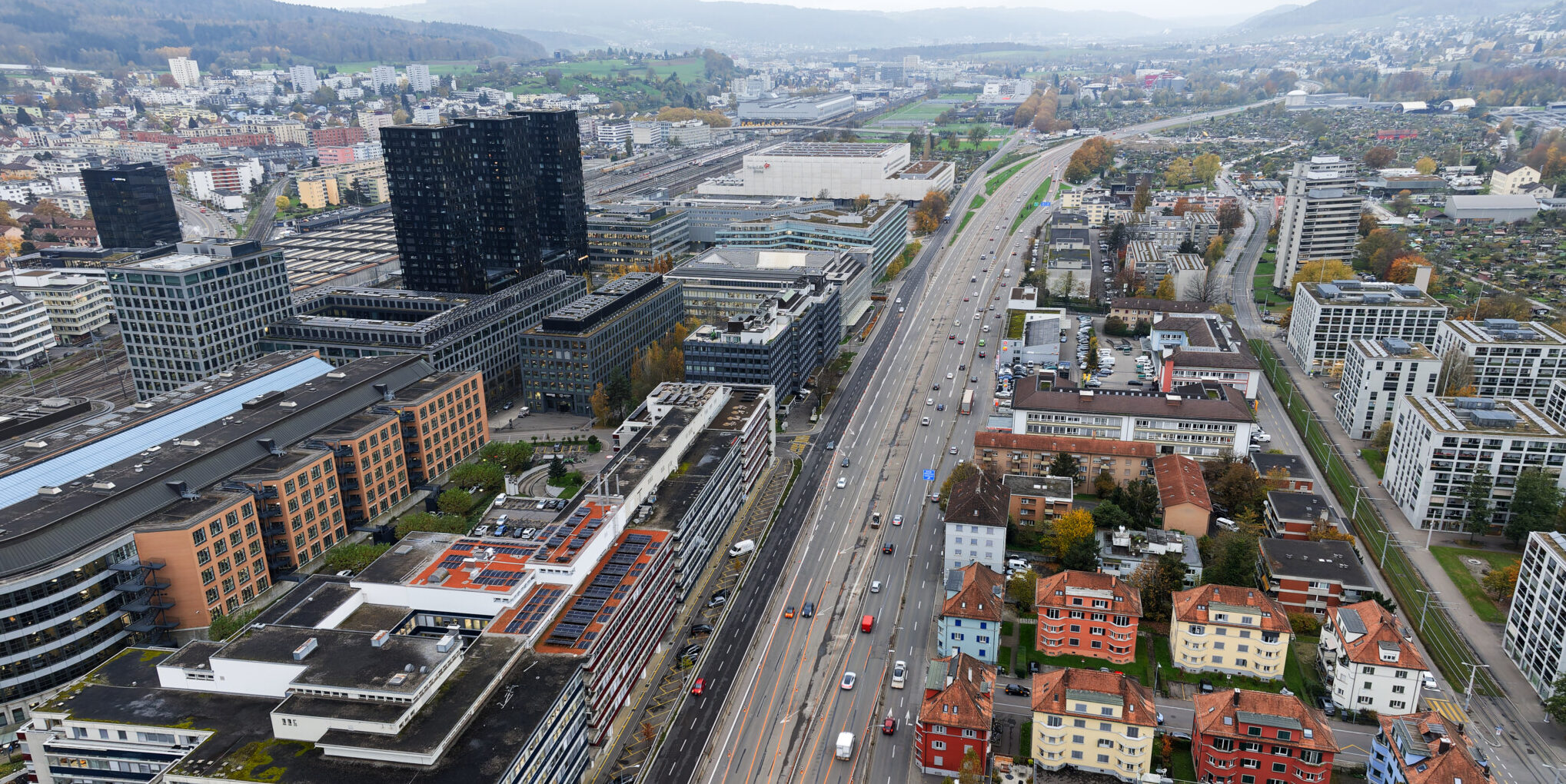
    In the canton of Zurich, traffic construction lines secure the space for infrastructure. Buildings that protrude into this area are only permitted under certain conditions. However, due to legal amendments in the past, uncertainties have arisen, particularly in the case of projecting building parts such as balconies and bay windows.

    With the planned revision of the Planning and Building Act, the cantonal government wants to eliminate these uncertainties. “We only want to restrict balconies and bay windows to the extent necessary for land protection and urban design,” explains Carmen Walker Späh, Director of Economic Affairs.

    In addition, the construction of easily removable small buildings such as bicycle shelters, solar panels or container boxes is to be made easier. While such buildings can already be authorised in the building line area today, this should also be possible in the road clearance area in future.

    Simplified adjustment of building lines
    Another key element of the revised law concerns the adjustment of building lines that were established as part of a neighbourhood plan procedure. In future, these changes should be possible in the ordinary procedure, thereby avoiding time-consuming neighbourhood plan revisions.

    Positive consultation and next step
    The proposed changes met with broad approval in the consultation. The majority of the 70 or so participants supported the amendments, although some of the submissions led to the draft being made more precise.

    The revised bill has now been submitted to the Cantonal Council for further consultation and to the relevant committee for examination. The aim is to create greater planning and legal certainty through clear legal regulations.

  • Cost rent and rising land prices

    Cost rent and rising land prices

    The cost rent model is based on the cost-covering return on the total investment costs of a new building. In many cities, building land now accounts for up to half of these costs. In Zurich in particular, land prices have risen massively in the last 15 years, from CHF 1,419 per square metre in 2007 to over CHF 5,800 in 2023.

    Even with a conservative calculation, the share of land value in the total investment costs is currently just under 50 %. This means that a reduction or increase in the land price has a direct impact on rental costs. To compensate for a 10 % increase in the land price, the cost rent would have to rise by around 5 %.

    Cost rent compared to market rent
    An analysis of the Werdwies housing estate in Zurich Altstetten shows that construction costs have risen by 32.5 % since 2007. The cost rent of a newly constructed housing estate would currently be barely below the market rent.

    According to a calculation with a gross yield of 4.25 %, the market rent for a 70 m² flat would be CHF 2,567 per month. Reducing the gross yield to 4 % could lower the rent, but without subsidisation it would only be affordable for 56.6 % of local households.

    Subsidies as a control instrument
    Various subsidy models are conceivable to reduce the rent burden.

    Land subsidies: A public subsidy of 20% of the land value could increase affordability by 7.1 percentage points.

    Subject subsidies: Direct subsidies to households could provide targeted relief to those who need it most.

    Object promotion: A reduction in value-added taxes could promote the development of affordable housing, provided that clear control mechanisms are in place.

    Spatial planning and planning certainty are key
    A decisive lever for controlling housing costs is the early and transparent definition of building regulations. Uncertainty about future rental regulations or value-added levies can lead to bad investments.

    In order to ensure affordable housing in the long term, municipalities should consistently use planning surplus values to reduce rents or subsidise subjects. In addition, measures must be aimed at getting a grip on rising land prices, as cost rents will increasingly rise to market levels without intervention.