Tag: Politik

  • SVIT Switzerland with new management

    SVIT Switzerland with new management

    With the handover of the chairmanship from Andreas Ingold to Michel Molinari, SVIT Switzerland has completed a significant generational change. Molinari, previously Vice President and CEO of BLKB Fund Management AG, is thus assuming responsibility for an association with over 2,600 members. At the same time, Cécile Berger-Meyer and David Zumsteg were elected to the presidency. Their predecessors, Andreas Ingold and Jean-Jacques Morard, were made honorary members for their many years of commitment.

    An association on the move
    2024 was an intensive year, with targeted political positioning, strategic projects such as the DACH cooperation and the tenancy law commentary. The successful new edition of “SVITPedia” and a high demand for training have made SVIT Switzerland a dynamic and adaptable organisation. The “eduQua” certification was renewed and training courses and examinations were successfully organised in all parts of the country.

    Strategic clarity and strong operational
    The positive development of the association over the past eight years is due to clear strategic decisions and the professionalisation of structures. The separation of strategy and operations, the introduction of a CEO model and the reorganisation of the Forum, Campus and Summit platforms have created a stable foundation. A strategic action plan for positioning has been developed and is currently being implemented. The aim is to further increase the visibility and effectiveness of the association.

    Political relevance strengthened
    The 2025 Delegates’ Meeting once again demonstrated the growing political relevance of SVIT Switzerland. The delegates approved a motion to no longer conclude sponsorship agreements with Swiss Marketplace Group AG in future. Current contracts will also be cancelled until they expire. The association is thus sending out a signal in favour of independence and clear representation of the industry’s interests.

    Visible, present, consistent
    With its new leadership and strengthened position, SVIT Switzerland aims to further expand its role as a leading professional and industry association. The three strategic pillars of training, politics and networking form the stable foundation for a future-orientated commitment. The Assembly of Delegates as part of the Swiss Real Estate Forum also provided the right stage for this in 2025, with inspiring impulses from personalities from politics, sport and business.

  • Smart City Aarau Strategy 2034

    Smart City Aarau Strategy 2034

    With “Smart Aarau 2034”, the city is pursuing a forward-looking approach. The strategy does not rely on technological impetus alone, but sees digitalisation as a tool for solving complex challenges. The focus is on the needs of the population, cooperation between departments and resource-efficient implementation. Aarau is orientated towards the city’s existing development goals and integrates smart thinking into all urban projects.

    A methodological framework for real progress
    The change in strategy also means a rethink in terms of implementation. In future, projects will no longer be planned in secret, but developed in dialogue with those affected. A municipal team will provide methodical support to employees. From the initial idea to the actual tested project. Experience from the Smart City period to date shows that this approach is effective if it is applied consistently.

    Smart means networked and usable
    The new strategy puts an end to isolated islands of innovation. Instead, projects should be systemically conceived and networked across the city in future. The goal is a city that utilises its resources efficiently, can react to changes and introduces new solutions where they are actually needed. Digital tools will only be used if they contribute to quality of life or efficiency.

    Effectiveness instead of symbolic politics
    Aarau measures success not by the number of digital projects, but by their impact. The new strategic framework focuses on measurable progress. This applies to implementation, behaviour, awareness and everyday use. This makes smart thinking the new basis for urban development – comprehensible, user-centred and climate-friendly.

  • Schwamendingen gets its Ueberlandpark

    Schwamendingen gets its Ueberlandpark

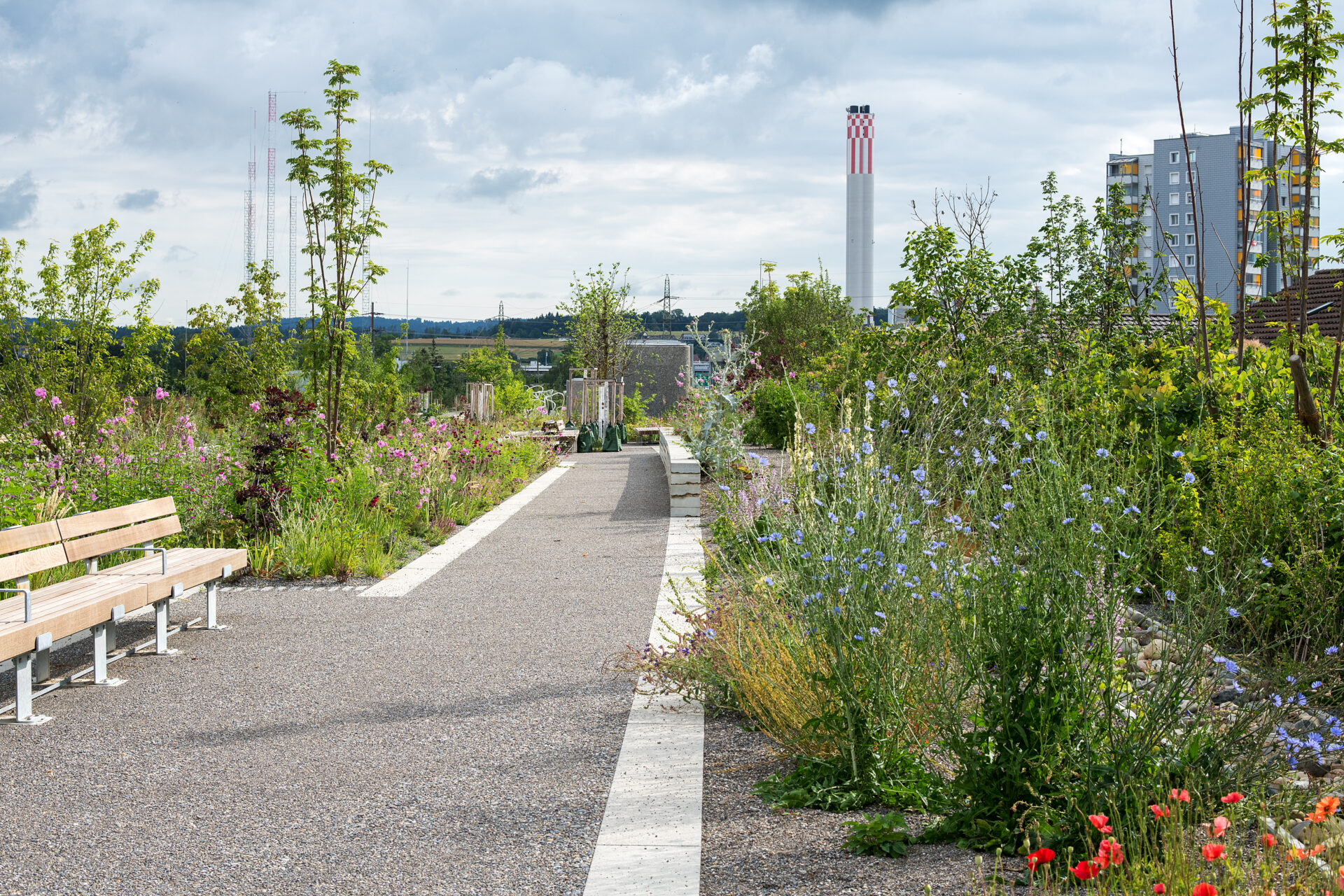
    After five and a half years of construction, the Schwamendingen enclosure was officially inaugurated. With the transfer of traffic to the extended Schöneichtunnel, the motorway noise disappears and in its place a park is created that sets new standards. The overland park is around one kilometre long, thirty metres wide and connects the neighbourhood with a green ribbon.

    More than just noise protection, a symbol of urban planning courage
    Federal Councillor Albert Rösti praised the project as a prime example of national road construction that is compatible with residential areas. The enclosure was the result of clear political will at all federal levels. Government Councillor Carmen Walker Späh also emphasised the importance of great visions for the design of vibrant, resilient cities.

    Green spaces as a climate strategy and meeting place
    For city councillor Simone Brander, the park is far more than just a design element. It counteracts the overheating of the urban climate, creates a quality of stay and strengthens social cohesion. Robust, native plants were planted, a conscious decision as the park does not require artificial irrigation.

    A park for everyone and a meeting place
    The Überlandpark was opened to the public on 10 May 2025. The neighbourhood celebrated with a pavilion, information stands and a wide range of culinary delights. The new park is open to everyone. A space for recreation, encounters and the future.

  • Direct investment as a driver of growth

    Direct investment as a driver of growth

    Direct investments are a central component of the global economy. They comprise equity investments in foreign companies with the aim of permanently influencing their business activities. The focus is on strategic control, market access and securing resources. In contrast to portfolio investments, which are primarily aimed at capital gains, direct investments have far-reaching economic effects for the countries of origin and recipient countries.

    Switzerland’s locational advantages
    Switzerland is one of the most attractive investment locations in the world. Factors such as legal certainty, a stable economy, highly qualified skilled labour and a well-developed infrastructure make the country particularly attractive for multinational companies. Many international corporations such as ABB and Novartis have their headquarters here, while global companies such as Google and Liebherr have branches in Switzerland.

    Global networking and economic effects
    As an investor and investment location, Switzerland benefits from international capital flows. Swiss companies expand abroad through direct investment, while foreign investors invest in Swiss companies. This not only promotes the exchange of expertise and technologies, but also strengthens economic dynamism. The pharmaceutical sector in particular plays a key role in bilateral investment flows, especially between Switzerland and the USA.

    Direct investments and their influence on growth
    Direct investments have a measurable influence on economic performance. Capital gains from Swiss investments abroad flow back into the domestic economy and have a positive impact on consumption and investment. At the same time, foreign direct investment in Switzerland creates employment and increases productivity. in 2022, foreign-controlled companies accounted for around 24 per cent of total gross value added, while 11 per cent of jobs were directly dependent on them.

    Increasing regulation as a challenge
    In recent years, direct investments have been subject to increasing political regulation. Tax adjustments and investment controls are intended to create transparency and prevent tax avoidance. At the same time, there is a growing debate about tighter controls on takeovers by foreign investors, particularly with regard to national security interests. These developments could impair the growth potential of future direct investments.

    Direct investment as a stabiliser and growth factor
    Switzerland benefits greatly from direct investment, both as a country of origin and as a recipient country. It promotes innovation, strengthens economic power and secures prosperity. However, increasing regulatory intervention could pose long-term challenges for the global flow of investment and economic growth.

  • Climate-neutral industry – Vision 2026

    Climate-neutral industry – Vision 2026

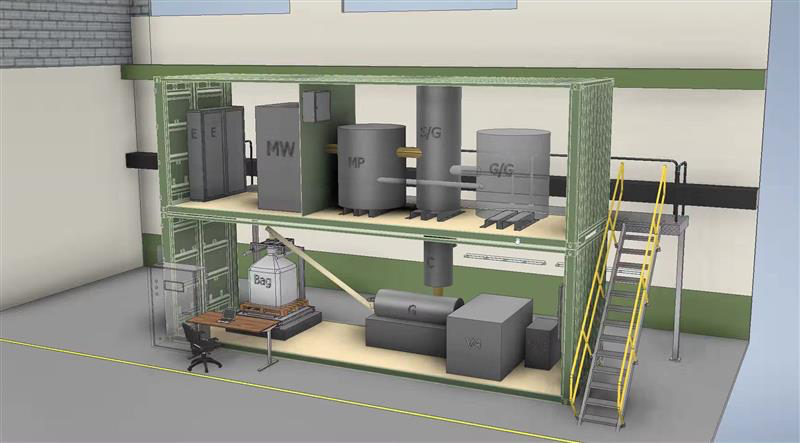
    Founded in 2022, the Association for the Decarbonisation of Industry aims to reduce emissions to a minimum through innovative technology. At the forefront is the methane pyrolysis process, which enables emission-free energy utilisation by splitting hydrogen from methane. The remaining carbon is utilised as a resource, for example as humus in agriculture or as a building material, which binds the carbon in the long term.

    Cooperation between business, research and politics
    Without the cooperation of 16 leading companies, Empa and politicians from the Canton of Zug, the project would hardly be possible. Together, they are contributing to the development and scaling up of the pyrolysis process, which is to be scaled up from laboratory to industrial size by 2026. The partners are providing funding of over CHF 8 million, thereby sending a strong signal for the decarbonisation of industry.

    Methane pyrolysis Reduction of CO2 emissions
    The association is focusing on methane pyrolysis, a process that minimises CO2 emissions when using natural gas. Instead of traditional combustion, hydrogen is obtained from methane, while the carbon is in solid form and therefore does not cause any emissions. This technology could save up to 270 g of CO2 per kilowatt hour produced and is therefore a potential key to the net-zero targets by 2050.

    Sustainable ecosystem without waste
    The association is working to create an ecosystem that optimally utilises all components of the process. Through the circular economy concept, not only hydrogen, but also carbon and waste heat are to be efficiently reused to avoid waste. This holistic strategy creates a model that is ideally suited to a climate-friendly future.

    Membership of the Association for the Decarbonisation of Industry
    Companies that are committed to the climate-neutral future of industry and would like to benefit from the findings of the association can become members. The association is tax-exempt and donations are deductible in the canton of Zug. Members gain access to advanced knowledge and support an initiative that lays the foundations for an emission-free
    industry.

  • Standstill in the owner-occupied rental value debate

    Standstill in the owner-occupied rental value debate

    The abolition of the imputed rental value, a tax that is unique in Europe, is in danger of failing once again. There is broad agreement in both councils that the system needs to be reformed. However, its implementation remains highly controversial. The issues of property tax for second homes and the debt interest deduction in particular are causing conflict.

    In its third deliberation on Thursday, the Council of States maintained the abolition of the imputed rental value for primary residences only. It also maintained its position on the debt interest deduction. In future, deductions of up to 70 per cent of taxable property income should remain permitted. The National Council, on the other hand, is calling for a complete system change and also wants to exempt second homes from tax.

    Tourism cantons put the brakes on
    The majority rejection in the Council of States is primarily due to the concerns of the tourism cantons. They fear a considerable loss of revenue due to the abolition of the imputed rental value for second homes. The proposal of a property tax to compensate for this has met with resistance there. “We need to focus on primary residences,” emphasised Martin Schmid (FDP/GR). The introduction of a property tax would present “extremely high hurdles”, as it would require a constitutional amendment with a double majority.

    Realistic collapse of the bill
    The collapse of the bill seems increasingly likely. Even the abolition of the imputed rental value for primary residences is facing headwinds. The tenants’ association has already announced a referendum. Its president, Carlo Sommaruga (SP/GE), criticised the bill as a “tax giveaway for rich homeowners” that does not solve the inequality between tenants and owners.

    Doubts are also growing within the centre-right parties. Pascal Broulis (FDP/VD) warned that the bill would unnecessarily complicate the tax system. The National Council must first decide on the bill again before a possible conciliation conference could follow. However, there is currently no majority solution in sight.

  • Buildings as carbon sinks

    Buildings as carbon sinks

    The construction industry is one of the largest CO2 emitters in the world. However, projects such as “Beyond Zero” and the “Mining the Atmosphere” initiative could turn the tide. The aim is not only to reduce the harmful greenhouse gas, but to actively bind it in building materials. These materials, which are being tested in the new NEST unit, could revolutionise concrete and insulation materials and have the potential to make the construction industry climate-neutral or even CO2-negative.

    Technology undergoing practical testing
    Nathalie Casas from Empa explains that “negative emissions technologies” (NET) are the key to achieving climate targets: “We need to remove excess CO2 from the atmosphere in order to achieve the 1.5-degree target. NETs, which already work in the laboratory and are now being used in the construction industry, will help us achieve this.” Casas emphasises the urgency of taking action as emissions continue to rise.

    Sustainability in the construction industry
    Corinne Reimann from Implenia sees NET as a great opportunity for the construction industry: “The new materials will finally enable us to make decisive progress in the area of sustainability. The industry has enormous leverage here, but also challenges. Price and acceptance will be crucial.” Reimann emphasises that the functionality and cost-effectiveness of new materials must be ensured in order to enable their widespread use.

    The contribution of architects and planners
    Christoph Kellenberger, co-founder of OOS, sees the early involvement of architects and planners as a decisive factor: “With our knowledge, we can help develop the right building materials from the outset and integrate them into construction practice. We also need to publicise the potential of CO2-storing materials in the industry and show what effects can be achieved with them.” For Kellenberger, the key to success lies in transparent knowledge transfer and practical solutions.

    Political framework conditions and social responsibility
    In addition to technological innovation, the construction industry also requires political and economic framework conditions. According to Casas and Kellenberger, clear cost transparency is necessary in order to promote the widespread use of NET. CO2 emissions must be priced fairly and subsidies could help to offset the initial higher costs of the new materials. “The transformation will only succeed if everyone pulls together – politics, business and society,” says Casas.

    The “Beyond Zero” project shows that it is possible to turn buildings into carbon sinks. However, this requires not only technological solutions, but also the will of politics, business and society to break new ground. The construction industry has the opportunity to develop from one of the largest CO2 emitters into a pioneer of the climate transition – and the potential to do so already exists today.

  • “We are constantly investing in our future”

    “We are constantly investing in our future”

    Mr Tamagni, since taking office in January 2021, you have further strengthened Schaffhausen’s position as an attractive place to live and do business. What specific measures have you taken to achieve this? What has worked well and what has worked less well?
    That’s right – the canton of Schaffhausen is developing very well! More and more people are discovering the advantages of Schaffhausen as a liveable alternative to the greater Zurich area and are moving here. This has long been the case for companies – the canton is particularly attractive for SMEs with a tax burden of 12 to 12.5%. Our framework conditions are excellent, the distances are short and we maintain close co-operation with companies in order to create new impetus together. The canton of Schaffhausen is a region whose environment and dynamism attracts committed people and companies. It is a region where you can put down roots because – despite all the hustle and bustle – it offers proximity and familiarity.

    What specific location promotion measures are you planning in your next term of office to make Schaffhausen even more attractive?
    The Government Council’s top priority remains to further strengthen Schaffhausen as a place to live and do business in the national and international competition for business locations. Tax relief measures are being developed in favour of the population and companies, and we are planning support measures for innovative companies and SMEs. The compatibility of family and career remains a high priority. The completion of the direct train connection to Basel and the dual carriageway expansion of the A4 motorway to Winterthur from around 2027 will be very important for investors in residential and commercial property.

    You want to push ahead with investments in strategic projects such as digitalisation and demographics. Can you tell us more about these projects and their significance for Schaffhausen?
    We drew up the first demographic strategy in Schaffhausen back in 2017 – one of the first cantons to do so. Our strategy is based on four key areas: Measures to maintain the labour pool, ensuring local care and healthcare services with forms of housing that support autonomy in old age. Furthermore, settlement and transport development will be aligned with demographic developments and the education system will be adapted to the increasingly diverse population.

    In terms of digitalisation, the cantonal government is focusing on overarching goals: Digital First for the population and the economy and complete end-to-end digitalisation of the administration. Every service and every process should be optimised and digitally available – to save resources and time.

    As Schaffhausen’s Director of Economic Affairs, how do you see the current property market in the canton and what trends do you expect to see in the coming years?
    Schaffhausen still has affordable living space and building land and therefore potential for residential development. The region will receive an additional boost from the expansion of the direct rail link to Basel and the removal of bottlenecks on the A4 motorway in the direction of Winterthur. This will make Schaffhausen a hub between Zurich, Winterthur and Basel, which will further increase its attractiveness as an economic and residential region.

    How does the canton of Schaffhausen strike a balance between the development of the urban centre and the preservation of Schaffhausen’s natural landscapes and historic architecture?
    Rural areas are a valuable part of the canton’s high quality of life. With regional and location development, the regional nature park and the promotion of tourism, Schaffhausen has specific programmes that take this balance into account and promote the strengthening of the countryside. Schaffhausen stands for proximity to nature and the diversity of gourmet products. The new tourism strategy pays particular attention to these aspects of Schaffhausen.

    With your focus on efficient, citizen-friendly and citizen-oriented public services, are there any plans to streamline processes relating to real estate transactions or building permits?
    With its digitalisation strategy, the cantonal government is laying out the cantonal administration’s path to the digital future. With the “Digital Administration Schaffhausen”, it is utilising the opportunity of digital transformation to expand user-friendly services for the population and the economy. Internal processes are being structured even more efficiently and employee collaboration is being restructured using agile methods and modern technologies. Digitalisation has already been an important topic in the canton of Schaffhausen for several years and individual services are well advanced. For example, the geoportal, where data is openly available. This benefits owners, buyers and also the administration.

    In your opinion, what role do sustainable and energy-efficient buildings play in future property development in Schaffhausen and in other economic sectors?
    The canton’s location policy takes global climate targets into account and has always pursued sustainable economic development. Schaffhausen companies are locally innovative, globally successful and make an important contribution to a sustainable economy with their investments, products and services. When it comes to energy-efficient and sustainable construction, the canton of Schaffhausen endeavours to act as a role model. An exciting regional initiative on this topic is the “Schaffhauser Haus”, which focuses on building with a regional focus. This strengthens the regional economy with craftsmanship, promotes young talent and sustainably closes material cycles.

    Given the growth of the city of Schaffhausen, what strategies are there to create adequate living space for all sections of the population?
    The canton of Schaffhausen has recorded moderate and sustainable population growth of less than one per cent over the last ten years – this is not comparable with other regions. If we take a look at the vacancy rates, it becomes clear that although the vacancy rate is also low, affordable living space is available. There are no queues like in Zurich. With further tax relief measures and investments in childcare, the canton is also improving the situation for families and high earners.

    As head of the Department of Economic Affairs, how do you see your role in implementing the canton’s economic policy goals?
    As Director of Economic Affairs, I am the top, direct point of contact. Short distances, quick decisions, a high level of service-orientation – that is our credo. I am a representative of the cantonal economic development agency, which functions as a “one-stop shop” as a contact point for questions from companies or people interested in relocating. Companies find open doors everywhere in Schaffhausen.

    What long-term effects do you expect your previous political measures to have on the canton of Schaffhausen?
    Looking back over the last 25 years, the effects are clear – the economic development of the region is a success story. The canton was in an economic crisis in the 1990s due to structural change. Today, Schaffhausen is an internationally recognised headquarters location with a strong industrial base. According to UBS, no other canton has improved as much as we have in terms of location factors. The financial situation with high tax revenues speaks for itself. Schaffhausen now belongs to the small group of payers in the national financial equalisation scheme.

    Schaffhausen is a border canton. What advantages and disadvantages does this bring for the canton in the property sector?
    Due to its special location between the Rhine and Germany, Schaffhausen has long been unjustly overshadowed by other cantons – for many, Switzerland ends at the Rhine. This view is changing more and more! Schaffhausen is now on the radar of many companies and investors who recognise its potential. For residents, the moderate development has its advantages: open countryside and nature have been preserved in the canton of Schaffhausen.

    What visions and concrete projects do you have for the future development of Schaffhausen as a place to live and do business?
    Pioneering spirit and industrial tradition characterise Schaffhausen as a business location. The Government Council’s top priority is to strengthen Schaffhausen as a place to live and do business. It is also important to secure, consolidate and strengthen the national and international competitiveness of Schaffhausen as a business location. Thanks to the very good financial situation in the canton, measures and projects in favour of the attractiveness of the location and the population can be developed and implemented. The compatibility of work and family life, the improvement of transport connections by road and rail within the canton and in particular to the Zurich and Basel regions, the implementation of energy and climate targets and the construction of important infrastructure projects are also priorities.

    Where do you see Schaffhausen in the next 20 years?
    In 2022, we developed projects and measures for a successful path into the future in the canton as part of the “next.” 2030 development strategy in a participatory process. The vision of Schaffhausen as a swarm and nest region now forms our overarching compass, from which the cantonal government has identified fields of action that are particularly central to utilising the region’s development potential. To improve the dynamics of the swarm region, for example, ecosystems of new technologies are to be established and the capacity for innovation strengthened. In order to maintain the quality of the nest region, the Government Council wants to ensure excellent location factors – from the training of skilled labour to production areas and framework conditions for companies – and harness social energy. For example, by providing a good range of basic services or strengthening tourism as part of the population’s quality of life. In this way, Schaffhausen can promote a pioneering spirit, be open and innovative and be a place where people want to put down roots and feel at home. With this basic attitude, Schaffhausen is a centre of attraction for companies and individuals who want to become involved in society and economic life.
  • Five years of digital offensive in construction

    Five years of digital offensive in construction

    Five years ago, in 2019, an alliance of more than a dozen employers’ associations and three trade unions launched the Information System Allianz Bau (ISAB). The aim was to use the results of actual inspections more efficiently and thus ensure compliance with generally binding collective labor agreements (CLAs). What began with information on around 1,000 companies in the main construction industry has now developed into a comprehensive database containing information on over 45,000 companies.

    A comprehensive digital working tool
    ISAB has established itself as a comprehensive digital working tool through the introduction of the three modules ISAB Portal, ISAB CLA Certificate and ISAB Card. For the first time, cross-industry and cross-regional information is available on which companies are subject to which collective employment agreement, whether they have been inspected and whether any necessary back payments have been made. The use of the ISAB CEA certificate has increased significantly: While 3300 retrievals were recorded in 2019, this figure had risen to over 59,000 by February 2024.

    Significance for the Swiss construction industry and politics
    ISAB not only plays a central role in the construction industry, but also has a political dimension. It is the most effective instrument for protecting high Swiss wages. In the political debate, particularly in the context of EU negotiations, ISAB sends a strong signal against calls for additional accompanying measures that could burden entrepreneurs.

    A successful digital transformation project
    The digital offensive launched with ISAB 2019 impressively demonstrates how digital tools can increase efficiency and transparency in the construction industry. With secure information on more than 45,000 companies and the widespread use of ISAB CLA certificates, ISAB has established itself as an indispensable tool that protects the high standard of Swiss wages and ensures compliance with CLAs.

  • Change of management at SVIT Switzerland decided

    Change of management at SVIT Switzerland decided

    The Assembly of Delegates of the SVIT member organisations took place in Lucerne on 20 June 2024. It was decided that Michel Molinari, currently Vice-President of SVIT Switzerland, will take over the office of President from Andreas Ingold in 2025. Jean-Jacques Morard, also Vice-President, will be replaced by Cécile Berger-Meyer. David Zumsteg will succeed Michel Molinari as Vice President. Andreas Dürr will also hand over his seat to Boris Grell in 2026. Last year, Gabriel Schmid was appointed to the Executive Committee as Chief Financial Officer. These new appointments mark the start of a comprehensive change of leadership in the umbrella organisation.

    Decision on sponsorship agreements
    In addition to the elections to the Executive Committee, the delegates voted on motions put forward by SVIT Eastern Switzerland and SVIT Central Switzerland. The motions called for SVIT Switzerland not to conclude any further advertising, sponsorship or other service agreements with Swiss Marketplace Group AG and its organisations. Existing agreements should be cancelled at the end of their contractual terms. The delegates approved these motions, thereby sending a clear signal in favour of a new direction for the association.

    Swiss Real Estate Forum as a supporting event
    The 2024 Delegates’ Meeting was embedded in the Swiss Real Estate Forum (SREF), which took place on the same day. This forum provided a platform for personalities from politics, business and sport, including former Federal Councillor Ueli Maurer and former world goalkeeper Oliver Kahn, to discuss current issues in the property sector.

    With the decisions taken and the change in leadership that has been initiated, SVIT Switzerland is positioning itself for the future and providing important impetus for the further development of the association and the industry as a whole.

  • Impulses for Zurich’s future: The first day of the location

    Impulses for Zurich’s future: The first day of the location

    The first “Location Day” in the canton of Zurich brought together leading figures from business, research and politics to shed light on the attractiveness and future viability of the location. The focus was on discussing current challenges and developing strategies to strengthen the business and innovation location. Panels and workshops on topics such as technology, skilled workers, entrepreneurship, mobility and sustainability provided important impetus to further improve Zurich’s position in international comparison.

    A prior study on the attractiveness of the location provided the basis for in-depth discussions and highlighted Zurich’s strengths in the areas of education, economic power and quality of life, as well as areas with potential for improvement such as the labour market, innovation and infrastructure. In particular, the relevance of artificial intelligence for the technology location and the need for a stronger digital focus in the healthcare sector were emphasised. In addition, the importance of promoting start-ups and integrating digital processes in the healthcare sector was emphasised in order to increase both the attractiveness for specialists and the efficiency of medical care.

    The “Location Day” underlined the urgency of utilising domestic potential and continuously improving the framework conditions for a digital and sustainable transformation. The results of the workshops and panels will now be followed up in order to develop and implement concrete measures. Due to the high level of interest and productive contributions, a repeat of the event is planned in order to evaluate progress and new approaches in the coming year.

  • Stefan Kölliker, President of the Government of St. Gallen, is a strategic new member of the Board of Directors

    Stefan Kölliker, President of the Government of St. Gallen, is a strategic new member of the Board of Directors

    As part of the reorganisation, which is accompanied by a focus on construction, capital and pensions, Hans Klaus, a long-standing member of the Board of Directors, has announced his retirement. This step follows the successful implementation of the company’s strategic realignment, which Klaus has played a key role in shaping since 2021. His departure marks the end of an era in which he made significant contributions to the development and positioning of Admicasa.

    New impetus from Stefan Kölliker
    With the appointment of Stefan Kölliker, who has in-depth knowledge of politics and business, Admicasa is focusing on a continued innovative and interdisciplinary strategy. Kölliker’s experience from his time as Head of the Department of Education and President of the Government of St. Gallen is particularly valuable for future projects and challenges, such as combating the housing shortage.

    Kölliker himself emphasises the innovative potential of the company and the opportunity to actively contribute his broad knowledge. His vision of tackling cross-industry problems with new approaches is highly valued by Serge Aerne. Aerne sees Kölliker not only as a successor, but also as a driving force who will enrich the company with his extensive network and his political and economic expertise.

    Outlook and strategic goals
    With the integration of Stefan Kölliker into the Board of Directors, Admicasa is pursuing the goal of further expanding its market-leading position. Kölliker’s background and strategic mindset are key to setting the course for a successful future and leading Admicasa into a new phase of growth and innovation.

  • Green cities as trailblazers for global climate impact

    Green cities as trailblazers for global climate impact

    The MCC study, published in the journal Nature Cities, highlights four key methods of CO2 removal in urban environments that could sequester one gigatonne of CO2 annually by the middle of the century. The methods analysed include adding biochar to cement, increasing the use of wood in construction, enriching urban soils with biochar and installing CO2 filters in commercial buildings. Together, these approaches could make a significant contribution to achieving net-zero urban emissions.

    Urban strategies for the climate and more
    Quirina Rodriguez Mendez, PhD student at the MCC and lead author of the study, emphasises that these techniques are of great benefit not only in terms of climate protection, but also for environmental quality and well-being in cities. For example, the use of special colour pigments and surface materials to improve the reflectivity of urban surfaces could significantly lower the temperature in cities and reduce the energy required for air conditioning systems.

    Local actions with a global impact
    The study emphasises the role of cities as “test laboratories” for climate protection, where local measures can be implemented quickly and potentially scaled up globally. Felix Creutzig, head of the MCC working group and co-author of the study, emphasises that local climate solutions, although often underestimated, can have an impressive impact and improve quality of life. The research findings offer important insights and recommendations for policymakers shaping urban infrastructure and policies.

  • First Swiss Hydrogen Congress

    First Swiss Hydrogen Congress

    The first Swiss Hydrogen Congress took place in Yverdon-les-Bains on 28 March. The event brought together entrepreneurs, experts from science and industry as well as political decision-makers. The diversity of the speakers made it possible to cover the topic from numerous angles. The first Swiss Hydrogen Congress was organised in collaboration with Planair, CleanTech Alps and the Western Switzerland H2 Network and was a complete success.

    Hydrogen is not a panacea for solving all of Switzerland’s energy problems, but it does offer numerous opportunities. The first Swiss Hydrogen Congress saw fruitful dialogue and strong collaboration. This demonstrates the importance of the topic for Switzerland, and everyone involved is willing to work together to strengthen the country’s competitiveness and build a sustainable energy future.

    What needs to be remembered from this day
    Representatives from the energy, gas and industrial sectors, entrepreneurs and politicians all agree that it is essential for Switzerland to be connected to the European grid. It is crucial that our country does not miss out on this opportunity.

    Another important point is the demand for a clear strategy and suitable framework conditions on the part of the federal government in order to drive the market forward.

    Despite the existing operational challenges, the congress was able to draw positive conclusions from ongoing projects such as Green Gaz in Aigle and Hydrospider. Participants were given an insight into the development of hydrogen projects such as H2 Bois, Gruyère Hydrogène Power and Prhysm.

    In addition, aeesuisse presented its positioning on the topic of hydrogen with the publication of the brochure “10 points on hydrogen”.

    A passion that transcends our borders
    Hydrogen is a hot topic now more than ever. It is moving experts and politicians beyond Switzerland’s borders. In Europe, discussions about its opportunities and risks are accelerating and are in full swing. Switzerland and its pool of expertise have a key role to play here. “We are currently experiencing a strong enthusiasm for hydrogen, with major announcements at international level. Switzerland is a leader in innovation in many areas, such as compression and storage. We must therefore consolidate our leading position and not allow ourselves to be overtaken by our European competitors,” says Laurent Scacchi, Director of Western Switzerland at aeesuisse.

  • Federal Council draws up new regulation for permissible net yield

    Federal Council draws up new regulation for permissible net yield

    Der Nationalrat hat der Landesregierung am Dienstag den entsprechenden Auftrag erteilt. Dies, indem er mit 130 zu 61 Stimmen bei 3 Enthaltungen eine Motion des Bündner Ständerats Stefan Engler mit dieser Forderung annahm.

    Der Mitte-Politiker argumentierte, Marktbeobachter gingen davon aus, dass der Referenzzinssatz weiter ansteigen werde. Kürzlich erhöhte ihn das Bundesamt für Wohnungswesen (BWO) auf 1,75 Prozent.

    Seit 1986 gelte der Grundsatz, dass ein Ertrag aus Mietobjekten dann zulässig sei, wenn dieser 0,5 Prozent über dem Referenzzins liege. Das Bundesgericht habe aber 2020 zwei Praxisänderungen vorgenommen. Unter anderem habe es bestimmt, dass der Ertrag den Referenzzinssatz neu um zwei Prozent übersteigen dürfe, wenn der Referenzzins zwei Prozent oder weniger betrage.

    Bei einem Anstieg des Referenzzinssatzes auf über 2 Prozent werde sich die Frage stellen, ob der bei der Berechnung der Nettorendite zulässige Zuschlag zum Referenzzins direkt wieder auf 0,5 Prozent zu reduzieren sei. Es sei besser, so Engler, wenn der Bundesrat diese Frage auf politischem Weg kläre, als diese für Mieter- und Vermieterschaft wichtige Frage den Gerichten zu überlassen.

    Rot-Grün dagegen
    Der Bundesrat war einverstanden mit der Annahme der Motion, welcher der Ständerat bereits im September zugestimmt hatte. «Gouverner, c’est prévoir», sagte Bundesrat Guy Parmelin am Dienstag im Rat. Regieren heisse Vorausschauen.

    Steigt der Referenzzinssatz um 0,25 Prozentpunkte, können die Vermieter die Mieten um 3 Prozent anheben. Voraussetzung dafür ist bei langjährigen Mietverhältnissen aber, dass auch die früheren Senkungen weitergegeben wurden.

    Eine rot-grüne Minderheit im Nationalrat argumentierte am Dienstag, im Text der Motion werde schon eine bestimmte Richtung für die Neuregelung vorgegeben. Dies in dem Sinne, dass die Interessen der Vermieter in den Vordergrund gestellt würden. Sie scheiterte aber mit ihrem Antrag, die Motion abzulehnen.

  • Adaptation strategies for property professionals in a changing world

    Adaptation strategies for property professionals in a changing world

    The effects of the global pandemic are still being felt years later and have led us into a new reality. This requires property investors to re-evaluate their strategies in order to position themselves in a balanced way while remaining disciplined and flexible in responding to changing market conditions.

    The pandemic led to unprecedented, globally synchronised economic shutdowns, followed by a rapid restart. This resulted in a return of inflation, labour market bottlenecks and rising interest rates. At the same time, geopolitical upheavals, including conflicts in oil regions and the emergence of national industrial and environmental policies, are reshaping the global landscape.

    Against this backdrop, property investors should expect subdued growth in the USA, moderate growth in Europe and an adjustment to a new economic normal in China in 2024. These developments favour a focus on quality stocks, including in the technology sector, and a cautious stance towards government bonds as central banks are expected to start cutting interest rates.

    Political developments will also play an important role and could harbour both opportunities and risks for the global markets. Investors should therefore be prepared to adjust their market strategies accordingly and consider capital protection strategies.

    The next decade will be characterised by the ongoing development of artificial intelligence, a changing Chinese economy, the energy transition and persistently high levels of debt. These factors will have a far-reaching impact and offer investors new opportunities, particularly in sectors that benefit from technological innovation.

    In this new world, it is more important than ever for investors to have a clear plan, invest in a balanced way and remain flexible. Lessons from the past emphasise the value of diversification and the importance of patience and adaptability in an ever-changing environment.

  • Winterthur Economic Region – From Industry to Service and Education Stronghold

    Winterthur Economic Region – From Industry to Service and Education Stronghold

    At the 97th immoTable Winterthur, we show what moves the region in cooperation with the City Development and House of Winterthur.

    We shed light on this innovative economic area with speakers from business and politics.

    Take advantage of the opportunity for networking afterwards. Present your company and services to influential guests.

    The 97th immoTable will take place on 1 June 2023, starting at 1.30 pm. Be there and secure your ticket now. We look forward to seeing you.

  • Swissolar President Jürg Grossen in conversation

    Swissolar President Jürg Grossen in conversation

    In the last year, the expansion of photovoltaics has reached a new record. Will this boom last longer?
    Jürg Grossen: It still has to increase significantly, we have to expand two to three times faster than we have up to now. This is not an easy task. It needs the right funding instruments and incentives, then we can do it.

    Which instruments are you thinking of?
    Grossen: A mix of different measures. We must continue the one-time payment for new solar systems and see that there is enough money in the pot. Today, the extension is limited by the financial resources. We can prevent this by making the grid surcharge fund more flexible and allowing it to temporarily become indebted. And through a slight increase in the network surcharge – the statutory fee per kilowatt hour of electricity consumed.

    In addition, we need incentives to further increase self-consumption of self-produced solar power. Today, under certain conditions, you can join forces within your neighborhood to use solar power together. We must expand these mergers. For example, to regional energy communities, which can also use the local distribution grid for a reduced grid fee. Last but not least, there needs to be a certain level of standardization in the purchase fees for solar power producers. Today in Switzerland, depending on the distribution network operator, there is a fee of between 3 and 20 centimes per kilowatt hour. This is difficult to explain.

    All models for the Swiss energy mix 2050 now assume that photovoltaics will become the second pillar of energy supply alongside hydropower. Why has solar energy been given such weight?
    Grossen: On the one hand, the prices for solar modules have fallen sharply and their performance has steadily improved. This makes the production of solar power cheaper. On the other hand, we have learned in recent years how much photovoltaics can contribute to the power supply. As an apprentice in the late 1980s, I installed solar systems on SAC huts. My boss at the time was convinced that PV systems could never be operated profitably on the grid. He died believing that. In our business, we only started planning PV projects again in the last 15 years, and over time we have seen that a huge contribution can be made – especially in combination with e-mobility. In addition, the PV electricity is produced exactly where it is needed, in the building.

    In the future, Switzerland will primarily lack winter electricity. With which concepts can photovoltaics make a greater contribution to closing this gap?
    We achieve the main share with systems on buildings in the mountain regions and in the Mittelland. The systems already supply 30 percent of the electricity in winter, and even more can be achieved with better orientation and the use of facades and balconies. In the mountains, the yield is twice as high in winter, but the costs are much higher for systems outside of residential areas. Therefore, one should primarily use the existing infrastructure – for example dams, cable car stations or hotels.

    We will have far too much solar power in summer in the future. We have to convert it into synthetic gases or fuels.

    And turn it back into electricity in winter?
    Yes, sensibly in combined heat and power plants, where heat is also generated in winter. With a pure conversion back to electricity, the energy loss is very high. Some of it will also be used as hydrogen, which will reduce losses. For example in trucks or construction machinery.

    You said that we need to expand two or three times faster. It is already difficult to find solar technicians today. How do we recruit the necessary skilled workers?
    With Swissolar, we will start a program that will make it easier for career changers to enter this professional field. Because there will be industries that will need far fewer staff in the future, such as car garages, gas stations or the oil heating industry. It would be great if we could recruit these specialists for solar expansion. In addition, we want to establish training with a federal certificate of proficiency, so that training is possible straight from school.

    The shortage of skilled workers is a major challenge. But we can also become even better as an industry. The assembly of solar systems must become more “industrial”. For the homeowner, it should not make a significant difference whether they have a roof built with or without solar modules.

    The energy policy discussions in recent months have revolved primarily around security of supply and impending gaps. How do you assess the situation?
    I am very glad that this discussion is finally coming to light. Because it is important and justified. The panic that some are spreading is unjustified. We will not be able to solve the problems with new nuclear power plants. In addition to building up a storage reserve for the winter, we have to start with the demand side in particular. Studies say that in the worst case, there could be a power cut for around fifty hours a year. There are enough consumers who would be willing to reduce their electricity consumption for a short period of time if they were compensated for it. So it's not just about additional production, but also about intelligent power consumption. In the future, electric cars will also be able to play a major role here. Because we will not only charge batteries, we will also be able to use them flexibly as storage. This is still not given enough consideration in the whole discussion on security of supply.

    Many were very surprised at how quickly e-mobility has grown over the past two years. You are an electric car driver from the very beginning. Also surprised?
    Not at all. But pleased and relieved. I bought an electric car in 2010 and saw how many kilometers I could drive with just a few PV modules. That was awesome. And the cars have gotten a lot better since then. Today, comfort in e-cars is better than in combustion-powered cars. We owe that to Elon Musk, who showed the industry how it can be done with Tesla.

    What developments do you expect in the field of batteries?
    I have become cautious with such forecasts. When it comes to PV modules and computer chips over the last few decades, we've always heard: it can't get any better or smaller. And we were repeatedly taught better by technological developments. That's why I don't see any hard limits as a matter of principle. Energy density and weight will be much better and electric cars will be cheaper than combustion engines in a few years.

    One more thing is important to me. In the future, we will have to use the batteries more than once: ten years in the car, at least ten years in the building and only then for recycling. We don't need new batteries from the factory in the buildings or the district storage facilities, but can rely on batteries that have been discarded from the e-vehicles.

    In your scenarios, you assume a significant improvement in energy efficiency. This topic has receded somewhat into the background in recent years. Do we need another awareness-raising campaign like the one we did when Federal Councilor Adolf Ogi demonstrated how we could cook eggs while saving energy? Or does technology solve all problems?
    It's certainly not wrong to keep reminding people to use energy efficiently, but it's not primarily about making sacrifices. I still cook my breakfast egg according to the Ogi principle. That was a great idea. However, one must not forget that a great deal has happened in the field of energy efficiency. Today we need significantly less energy per capita. Consumption has become decoupled from population and economic growth. Total energy consumption has also fallen significantly in the last ten years and is now lower than it was in 1990. In addition, the energy efficiency of electronic devices has improved by 30 to 60 percent. And the end of the road has not yet been reached. The currently higher energy prices will certainly also help to make energy efficiency even more attractive.

  • Solar power could solve Swiss energy problems

    Solar power could solve Swiss energy problems

    Only photovoltaics can show Switzerland the way to a CO2-free future, writes the Deputy Director of the Federal Materials Testing and Research Institute ( Empa ), Peter Richner, in an article for Avenir Suisse . It is based on the so-called Kaya identity, which the Japanese scientist Yoichi Kaya used in 1993 to describe the total amount of anthropogenic CO2 emissions as a function of four factors. The fourth alone, a reduction in the CO2 footprint, has enough potential, according to Richner, to achieve Switzerland's climate goals – through massive expansion of photovoltaics.

    If only 50 percent of all Swiss roofs were equipped with solar modules, electricity production from nuclear power plants would be superfluous. Richner demonstrates this in terms of electricity supply and demand for 2015. However, if all roofs and increasingly also building facades were equipped with solar panels, the output gap in winter could also be compensated for. At the same time, however, solutions would have to be found in order to be able to utilize the largest possible proportion of the electricity surplus in summer, both on a daily basis and at other times of the year.

    For increased flexibility of use, day storage systems could shift loads, for example through batteries or hydrogen. Digitization offers opportunities for the necessary creation of flexibility in consumption and production. Excess electricity could be converted into hydrogen in summer and possibly, together with CO2 from the air, into methane or liquid synthetic hydrocarbons. These chemical energy carriers can be stored easily and used in a variety of ways. And finally, seasonal heat storage systems could be charged with excess electricity in order to reduce energy requirements in winter.

    The potential of energy efficiency, another influenceable factor of the Kaya identity, is far from being exhausted, says Richner. However, achievements in this area would be compensated for by higher electricity demand, fossil electricity imports from abroad in winter or increased electricity consumption.

    In order to achieve a climate-neutral Switzerland, one of the four factors in the Kaya identity must be zero or the remaining product is offset with CO2-negative technologies such as the separation of CO2 from the air and its storage. Politicians must provide a decisive framework for this, as long as the nuclear power plants are still running.