Tag: preisguenstiger Wohnraum

  • Rankstrasse residential tower block

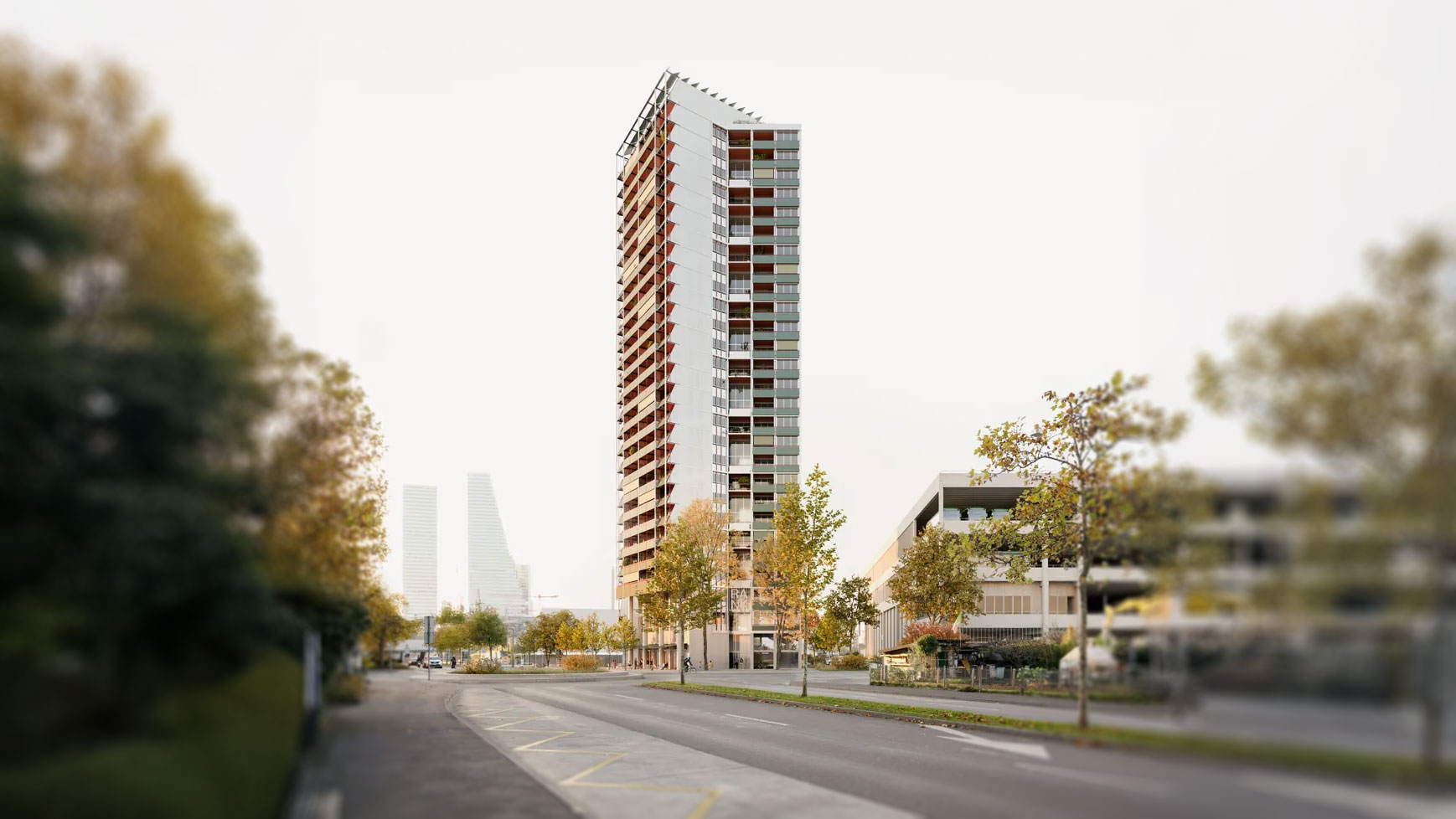
    Rankstrasse residential tower block

    In order to make optimal and sustainable use of the limited space on Rankstrasse, Basel’s “1000 ” residential construction program is based on a widely advertised, anonymous architectural competition. 78 teams showed interest, 15 selected projects were submitted and competed for the best solution. The expert jury was ultimately won over by “Miranda” by Zurich-based studio DIA, Haller Ingenieure and Hefti Hess Martignoni.

    Sustainability integrated into the architecture and social fabric
    The 88-metre-high building will provide over 100 new rental apartments based on the “Mietvertrag Plus” model, which is affordable and bound by income and occupancy rules. The outstanding feature is the innovative neighborhood concept. Three floors are connected vertically, creating inclusive meeting zones for diverse groups of tenants. The apartments have a compact and functional design, enable economical use of space and meet high ecological and economic standards. Green outdoor areas, communal spaces and resource-conserving construction methods underline the sustainability claim. The city is thus proactively committed to responsible, socially integrative urban growth.

    New benchmark for living on the outskirts of the city
    With “Miranda”, Basel-Stadt is launching a further development on the eastern outskirts of the city. The high-rise marks a striking prelude to future neighborhood developments and sets an architectural example of openness. The earliest start of construction is 2028, preceded by a development plan and public information. The focus on community, mixing, sustainability and architectural quality positions the project as a reference for modern, urban construction in Switzerland.

  • New residential neighbourhood with a focus on families and community building

    New residential neighbourhood with a focus on families and community building

    According to a statement, the jury of the Canton of Basel-Stadt has decided that the design by the two Basel-based architectural firms Clauss Kahl Merz Atelier für Architektur Städtebau and Truwant Rodet will be implemented. The planned residential development at Riehenring 120 on the former site of Exhibition Hall 3 will comprise 170 affordable flats.

    Exhibition Hall 3 is currently used by Basler Verkehrs-Betriebe (BVB) as a garage for electric buses. This temporary use will end in 2028. After that, the canton plans to develop this centrally located area into a vibrant residential and living space by 2031. The plans primarily include large, family-friendly flats and a small number of small flats. In addition, a double kindergarten, a daycare centre and commercial premises are planned, as well as 200 parking spaces for tenants and other people from the neighbourhood.

    The winning project impressed the jury “with its high quality of living and its contribution to the surrounding neighbourhoods”. Part of the car park will be built above ground. This will create two additional outdoor areas on the roof for tenants, which can also be used as planting gardens.

    At the same time, according to the canton, this will make construction more resource-efficient: as less ground needs to be excavated, there will be “no energy-intensive excavation and less building material will be used. In addition, the project as a whole focuses on environmentally friendly construction by reusing various components from the existing Exhibition Hall 3 and the former BVB garage in Rank.”

  • Wolf-Areal Basel affordable apartments

    Wolf-Areal Basel affordable apartments

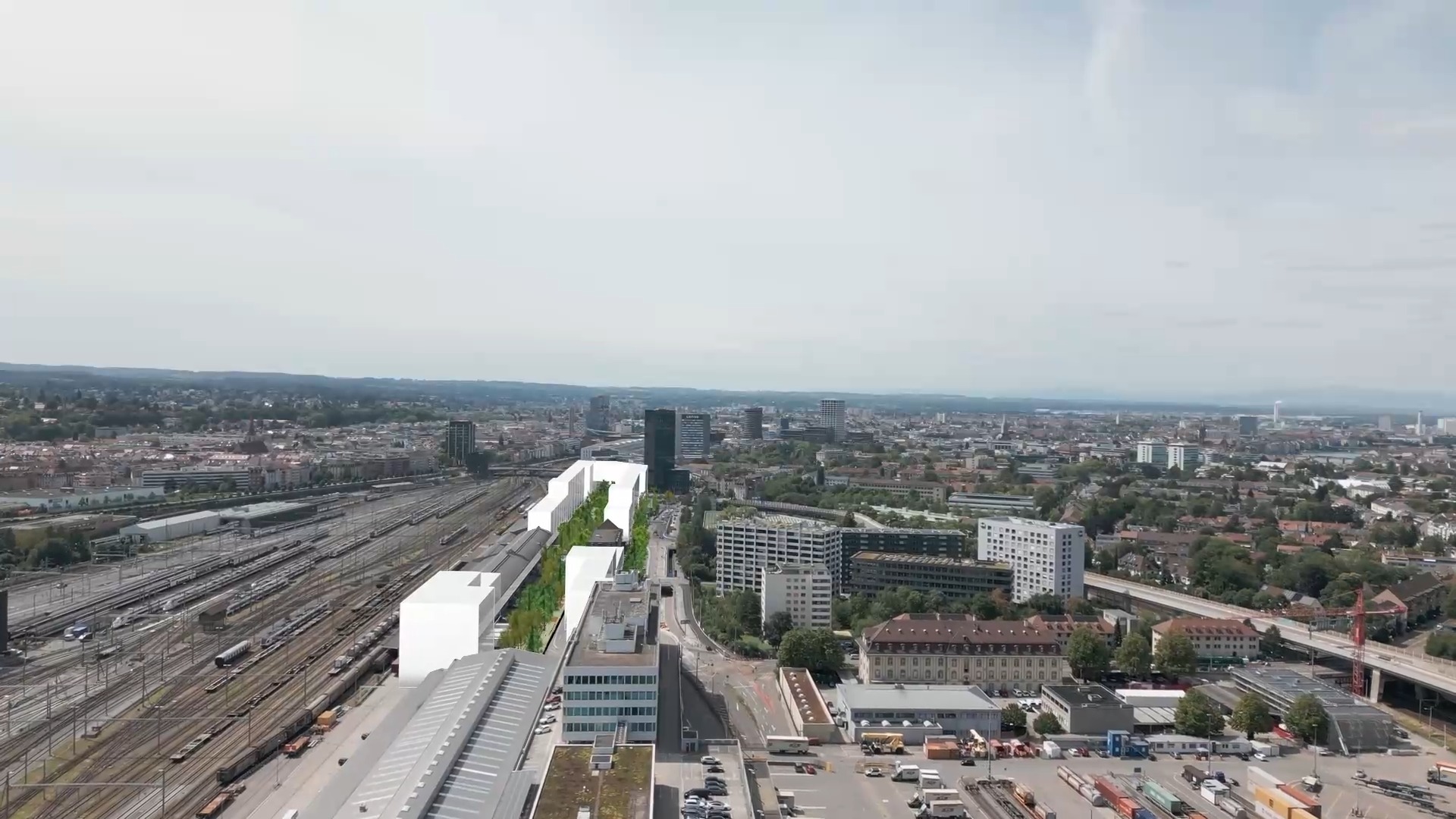
    SBB is pressing ahead with the transformation of the former Wolf freight station into an urban living and working quarter. As with the Volta Nord project, former railroad areas are being opened up for living, working and leisure.

    from 2028, around 270 apartments will be built on two building plots in the heart of the site, specifically positioned in the affordable segment.

    low-cost rent and contemporary forms of housing
    The Basler Wohngenossenschaft is planning around 150 cooperative apartments, while Vivanta is planning around 120 additional affordable units. All apartments will be built according to the cost-rent principle, which allows for moderate rents in the long term.

    the concepts are based on contemporary forms of living for different phases of life, from families to singles to older people. Communal areas and meeting zones are intended to strengthen neighborhood life and promote social networking.

    Non-profit partners with a clear mission
    BWG and Vivanta pursue an explicitly non-profit mission. To secure affordable living space while maintaining high quality and sustainability standards. The projects should demonstrate that ecological construction methods are compatible with affordable rents.

    building rights as a development instrument
    Building plots are allocated on the basis of a partnership-based building rights agreement developed jointly by SBB, the Federal Office for Housing and the Swiss Housing Association. This model creates reliable conditions for non-profit developers and accelerates the realization of affordable housing in city centers.

    with the development of the Wolf site, SBB is continuing to pursue its strategy of opening up areas that are no longer required for operational purposes for modern urban use and making a substantial contribution to affordable housing.