Tag: Projektentwicklung

  • New hotel project strengthens tourism in Scuol

    New hotel project strengthens tourism in Scuol

    Halter AG and Bergbahnen Scuol SA have signed a purchase agreement for the land of the former Engadinerhof in Scuol. The two partners intend to establish a hotel business with 130 rooms there, as detailed in a press release. Additional added value is to be brought into the region through the annual occupancy rate. In addition, staff flats, tourist flats as well as first and second homes are to be built to meet local demand.

    “The hotel complex will give visitors unforgettable moments and at the same time help to further consolidate Scuol as a lively and attractive tourist destination,” comments Roman Kummer, project manager at Schlieren-based Halter AG, in the press release. The project aims to strengthen Scuol as a holiday and recreation destination in the long term. Bergbahnen Scuol is contributing its local roots and tourism experience to the collaboration.

    The current plan is to submit the planning application in mid-2028.

  • Smart City Aarau Strategy 2034

    Smart City Aarau Strategy 2034

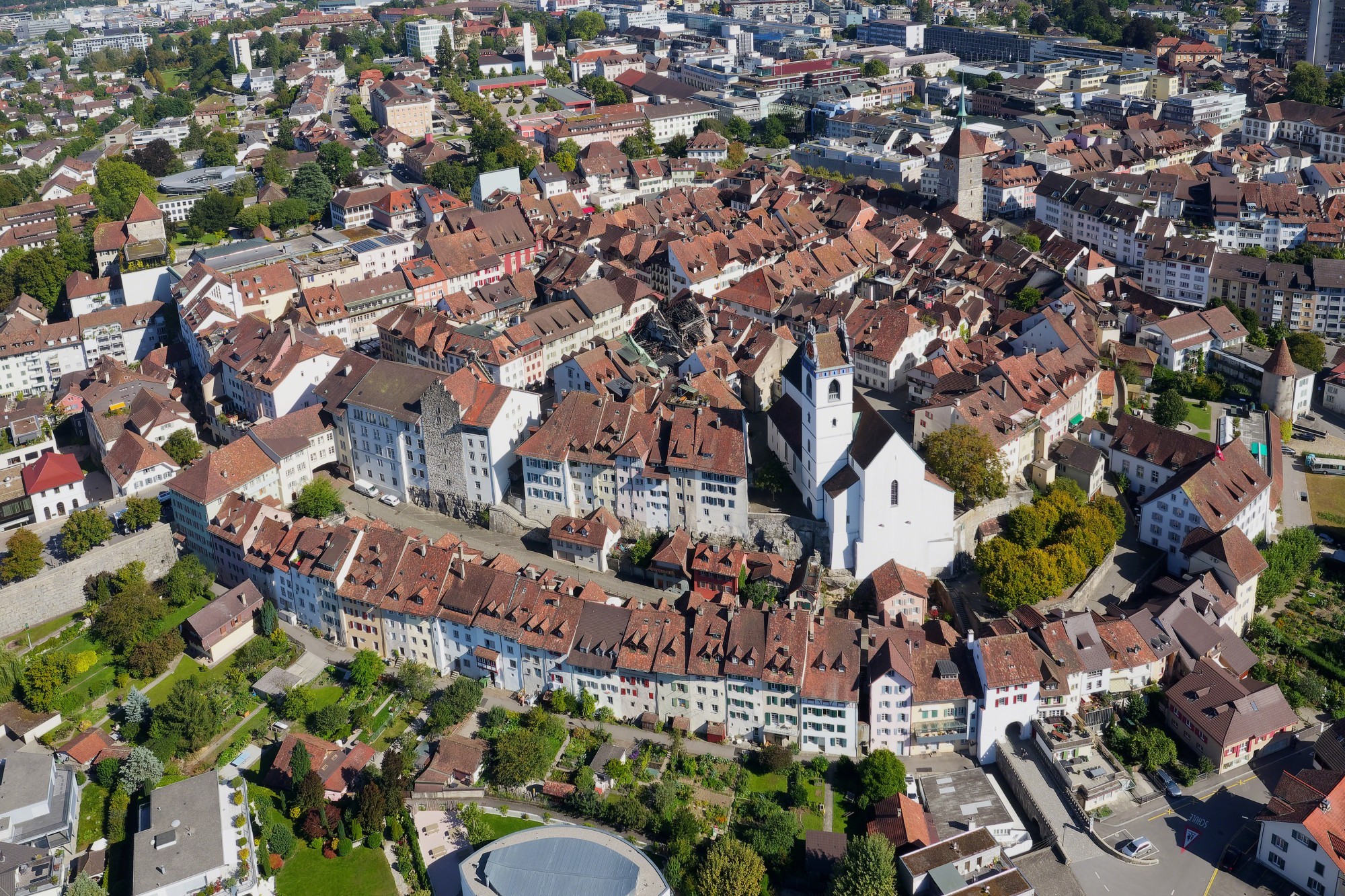
    With “Smart Aarau 2034”, the city is pursuing a forward-looking approach. The strategy does not rely on technological impetus alone, but sees digitalisation as a tool for solving complex challenges. The focus is on the needs of the population, cooperation between departments and resource-efficient implementation. Aarau is orientated towards the city’s existing development goals and integrates smart thinking into all urban projects.

    A methodological framework for real progress
    The change in strategy also means a rethink in terms of implementation. In future, projects will no longer be planned in secret, but developed in dialogue with those affected. A municipal team will provide methodical support to employees. From the initial idea to the actual tested project. Experience from the Smart City period to date shows that this approach is effective if it is applied consistently.

    Smart means networked and usable
    The new strategy puts an end to isolated islands of innovation. Instead, projects should be systemically conceived and networked across the city in future. The goal is a city that utilises its resources efficiently, can react to changes and introduces new solutions where they are actually needed. Digital tools will only be used if they contribute to quality of life or efficiency.

    Effectiveness instead of symbolic politics
    Aarau measures success not by the number of digital projects, but by their impact. The new strategic framework focuses on measurable progress. This applies to implementation, behaviour, awareness and everyday use. This makes smart thinking the new basis for urban development – comprehensible, user-centred and climate-friendly.

  • Outstanding projects at the Real Estate Award 2024

    Outstanding projects at the Real Estate Award 2024

    The event begins with a networking aperitif at 5 pm, which offers the opportunity to exchange ideas with leading figures from the industry. The winners in the categories of sustainability, project development/innovation, digital and marketing will then be announced at a gala dinner. The Real Estate Personality of the Year will also be honoured.

    Guest speaker Patrizia Laeri will provide insights into the topics of finance and diversity. Councillor of States and FDP President Thierry Burkart will discuss the current challenges and opportunities in the property sector with Annina Campell.

    Performances by comedian Joël von Mutzenbecher and the rockabilly band ‘the B-Shakers’ round off the evening. The Real Estate Award 2024 offers a varied programme that combines professional exchange with entertainment.

  • Voting opens for the Real Estate Award 2024

    Voting opens for the Real Estate Award 2024

    Online voting takes place via the website www.realestateaward.ch. All interested parties are cordially invited to cast their vote and help select the best in the industry.

    The winners will be announced at a gala dinner at Trafo Baden on 24 October 2024. This exclusive evening offers an excellent opportunity to honour the outstanding achievements of the winners while making valuable contacts in the real estate industry and enjoying an exceptional networking experience.

  • New Lucerne Theatre: Forward-looking operating concept confirmed

    New Lucerne Theatre: Forward-looking operating concept confirmed

    The evaluation of the operating concept for the new Lucerne theatre, which was drawn up in 2020 and later adapted to the winning project “überall” by Zurich architects Ilg Santer, was led by the renowned management consultancy METRUM. This review included discussions with experts and a review of documents and studies on various operational aspects such as personnel, space costs and catering.

    Confirmation and strategic direction
    The evaluation was divided into the areas of “cultural policy issues”, “output issues” such as visitor numbers and performance figures and “input issues”, which include personnel planning and building maintenance. The results confirmed the operating concept and emphasised the need for detailed planning for the future. Cultural Director Dr Armin Hartmann and Lucerne City President Beat Züsli presented the encouraging results, which confirm the theatre as a multi-genre theatre with its own ensemble and emphasise its importance for cultural provision and economic value creation.

    Confidence-building and political acceptance
    The pre-evaluation serves as an important confidence-building measure for the project, which is facing political and financial challenges. The results provide a solid basis for the upcoming decisions and further project development, including a possible referendum in winter 2025. This step is crucial to convince the city council of the necessity and feasibility of the project.

    With the upcoming media conference and the detailed presentation of the “everywhere” project, the City of Lucerne will present a comprehensive report and proposal that sets out the financial and operational framework for the new theatre. This progress promises to have a lasting impact on Lucerne’s cultural landscape and further strengthen the city as a cultural hub in Switzerland.

  • Climate-neutral showcase neighbourhood

    Climate-neutral showcase neighbourhood

    The city of Zurich is setting new standards in terms of climate protection. With the decision to establish a “net-zero pilot neighbourhood” in the Binz/Alt-Wiedikon area, the City Council is underlining its commitment to sustainable urban development. This area, which includes industrial and residential zones, was specifically selected to test a wide range of climate protection measures under real-life conditions. The neighbourhood is to become a model for environmentally conscious coexistence, with the promotion of a sense of community playing a central role. The approach that climate protection is a shared responsibility is to be reinforced by involving all residents, regardless of their origin or professional background, in the project development.

    One focus of the project is on the direct participation of neighbourhood residents. They are encouraged to contribute their own suggestions for climate protection measures and actively participate in their implementation. In addition, 15 initiatives will be proposed at the start, which will be tackled immediately. These include measures to reduce waste and promote sustainable nutrition in catering establishments.

    The “net zero pilot district” not only serves as a testing ground for sustainable urban development, but also as a learning environment in which the failure of projects is also seen as a valuable experience. The successful approaches have the potential to be transferred to other neighbourhoods and thus contribute to achieving the city’s climate targets.

    The City Council is providing a credit of CHF 7.7 million for the realisation of this ambitious project, of which CHF 3 million is earmarked for projects from local initiatives and a further CHF 2.5 million for participatory projects. Although the proposal is widely supported, there are also critical voices calling for a more detailed concept for implementation. However, the City of Zurich’s parliament, the municipal council, voted in favour of the city council’s plans by a large majority. With this project, Zurich is emphasising its leading role in the area of climate-friendly urban development and sending out a signal about the importance of local climate protection initiatives.

  • Increased efficiency in property management

    Increased efficiency in property management

    Although intergenerational living concepts have the potential to strengthen coexistence in neighbourhoods, many owners of large property portfolios are reluctant to implement them. The reason for this lies in the lack of experience with the administrative burden of these special forms of housing, which differ significantly from conventional offers.

    In order to meet these challenges, an orientation framework and a toolbox have been developed that offer insights into the necessary administrative tasks and questions that need to be clarified. The aim is to provide owners, portfolio managers and property managers with a clear guideline to simplify the realisation of such innovative forms of housing. These useful tools emerged from an intensive exchange of experience organised by Zimraum and Stratcraft, in which various stakeholders took part. In a total of four brown bag meetings, essential topics such as marketing, letting, operational management and advice on project development were discussed and solutions developed.

    With the new orientation framework and the toolbox, SVIT Zurich is providing important impetus for the property sector by not only paving the way for the implementation of community-promoting forms of housing, but also helping to rethink and redesign housing for the elderly.

  • Timber Finance informs about CO2 methodology in timber construction

    Timber Finance informs about CO2 methodology in timber construction

    Timber Finance has been working since 2022 to establish timber construction on the market for CO2 storage certificates. The company recently received an ICROA CO2 certificate standard for its methodology developed for this purpose, Timber Finance announced in a press release. The competence centre for modern timber investments expects its CO2 storage technology to be finally recognised in the course of the year.

    For the pilot phase of the methodology, Timber Finance is inviting interested parties from the property development, architecture, engineering, project development and real estate sectors as well as general and total contractors to register their planned or ongoing timber buildings as pilot projects for CO2 certification. On 8 February, the Competence Centre will also be hosting an online seminar on the topic. According to the event announcement, the approach of generating financing contributions for timber construction projects via CO2 storage certificates will be explained in detail.

  • Relevance of social sustainability in institutional real estate portfolios

    Relevance of social sustainability in institutional real estate portfolios

    Ms Zimmerli, you are developing criteria for assessing the social sustainability of institutional real estate portfolios. What are your motives?
    In recent years, many institutional owners have set climate targets that go beyond the legal requirements as part of their ESG strategies. After the “E”, the “S” is now slowly coming into focus. The problem is that nobody really knows what constitutes social sustainability. We observe that a lot is projected into the “S”, and the big social contexts are often pushed into the background. We have therefore decided to test with partners from academia, real estate associations and institutional investors on the basis of various portfolios what an operationalisation of social sustainability might look like. Our goal is to define a few clear, easily interpretable and comparable key figures for social performance, to create short checklists to complement them, and thus to give more room to competition for good ideas.

    Many portfolio and asset managers are currently busy preparing reliable energy and emissions data. What prompts you to develop key figures for social sustainability right now?
    It is true that the focus of the real estate industry is still on the collection of climate key figures at the moment. Thanks to the REIDA CO2 benchmark and the environmentally relevant AMAS key figures, there is now a clear orientation framework and good instruments. We want to take both the momentum and the focus on the essentials of these instruments with us, because we are convinced that the real estate industry simply cannot afford to reduce sustainability to environmental issues. The heated debates on the reference interest rate, housing protection and major development projects show that the public and politicians also expect sustainable real estate portfolios to provide answers to social questions.

    In the industry, there is currently no consensus on what is meant by the “S” or how societal-social sustainability should be measured. How do you see it?
    Against the background of the current political discussions, the “S” is not complicated: At the societal level, it is about providing housing to broad segments of the population, about socially mixed living environments and about well-functioning neighbourhoods and districts. For institutional owners, it is about how property portfolios are structured and how the available living space is distributed. For new construction and renewal projects, the question is what happens to existing tenants, for which target groups additional living space is created and how neighbourhoods and districts can be strengthened. Of course, there are countless other needs. However, we believe that key figures should refer to the major social levers and that the market should play a role in individual needs.

    How can and should the “social performance” of a real estate portfolio be effectively measured or assessed?
    We are guided by the philosophy of the environmentally relevant key figures of AMAS and REIDA: “Keep it simple”. In essence, social performance can be measured simply with hard-testable key figures: We are currently testing how data on the portfolio structure and on first-time lettings and re-letting can be collected and evaluated as simply as possible. In addition, we are developing questionnaires that owners can use in their tenant surveys to obtain reliable findings on satisfaction with the neighbourhood, flat or property management. Finally, we use classic key figures on fluctuations and vacancies, which are usually already collected and evaluated.

    The optimisation of ecological criteria often requires high investments. This creates incentives to sell properties with a poor ecological balance. Do properties with poor social ratings face the same fate?

    No, from our point of view there is no danger of stranded assets in terms of social sustainability. We are convinced that basically every property can be transformed in a socially sustainable way with reasonable effort. The most important levers here are renewal planning and management. Renewal planning determines when which properties are to be adapted to current needs and market prices. In management, decisions are made as to who will receive affordable or barrier-free living space. We have selected key figures that can be directly influenced by portfolio and asset managers. We understand social sustainability as the result of far-sighted portfolio and asset management and consistent marketing and management, and not as a property or location attribute. We are also convinced that properties with strong social qualities can compensate for environmental weaknesses.

    Many owners find it difficult that innovative ideas and approaches with which they want to stand out from competitors disappear in extensive checklists and indicator sets of sustainability labels. How can this be prevented?
    By separating obligation from freestyle. We pursue the same goal with social sustainability as REIDA does with ecological aspects: A few uniform key figures should make it visible and comparable how well a portfolio fulfils the mandatory programme. In addition, there are topics for which there are no standardised specifications. Fund management companies and asset managers should be free to decide and communicate how they want to ensure, for example, good neighbourhood care, good cohabitation or good tenant management. We see the “how” as a freestyle; this is where competition, creativity and innovation should play a role. In other words, we want more goal orientation and less micromanagement. In a highly regulated world, ESG should not be a tighter corset, but a springboard with which the real estate industry can prove what it can achieve with yield-oriented portfolios.

    Where do you stand with the key performance indicator set?
    We are currently working on concretising and validating our approach on the basis of four funds of our partners. We will present the findings and a first consolidated draft on 28 September 2023 at the symposium “Measuring social sustainability in ESG – what is it all about?” and discuss it with owners, managers and experts. Interested readers can register here . I would be pleased if we could welcome you at the HWZ in Zurich.

    Source: ssrei.ch

  • Künstliche Intelligenz in der Projektentwicklung

    Künstliche Intelligenz in der Projektentwicklung

    Megatrend KI
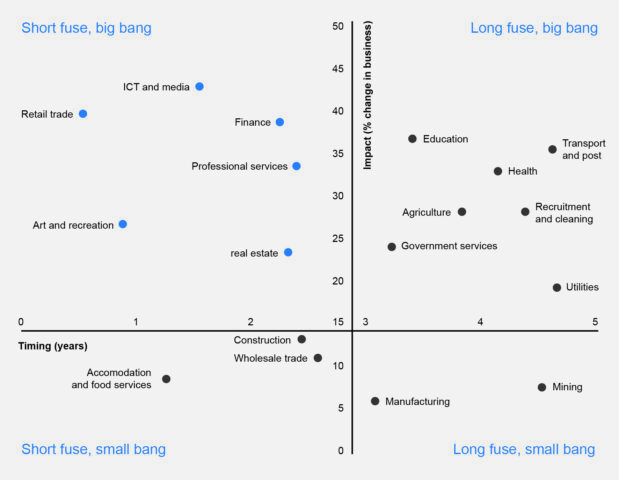
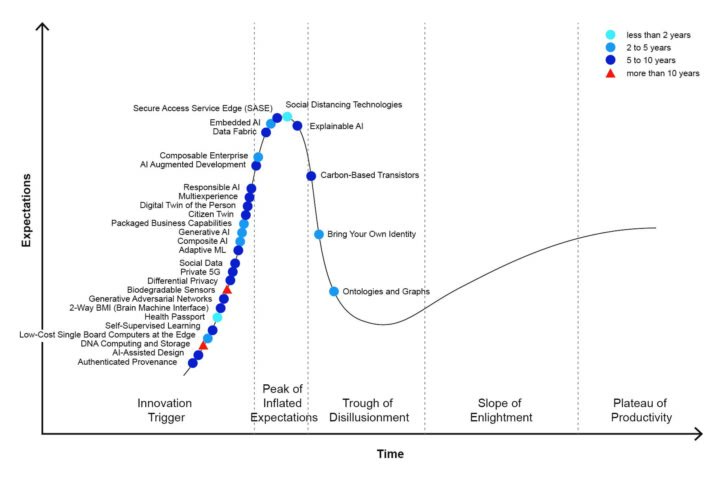
    Digitalisierung und Künstliche Intelligenz sind Megatrends, die weitreichende und tiefgehende Veränderungen bewirken werden. Diese Technologien können als Innovation und Folgeinnovation mit grossem disruptivem Potenzial gesehen werden. Digitalisierung steht für digitale Herangehensweisen, Verfahren und Technologien, die Wirtschaft und Gesellschaft zunehmend und immer schneller durchdringen. Dies führt zu neuen Prozessen und Werkzeugen, die Unternehmen, Menschen und damit Arbeit, Leben und Verhalten zwangsläufig verändern. Die Technologie ist dabei der Treiber, welcher Veränderungen bringt. Der Begriff Digitale Transformation beschreibt die Folgen und Auswirkungen der Digitalisierung. Deloitte hat vor einigen Jahren eine Übersicht zu Grad und Art der Betroffenheit unterschiedlicher Branchen durch digitale Innovation und Transformation veröffentlicht. Der Immobilienbranche wurde dabei eine hohe Betroffenheit in relativ kurzer Frist prognostiziert («short fuse, big bang»). Dieser Transformationsprozess ist derzeit im Gange. Hinsichtlich der innovationsauslösenden Technologien stellt das Marktforschungsinstitut Gartner Inc. jährlich in seinem Hype Cycle Report das Entwicklungsstadium von Megatrends dar. Sämtliche Technologien durchlaufen dabei die dargestellten Phasen, jedoch unterscheiden sie sich jeweils in Dauer und Durchlaufgeschwindigkeit deutlich. Die in der Abschlussarbeit zentrale Erklärbare KI («Explainable AI») befindet sich demgemäss etwa auf dem Gipfel der überzogenen Erwartungen (siehe Abbildung 2). Zwar funktionieren in diesem Stadium bereits einzelne Anwendungen, gewisse Enttäuschungen sind jedoch vorgezeichnet. Auf dem Pfad der Erleuchtung werden sich erfolgsversprechende Geschäftsmodelle herauskristallisieren. Es bilden sich neue Märkte, da durch die gesteigerte Leistungsfähigkeit der Technologie und den daraus resultierenden neuen Kundenbedürfnissen eine zunehmende Nachfrage entsteht. Auf dem Plateau der Produktivität entfaltet sich schliesslich in technischer wie auch in wirtschaftlicher Hinsicht das volle Potenzial der Anwendung.

    Mit dem Erreichen der kritischen Masse von Anwendern wird sich KI auch in der Immobilienwelt zunehmend etablieren. Wichtig für den nachhaltigen Erfolg wird ein gesteigertes Bewusstsein für Daten und den Umgang mit diesen sein. Zudem müssen sich die Anwender Kenntnisse über Funktionsweisen von KI-Technologie aneignen. Die heute auf dem Markt verfügbaren KI-Anwendungen fokussieren auf einzelne Teilbereiche der Projektentwicklung und decken dadurch jeweils nur einen kleinen Teil des Gesamtprozesses ab. Als Grund hierfür ist auch die Komplexität von mehrjährigen Projektentwicklungen mit ihren unterschiedlich ablaufenden Phasen sowie vielen involvierten Stakeholdern zu nennen. Eine durchgängige und phasenübergreifende Lösung fehlt somit noch, es sind jedoch Tendenzen feststellbar, dass künftig dem Bedürfnis nach solchen Ansätzen nachgekommen wird. In der Abschlussarbeit werden anhand verschiedener Use Cases aktuelle KI-basierte Anwendungen behandelt.

    Kooperation Mensch – Computer
    Die Fülle an Daten, die zunehmende Digitalisierung sowie Fortschritte in der Computertechnologie versprechen also auch in der nicht unbedingt für Innovationsfreude bekannten Immobilienbranche den vermehrten Einsatz KI-basierter Anwendungen. Grosses Potenzial bietet hierbei die Standortsuche und Identifikation neuer Entwicklungschancen durch KI, was künftig vermutlich eine bedeutende Rolle spielen wird. Das Zusammenspiel Mensch – Computer ist dabei mehr als die blosse Summe seiner Teile. Ängste, dass die Entwicklung von Immobilienprojekten künftig überwiegend automatisiert und an den Computer delegiert werden könnte, sind unbegründet. Insgesamt werden Projektentwicklungen durch den vermehrten Einsatz von Künstlicher Intelligenz sogar menschlicher, da der Mensch noch stärker zum Manager wird, der die Ziele definiert, Aufgaben delegiert, kontrolliert und korrigiert. Die Komponente Mensch spielt dabei weiterhin die buchstäblich entscheidende Rolle, indem sie Ergebnisse der KI auf Sinnhaftigkeit prüft und weiterverarbeitet. Dabei wird es in der Projektentwicklung immer auch um menschliche Bedürfnisse wie Vertrauen und Eigenschaften wie emotionale Intelligenz gehen.

    Wenn die Voraussetzungen also gegeben sind, kann Künstliche Intelligenz bereits heute einen Mehrwert in der Projektentwicklung schaffen, indem beispielsweise standardisierbare Analyseaufgaben an den Computer delegiert werden und der Mensch sich somit auf das Wesentliche konzentrieren kann. In diesem Zusammenspiel behält die menschliche Intelligenz in der Synthese der Ergebnisse weiterhin ihre entscheidende Rolle, mit dem Ziel, ein besseres Produkt für Entwickler und Gesellschaft hervorzubringen. Chancen und Nutzen überwiegen dabei Risiken und Aufwände. Letztere müssen zunächst durch innovative Entwickler getätigt werden, um die Innovation auf den Weg zu bringen. Wenn sich dann ein hoher relativer Nutzen der Anwendung einstellt, kann diese reüssieren und gebräuchliche Prozessmodelle verbessern oder gar ersetzen.

    Zur Person
    Simon Lindhuber, geboren 1983. Architekturstudium an der Technischen Universität München sowie der ETSA Madrid, Abschluss als Dipl.-Ing. TUM 2010. Master of Advanced Studies UZH in Real Estate, Abschluss 2021. Mitglied der Bayerischen Architektenkammer. AIV-Schinkelpreis für Architektur 2009. Ab 2016 bei Topik Partner AG (ehem. Odinga Picenoni Hagen AG) in der Projektentwicklung tätig, u.a. Neubau eines Geschäftshauses an der Bahnhofstrasse, Zürich. Seit 2021 als Head of Real Estate bei modissa ag c/o HANUVER AG, u.a. für die strategische Portfolioentwicklung und die Führung des Property Managements sowie diverse Digitalisierungsprojekte
    verantwortlich.
    Abbildung 1: Betroffenheit der Branchen (vgl. Deloitte, 2012).
    Abbildung 2: Entwicklungsverläufe neuer Technologien (Gartner, 2020).

  • Real Estate Award 2022: These are the nominees!

    Real Estate Award 2022: These are the nominees!

    Outstanding achievements are honored, regardless of the size of a company. The presentation of the awards as part of the Real Estate Awards on October 26, 2022 is also a special occasion for the real estate and construction industry to meet. Over the past few years, more than 3,800 people have attended the Real Estate Award ceremony, making the event an important fixture on the agenda of the real estate industry.

    The jury of real estate experts and economists made a preselection from all the applications submitted. Based on criteria such as vision, strategy, pioneering spirit, originality, scalability and special service, the jury nominated three projects in each category for the Real Estate Award 2022.

    Real estate management / construction digital
    Allthings Technologies AG were nominated with the project "CôtéGare new building project", EcoEnergy Swiss AG with the Pconcept "ESC energy saving contracting" and VERIT Immobilien AG with "Mandate access with artificial intelligence".

    marketing
    In the marketing are Homedeal24 AG with "DER DIGITALE REAL ESTATE MARKETPLACE", onOffice Swiss AG with the "onOffice brokerage software"
    and revolutionSCREEN AG with the project "Marketing real estate with one click on the display".

    Conversion/change of use
    In the case of conversion or conversion, the architects Horcher GmbH with the project "From commercial to loft – open living in rough charm", Bauart Architekten und Planer AG with the topic "Convert urban "non-place" into a place worth living in" and Klam AG with " From a 1970s terraced house to Casa per l'arte»

    project development
    In the project development, the company Amenti AG presents – "Digitization of the feasibility study", CCTM AG shows the project "GAG LINDENPARK" and
    Monoplan AG shows «NEUBAU JOYN | SERVICED LIVING | SMOOTH PARK»

    Manufacturer Innovation
    In the Manufacturers and Innovation category, the company Climeo AG was awarded "User-friendly room climate systems for a healthy future", Georg Fischer AG with "Georg Fischer Piping Systems (GFPS) – Hycleen Automation System" and KLAFS AG with "Living becomes wellness – Auf push of a button»

    You can vote online for the nominated applications on the website www.realestateaward.ch until October 22, 2022. The winners will then be presented with the awards on October 26, 2022 at the Real Estate Award ceremony in the Zurich area. The real estate personality of the year, chosen by the jury, will also be honored on this evening.

    Congratulations to the nominees and good luck with the current vote!

  • Steiner remains on course for growth

    Steiner remains on course for growth

    According to a statement by the Steiner Group , the Zurich real estate company generated sales totaling CHF 763.6 million in the 2021/22 financial year, which ended on March 31, 2022. At the same time, the operating result before taxes and interest reached an exceptionally high value of CHF 49.7 million. The real estate service provider, which specializes in project development and implementation, has achieved “solid growth in all key areas of its core business”.

    Specifically, the report mentions a strong real estate development business, a high level of construction activity by the group’s total and general contractor in western Switzerland and profits from the sale of condominiums and developed projects. The group has thus completed its first year of transformation after the decision to focus on real estate development at the beginning of 2020 “with a very good result”, writes Steiner.

    In the year under review, Steiner was able to acquire new development projects with a forecast market value upon completion of around CHF 1.5 billion. Steiner explains that this has increased the group’s development portfolio to a volume of CHF 6.4 billion.

  • Halter AG lays the foundation stone for a new quarter

    Halter AG lays the foundation stone for a new quarter

    A new quarter is to create the connection between Suhr Süd and the center. In addition to a twelve-story high-rise, three four- to six-story buildings are being built. Schlieremer Halter AG is responsible for project development and implementation, according to a media release . The foundation stone was laid on Wednesday.

    The quarter is being built on an area formerly used by Ferroflex AG. There will be areas for living, services and commerce. Public open spaces with paths and squares, a children's play area and a barbecue area are planned between the buildings. In the high-rise and in the so-called garden house, 59 apartments with 2.5 to 5.5 rooms will be built as residential property. 143 rental apartments are being built in the other two buildings.

    The development project will be implemented according to the objectives of the 2000 Watt Society. District heating from the Buchs AG waste incineration plant is used to generate heat. Solar systems will provide some of the electrical energy required.

  • Real Estate Award 2021: These are the nominees!

    Real Estate Award 2021: These are the nominees!

    Outstanding achievements are honored, regardless of the size of a company. The presentation of the awards as part of the Real Estate Award on June 21, 2021 is then also a special occasion where the real estate and construction industries meet. In the past few years, over 2,800 people have taken part in the Real Estate Award ceremony, making the event an important fixture on the real estate industry's agenda.

    The jury of real estate experts and economists made a pre-selection from all the applications submitted: Based on criteria such as vision, strategy, pioneering spirit, originality, scalability and special service, the jury nominated three projects in each category for the Real Estate Award 2021.

    In the category management:
    – Credit Trust – "The digital alternative to the debt enforcement extract – especially for managers"
    – VERIT Immobilien AG – "VERIT thinks the tenant onboarding process digitally through to the end"
    – PRIVERA AG «Tenant concerns intelligently automated – fast, lean, smart – IMOFIX» In the category

    Project development:
    – NEST Interiors AG – "Idyllic residential area on the Fischingerbach"
    – Felix Partner Architektur AG – "West-Log"
    – CCTM Real Estate & Infrastructure AG – "Swiss Life Arena"

    In the Marketing category:
    – Tend AG – "Bear Tower"
    – Marti Gesamtdienstleistungen AG – "Schäferhöhe – Get out of the stables"
    – LIVIT AG – "Guggachpark"

    In the conversion / conversion category:
    Felix Partner Architektur AG – "From the ruin to the zero-energy balance house"
    – Credit Suisse Asset Manag. – «Transformation Schwarzenburgstr. Liebefeld »
    – Marazzi + Paul Architects AG – «Schönburg Bern»

    In the Real Estate / Construction Digital category
    SV Group AG – "Stay KooooK"
    – Price Hubble AG – "Property Tracker"
    – SBB – "Smart City Lab Basel"

    The real estate and construction industry now has the final say: From May 1 to June 15, 2021, the www. realestateaward.ch online for the nominated applications.

    The winners will then be presented with the awards on June 21, 2021 at the Real Estate Award ceremony in Zurich. If this date is not possible due to any BAG regulations, the event will take place on August 30, 2021.

    The real estate personality of the year, chosen by the jury, will also be honored on this evening.

    At the same time as the Real Estate Award is presented, the SVIT Switzerland Award "Innovation in Real Estate" will be presented. https://realestateinnovation.ch/

    Order tickets for the Real Estate Award ceremony at: www.realestateaward.ch or SVIT – https://realestateinnovation.ch/