Tag: Raumplanung

  • Federal Council wants to accelerate residential construction

    Federal Council wants to accelerate residential construction

    According to its communication, the Federal Council is examining measures to accelerate residential construction. With its report of 22 April 2026, it is responding to five postulates from the National Council and Council of States. It is part of the federal government’s housing shortage action plan. The Federal Council has instructed the Federal Department of the Environment, Transport, Energy and Communications to submit a consultation draft by the end of 2026.

    One of these measures should create the legal basis for a national interest in housing construction. Such a legal basis would then take precedence over, for example, the protection of the townscape or listed buildings. The Federal Council is also having the restriction of the right of appeal for private individuals and the admissible complaints examined. In addition, the procedural costs for objections that are proven to be an abuse of rights could be imposed on the objectors, namely if the objection is clearly aimed solely at preventing or delaying a project.

    However, the sovereignty for planning and building authorisation procedures lies with the cantons. The Federal Council can therefore only recommend that they introduce a digital authorisation procedure and set binding deadlines in order to speed up the process. The Federal Council also recommends that planning applications should only be published once they are complete. It also points out that many licensing authorities do not have sufficient staff or expertise to process complex dossiers.

  • Umwelt Arena presents new exhibition on micro-apartments

    Umwelt Arena presents new exhibition on micro-apartments

    According to an announcement, the Umwelt Arena in Spreitenbach is presenting a pioneering living concept with the new exhibition “Micro-apartment – 50 m2 for 4 people”. Sustainable, affordable living is one of the major challenges of our time, it continues. With a concrete example, the Umwelt Arena shows that intelligent spatial planning, multifunctionality and energy-efficient construction are not visions of the future, but reality.

    Visitors learn how the project is created, which solutions are implemented and what impact micro-apartments have on sustainability, it continues. The show flat demonstrates how space for a family of up to four people can be created on around 50 square metres without any loss of comfort. Through space planning and multifunctional furnishing, the living room can be transformed into a bedroom at the touch of a button and the children’s room can become an office or playroom if required.

    The 1:1 scale model flat can be viewed during short guided tours. They take place twice a day at 2 pm and 3.30 pm.

    Guided tours for companies, clubs and schools can be booked on request, according to the Umwelt Arena. The topic of micro-living can be chosen as the focus of the two guided tours Sustainability in Everyday Life and Building and Modernising.

  • The way is clear for Wil West

    The way is clear for Wil West

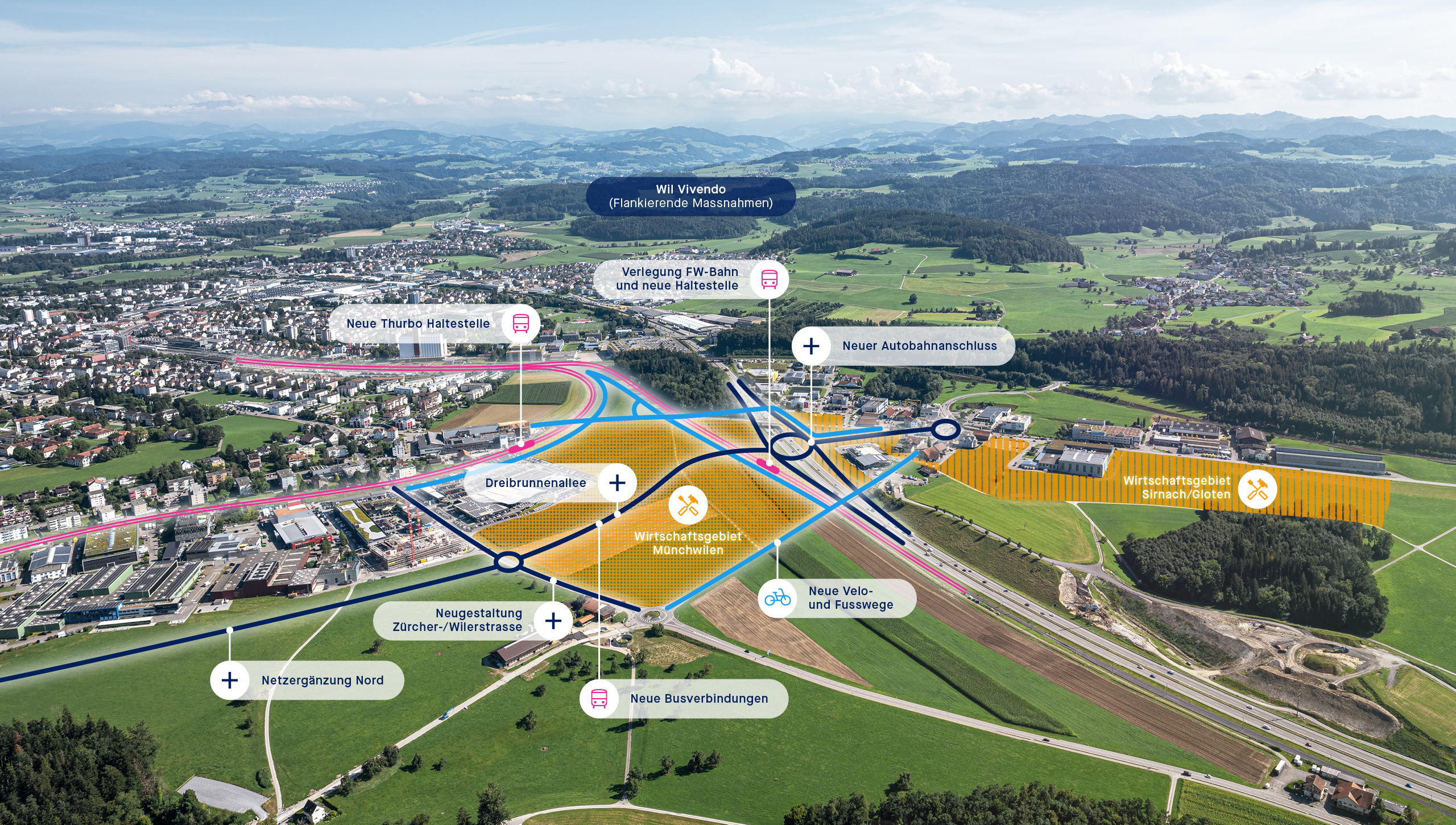
    At the second attempt, the voters of St. Gallen say yes to Wil West. The decision is close, but clear enough to create planning security. The vote shows that the region wants to grow. Bundled, plannable and coordinated across cantonal borders.

    With the sale of the land, St. Gallen is handing over a former estate of the Wil psychiatric clinic to the canton of Thurgau. In future, the economic area will be located entirely on Thurgau soil, but will remain within the immediate sphere of influence of the Will region. This creates a clearer starting position for investments, infrastructure and long-term settlement strategies.

    Concentration instead of urban sprawl
    Wil West stands for a model that keeps many regions busy, enabling economic growth without further urban sprawl. Instead of constantly scattering new commercial zones on the outskirts of towns, the location will in future concentrate companies, services and productive jobs in a location with good transport links.

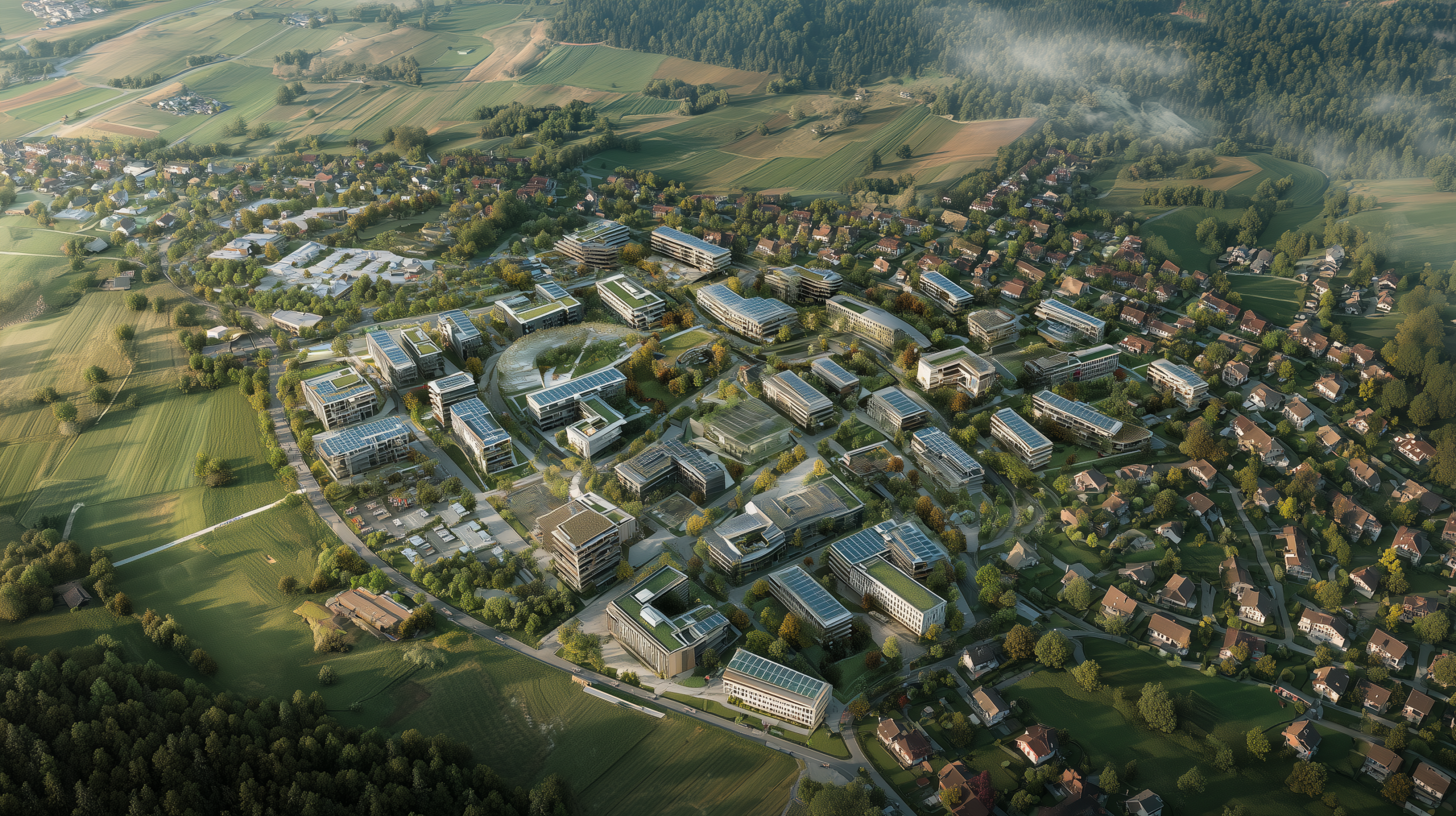
    The plan is not just any old industrial area, but a modern work location. The aim is to create high-quality businesses that generate added value and skilled jobs without taking up an excessive amount of space. The development potential of the region will thus be utilized. For spatial planning, the project is therefore also an instrument for channeling growth instead of leaving it to chance.

    Infrastructure as a driver of development
    Wil West has a particularly strong impact through its infrastructure. With the project, the federal government, cantons and region are linking the expansion of the highway, public transport and pedestrian and bicycle connections. The planned freeway link to the A1 and better rail and bus connections will make the area attractive for companies and at the same time relieve pressure on the existing town centers.

    Sustainability as a location factor
    The first version of Wil West failed due to concerns such as loss of cultural land, traffic and ecological impact. In the revised version, sustainability plays a much more visible role. More compact construction methods, more careful land use and more green and open spaces are intended to reduce the ecological footprint.
    This is precisely what is becoming a location factor for companies looking to relocate. When choosing a location, more and more companies are looking at energy and land consumption, accessibility without a car and an attractive environment for employees.
    Wil West has the opportunity to set a new standard for work zones if quality assurance, phasing and criteria for settlements are consistently implemented.

    Seize opportunities, manage expectations
    With the yes vote for the proposal, expectations are now also rising. Politics and administration must pick up the pace without falling into a hectic pace. The region needs clear guidelines: which sectors should come? What density is desired? How can development be managed over decades without having to change strategy every time the economy changes?

  • Spatial planning for municipalities since 1 January 2026

    Spatial planning for municipalities since 1 January 2026

    Federal framework, cantonal rules
    Parliament has reorganised the roles with regard to value-added compensation. One thing is clear: the obligation under federal law to pay value-added tax now only applies to individual zoning; the cantons are responsible for other significant planning advantages such as upzoning and rezoning. In the canton of Aargau, the equalisation of such advantages takes place within the framework of administrative contracts – not by means of decrees. For the municipalities, this means that they must actively negotiate, document properly and align their practices closely with cantonal law.

    Solar on façades
    Solar installations on façades are now generally not subject to authorisation in building and agricultural zones, provided they are deemed to be sufficiently adapted. The notification is made via the cantonal platform; the formal building permit procedure is no longer required. Art. 32abis RPV defines how adaptation is to be understood in concrete terms and at the same time opens up a certain amount of leeway for municipal design regulations. Municipalities can issue area-specific regulations, but may not excessively restrict the use of solar energy. Installations on cultural and natural monuments of cantonal or national importance as well as on buildings with substance protection or in sensitive local and landscape zones remain subject to authorisation.

    Solar above car parks
    In building zones, support structures for solar installations above or on the edge of car parks with 15 or more parking spaces are now considered directly compliant with zoning regulations. However, the municipalities can specify these basic regulations. They may designate areas where such structures are excluded or only permitted subject to conditions, or conversely declare smaller car parks to be zoning-compliant. This turns the car park into a strategic energy area. Provided that the municipalities utilise their autonomy and define clear objectives for townscape, climate protection and energy production.

    New planning principles
    RPG 2 introduces a new planning principle for the utilisation of underground space. In future, underground uses must be harmonised with above-ground uses and the affected interests at an early stage. At the same time, the priority of agriculture in the agricultural zone is expressly enshrined in the law. Agricultural uses are to be weighted more heavily than non-agricultural concerns, for example by easing immission control requirements if the agricultural interest prevails. For the practice of land use planning, this means less of a change of course than a shift in emphasis: the familiar balancing of interests in accordance with Art. 3 RPV remains, but is given clearer guidelines, which must be made visible in the planning report.

    Zoning-compliant and without planning obligation
    Installations for the production and transport of energy from biomass can be zoning-compliant in the agricultural zone under simplified conditions. It is now expressly stated that such zone-compliant biomass plants are not subject to planning requirements, even if they have a spatial impact. This is the legislator’s response to previous case law, which in some cases assumed a planning obligation for biomass-based energy plants. For municipalities and cantons, the discussion is thus shifting more in the direction of authorisation and requirement practice instead of land use planning.

    Building outside of building zones
    RPG 2 also brings noticeable changes outside of building zones. In principle, building applications can only be authorised with the approval of the canton. For municipal authorities, the main changes are in the material criteria against which projects are assessed. The priority given to agriculture will be strengthened and should also have an impact on the easing of odour and noise protection requirements.

    At the same time, the new law improves the framework conditions for plants that utilise renewable energies. Biomass plants in the agricultural zone are deemed to conform to zoning if they fulfil certain requirements and do not require prior planning, even if they are no longer subordinate to the agricultural operation but are merely part of it. For installations for the use of renewable energy and for thermal networks that do not conform to zoning regulations, the requirements for exceptional authorisations are relaxed, provided they contribute to the reduction of fossil fuels.

    Infrastructure, mobile radio and dismantling
    For infrastructure installations outside of building zones, the principle of bundling in locations that are as insensitive as possible now applies. Mobile radio installations can also be explicitly authorised outside the building zone if the location there offers significant advantages over a location within the building zone. Finally, the statute of limitations for dismantling orders will be standardised. Unlawful buildings and installations can generally no longer be demolished after 30 years, regardless of whether they are located inside or outside the building zone. Constellations in which police assets such as public order, peace, safety or health are jeopardised remain exempt.

    For the municipalities, the revised spatial planning law opens up new scope for solar energy, biomass, infrastructure and the prioritisation of agricultural interests. It will be crucial to actively shape this freedom, to anchor it in land use planning and authorisation practice and to document the new principles transparently.

  • Improve quality, streamline processes

    Improve quality, streamline processes

    Since the revision of the Spatial Planning Act, economical land use has been the guiding principle, but in practice, procedures often remain slow and cumbersome. Interests clash, responsibilities are not always clear and objections can block projects for years.

    Anyone who wants to promote inner-city development must therefore start earlier. Project sponsors, planners, authorities, politicians and implementers should enter into a structured dialog before the planning application is submitted. This allows conflicts to be clarified, quality to be defined and procedures to be geared towards a realistic target image from the outset.

    Five factors for better procedures
    Representatives of the federal government, cantons, municipalities and the construction industry have identified five success factors in a dialog lasting several years. It requires attitude, early and structured dialog, clear responsibilities, acceptance and everyday benefits of the projects as well as a clear strategic embedding.

    What is often missing is less technical knowledge than consistent application in everyday life. Reliability between the stakeholders, the will to implement and tools that help to manage complex processes pragmatically. Corresponding work aids were presented at Swissbau in January 2026 and then made available online. As concrete support to “make building easier”.

    Contribution of the construction industry
    The construction industry is actively involved in the search for solutions. For example, as part of Federal Councillor Guy Parmelin’s housing shortage action plan and on the basis of studies by ARE and BWO. This work has resulted in a concept for a two-stage building permit procedure. The use and architecture are clarified first, followed by technical aspects and standards.

    This model is to be accompanied by consistent digitalization throughout the entire process. The aim is to increase planning security, avoid loops, clarify interfaces and thus reduce both the duration of the process and the workload for everyone involved. The concept is intended as a basis for discussion and makes the industry’s perspective tangible for authorities, politicians and the public.

    ISOS, townscape protection and municipal autonomy
    Another focus is on dealing with ISOS as well as monument and townscape protection. In the dialogues at federal level, it was established that cantons and municipalities can deviate from ISOS conservation objectives when fulfilling their own tasks, for example in housing construction, if there are overriding interests. This strengthens the municipalities’ scope for action and facilitates local considerations.

    An amendment to the ordinance is planned by fall 2026 in order to focus the direct application of ISOS on cases that are actually relevant to the townscape. At the same time, it is being examined how a new division of tasks between the federal government and the cantons could further develop the practice. A corresponding committee postulate from the National Council has been transferred. The construction industry is closely following this process and is calling for a sustainable balance to be struck between protection and development.

    Fast, digital and high-quality approval procedures
    The course is set: the industry is committed to leaner, digital and faster building approval procedures, with a clear focus on two-stage procedures, practical tools and reliable cooperation.

    After all, Switzerland’s inner city development can only succeed if everyone involved pulls together. With transparent processes, clear responsibilities and projects that are both qualitatively convincing and create urgently needed living and working space.

  • Norman Gobbi points to sustainability in Ticino

    Norman Gobbi points to sustainability in Ticino

    Mr. Gobbi, you have recently been in charge of construction in Canton Ticino. What are your first priorities in this area?
    “In my new role as head of the Construction Division, which I have held since September 1, the priority is to initiate contacts with all the main players in the construction sector in Ticino, in order to understand their view of the current situation and prospects-short, medium and long term.”

    How do you intend to make spatial planning in Ticino more sustainable, particularly in the delicate balance between densification and landscape protection?
    “The canton of Ticino has a very different geographic conformation than the highland cantons. Everything is concentrated in the few square meters of the valley floors, which were already heavily anthropized during the 20th century: this makes it very difficult to reconcile all the functions that the territory has to perform, while ensuring the highest possible degree of sustainability and quality of life. The key lies in forward-looking planning, as well as the patience to remedy, step by step, the mistakes inherited from the past.”

    What role does climate change play in your building policy? Are there concrete plans for climate-resilient building in the canton?
    “Ticino stretches from 200 to over 3,000 meters above sea level and is therefore particularly exposed to the effects of climate change. The State Council is aware of this and has included mitigation of these phenomena among the goals of its long-term program.”

    What is your position on promoting the use of wood and modular construction in public building?
    “More than 50 percent of our canton’s land area is covered by forests. So our interest in promoting the use of this abundant and high-quality resource is obvious. The state is there and will play its part in this area: I also expect creative impulses from our Academy of Architecture and, of course, increasing sensitivity from the private sector.”

    Housing space in Ticino is becoming increasingly scarce and expensive. What strategies will you adopt to create affordable housing?
    “Our constitution entrusts the management of these issues, first and foremost, to the municipalities: I consider this a wise choice, since local authorities have an in-depth knowledge of what is happening on the territory and can therefore react promptly to changes in the housing context. That said, the canton is following the issue very closely and is ready to take regulatory action where it is appropriate to do so.”

    How will it work with municipalities to ensure consistent and uniform spatial planning?
    “The new Federal Law has completely changed the paradigm, and Ticino has incorporated it into its Master Plan: it is clear that-for the reasons related to the conformation of the territory I mentioned-the issue of densification is particularly delicate for our canton. The implementation of this strategy will require a broad debate both among institutions and within society as a whole.”

    In German and French-speaking Switzerland, economic promotions are very active. How much energy does the canton and individual districts, respectively, economic regions invest in positioning, and what are they doing concretely?
    “Ticino is constantly working to position itself as a dynamic region that is open to innovation. We are just under two hours from the economic hubs of Zurich and Milan, and in the future we can aspire to accommodate realities that want to remain connected to the dynamism of these metropolises without necessarily having to suffer the disadvantages in terms of quality of life.”

    What lessons do you draw from your time as safety director for your new role in the construction industry?
    “Attention to safety is a ‘mindset,’ and it helps in all situations in life-especially in professions where people risk serious or even fatal injuries. So it will be a priority for me to strengthen awareness on these issues and try to strive for a construction industry where people can work without ever having to fear for their safety.”

    How do you manage the transition from a heavily safety-focused area to a more technical one?
    “Our militia system encourages us to be ‘enlightened amateurs,’ avoiding overspecialization and maintaining an awareness that the work of the state is not made up of watertight compartments, but of interconnected organs that must work in constant dialogue.”

    Do you see your new role as a long-term task or rather as a temporary solution until the end of the legislature in 2027?
    “As I have said many times, land management is my great passion after institutions.”

  • Building the future means taking responsibility

    Building the future means taking responsibility

    Mr Binkert, you have been working in property development for decades. What drives you personally and what is your vision for the future of architecture and property development?property development is also spatial development. With every building, we change our environment, the space around us. This change should be an improvement, not a deterioration. I am concerned with the question of the rules that we must observe to ensure that our built environment remains sustainable, liveable and fit for the future. I see the future of property development in creative, holistic planning that combines social needs with technological possibilities and puts people and the environment at the centre.

    Which project has had a particular impact on you?
    Every project broadens the horizon of experience – but Greencity Zurich was a turning point for me. It was the first time we developed concrete rules for Losinger Marazzi on how a neighbourhood has to be planned, built and operated in order to be considered truly sustainable. This project showed me how profound an impact sustainability can have when it is systematically thought through and implemented. The fact that Losinger Marazzi emerged as Switzerland’s first “green general contractor” was a strong sign that sustainability can also be a model for economic success.

    As President of the 2000-Watt Smart Cities Association, you are committed to sustainable and energy-efficient cities. How do you specifically integrate sustainability aspects into your projects?
    In Greencity Zurich, we developed comprehensive rules for the planning, construction and operation of a sustainable urban district for the first time. This resulted in the “2000-Watt-Areal” label, which has certified over 50 urban neighbourhoods throughout Switzerland. Today, we are developing it further under the authorisation of the Swiss Federal Office of Energy – with a view to the smart city. We were recently able to certify the first project in India.

    The biggest challenge remains the balance between ecological, social and economic sustainability – especially internationally. In China, social demands are difficult to realise, in Brazil there is often a lack of environmental understanding, in the Emirates economic efficiency is not an issue. In Switzerland, too, it takes empathy, understanding and perseverance to implement viable, sustainable solutions.

    You have international experience, including in the USA and India. What differences and similarities do you see in urban development between Switzerland and these countries?
    The main difference lies in the pace of growth: emerging countries with rapidly growing populations need a lot of new space quickly and cheaply – often at the expense of quality. There, sustainability is a promise for the future that is often met with scepticism. Sustainability costs a lot in the short term, but only yields returns in the long term, but then, according to our assumptions, it covers the costs many times over.

    In the western world – where growth is stagnating or declining – other values take centre stage: social justice, the circular economy, biodiversity. Here, sustainable development is increasingly seen as a prerequisite for quality of life. However, the demand that the West must also pay for sustainable development in emerging countries is also pushing wealthy countries like Switzerland to their limits.

    What trends do you see in future urban and area development and how do you envisage the forms of housing of the future, particularly with regard to demographic change, increasing urbanisation and densification?
    We are at a turning point. The construction industry urgently needs to catch up in areas such as digitalisation, automation and artificial intelligence. We are still building “brick and mortar” – as in Roman times. While basic human needs have hardly changed, the technical possibilities certainly have. The megatrends – demographic change, health, the future of work, the climate crisis – require new answers to the question of how we live. We must have the courage to question the status quo, break new ground and try out solutions that did not exist in the past.

    The “housingisation of Switzerland” cannot continue. What used to work in a Switzerland with 6 million inhabitants and limited mobility is now leading to collapse. We need to see ourselves more as part of the universe again, in which we are just one of many species – not as dominators. Every day we see the consequences of our short-sighted use of finite resources, diminishing biodiversity and the waste of energy.

    In future, we will move closer together, make space for others, live more efficiently and with greater sufficiency. To ensure that this does not diminish our quality of life, we need to make better use of the technological opportunities that are already available to us today and those that we will develop in the future. We will live more urbanised lives than we do today, we will meet our daily needs within walking distance and we will be better connected.

    We have now reached 9 million inhabitants in Switzerland. The property industry has been talking about a Switzerland of 10 million for some time now. In your opinion, are we sufficiently prepared for this and where do you still see a need to catch up?
    The idea of a Switzerland of 10 million is already outdated. If we want to enable our ageing society to live comfortably, we need an additional young and well-educated workforce – we need a 12-million-strong Switzerland! We must offer sustainable solutions to the expected migration flows of climate refugees and war refugees without jeopardising our culture and history. The faster and better we prepare for this, the more we will be able to benefit from it.

    We are ill-prepared for the exogenous paradigm shifts. Although we are aware of the pull of the big cities, we do not offer any alternatives. We still work with zoning plans, even though these are no longer able to reflect our production and our way of life. We stare spellbound at the successful crowd-pullers of Zurich, Basel and Geneva instead of recognising and exploiting the dormant qualities of small towns such as Lenzburg, Brugg, Wetzikon or Glarus. There is an urgent need to catch up here.

    Our vision of Smart City Switzerland is not a megacity with a sprawling agglomeration – quite the opposite: we are proposing to become more compartmentalised again. It is not the large Swiss cities that should grow, but the medium-sized and well-connected smaller cities that should become denser and more urbanised – with plenty of green space in between. Urbanisation includes the improvement of amenities, cultural enhancement and, in particular, the creation of new jobs. And where research on settlement development identifies gaps in the urban network, we must also have the courage to build new cities.

    What roles and long-term vision do you see for the Glarus economic region and which key projects will characterise the coming years?
    Glarus North is the economic backbone of the canton – with its location, infrastructure and proximity to the Zurich economic area, it offers enormous potential for production and services. Glarus South, on the other hand, scores highly in terms of nature, recreational value and quality of life. These two areas should be considered much more in terms of a functional symbiosis. The Glarus 2030 vision shows clear prospects for this, but it needs to be supported more broadly. Key projects in Näfels-Mollis and Niederurnen-Oberurnen would be ideal catalysts, but have so far been underutilised – not even in the recently adopted municipal structure planning. Narrow cantonal and federal regulations on building zone dimensions are slowing down development – there needs to be room for manoeuvre for future-oriented solutions.

    One of your students’ Master’s theses analyses Glarus North as a potential sub-centre in the Zurich economic region. How do you assess the development potential of this region, particularly with regard to infrastructure, industries, jobs
    and housing?

    The potential of Glarus North is impressive. Our studies on Smart City Switzerland show that there is space for a medium-sized city on both sides of Lake Walen – but whether this is created in Glarus North, Ausserschwyz or Sarganserland ultimately depends on the political will of the residents.
    The aforementioned HSLU master’s thesis examines the relationship between the large city of Zurich and the surrounding sub-centres (nodes of second centrality). The current situation of the brain drain and the salary mercenaries who commute back and forth between rural Glarus and urban Zurich is contrasted with the vision of the 15-minute town of Glarus Nord. The master’s thesis confirms the interdependence of spatial planning and economic development, of densification and diversity of use, of jobs and living space.

    What needs to happen from a planning and political perspective so that Glarus not only grows, but also helps to shape the future?
    From the perspective of Smart City Switzerland, the Federal Office for Spatial Development ARE must revise spatial planning throughout Switzerland and create new open spaces for densified settlement development. On this basis, existing cities can be densified or even new regional cities (nodes of second centrality) and small towns (nodes of third centrality) can be developed.

    For Glarus, this specifically means active lobbying in Bern to position Glarus North as a business location. This is the only way for the canton to free itself from the role of passive follower in financial equalisation. A clear decision needs to be made between a wait-and-see approach and active participation. If you want to help shape the future, you have to invest – in planning and development, infrastructure, location marketing and political persuasion.

    What role does the cantonal structure plan play in this and what influence can be exerted at communal level?
    The cantonal structure plan reflects the current situation and takes a linear approach. It does not reflect the paradigm shifts that we will be facing in the coming years. The structure plan also offers insufficient flexibility to be able to react to the new exogenous and endogenous challenges.

    The scope for influencing the overarching structure plan is limited. The municipality is dependent on the canton, and the canton in turn is dependent on the federal government. In addition, the requirement for planning consistency makes any innovation difficult. The reaction times are too long. Nevertheless, there are levers: pilot projects and development centres (ESP) make it possible to test innovative ideas and try out new urban models.

    Today’s 105th immoTable in Glarus makes an important contribution to the urgently needed discussion on whether Glarus wants to become a location for the future.

  • New recommendations for better protection of high-quality floors

    New recommendations for better protection of high-quality floors

    Durabilitas has worked with partners on a multi-year project to develop recommendations for better consideration of soils in spatial planning. They are aimed at actors at the three levels of government – federal, cantonal and municipal – according to a press release from the Foundation for Sustainable Development. They are based on the application of the Soil Quality Index(SoilQI), which has already been used in countries such as Germany, Austria and Belgium for several years.

    For the recommendations now presented, Durabilitas and its partners have analysed the application of the SoilQI in these countries. On the other hand, the application of the SoilQI in Swiss pilot projects was analysed. The project was supplemented by the evaluation of a national support group made up of experts from various disciplines.

    The SoilQI can be used to record and map the quality of soils. It thus offers “a simple planning aid, for example to direct construction activities to locations with lower soil quality wherever possible and to preserve high-quality soils”, according to the press release.

  • Digital tool for site development

    Digital tool for site development

    Site development is one of the most challenging tasks in municipal planning. Smaller municipalities in particular face structural hurdles. There is a lack of resources, access to IT tools is limited and a lack of standards makes it difficult to make well-founded decisions. The digital guide is a modular, user-friendly and technically precise tool that closes this gap.

    Interplay of knowledge and technology
    The project combines the interdisciplinary know-how of the Institute for Spatial Development (IRAP) and the Institute for Information and Process Management (IPM). The centerpiece is a digitally supported guideline that systematically structures planning processes and enables automated analyses. Research, evaluation and variant development can thus be organized more efficiently. Municipalities receive a tool that improves planning quality, regardless of their size.

    Focus on employment areas
    While inner-city development has so far concentrated primarily on residential and mixed zones, this project focuses specifically on workplace areas. The strategic development of such areas is crucial to the future viability of companies and locations, especially in times of scarce space. The digital guideline provides a unique solution in Switzerland.

    Participation through echo chamber ensures quality
    An echo chamber was set up to guarantee practical application. This committee of experts from municipal administrations and planning offices contributes valuable expertise. At the first meeting on January 24, 2025 in St. Gallen, the participants discussed basic requirements and defined the next steps. The dialog between research and practice is thus established at an early stage.

    Efficient and sustainable planning and decision-making for the future
    The final software solution should be easy to use. It enables an objective and systematic evaluation of development scenarios according to relevant sustainability criteria, thereby promoting well-founded decisions in politics and administration. The creative design process is retained, supplemented by digital efficiency and reliable comparative values.

    Time horizon and outlook
    The project was launched in June 2024 and will run until May 2026. It is intended as a contribution to modern, digitally supported spatial planning. The vision is a national competence platform that makes site development tangible, scalable and of high quality.

  • International platform for spatial planning

    International platform for spatial planning

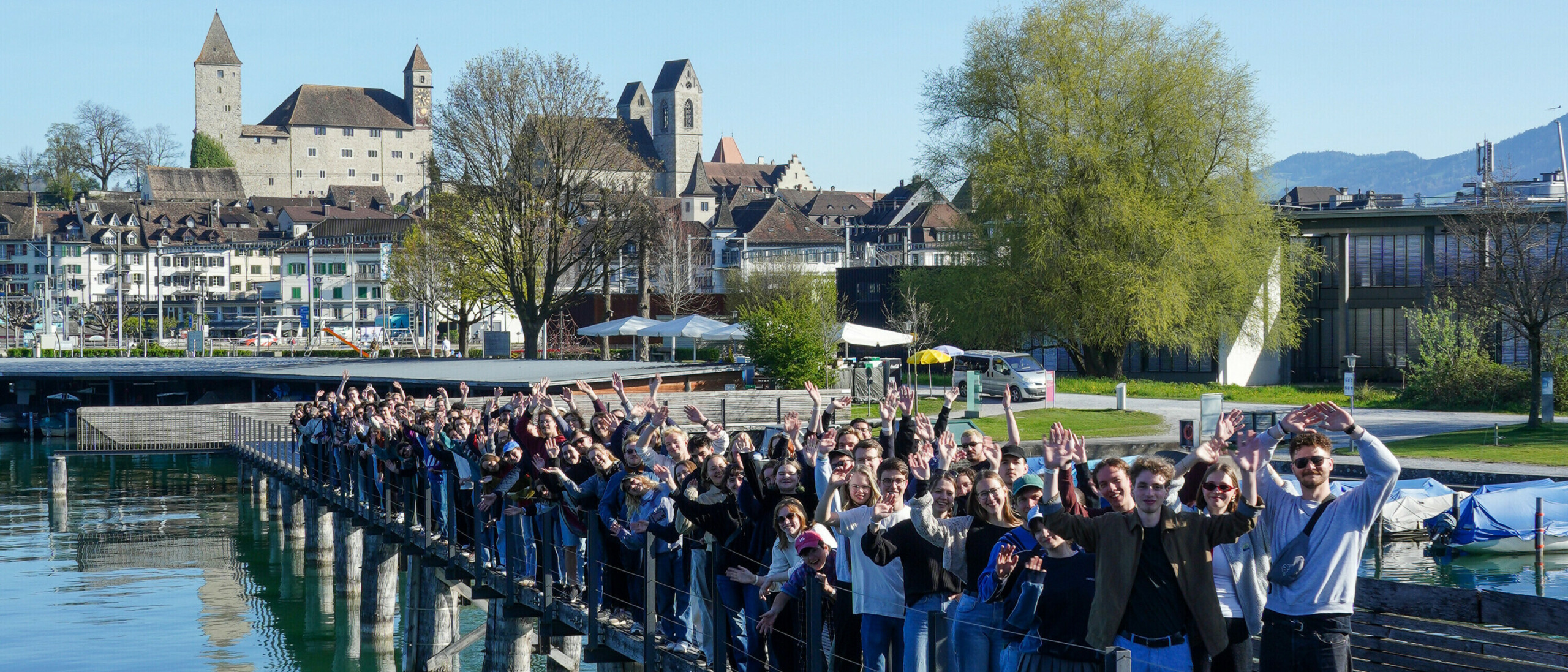
    Under the motto “P:ITte all change ‘Space & Mobility’ integrated”, the Eastern Switzerland University of Applied Sciences hosted its 76th meeting from April 9 to 13, 2025. Around 150 students of urban, transport and spatial planning accepted the invitation to Rapperswil-Jona. The meeting, organized by dedicated Bachelor students, offered a platform for international exchange, networking and professional discussions about the future of spatial and transport planning.

    Professional impetus for the transport turnaround
    The focus was on the question of how mobility can be designed sustainably and dovetailed with urban development in a meaningful way. Using specific examples from the region, the participants examined the Bahnhofstrasse in Rapperswil and the function of transport hubs such as Jona railroad station. The interactive workshops and excursions made it clear that successful spatial planning requires integrated solutions that consider settlement and transportation as a unit.

    Networking across national borders
    The Planners’ Meeting is the most important conference for students of urban and spatial planning in German-speaking countries. Organized on a rotating basis by the student councils, the meeting offers further professional training and valuable international networking. The next meeting will take place at the TH Lübeck and the HCU Hamburg and will continue the discussion on sustainable spatial concepts.

  • Zurich as a pilot city for CO₂ measurements

    Zurich as a pilot city for CO₂ measurements

    Together with Paris and Munich, Zurich was selected as a pilot city for the EU project “ICOS Cities”. The aim of the project is to precisely measure the CO₂ emissions of cities and make them comprehensible using models. This is crucial for demonstrating progress in reducing emissions and achieving climate targets efficiently.

    To this end, Empa is expanding an existing CO₂ measurement network to 60 locations in the city. Inexpensive sensors record data unobtrusively on street lamps and trees. In addition, more complex instruments were installed on mobile phone antennas and precise measurements were carried out on a measuring tower. “There is no diet without scales,” explains Lukas Emmenegger from Empa, emphasizing the importance of reliable data.

    From measurement to modeling
    A central goal of the project is to translate the selective measurements into precise models. These not only show where CO₂ is produced, but also take into account factors such as weather and natural cycles. Empa is developing two models for this purpose, a city model that breaks down emissions by kilometer and a high-resolution model that even makes emissions from individual buildings visible.

    The results are promising: during the energy crisis in the winter of 2022/23, the researchers were able to measure and model a significant reduction in emissions. “Our models work,” confirms Dominik Brunner, an expert in CO₂ modeling at Empa.

    A cookbook for the climate future
    The “ICOS Cities” project runs until 2025 and aims to develop a kind of “cookbook”, a guide on how cities can measure, analyze and reduce their emissions. Zurich’s role as a committed partner city makes the city a pioneer. “We hope that our findings will help Zurich to achieve its climate targets,” says Emmenegger.

    With this knowledge, Zurich could not only accelerate its own progress, but also serve as a model for other cities in Europe.

  • Setting the course for the future in partial revision 2024

    Setting the course for the future in partial revision 2024

    The cantonal structure plan is regularly reviewed and adapted to reflect current developments. The 2024 partial revision contains important adjustments in the “Supply and disposal”, “Landscape” and “Settlement” chapters. For example, the site for the deep geological repository will be entered for information purposes, while measures to limit light emissions and flood protection will be added.

    New landfill sites for long-term waste disposal security
    A central point of the revision is the entry of 20 new landfill sites and the expansion of three existing landfills. At the same time, two existing sites will be deleted. The aim is to ensure disposal security for the next 40 years. As not every registered site will be realized, precautionary planning is being carried out with more options than are currently required.

    In order to reduce transport traffic, at least one type B landfill is to be operated in each planning region. For types C/D/E, an additional two to five landfills are planned throughout the canton. Special requirements will ensure that sites in close proximity are controlled in a targeted manner and put into operation at a coordinated time.

    Public circulation and consultation
    The partial revision of the structure plan is open to the public from December 6, 2024 to March 14, 2025. Interested citizens can submit written comments. The planning regions and municipalities will be consulted at the same time. An explanatory report will summarize the feedback before the Government Council submits the revised draft to the Cantonal Council for consultation.

    Simultaneous amendments to legislation
    Parallel to the partial revision of the structure plan, the consultation process for a revision of the Planning and Building Act with a focus on “Spatial development and night” is taking place. The avoidance of light emissions and the regulation of solar installations in protected sites are also part of these consultations. The coordinated implementation of these bills ensures that the measures are targeted and future-oriented.

    With the partial revision of the 2024 cantonal structure plan, the canton is setting important priorities for sustainable spatial and environmental development. The participation of citizens and municipalities ensures that the adjustments are broadly supported and implemented transparently.

  • Forward-looking settlement development strategy for Hofen

    Forward-looking settlement development strategy for Hofen

    The settlement development strategy for the Hofen district of the municipality of Thayngen is a milestone in spatial planning in the canton of Schaffhausen. It forms the first building block of a large-scale local planning revision that serves as a pilot project for the development of the entire municipality of Thayngen and its neighbourhoods. The focus is not only on local structures, but also on the integration of regional requirements and cantonal guidelines.

    The SES was developed in close collaboration with Dost Architektur GmbH, representatives of the municipality of Thayngen, the canton of Schaffhausen and local associations. With an interdisciplinary approach and the involvement of the public, the settlement development of Hofen is to be future-proofed in order to meet the requirements of the predicted growth. Particular attention is being paid to “inward settlement development”, which optimises the use of existing resources and at the same time improves the local quality of life.

    A roadmap for Hof’s future
    The SES is based on four central strategic paths that should characterise the spatial and structural future of Hof.

    1. Preserve historic substance, create new living spaces
      The preservation of the historic building structure is a central element of the SES. Particular emphasis is placed on the spatial and design integration of new construction projects. New living space is to be created, particularly in the areas of the former market garden, in order to meet the growing demand for housing.
    2. Improving the design of the town centre
      The quality of life in Hofen is to be enhanced by upgrading the design of central meeting spaces. The village square will be redefined as a meeting place for the village community, with seating and playground facilities created and traffic-calming measures implemented.
    3. Safety and traffic calming
      One focus of the SES is on improving road safety. Pedestrians and cyclists should benefit from traffic-calming measures and the route to school in particular should be decoupled from the main road to ensure the safety of schoolchildren.
    4. Strengthening Hofen’s identity
      Hofen wants to present itself confidently and emphasise its unique qualities. The SES envisages an increased digital presence and the staging of key historical buildings to make the town more attractive for both residents and visitors.
      These overarching strategy paths include eight specific indicative projects that are to be implemented in the short, medium and long term. These projects range from the creation of new residential areas and the upgrading of the village square to the renaturalisation of the Beaver, which will make a significant contribution to the ecological balance of the region.

    Landscape and nature as a central component
    The Lower Reiat region is characterised by a diverse landscape of hills and agricultural land. This landscape is not only ecologically valuable, but is also listed in the cantonal structure plan as a “landscape worthy of protection”. The dry meadows, pastures and orchards that surround Hofen are striking landscape elements that characterise the townscape and should be preserved.

    The beaver, which flows through Hofen and is used for agricultural purposes in parts, is of particular importance. The planned renaturalisation of the canalised sections is intended to increase ecological diversity and further enhance the attractiveness of the natural environment for residents.

    Buildings worthy of protection and building land reserves
    Hofen has a historic building stock that should not only be protected as part of the SES, but also integrated into the future development of the settlement. In particular, the baroque “Holländer district” with the residence of Tobias Holländer and the striking Schweizerbund inn contribute to the unique identity of the village.

    The SES also envisages strategic utilisation of the existing building land reserves. There is long-term upzoning potential, particularly in the area of the former market garden and on the outskirts of the village, to meet future demand for residential and work space.

    Communication and public involvement
    Transparent communication with the residents of Hofen is a central component of the SES. The planning steps were accompanied by a working group of community representatives, local associations and planners and presented at public events. In particular, the development of the former market garden as a new residential area met with great interest from the population.

    The settlement development strategy drawn up for Hofen not only sets new standards for local planning, but also for cooperation between the administration and local residents. The participatory approach ensures that the future development of the municipality meets the needs of the residents.

    A model for the entire region
    The Hofen SES not only serves the further development of the district itself, but also as a model for the other districts in the municipality of Thayngen. The findings and guidelines developed in Hofen are to be transferred to Altdorf, Bibern, Barzheim, Opfertshofen and Thayngen. In this way, SES is making a significant contribution to safeguarding the quality of life and economic potential of the entire region in the long term.

  • Canton Glarus defines settlement and extraction areas in the structure plan

    Canton Glarus defines settlement and extraction areas in the structure plan

    As part of the communal land use planning of Glarus North, the Department of Building and Environment of the Canton of Glarus has officially defined the settlement area of the municipality in the cantonal structure plan. This follows an in-depth review of the utilisation of the residential, mixed and core zones, which now comply with the strict federal and cantonal requirements for building zone dimensioning. This stipulation supports the aim of preventing urban sprawl and preserving the landscape, while at the same time offering landowners in Glarus North long-term planning and legal certainty, which is of considerable importance for the economic development of the canton.

    Expansion of the Haltengut mining area in Mollis
    In addition to the designation of the settlement area, the Haltengut mining area in the district of Mollis was expanded in the cantonal structure plan. This measure is the result of careful coordination of land-use planning by the municipality of Glarus Nord, which has demonstrated the environmental compatibility of the project. The expansion of the extraction area contributes to the needs-based supply and disposal and represents an important spatial planning co-operation between the canton and the municipality.

    Approval procedure at federal level
    The updates to the 2018 cantonal structure plan were submitted to the Federal Office for Spatial Development for approval following consultation with neighbouring cantons. With the determination of the settlement and extraction areas, the canton of Glarus has completed a significant step in the approval process for the communal utilisation planning of Glarus North. The decisions are binding with immediate effect and create a clear framework for the future development of the region.

  • 101. immoTable – Geneva economic area

    101. immoTable – Geneva economic area

    [smartslider3 slider=”16″]

    The 101st immoTable, the renowned event for the property industry at Signatur Rhône in Geneva, focused on important topics that will have a significant impact on the future of the property world. From sustainable spatial development and geothermal energy as part of the energy transition to health risks in water and legal issues relating to renovations in Geneva, the event provided a comprehensive platform for dialogue on current challenges and innovations in the sector.

    The Director of the Department of Territory of the Canton of Geneva, Marta Alonso, presented pioneering urban development and spatial planning projects. By 2060, over 12,000 new residential units, 6,000 workplaces, schools, a large park and revitalised river areas are to be built on an area of 230 hectares. Modern visualisation techniques and 3D models enable a transparent presentation of the development scenarios.

    David Faehndrich, Head of the Western Switzerland division at EKZ Contracting SA, emphasised the role of sustainable and economical energy supply systems. Several important projects have already been realised, such as the geothermal energy supply for the new flats in the “Jardins du Bourg” in Châtel-St-Denis. These measures reduce CO₂ emissions and promote the energy transition.

    In his presentation, Pierre Descloux, CEO of Dipan SA, emphasised the importance of treating hydraulic systems, particularly with regard to rust, limescale and legionella. He emphasised the importance of ensuring the hygiene and efficiency of these systems.

    Cosima Trabichet-Castan, a specialist in property law at MLL Legal, spoke about the challenges of obtaining planning permission and complying with local building regulations. She also spoke about the complex regulatory requirements in Geneva, which according to a recent UBS study has the longest waiting times for building permits in Switzerland. Her presentation highlighted the importance of integrating sustainable practices in this context-rich regulatory environment.

    Fabio Nairi from IWG Switzerland spoke about measures to reduce commuting times and CO₂ emissions as well as the transition to hybrid working models.

    The 101st immoTable once again proved why the event is one of the top platforms for the property industry. The topics discussed are of key importance for the future development of the industry and offer valuable solutions for current challenges.

    Further information on the event and future dates can be found at www.immotable.ch

  • Federal Council imposes limits on buildings outside building zones

    Federal Council imposes limits on buildings outside building zones

    The Federal Council is proposing that the number of new buildings outside of building zones be increased by a maximum of 1 per cent compared to 2023. At its meeting on 19 June, it submitted a corresponding draft for consultation, the Federal Council announced in a press release. The consultation draft is a proposal for the ordinance on the revised Spatial Planning Act. It was passed by both chambers on 29 September last year and aims to stabilise construction outside of building zones at a certain level.

    There are currently around 620,000 buildings outside of building zones in Switzerland. If the bill comes into force, this figure could increase by a maximum of 6,200 buildings. With an average of 500 new buildings outside the building zone each year, the maximum permitted number would be reached in just over ten years, writes the Federal Council.

    The Federal Council is also proposing changes to the handling of special zones. Here, the volume and area of new buildings outside of building zones will have to be compensated for by the demolition of existing structures. In agricultural zones, the priority of agriculture over other uses is reaffirmed.

  • Easier building in noisy areas

    Easier building in noisy areas

    As part of the revision of the Environmental Protection Act, the UREK-N would like to simplify building in noise-polluted areas. In principle, at least half of the noise-sensitive rooms in new homes should have a window that complies with the noise limits. Relaxations are possible if controlled ventilation systems are installed or a quiet, private outdoor space is available. These regulations are intended to create a balance between densification and noise protection.

    Positions of the National Council and the Council of States
    The Council of States proposes that the limit values no longer have to be complied with at any open window in flats with controlled ventilation. However, the UREK-N considers the National Council’s version to be more balanced, as it offers a pragmatic solution to the housing shortage. The committee emphasises that building permits will only be granted if the buildings meet stricter noise protection requirements and measures to limit noise emissions are still prescribed.

    No reduction in noise protection regulations in aircraft noise areas
    The UREK-N dispenses with specific aircraft noise limits and agrees with the Council of States. This means that no further legal amendments should be necessary to allow construction near airports. The Commission does not envisage any additional restrictions for municipalities with regard to lowering the speed limit.

    Remediation of contaminated sites and VOC steering levy
    In the area of remediation of contaminated sites, the UREK-N maintains that owners must pay for the costs of investigating and remediating private playgrounds and gardens. The committee also requests that alternatives to the VOC incentive tax be examined and calls for an in-depth analysis by the Federal Council.

    Geoinformation Act and energy research
    The UREK-N has decided to refer the draft amendment to the Geoinformation Act back to the Federal Council for a thorough review. In the area of energy research, the aim is to harmonise the credit period of the SWEETER programme with the four-year period of validity of the ERI Dispatch.

    Approval of the electricity reserve
    The Commission supports the amendment to the Electricity Supply Act without a dissenting vote and emphasises the importance of a secure electricity supply even in extreme situations. It will examine the concept of the electricity reserve in depth and analyse various options in order to guarantee security of supply while minimising the environmental impact and costs.

    The UREK-N also recommends that the Federal Council provide stronger incentives for the formation of local electricity communities and relieve them of grid utilisation fees. The meeting took place under the chairmanship of National Councillor Christian Imark and partly in the presence of Federal Councillor Albert Rösti.

  • Dismantling for the Lymhof is complete

    Dismantling for the Lymhof is complete

    According to an article in the Lymhof newsletter, the demolition of the Vitis Sport Centre with tennis hall in the Rietpark district of Schlieren has been completed. The construction of the Lymhof can now begin after planning permission and preliminary work have been granted. The vertical farm planned by start-up Yasai in the hall building will not be realised. Yasai recently withdrew from the project because it is realigning itself as a company. The landowner Geistlich Immobilia is now planning to divide the hall into six sections. The rooms, which are up to 9 metres high, could provide space for creative uses such as an artists’ collective, a mixed studio community, cultural uses or neighbourhood offers.

    In February 2024, Schlieren City Council granted planning permission for the Lymhof. The appeal period has now also expired, meaning that the realisation of the new neighbourhood near Schlieren station can begin, according to the press release. The next step is to finalise all official and cantonal requirements. Construction approval for the excavation is expected in summer 2024. The actual construction of the buildings will begin around autumn 2024 and will take around three years.

    The Lymhof should then be ready for occupancy in 2027. In addition to a colourful mix of flats for a colourful mix of residents with different generations and lifestyles, ground floor uses along Wiesenstrasse and a restaurant with catering facilities and hotel rooms will also be built there. Although the 350 or so rental flats will not be ready for occupation until 2027, interested tenants can already register their interest online.

  • HSLU launches Master in Collaborative Spatial Development

    HSLU launches Master in Collaborative Spatial Development

    Lucerne University of Applied Sciences and Arts is offering a new Master’s degree course in Collaborative Spatial Development from this autumn semester. The programme is open to students from disciplines such as spatial planning, urban planning, architecture, landscape architecture, environmental sciences, economics and social sciences, the HSLU explains in a press release. “More than ever, the spatial development of the future needs interdisciplinary and transdisciplinary teams to find appropriate solutions to current challenges,” Tabea Michaelis is quoted as saying in the press release. She will lead the new Master’s degree programme together with her colleague Amelie-Theres Mayer.

    The programme aims to prepare its graduates for the complex challenges of future spatial transformation processes. The focus is on dealing with changing requirements and increasingly scarce resources. The teaching programme includes involving groups with different requirements in the planning process and mediating between them.

    “We don’t see spatial development as a product, but as a process,” explains Michaelis. According to the co-director of the degree programme, the aim of such processes is to create climate-friendly, open and adaptable spaces. “Planning these spaces requires a holistic understanding of building culture that starts from the existing building stock and keeps an eye on the political and legal framework as well as economic viability.” To this end, students are expected to work together with potential project clients in a practical manner.

  • Switzerland discusses underground freight transport

    Switzerland discusses underground freight transport

    Cargo sous terrain AG has presented an ambitious project: the construction of an underground tunnel system for the transport of goods, financed and operated by private actors. After the Federal Act on Underground Freight Transport came into force on 1 August 2022, the legal basis for such an undertaking was created. The Sectoral Transport Plan, a spatial planning instrument, has now set the planning course for the first section from Härkingen to Zurich with the Underground Freight Transport sub-project.

    The SUG includes the planned route and the basic parameters of the distribution centres, the locations of which are to be specified in the structure plans of the cantons of Bern, Solothurn, Aargau and Zurich involved. Consultation with the cantons has been initiated in order to harmonise regional interests and spatial planning aspects. From March, this process will continue with the participation of municipalities and the population in order to gather a broad spectrum of perspectives and concerns.

    Once the consultations have been completed and all comments have been taken into account, the SUG will be finalised and submitted to the Federal Council for a decision. This process demonstrates Switzerland’s commitment to innovative transport solutions that support sustainable spatial and environmental development while increasing the efficiency of freight transport in an increasingly networked economy.

  • Nationalrat setzt neue Akzente für Umwelt, Raumplanung und Energie

    Nationalrat setzt neue Akzente für Umwelt, Raumplanung und Energie

    Die nationalrätliche Kommission für Umwelt, Raumplanung und Energie (UREK-N) hat beschlossen, das Beschwerderecht von Umweltschutzorganisationen bei kleineren Wohnbauprojekten einzuschränken. Die Änderung des Bundesgesetzes über den Natur- und Heimatschutz zielt darauf ab, den Rechtsrahmen für kleinere und mittlere Wohnbauprojekte anzupassen, um ungleiche finanzielle Mittel zwischen Parteien auszugleichen.

    Darüber hinaus hat die Kommission die Beratung des Bundesgesetzes über die Aufsicht und Transparenz in den Energiegrosshandelsmärkten begonnen, um eine angemessene Aufsicht und Transparenz sicherzustellen. Im Zuge der Diskussion über ein Strommarkt-Abkommen mit der EU erörterte die Kommission die volkswirtschaftliche Bedeutung einer sicheren Stromversorgung und die Notwendigkeit, die Schweizer Regelungen mit denen der EU in Einklang zu bringen.

    Im Bereich der Kreislaufwirtschaft hat die Kommission die meisten Differenzen mit dem Ständerat ausgeräumt, insbesondere bezüglich der Lockerung des Siedlungsabfallmonopols. Es bleibt jedoch noch Uneinigkeit in der Frage, ob unverkaufte biogene Produkte entpackt werden sollen.

    Weitere Diskussionen der Kommission umfassten die Teilrevision des Umweltschutzgesetzes, die sich auf den Lärmschutz und Altlastensanierungen konzentriert. Die Motion «Mit Verdichtung und gemeinnützigem Wohnungsbau gegen die Wohnungsnot» wurde von der Kommission abgelehnt, da sie der Meinung ist, dass die bestehenden gesetzlichen Grundlagen bereits ausreichend sind. Zudem wurde ein Postulat zur Optimierung der Nutzung von Energieholz eingereicht.

    Die Sitzungen der Kommission am 22. und 23. Januar 2024 standen unter der Leitung von Nationalrat Christian Imark und wurden teilweise in Anwesenheit von Bundesrat Albert Rösti in Bern abgehalten.

  • Winterthur’s Grüze innovation lab opens in May

    Winterthur’s Grüze innovation lab opens in May

    In May 2024, the Grüze Innovation Lab will open on St.Gallerstrasse in Winterthur. According to a press release, it is planned as a versatile meeting place where visitors can find out about the large-scale Grüze crossing construction site. In addition, the filigree building, which is open on all sides, will be a place for discussions on urban development issues, possible conflicting goals and the effects of climate change on the urban population.

    The approximately 120 square metre pavilion with exhibition space, stage and café has a modular design and can be extended in modules. The statics were designed for a two-storey, closed building. This takes into account the possibility that the innovation lab could grow into a neighbourhood centre with increased space requirements in the medium term. For the time being, it is planned for a useful life of ten years.

    The innovation lab was developed by the Winterthur Civil Engineering Office in collaboration with the Department of Architecture, Design and Civil Engineering at the Zurich University of Applied Sciences (ZHAW) and Holcim Switzerland. The extra-thin and recyclable concrete slabs made of carbon fibre-reinforced concrete (CPC) from CPC AG reportedly save up to 75 percent material compared to conventional concrete construction methods. CO2 emissions are to be reduced by a factor of two to four.

    The CPC concrete elements, which emerged from a long-term research project at the ZHAW, can be dismantled into their component parts with little effort and rebuilt elsewhere or reused for another structure. Holcim produces them and makes them available on loan. The prefabricated elements are assembled within a few days in the spring.

  • Unterengstringen publishes development concept

    Unterengstringen publishes development concept

    The municipality of Unterengstringen has published its spatial development concept. The 71-page concept can be downloaded from the municipality’s website. It serves as a strategic instrument and decision-making aid for planning and construction projects in the municipality and also forms the basis for the municipal structure plans and the building and zoning regulations (BZO). In accordance with cantonal requirements, the municipality of Unterengstringen must update and amend its own BZO by spring 2025 at the latest.

    According to the concept, the Unterengstringen municipal council wants to show what is needed for high-quality municipal development, how the municipality can become or remain attractive as a place to shop, work and live and where Unterengstringen should grow in the future. The central district between the Limmat in the south, the cantonal road in the north, the education zone in the west and Weiningerstrasse is of strategic importance for Unterengstringen. This includes the rural town centre with historic buildings and the centre zone on the urban axis.

    The analysis leads to a vision of networking across this area with three key points. The quality of the street spaces between the two areas will be improved. A network of zones is created. The buildings that line these street spaces should support these networks on the ground floors and in the design of the surroundings. As an example, the two key projects Stolzwis and Sennenbüel will be closely monitored by the municipality and developed together with private investors, according to the concept.

    Furthermore, the town centre is to be upgraded through sustainable, high-quality densification, promotion of commerce and a distinctive public space.

  • Luucy presents new features in an update

    Luucy presents new features in an update

    Luucy AG, which has offices in Lucerne and Schlieren, has launched a new version of its interactive 3D platform for spatial and property development. According to a press release, there are several new features. These include the photorealistic terrain from Google Maps. This third terrain option in Luucy not only makes it possible to depict the surroundings in great detail, but also to display buildings in over 2,500 cities and 49 countries in photorealistic form, according to the press release.

    There have been changes to the licences. In order to offer users the best possible tailored solution, two new licence plans have been introduced in addition to the team licence – the former standard licence. For individuals and smaller teams, there is now a cost-effective entry into Luucy with the Starter licence. For larger companies with different teams and departments, the company now offers the Business licence.

    According to the press release, the key figures app has been updated and expanded with additional key figures. A detailed view has been added, which makes it possible to compare the key figures of different buildings with each other. In addition, it is now possible to export detailed views and variant comparisons as a CSV file so that the data can be easily analysed in other applications. And there is the new “Group objects” function. This allows users to group their objects per variant, whether self-created or imported objects.

    According to the press release, Luucy will be present at Swissbau 2024 from 16 to 19 January 2024 at Messe Basel.

  • Architecture book about Schlieren receives award in Frankfurt

    Architecture book about Schlieren receives award in Frankfurt

    According to a media release, the book “Stadtwerdung im Zeitraffer” is one of the ten winners of the DAM Architectural Book Award 2023, which is awarded by the Frankfurt Book Fair and the German Museum of Architecture (DAM). The photographic long-term observation of Schlieren from 2005 to 2020 shows how the Swiss midlands are developing, it adds. “Stadtwerdung im Zeitraffer” is edited by Meret Wandeler, Ulrich Görlich and Caspar Schärer and is the conclusion of the study “Fotografische Langzeitbeobachtung Schlieren”.

    According to the press release, the highly acclaimed project has spent 15 years photographically investigating how building activity and urban development change the character of a typical Swiss suburban community in the agglomeration belt. The book was designed by the graphic studio Elektrosmog in Zurich. It is published by the Zurich publishing house Scheidegger & Spiess.

    In the award citation, the jury stated: “The book explains itself in its structure, explores the given topic in a multi-faceted way and at the same time carefully manages the time of its audience. The 630-page double volume ‘Stadtwerdung im Zeitraffer’ fulfils all these criteria for a good architecture book”. The book illustrates the growth in Schlieren, “where 7,000 people have been added in 15 years, where some corners have been densely built and others have hardly changed at all”.

    The jury also praised the choice of a suitable location to explore the phenomenon of urban development. The two parts of the double volume tell of their process with the appropriate means in each case. Essays and texts provide the background to the development and classify it.

  • Spatial planning moderates real estate market

    Spatial planning moderates real estate market

    The Federal Office of Housing(BWO) and the cantonal planners of the Zurich metropolitan area commissioned the Center for Regional Economic Development of the University of Bern, in cooperation with IAZI, to investigate the contribution of spatial planning to rising housing costs. According to the results of the study, spatial planning plays a moderating role in the real estate market. It has an impact on construction activity and thus influences housing costs, writes the BWO in a statement on the study.

    By limiting the availability of building land and zoning capacities, spatial planning controls how flexibly the supply can adapt to the development of demand for housing. Too strict spatial planning can lead to higher housing costs in the long term, the authors of the study state. At the same time, however, spatial planning also has the task of protecting the landscape and limiting urban sprawl.

    The study identifies inner development as a solution to this dilemma. It offers an instrument “that makes it possible both to protect the landscape and to increase the supply of living space”. Another instrument proposed by the study is rezoning, i.e. the expansion of possible uses in a building zone. In addition, “lengthy approval and appeal procedures are described as driving up housing costs”.

    From 3 to 7 November, the Swiss Housing Days 2023 will take place in Biel BE. On 6 November, the programme will include a discussion by experts on the question of internal development that leads to more affordable housing.

  • Study on the role of spatial planning in rising housing costs

    Study on the role of spatial planning in rising housing costs

    The study “Causes of rising housing costs in Switzerland with a focus on spatial planning” makes it clear that spatial planning plays a moderating role in the real estate market: it has an impact on construction activity and thus influences housing costs. The increase in demand for housing, on the other hand, is a driving factor in rising housing costs. Among other things, the downsizing of households, population growth and rising individual housing consumption play a role here.

    Spatial planning can have an influence here. It limits the availability of building land and zoning capacities. In this way, it controls how flexibly the supply of housing can adapt to changing demand. If spatial planning is too strict, the supply can react less flexibly to the strong increase in demand. This can lead to higher housing costs in the long run.

    Internal development as a solution

    However, one of the tasks of spatial planning is to limit urban sprawl and protect the landscape. The study identifies inner development as an instrument that allows both the protection of the landscape and an increase in the supply of housing. The study also shows that rezonings have a price-dampening effect in areas where the utilisation of building zones is already high. Upzoning is defined as the expansion of possible uses within a building zone. This is therefore an effective means and, if used in a targeted manner, can have an optimal effect. The study results also suggest a connection between high housing costs and high planning and process costs. Lengthy approval and objection procedures also contribute to increased costs.

    Conference on housing and spatial development

    As part of the Swiss Housing Days 2023, which will take place from 3 to 7 November 2023 in Biel, a panel of experts will discuss on 6 November how internal development can be shaped so that more affordable housing is created in the process. More details and registration at www.bwo.admin.ch.

  • Canton Zurich and Winterthur coordinate expansion of the ZHAW

    Canton Zurich and Winterthur coordinate expansion of the ZHAW

    The number of students at the ZHAW is expected to increase by between 0.8 and 2.0 percent annually until 2035. The ZHAW therefore needs additional space in Winterthur, the Canton of Zurich ‘s Department of Construction informs in a statement. The canton wants to coordinate the expansion of the university with the ZHAW and the city of Winter thur. Both the university staff and the city’s population should benefit from coordinated planning. A binding basis for the spatial development of the ZHAW is laid down in a declaration of intent already signed by the three partners.

    According to the agreements, the expansion of the university is to be concentrated on the three sites Sulzer-Areal, Technikum and St.Georgen. On the Sulzer site, expansions can take place on the area already belonging to the university. Between the Technikum and the armouries, on the other hand, new areas are to be used. Here the city of Winterthur wants to create a knowledge quarter together with the ZHAW. To this end, it is planned to relocate current third-party uses to Teuchelweiherplatz.

    At the St.Georgen site, the use of the Linde site is being examined. The SBB site, which is no longer needed for railway operations, could be considered as a possible new location for the ZHAW, writes the construction directorate. The construction directorate, the education directorate, the ZHAW and the city of Winterthur have set up an area management team to concretise and implement the plans. “This will ensure that the complex work is carried out in the long term from an overall perspective and in a coordinated manner,” the statement says.

  • Limmattal should actively shape its urbanisation

    Limmattal should actively shape its urbanisation

    Urbanist Thomas Sevcik assumes that the region between Schlieren and Turgi will increasingly become a city. In his publication “Limmattalstadt – Impulse für die Region entlang der Limmat” (Limmat Valley City – Impulses for the Region along the Limmat), he proposes to shape this urbanisation “actively and strategically”. “The Limmattal city will come anyway. But we should make it as good as we can,” he writes.

    Among other things, Sevcik proposes so-called neo-areas. These should close gaps between settlement areas. For example, a campus on part of the marshalling yard could offer space for a Hochschule Limmat, a computer centre, but also a congress and entertainment centre. A new residential quarter could be built between Neuenhof and Killwangen, and a future-oriented quarter for new forms of living and working in the Tägerhard to the east of Wettingen. In the Hard in Siggenthal, too, a new district could combine work, living and leisure.

    Sevcik points out that the Limmat has so far had little presence in the region. He suggests upgrading the river landscape in Dietikon to a riviera.

    Economically, the future Limmat Valley city should rely on its strengths in applied technology and design, logistics and trade, as well as medtech and biotech. Mobility in the region should be facilitated by the extension of the Limmattalbahn, the use of the railway line between Dättwil and Wettingen, cable cars and the bicycle network. Sevcik also proposes a take-off site for vertical take-off electric helicopters at the Würenlos motorway service station.

    Sevcik developed the strategy ideas on the initiative of the Limmatstadt Location Promotion Agency and presented them at the general meeting of Limmatstadt AG on 15 August. 20 companies, mainly from the region, supported the project. The publication can be ordered digitally.

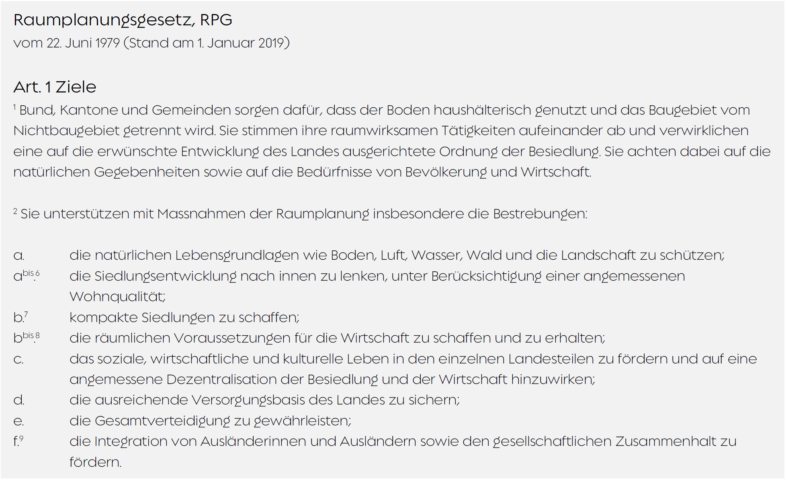
  • Spatial planning, the measure of all things?

    Spatial planning, the measure of all things?

    Source: Swiss Confederation

    In reality, however, the cantonal and municipal planning instruments are incomplete, rigid, purely quantitative and do not pursue a three-dimensionally developed picture of the future. The consequences are well known: Inconsistent cityscapes, insufficient densification potential, growing traffic volumes, uncoordinated infrastructural facilities and, finally, a dissatisfied population.

    Forward-looking spatial planning with new concepts is indispensable, because the current sluggish planning instruments of spatial planning are obviously at odds with the dynamic process of urban planning and to date fail to achieve the goals defined in the RPG.

    With the use of the already existing GIS data, the potential impacts on all relevant topics such as interior densification, land use, transport, energy consumption, greenhouse gas emissions and many others could be visualised, evaluated and communicated in a participatory manner throughout Switzerland on the basis of qualitative future scenarios – and beyond the cantonal borders.

    Buildings in the context of spatial planning
    Spatial planning also creates the framework conditions for the development of neighbourhoods and ultimately of the building stock. When we talk about sustainable buildings, it is not enough to look at them in isolation and focus solely on their substance. Buildings are to be understood in their context and thus in consideration of their contribution to the reduction of traffic volume, to densification and to social integration. Following this logic, the two standards SNBS Building Construction for Building and SSREI for Existing Buildings have been developed in Switzerland. In terms of their content, both are unique in an international comparison.

    Source www.ssrei.ch