The Maisprach heating network in the canton of Basel-Landschaft and the Basel-based energy supplier IWB have launched a new project to supply heat from regional raw materials. Since the beginning of December, energy has been generated from a wood-fired boiler and a biochar plant and fed into the heating network, according to a press release.
The municipality of Maisprach laid the foundations for this step in January 2025 with the construction of a new depot. IWB initially set up new wood heating systems there. This was followed in November by the construction of the biochar plant. Every year, 250 tonnes of biochar are to be produced here from landscape conservation wood and biomass through pyrolysis. The waste heat from the charcoal production will be fed into the district heating network. The operators anticipate 900 megawatt hours of heat energy for network customers, with a further expansion of the network on the horizon. The wood-fired boiler is also fuelled by regional biomass. The biochar produced is used in the region as an additive for composting, in soil substrates and in agriculture. IWB invested CHF 3.5 million in the project.
“IWB has experience in the construction and operation of heating plants. As part of a pilot project in Basel, IWB tested the innovative approach of utilising waste heat from a biochar plant in a heating network. We can now benefit from this,” said Dorian Wernli, Mayor of Maisprach, in the press release.
BKW presented its Solutions 2030 strategy on 8 November. According to a press release, this strategy aims to increase the operating result before interest and taxes to CHF 1 billion by 2030. according to the annual report, the operating result in 2023 was CHF 620.3 billion.
The operating result for the Energy Solutions division is set to rise to CHF 650 million. in 2023 it was 534.6 million. The result for the Grids division is expected to be CHF 150 million in 2030 (2023: CHF 146.7 million). The strongest growth is targeted in the area of infrastructure and building solutions. in 2023, the result should be CHF 200 million, with a loss of CHF 40 million in 2023. General planning in infrastructure and building construction as well as building technology solutions are to be expanded and profitability steadily increased.
The Bern-based energy supplier plans to invest CHF 4 billion to achieve this, at least half of it in Switzerland. The investments are to be financed from free cash flow, which is expected to total over CHF 5 billion during this period.
“With the comprehensive further development of the strategy, BKW is supporting its customers even more strongly in the transformation of the energy system with forward-looking solutions”, BKW Chairman of the Board of Directors Roger Baillod is quoted as saying in the press release. CEO Robert Itschner emphasises the breadth of the targeted growth: “All of BKW’s business areas will contribute to achieving these goals. BKW is investing in its strong Swiss base and growing in other European countries in a targeted manner.”
BKW aims to reduce its net greenhouse gas emissions to zero by 2040.
The Repower Group is significantly expanding its portfolio in Italy. According to a company press release, it has acquired the 35 per cent of shares in Repower Renewable previously held by the London-based investment firm Omnes Capital since it was founded in 2018. The Poschiavo-based electricity producer, distribution system operator and energy trader has also held the remaining 65 per cent since then. This means that the Repower Group now controls 100 per cent of Repower Renewable.
This means that Repower is now the sole owner of Repower Renewable’s Italian wind, solar and hydroelectric power plants. Their total output amounts to around 120 megawatts. According to the press release, there is also a “full pipeline” of already approved power plant projects with a total capacity of a further 150 megawatts.
According to the statement, Repower’s strategy envisages the consistent expansion of its portfolio of renewable energy plants in Switzerland and Italy. The 30,000 customers in Italy to date are to be supplied entirely with certified renewable energy in the future.
The Canton of Aargau location promotion organisation is presenting Aargau as a business location on a new platform. At www.aargau.swiss, existing companies and companies interested in setting up a branch can find out about the advantages of the business location, explained the location promotion organisation in a press release. The Aargau cantonal government is pursuing the goal of increasing the economic strength of the location by attracting companies with high added value. The new website contributes to this by making the strengths of Aargau more visible.
The new website provides information about the business location, programmes to promote innovation as well as advisory and support services offered by the cantonal location promotion agency and its partners. Separate sections are dedicated to company start-ups, relocations and the expansion of existing companies. In addition, news about the business location and its companies is published regularly. The news is produced by the Café Europe news agency based in Winterthur.
Sika has acquired Chema in Peru, a manufacturer of products for tile laying. With this acquisition, the Baar-based speciality chemicals company is expanding its distribution channels in the Peruvian mortar market and expanding its production in the area of building finishing, according to a press release.
The acquisition opens up additional distribution channels and complementary production sites for Sika. This is associated with important opportunities for cross-selling with complementary products such as sealants, adhesives and liquid membranes. “The expanded product offering and geographic footprint will allow us to better serve new and existing customers across the country with complete solutions,” said Mike Campion, Regional Head Americas.
Chema has been in the business of distributing high-quality, easy-to-use tile installation products for more than 50 years with four modern manufacturing plants and seven warehouses worldwide. “The broad customer base appreciates the efficient logistics organisation and delivery reliability in combination with a top range of products and solutions,” it says.
The city of Zurich has been awarded the Energy City Gold label for the sixth time in 2024, the city administration announced in a press release. Every four years, the Energy City Association awards the label to cities and municipalities that are committed to ambitious energy and climate protection goals. In the current evaluation, the city of Zurich achieved its best result to date.
Across Switzerland, 109 cities and municipalities have been awarded the Energy City Gold label. “As the largest city in Switzerland, the city of Zurich serves as a role model for other energy cities that also want to consistently achieve their ambitious energy and climate policy goals,” Katrin Bernath, President of the Energy City Association, is quoted in the press release from her speech at the award ceremony. The award was accepted by City Councillor Michael Baumer. “The top score for the city of Zurich shows that we are on the right path to net zero,” said the head of the City of Zurich’s industrial operations.
In the current re-audit, the City of Zurich’s energy and climate targets also included the area of climate adaptation for the first time. Zurich scored highly here with its specialised planning for heat reduction and urban trees. The city has also launched a programme for urban greening. This programme supports and financially promotes the ecologically valuable upgrading of outdoor spaces, green roofs and vertical greening by providing advice.
The traditional view of peripheries as remote rural or mountainous areas is challenged in the latest analysis by the Council for Spatial Planning. With a broader understanding of peripheries, including urban and suburban areas, the Council recommends an adapted approach to these diverse regions in order to utilise their development potential in a sustainable manner.
This report, which is published every four years, sheds light on Neuchâtel’s territorial developments and provides an assessment of the implementation of the Federal Spatial Planning Act and the cantonal master plan of 2019, focussing on inner development, mobility coordination and the qualitative development of living spaces. Climate protection, biodiversity, preservation of agricultural land and energy efficiency are also taken into account.
Key points and recommendations for action
Definition and understanding of peripheries – The report encourages understanding peripheries as dynamic spaces that can have both urban and rural characteristics. These areas are defined not only by their geographical location, but also by socio-economic factors.
Dialogue and insights – Through direct exchanges with representatives of the different peripheries, the Council gathered valuable insights. These interactions revealed that the conventional view of peripheral areas as disadvantaged and left behind does not correspond to reality.
Vibrant Peripheries – The report presents the idea of “Vibrant Peripheries” as places of engagement and innovation where people develop solutions to social and economic challenges.
Challenges and opportunities – Despite specific challenges such as the lack of a critical mass of actors or pressure to adapt, peripheries offer unique opportunities for sustainable development and innovation.
Recommendations for the future – In order to promote the peripheries as vibrant and resilient spaces, the federal government, cantons and municipalities should promote innovative approaches in housing, mobility, business, tourism and energy. The focus is on strong sustainable development that prioritises a healthy biosphere and a pollution-free environment.
The ROR report encourages a rethink in spatial planning and emphasises the importance of cross-cutting thinking and value-added strategies. It calls on the federal government, cantons and municipalities to work together to create vibrant peripheries that serve as a driving force for a sustainable and inclusive society. You can find the documentation at: https://regiosuisse.ch/sites/default/files/2024-02/Lebendige_Peripherien.pdf
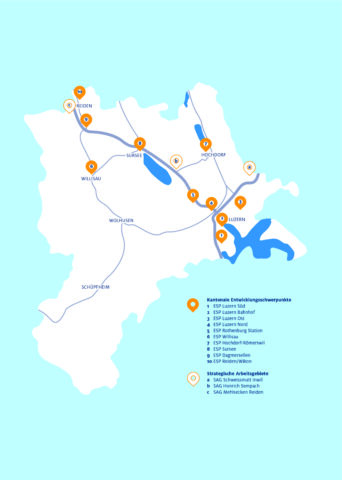
The cantonal development priorities were already defined in the 2009 cantonal structure plan. Even before the Swiss population approved the Spatial Planning Act, the cantonal planners had already focused on an increased spatial concentration of future economic development along the most attractive transport locations. Further planning instruments are available for the more decentralised locations, so that adequate business development is also possible there .
Integral spatial and economic development The coordination of settlement and transport is a central element in the further development of the cantonal development focal points (ESP). Only when infrastructures and growth are in good symbiosis will functioning areas be created in the long term. The optimisation of transport access is often the basis for ESP development. In addition to planning roads and railways, the Canton of Lucerne focuses in particular on promoting sustainable mobility, not least with regard to climate policy goals. The companies, for their part, are called upon to introduce a company mobility management system and to do their part to ensure that traffic can flow optimally.
Instrument for coordinated location promotion Thanks to its central geographical location and constant work on the most important location factors for companies, the Canton of Lucerne is particularly attractive as a business location today. Due to the close cooperation of the canton with the regions and municipalities in location and business promotion, the cantonal ESPs are the most important link to spatial planning. All development focal points should be provided with available, attractive land offers, combined with a promising marketing profile. The basis is laid in the jointly supported area management of the ESPs in cooperation with the landowners and investors.
Strategic working areas as a special offer Strategic working areas (SAG) are coherent larger areas that are defined in the structure plan. There are currently three such areas in the canton of Lucerne. They are between 10 and 30 hectares in size. This is a lot of space to realise big ideas and projects. According to the criteria formulated, their use is reserved for particularly high-value-added companies and real estate developments. The development of the sites is carried out in close coordination with the Canton of Lucerne and the respective local communities. The Lucerne Economic Development Agency acts as the first point of contact for potentially interested parties.
Lucerne city region
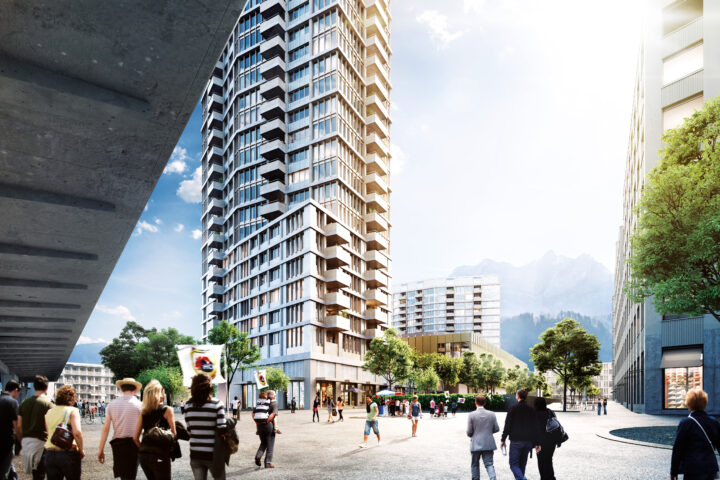
ESP Lucerne South Nestled between Lucerne, Horw and Kriens is a diverse settlement area with an urban character and directly adjacent recreational area. The ongoing transformation into an urban, creative and sustainable living and working area is in full swing. Lucerne South has excellent regional and national transport connections. The “Freigleis” bicycle highway is particularly popular as a work and leisure connection. www.luzernsued.ch
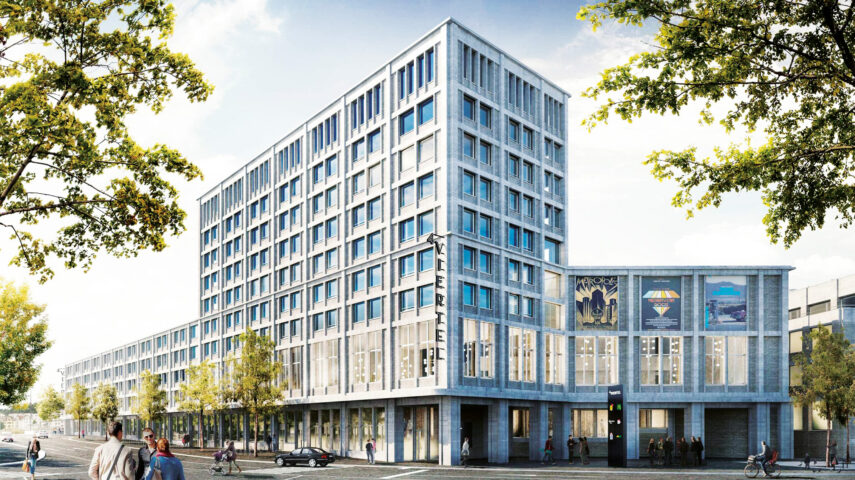
ESP Lucerne North The Smart City Lucerne North is where Emmen and Lucerne, the two most populous municipalities in the canton, meet. The urban heart of the ESP perimeter, which stretches from Littau railway station to Waldibrücke railway station, is currently being built around Seetalplatz, which is ideally accessible and picturesquely situated on the Reuss and Kleine Emme rivers. The largest ESP in terms of area offers a wide range of services for businesses and the population. www.luzernnord.ch
ESP Lucerne East The Lucerne East area comprises six Rontal municipalities. Directly connected to the A14 motorway and accessible by all means of transport, Lucerne East lies directly on the axis of the economic areas of Lucerne, Zug and Zurich. In addition to large industrial firms, internationally oriented companies in particular are located here. At the same time, the green hills of the region and the nearby water space of the Reuss River offer local recreation on the doorstep. www.luzernost.ch
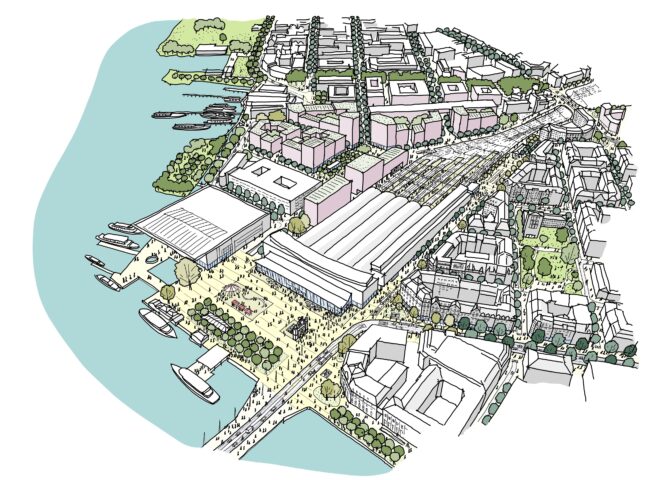
ESP Lucerne railway station The world-famous postcardLucerne is the cultural and economic metropolis of Central Switzerland. The project of the century, the through station, will ensure Lucerne’s national and international accessibility in the long term and enable the expansion towards sustainable mobility in the entire metropolitan region. The city centre on the lake will take on a new character as new, unique urban development opportunities are created in the immediate vicinity of the station.
ESP Rothenburg Station This ESP, located in the north of the city region, is characterised by a high location quality and development dynamics and has great potential for further development. An overall settlement and transport concept is currently being developed in a cooperative process, which will form the basis for the future structural, transport-friendly and economic development of the area.
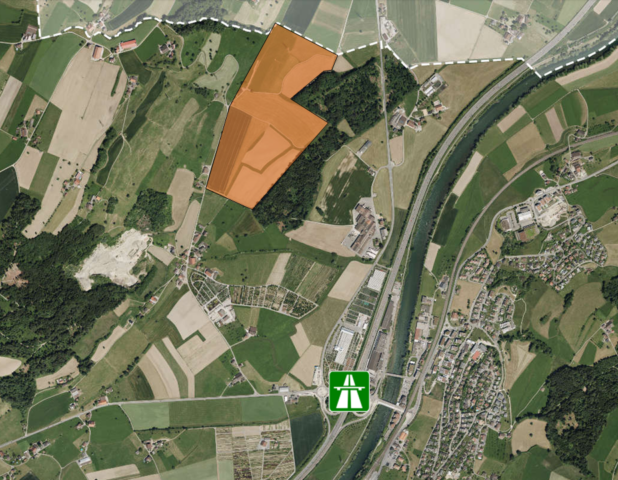
SAG Schweissmatt Inwil The largest of the three strategic working areas in the canton of Lucerne is located in the municipality of Inwil. The almost 30-hectare site is located in the immediate vicinity of the A14 motorway (main transport axis Lucerne-Zug-Zurich) and is in the process of being prepared under planning law for the settlement of a large-scale enterprise with high added value.
Sursee, Seetal, Willisau and Wiggertal regions
ESP Sursee The development of the city and region of Sursee into a modern small-town centre on Lake Sempach has been in the offing for decades. The town is also interesting as a business location. Over the years, numerous companies have settled here, benefiting from the perfect rail and road connections. With its inclusion in the agglomeration programme, the town of Sursee is about to take the next step in its development. From the working area in the north of the town, companies can reach their customers throughout Switzerland within a short time.
ESP Hochdorf-Römerswil Hochdorf is the regional centre of the Lucerne Lake Valley. The high quality of the landscape meets exciting companies here. Industry in particular has settled in the Seetal over the course of time. This has left its mark. Even today, the Seetal is still the region with the highest proportion of second sector companies. The large reserves of building land are a major advantage of the ESP and, in particular, its potential. A utilisation and development concept is currently being drawn up.
ESP Reiden / Wikon The municipalities of Wikon and Reiden are located on the border with Canton Aargau and have excellent transport connections with their own motorway exit to the A2. In addition to the north-south connection, the east-west connection A1 is also in the immediate vicinity. This location and also the industry- and fabric-friendly environment (the ESP borders residential areas at only a few points) make the ESP a highly sought-after location for companies.
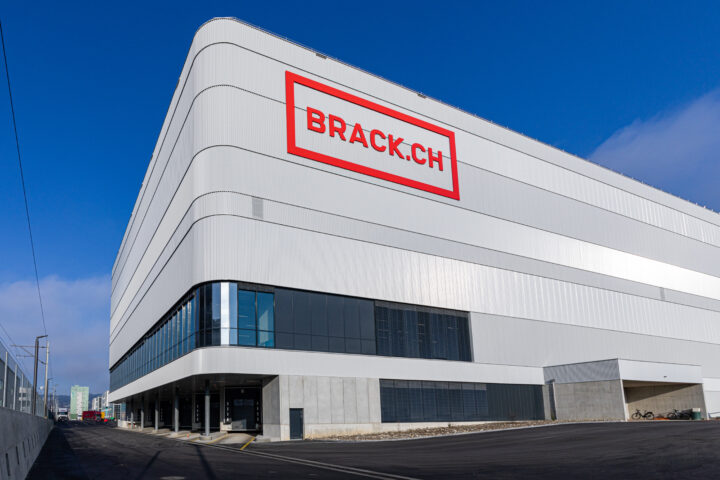
ESP Willisau The pretty little town of Willisau is the regional centre of the Lucerne hinterland. Small and medium-sized commercial and industrial enterprises from various sectors have settled here. Competec Logistik (Brack) is a major newcomer to the area, and the company continues to expand in Willisau. There are still building land reserves, and urban development is underway on the former Wellis site. The spatial and utilisation vision for the Willisau ESP is currently being drawn up for its further development.
ESP Dagmersellen The Dagmersellen development focus has excellent transport connections. It is located in the immediate vicinity of the A2 motorway junction, the railway station is within walking distance, and there is also an industrial railway siding. The ESP is characterised by large industrial companies such as Pan Gas, Misapor, Emmi and Hiestand, and has a large range of warehousing and logistics facilities, especially through Galliker AG. The ESP still has potential for expansion.
SAG Honrich Sempach The strategic working area is located directly on the motorway. Nearby, the old Swiss fought for their independence in the famous Battle of Sempach. The profile is also independent. Where else can companies find 10 hectares of land with a lake view for development today? The Städtli, which was awarded the Wakker Prize, convinces with its high quality. There is one condition: the land is reserved for value-added companies and uses.
SAG Mehlsecken Reiden The location of SAG Reiden could not be more central. Situated between the cities of Basel, Bern, Lucerne and Zurich, it lies at the crossroads of the A2 and A1 motorways that cross the country. The Reiden motorway junction is right next to the site. The approximately 20 hectares of land offer strategic development opportunities for a high-value-added company that would like to take advantage of the favourable location and the high potential for the next big step.
With the Dispatch on Location Promotion 2024-2027, the Federal Council is further developing the strategic foundations of federal location promotion. It is pursuing the following five goals with location promotion in the years 2024-2027: Improve the framework conditions for SMEs, strengthen regions, contribute to sustainable development, exploit the opportunities of digitalisation and strengthen the attractiveness of the business and tourism location. Compared to the period 2020-2023, the importance of sustainable development and digitalisation will be upgraded. In addition, location promotion will be geared even more strongly to the needs of the main target groups – SMEs and regions. In order to implement the goals, 23 concrete activities will be defined in the coming years by SECO and the mandated organisations (guarantee cooperatives, Swiss Export Risk Insurance, Swiss Association for Hotel Credit, Switzerland Tourism, Switzerland Global Enterprise). Some of them are implemented in cooperation with the cantons and other partners.
The focal points of location promotion In SME policy, the focus is on expanding EasyGov.swiss, the one-stop shop of the Confederation, cantons and municipalities for businesses. This can make a significant contribution to reducing the administrative burden on businesses. In the period 2024-2027, the scope of EasyGov services is to be further expanded in order to meet the needs of businesses for additional electronic government services. As part of the expansion of EasyGov, it is planned, for example, to be able to offer businesses a bundled process for moving companies (change of address) in the future. Further expansion is also planned in the area of aliens law notifications and permits for businesses.
In tourism policy, the focus is on the further development of investment promotion, sustainable development and the digital transformation of tourism. Another priority for the years 2024-2027 is the implementation of the recovery programme for Swiss tourism to counteract the effects of the Covid 19 pandemic.
The New Regional Policy NRP will enter its third eight-year multi-annual period (2024-2031) in 2024. The existing thematic funding priorities of “industry” and “tourism” will be continued. In addition to digitalisation, sustainable development and the “local economy”, which complements the export orientation of the NRP, will be given particular weight as cross-cutting themes.
Finally, the offer of support for the export industry, for example in relation to trade-related issues, and in particular access for Swiss exporters to large foreign infrastructure projects, will be further developed in line with demand and the “Team Switzerland” approach will be expanded. For example, various associations, federal offices, Switzerland Global Enterprise and Swiss Export Risk Insurance are increasingly conducting joint promotional activities abroad. These are aimed, among others, at general contractors who carry out large infrastructure projects. Further business opportunities are being identified in important markets.
Commitment credits and payment frameworks In order to continue and further develop the instruments of location promotion, the Federal Council is proposing commitment credits and payment frameworks totalling CHF 428.83 million to parliament for the years 2024-2027. For the years 2020-2023, an amount of around CHF 399 million was available. In addition, there is a payment framework for the creation of the Regional Development Fund in the years 2024-2031 amounting to CHF 217.3 million (reduced by CHF 12.7 million compared to the previous period 2016-2023).
Location promotion is implemented using the instruments of SME policy, tourism policy, the New Regional Policy (NRP) and foreign trade promotion.
Wir verwenden Cookies zur Unterstützung und Verbesserung unserer Dienste. Mit der Nutzung dieser Website erklären Sie sich mit der Verwendung von Cookies einverstanden. Weitere Informationen finden Sie in unserer Datenschutzerklärung.