
The Branch was founded in 2020. What exactly is the association and what does it do?
W.S. Seidel: The Branch is a non-profit association that develops new processes and solutions for the further development and increased productivity of the construction and real estate industry and thus promotes the transformation of the industry. The association is broadly based: on the one hand, among its members – organisations from the entire sector, private and public building owners, entrepreneurs, planners, logistics experts and IT specialists. On the other hand, at the level of federal policy: The Branch aims to contribute to the implementation of the goals set by the Federal Council in its 2030 Agenda for Sustainable Development and in its 2050 Energy Strategy.
What are the goals of The Branch?
Y.Körber: The Branch is committed to process-related and integrated cooperation within the construction industry. The industry today is very discipline-based, sometimes almost with blinkers. People think mainly in phases, and there is a conspicuous separation between planning and execution. However, cross-disciplinary cooperation would be enormously important. By this we mean, for example, that the different players work together much more closely from the beginning, and that the execution is already taken into account much earlier in the planning. We are working intensively to establish integrated models in the market and to develop basic principles, solutions and answers. Ultimately, this should also lead to more productivity and innovation as well as better results.
St. Zanetti: We want to use concrete projects to show that new models work. We want to build up a rich inventory of tried and tested instruments. In addition, we organise events where we discuss practice-related questions with the participants.
How does the cooperation within the association work?
St. Zanetti: The association is currently organised in eight working groups, which are composed dynamically and deal with different assignments in different subject areas. One of the working groups, for example, deals with the question of how to improve the handling of data in construction projects. We are currently in the process of creating templates, for example for the legally compliant exchange of data. Such templates can save a lot of effort because not every company has to reinvent the wheel.
How will the success of The Branch be measured in the long term?
Y. Körber: In the changes that take place in the construction industry.Körber: By the changes we can create in the industry: more innovation, more sustainability, a very concrete change in culture. We can also see that our idea is well received from the growth of the association – in the first three years we have gained over 500 members in German-speaking and French-speaking Switzerland and our board of directors comprises almost 20 people. This also shows that the industry is hungry for change.
The topic of grey energy and the circular economy is currently very present. What role does it play at The Branch?
W.S. Seidel: This is one of our core topics. Finding a better way of dealing with grey energy and making building projects more sustainable is only possible through innovation. And innovation needs collective know-how – and thus the cooperation of different disciplines at an early stage.
St. Zanetti: In the end, you will only be able to achieve a sustainable real estate industry if you think in integrated cycles. Because only then will we know what has happened, what has been built and what emissions are produced. The sustainability goals of the Federal Council can also only be achieved with an integrated view.
What significance does digitalisation have for The Branch?
St. Zanetti: Only when we are on the move in an integrated way can we as an industry optimally use and exploit technologies. Digitalisation then in turn supports integrated cooperation. When using technologies, the compatibility of different software and technologies is central. For example, we are dealing with the question of how the interfaces of the systems of different players and in different phases look and how companies must select their software so that data continuity is guaranteed. We also want to set standards for the industry in this area.
The criticism of proptech companies is often that they do not know the needs of the industry and only provide individual pieces of the puzzle.
Y. Körber: One of the big challenges for young proptech companies is precisely this fragmented and non-integrated process view in the construction industry. This makes it difficult for start-ups to develop scalable solutions. They develop a solution for one project – and everything is supposed to look different again for the next one. The work of The Branch will also lead to standardisation in this area and make it easier for young companies to develop suitable solutions.
One question in conclusion: Why are you personally on the board?
St.Zanetti: I find it exciting to advance topics in a pragmatic format with people from the most diverse companies using very concrete practical examples.
Y.Körber: I am fascinated by the fact that The Branch shapes innovation and makes it accessible to everyone. The real estate industry is an important pillar of the Swiss economy – our approach therefore serves not only at industry level, but also at national level. That’s what I like to be involved in.
W.S.Seidel: I am on the board in order to further develop the conflict-laden situation between the various players in the construction industry, as a result of which a lot of added value is lost, into a proactive production and cooperation-promoting culture in the long term, from which everyone benefits.
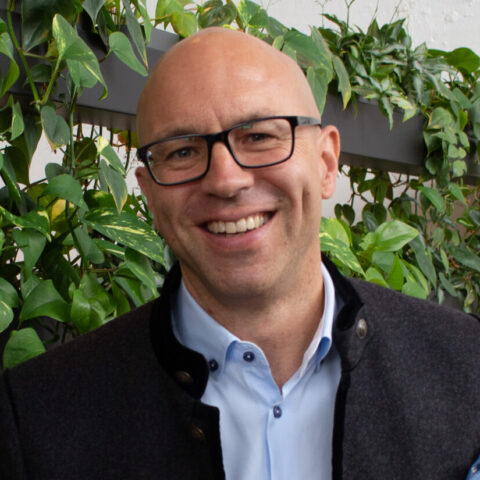
Wolf S. Seidel is a lawyer and a proven expert in construction, planning and real estate law. The practical, legal design of integrated project development models is a focus of his current studies and work. He is involved in various committees and organisations that make collaborative and process-optimised forms of realisation available in practice, particularly for Swiss building owners – both public and private.
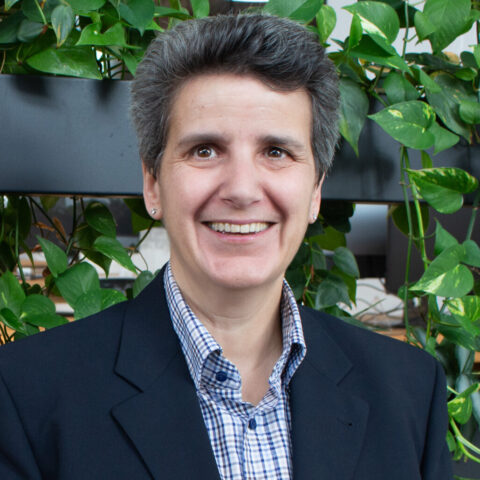
Yvette Körber is co-founder of several companies, including Amberg Loglay AG. She has been working successfully in the construction industry for several years and helps the industry to become more efficient with smart and digital construction logistics. She is involved in “The Branch” with the Design Build and Ordering Competence groups.
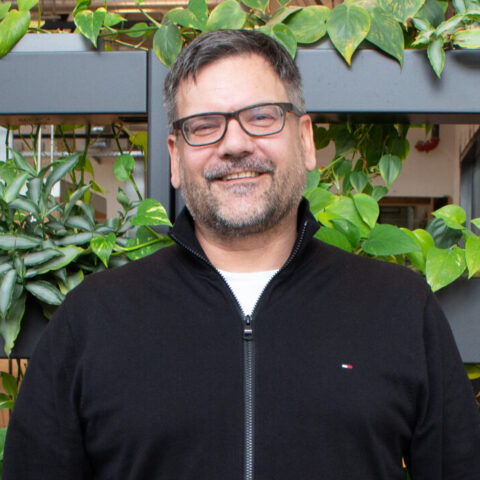
Stefan Zanetti has spun off several spin-offs from ETH Zurich; most recently Allthings Technologies AG, an integration and orchestration platform for the real estate industry that seamlessly links numerous systems. He is involved in various committees for a permeable and seamlessly networkable software landscape in the real estate industry in Switzerland and Europe, and is also a regular lecturer on various CAS and MAS training courses.
