Tag: Schule

  • EMPA wins Building Award 2025

    EMPA wins Building Award 2025

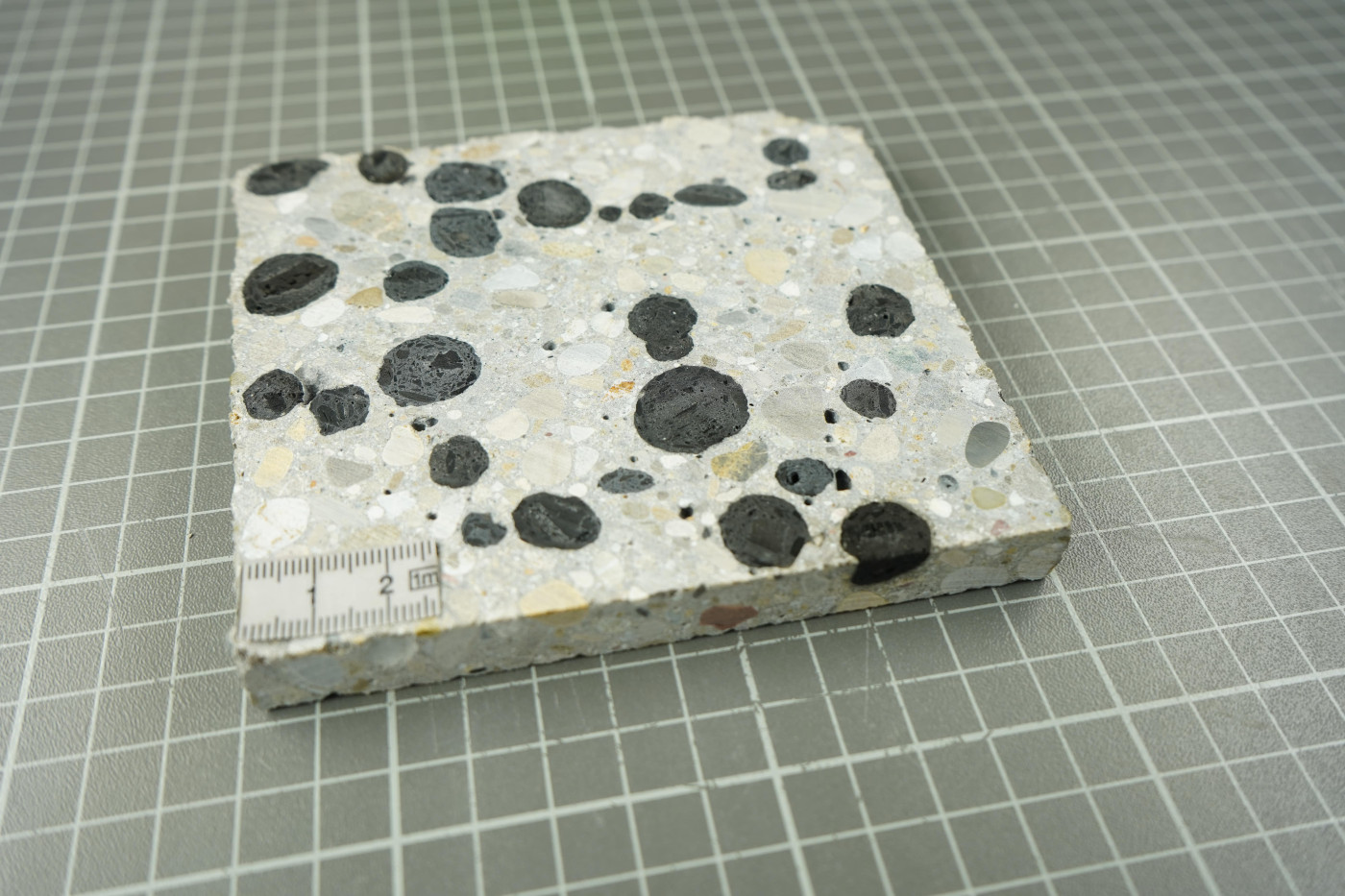
    Cement production accounts for around 8 per cent of global CO₂ emissions, a huge lever for climate protection. This is precisely where Empa comes in. With CO₂-storing concrete, to which specially developed carbon pellets made from biochar are added. These replace part of the conventional aggregate. The trick is that the pellets absorb CO₂ and can act as a permanent carbon sink without negatively affecting the building material properties. This makes the concrete not only climate-neutral, but also potentially CO₂-negative, while remaining suitable for practical use in building and infrastructure construction.

    Outstanding engineering achievement with prospects
    Empa was honoured with the Building Award in the “Research, Development, Start-ups” category for this innovation at the end of June 2025. The most important prize for civil engineering in Switzerland. The award ceremony at the KKL Lucerne honoured outstanding projects that bring science and practice together. Empa impressed the jury with a solution that has the potential to significantly improve the carbon footprint of entire construction projects with a view to industrial feasibility.

    Pilot project already planned
    The Empa team led by Pietro Lura and Mateusz Wyrzykowski is already working with partners to further develop the CO₂-negative pellets for market use. Initial applications are in preparation, including in the NEST unit “Beyond Zero”, a module of the experimental research building of Empa and Eawag. There, CO₂-reduced and CO₂-negative building materials are tested under real conditions, which further emphasises the practical relevance of the research.

    CO₂ as a raw material of the future
    Concrete innovation is part of a broader strategy. With the “Mining the Atmosphere” research initiative, Empa is pursuing a visionary goal of transforming the economy towards a CO₂-based material cycle. The concept is to capture CO₂ directly from the atmosphere and convert it into chemical raw materials such as methane or methanol. These in turn replace fossil raw materials in the production of building materials or energy sources. At the end of their life cycle, the products are to be bound in special storage sites, a long-term storage facility for carbon.

    Foresight for construction, energy and the economy
    The approach extends far beyond the construction industry. In future, synthetic methane could be used to overcome seasonal energy imbalances and replace CO₂-intensive materials. The prerequisite is a close interlinking of materials research, process development and economic scalability. In addition to technological progress, Empa is therefore also calling for regulatory framework conditions that make CO₂ capture economically attractive.

    Innovative strength as a lever for transformation
    Empa’s award marks more than just a scientific success. It symbolises change in the construction industry. CO₂-storing materials are no longer a distant vision, but concrete tools for the construction turnaround. This could transform the industry from a problem creator to part of the solution and help buildings to actively stabilise the climate in the future.

  • Zurich power generators jointly train grid electricians

    Zurich power generators jointly train grid electricians

    According to a press release, Zurich’s two electricity suppliers are launching a joint training and communication campaign. Together, they want to train more grid electricians. The focus is on lateral entrants, according to a joint press release from EKZ and ewz.

    Instead of poaching skilled workers from each other, the electricity suppliers have now developed a joint training concept that is specifically tailored to lateral entrants. The programme is aimed at professionals who have already completed training in electrical engineering or another trade. The two energy companies are organising an information evening on this topic on 13 November.

    The programme is being run jointly by the two companies. During the internal training period, employees already receive a full salary. They are employed by either EKZ or ewz and receive their practical training on the job, supplemented by courses at the ewz training centre in Zurich-Schwamendingen. After around a year of further training, graduates receive an internal training certificate.

    In order to reach candidates for the lateral entry programme, the electricity suppliers are launching the Komm ins Team Power campaign. It addresses the target group with short videos on various online channels and directs them to a special website. Advertising campaigns at sporting events, activation via employees of the two energy companies and cooperation with the netzelektriker-forum association are also planned.

  • Optimal exam preparation for prospective property professionals

    Optimal exam preparation for prospective property professionals

    The member organisations SVIT Bern, SVIT Eastern Switzerland, SVIT Central Switzerland and SVIT Zurich are intensively involved in the training of their apprentices. One outstanding example of these endeavours is the three-day “QV-Campus” launched by the SVIT Young Zurich youth commission in 2017. This campus offers apprentices optimal preparation for the company qualification process (final apprenticeship examination).

    The graduates of this year’s campus have just received their exam results. As every year, most of the participants scored above average, which makes the association proud and emphasises the high quality of their training.

    During the QV-Campus, participants were tested in industry-specific lessons without grades in order to specifically identify and close any gaps in their knowledge. The most important exam topics were taught by experienced QV exam experts. The programme also included overcoming exam anxiety and various learning techniques. On request, learners received further support on site or via Zoom until the exam.

    With around 40 third-year learners taking part, the “QV-Campus” can be considered a success. The high level of motivation of all those involved contributed significantly to the positive outcome. “It gave me a wake-up call!” commented one participant, who was now also able to gain new and exciting insights into the subject of “Taxation”. Another participant commented: “I had planned to study intensively for four weeks before the QV, but after the QV-Campus I realise that this is not enough.”

    For many young people, activities such as going out, friends and sport take centre stage, and they often lack the motivation and ambition to prepare for their exams in a timely and structured manner. This is precisely where the QV-Campus comes in, by guiding apprentices to plan properly and showing them that relaxation and proper preparation are crucial for a successful apprenticeship qualification.

    After the Campus is before the Campus.

    Are you in your 3rd year of apprenticeship and want to be optimally prepared for the company qualification process?

    Then register for the QV-Campus 2025 at www.svit-young.ch.

  • New Master’s programme for urban change

    New Master’s programme for urban change

    From the start of the 2025 autumn semester, the School of Architecture, Civil and Environmental Engineering(ENAC) at the Swiss Federal Institute of Technology Lausanne(EPFL) will be offering a Master’s degree in the challenges of urban change. A Master’s degree in Urban Systems will enable ENAC students to become specialists in adapting cities and surrounding areas to climate change, according to a press release from EPFL.

    In view of climate change, Switzerland needs to equip itself with experts in urban management in the broadest sense, according to the EPFL. The new Master’s degree programme has been developed in collaboration with practitioners. It offers graduates of the ENAC Bachelor’s degree programmes in Civil Engineering and Environmental Engineering the opportunity to specialise in the sustainable transformation of cities and surrounding areas. The Master’s programme is also open to other related disciplines, including architecture, provided they submit an application.

    The programme has three specialisations: Mobility and Transport in a Changing Climate, Sustainable Transitions in Urban Systems and Health and Wellbeing in the Urban Environment.

    At the end of the programme, students receive an EPFL Master of Science MSc in Urban Systems. This diploma entitles them to use the title EPF qualified engineer.

  • Successful completion of the preliminary project for the Horw campus

    Successful completion of the preliminary project for the Horw campus

    The successful completion of the preliminary project for the expansion and renovation of the Horw campus brings the vision of a modern educational centre a significant step closer. The purpose of the preliminary project phase was to gain detailed insights into the development and cost structure of the construction project. Despite the expected additional costs due to external factors such as construction costs and sustainability-orientated measures, the original project costs of CHF 365 million have been largely confirmed.

    Cost development and influencing factors
    The analysis has shown that in addition to construction inflation, which accounts for around 18 per cent of the increase in costs, adjustments to VAT also have a significant impact. Further additional costs in the area of sustainability and project development as well as statutory sustainability certifications increase the financial framework. Total expenditure is now expected to amount to CHF 600 million, including reserves of around CHF 78 million. This sum is still in line with comparable projects of a similar scale in Switzerland.

    Relevance for education and the economy
    Government Councillor and Finance Director Reto Wyss emphasise the continuous monitoring and review of cost developments by the responsible real estate department. The project remains continuously within the planned budget and the additional financial requirements are clearly explained by the review results. Project-related decisions and the dissemination of information are kept transparent in order to ensure public confidence.

    The Canton of Lucerne has outsourced the realisation of this major construction project to a non-profit public limited company, “Immobilien Campus Luzern-Horw AG”. This enables efficient and targeted construction in compliance with the referendum and without affecting the special loans that have already been approved.

    Outlook and significance for the region
    Director of Education Armin Hartmann emphasises the supra-regional significance of the project: “The Horw campus will have a lasting impact on the educational landscape and the business location. Its impact will reach far beyond the borders of Lucerne into the whole of Central Switzerland.” The realisation of this visionary project is therefore expressly welcomed and supported.

    The successful completion of the preliminary project has paved the way for the next phase of the construction project. The project management team will promptly initiate the next steps, with the start of construction scheduled for 2026.

  • Limmattal Summer Academy presents future projects

    Limmattal Summer Academy presents future projects

    The results of the Limmattal Summer Academy are currently being presented to the public by the OST- Ostschweizer Fachhochschule. The Summer Academy was about finding and describing future projects for the Limmat Valley. According to a media release, 60 students and young landscape and spatial planners, architects, traffic experts, sociologists and artists from universities in Switzerland, Germany, Austria and the Netherlands examined the Limmat Valley over the course of a week.

    The Limmattal Summer Academy was commissioned by the cantons of Aargau and Zurich and carried out by the OST – Ostschweizer Fachhochschule. Its results can be seen in the marquee at the Schlierefäscht until 10 September and will then travel to the Limmattal communities.

    “The Limmattal is one of the most dynamic core regions in Switzerland, the number one growth region,” Schlieren’s mayor Markus Bärtschiger is quoted as saying during this presentation. In order to be prepared for a sustainable future, however, the Limmat Valley needs new and unconventional impulses.

    The activities are concentrated on four focus areas: For example, the Zürcherstrasse between Unter- and Oberengstringen is to be upgraded to an aggloboulevard with recreational and green spaces. Another group of students combined the Fahrweid area into an emerald green ring by upgrading and linking ecological bridges in the area.

    The Silbern industrial cluster in Dietikon is to transition to a circular economy and become climate-adapted thanks to a pilot project. Ensuring public accessibility and usability of the riparian areas for all calls for a project around the Spreitenbach, Killwangen and Würenlos railway station area.

  • Municipalities exchange experiences on indoor air

    Municipalities exchange experiences on indoor air

    The corona pandemic also has consequences for the management of public real estate. The property area of the city of Schlieren has been intensively concerned with the quality of indoor air in recent months. As she reports, she has now formed an indoor air experience group together with other communities. Aarau, Baden, Lindau ZH, Lucerne, Volketswil ZH and Zurich also participate in the group. The Lucerne University of Applied Sciences supports the working group. Schlieren is represented in the group by Philipp Ganz, head of maintenance in the property division.

    The experience group wants to minimize the risk of coronavirus spreading, particularly in schools and kindergartens. Various studies have found that an increase in the CO2 content of the room air also facilitates the transmission of viruses through aerosols.

    The city of Schlieren also wants to use the experience gained together with its partners in its own commercial premises. The city runs the innovation and young entrepreneur center .

  • Schlieren expands planning for Zelgli school complex

    Schlieren expands planning for Zelgli school complex

    The city council of Schlieren has initiated an extended strategic plan for the Zelgli school complex. According to the city council news, the increasing number of students makes new planning necessary. In order to optimally determine the future development of the Zelgli school complex, the city council approved a loan for a feasibility study in July 2019. In April 2020, based on the current figures, two to four additional classrooms, two additional kindergartens and a triple after-school care center were planned. As early as September 2020, the latest figures showed that four new classrooms, two kindergartens and a quadruple day-care center are needed, according to the city council news.

    Structural adjustments are therefore necessary, such as enlarging the teachers’ room or installing additional sanitary facilities. Due to the changed order volume, a loan is now required for strategic planning. The city council has now approved it with 80,000 francs.

    According to the detailed message about the city council resolutions available on the website of the city of Schlieren, the school space requirements are calculated and planned twice a year based on the currently known data. The first order for spatial planning and open space planning with a volume of around 39,000 francs has already been placed with Metron Architektur AG in Brugg AG.