Tag: Siedlungsentwicklung

  • New open space concept enhances quality of life and biodiversity

    New open space concept enhances quality of life and biodiversity

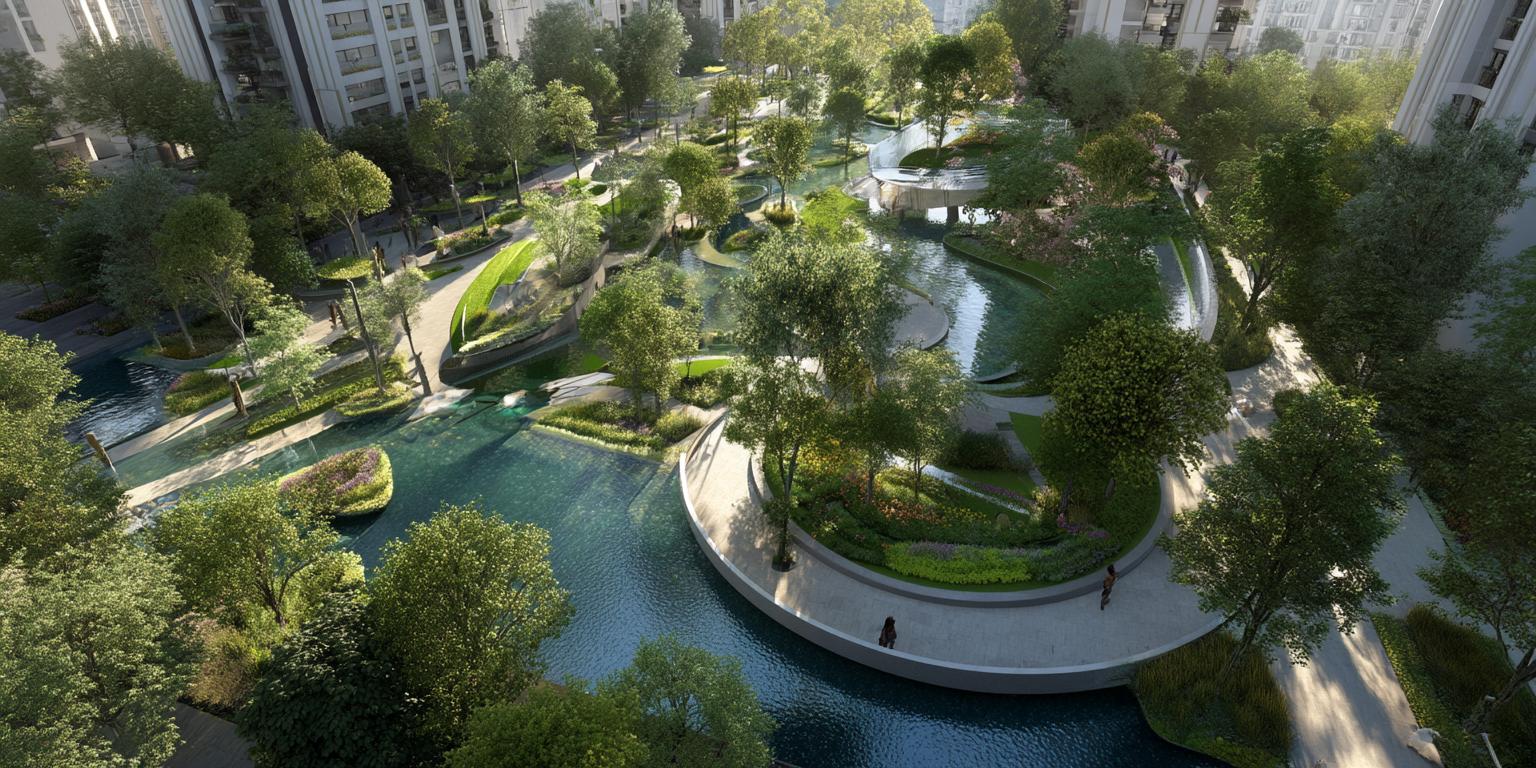
    According to a press release, Spreitenbach Municipal Council has adopted the open space concept. This establishes a legally binding framework for the future development of open spaces within the municipality’s built-up area. The aim is to safeguard and improve the quality and use of open and green spaces.

    The plan’s objectives include strengthening the identity of neighbourhoods, promoting biodiversity and enhancing climate resilience based on the ‘sponge city’ principle – rainwater runoff should be absorbed locally wherever possible.

    The plan also includes a catalogue of 21 specific measures. The first measures include the planning and implementation of Neumatt Park, the further development of the Ziegelei site, and the creation of temporary open spaces. Immediate measures are intended to improve the quality of the environment, whilst better signage will indicate the route connections. By the end of 2026, responsibilities are to be clarified, priorities set and initial measures prepared.

    The municipal assembly approved the commitment credit for the open space concept, amounting to 170,000 Swiss francs, on 28 November 2023. An interdisciplinary planning team subsequently developed the concept in collaboration with a broadly based steering group.

  • Owner participation “Ziegelbrückstrasse” in Glarus North

    Owner participation “Ziegelbrückstrasse” in Glarus North

    The municipality of Glarus Nord would like to motivate developers to carry out participatory processes for more complex construction projects. Its “Participation and communication guidelines for planning processes” outline how the needs of the population and future users can be anticipated at an early stage for various planning situations. To set a good example, the municipality initiated a participatory process for the “Ziegelbrückstrasse” development area between Ziegelbrücke railroad station, the Jennyareal and the village center of Niederurnen: between October 2024 and February 2025, it involved the affected owners in the development of a mission statement, which served as the basis for the development of an outline plan for the area.

    Shaping the framework conditions for development
    The mission statement was intended to define the structural dimensions and the mix of uses. As the area is one of the densification and upgrading areas that characterize the village, qualitative key points of a development that does justice to the character and history of the area were also up for discussion. The municipality also saw the public sector as having a duty and therefore set out its expectations regarding the design and upgrading of the cantonal road that runs through the area. This provided the municipality with a broad-based basis for discussions with the canton, which is responsible for the renovation of the road.

    The jointly developed model served the municipality as the basis for a binding framework plan. The framework plan in turn defines the guidelines for how buildings may be constructed along Ziegelbrückstrasse in future under the new owner-binding land-use plan. The owners involved helped to shape how and what they can build on their properties in the future by participating in the master plan.

    A streamlined participation process
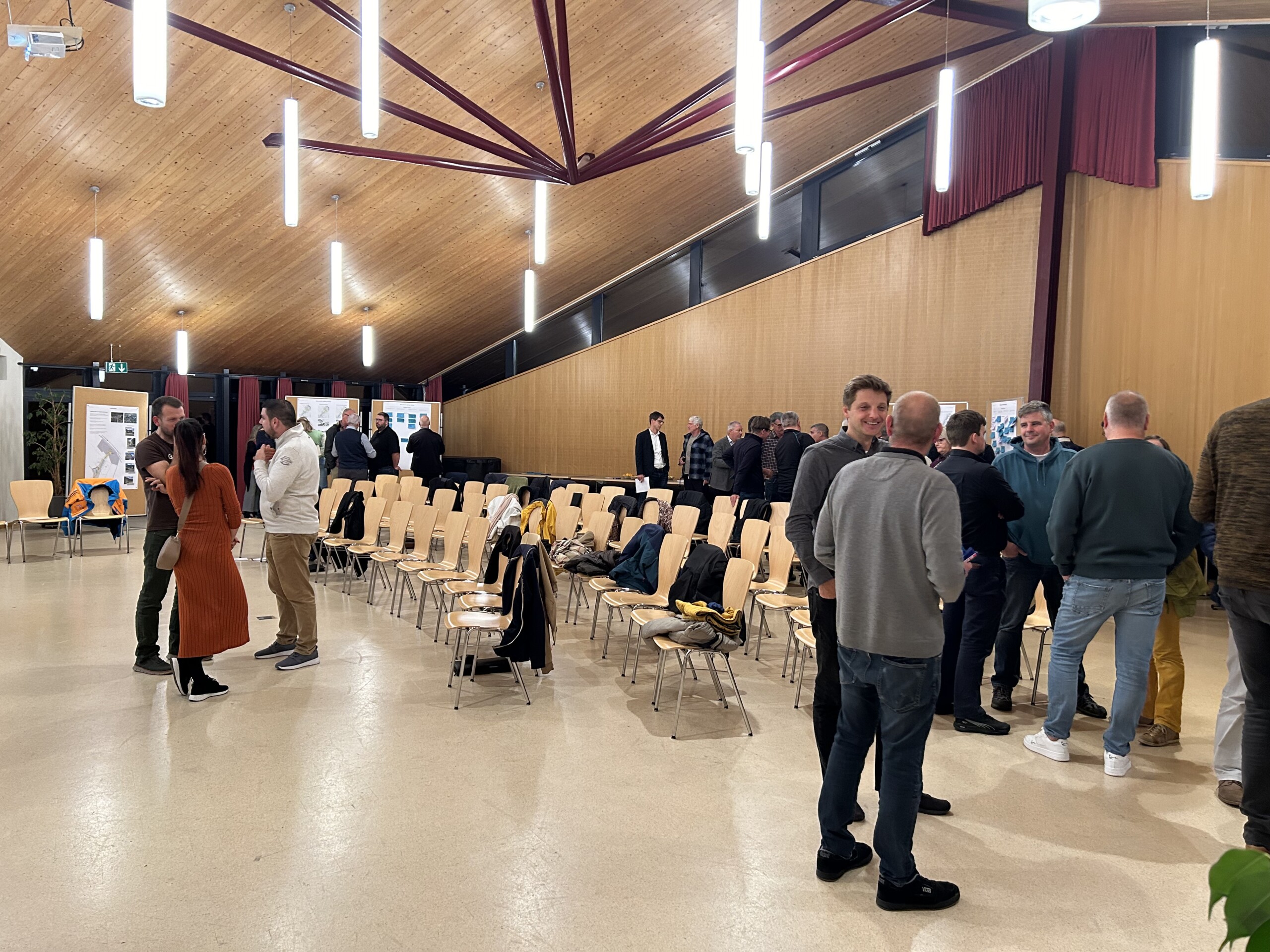
    The owners in the area were invited to take part in two evening events with the municipality. The first evening was for information and participation, the second for the presentation of the results. Over 56 owners of 127 plots took the opportunity to participate in the events themselves or with a representative.

    In the first workshop, they were given an insight into the planned planning instrument and were consulted on various options for future development possibilities. By prioritizing the options, they were able to influence the decision on the desired model. In the second workshop, the municipality presented the framework plan developed on the basis of the desired variant.

    A worthwhile effort for the municipality
    Participatory processes are complex and cost time, money and political capital. For the municipality, the time-consuming process was worthwhile because it increases the chances of owners becoming active: By being informed about more construction options at an early stage, they can adjust their investment planning and align any existing intentions with the municipality’s development plans.

    The discussion about the vision helps to orient owners towards a common vision of the future of the densification and development area and to convey to them that issues such as the addressing of buildings to the street, the granularity of the development, the design of the base storey or the materialization are not just private matters, but also have an effect on the image of the district and thus influence the attractiveness and value of the location for everyone.

    The participatory process offered the municipality the opportunity to draw attention to its building advice and increase the likelihood that landowners with investment intentions will discuss and coordinate their plans with the municipality at an early stage, before they have drawn up a preliminary or construction project that can hardly be adapted. In the best-case scenario, the process encourages some owners to think bigger and enter into cooperation with other landowners or jointly tackle issues such as the provision of parking spaces in construction projects.

    The municipality was also able to use the events to coordinate upgrades on public land with the needs and ideas of the owners and to test the acceptance of measures such as greened medians on the road or a speed reduction on certain road sections.

    More planning security for landowners
    Participatory processes also cost the participants time. In the case of Ziegelbrückstrasse, the effort was worthwhile for the property owners simply because they were able to influence decisions on issues that are binding for the property owners by participating in the framework plan that is binding for the authorities: the fundamental question of the design of the density and mix of uses possible with the new land use planning. The framework plan also offers owners more planning security, as it strengthens equal treatment in the approval process.

    As part of the process, the owners gained a better understanding of what the municipality expects from structural developments and were able to gain inspiration as to what contributions they can make to neighborhood upgrading in addition to structural developments – for example with the design of gardens and street front zones or smaller renovation projects. The opportunity to find out about their neighbors’ plans at the event ultimately gives owners more certainty that they are not alone in their investments.
  • Forward-looking settlement development strategy for Hofen

    Forward-looking settlement development strategy for Hofen

    The settlement development strategy for the Hofen district of the municipality of Thayngen is a milestone in spatial planning in the canton of Schaffhausen. It forms the first building block of a large-scale local planning revision that serves as a pilot project for the development of the entire municipality of Thayngen and its neighbourhoods. The focus is not only on local structures, but also on the integration of regional requirements and cantonal guidelines.

    The SES was developed in close collaboration with Dost Architektur GmbH, representatives of the municipality of Thayngen, the canton of Schaffhausen and local associations. With an interdisciplinary approach and the involvement of the public, the settlement development of Hofen is to be future-proofed in order to meet the requirements of the predicted growth. Particular attention is being paid to “inward settlement development”, which optimises the use of existing resources and at the same time improves the local quality of life.

    A roadmap for Hof’s future
    The SES is based on four central strategic paths that should characterise the spatial and structural future of Hof.

    1. Preserve historic substance, create new living spaces
      The preservation of the historic building structure is a central element of the SES. Particular emphasis is placed on the spatial and design integration of new construction projects. New living space is to be created, particularly in the areas of the former market garden, in order to meet the growing demand for housing.
    2. Improving the design of the town centre
      The quality of life in Hofen is to be enhanced by upgrading the design of central meeting spaces. The village square will be redefined as a meeting place for the village community, with seating and playground facilities created and traffic-calming measures implemented.
    3. Safety and traffic calming
      One focus of the SES is on improving road safety. Pedestrians and cyclists should benefit from traffic-calming measures and the route to school in particular should be decoupled from the main road to ensure the safety of schoolchildren.
    4. Strengthening Hofen’s identity
      Hofen wants to present itself confidently and emphasise its unique qualities. The SES envisages an increased digital presence and the staging of key historical buildings to make the town more attractive for both residents and visitors.
      These overarching strategy paths include eight specific indicative projects that are to be implemented in the short, medium and long term. These projects range from the creation of new residential areas and the upgrading of the village square to the renaturalisation of the Beaver, which will make a significant contribution to the ecological balance of the region.

    Landscape and nature as a central component
    The Lower Reiat region is characterised by a diverse landscape of hills and agricultural land. This landscape is not only ecologically valuable, but is also listed in the cantonal structure plan as a “landscape worthy of protection”. The dry meadows, pastures and orchards that surround Hofen are striking landscape elements that characterise the townscape and should be preserved.

    The beaver, which flows through Hofen and is used for agricultural purposes in parts, is of particular importance. The planned renaturalisation of the canalised sections is intended to increase ecological diversity and further enhance the attractiveness of the natural environment for residents.

    Buildings worthy of protection and building land reserves
    Hofen has a historic building stock that should not only be protected as part of the SES, but also integrated into the future development of the settlement. In particular, the baroque “Holländer district” with the residence of Tobias Holländer and the striking Schweizerbund inn contribute to the unique identity of the village.

    The SES also envisages strategic utilisation of the existing building land reserves. There is long-term upzoning potential, particularly in the area of the former market garden and on the outskirts of the village, to meet future demand for residential and work space.

    Communication and public involvement
    Transparent communication with the residents of Hofen is a central component of the SES. The planning steps were accompanied by a working group of community representatives, local associations and planners and presented at public events. In particular, the development of the former market garden as a new residential area met with great interest from the population.

    The settlement development strategy drawn up for Hofen not only sets new standards for local planning, but also for cooperation between the administration and local residents. The participatory approach ensures that the future development of the municipality meets the needs of the residents.

    A model for the entire region
    The Hofen SES not only serves the further development of the district itself, but also as a model for the other districts in the municipality of Thayngen. The findings and guidelines developed in Hofen are to be transferred to Altdorf, Bibern, Barzheim, Opfertshofen and Thayngen. In this way, SES is making a significant contribution to safeguarding the quality of life and economic potential of the entire region in the long term.

  • Rhine bank development as a project for the future

    Rhine bank development as a project for the future

    The city council is pursuing the goal of freeing the banks of the Rhine from motorised traffic and transforming it into a lively centre for leisure, living and business. This redevelopment offers Schaffhausen a unique opportunity to sustainably improve the quality of life in the city and promote tourism at the same time. The focus is on the expansion of green and open spaces as well as new housing and jobs.

    The development strategy includes concrete steps to realise this vision, building on the results of an urban planning study and public consultations.

    Step-by-step implementation in sub-projects
    The implementation will be realised in several sub-projects over a period of twelve years until 2036. The sub-projects include the new connecting road, the development of the Gaswerk site and the upgrading of the Rhine embankment promenade. This division allows for gradual realisation and creates planning security for all parties involved. Interim utilisation is planned for the Gaswerk site until construction begins.

    High added value with manageable investment
    The project requires public sector investment totalling around CHF 35 million, of which the city will bear around CHF 22 million. The remaining costs will be co-financed by the federal government and the canton. Private investment in residential and commercial space significantly increases the economic benefits of the project and promotes urban development.

    Fundamental decision and framework conditions
    In order to implement the project efficiently, a fundamental vote is proposed. At the same time, all operational decisions will be delegated to the City Council in order to minimise the implementation risk and increase planning certainty.

    The City Council has defined clear framework conditions, including an amicable solution for the water sports clubs, the promotion of biodiversity and the urban climate and the creation of a balanced mix of charitable and non-charitable housing on the Gaswerk site. In addition, potential studies are being carried out to clarify the economic feasibility of catering and commercial uses.

    With the redesign of the banks of the Rhine, Schaffhausen is opening a new chapter in its urban development – towards a more sustainable, liveable and economically stronger future.

  • Enable inward settlement development despite noise pollution

    Enable inward settlement development despite noise pollution

    The UREK-S upholds the decision of the Council of States to build in areas subject to noise pollution, provided that controlled ventilation is installed and windows are used primarily for lighting purposes. In these cases, it is not necessary to comply with noise limits with open windows. The Commission is convinced that these regulations will favour the creation of living space in central locations and thus promote inward settlement development.

    With regard to construction in the vicinity of airports, the Commission rejects a new specific aircraft noise limit, as proposed by the National Council. It favours the Federal Council’s regulation, which allows exceptions to the requirements for aircraft noise. In its opinion, this regulation allows denser construction despite aircraft noise.

    The Commission proposes deleting the provision on maximum speeds on traffic-orientated roads from the law. Speed reductions should not be prohibited in principle, but should be implemented through measures that have already been adopted.

    With regard to the remediation of contaminated playgrounds, the Commission confirms the decision of the Council of States on private children’s playgrounds and home gardens with pollutant contamination by a casting vote of the President. It rejects the idea that the federal government should be able to provide compensation from the VASA Contaminated Sites Fund for voluntary remediation. The Commission is in favour of the remediation of contaminated private playgrounds and gardens, but without using federal funds. Cantons can provide financial support for remediation if they so wish. Some members request that the National Council be followed, except with regard to the regulation that the owners must in principle pay for the remediation costs.

  • Manifesto against housing shortage

    Manifesto against housing shortage

    URBANISTICA’s Manifesto for Urban Planning aims to raise awareness and conviction among the population and politicians that urban planning must once again be practised seriously and competently in this country in order to meet the current challenges as well as the needs of future generations.

    With the advent of individual mobility in the middle of the last century, urban planning in Switzerland fell into oblivion. The primacy was given to transport planning and land use segregation, which led to urban sprawl in Switzerland. With the adoption of the revision of the Spatial Planning Act in 2013, the Swiss people decided that no further building land should be zoned and that future population growth should be accommodated by means of inner settlement development.

    The following manifesto is intended to initiate the necessary discourse on urban planning and urban development. Urbanistica is a website, platform and movement at the same time, which sets impulses and promotes public dialogue with the aim of ensuring that high-quality, sustainable and needs-oriented urban planning and good urban development is once again practised in many cantons, municipalities and cities in Switzerland. In the interest of sustainable spatial development in Switzerland, the initiators ask you to consider and sign the manifesto. Every voice is important! Manifesto against housing shortage. www.urbanistica.ch