Tag: Smart City

  • How digital systems are reorganizing urban development

    How digital systems are reorganizing urban development

    Modern cities must simultaneously manage transportation, energy supply, housing, infrastructure, administration and climate adaptation. This is despite a growing population and increasingly scarce resources. Smart city approaches see the city as an ecosystem in which mobility, energy, buildings, climate and governance are interlinked. Sensors, data rooms and digital platforms create transparency, provide real-time information and improve the basis for long-term decisions. The decisive factor is not the digitalization of individual silos, but the interaction of systems.

    Switzerland in the top international group
    Zurich has held a top position in the IMD Smart City Index for years and once again leads the global rankings in 2025. Geneva and Lausanne are also in the top 10, underlining the strength of the Swiss approach with high data quality, well-developed infrastructure and a strong research landscape. At the same time, medium-sized cities such as St. Gallen, Winterthur and Lugano are developing their own smart city strategies, data platforms and pilot projects. Often with a focus on mobility, administration and energy.

    International role models and different approaches
    Singapore is regarded as a reference for integrated national digital strategies in which mobility, energy, administration and health are linked via data and platforms. Copenhagen combines smart city technologies with a consistent sustainability policy and low-emission mobility, while Helsinki scores with extensive open data approaches and digital administration. Cities such as Dubai, London and Amsterdam have different priorities. From large infrastructure programs to data-driven mobility and data-ethical governance. What they have in common, however, is a clear political will and long-term strategies.

    Governance, data and federal reality
    Smart city is only partly a question of technology. Without resilient data spaces, clarified responsibilities, data protection rules and transparent decision-making processes, projects remain piecemeal. In federal Switzerland, municipalities, cities, cantons and the federal government also have to coordinate their roles. For many municipalities, Smart City therefore primarily means process modernization, cross-departmental cooperation and a new understanding of urban development. UrbanTech and PropTech combine administration, real estate management, energy and mobility systems. The closer these systems are linked, the greater the leverage for sustainable urban development.

    Technology as a means, not an end
    The most successful smart cities in the world are not characterized by the number of sensors they have, but by the way they deal with complexity. They use technology in a targeted way to improve quality of life, resilience and efficiency. They embed digital solutions in social and ecological goals. Smart City is therefore less an IT project than an urban development project in which technology remains a tool. The decisive factor is how cities use data and digital systems to make smarter, more inclusive and more sustainable decisions.

    What exactly is a smart city?
    Smart city – precisely defined:

    A smart city is a city that uses digital technologies, data and networked systems to improve quality of life, sustainability, efficiency and participation. It integrates energy, mobility, buildings, administration and the environment into a common data and organizational model and uses this information to intelligently manage services, infrastructure and urban planning.
    The decisive factor is not the technology itself, but the ability to use it responsibly, safely and purposefully in the interests of the entire population.

    Smart cities promise efficiency, sustainability and better urban services. At the same time, they harbor risks that need to be carefully addressed. The following areas are particularly critical:
    Data protection and surveillance

    Sensors, cameras, mobility data and networked infrastructures generate huge amounts of data about the population’s behavior, movements and usage. Without clear rules, this can lead to a risk of surveillance, whether by the state or the private sector.

    The power of algorithms
    When data-based systems control decisions, for example in transport, administration or energy use, there is a risk of non-transparent or difficult-to-understand processes. A lack of explainability or unverifiable models can weaken public trust.

    Democratic control
    Smart city decisions are often made at the interface between the administration, technology providers and infrastructure operators. Critics warn that important urban development decisions could increasingly be influenced by technical systems or private companies.

    Social inequality
    Digitalization is expensive. Cities with fewer resources run the risk of falling behind. A “digital divide” can also emerge within a city. Between those who can use all services and those who remain excluded. Be it for financial, technical or social reasons.

    Complexity and dependency
    The smarter a city, the more dependent it is on digital systems, platforms and external technology partners. Outages, cyberattacks or technical disruptions can have significant consequences for infrastructure, security or supply.

    Lack of standards and governance
    Without clear governance models, isolated solutions, incompatible systems and unclear responsibilities arise. This can negate efficiency gains and make long-term investments more difficult.

    International smart city gadgets that have made headlines
    Smart lamp posts, networked street lamps (Barcelona, Los Angeles, London)
    Smart lanterns with sensors for traffic, noise, weather, air quality and parking lot detection.
    They caused a stir because they are disguised as harmless infrastructure but collect large amounts of data.
    – Symbol for “visible invisible” smart city technology.

    “Quayside Project” Sidewalk Labs sensor masts (Toronto)
    Alphabet/Google planned a district with a fully sensorized environment.
    Temperature, movement, mobility, waste, energy – everything was to be measured in real time.
    – Stopped after criticism of data protection. Discussed worldwide.

    “Lampposts-as-a-Platform” (Singapore)
    Singapore equipped lampposts with cameras, microphones and IoT modules as infrastructure for autonomous driving and safety systems.
    – Internationally renowned for AI-based monitoring and efficiency.

    Smart waste bins, solar-powered waste containers (Bigbelly, New York, Berlin, Vienna)
    Compact waste, report fill levels and sometimes serve as Wi-Fi hotspots.
    – Was in the headlines because some models were able to secretly collect data (“WLAN tracking”).

    Intelligent parking spaces, sensor parking spaces (San Francisco, Amsterdam)
    Ground sensors report free parking spaces in real time.
    – Known for the SFpark project, which measurably reduced traffic.

    Autonomous delivery robots (London, Tallinn, San Francisco)
    Robots that transport food and parcels.
    – Media excitement because they are considered “new road users” on the sidewalks.

    AI-based traffic lights (Hangzhou, Tel Aviv, Los Angeles)
    Cameras and AI control traffic lights dynamically, reducing congestion times by up to 30 %.
    – The “City Brain” system from Alibaba in Hangzhou has become particularly well known.

    Drone programs for rescue and logistics (Rwanda, Dubai, Zurich)
    Drones deliver medicines, defibrillators and medical supplies.
    – Known for Zipline (Rwanda) and medical drone logistics in Switzerland.

    Smart benches with charging function and sensors (Prague, New York, Dubai)
    Solar modules charge smartphones, integrated sensors measure environmental values.
    – Viral because they combine design, energy and technology.

    Holographic citizen information and AR maps (Seoul, Tokyo, Shanghai)
    Interactive AR displays for navigation, participation or administration.
    – The first prototypes were celebrated at trade fairs and shared globally.

    Sound Traffic Light, noise radar systems (Paris)
    Cameras and microphones measure vehicles that are too loud and automatically trigger fines.
    – Great media coverage due to privacy vs. noise abatement.

    Robot police and autonomous security vehicles (Dubai)
    Dubai was one of the first cities to present “Robocop”-like surveillance robots.
    – Global media topic, futuristic and controversial at the same time.

    Top 20 Smart Cities 2025 – International ranking

    1.Zurich (Switzerland)
    Outstanding combination of quality of life, digital administration, mobility and energy efficiency.

    2.Oslo (Norway)
    Leading in climate protection, autonomous mobility solutions and digital governance.

    3.Singapore (Singapore)
    Smart nation as a guiding principle of the state, fully integrated mobility & administration.

    4.Geneva (Switzerland)
    International governance, smart mobility management, high urban service quality.

    5.Copenhagen (Denmark)
    World leader in sustainable urban development and networked mobility planning.

    6.Lausanne (Switzerland)
    Strong research (EPFL), innovative urban planning, mobility and energy data spaces.

    7.Helsinki (Finland)
    Open data, digital administration and one of the highest transparency standards in the world.

    8.London (United Kingdom)
    Mobility data, AI pilot zones, sharing economy and world-leading GovTech scene.

    9.Abu Dhabi (UAE)
    Massive digitization of administration, smart mobility & automated infrastructure.

    10.Amsterdam (Netherlands)
    Pioneer in data ethics, circular economy and citizen-oriented smart city projects.

    11.Stockholm (Sweden)
    Strong IoT infrastructure, energy efficiency, digital access to public services.

    12.Seoul (South Korea)
    Smart governance, AI traffic light systems, highly connected city infrastructure.

    13.Dubai (UAE)
    One of the most technology-driven cities in the world: autonomous transportation, 3D printing, GovTech.

    14.Vienna (Austria)
    Excellent administration, smart living, social innovation and urban resilience.

    15.Barcelona (Spain)
    Urban sensor technology, mobility platforms, open data movement and civic tech.

    16.Prague (Czech Republic)
    Rise in Europe: smart mobility, digital administration, open data initiatives.

    17.Tokyo (Japan)
    Autonomous mobility, robotics, smart infrastructure on a megacity scale.

    18.Tallinn (Estonia)
    E-government world champion, blockchain-based administration, digital identity.

    19.Canberra (Australia)
    Digital administration and mobility systems at a very high level.

    20.Vancouver (Canada)
    Sustainable urban planning, smart mobility, strong tech and innovation scene.

  • Partnership drives smart urban development in the region

    Partnership drives smart urban development in the region

    The City of Thun and the Smart Regio Thunersee association have signed a cooperation agreement. According to a press release, the collaboration will be guided by the Smart City Thun vision.

    “The partnership aims to drive innovation in a targeted manner, use resources efficiently and further develop the city of Thun and the Thunersee region as an attractive place to live and do business,” said Councillor Andrea de Meuron, Head of the Finance, Resources and Environment Department, in the press release.

    The Smart City project, developed as early as 2021/22, aims to make Thun “liveable, progressive and resource-efficient”. Digitalisation is to be used to increase the efficiency of services. At the same time, there is also a desire to bring together the various forces within society.

    The agreement now concluded is intended to strengthen selected innovation and networking formats. As concrete projects, Thun-based SMEs are planning to use cargo bikes for inner-city transport; an information day on this will take place on 2 June 2026. In the autumn, the focus will be on the circular economy in construction. “We don’t just want to discuss smart projects, but actually initiate and implement them, working closely with the city and the local community,” says Markus van Wijk, President of the Smart Regio Thunersee association.

  • Small cities are increasingly interested in the smart city

    Small cities are increasingly interested in the smart city

    The Zurich University of Applied Sciences (ZHAW), based in Winterthur, has published the Swiss Smart City Survey 2024. The report shows that small cities in particular are investing in smart solutions, according to a press release. The ZHAW survey also recorded an increase in the number of respondents.

    A total of 403 smart city projects were reported by the participating cities and municipalities in the survey. Specifically, these include categories such as Smart Governance, Smart Environment, Smart Mobility, Smart People, Smart Living and Smart Economy. 97 projects fall into the Smart Environment category, most of them in the field of photovoltaics. This is twice as many as in 2022.

    However, the report still shows great potential for development. The topic of smart cities is being actively addressed in 29% of the cities surveyed, while 18% are still in the initial phase. “Many cities are not yet in a defined smart city development phase – a clear sign that there is enormous development potential here,” said Vicente Carabias, Head of Sustainable Energy Systems and Smart Cities at the ZHAW, in the press release. “At the same time, the survey shows that more and more cities are embracing the topic of smart cities. The data from the Swiss Smart City Survey highlights the high market potential for science and companies, which can play an active role in the development of smart infrastructures.”

  • Small cities drive smart transformation

    Small cities drive smart transformation

    In the current survey, 403 projects from 124 cities were recorded, with digitalization and sustainability being the most important topics. Most initiatives relate to the smart environment, in particular renewable energies such as photovoltaics and resource-saving technologies. This dynamic underscores the transformation that Swiss cities are striving to achieve in order to reduce their carbon footprint and create innovative living spaces.

    Commitment and growth opportunities for small cities
    The number of participating cities has increased significantly. More and more municipalities are formulating their own smart city strategies, appointing responsible parties and working on pilot projects for digital transformation. Nevertheless, the survey shows that almost 80 percent of cities have not yet implemented fully developed processes and are only in the early stages of development. This is a strong signal of existing development potential and market opportunities for players from business and science.

    Governance, participation and infrastructure
    The key dimensions include smart governance, citizen engagement and co-creation. The increase in projects in digital citizen services and smart infrastructure, such as resource conservation or smart mobility, points to the need to expand and strengthen internal organizational competencies within city administrations.

    Market potential and next steps
    The authors of the study emphasize that the dynamics of smart city initiatives are high, but that there is still room for improvement in terms of design and organization. The market potential for companies and research is correspondingly high. Smart infrastructure and innovative projects offer numerous opportunities for cooperation and investment.

    Small cities as drivers of the smart future
    Small Swiss cities are proving to be the driving force behind the smart city transformation. With growing commitment, a clear focus on sustainability and digitalization and an increasing number of concrete projects, they are gaining in importance and creating new opportunities for a sustainable and networked urban landscape.

  • Europe’s largest construction project takes shape

    Europe’s largest construction project takes shape

    The ambitious Ellinikon project is being built on the disused Hellinikon airport site south of Athens. Here, Greece is building a new city from the ground up that will serve as a model for sustainable and digitally networked urban development. In just a few years, this area is set to become a living space for over 10,000 people, a place of work for up to 80,000 employees and a destination for millions of tourists. The aim is to create a city that meets the ecological, technological and social requirements of the 21st century.

    From ghost airport to beacon of hope
    The site of the former Hellenikon International Airport, once the gateway to the world, was unused and dilapidated for decades. The debt crisis got the project moving. in 2014, Lamda Development was awarded the contract to lease and develop the site for 915 million euros over 99 years. The planning was in the hands of renowned architectural firms, including Foster Partners from London. The excavators have been rolling since 2020 and everything should be ready by 2036.

    A city of short distances
    Ellinikon is designed as a so-called “15-minute city”. Everything you need to live – school, doctor’s surgery, grocery store, sports field or café – should be within 15 minutes on foot or by bike. The planners want to significantly reduce motorized private transport. Local public transport, micromobility with e-scooters, bike sharing and a modern network of footpaths and cycle paths will replace the traditional car.

    Europe’s largest coastal park
    In the middle of the new urban area, a park is being created that will set new standards. 2.6 million square meters of green space, more than London’s Hyde Park. Ellinikon Park offers space for walks, sport, cultural events and nature observation. Around 80 % of the water used comes from natural sources already present on the site.

    Reusing instead of wasting
    Before the high-rise buildings could rise into the sky, the first step was to dig deep. More than 300 reinforced concrete pillars with a depth of up to 55 meters support the foundations of the new Riviera Tower landmark. The concrete from the former runways will be recycled on site and reused for roads and slope stabilization. A central goal of the project is net-zero emissions. Buildings are certified according to the LEED standard.

    The tallest residential building in Greece
    207 meters high, 53 floors, 169 apartments, the Riviera Tower will be the tallest building in the country. In addition to the Riviera Tower, another high-rise is being built, the Vouliagmenis Mixed Use Tower with a height of 150 meters. It offers office space, a hotel for business travelers and direct access to two subway stations.

    Smart City Ellinikon
    Ellinikon sees itself as a smart city. Data, sensors, networking and digital services play a central role. Intelligent street lighting, sensors for air quality and noise, apps for navigation, booking and payment as well as 5G and fiber optic networks for high connectivity are just a few examples. Intelligent power grids, energy-efficient architecture and microclimate analyses are intended to optimize energy consumption.

    Social commitment and tourism
    Ellinikon should not only be chic, but also social. The first completed building, a center for people with disabilities, was handed over in 2023. Further public facilities are being planned, such as kindergartens, schools, a clinic, cultural centers and sports facilities. Two large shopping centers, the Vouliagmenis Mall and the Riviera Galleria, are expected to attract an international audience. Even more spectacular, however, is the casino complex, which is being realized together with Hard Rock International.

    Economic boost for Greece
    The project is expected to contribute 2.4% to Greece’s gross domestic product in the long term. 70,000 to 80,000 direct and indirect new jobs are planned and tourism is expected to grow by over one million additional guests per year. The expected tax revenue amounts to 14 billion euros over the duration of the project.

    What happens next
    The first major construction phase should be completed by 2026/2027. Central infrastructure facilities such as transport routes, the first residential buildings, green spaces and educational facilities should then be in place. Full completion will follow by 2036. Ellinikon will not only be a new district of Athens, but a showcase for what urban development can look like in the future.

  • Series production of intelligent safety robots

    Series production of intelligent safety robots

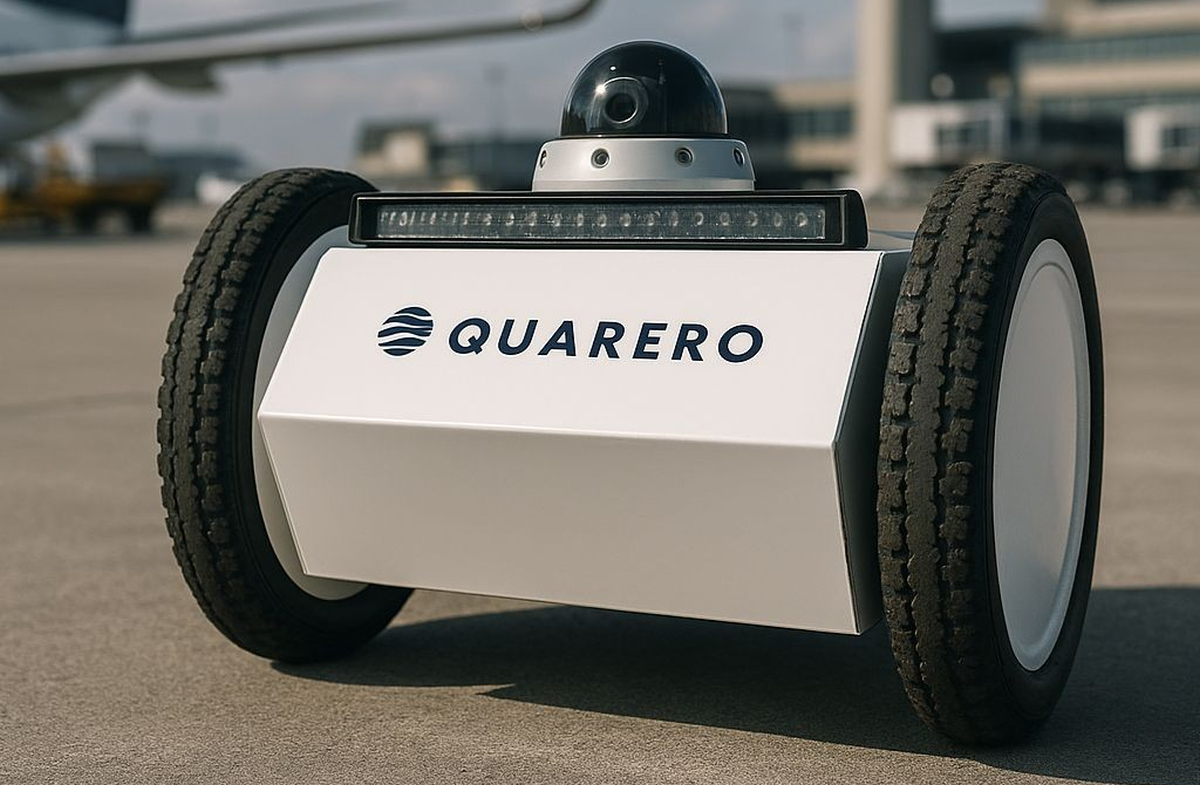
    Founded in 2021, the startup begins series production of its highly developed security robots. Developed in Switzerland and produced in Germany, this combination of innovative strength and manufacturing excellence is set to change the European security market. The first 50 systems are scheduled to go into operation in 2025.

    CEO Marcus Köhnlein sees the project as an infrastructure measure for a smarter future. “This is more than just robotics, we are delivering scalable systems that rethink security autonomously and reliably.” The robots are designed for complex environments such as airports, logistics centers or smart cities and work autonomously, supported by real-time analysis and predictive diagnostics.

    Automated security
    With rising urban risks and increasing staff shortages in the security industry, the demand for automated solutions is growing. The robots provide an answer – scalable, flexible and low-maintenance. Their modular design allows them to be adapted to different locations, from industrial sites to university campuses.

    The business model is based on “Robot-as-a-Service” and offers customers high-performance safety solutions with a low barrier to entry. Real-time data, continuous learning and high uptime are integral components of the system.

    Growth strategy and financing round launched
    A new investment round has been launched for the next phase: scaling, market expansion and international launch. The aim is to expand production to 300 systems by 2027. The company is currently focusing on Europe, but has long-term plans for global expansion.

    The start-up is managed by an experienced team. CEO Marcus Köhnlein brings management experience from digitalization and innovation projects. CTO Christoph Uhrhan is a professor of robotics at Furtwangen University, where he heads the robotics laboratory. The Chairman of the Board of Directors is Andreas R. Sarasin, former partner at a renowned Swiss private bank and member of the Board of Directors at uniqueFeed.

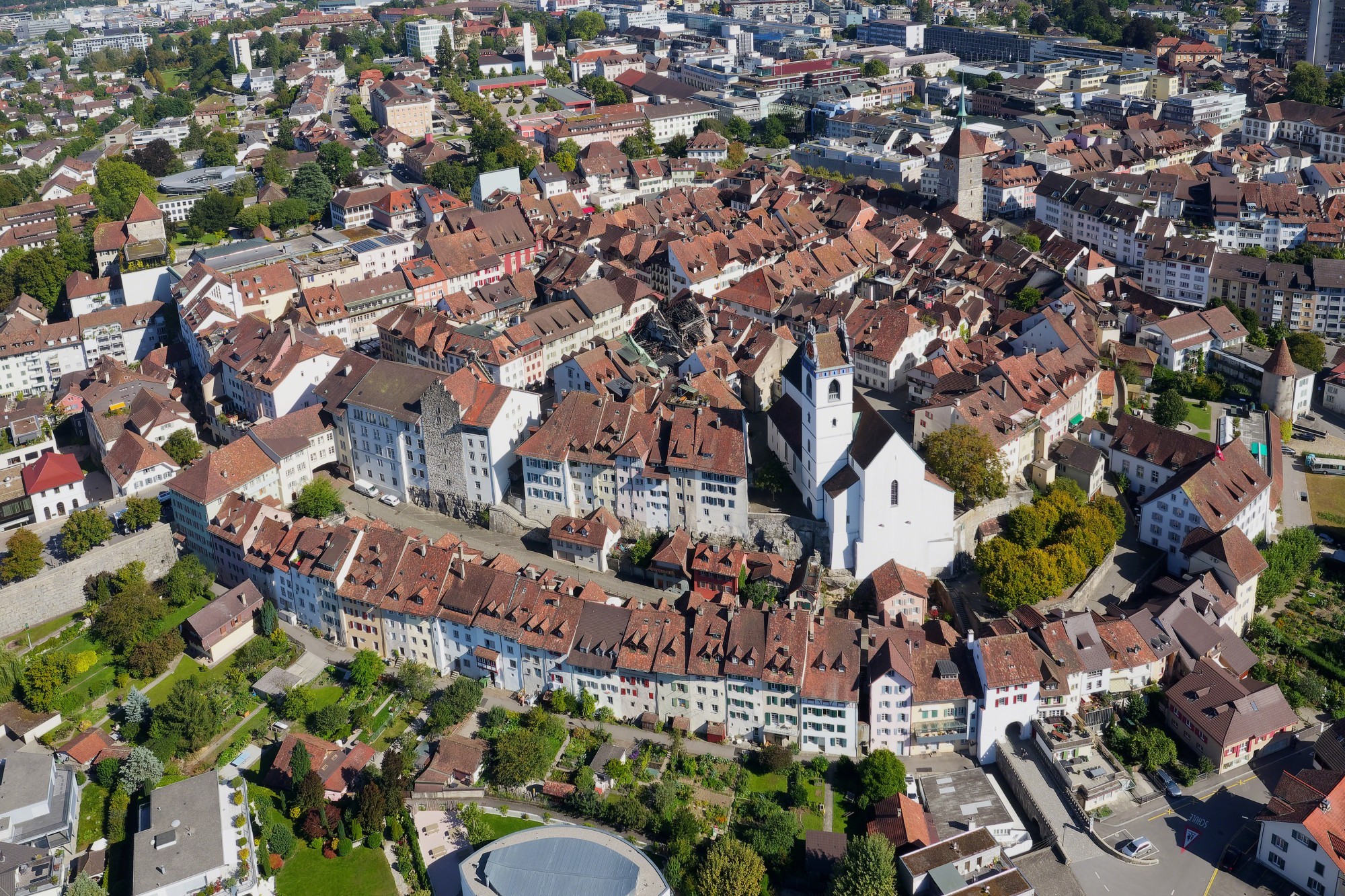
  • Smart City Aarau networked, user-centered and environmentally friendly

    Smart City Aarau networked, user-centered and environmentally friendly

    Aarau is facing complex social and technological developments. In order to respond to this in a future-oriented manner, the city is pursuing a networked, creative and efficient approach with its Smart City strategy. The focus is on concrete benefits for the target groups and environmentally friendly processes. Digital technologies are only used where they create real added value.

    Five basic principles for smart impact
    Based on experience from the first strategy period from 2021 to 2025 and proven models from other cities, Aarau has defined five high-impact approaches.

    Networking: Projects interlock across departments and are implemented collaboratively.

    Meeting needs: Solutions that are actually needed are developed in dialog with the population.

    Testing: Innovation also means trying things out. Pilot tests help to minimize risks and make ideas practicable.

    Environmental protection: Sustainability is a must. All projects take environmental aspects into account and rely on renewable resources.

    Technology as a means to an end: Technology is used in a targeted manner and only if it contributes to the solution.

    Smart City Team as enabler
    The municipal Smart City Team supports employees in the idea and project phase. It helps to identify target groups, hone project ideas and develop testable solutions. Formats such as kick-off meetings, workshops or support for complex projects through to implementation are available. The motto: implement projects with real benefits for Aarau or consciously reject them.

    Targeted support and smart vessels
    The Smart City Team also works in the background. It monitors trends, networks stakeholders and promotes knowledge transfer via formats such as the “Smart City Newsroom”. It also supports projects financially via the Smart City Investment Loan and helps to create participatory vessels.

    Measuring impact and learning
    The strategy is based on the IOOI impact model and measures not only outputs but also outcomes and long-term impacts. The aim is for all municipal specialists to apply user-centered methods, plan their projects in a networked manner, implement them in a resource-efficient way and integrate digital technologies in a meaningful way by 2034.

    Smart City Aarau thinks ahead
    The city of Aarau is reinterpreting Smart City as a method for developing sustainable, liveable urbanity. The focus is on people, not technology. This turns complexity into innovation and ideas into concrete future solutions for Aarau.

  • Smart City Aarau Strategy 2034

    Smart City Aarau Strategy 2034

    With “Smart Aarau 2034”, the city is pursuing a forward-looking approach. The strategy does not rely on technological impetus alone, but sees digitalisation as a tool for solving complex challenges. The focus is on the needs of the population, cooperation between departments and resource-efficient implementation. Aarau is orientated towards the city’s existing development goals and integrates smart thinking into all urban projects.

    A methodological framework for real progress
    The change in strategy also means a rethink in terms of implementation. In future, projects will no longer be planned in secret, but developed in dialogue with those affected. A municipal team will provide methodical support to employees. From the initial idea to the actual tested project. Experience from the Smart City period to date shows that this approach is effective if it is applied consistently.

    Smart means networked and usable
    The new strategy puts an end to isolated islands of innovation. Instead, projects should be systemically conceived and networked across the city in future. The goal is a city that utilises its resources efficiently, can react to changes and introduces new solutions where they are actually needed. Digital tools will only be used if they contribute to quality of life or efficiency.

    Effectiveness instead of symbolic politics
    Aarau measures success not by the number of digital projects, but by their impact. The new strategic framework focuses on measurable progress. This applies to implementation, behaviour, awareness and everyday use. This makes smart thinking the new basis for urban development – comprehensible, user-centred and climate-friendly.

  • Winterthur invests in six smart city projects for 2025

    Winterthur invests in six smart city projects for 2025

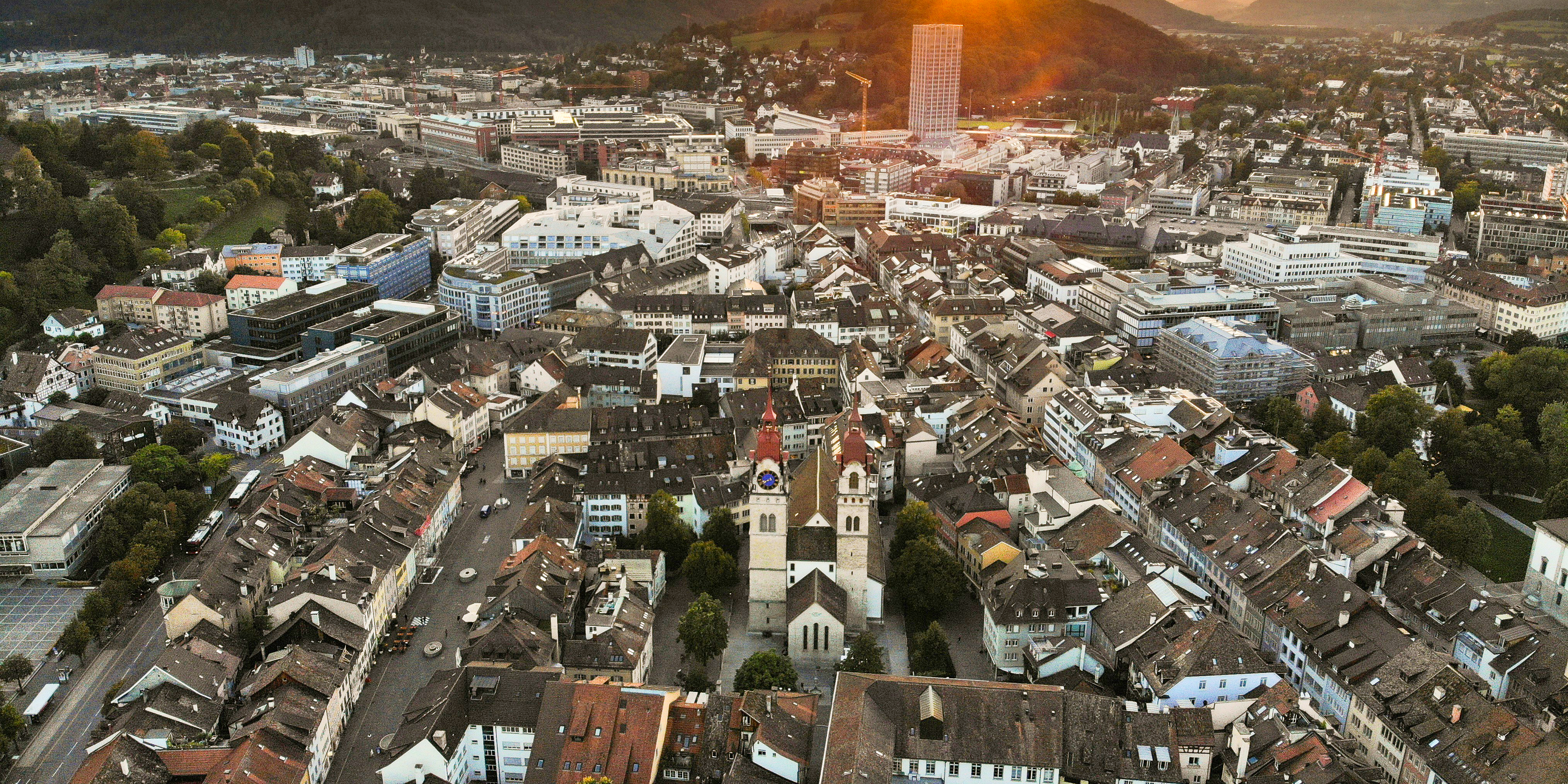
    Since 2018, Winterthur has been focussing on smart city projects that make the city more efficient, sustainable and liveable. Already 27 projects have been successfully implemented. In 2025, the city will continue to focus on innovative solutions for mobility, digitalisation and ecological urban development.

    The subsidised projects for 2025 are wide-ranging. From the sustainable reuse of building materials to digital registration systems for school sports and an AI-supported cultural calendar. All projects aim to solve existing challenges with creative technologies and new approaches.

    Six funded smart city projects for 2025

    • Sponge city in action: Extreme weather events such as heat and heavy rain are becoming more frequent. This project is testing how green roofs and permeable soils can help to cool the city and better absorb rainwater. The effect of the sponge city elements is visualised in the Grüze innovation laboratory.

    • Winti Re-Use: Construction projects often generate large quantities of recyclable material that has previously been disposed of. A new platform ensures that construction waste is reused sensibly in order to conserve resources and protect the environment.

    • Spitex mobility: Spitex employees are out and about in the city every day – often in their own cars. This project is testing sustainable alternatives such as e-bikes and e-scooters to promote lower-emission mobility and create more flexible transport solutions for care staff.

    • Smart registration for school sports: A digital platform aims to make registering for school sports easier, faster and error-free. Parents and administration benefit from an optimised process that reduces bureaucracy.

    • CulturAI: Winterthur is a lively cultural city, but smaller events often remain in the shadow of larger events. An artificial intelligence (AI) analyses preferences and suggests individually suitable cultural events – even for users with little time for research.

    • Winbib : Unattended opening hours make libraries more flexible to use, so that books and media can also be borrowed in the evenings or at weekends.

    Smart City Winterthur 2030
    The city of Winterthur is pushing ahead with its smart city development in a targeted manner. On 1 January 2025, the City Council adopted the “Smart City Winterthur 2030” strategy. The aim is to actively promote innovation, create new networks for collaboration and further develop the city’s digital transformation.

    By promoting these six projects, Winterthur is demonstrating how modern, sustainable urban development can be achieved through creative approaches and the targeted use of technology.

  • Appenzellerland, Winterthur and Zurich honoured with awards

    Appenzellerland, Winterthur and Zurich honoured with awards

    The Smart City Hub Switzerland association has presented its Smart City Hub Awards for innovative approaches to intelligent and sustainable urban solutions for the first time. Seven projects were nominated from a total of 20 submissions, the association, which is made up of representatives from cities and federal service providers, announced in a press release. Of these seven nominees, the Smart Appenzellerland, Generative AI Assistance for Winterthur and Zuri Accessible CiTy (ZuriACT) projects have now been honoured in the Newcomer, Innovation and Smart Citizen Services categories.

    The organisation Verein Smartes Appenzellerland(VSAL) was the winner in the Newcomer category. Its project promotes digital transformation in Appenzellerland. The press release emphasised the development of a platform for the Internet of Things and educational initiatives in mathematics, IT, science and technology.

    The prize in the Innovation category went to the city of Winterthur. In the Generative AI Assistance project, it is testing the use of artificial intelligence in practical applications that are accompanied by training and ethical reflection.

    TheCity and University of Zurich were honoured with the award for Citizen Services. Their Zuri Accessible CiTy (ZüriACT) project aims to improve accessibility in Zurich using digital tools and better data. Innovative technologies are used to simplify accessibility data in collaboration with those affected.

  • Zurich once again the smartest city in the global IMD Smart City Index

    Zurich once again the smartest city in the global IMD Smart City Index

    The IMD Smart City Index has once again placed Zurich in first place in a global comparison. Geneva improved from 9th to 4th place, while Lausanne slipped to 7th place. For this year’s survey, interviews were conducted in 142 cities worldwide to measure the intelligence and perception of the inhabitants of their city. The World Competitiveness Centre of the IMD Business School in Lausanne and Singapore is responsible for compiling the index each year.

    Zurich received a AAA Smart City rating, both overall and in the areas of structures and technologies, with Geneva achieving similar scores. Citizens in Zurich prioritise affordable housing, traffic density and air pollution among the 15 important criteria, while Geneva and Lausanne have similar priorities.

    Geneva and Lausanne also received high ratings for their smart city initiatives, with Lausanne placing particular emphasis on safety. The municipalities of Riga, Luxembourg and Vilnius saw significant progress in the index, while cities such as Bologna, Los Angeles and Rome saw significant declines. These findings could be of great interest to property and location development professionals.

  • Dietikon expands information offer on its city app

    Dietikon expands information offer on its city app

    The range of information and services in the Dietikon city app has been expanded, according to a press release from the city of Dietikon. The population now has access to numerous local real-time data in the areas of traffic, temperature, air quality or noise. Interested parties can also set up personalised notifications in the app, it continues.

    As part of the Smart City Dietikon, data in the areas of traffic, temperature or air quality are collected via sensors at various locations in the city. Until now, this data has primarily been collected internally, according to the statement. Now this data is also available to the general population and the economy in the app.

    The modified city app is a newly developed module that was created in close cooperation with the app provider Anthrazit and the Electricity Works of the City of Zurich(EKZ). Dietikon is the first city to use the module, according to the statement.

    “I see the presentation of this data as a great benefit for the population,” Jörg Haller, the head of Smart City and Public Lighting at EKZ, who drove the project together with the city of Dietikon, is quoted as saying.

    “The city council has set itself the goal of actively driving forward the digital transformation. An internal process is currently underway to further develop the smart city strategy, and other projects are being implemented in parallel,” city president Roger Bachmann is quoted as saying. As an example, he mentions street cleaning with the support of artificial intelligence. The Smart City Dietikon won the main prize at the Smart City Innovation Challenge of the Swiss Federal Office of Energy(SFOE) 2020.

  • Lucerne North on the way to becoming a Smart City

    Lucerne North on the way to becoming a Smart City

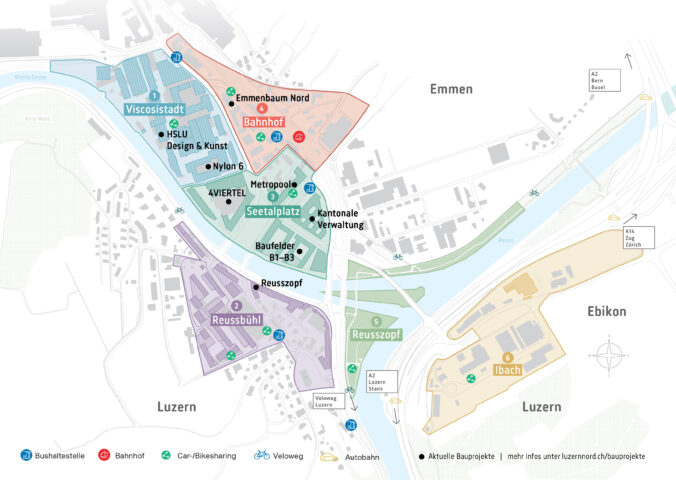
    Lucerne North is a development focus of the Canton of Lucerne. In the coming years, 1,500 new flats, 4,000 additional jobs, 850 study places, two recreation zones and various cultural facilities are to be built here step by step.

    In order to become a modern, ecological and lively centre on the river, Lucerne North is to develop as a Smart City. A Smart City uses technologies, innovations and data to improve people’s quality of life, make the location more attractive for businesses, use the infrastructure more efficiently and conserve resources.

    So far, Central Switzerland has lacked concrete examples of the smart city approach in an area development. Lucerne North is to become a first practical example with a pioneering character – with the simultaneous developments of the city of Lucerne towards a Smart City as well as possible cooperations on the way to a Smart Region Lucerne. The municipality of Emmen, the city of Lucerne, the canton, the transport association, the business development agency, companies, site developers and the population are involved in this networked approach.

    The partners involved are convinced that the Lucerne North area is particularly suitable as a smart city, as there are an above-average number of innovative companies, investors and organisations on site and cooperation already works well.

    Lucerne North is divided into six sub-areas. The adjacent areas of Seetalstrasse and Littauerboden are also part of the development focus.

    Smartness has many dimensions
    The Smart City approach is characterised by six dimensions: “Mobility”, “Living”, “Economy”, “Environment”, “Governance” and “People”. In the Smart City dimensions “Living” and “People”, the participatory pilot project “Quartiereffekt” was a milestone in Lucerne North. It enables the population to finance and implement their own ideas for neighbourhood design. But exciting projects were also developed on a smaller scale, such as a smart box from which the population can spontaneously borrow balls, badminton rackets and other games free of charge via an app.

    The “Offcut” materials market in the Reussbühl area pursues the goal of a circular economy by recycling residual and used materials, in line with the “Environment” dimension.
    The “4VIERTEL” development on Seetalplatz provides new approaches in the “Mobility” dimension and provides its residents with a mobility station with sharing vehicles such as e-cars, e-scooters, e-cargobikes and e-bikes. In addition, all car-free households receive annual vouchers for public transport, a bicycle service or the in-house sharing service.

    In the “Economy” dimension, a new research cooperation for sustainable textiles was established in 2022 with the Viscosistadt Lab. It aims to realign the textile competences at the location in Lucerne North.

    Viscosistadt is gradually developing into the creative part of Lucerne North.

    Transformation in full swing
    The transformation of Lucerne North is in full swing. While some projects are under construction, important planning decisions have been made for others.

    In Viscosistadt, a historic industrial building of the former Nylon-6 factory is currently being converted. This will create about 20,000 square metres of new space for office and commercial use. Right next door, the construction site for the “4VIERTEL” development is in the final phase. The first residents of Lucerne North will move in here from summer 2023.

    Near Emmenbrücke station, 42 new flats will be built in “Gerliswil Central” by 2024. The Emmenbaum Nord building and the newly designed Schützenmatt district will give the area directly around Emmenbrücke station a fresh face.

    An urban location with high density is being created around the new Seetalplatz.

    The Rüüssegg housing cooperative’s development on Seetalplatz is about to receive the building permit for around 380 flats. Directly opposite the Kleine Emme in Reussbühl, 80 cooperative flats will also be built from 2024. The “Metropool” project of the Luzerner Kantonalbank and the cantonal administration on Seetalplatz are about to start construction.

    The Reussbühl West area has a somewhat longer time horizon. The CKW site, which is used for commercial and industrial purposes, is to become an attractive and lively urban district in the coming years.

    Even if no new flats have been occupied yet, Lucerne North is already alive today. Various temporary uses such as the cultural meeting place “NF49” (until November 2022) or the “Garage Emma” with studios for creative people, numerous events such as “Design Schenken” or the Swiss championship of bicycle couriers, cinemas and leisure facilities such as the “Adventure Room” brought around 105,000 visitors to Lucerne North last year. In addition, there are thousands of guests at the summer bar “Nordpol” on the Reuss.

  • Swarms of drones measure traffic

    Swarms of drones measure traffic

    A team led by Professor Nikolas Geroliminis, head of the Laboratory for Urban Transport Systems ( LUTS ) at the Swiss Federal Institute of Technology in Lausanne , is measuring traffic with unprecedented accuracy. It uses swarms of drones to do this. It converts the video images into algorithms and analyzes the data. “Our goal is not to monitor traffic, but to find the causes of traffic jams and offer fact-based solutions,” postdoc Manos Barmpounakis is quoted as saying in a statement .

    The LUTS tested its multidisciplinary approach in 2018 and 2019. Last summer it was tested in the monitoring and evaluation of parking areas in the port of Pully VD. In mid-May 2022, a new experiment was conducted in Nairobi, the city ranked 4th in the world in terms of congestion. It turned out that cultural peculiarities such as the minibuses called Matatus, “which drop off and pick up passengers as required in an indescribable traffic chaos” also have to be taken into account. Traditional modeling approaches are not directly applicable to this.

    For further experiments, the laboratory received a grant from the innovation agency Innosuisse . This technology, called CityDronics, is to be further developed into a marketable solution by a start-up based in Switzerland. It will be the first to integrate drones into urban mobility. With multi-sensors, the drones could also measure exposure to CO2 and noise. Several cities are already interested in CityDronics.

  • Swiss cities are getting smarter

    Swiss cities are getting smarter

    Thanks to digitization, networking, participation and efficiency, a smart city should contribute to a higher quality of life and more sustainability. This is how most Swiss cities explain the concept of the Smart City, according to a study by the Zurich University of Applied Sciences ( ZHAW).

    The ZHAW carried out the study for the first time this year and was supported by several partners. A total of 84 Swiss cities and municipalities took part. According to the results, more than half of them rate the topic of smart cities as important or very important and are actively involved in it. At the end of 2020, however, only 23 cities had a developed smart city strategy. According to the ZHAW, this number is likely to increase in the coming years. For example, a strategy is already being developed for seven cities.

    The ZHAW has examined the development of intelligent cities using nine dimensions. The cities surveyed had a total of 329 existing projects in these dimensions. Most of the projects – 98 in total – are part of the Smart Governance dimension. City apps or chatbots, for example, make it easier to access information relevant to administration. This category also includes digital building permits or the digital notification of relocation.

    There are also 76 projects in the Smart Energy and Environment dimension. Certification as an energy city was mentioned here particularly often. Many projects aim to promote renewable energies and conserve resources. But intelligent power grids and lighting systems are also in focus in several cities.

    According to the ZHAW, most smart city projects are initiated within the administration, by energy suppliers or by politics. The cities are often based on other cities at home and abroad. However, many cities would like more support overall from the federal government and the cantons.