Tag: Solaranlage

  • Seuzach secondary school generates generational power

    Seuzach secondary school generates generational power

    EKZ promotes the installation of large solar systems via the company’s own EKZ fund. Most recently, the installation of a solar system on the roof of the Seuzach secondary school was supported with CHF 30,000, EKZ reports in a post on LinkedIn. The system’s panels were installed towards the end of September. The secondary school pupils were able to lend a hand themselves as part of myblueplanet ‘s Impact Day.

    The involvement of students is part of the way the EKZ fund works: “In the projects with schools, the young generation is sensitised to climate-friendly electricity production,” says the EKZ fund description. The electricity not consumed by the schools themselves is sold by EKZ to its own customers as generational electricity. Part of the proceeds flow back into the EKZ fund to finance the construction of further solar plants.

  • Solar energy on track

    Solar energy on track

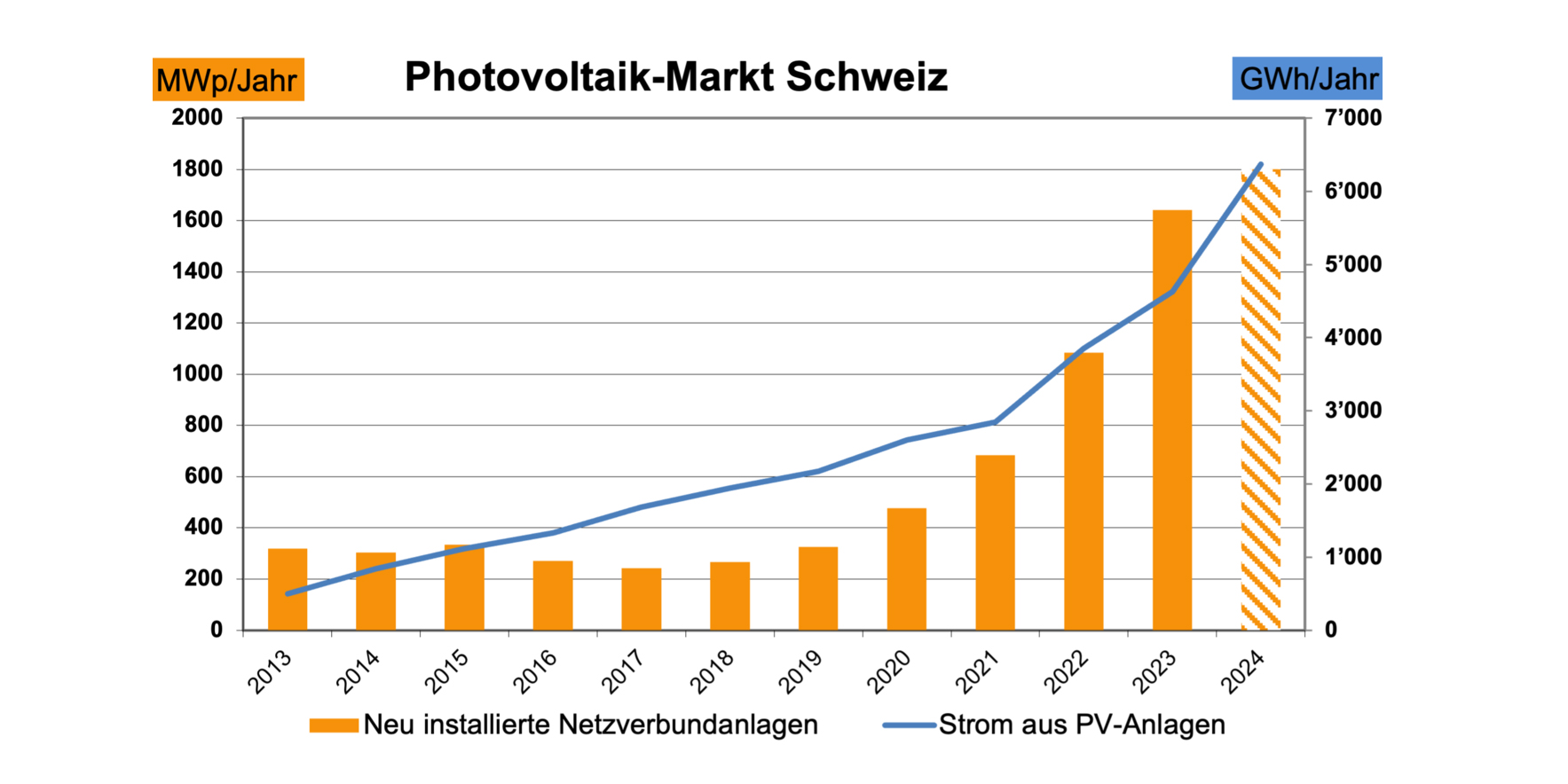
    In 2024, 1,798 megawatts of new photovoltaic capacity were installed in Switzerland, an increase of 10 % compared to the previous year. The total output rose to 8.2 gigawatts, which covered over 10 % of the national electricity demand. Despite below-average solar radiation and rising electricity consumption, the annual production corresponds to the consumption of around two million households.

    Security of supply through winter electricity
    Photovoltaics is not just a summer technology; from October 2024 to April 2025, 2.4 terawatt hours of solar power were generated, a third of annual production. This contribution significantly relieved the pressure on Switzerland’s reservoirs. Without solar energy, Switzerland would have had to import significantly more electricity.

    Decline in the single-family home segment
    While larger systems continued to grow strongly, the expansion on single-family homes fell by 3 %. This slowed overall growth, as around a third of installed capacity was previously based on this segment. According to Swissolar, the reason for this restraint is the uncertainty surrounding the new Electricity Act.

    Battery storage systems are gaining in importance
    The expansion of battery storage systems also increased by 4%. The commercial sector in particular is showing increased momentum. Today, 47% of PV systems on single-family homes are already equipped with battery storage. The total storage capacity is just under 900 MWh, enough for 100,000 households for one day.

    International momentum confirms global trend
    Around 597 GW of photovoltaic capacity was installed worldwide in 2024, an increase of 33%. With 908 watts per capita, Switzerland is in 10th place in an international comparison. Global solar power production rose to 2,000 TWh.

    Changing framework conditions
    The new Electricity Supply Act creates important foundations for local electricity consumption, but also leads to uncertainty. In particular, there is a lack of practicable solutions for local electricity communities and market-based purchase remuneration. Swissolar is calling for concrete improvements to better utilise the potential of local use and storage solutions.

    Slowdown with prospects
    Swissolar expects the market to decline by around 10% to 1600 MW in 2025 due to regulatory transition phases. Stabilisation is expected from 2026. The targets of 18.7 TWh of solar power by 2030 and 35 TWh from new renewable energies by 2035 are achievable with continuous expansion of between 1,800 and 2,000 MW per year.

  • Pioneering project: Greenhouse solar system utilises light twice

    Pioneering project: Greenhouse solar system utilises light twice

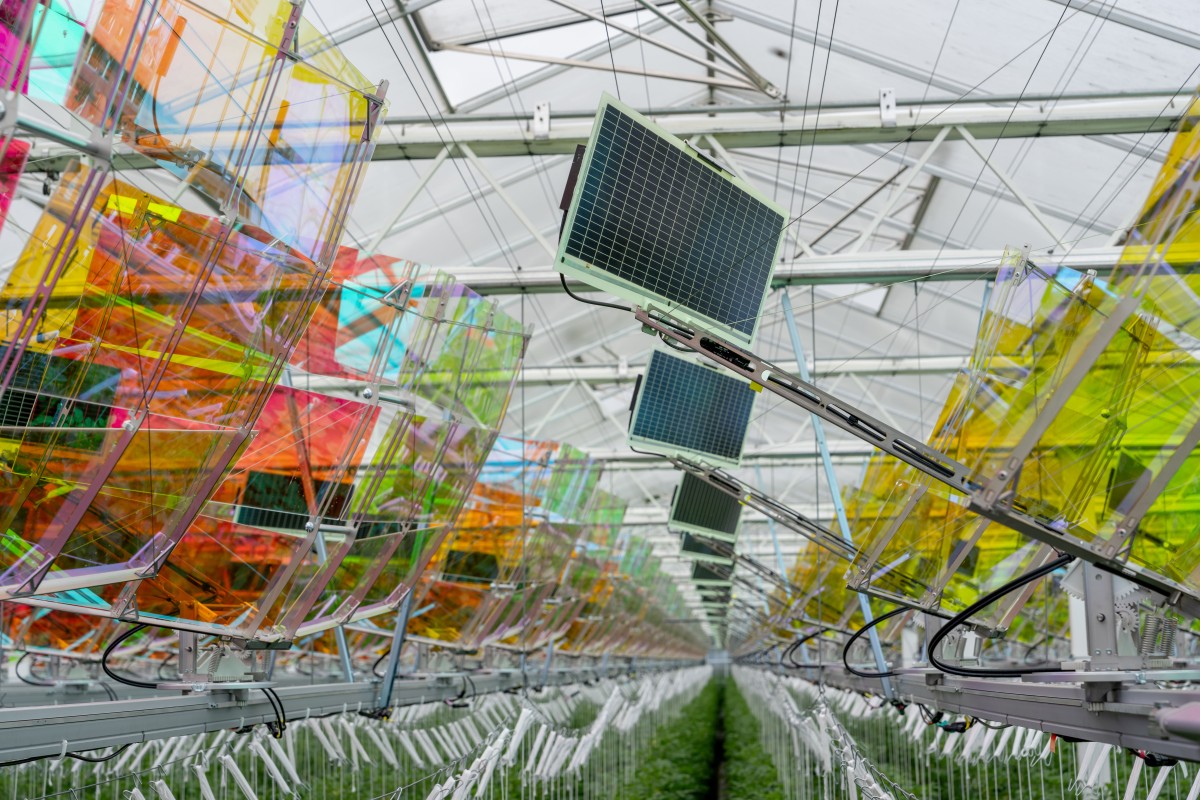
    The start-up Voltiris from Epalinges has installed its largest solar system to date on a greenhouse belonging to Meier Gemüse AG in Rütihof, according to a press release from the canton of Aargau. The solar system is based on a filter technology in which light waves used to generate electricity are filtered out and redirected to a solar panel, while the light required for photosynthesis can enter the greenhouse unhindered. In this way, plants can be grown without any loss of yield and renewable energy can be generated at the same time. The canton of Aargau subsidised the solar system with CHF 50,000.

    The solar plant in Rütihof covers an area of around one hectare and generates around 234 kilowatts of electricity with around 1,730 solar panels. “As a Swiss startup, we are proud that the first and world’s largest plant with our spectral AGRI-PV system has gone into operation here in the canton of Aargau,” said Dominik Blaser, Chief Product Engineer and co-founder of Voltiris, in the press release.

    Thanks to the filter technology, Voltiris’ photovoltaic modules can be used inside greenhouses without casting shadows, unlike conventional solar systems. The concave arrangement of the filter also concentrates the light, allowing it to hit the photovoltaic module with four times the intensity. In this way, a higher energy yield can be achieved than with conventional solar radiation.

    The solar installation is also in line with the cantonal energy strategy, which aims to achieve the net-zero target by 2050 and strengthen security of supply.

    “This plant is an example of how agriculture and energy production can be combined in a meaningful way,” Markus Dieth, member of the cantonal government and Director of Agriculture, is quoted as saying in the press release.

  • Construction of a solar plant at 2000 metres

    Construction of a solar plant at 2000 metres

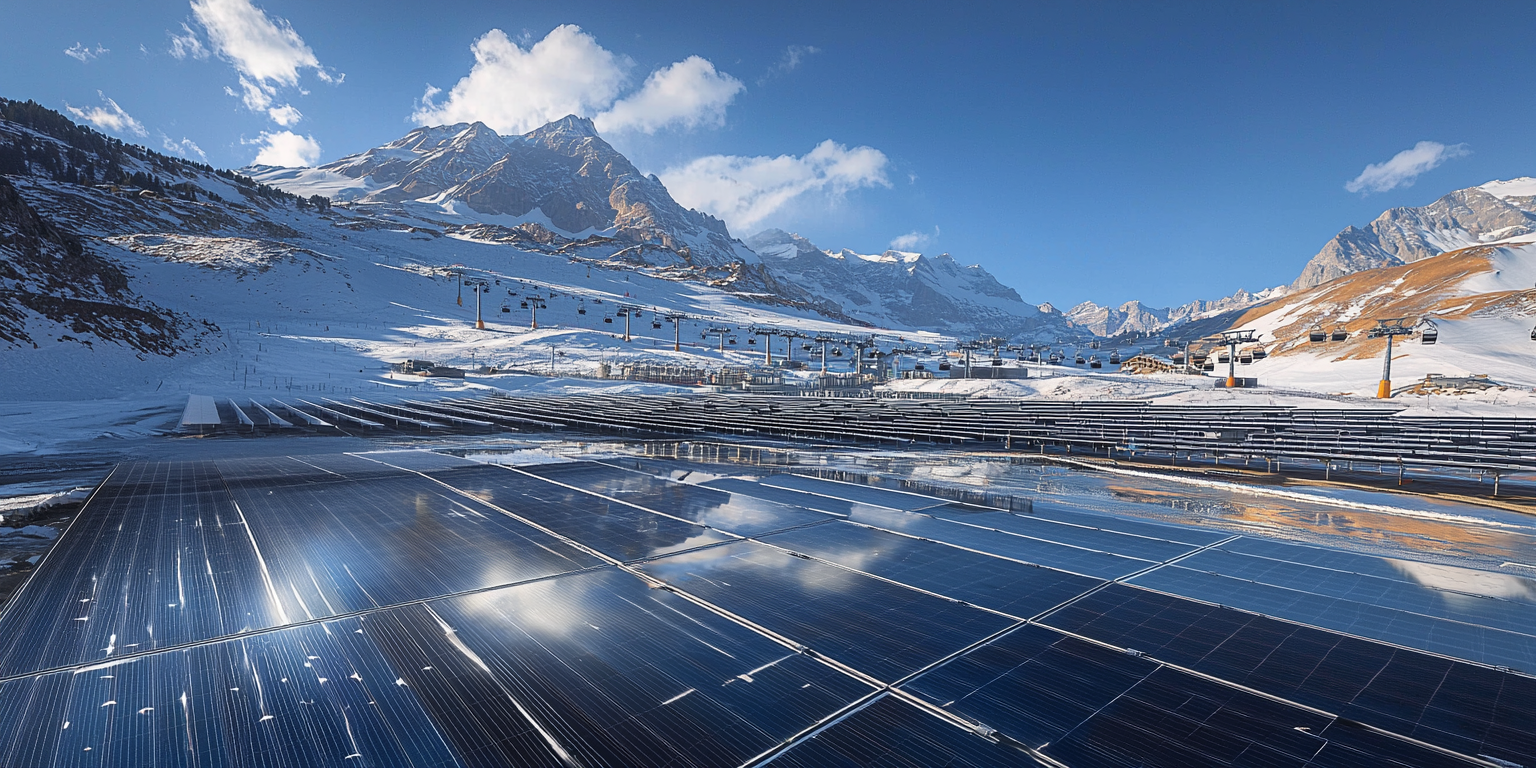
    Construction of the Madrisa Solar project by Repower, Elektrizitätswerke des Kantons Zürich(EKZ) and the municipality of Klosters has begun, according to a joint announcement by the partners. A solar plant with a production capacity of 12 megawatts is being built at an altitude of around 2000 metres above Klosters. It is expected to supply around 17 gigawatt hours of electricity per year. Over 40 per cent of this will be generated in winter. The electricity produced will be purchased by EKZ for customers in its own supply area and the Klosters-Madrisa mountain railway.

    After the population of the municipality of Klosters voted in favour of Madrisa Solar in October 2023, the first preparatory work began in autumn 2024. Predominantly regional companies were commissioned with the planning and realisation of Madrisa Solar. Around 15 per cent of the plant should be in operation by the end of 2025. Full commissioning is planned for the end of 2027.

    “After an intensive planning phase and a challenging approval process with many parties involved, we are very pleased with the start,” said Michael Roth, Head of Production & Grid at Repower and member of the Executive Board. Paul Sidler, Head of Renewable Energies at EKZ, describes Madrisa Solar as “a further commitment to a secure and sustainable electricity supply in Switzerland. This complex pioneering project also makes an important contribution to the urgently needed winter electricity.”

  • Ground-breaking ceremony for large-scale solar project

    Ground-breaking ceremony for large-scale solar project

    The Baden-based energy service provider Axpo is building a solar power plant above Tujetsch, in the immediate vicinity of the Lai da Nalps reservoir. According to a press release, it will generate 11 gigawatt hours of solar power with an output of 8 megawatts per year from 2028.

    At least 10 per cent of this should be connected to the grid by the end of 2025 in order to meet the requirements of the Solar Express. Further construction stages will be completed during the summer months of the following years, and the plant should reach its full production capacity in 2028. SBB will purchase the solar power for the railway power supply over a period of 20 years. This could cover the annual electricity needs of 2,000 households.

    At the ground-breaking ceremony, the importance of the solar project for the energy transition was emphasised. “Energy production in winter is key for Switzerland – alpine solar plants like NalpSolar make an important contribution when demand is at its highest,” Antoine Millioud, Head of the Solar Division at Axpo, was quoted as saying. Axpo also expects NalpSolar to provide important insights into the technology and realisation of large-scale solar projects in challenging alpine locations.

    Martin Cavegn, Mayor of Tujetsch, emphasised the potential of the plant for a sustainable energy future and value creation in the region. The location right next to the Nalps reservoir combines existing infrastructure with new climate-friendly technology. This brings advantages for local value creation and makes Switzerland’s electricity supply more secure.

  • Lucerne wants to use transport infrastructure as solar power plants

    Lucerne wants to use transport infrastructure as solar power plants

    The canton of Lucerne wants to use more solar energy to generate renewable electricity and heat and utilise additional areas of the canton’s own road infrastructure as solar power plants. The canton plans to equip bridges, tunnels, galleries, noise barriers, carriageways, embankments and retaining walls with photovoltaics.

    According to a press release, ten times more energy could be generated by utilising the sun at the most suitable locations than is currently the case. The photovoltaic potential on these areas could therefore be increased, according to the technical report “Potential for renewable energy production in the canton of Lucerne”, which was published in 2024.

    Two pilot projects should provide concrete figures on the electricity generation potential. Photovoltaic systems are to be installed on the noise protection gallery in Knutwil and at the Rontal bridge near Buchrain and Dierikon. According to the press release, 1 gigawatt hour of renewable electricity could be generated on these sites.

    The plant on the Rontal Bridge is due to go into operation in 2025 and is being realised by the canton, which plans to generate its own electricity there. The Knutwil noise protection gallery has the largest area of the properties analysed. It is the size of half a football pitch and the plant there is scheduled to supply solar power from 2026. Various renovation measures are due to be carried out on the noise protection gallery before the plant is built.

  • New solar system supplies solar power for sports and leisure activities

    New solar system supplies solar power for sports and leisure activities

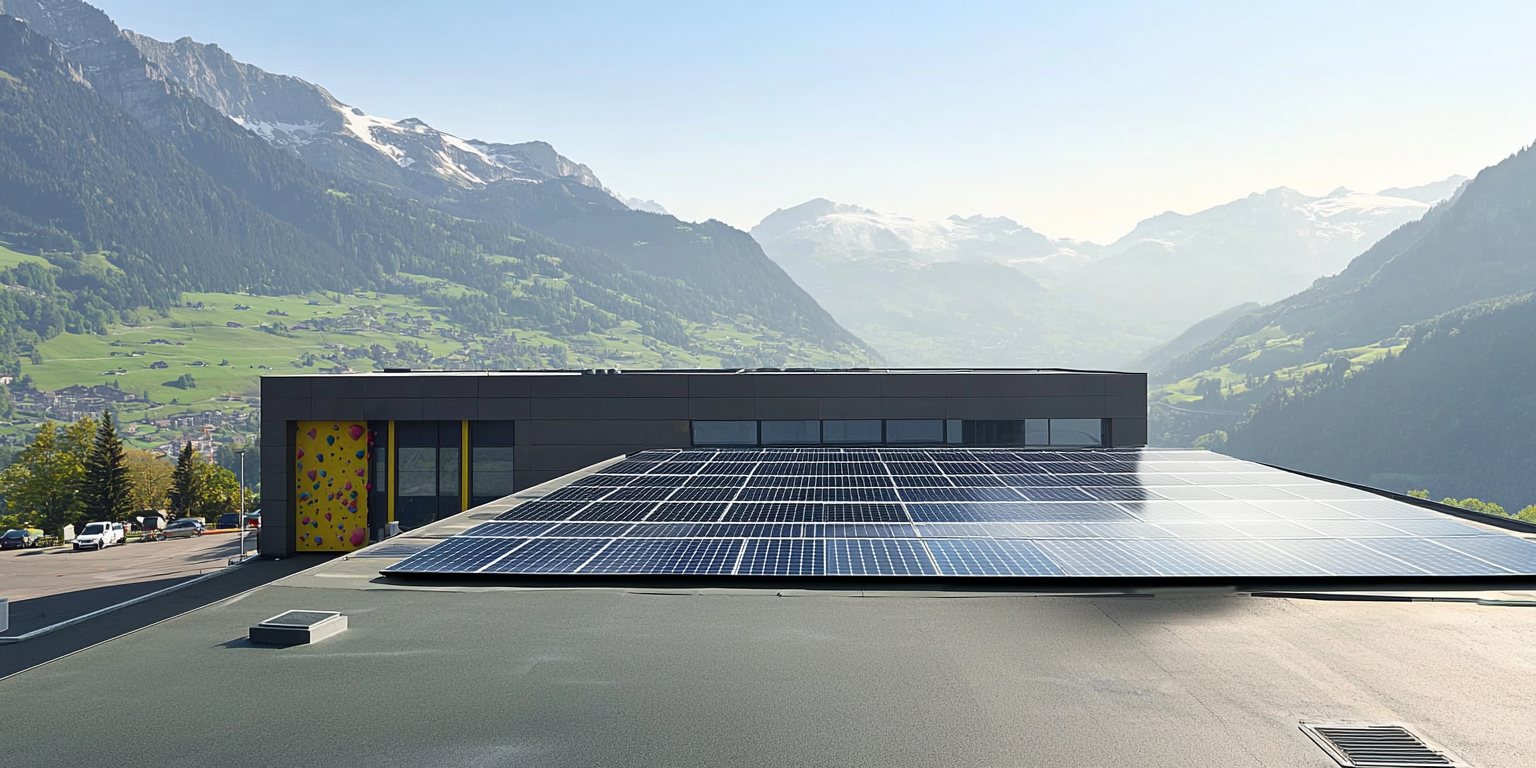
    The Münchenstein-based electricity producer aventron AG opened its new solar power plant in Näfels on March 27, according to a press release. The system is located on the roof of the bouldering hall, which is part of the Lintharena building complex. While the Verein Kletteranlagen Linthgebiet (VKL) has made the roof of the bouldering hall available for the solar system, the system itself is fully owned by aventron.

    The solar system has an area of 660 square meters and an output of 145 kilowatts. This means that around 124 megawatt hours of solar power can be generated each year, all of which will flow to Lintharena AG and cover around 10 percent of its electricity requirements. According to Samuel Leuzinger from VKL, the solar system has a double benefit for the association: “We receive additional income from the roof rental from aventron and are doing something for climate protection and the energy transition,” Leuzinger is quoted as saying in the press release.

    The construction of this and another solar installation in neighbouring Mollis was supported by the organizing committee of the Swiss Wrestling and Alpine Festival (ESAF) 2025. Aventron is an energy partner of the ESAF in Glarnerland. Through this partnership, the ESAF organizing committee put aventron in touch with suitable roof owners such as the VKL. “We are implementing this photovoltaic system in cooperation with our partners, the Lintharena, VKL and the ESAF in Glarnerland,” commented aventron CEO Eric Wagner on the new system, according to a press release. “This is an important step towards more Swiss solar power and the implementation of the Energy Strategy 2050.”

    Aventron generates its electricity exclusively from renewable sources. The company now has a nationwide solar capacity of around 65 megawatts. The aim is to increase this to an output of 100 megawatts by 2027.

  • Disentis/Mustér gets large-scale photovoltaic system

    Disentis/Mustér gets large-scale photovoltaic system

    Axpo Solutions AG from Baden and Bergbahnen Disentis AG are planning to realise a large-scale photovoltaic plant with a capacity of over 10 megawatts peak in the Grisons municipality of Disentis/Mustér. The two partner companies are currently founding the power plant company Ovra Solara Magriel AG, based in Disentis/Mustér, to construct and operate the plant. The project, which is based on Article 71a of the Energy Act, the so-called Solar Express, has now received the approval of the government of the canton of Graubünden, the cantonal administration announced in a press release. The voters of Disentis/Mustér had already given the plan the green light in 2023.

    The plant is to be built on an area already used for tourism at an altitude of around 2100 metres above sea level. The plan is to install 20,750 solar panels on an area of around 13.5 hectares. The operators expect an annual electricity production of around 14.6 gigawatt hours, of which around 5.4 gigawatt hours will be generated in winter.

  • Start of construction for alpine solar plant in Klosters

    Start of construction for alpine solar plant in Klosters

    The Madrisa Solar alpine solar power plant can be built. According to a press release, Madrisa Solar AG, the client, has decided to go ahead with the construction. The plant will be built near the Klosters-Madrisa mountain railway at an altitude of 2,000 metres above sea level.

    The south-facing plant will have an output of 12 megawatts and is expected to generate 17 gigawatt hours per year, enough to supply 3500 households. The electricity will be purchased by EKZ, based in Dietikon ZH, and the Klosters-Madrisa mountain railway company. In addition to the cantonal energy supplier from Zurich, the Graubünden-based energy supplier Repower and the municipality of Klosters each hold a one-third stake in Madrisa Solar AG.

    “For us, Madrisa Solar is a further commitment to the energy transition,” said Paul Sidler, Head of Renewable Energies at EKZ, in the press release. “As a pioneering project, the Alpine solar plant will strengthen security of supply in winter in the future.”

    “The decisive factors for the positive decision were the ideal location, the great support of the municipality of Klosters, the partnership with EKZ and the good cooperation with the cantonal authorities and environmental protection organisations,” adds Repower CEO Roland Leuenberger.

    According to municipal president Hansueli Roth, Klosters is building on its previous commitment: “As an energy town, Klosters wants to make a contribution to the expansion of renewable energies with its participation in Madrisa Solar in addition to its existing use of hydropower (for over 100 years) and thus fulfil its shared responsibility as a tourist municipality with high winter energy consumption.”

  • Renewable energy on contaminated soil

    Renewable energy on contaminated soil

    Energy supplier AEW has built a ground-mounted photovoltaic system in Spreitenbach. According to a press release, the newly built solar plant went into operation in September 2024 and was officially opened on November 26. Its installed capacity is 622 kilowatt peak. According to the press release, this could supply 140 households with solar power per year.

    The project is AEW’s first ground-mounted system. The energy supplier is thus temporarily using a previously contaminated plot of land at the Spreitenbach site, which became an open space when the old open-air switchgear was dismantled. It was previously contaminated by foundations, shafts and cable systems, according to the statement. “Brownfield and previously contaminated areas can be used sensibly on a temporary basis to make a significant contribution to the Energy Strategy 2050,” René Wüst, Project Manager at AEW Energie AG, is quoted as saying.

    The decision was also supported by the fact that the system, which comprises 1414 solar modules, requires less maintenance during operation and is less susceptible to faults. If the grid needs to be expanded in the future, for example to include a storage system, it can also “simply be reused, as the photovoltaic system is very easy to dismantle”.

  • Population supports sustainable electricity production

    Population supports sustainable electricity production

    On 18 August, the voters of Spiringen clearly approved the Sidenplangg solar installation with 68.8 percent. The voter turnout was 55.3 per cent. With their approval, the voters have seized a great opportunity and shown that they are in favour of sustainable electricity production, writes the municipal council in a press release.

    EWA-energieUri is also delighted with the yes vote. He is “grateful that the people of Spiringen are so clearly in favour of our project”, Werner Jauch, CEO of the Uri-based energy producer, is quoted as saying in a separate press release. As the landowner, the Uri Corporation must now approve the project. The planning application can then be submitted.

    The plant is to be built in the Schächental valley on 12 hectares at an altitude of 1,800 to 2,000 metres above sea level in an area that is already used for avalanche barriers. With a capacity of 8 megawatts, around 12.5 gigawatt hours are to be generated annually, up to 45 per cent of which in winter. The investment amounts to around CHF 39 million. The first part of the plant is due to be connected to the grid at the end of 2025.

    In addition to EWA-energieUri and the municipality, aventron AG, a joint venture of Swiss regional utilities based in Münchenstein BL, is also involved in the project.

  • Green light for alpine solar plant

    Green light for alpine solar plant

    The Graubünden-based energy supplier Repower, the municipality of Klosters and Klosters-Madrisa Bergbahnen AG want to jointly construct an alpine solar power plant at the mountain railway. Voters in the municipality of Klosters approved the project on 22 October 2023.

    According to a press release, the Graubünden government has now also approved the construction of the system by Madrisa Solar AG. The site is already well developed thanks to the existing tourist infrastructure and is connected to the power grid.

    The plant in the Züg area is to comprise 25,000 solar modules at an altitude of around 2,000 metres and an area of 156,821 square metres, with a total output of 10.8 megawatt peak. Electricity production is expected to exceed 15,000 megawatt hours.

    The mountain railways already operate five solar installations with an annual output of 294 megawatt hours. These cover up to 20 per cent of their own electricity requirements.

  • Commercial use and solar energy: development of the Papieri site is progressing

    Commercial use and solar energy: development of the Papieri site is progressing

    Property developer HIAG is expanding the transitional use of the Papieri site in Biberist. By the end of the year, around 6,000 square metres of space in the western section will be prepared for commercial use, as HIAG project developer Dominik Ulrich explained at an event organised by the Standort Schweiz network. Padelta AG is one of the users of the additional space. The company plans to operate eight modern courts there for the sport of padel, the Mexican version of tennis. The leisure facilities will be complemented by the Jump Factory trampoline park. Speed-E GmbH moved into the site in February with its workshop and showroom for electric bikes.

    In the industrial eastern part of the site, HIAG Solar AG, a joint venture between HIAG and aventron, installed a solar power system with a capacity of 620 kilowatt peak on the roof of a new building due for completion at the end of 2023 in mid-April. The electricity generated there will be used on site by the start-up Librec, which intends to recycle lithium-ion batteries here on an industrial scale. The second photovoltaic system on the site is already being planned.

    The approximately 270,000 square metre site on the River Aare was used as a paper mill from 1862 to 2011. HIAG took over the site in 2012 and the 2015 master plan envisages mixed use with a residential component in the western part of the site and commercial/industrial use in the eastern part. The property developer is currently working on the partial zoning plan, which covers the entire perimeter of the site. Temporary uses already occupy around 30 per cent of the site. The major users include Sieber Transport and Vigier.

  • Determining solar energy potential from space

    Determining solar energy potential from space

    The question of which roofs are suitable for solar installations and what output can be achieved there is answered by the new solar atlas from the German Aerospace Center (Deutsches Zentrum für Luft- und Raumfahrt – DLR). This map, which was presented at the ILA 2024 in Berlin, uses current aerial images and basic geodata, processed using machine learning methods. This made it possible to determine the solar energy potential for around 20 million buildings in cities such as Berlin, Dresden, Düsseldorf, Frankfurt and Hamburg. The results are publicly available at eosolar.dlr.de.

    Technology meets sustainability
    Anke Kaysser-Pyzalla, Chairwoman of the DLR Executive Board, emphasizes the importance of the Solar Atlas for the energy transition: “In order to develop and implement effective strategies and instruments for the expansion of rooftop solar installations, decision-makers need precise information on the current stock and expansion potential. The satellite-based information provided by DLR supports the energy transition and becomes a driver for innovative products and business models.” The Solar Atlas shows how successfully earth observation can be used for climate protection and the sustainable expansion of energy generation.

    Data evaluation and methodology
    In the EO Solar project, scientists at the DLR Earth Observation Center are combining several terabytes of data. This includes digital, distortion-free aerial images with a resolution of 20 centimetres and high-resolution surface models provided by the Federal Agency for Cartography and Geodesy. “In order to describe the current expansion potential for solar energy, we calculate the possible electrical output based on the hours of sunshine, the radiation intensity, the orientation of the roof surfaces and the shading from neighboring buildings or vegetation,” explains Annekatrin Metz-Marconcini, head of the EO Solar project.

    Artificial intelligence and practical applications
    DLR has developed a process that uses artificial intelligence to identify roofs with installed solar panels worldwide from high-resolution remote sensing data. In Germany, the market master data register, which records all registered solar installations on a daily basis, is also included. This method uses digital surface models of the terrain, which automatically takes into account shading from trees and the surrounding terrain. This means that even countries without detailed building models can calculate their solar energy potential and include it in their planning.

    Support for political decision-makers
    In contrast to existing solar atlases of federal states, districts or municipalities, the DLR Solar Atlas systematically maps the entire country in an up-to-date manner. This provides political decision-makers and planners with a sound basis for promoting the expansion of solar installations in a targeted manner. A similar map has already been created for Austria as part of an ESA project. For data protection reasons, solar expansion in Germany is shown at municipal, district or federal state level.

    Forward-looking energy planning
    With the new solar atlas, DLR is creating a valuable resource for the planning and implementation of sustainable energy projects. It enables a precise assessment of solar energy potential and thus supports the transition to a climate-friendly energy supply.

  • Exnaton and sunvigo develop new electricity tariffs for prosumers

    Exnaton and sunvigo develop new electricity tariffs for prosumers

    An environmentally conscious population is looking for energy security with the prospect of cost savings. According to a press release, the Zurich-based software company Exnaton and the Cologne-based energy supplier sunvigo want to offer so-called prosumers – customers who both produce and consume electricity – an innovative tariff. Sunvigo offers an electricity contract that can be purchased from the solar system provided by the company at a fixed price of 16 cents per kilowatt hour. Such a contract runs for 20 years, after which ownership of the solar system is transferred to the homeowner. If the self-produced electricity from their own roof is not sufficient, sunvigo customers also benefit from favourable conditions on the European Power Exchange EPEX. For the combination of self-production and dynamic residual electricity tariffs, sunvigo relies on the PowerQuartier billing platform from Exnaton, a spin-off of the Swiss Federal Institute of Technology in Zurich(ETH).

    To present their joint project to the general public, Exnaton and sunvigo are inviting the public to a webinar entitled “Smart prosumer tariffs as the key to energy independence” on 29 February from 10 a.m. to 11 a.m., according to the press release. Information on the project will be available at the E-World trade fair in Essen from 20 to 22 February.

  • AMAG commissions second solar plant in Zuchwil

    AMAG commissions second solar plant in Zuchwil

    In mid-December, the AMAG Group commissioned a photovoltaic system with a peak output of 153 kilowatts at its site in Zuchwil, the Group, which is primarily active in the automotive trade, announced in a press release. By 2025, AMAG plans to equip around 75,000 square metres of space on AMAG premises with solar panels. This would enable the Group to cover over a fifth of its electricity requirements from its own production.

    The 369 solar panels now installed in Zuchwil are already the Group’s second system at the Solothurn site. A similarly large system had already been put into operation at the end of June. “Our first photovoltaic system has already proved very successful and fulfils our expectations,” said Raphael Biberstein, Managing Director of AMAG Solothurn, in the press release. “It fills us with pride to be able to generate the electricity we need ourselves with these two systems.”

    The AMAG Group has already installed further photovoltaic systems in Basel, Wettswil ZH, Lupfig AG, Chur, Baden AG, EtoyVD, Oftringen AG, Buchrain LU, Winterthur, Maienfeld GR, Cham, Noville VD, La Tour-de-Trême FR, Châtelaine GE, Lengwil TG and Lugano. They cover a total area of around 34,000 square metres.

  • Trunz nimmt Solaranlage auf seinem Dach in Betrieb

    Trunz nimmt Solaranlage auf seinem Dach in Betrieb

    Die Trunz Holding AG hat am 18. Oktober ihre neue Solaranlage auf dem Dach des Trunz Technologie Centers in Steinach in Betrieb genommen. Ihre 2660 Photovoltaikmodule haben laut einer Mitteilung insgesamt eine Fläche von 8000 Quadratmetern. Die Module bestehen aus bifacialen Zellen und sind damit auch für die Stromproduktion bei diffusem Licht geeignet.

    Die Anlage hat eine Leistung von 1,1 Megawatt peak und soll pro Jahr 1,1 Millionen Kilowattstunden Strom erzeugen. Davon sind 750‘000 Kilowattstunden für den Eigenverbrauch vorgesehen. Das entspricht rund einem Drittel des Stromverbrauchs von Trunz in Steinach. Der übrige Strom wird in das Netz der Elektra Steinach eingespeist. Die Anlage wurde von Solar21 mit Sitz in Zürich installiert.

    An der Einweihung der Anlage haben auch die St.Galler FDP-Nationalrätin Susanne Vincenz-Stauffacher und der Mitte-Ständerat Benedikt Würth teilgenommen.

  • EWD and Swisspower plan alpine solar plant in the Persenn area

    EWD and Swisspower plan alpine solar plant in the Persenn area

    EWD Elektrizität Davos is investing in domestic electricity production with the planned construction of an alpine solar plant in the Parsenn region. This should lead to more independence from electricity imports, according to a media release.

    The municipality of Davos and the municipal utility alliance Swisspower are participating in the planning. Other supporters are Energie Wasser Bern and the Basel energy supplier IWB, as well as Energie Thun AG. The annual production in full operation is estimated at 10 gigawatt hours, which corresponds to the electricity needs of 3000 four-person households.

    Totalp in the Parsenn area was chosen as the location for the photovoltaic plant. Due to its location in a skiing area with an existing mountain railway infrastructure, the site is well connected. The plans were made with consideration for valuable cultural and pasture land in the ski region. Electricity production in the immediate vicinity of consumers, chairlifts and gondolas reduces transport losses. In addition, the plant is shielded on the valley side, so that “no reflections or adverse effects on the population” are to be expected. Even before the power shortage, the sustainable energy future through photovoltaic systems in the mountains was a topic in Davos. Compared to the Central Plateau, the region benefits from many hours of sunshine, even in winter.

    Following the approval of the Davos government, the project will be debated in the Davos parliament at the beginning of November. Afterwards, the population will vote. If the referendum is positive, construction work is to begin in 2024. The goal is to put the first parts of the plant into operation by December 2025.

  • ARA Thunersee plans folding solar roof on the sewage treatment plant

    ARA Thunersee plans folding solar roof on the sewage treatment plant

    ARA Thunersee wants to expand the production of renewable energy. According to its annual report, which has just been published, it is planning a large folding solar roof system on the roof of the pre-treatment and biology basins. The folding solar roof is to be supplied by dhp technology AG in Zizers GR.

    The system is to be installed on an area of 20,000 square metres with a capacity of 3,000 kilowatt peak and an annual electricity output of 3 gigawatt hours. The plant’s capacity would cover up to one third of ARA’s own needs. Since the investment volume exceeds 5 million Swiss francs, it must be approved by the Assembly of Delegates on 1 November.

    Already under construction is a smaller solar roof system by dhp technology with 600 kilowatt peak above the basin for powdered activated carbon (PAH) dosing. It is to produce solar power from February 2024. This will cost 2.26 million Swiss francs.

    In addition, ARA Thunersee already produces 13 gigawatt hours of biomethane per year and feeds it into the natural gas grid of Energie Thun AG. Ingo Schoppe can also imagine converting the waste heat generated from wastewater during the purification process into electricity. “The technical solutions for this are ready; it is up to us and our partners to design these technical solutions in such a way that they are not only good for the environment, but also become economically feasible,” writes the managing director of ARA Thunersee in his report

    The board of directors submitted a credit application of 12.37 million Swiss francs for the entire plant to the assembly of delegates. The assembly also has to decide on awarding the contract to dhp technology, with whom a service contract is to be drawn up. Under Pronovo ‘s support programme, the plant operator can expect to receive a one-time investment grant (GREIV) of 985,000 francs for the planned plant. The timetable envisages the commissioning of the entire plant in the summer of 2025.

  • Solar plant investment attracts a lot of interest

    Solar plant investment attracts a lot of interest

    The population of Frauenfeld is showing great interest in participating in large solar power plants. According to the municipal energy supplier Thurplus , it was able to sell all shares in a new photovoltaic plant planned for the roof of Keller-Stahl AG within just over a month.

    The plant consists of 300 modules on an area of 700 square metres. It has a capacity of 140 kilowatts/peak and is expected to generate 140,000 kilowatt hours of electricity per year. Two years ago, a similar plant was built on the roof of Keller-Stahl, which was also financed by private investors.

    The new plant is Thurplus‘ seventh investment plant. These have a total area of 3500 square metres and a capacity of 690 kilowatt/peak. Thurplus customers can participate in solar power plants for as little as 300 Swiss francs. In return, they receive 100 kilowatt hours of electricity per square metre of solar area per year for 20 years.

    Thurplus CEO Reto Lüthy sees the active participation of the city’s residents as confirmation of the company’s strategy. “For them, we are the key player in achieving the local energy turnaround,” he is quoted as saying in the press release. Thurplus is now looking for other solar projects that can be realised through the participation model.

  • Schlieren continues to make progress with solar expansion

    Schlieren continues to make progress with solar expansion

    According to its press release, the city of Schlieren is taking another step towards sustainable energy supply and mobility: by the end of August, it will have put six new charging stations for electric vehicles into operation, as well as the largest municipal photovoltaic system at the IJZ Innovation and Young Entrepreneurs Centre on Rütistrasse.

    Each of its 1278 latest-generation modules has an output of 425 watts peak. The solar power generated is not only fed into the grid, but is also used for self-consumption: “The project at the IJZ exemplifies the progress in the energy turnaround, to which we attach great importance in this and many other projects,” Dr. Martin Nicklas, who heads energy contracting at the Canton of Zurich’s electricity utility(EKZ), is quoted as saying. This is because the solar power produced there is used to supply the IJZ and the commercial businesses located there as well as the surrounding flats. “This means that the PV electricity is produced and used at the same location – you can’t get more local than that.”

    Schlieren wants to set a positive example, especially in view of the solar targets that have so far been missed in the canton. The city is pushing the expansion of solar energy on its own municipal properties, especially on flat roofs, says Albert Schweizer, Head of Real Estate and Location Promotion at the City of Schlieren. “Our own municipal authorities, as well as the protection of historical monuments and our grid provider EKZ, provide us with significant support in promoting solar energy

  • AMAG commissions second photovoltaic plant in Cham

    AMAG commissions second photovoltaic plant in Cham

    AMAG has connected the second solar plant on the roof of its own car park at Alte Steinhauserstrasse 5 in Cham to the local power grid. According to a media release from the car dealer, over 786 solar modules were installed on an area of 1599 square metres. This could generate 320,000 kilowatt hours of electricity annually.

    The public car park is operated by AMAG Parking AG. With the activation of the facility, the AMAG Group is continuing to work on the implementation of its sustainability and climate strategy. In June 2023, the car dealer had commissioned a photovoltaic roof system at AMAG Zug. As there, the electricity is intended to cover AMAG’s own needs. Any excess production is to be fed into the public power grid.

    By 2025, 75,000 square metres of the roofs of AMAG plants are to be equipped with solar panels. The AMAG Group has gradually expanded its solar capacities in recent years. This has resulted in the installation of corresponding systems on the roofs of numerous plants.

  • Canton Zurich identifies untapped potential for solar power

    Canton Zurich identifies untapped potential for solar power

    Falling prices for solar installations have fuelled the construction of new photovoltaic systems in the canton of Zurich, as an analysis by the cantonal statistics office shows. According to this, there were at least 12,600 active photovoltaic systems in the canton at the end of 2021. Almost all of them were installed after 2010, according to the data. They produced about 0.3 terawatt hours of solar electricity per year, which is roughly equivalent to the annual electricity consumption of the canton of Appenzell Ausserrhoden.

    Despite the increase in installations, the analysis finds that there is still a great deal of untapped potential for solar power. About half of all Zurich systems are installed on single-family homes. There is still a need to catch up with multi-family houses and buildings that are not used for residential purposes. The latter also offer space for larger systems with a higher installed capacity.

    The analysis identifies further potential in new buildings. When the new cantonal energy law comes into force in September 2022, all new buildings will have to contribute to covering their electricity demand. It can therefore be assumed that new systems will be installed in the coming years.

    The Canton of Zurich wants to achieve zero greenhouse gas emissions by 2040 – or by 2050 at the latest. Accordingly, according to its own information, it attaches great importance to the use of the existing potential for renewable electricity production. ce/ssp

  • Laax says yes to high-alpine solar plant at Vorab mountain station

    Laax says yes to high-alpine solar plant at Vorab mountain station

    The high-alpine solar plant will be built east of the glacier tongue near the Vorab mountain station. Around 20,000 modules are planned on an area of around 150,000 square metres. With a production capacity of around 7.5 MW, they will supply almost 12 GWh per year, which corresponds to the annual consumption of more than 2,200 households.

    The voters of Laax approved the Vorab high-alpine solar project at the municipal assembly on 13 June. The next step is to install a test system in autumn 2023. In this way, the project team wants to ensure that the technology used can withstand the harsh conditions on the Vorab at almost 2,600 metres above sea level and that it will produce the calculated energy yield, especially in the winter months.

    The Vorab solar plant is planned in an area that is already used for tourism. An environmental impact assessment is currently being carried out. The landowner of the site is the political municipality of Laax. The Graubünden energy provider Repower and the Weisse Arena Group will be the owners of the alpine solar plant, and Flims Electric is planned as the project developer.

    Local solar energy for mountain railways
    As the owner of the mountain railways, the Weisse Arena Group will be an important consumer of local solar energy. The Vorab solar plant brings the Weisse Arena Group one step closer to its vision of making the destination of Flims Laax Falera the first self-sufficient Alpine destination to cover 100 percent of its energy needs from climate-friendly, regional sources. In the 2022 autumn session, the federal parliament created the conditions for the rapid expansion of ground-mounted PV systems with high winter production with the “urgent federal law on the short-term provision of a secure electricity supply in winter”.

  • IWB tests alpine solar plant on Melchsee-Frutt

    IWB tests alpine solar plant on Melchsee-Frutt

    IWB has concluded a cooperation agreement with the Kerns Alpine Cooperative outside the stone bridge. According to a press release, the agreement provides for the feasibility of a solar plant on the Melchsee-Frutt plateau to be examined. In addition to the technical details, the effects of a photovoltaic system on the existing management and the environment will also be analysed.

    The good accessibility, the high altitude and the snow favour the production of electricity, especially in winter, according to the statement. The plant would be connected to the Obwalden electricity company.

    The two contract partners have already begun talks with the municipality of Kerns and the canton of Obwalden. Other stakeholders and environmental organisations are also to be included in the talks.

    Markus Ettlin-Niederberger, president of the Kerns Alpine Cooperative, welcomes the expansion of the project. “We can make an active contribution to a renewable and secure energy supply and even increase local added value,” he is quoted as saying in the press release. Pascal Semlitsch also sees great potential in the project. “Melchsee-Frutt offers very good conditions for an alpine solar plant,” the head of investments at IWB is quoted as saying. “We have the goal that more renewable, domestic solar power can be produced very locally and in an environmentally friendly way.”

    IWB has already built an alpine solar plant at the Muttsee dam in the canton of Glarus together with Axpo.

  • AMAG Porsche Centre gets solar power

    AMAG Porsche Centre gets solar power

    On 5 May, the AMAG Group commissioned a photovoltaic (PVA) plant with an output of 87 kilowatts peak on the roof of the Porsche Centre in Winterthur. The new plant is part of a major offensive in which the Group has already set up a whole series of solar plants on the roofs of AMAG operations. By 2025, around 75,000 square metres of surface area are to be equipped with solar panels, informs the automobile trading group headquartered in Cham in a statement. This would be sufficient to cover over 20 per cent of the Group’s electricity requirements. AMAG also aims to achieve climate neutrality by 2025 at the latest.

    The new plant on the roof of the Porsche Centre will contribute around 86 megawatt hours of solar power annually towards this goal. “For us, it is a great pleasure that we now not only stand for Porsche’s great products in the Winterthur region, but also for sustainability and climate protection in accordance with the AMAG Group’s strategy,” Marcel Renz, Managing Director of AMAG First AG’s Porsche Centre Winterthur, is quoted as saying in the statement. “Thanks to PVA, we will be able to cover our own electricity needs to a certain extent.”

    According to the statement, the AMAG Group is pursuing the goal of becoming the leading provider of sustainable individual mobility. The acquisition last year of the solar company Helion, which specialises in photovoltaics, heat pumps and e-mobility, should also be seen against this background.

  • Federal Council facilitates approval of large solar installations

    Federal Council facilitates approval of large solar installations

    On 17 March, the Federal Council made several amendments to ordinances in the energy sector. According to a press release, these implement the urgent measures for the short-term provision of a secure electricity supply in winter, which were adopted by parliament in 2022.

    The amendments facilitate the approval of large photovoltaic plants. The building permit itself is issued by the canton and must also contain conditions for dismantling. The site municipality and the landowner must have given their consent. The federal government in turn approves the electrical connection.

    The large-scale plants can receive a one-off payment of up to 60 per cent of the eligible investment costs. To qualify, they must have fed at least 10 per cent of the plant’s expected production or 10 gigawatt hours into the grid by the end of 2025. The entire plant must have been connected to the grid by the end of 2030.

    The relief applies until these new large-scale plants generate a total of 2 terawatt hours of electricity. The plants may not be built on crop rotation areas.

  • Zwicky wird für Solaranlage ausgezeichnet

    Zwicky wird für Solaranlage ausgezeichnet

    Die E. Zwicky AG ist für ihre zu 85 Prozent vertikale Solaranlage ausgezeichnet worden, informiert die auf Produkte aus Getreide, Hülsenfrüchten, Kernen und Saaten spezialisierte Thurgauer Familienfirma in einer Mitteilung. Konkret hat Zwicky den Schweizer Solarpreis 2022 in der Kategorie Energieanlagen gewonnen. „Wir sind stolz, eine der schweizweit grössten vertikalen Solaranlagen unser Eigen nennen zu dürfen“, wird Zwicky-CEO Kurt Krucker in der Mitteilung zitiert. Insgesamt sind mehr als 30 Gewinner ernannt worden.

    Für die bereits von weitem sichtbare Solaranlage an den rund 60 Meter hohen Silotürmen der Schälmühle des Unternehmens in Müllheim-Wigoltingen wurden über 2200 Quadratmeter Solarpanele verbaut. Durch die überwiegend vertikale Installation kann besonders die im Winterhalbjahr tiefer stehende Sonne gut ausgenutzt werden, erläutert Zwicky. In den ersten zehn Monaten Laufzeit hat die Anlage bereits 340 Megawattstunden Strom produziert.

    Zwicky setzt den an den Silotürmen gewonnenen Strom vollständig in der eigenen Produktion ein. „Unsere Zwicky-Vision ist es, zum energetischen Selbstversorger heranzuwachsen“, erklärt Krucker. Um dieses Ziel zu erreichen, will das Unternehmen weitere Projekte für nachhaltige Energie umsetzen. Entsprechende Baugesuche seien bereits eingereicht, erläutert der Unternehmenschef.

  • Hilcona installs new solar power plant

    Hilcona installs new solar power plant

    The Hilcona Group has installed a photovoltaic system at its Landquart site. The international food producer invested CHF 920,000 in this. The almost 4,000 square meter solar power plant produces up to 830 megawatt hours of electricity per year, which according to a press release is sufficient for around 165 households.

    The head of quality management and sustainability, Oliver Bindel, is quoted as saying that the Hilcona catchment area already uses 100 percent hydropower. "Our electricity is already 100 percent renewable today." Hilcona wants to further expand its own electricity production and gradually reduce the proportion of purchased electricity.

    "Lighthouse projects such as the current one at the Hilcona site in Landquart show that Hilcona is not too big a project to have net zero CO2 emissions in the long term. It is important to us to make a positive contribution to achieving global climate goals.”

  • ewz builds second solar system on dam wall

    ewz builds second solar system on dam wall

    ewz is building its second large-scale solar system on the Valle di Lei dam at over 1,900 meters above sea level. The Graubünden municipality of Ferrera issued the building permit for this in November 2021. According to a press release , more than 1,000 modules will be installed on the Valle di Lei dam wall of the Hinterrhein power plant ( KHR ) over a length of 550 meters. Most of the construction and installation work is carried out by KHR employees.

    The system was developed and planned by Reech GmbH from Landquart GR. It will have an output of 343.2 kilowatt peak. Annual production will be around 380 megawatt hours. According to ewz, this corresponds to the annual electricity requirements of around 160 households in Zurich.

    High alpine photovoltaic systems are particularly efficient. According to the information, they deliver 25 percent more electricity on average over the year than systems in the Mittelland. They also produce around half of the annual electricity in winter. As a result, according to ewz, they contribute to security of supply in the winter months.

    Similar to the first photovoltaic system from ewz on the Albigna dam, ewz customers can also participate in Lago di Lei – Solar. 73 percent of the available space has already been sold.