Tag: Solarenergie

  • Wind and solar power ensure a stable electricity supply in the regional energy system

    Wind and solar power ensure a stable electricity supply in the regional energy system

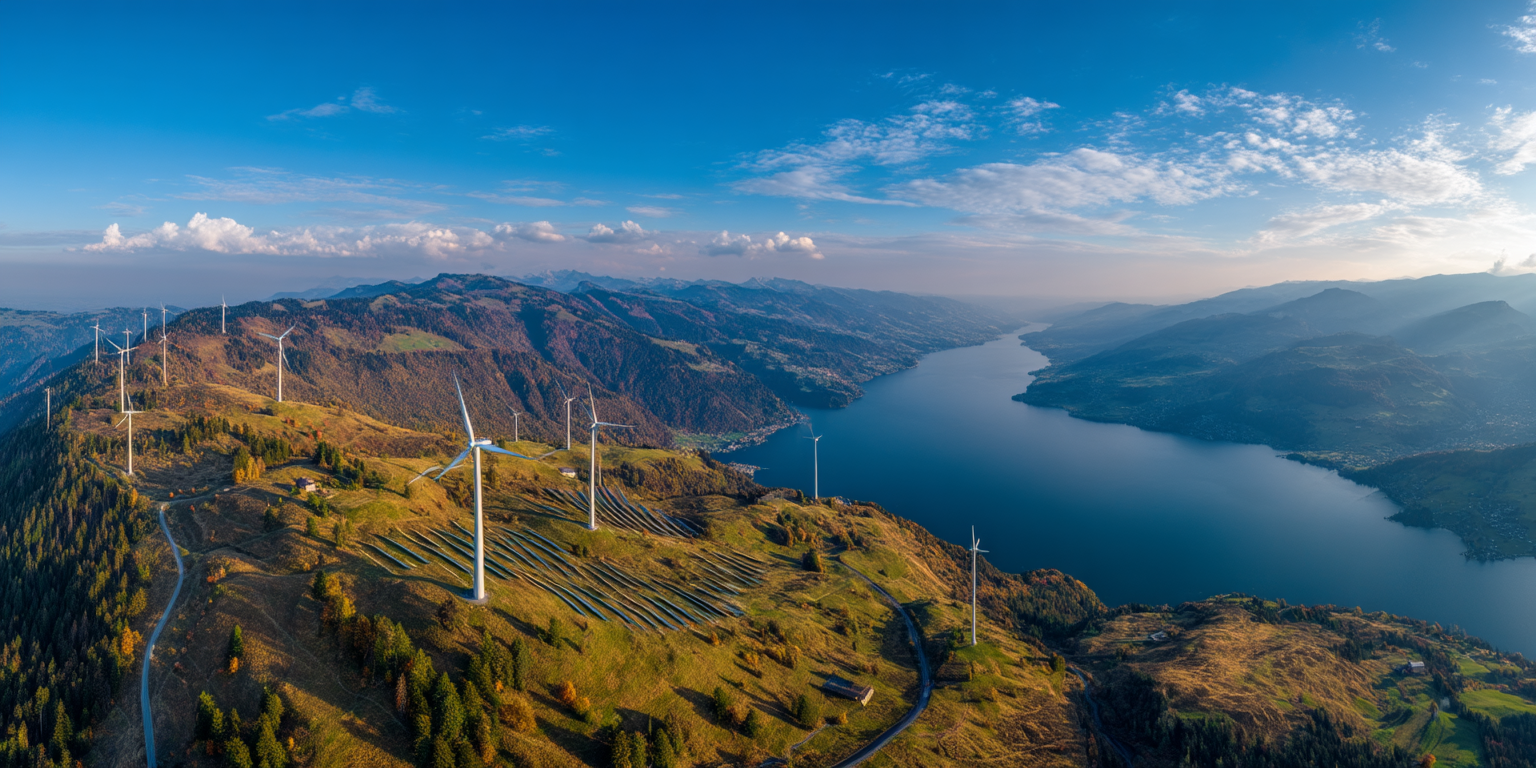
    According to a statement from the operator BKW, the Swiss Energypark in the supply area of the Société des Forces électriques de La Goule generated a total of 134.45 gigawatt-hours of electricity in 2025. This represents 81 per cent of the region’s total consumption of 166.96 gigawatt-hours. In the previous year, the Energypark had generated 139.6 gigawatt hours.

    Wind energy once again contributed the largest share to electricity production, with a total of 86.50 gigawatt hours. The Juvent wind farm alone generated 72.6 gigawatt hours. Although this is less than the 91.1 gigawatt hours of the strong previous year due to low wind speeds, wind energy remains a reliable source of electricity, particularly during the winter months.

    The La Goule hydroelectric power station supplied 16.29 gigawatt hours, its worst result in decades. In the previous year, the figure had been 17.6 gigawatt hours.

    Solar energy, by contrast, grew significantly. In 2025, it supplied a total of 31.66 gigawatt hours, accounting for 24 per cent of total production. In the poor year of 2024, the figure had been just 13.6 gigawatt hours.

    The Swiss Energypark covers an area of 251 square kilometres between the cantons of Bern and Jura. 21,000 people live here.

  • Crowdfunding drives flexible solar energy forward

    Crowdfunding drives flexible solar energy forward

    Solarify GmbH is further expanding its range of investment opportunities for private investors in the energy transition. According to a press release, the Wabern-based company now offers crowdfunding for a new generation of solar power plants connected to battery storage systems. These enable solar power to be delivered at a later time.

    Solarify.ch is thus also responding to a change in the remuneration of solar power. In future, feed-in tariffs will be based on hourly rates. In addition, market prices will be recalculated on a quarterly basis. The storage facilities allow for a flexible response to prices.

    The company is already using solar systems with battery storage, for example at the Tannental asylum accommodation in the municipality of Muri near Bern and on the roof of Condecta AG in Bern.

    “With this new generation, we can operate solar systems in a way that benefits the grid and the system,” CEO Roger Langenegger is quoted as saying in the press release. “Instead of putting strain on the grids at midday, the electricity is consumed locally or sold at times of higher demand.”

    Solarify.ch enables private individuals to invest in the energy transition. Founded in 2016, the company has implemented 160 solar projects throughout Switzerland and invested 26 million Swiss francs.

  • Photovoltaic system on company roofs in Aarau

    Photovoltaic system on company roofs in Aarau

    Over the next six weeks, HKG Engineering AG will be installing a photovoltaic system on the roofs of its own company buildings at the Aarau site. According to a press release, 184 high-efficiency modules are planned there, which will generate 93,000 kilowatt hours of electricity per year.

    The energy generated will be sufficient to cover the company’s own requirements in the offices and for charging electric vehicles. The system will also reduce the load on the neighboring Aarhof property, which is currently under construction.

    With this investment, HKG is sending out a clear signal for sustainable action. The aim is to reduce CO2 emissions in the building sector and reduce dependence on external energy.

  • Cooperation for more solar power in Zurich and eastern Switzerland

    Cooperation for more solar power in Zurich and eastern Switzerland

    The Basel-based energy supplier IWB has acquired the Winterthur-based solar specialist Senero AG. According to a press release, IWB intends to expand its position in the field of renewable energies. Senero’s position will therefore be significantly expanded with access to IWB’s structure, size and integrated range of solutions.

    In the cooperation, IWB intends to invest in its own and the expansion of decentralised solar power production and thus make a contribution to security of supply and the energy transition, according to the press release. The company plans to install 150 to 200 megawatts of photovoltaic capacity (megawatt peak/MWp) on roofs and façades for private and business customers by 2030. Currently, 55 MWp have already been installed. In addition, IWB offers its customers comprehensive services in connection with the connection for self-consumption (ZEV). Customers are supported in setting up, operating and managing ZEVs.

    Senero is contributing its expertise in the installation of photovoltaic systems (PV), batteries and charging stations for electric cars to the new partnership. The company installs 120 photovoltaic systems every year.

    “Together with our solar companies Planeco and Kunz Solartech, IWB can realise solar systems for companies and private customers throughout German-speaking Switzerland thanks to Senero. We can now strengthen our sales activities, particularly in the Zurich area and eastern Switzerland,” said Markus Balmer, Head of Sales at IWB, in the press release. “We expect continued strong growth in the solar industry, even though the current market environment has become more difficult. There are still far too many roofs without PV, and the legal framework for PV systems has improved with the new energy legislation.”

    Fabian Krämer, Co-Managing Director of Senero, sees security and a long-term perspective in the takeover by IWB. “IWB is a large and established partner that offers our employees secure prospects for the future. Together with IWB, we can continue our success story in the solar market and realise many more systems for our customers,” Krämer is quoted as saying.

  • Solar facade combines energy generation with architecture

    Solar facade combines energy generation with architecture

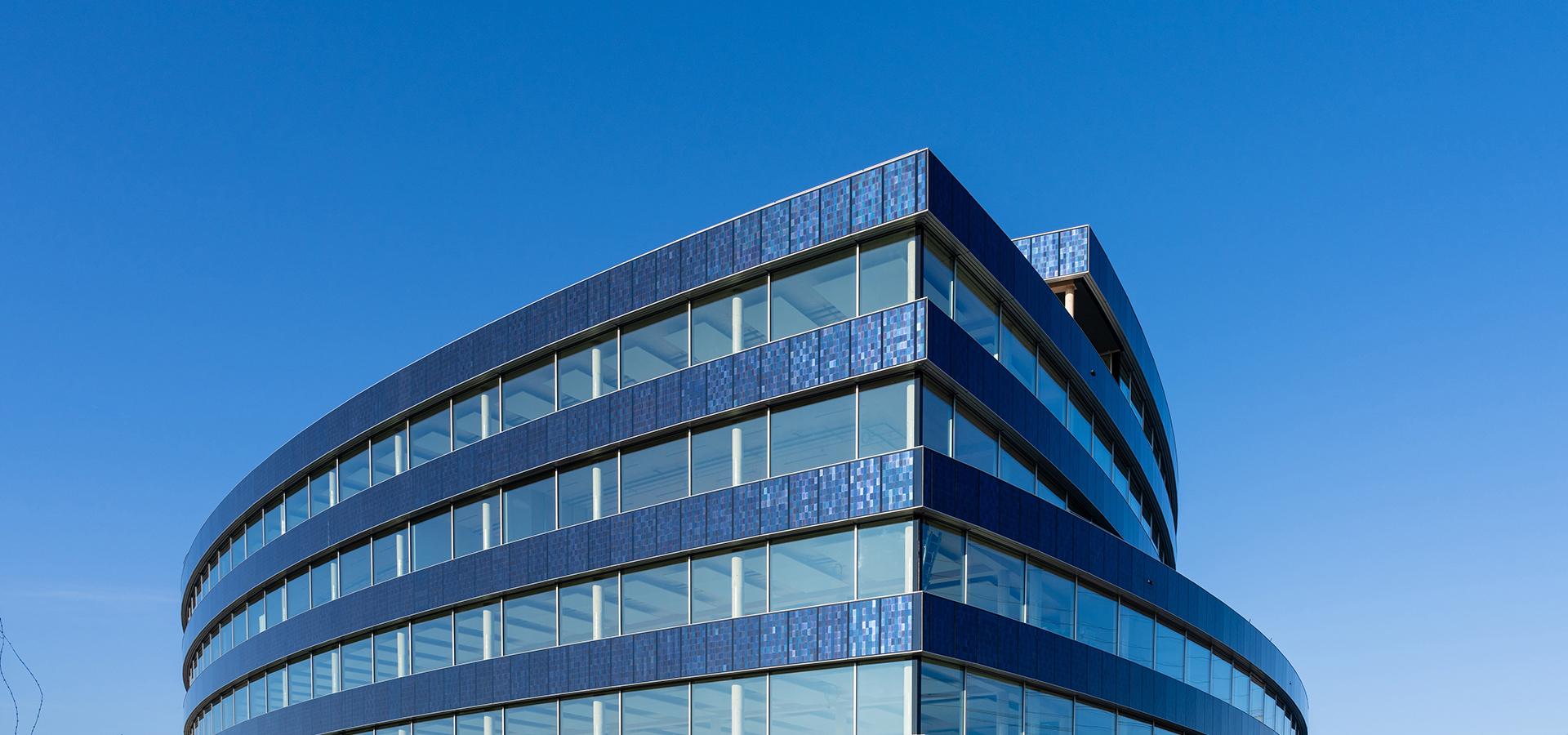
    Megasol Energie has developed the photovoltaic solution for the Bern 131 project, according to a press release . The 1605 customised modules shimmer blue thanks to the coloured rear glass, which is aligned with the sun. The front glass is transparent. Megasol developed the modules in collaboration with the Bern-based architecture firm Atelier 5, which designed the building.

    Megasol also supplied 468 standardised M450 modules for the roof area. The entire system has an output of 504 kilowatt peak. This will generate around 341,238 kilowatt hours of electricity per year. This corresponds to 88 per cent self-sufficiency for the building.

    Bern 131 at Stauffacherstrasse 131 was built by Atelier 5 as a hybrid of steel and wood. The wood comes 98 per cent from the canton of Bern. The building is SNBS Gold-certified.

    Florian Lünstedt, architect and partner at Atelier 5, praises the collaboration with Megasol. “The façade is not only an important architectural element that characterises the building, but also a functional component for energy generation,” he is quoted as saying in the press release. “The joint development of the PV modules with Megasol has made it possible to combine both aspects at a high level.”

  • Study shows potential for renewable energy in Frauenfeld

    Study shows potential for renewable energy in Frauenfeld

    The municipal utility company of Frauenfeld, Thurplus, and researchers from the Swiss Federal Laboratories for Materials Science and Technology (Empa) have presented the results of a two-year study entitled “Energy Perspectives 2050”. As detailed in a press release, the study developed scenarios that show which technologies, energy requirements and infrastructures could be used to achieve net-zero emissions in the specified period.

    According to the study, 80 percent of buildings in Frauenfeld are still heated with oil or natural gas. However, decarbonization could be achieved with the technologies already available today, such as district heating, heat pumps, photovoltaics and battery storage. However, to replace the existing fossil heating systems by 2040, 250 buildings a year would have to be equipped with renewable heating technologies. District heating plays a central role here, but solar systems also have great potential. Solar energy, which currently covers 18 percent of Frauenfeld’s electricity requirements, could be increased almost fivefold by 2040, according to the press release.

    The study was carried out in collaboration with Urban Sympheny AG, a spin-off of Empa. The project was supported by the Swiss Federal Office of Energy (SFOE), the Office for Energy of the Canton of Thurgau and the Office for Building Construction and Urban Planning of the City of Frauenfeld.

  • Zurich Airport tests solar fences

    Zurich Airport tests solar fences

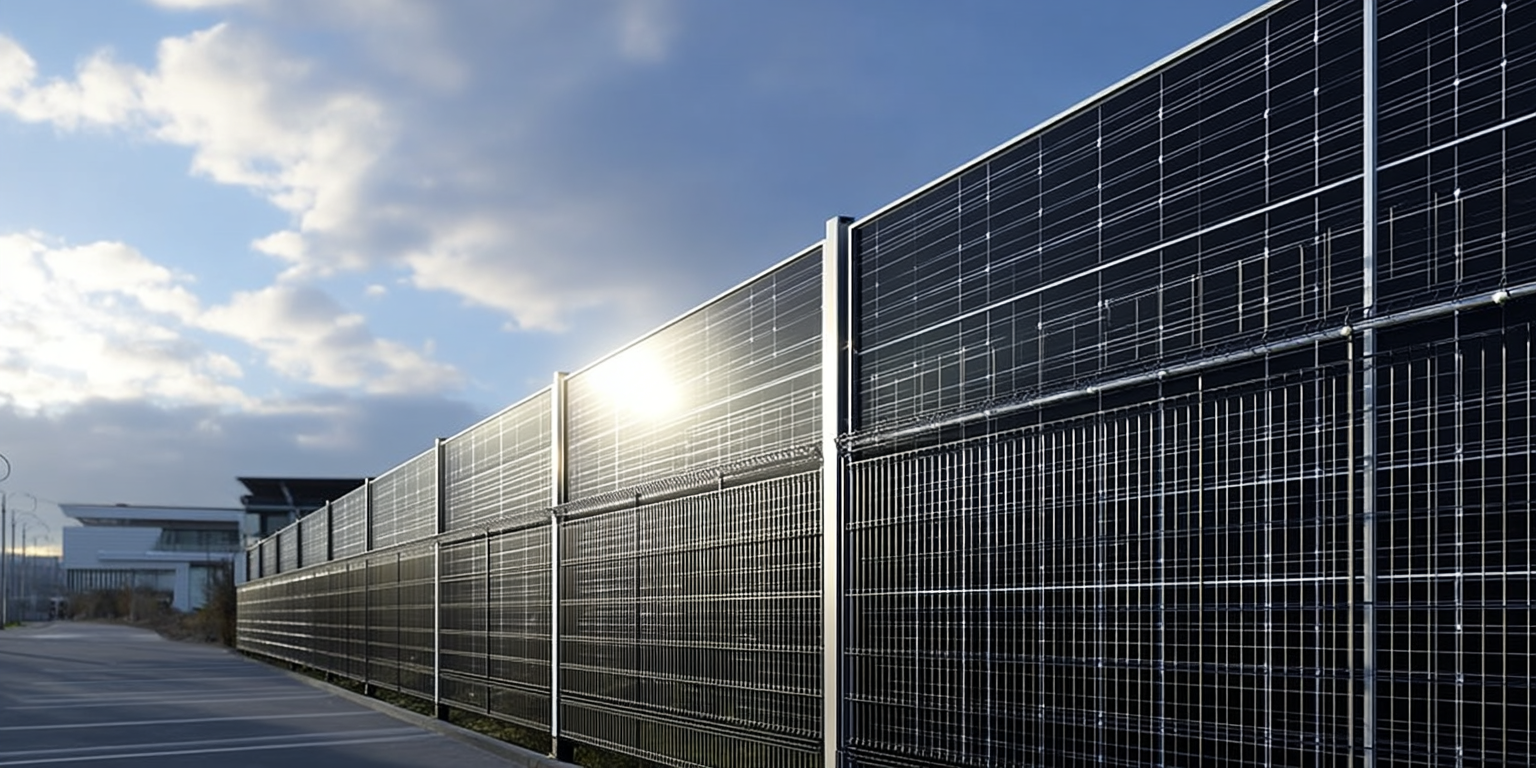
    Flughafen Zürich AG in Kloten wants to come closer to its net-zero target for company emissions by 2040 with a significant expansion of renewable energies. According to a press release, photovoltaic systems are to be significantly expanded. In addition to systems on roofs and facades, the airport is now testing the installation of solar fences. The first system has been installed next to the airport’s heating center.

    The vertically mounted panels offer several advantages. As they can be exposed to solar radiation on both sides, the electricity yield is increased by 10 to 30 percent. This means that electricity production can be extended throughout the day. At the same time, the solar panels serve as a security fence for the airport area.

    “As a first step, we want to gather experience with the vertical solar systems and check whether this technology could be considered for other locations. Parking lots, for example, are conceivable. The test phase will last at least a year in order to be able to map the seasonal effects,” Guido Hüni, Head of Energy and Decarbonization at Flughafen Zürich AG, is quoted as saying in the press release.

    Photovoltaic systems are currently installed on twelve building roofs. Further locations are being examined in a feasibility study. Among other things, glare safety for pilots and the tower must be guaranteed. By 2040, the airport’s photovoltaic systems should produce enough electricity to supply 5,000 households.

  • Thurgau bank opts for solar energy in Arbon

    Thurgau bank opts for solar energy in Arbon

    Thurgauer Kantonalbank(TKB) has installed a new photovoltaic system on the roof of its branch in Arbon. According to a press release, the new 500 square metre system is the largest that the bank has put into operation. It is expected to supply around 105,000 kilowatt hours of electricity per year. This corresponds to the annual consumption of 21 households.

    The electricity produced on the roof will primarily be used for the operation of the branch. Depending on demand, it will cover between 25 and 40 per cent of the bank branch’s energy requirements, according to the press release. The solar system will also supply three charging stations for electric cars in the neighbouring underground car park of the Novaseta shopping centre. Any surplus electricity generated will also be fed into the public grid.

    With the new system, TKB wants to emphasise its commitment to sustainable and renewable energy and reduce local CO2 emissions.

  • Gold-coloured façade modules in Schlieren set new solar standards

    Gold-coloured façade modules in Schlieren set new solar standards

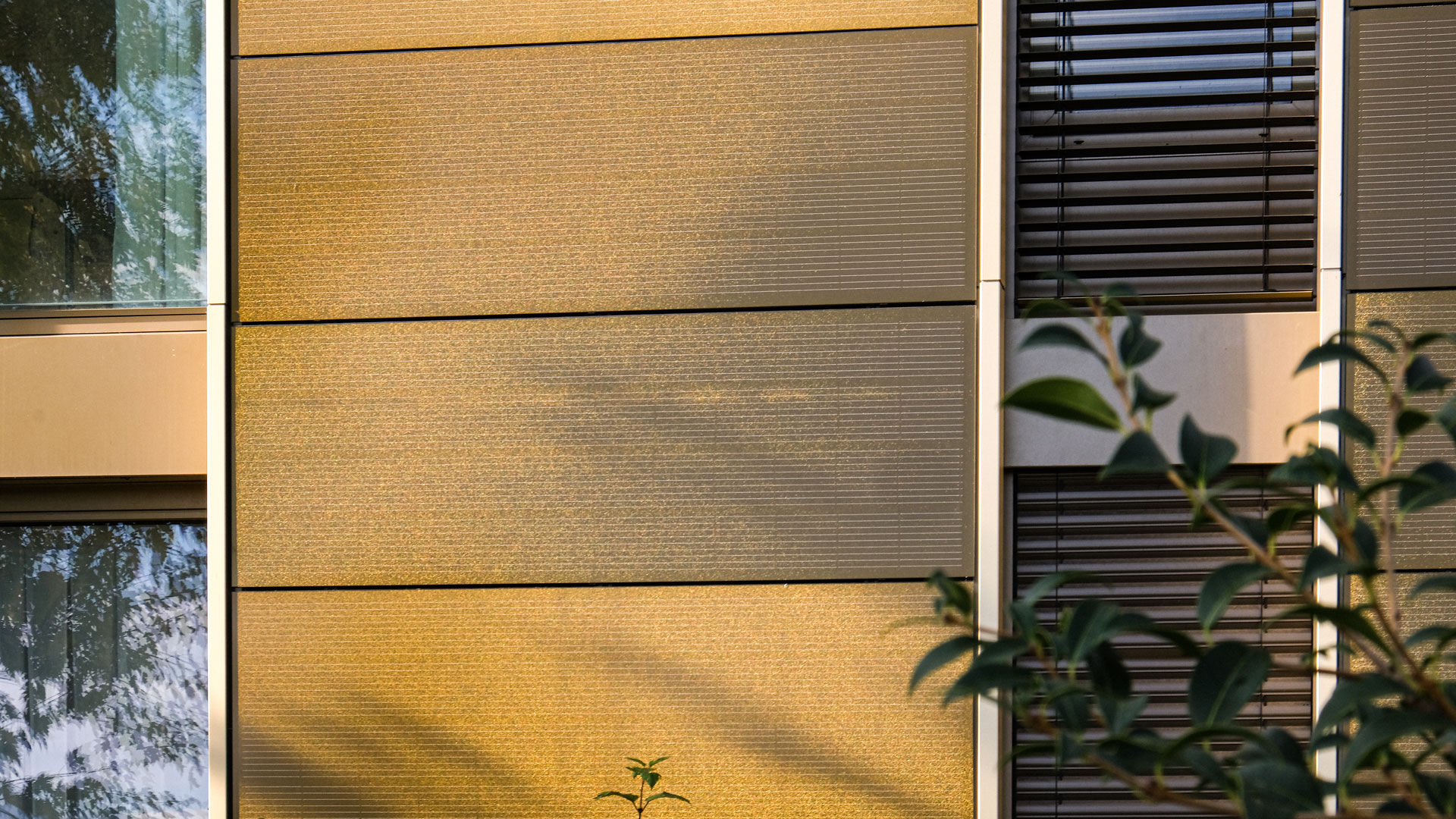
    Megasol Energie AG, based in Deitingen, has launched a new coloured solar module on the market. According to a press release, the modules with their new colour design achieve around 94 percent of the efficiency of conventional black photovoltaic modules.

    The panels under the name SOLARCOLOR Morpho are manufactured for installation as façade elements. For example, they have been installed on two new buildings in the Lacheren area of Schlieren. Depending on the incidence of light, the gold-coloured modules create a lively play of colours, according to the press release.

    The two buildings in Lacheren comprise 36 flats. The roof is also covered with photovoltaic modules and generates peak values of 68 kilowatts with an annual yield of 59,900 kilowatt hours. The façade elements generate peaks of 17 kilowatts and an annual yield of around 16,200 kilowatt hours.

    Megasol Energie AG is one of the five nominated finalists for the Prix SVC Espace Mittelland 2025 sponsored by the Swiss Venture Club (SVC), which will be awarded in Bern on 12 March 2025.

  • Hybrid small power plant promotes green energy in Graubünden

    Hybrid small power plant promotes green energy in Graubünden

    NewGreenTec AG has installed one of its hybrid wind-solar small power plants on the roof of the Plantahof. In future, it will contribute to the sustainable power supply of the agricultural training centre in the canton of Graubünden and eastern Switzerland. According to the start-up company, it will also enable pupils and teachers to experience the technology first-hand and expand their knowledge of renewable energies.

    “We are delighted to be promoting the sustainable development of agriculture in Graubünden with this project,” said Frido Stutz, Managing Director of NewGreenTec AG, in a company press release. “The combination of wind and solar energy is a pioneering step towards an environmentally friendly and stable power supply throughout the day and year.”

    NewGreenTec also recognises this as a symbol of the potential for a sustainable future: “With the power of wind and sun, the Rhine Valley is set to become another example of successful innovation in green energy supply.” The company’s first small power plant on an industrial building was put into operation in January 2023.

    The hybrid device combines solar panels, a small wind turbine and storage technology in a single unit and was developed in collaboration with Swiss universities of applied sciences. The wind turbines, which rotate around a vertical axis, are independent of the wind direction and virtually noiseless.

  • Solar energy as the driving force behind the power supply

    Solar energy as the driving force behind the power supply

    Swissolar sees potential for solar installations to account for 80% of the country’s electricity expansion by 2035. According to the first Solar Monitor Switzerland, which has now been published, the annual solar power yield could reach more than 28 terawatt hours. According to a press release, the recently published Solar Monitor Switzerland provides the first up-to-date facts and figures on the future development of the solar market. It includes forecasts for the expansion of photovoltaics up to the year 2035.

    For the current year, solar energy is contributing 11% to electricity generation and is therefore “well on the way to becoming the second mainstay of Switzerland’s electricity supply alongside hydropower”. The prerequisite is “significantly improved implementation provisions”, it says. The new Electricity Act has led to uncertainty, which will have a dampening effect on market growth over the next two years. After that, new growth spurts can be expected.

    For the first time, the Solar Monitor also provides an overview of industry turnover and the skilled labor situation. According to the report, the industry is expected to generate 3.7 billion Swiss francs in the current year and could reach 6 billion in ten years’ time. As part of a survey, Swissolar collected figures on the personnel situation. There are currently 11,000 full-time equivalents working in the solar industry. In order to achieve the expansion targets set out in the Electricity Act, 19,000 full-time employees are required.

    In future, an updated version of the Solar Monitor will be published annually.

  • Synergies for sustainable building and energy solutions

    Synergies for sustainable building and energy solutions

    From 14 to 17 November 2024, visitors to Bernexpo can expect a unique trade fair format: the Hausbau Energie Messe and Energy Future Days will once again join forces to present the largest Swiss event for construction, renovation and energy. Every year, this event attracts over 10,000 private homeowners, prospective builders, architects and planners and offers a varied programme for experts and interested parties.

    Specialist events and innovations for energy and construction
    This year’s focus is on sustainable energy generation and utilisation. A wide range of specialist and public events offer exciting insights and valuable information on topics such as photovoltaics, storage systems, electromobility and refurbishment processes. For architects in particular, the Architecture Forum will be focussing on innovative solutions for modern construction projects under the motto “Liveable living and working spaces”.

    Specialist day for experts and decision-makers
    Thursday is aimed specifically at experts from the construction and energy sector. Architects, planners, energy specialists, installers and decision-makers from the public sector and investors will find an ideal platform for professional dialogue and networking. The combination of trade fair and expert forum creates synergies that provide pioneering impetus for the future of construction and energy supply.

    New platform for solar energy solutions: “BärnSOLAR 24
    Another highlight is the launch of “BärnSOLAR 24”, a platform dedicated entirely to the integration of solar energy in construction projects. It offers experts targeted answers and customised solutions for the use of solar energy in construction.

  • Solar power: first system of the second project in operation

    Solar power: first system of the second project in operation

    Zaugg Schlieren AG put the first third of its second solar plant in Schlieren into operation in mid-October. The corresponding building permit was only applied for at the end of February, the Schlieren-based packaging and logistics specialist reports in a post on LinkedIn. The installed capacity is stated as 98.28 kilowatts peak. This means that around 95 megawatt hours of solar power can be produced each year.

    By 2026, Zaugg Schlieren plans to have installed solar systems with a total output of 271.47 kilowatts peak. This means that around 263 megawatt hours of solar power can be generated each year. The company was founded in 1977 by Werner Zaugg on the site of the recently decommissioned gasworks in Schlieren. Since 2011 , Switzerland’s first professional transport packaging and crate manufacturer has also been represented with a site in China.

  • Solar panels for a sustainable energy supply

    Solar panels for a sustainable energy supply

    Lustenberger & Dürst SA has implemented two measures for a sustainable energy supply. According to a press release, 903 solar panels with an output of over 370 kilowatts peak were put into operation on various parts of the Langrüti 4 building at the headquarters in Hünenberg. Further solar modules were installed on the roof and facades at the Langrüti 6 site, with an output of just under 187 kilowatts peak.

    The total capacity of both installations will be 557 kilowatts peak, creating the basis for “maximum energy yield” and helping to cover the company’s own electricity requirements. Lustenberger & Dürst currently generates 60 percent of its annual consumption with self-produced solar power.

    The traditional cheese manufacturer sees potential in terms of sustainability. According to CEO Simon Grander, it will be “a central key to a sustainable world”. “For this reason, we have specifically renewed our infrastructure so that we no longer need fossil fuels in our company buildings,” he is quoted as saying.

  • Expansion of the photovoltaic system in Schönenwerd

    Expansion of the photovoltaic system in Schönenwerd

    Fashion Fish is investing in the expansion of solar energy, taking the next step towards greater sustainability. As the Schönenwerd-based outlet for designer items informs in a press release, the expansion of the photovoltaic (PV) system on the roofs of the six-storey former Bally production building includes a further 335 solar modules with an output of 140 kilowatt peak. In total, the area equipped with PV modules has increased by 664 square meters.

    According to the press release, the company has been taking steps towards more sustainable energy use for years. According to Managing Director Robert Meier, heating energy is generated via district heating. Electricity requirements have been covered by PV systems since 2020.

    The installation of the first system on the shed roofs has already achieved high peak outputs. An expansion to the east and west at the beginning of 2024 led to a balance in output throughout the day. By the end of August, energy production had amounted to more than 47 megawatt hours of electricity.

    The aim of the investment is to ensure that the majority of stores cover their energy requirements with solar power. This is also to the benefit of customers, for example through cooling ventilation in the summer months. “Thanks to the measures we have taken, we have been able to drastically reduce Fashion Fish’s CO2 emissions in recent years and offset the energy consumption of our air conditioning and ventilation systems with our own solar power,” Robert Meier is quoted as saying. The decision to expand the plant coincides with the company’s 20th anniversary year.

  • Swiss cleantech start-ups conquer the South African market

    Swiss cleantech start-ups conquer the South African market

    As part of the Academia-Industry Training Cleantech program (AIT), four Swiss cleantech start-ups were able to present their innovative solutions in South Africa. Subasol, Neology Hydrogen, Gaia Turbine and Soft Power presented their pioneering technologies and were given the opportunity to make valuable contacts and secure access to an emerging market.

    Subasol impresses with photovoltaic storage solutions
    Subasol, which develops innovative PV storage systems for the African market, won the pitch competition and prevailed against strong competition. The locally installed storage systems are intended to secure the energy supply in rural and off-grid areas of Africa and thus make a significant contribution to the continent’s sustainable development.

    Low-cost hydrogen for the future
    Neology Hydrogen scored highly with a technology that converts ammonia into hydrogen, providing low-cost and easily accessible hydrogen solutions for the global market. This innovation will accelerate the transition to a hydrogen-based economy.

    Practical solutions for clean energy
    Gaia Turbine and Soft Power completed the field of participants with compact water turbines and sustainable cooking solutions for developing countries. Both start-ups offer practical solutions to promote the use of renewable energy worldwide and reduce dependence on fossil fuels.

    Forward-looking exchange
    The next step is an exchange program in which five South African entrepreneurs will visit Switzerland to further develop their business models and explore opportunities for cooperation. This program is an important step towards promoting international cleantech partnerships and opening up new markets.

    Cleantech made in Switzerland conquers South Africa
    The success of the Swiss start-ups shows the potential of innovative cleantech solutions on the African market. Participation in the SA Innovation Summit has laid the foundation for future collaborations and offers promising prospects for international expansion.

  • Green light for alpine solar plant

    Green light for alpine solar plant

    The Graubünden-based energy supplier Repower, the municipality of Klosters and Klosters-Madrisa Bergbahnen AG want to jointly construct an alpine solar power plant at the mountain railway. Voters in the municipality of Klosters approved the project on 22 October 2023.

    According to a press release, the Graubünden government has now also approved the construction of the system by Madrisa Solar AG. The site is already well developed thanks to the existing tourist infrastructure and is connected to the power grid.

    The plant in the Züg area is to comprise 25,000 solar modules at an altitude of around 2,000 metres and an area of 156,821 square metres, with a total output of 10.8 megawatt peak. Electricity production is expected to exceed 15,000 megawatt hours.

    The mountain railways already operate five solar installations with an annual output of 294 megawatt hours. These cover up to 20 per cent of their own electricity requirements.

  • Photovoltaic output increased tenfold in the last seven years

    Photovoltaic output increased tenfold in the last seven years

    Thurplus takes positive stock of PV expansion over the past seven years. Between 2016 and 2023, Frauenfeld’s municipal energy supplier was able to increase its output more than tenfold from 144 to around 1500 kilowatt peak. In 2023 alone, over 700 kilowatt peak were added, according to a press release.

    In total, these solar systems produce around 1.5 million kilowatt hours of electricity per year. This corresponds to the average consumption of around 330 households. Between 2016 and 2023, the number of shareholders in the PV citizen participation models also increased from 50 to 240, according to the press release.

    “By actively shaping and successfully implementing many sustainable PV projects, Thurplus has managed to achieve this”, says Fabrizio Hugentobler, City Councillor and Head of the Thurplus, Leisure and Sport Department. “Thurplus is well positioned with its solar power, SolarInvest, PV contracting and other solutions.”

    According to the municipal PV strategy for Thurplus, an additional 5 per cent of the total electricity consumption of around 150 gigawatt hours is to be added annually by 2027. This corresponds to a total installed PV capacity of 8 megawatt peak or an electricity production of around 7.5 gigawatt hours per year. Thurplus is looking for suitable roofs from companies and institutions. “Together, we want to make progress and do our bit to ensure that the PV expansion targets are achieved,” says Thurplus Managing Director Peter Wieland.

  • Ticino solar specialist IngEne becomes part of Swiss Solar Group

    Ticino solar specialist IngEne becomes part of Swiss Solar Group

    IngEne from Ticino, which specialises in solar solutions, has joined the Swiss Solar Group. As the group of companies writes in a press release, it can now provide sustainable energy throughout Switzerland. The merger is an investment in solar expansion with the aim of facilitating access to clean, smart energy solutions in the areas of photovoltaic installations and mobility.

    According to the press release, the Swiss Solar Group has grown steadily since it was founded in 2013. Since then, more than 1,300 photovoltaic systems have gone into operation.

    With IngEne, the Swiss Solar Group has gained the technical expertise of one of the best solar specialists in the country. “Thanks to this expertise, we will be able to further improve our products for customers. Clean and smart energy for the whole of Switzerland is now possible. We would like to thank the IngEne team and look forward to working with them,” said Marc Preusche, CEO of the Swiss Solar Group.

    In Ticino, integrated solar panels on roofs and façades are widespread. IngEne serves both private households and industrial companies there. Systems with an output of over 1 megawatt are in use on factory roofs. The co-operation will have no impact on IngEne’s 55 employees: They will continue to work autonomously, but will also benefit from the synergy effects of the group, according to the statement.

    The addition of IngEne continues the growth. younergy Solar from Ecublens VD and the energy supplier Seetal Solar from Hitzkirch LU have already joined the Group in 2023.

  • ZHAW validates yield calculations for alpine solar systems

    ZHAW validates yield calculations for alpine solar systems

    Researchers at the ZHAW have verified the accuracy of the PVSyst software’s calculations on the yield of alpine solar plants. The Swiss Federal Office of Energy recommends this software as part of the expansion of alpine solar plants, the ZHAW explains in a press release. The results of the research showed “that the approach proposed by the federal government makes sense and that the yields tend to be underestimated”, the press release explains.

    For the validation, the ZHAW researchers carried out a large number of measurements on the Totalp in Davos GR in the winter months of 2023/24 using a flexible, multi-row miniature system. The measurement data largely matched the data collected at the same time from the existing test facility at the same location. In contrast, the yields calculated using the PVSyst simulation tended to be lower across the board.

    The researchers attribute this to the albedo values from Meteonorm used by the software. Albedo is a value for the proportion of sunlight reflected from the ground. At the same time, the research was able to show that backside irradiation on a bifacial solar panel increases the yield by around 25 to 35 per cent.

  • Determining solar energy potential from space

    Determining solar energy potential from space

    The question of which roofs are suitable for solar installations and what output can be achieved there is answered by the new solar atlas from the German Aerospace Center (Deutsches Zentrum für Luft- und Raumfahrt – DLR). This map, which was presented at the ILA 2024 in Berlin, uses current aerial images and basic geodata, processed using machine learning methods. This made it possible to determine the solar energy potential for around 20 million buildings in cities such as Berlin, Dresden, Düsseldorf, Frankfurt and Hamburg. The results are publicly available at eosolar.dlr.de.

    Technology meets sustainability
    Anke Kaysser-Pyzalla, Chairwoman of the DLR Executive Board, emphasizes the importance of the Solar Atlas for the energy transition: “In order to develop and implement effective strategies and instruments for the expansion of rooftop solar installations, decision-makers need precise information on the current stock and expansion potential. The satellite-based information provided by DLR supports the energy transition and becomes a driver for innovative products and business models.” The Solar Atlas shows how successfully earth observation can be used for climate protection and the sustainable expansion of energy generation.

    Data evaluation and methodology
    In the EO Solar project, scientists at the DLR Earth Observation Center are combining several terabytes of data. This includes digital, distortion-free aerial images with a resolution of 20 centimetres and high-resolution surface models provided by the Federal Agency for Cartography and Geodesy. “In order to describe the current expansion potential for solar energy, we calculate the possible electrical output based on the hours of sunshine, the radiation intensity, the orientation of the roof surfaces and the shading from neighboring buildings or vegetation,” explains Annekatrin Metz-Marconcini, head of the EO Solar project.

    Artificial intelligence and practical applications
    DLR has developed a process that uses artificial intelligence to identify roofs with installed solar panels worldwide from high-resolution remote sensing data. In Germany, the market master data register, which records all registered solar installations on a daily basis, is also included. This method uses digital surface models of the terrain, which automatically takes into account shading from trees and the surrounding terrain. This means that even countries without detailed building models can calculate their solar energy potential and include it in their planning.

    Support for political decision-makers
    In contrast to existing solar atlases of federal states, districts or municipalities, the DLR Solar Atlas systematically maps the entire country in an up-to-date manner. This provides political decision-makers and planners with a sound basis for promoting the expansion of solar installations in a targeted manner. A similar map has already been created for Austria as part of an ESA project. For data protection reasons, solar expansion in Germany is shown at municipal, district or federal state level.

    Forward-looking energy planning
    With the new solar atlas, DLR is creating a valuable resource for the planning and implementation of sustainable energy projects. It enables a precise assessment of solar energy potential and thus supports the transition to a climate-friendly energy supply.
  • Realisation of an extensive solar project at the production site of a pharmaceutical manufacturer

    Realisation of an extensive solar project at the production site of a pharmaceutical manufacturer

    The pharmaceutical manufacturer Takeda is currently building a photovoltaic system at its production site in Pierre-à-Bot in Neuchâtel. The solar panels are being installed on an unused plot of land and on the roofs of the car parks. The system will have a capacity of 3.7 megawatts per year and generate 4 gigawatt hours of electricity. This corresponds to 25 per cent of the annual demand. Commissioning is planned for the beginning of October 2024. The investment amounts to CHF 5 million.

    With this solar project, the Japanese pharmaceutical and vaccine manufacturer with its Swiss headquarters in Opfikon is making an important contribution to decarbonisation, according to its press release. “We are delighted to have been able to realise this ambitious project,” said Violaine Blétry-de Montmollin, city councillor for Neuchâtel. “It fits in perfectly with our energy concept.”

    Takeda is aiming to achieve net zero emissions worldwide by 2035 for its own activities. As part of this, the company is currently pursuing around ten projects at its site in Neuchâtel. In addition to electrification, they are dedicated to heat recovery, the avoidance of fossil fuels and refrigerants and biodiversity.

    Takeda acquired the production site in Neuchâtel five years ago as part of the takeover of its Irish competitor Shire. The site, which employs almost 700 people from 20 different countries, has specialised in the manufacture of medicines for the treatment of blood clotting disorders (haemophilia) for 25 years. They are supplied to over 80 countries.

  • 4B invests 35 million Swiss francs in Hochdorf

    4B invests 35 million Swiss francs in Hochdorf

    4B is investing around 35 million Swiss francs in a new machining centre and four new halls at its headquarters in Hochdorf. The Lucerne-based window and façade manufacturer also plans to install photovoltaic systems on both the old and new halls. “With this investment, we are laying the foundations for a new era and another 125 successful years in Hochdorf and Switzerland,” said 4B CEO Jean-Marc Devaud in a press release issued by the company.

    Construction work on the four new halls began on 27 March with the ground-breaking ceremony. It should be completed by the beginning of 2025. The first photovoltaic systems will be installed on the existing halls this year. Once the installation work on the new halls has also been completed, 4B in Hochdorf aims to produce around 3 gigawatt hours of electricity from solar energy every year. This is enough to cover the company’s entire electricity consumption in Hochdorf. In addition, 4B utilises the wood waste from production to generate heat in its own combined heat and power plant.

    “With the four new halls and the new machining facility, we are creating the basis for the long-term optimisation of our production processes,” explains Devaud. 4B is also planning to bring production processes that are currently outsourced back to Hochdorf. “We are also creating the flexibility to be equipped for the future,” says the company boss.

  • Canton of Bern favours solar energy along its roads

    Canton of Bern favours solar energy along its roads

    Two consortia from the cantons of Zurich and Basel were selected from among the applicants, which impressed with their expertise and innovative approaches. The awarding of the projects to the consortium of Elektrizitätswerke des Kantons Zürich (EKZ), Helion AG and mha gmbh as well as the consortium of Industrielle Werke Basel (IWB) and TNC Consulting AG (TNC) marks a decisive step towards promoting renewable energies in the region.

    In particular, the initiative of the EKZ-Helion-mha consortium to erect large-scale solar carports at cantonal motorway service stations represents a double innovation.

    In addition to producing clean energy, these carports help to reduce the use of air conditioning by providing shade. With a planned capacity of almost 8.5 megawatts, they are aiming to realise ten photovoltaic systems and are also exploring the possibility of installing solar panels on noise barriers, retaining walls and a bridge.

    The IWB-TNC consortium is focussing on the installation of almost 1.8 megawatts of photovoltaic systems in the Bernese Oberland region, distributed across various structures such as retaining walls and bridges. The feasibility of these projects is ensured by comprehensive studies.

    The first planning steps for these pioneering solar installations will begin in April 2024, underlining the canton’s commitment to the national Energy Strategy 2050 and to achieving the net-zero target by 2040. This selection process emphasises the Canton of Bern’s desire to take a leading role in the implementation of energy solutions and at the same time promotes the participation of local stakeholders in the energy transition.

  • Canton of Lucerne wants to accelerate the expansion of renewables

    Canton of Lucerne wants to accelerate the expansion of renewables

    The cantonal government of Lucerne has presented its draft legislation on the expansion of electricity production from renewable energies. The amendment to the Cantonal Energy Act provides for better utilisation of roof surfaces to generate solar power.

    According to a press release, new buildings will no longer be required to generate only a portion of the electricity they require themselves, but will have to “adequately utilise” the electricity generation potential of the roof surface. Electricity generation requirements are also proposed for existing buildings, as they in particular have “immense potential for electricity generation”.

    This is in the interest of a rapid expansion of locally produced renewable energy, according to District President Fabian Peter: This will “not only enable us to achieve our climate targets, but also increase our energy supply security”. After all, photovoltaic systems on roofs in the canton could generate a total of 2.4 terawatt hours of solar power. According to the figures, this is more than double the current electricity consumption of all private households.

    Photovoltaic systems will now also be allowed to be installed on another roof within a certain group of buildings, for example on stables, haylofts, commercial buildings or school grounds. This is the government council’s response to a frequently expressed concern from the public consultation. This took place from 15 December to 6 April 2023.

    The majority agreed with the general thrust, objectives and principles of the new regulations. This amendment to the Cantonal Energy Act is expected to be on the agenda for the upcoming May session of the Cantonal Council.

  • Integration of photovoltaics in building façades

    Integration of photovoltaics in building façades

    The German government has set itself the goal of drastically increasing the share of solar energy in energy consumption by 2030, which is only possible by utilising innovative technologies and tapping into new PV potential. A key element of this strategy is the effective utilisation of building façades for photovoltaics. Despite the obvious benefits, the potential of façade PV has so far remained largely untapped, mainly due to the challenges of cost, complexity and aesthetics.

    To overcome these hurdles, the Center project, funded by the German Federal Ministry for Economic Affairs and Climate Protection and coordinated by the Fraunhofer Institute for Solar Energy Systems ISE, brings together the expertise of leading industrial companies and research centres. The aim is to develop practicable and cost-efficient standard solutions for the integration of photovoltaic systems into building envelopes. This initiative promises to remove the technical and economic barriers that stand in the way of the widespread use of façade PV.

    Successful examples of the integration of PV into building façades, such as the town hall in Freiburg and the OWP 12 office building in Stuttgart, already demonstrate the potential of this technology. These projects demonstrate that PV elements not only contribute to electricity generation, but can also offer other benefits such as sound insulation, weather protection and climate regulation within the buildings.

    The centre aims to deliver ground-breaking results within the next two years and plans to publish its findings in the form of a VDI guideline. This should promote the use of building-integrated photovoltaics and make a significant contribution to achieving the German government’s climate targets. The participation of experts from all areas of the solar industry and the construction sector underlines the holistic approach of the project, which aims to accelerate the solarisation of the building envelope and thus take a decisive step towards a more sustainable future.

  • Oiken and Studer Innotec develop virtual power plant

    Oiken and Studer Innotec develop virtual power plant

    According to a press release , the Valais energy supplier Oiken and Studer Innotec are launching an innovation project to utilise photovoltaic systems and battery storage for the general power supply through a virtual power plant. The aim is to make the best possible use of and optimise variable and unplanned electricity generation in private homes or neighbourhoods. The project, which is financially supported by The Ark Foundation, is being developed in collaboration with the Icare Institute in Sierre VS. The test phase will begin in 2024.

    The aim of the project is to bring together small energy producers with the combined output of a large power plant to create a virtual power plant (VPP), according to the press release from Oiken. The accelerated development of decentralised and unplanned energy generation from photovoltaic systems (PV systems) in “residential power plants” is fundamentally changing the management and control of the electricity grid.

    According to solar statistics, PV systems with a total capacity of 4.7 gigawatts were installed in 2022, producing 3.8 terawatt hours or 6.7 per cent of Switzerland’s electricity consumption. The proportion of solar energy generated already exceeds the proportion of other energy sources such as gas, hydropower or biomass during the day in summer.

    At a local level, such as single-family homes, the aim is to improve self-consumption and optimise the feeding of electricity back into the grid by making the best possible use of batteries. At the next level up, such as a neighbourhood, the project focuses on the development of intelligent energy management for several systems. At the level of the region or the DSO (distribution network operator), the aim is to evaluate and combine local flexible power generation using a VPP solution.

  • Energiewende in der Schweiz: Technologischer Fortschritt statt Verzicht

    Energiewende in der Schweiz: Technologischer Fortschritt statt Verzicht

    Die Ergebnisse des «Helion Energiewende-Index», basierend auf einer Umfrage unter 3000 Schweizerinnen und Schweizern, offenbaren eine klare Präferenz für technologiebasierte Lösungen im Kampf gegen den Klimawandel. Die Mehrheit der Befragten favorisiert den verstärkten Einsatz von erneuerbaren Energien wie Solar- und Windkraft, während weniger als die Hälfte glaubt, dass weitere Verhaltensänderungen im Sinne eines Konsumverzichts notwendig sind.

    Interessanterweise schätzt die Mehrheit der Befragten ihr eigenes Verhalten als umweltfreundlicher ein als das der Gesamtbevölkerung, obwohl gleichzeitig ein verstärktes Engagement im Kampf gegen den Klimawandel gefordert wird. Dieser Wunsch nach schnelleren Fortschritten, insbesondere im Ausbau erneuerbarer Energien, zeigt sich deutlich in der hohen Akzeptanz und Priorisierung von Solarenergie.

    Photovoltaik-Anlagen werden von einem Großteil der Haus- und Wohnungseigentümer als bevorzugte Option betrachtet, wobei 73 Prozent eine Installation in Betracht ziehen. Die Hauptmotivation liegt hierbei in der eigenständigen Energieerzeugung und dem Schutz vor steigenden Strompreisen. Ökologische und nachhaltige Aspekte sind ebenfalls wichtig, aber sekundär.

    Die Studie hebt hervor, dass trotz der breiten Unterstützung für erneuerbare Energien Hindernisse, wie administrative Hürden und Finanzierungsfragen, weiterhin den Fortschritt bremsen. CEO Noah Heynen von Helion betont die Notwendigkeit, diese Hindernisse abzubauen und ganzheitliche Lösungen anzubieten, um die Energiewende effektiv voranzutreiben.

    Zusammenfassend zeigt die Studie, dass die Schweizer Bevölkerung bereit ist, die Energiewende aktiv zu unterstützen, wobei der Fokus auf technologischen Innovationen liegt, um eine nachhaltigere und klimafreundlichere Zukunft zu gestalten. Dieses Ergebnis ist insbesondere für Fachleute und Führungskräfte in der Immobilienbranche relevant, da es wichtige Einblicke in die Präferenzen und Erwartungen der Bevölkerung in Bezug auf nachhaltige Wohn- und Baukonzepte bietet.

  • tb.glarus connects the largest solar community in Glarus to the grid

    tb.glarus connects the largest solar community in Glarus to the grid

    tb.glarus is also enabling tenants to participate in the expansion of solar energy. As the Glarus-based utility announced, it commissioned the system at the Stampfrüti stable on 23 November. This is the company’s sixth solar community and the largest to date in the canton of Glarus.

    With an area of 707 square metres, the system is expected to generate 128,000 kilowatt hours of electricity per year. According to tb.glarus, 95 per cent of the 707 solar panels have already been sold. The one-off investment in the Stampfrüti plant offers tb.glarus customers a fixed credit for solar power over 20 years.

    The six solar communities have a total output of 519 kilowatt peak and generate around 490,000 kilowatt hours per year on an area of over 2500 square metres. tb.glarus is looking for further roof areas that are suitable for solar communities.

  • Umwelt Arena shows special exhibition on solar power

    Umwelt Arena shows special exhibition on solar power

    The Umwelt Arena in Spreitenbach is presenting a special exhibition on solar power together with the electricity utility of the city of Zurich(ewz). According to the announcement, the special exhibition, which will be open all day from 3 November to 28 April 2024, will focus on the history of the development of solar power, the function and installation of solar power and the potential of the sun to generate electricity.

    The ewz special exhibition shows the huge potential for climate-friendly solar power production that lies dormant on rooftops and how fundamentally uncomplicated it is to take action yourself to have a solar system installed, according to the press release. However, there are still reservations and outdated myths about the construction and utilisation of solar systems. The exhibition therefore sheds light on various aspects, including, for example, how a solar system and flat roof greening can ideally complement each other. On a journey of discovery, visitors are given information about the development of solar energy over the last few decades. They can also take part in a solar quiz.

    The Umwelt Arena would like to point out that those particularly interested in the topic of solar power and visitor groups such as companies, clubs or schools can combine a visit to the special exhibition with a guided tour of the SonnenTrail. The possible uses of solar thermal energy and photovoltaics are presented.

    According to the Umwelt Arena press release, guided tours must be booked in advance by telephone or online.