Tag: St.Gallen

  • St.Gallen freight station site underestimated development area

    St.Gallen freight station site underestimated development area

    Urban areas are under increasing pressure. Rising population figures and limited space call for innovative solutions. Areas behind railway stations in particular often remain unused, although they offer valuable potential for urban development. One example of a successful conversion is Europaallee in Zurich. However, while new urban neighbourhoods are already being created in many places, the future of the St.Gallen freight station site is still open.

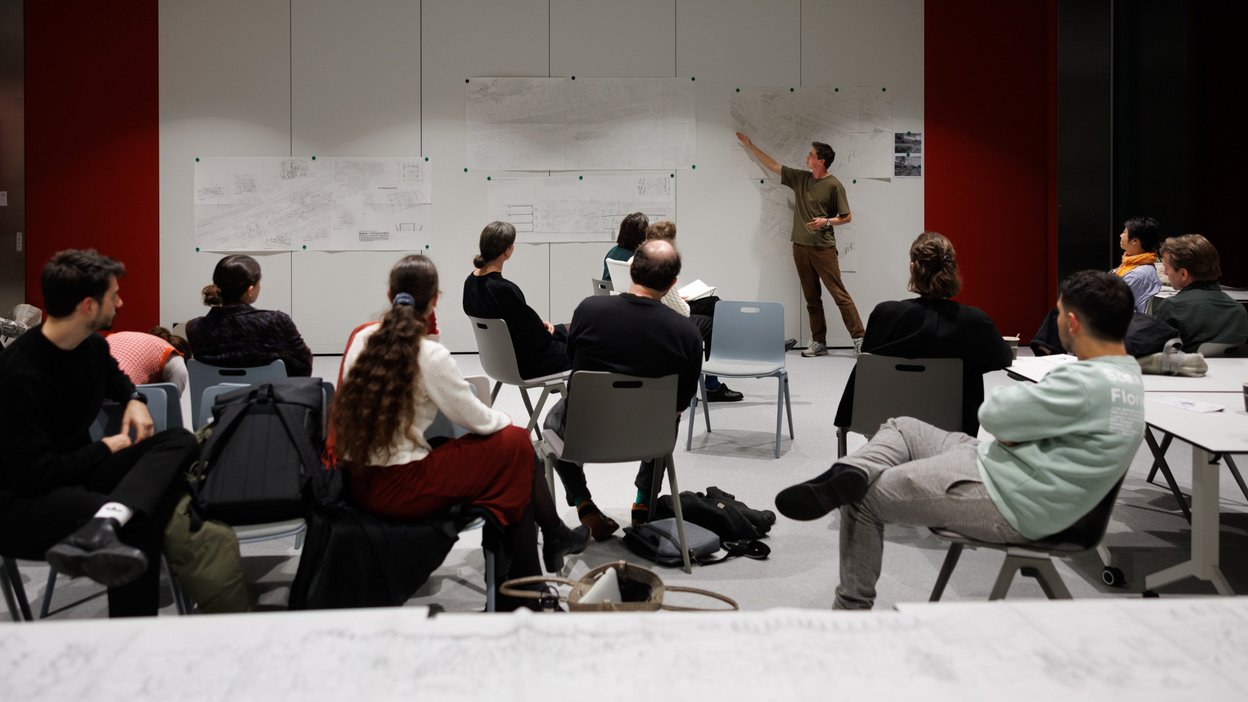
    Its development has been discussed for years, but different interests and perspectives have so far prevented a concrete realisation. This was the starting point for the course “Building the future – the importance of sectors for urban development”, which brought together architecture students from ETH Zurich with economics and sociology students from the University of St.Gallen.

    Interdisciplinary collaboration as the key to success
    The course combined architecture, urban sociology and economics to create a new approach to urban planning. “Architects of the 21st century learn from the building methods of the 20th century in order to develop sustainable models for the future,” explains Prof Momoyo Kaijima from ETH Zurich.

    The collaboration with sociologists and economists resulted in practice-oriented research that took into account not only urban planning concepts, but also social and economic aspects.

    Experiencing urban planning from new perspectives
    The students began their investigation with guided walks through the freight depot area, inspired by the sociologist Lucius Burckhardt’s “Spaziergangswissenschaften”. This method enabled them to experience the space not just as a planning object, but as a lived social place.

    “The study made it clear that even inconspicuous or derelict areas can play a decisive role in urban dynamics,” reports HSG student Livius Schönle.

    From observation to concept
    Based on interviews, observations and data analyses, the participants developed so-called “actor network drawings”, which they used to visualise complex relationships between the use of space, social groups and economic interests. Art painter Walter Dick also played a role in this, introducing the students to the basics of hand-drawing in order to visually represent their analyses.

    “The concrete experiences from the interdisciplinary collaboration show how important it is to be aware of the different ways of thinking,” emphasises Dr Niklaus Reichle from the University of St.Gallen. “Only if we think outside the disciplinary box can social challenges in dealing with space be tackled in a meaningful way.”

    Visions for sustainable urban development
    The students’ concepts ranged from multifunctional residential and working neighbourhoods to sustainable green spaces that integrate new recreational areas into the city. Some teams developed ideas for mixed-use buildings that combine social housing with commercial space, while others developed strategies for careful densification through innovative construction methods.

    A central theme was social integration: how can the freight depot area serve as a connecting element between existing neighbourhoods? How can open spaces be created that are both ecologically and socially valuable?

    Urban development as a joint task
    The research results emphasise that successful urban development requires more than just structural measures. Economic, social and ecological aspects must be considered together. The collaboration between ETH and HSG shows how different disciplines can learn from each other in order to make urban spaces sustainable and fit for the future.

    The city of St.Gallen could benefit from these findings: The freight yard site offers enormous potential for innovative neighbourhood development if the right course is set.

  • Planning started for new high-rise building in St.Gallen

    Planning started for new high-rise building in St.Gallen

    Schlieren-based property developer Halter AG has announced that it can begin concrete planning for a construction project with a high-rise building on Bogenstrasse in St. Gallen. The transformed site is set to offer a broad mix of residential, commercial and catering uses in the immediate vicinity of the railway station.

    The Expert Council for Urban Development and Architecture of the City of St. Gallen has approved the project draft drawn up by Halter AG in collaboration with architects Herzog & de Meuron and landscape architects Westpol for implementation in a special utilisation plan under planning law.

    According to Halter AG, there is now an indicative project ready for realisation that will serve as the basis for the upcoming parallel procedures such as the special land use plan procedure and the zoning plan amendment procedure. These are expected to take around 18 months.

    As the project progresses, the detailed design of the facades of the new high-rise building with around 80 flats will also be determined. Once the two procedures have been finalised, a planning application will be drawn up and the building permit process will begin. Construction is expected to start in 2027 if the project runs smoothly.

  • Purchasing organisation generates its own electricity in St.Gallen

    Purchasing organisation generates its own electricity in St.Gallen

    The purchasing organisation of the Swiss automotive and motor vehicle industry(ESA) has completed its own power supply network with a third system, according to a press release. On Thursday, 15 August, a photovoltaic system was put into operation at the ESA site in St.Gallen. ESA launched the first two systems at its headquarters in Burgdorf four months ago and in Giubiasco a month ago.

    With around 1,800 modules and around 3,500 square metres, the photovoltaic system in St.Gallen is currently ESA’s second-largest system. The amount of electricity generated in future will roughly cover the annual consumption of 150 households. The plant in Burgdorf covers 200 households, the one in Giubiasco around 25 households.

    The ESA purchasing organisation was founded in 1930. As a co-operative, it is owned by around 7000 co-owners from the automotive and motor vehicle industry. Around 670 employees, including around 60 apprentices, work at eleven locations throughout Switzerland.

  • New localisation solutions improve safety in civil engineering

    New localisation solutions improve safety in civil engineering

    Leica Geosystems, the precision equipment manufacturer based in the St.GallenBodenseeArea, has presented new localisation solutions for the civil engineering sector. According to a press release, employees of civil engineering companies will be able to use the new devices to better locate existing infrastructure supply lines and thus prevent accidents. This new solution from Leica Geosystems consists of the Leica DD300 CONNECT intelligent locating device and the Leica DA300 signalling device. The user-friendly solution enables professionals to carry out accurate, reliable and in-depth underground surveys and gain on-site insights into the underground network, according to the press release. The devices offer a frequency bandwidth for object detection in the spectrum from 33 to 131 kilohertz. The frequency of 83 kilohertz is particularly suitable for detecting objects at greater distances. The system can be integrated into the Leica DX Shield software.

    “Our product range extends from simple entry-level devices to sophisticated, fully equipped high-end locating devices,” said Federico Bertolucci, Product Manager for Locating Systems in the Geosystems division at Leica parent company Hexagon, in the press release. “The new Leica DD300 is characterised by unrivalled versatility, enabling a wide range of users to safely locate and bypass underground utilities. This adaptability significantly increases both productivity and safety at different levels of user expertise.”

  • New partnership promotes regional networking in Eastern Switzerland

    New partnership promotes regional networking in Eastern Switzerland

    The St.Gallen-based association IT rockt! and collektiv AG will be working together in future. According to a press release, IT rockt! Will move into premises in the coworking space collektiv (st.gallen). This means that IT rockt! will be “at the centre of events”, which will also enable the Eastern Switzerland IT cluster to expand its offering for members and employees. From September, IT rockt! will also be more flexible than before when organising events at collektiv (st.gallen).

    According to the press release, the collaboration between the two organisations will promote local exchange. This will promote regional networking. “We are very much looking forward to working with collektiv (st.gallen)”, Eva De Salvatore, Managing Director of IT rockt!, is quoted as saying in the press release. “The stimulating atmosphere creates ideal conditions for our IT community, and the region will benefit from such an enriching programme.”

    “It’s great to have a partner like IT rockt! at our side,” adds Majid Parente, founder and CEO of collektiv AG.

  • Landis AG is a new shareholder in Limmatstadt

    Landis AG is a new shareholder in Limmatstadt

    Landis AG is now involved as a shareholder in the Limmatstadt AG location promotion. The company describes itself on its website as an innovative planning and engineering office with its headquarters in Geroldswil and branch offices in Brüttisellen in the Glattal and in St.Gallen. The offer to customers ranges from infrastructure construction and real estate development, building law and spatial development to municipal engineering.

    On the site promotion website , Managing Director Thomas Brocker is quoted as having a clear regional commitment: “Landis AG is proud to be part of an informal network of partner companies like Limmatstadt AG.” Landis AG wants its customers to be “successful and cooperative The motto of the company, which was founded in 1961 as “Bauingenieurunternehmung Hans Landis AG”, is “Competence through experience and commitment”, Brocker is quoted as saying.

    The company portrait on the website shows how the company has grown since it was founded by Hans Landis in 1961 to become today’s planning and engineering office with around 30 specialists in the various areas of the services offered. Felix Stephan took over Landis AG from Jürg Marti in January 2006 and at the same time became managing director. In April 2009, the engineering company Geser Partner Bauingenieure AG in Wangen-Brüttisellen, which operates in the same segment, was taken over as a 100 percent subsidiary and finally merged into Landis AG in July 2014.

    On April 1, 2019, the then head of the real estate development department, Thomas Brocker, together with the previous management, took over the fortunes of the company, according to the Landis AG website. In October 2020, Landis AG moved to larger premises on Steinhaldenstrasse in Geroldswil.

  • Zurich remains at the top of the Swiss city ranking

    Zurich remains at the top of the Swiss city ranking

    The magazine “ Bilanz ” has published this year’s ranking of the quality of life in Swiss cities. Zurich took first place again and, according to the report , has been the undisputed leader for eleven years. The cities of Zug and Bern took second and third place, followed by Winterthur, Basel and Geneva.

    The city ranking was created by the real estate experts from Wüest Partner for the business magazine “Bilanz” based on several indicators for the quality of life in cities, for example in the areas of the job market, education, leisure and shopping. A total of 162 cities were rated in this way.

    According to the article by “Bilanz”, it hardly seems possible for other cities to break into the absolute top group. In the top 10, only the canton’s capital, Aarau, lost two places and fell from 6th to 8th place. When asked whether other cities even had a chance of making it into the top group, Patrick Schnorf from Wüest Partner was quoted as saying: “It’s impossible It doesn’t.” For example, St.Gallen, which currently ranks 11th, has a chance if the city could increase its educational and cultural offerings as well as its population growth.

    According to Schnorf, Bassersdorf ZH is a counter-example, which has slipped back eleven places. “Compared to other cities, Bassersdorf has not developed as quickly, for example in terms of education and culture,” Schnorf is quoted as saying. According to the ranking, the two economic regions of Zurich and Lake Geneva are the most liveable.

    Since there are only four cities in the top 30 from western Switzerland and Lugano, one in Ticino, it must be said that the overall quality of life in German-speaking Switzerland is higher.

  • Konnex Baden wins two more tenants

    Konnex Baden wins two more tenants

    On behalf of the co-ownership, SPGI Zurich AG has rented two additional areas in the Baden connection . The Konnex building complex in the center of Baden is currently being completely renovated. According to themedia release , a “city in a city” offer will be available there by mid-2023. A total of around 35,000 square meters of space will be rented for this purpose.

    According to the press release, the new tenants are Casino Davos AG and SkySale. Casino Davos has already moved in as an interim tenant and will move into its new 495 square meter space once the refurbishment is complete. SkySale Schweiz GmbH, better known under its apple box brand, is also a new tenant. It will move into around 814 square meters of space in early summer 2023.

    The interest in the innovative multi-tenant concept of the Konnex is great and negotiations are currently taking place for many other areas. The city-in-city concept envisages a range of services and amenities, including restaurants, convenience stores, fitness, childcare and co-working.

    SPGI Zurich AG, based in Zollikon, is a subsidiary of the Intercity Group , an independent real estate service provider with group companies in Zurich, Lucerne, Bern, Basel, St.Gallen, Olten SO and Zug. Since 1993, SPGI Zurich AG has been an alliance partner of Cushman & Wakefield , a leading global provider of real estate services with headquarters in Chicago and 53,000 employees in 60 countries worldwide.

  • Asking rents are developing differently

    Asking rents are developing differently

    The rental index, which is collected monthly by the digital real estate marketplace Homegate in cooperation with the Zürcher Kantonalbank , closed in May at 117.6 points, Homegate informs in a press release . Compared to the previous month, advertised rents increased by an average of 0.2 percent across Switzerland. The analysts of the index have observed different developments within the individual cantons.

    Rents have remained relatively stable in most cantons. In the canton of Geneva, asking rents in May were 1 percent lower than in April. In the cantons of Zug, Graubünden, Appenzell Innerrhoden and Appenzell Ausserrhoden, on the other hand, the analysts identified significant increases of between 1.1 and 4.1 percent. However, they mainly attribute the jump of 4.1 percent in the canton of Zug to a decline in the previous month.

    In the eight cities examined in the index, the analysts identified an increase in asking rents of 0.7 percent in St.Gallen and a decrease of the same amount in Geneva and Lausanne. The two cities in western Switzerland are also the only ones where analysts have observed a drop in asking rents year-on-year.

    When recording rental price changes for the rental index, the rental prices are corrected for different quality, location and size of the apartments, explains Homegate. This makes it possible to record the actual rental price development.

    Homegate is a division of SMG Swiss Marketplace Group AG . This combines the digital marketplaces of TX Group , Ringier and Mobiliar .

  • Sargans Cantonal School is being renovated for 50 million francs

    Sargans Cantonal School is being renovated for 50 million francs

    The Sargans canton school has been in operation in its existing form for over 50 years and is in need of renovation. It can no longer meet today's structural requirements in terms of earthquake security, building technology and insulation. There is also a lack of around 1900 square meters of school, preparation and group rooms that ensure modern teaching in the long term. In addition, central facilities such as the cafeteria are too small and there are only a small number of student and teacher workplaces.

    The plan is to demolish the west and south wings dating from 1963 and 1969. They will be replaced by contemporary new buildings. L-shaped extensions are to be built, which together with the east and north wings form a rectangular structure. At the center is an identity-creating courtyard.

    The new west wing will house the cafeteria with outdoor seating, a kitchen, foyer, auditorium and some classrooms. In the new south wing there is space for additional class, subject and group rooms as well as rooms for administration and teaching staff. In the east and north tracts, there are mainly renovations with regard to earthquake security. Continuous access corridors on the upper floors ensure short connecting routes with common areas.

    A loan of CHF 49.9 million was granted for the project. Of this, 3 million are for the existing buildings and 46.9 million for the new buildings. Construction work is scheduled to begin in summer 2023 and will last three years. School operations in the east and north wing will continue – temporary arrangements will be built for the south and west wing.

    The St. Gallen electorate approved the building project in 2014. A total of 17 objections were received in 2018. These were rejected by the municipality of Sargans, but a resident filed an appeal against the decision with the Department of Economic Affairs. This also rejected the objection, whereupon the recurrent filed the complaint before the federal court. In May 2021, the latter also rejected the complaint in the last instance. Now nothing stands in the way of the planned renovation and expansion of the canton school.

  • Cantonal banks join emonitor

    Cantonal banks join emonitor

    St.Galler Kantonalbank ( SGKB ), Graubündner Kantonalbank ( GKB ) and Luzerner Kantonalbank AG ( LUKB ) are the new majority shareholders of Proptech emonitor AG . The investment takes place through the company BES Holding AG, which was founded by the three banks.

    Proptech emonitor, based in St.Gallen, digitizes rental and sales processes for real estate. According to a joint press release by the three banks, the aim of all those involved is to establish close cooperation between emonitor AG and the real estate portal newhome.ch . In doing so, they want to gradually expand the network around real estate and living.

    Together with 14 other cantonal banks and other important players in the Swiss real estate industry, SGKB, GKB and LUKB are the owners of newhome.ch, which was founded in 2013. According to the information, they intend to win additional cantonal banks to participate in emonitor in the coming months.

    The cooperation with the cantonal banks enables emonitor to further expand the ecosystem around the issues of housing and real estate in Switzerland, says co-founder and CEO Daniel Baur: "The cantonal banks are the ideal partners for us because they have a high level of trust in the population and enjoy in the real estate market. "

    Enrico Lardelli, member of the management of GKB and new board of directors of emonitor AG, also emphasizes the importance of this strategic partnership for the living ecosystem. Accordingly, the participation of his bank has a "long-term, strategic character".

  • Eastern Switzerland is to get new coworking spaces

    Eastern Switzerland is to get new coworking spaces

    Commuting to work not only loses time and quality of life, according to a media release from Regio Appenzell AR-St.Gallen-Bodensee . Local and cantonal added value also suffers. Therefore, Regio Appenzell AR-St.Gallen-Bodensee would like to establish three coworking spaces in Appenzell Ausserrhoden. VillageOffice has identified the greatest potential for the joint offices in Herisau, Teufen and Trogen in the canton and will now also support the project. It is also supported by the canton itself.

    “REGIO is committed to competitive and attractive framework conditions in the region. Central challenges include reducing the so-called brain drain and the shortage of skilled workers in Eastern Switzerland, "Leila Hauri, director of the Appenzell AR-St.Gallen-Bodensee region, is quoted in the message. According to her, the coworking spaces in rural areas should help to address these problems.

    In the next phase, the pilot operation is to be prepared and optimized for all three locations. "If everything goes according to plan, we should be able to start all three pilot operations within the next six months," says project manager Clarissa Zurwerra.

  • University of St.Gallen gets a house in the park

    University of St.Gallen gets a house in the park

    The University of St.Gallen ( HSG ) needs more space, according to a joint communication from the Canton of St.Gallen , the City of St.Gallen and the HSG. The canton of St.Gallen will therefore have a second campus built for the HSG on the Platztor site in the city of St.Gallen. The project had already been approved by the population of the canton in 2019.

    In the architecture competition organized by the canton, the project House in the Park by Zurich architect Pascal Flammer was able to prevail from among 59 candidates, informs the city administration. The winning project envisages a six-story building surrounded by a park. Large windows and a lot of wood made the building appear light and open, according to the announcement. On around 31,000 square meters, space will be created for around 3,000 students, lecturers and employees. The new building will significantly enhance the area “compared to the current situation”, write the authors.

    In the next step, the canton will now work out the specific construction project. The approval process is then to be started in 2023. Construction is scheduled to start in 2025. The Haus am Park should be ready for use in 2029.

    The communication estimates the cost of the project at CHF 207 million. The canton's population has already given their approval for the CHF 160 million allocated to the canton. The federal government and the HSG will contribute CHF 25 million and CHF 20 million respectively. The city of St.Gallen made a contribution of 2 million francs to the sale of the property.