Tag: st. gallen

  • New court building for St.Gallen district court

    New court building for St.Gallen district court

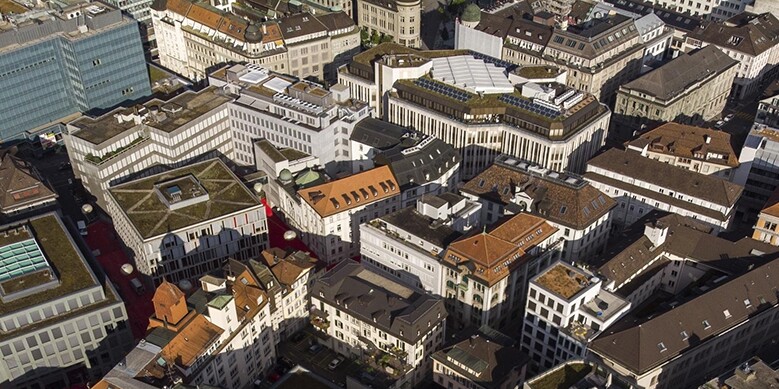
    Since 1996, the district court of St. Gallen has been split between two locations. A solution that was never intended to last. While the offices are housed in the Bohl 1 property, the court sessions are held at Neugasse 3/5. This division not only makes work processes more difficult, but also no longer meets today’s requirements in terms of security and functionality. With the planned move to the Schützengasse 1 property, the court will finally have a modern and coherent home.

    A building for the future
    Schützengasse 1 is owned by the Canton of St. Gallen and will be extensively renovated and modernised for its new purpose. The feasibility study has confirmed that the building is ideally suited to the needs of modern court operations. By bringing all services together at one location, not only can work processes be simplified, but security requirements can also be implemented in line with the times. The current rental solution at Neugasse 3/5 will therefore become obsolete, which will bring long-term financial benefits for the canton.

    Financing and costs at a glance
    The total costs for the project amount to around CHF 27 million. This amount includes CHF 8.5 million for the transfer of the property from financial to administrative assets. The actual costs for the renovation and conversion of the building amount to CHF 19.5 million according to a rough cost estimate. This investment is supplemented by a one-off compensation payment of CHF 780,000 from the City of St. Gallen. The elimination of the rental costs for Neugasse 3/5 will also provide long-term relief for the canton’s finances.

    Start of construction and schedule
    The construction project is scheduled to start in 2027. Completion and occupation are planned for the end of 2028. In the foreseeable future, the District Court of St. Gallen will therefore have a building that not only meets current requirements, but also takes future developments in the justice sector into account.

    The largest district court in the canton
    With around 3,300 court cases a year, the district court of St. Gallen is the most important of the canton’s seven district courts. It deals with cases in the areas of civil and criminal law and has a well-established team of currently 43 permanent employees. These include district court judges, court clerks, clerical staff and auditors. In addition, 14 part-time district judges are involved in handling the cases. These extensive tasks require an infrastructure that fulfils today’s requirements for efficiency, security and flexibility.

    Security as an integral part
    In addition to merging the locations, the security system is a central element of the project. Court operations today must meet high standards in order to ensure the integrity of proceedings and the protection of all parties involved. The new property will be remodelled in such a way that these requirements are met and all security-relevant aspects can be taken into account.

    A win-win situation for everyone involved
    The planned relocation of the St. Gallen district court not only represents an upgrade for the judicial centre, but also a sustainable investment in the quality and future viability of the cantonal court system. The optimisation of processes, the modernisation of the infrastructure and the energy-efficient refurbishment are steps towards efficient and resource-saving operations. At the same time, the parties to the proceedings benefit from a modern environment that facilitates negotiations and processes within an appropriate framework.


  • Renovation of Grütstrasse in Gossau for greater safety and noise protection

    Renovation of Grütstrasse in Gossau for greater safety and noise protection

    The Schlieren-based construction company STRABAG is renovating Grütstrasse in Gossau, according to a press release. The road, which is described as an important transport link, shows signs of damage to the carriageway. The road is now being renovated in order to modernise the infrastructure and improve road safety. “A central component of the measures is the structural redesign to increase safety for cyclists and pedestrians,” it continues. In addition, traffic noise is to be reduced with new 30 km/h zones. Completion is planned for the end of 2026.

    In addition to the renovation of the road surface, the project also includes other extensive work. The Gossauerbach stream, which runs under the greenway, will be upgraded to make it flood-proof. STRABAG is also renewing combined water pipes and drinking water pipes. Energy and shaft systems are being modernised and the infrastructure required for telecommunications is being expanded.

    “The renovation will provide the people of Gossau and all road users with greater road safety, modern infrastructure and improved flood protection,” says Remo Hürlimann, head of the construction department of the municipality of Gossau.

  • New facility management branch opened in St.Gallen

    New facility management branch opened in St.Gallen

    Hälg Facility Management AG will also have a presence in St.Gallen from the new year. The Zurich-based company, which was founded in 2000, is thus expanding its network to eastern Switzerland. It already has branches in Zurich, Bern, Münchenstein BL and Rotkreuz ZG. The company is part of Hälg Holding AG, based in St.Gallen. With 1144 employees at 27 locations in Switzerland, the group is active in building technology and property management.

    Markus Haldimann, the long-standing Managing Director of Hälg Facility Management AG, will take over the strategic management of the new branch, according to a company press release. Daniel Weber will be responsible for operational management as site manager. After training as a polymechanic, Weber completed a degree in facility management and continued his training in new energies. He will be responsible for providing services on site and further developing the St.Gallen team.

    “The expansion of our range of services here in St.Gallen not only strengthens our regional presence, it also offers our customers real added value,” Marcel Baumer, co-owner of the Hälg Group, is quoted as saying. “In addition to services in the area of building technology, we can now also offer our high service quality and expertise in the area of facility management.”

  • Burkhalter buys Bötschi Holding

    Burkhalter buys Bötschi Holding

    Burkhalter Group has acquired the building technology company Bötschi Holding. According to a media release from the Zurich-based service provider for heating and cooling, ventilation and air conditioning, sanitary and electrical engineering, the takeover is in pursuit of the expansion of its technology fields of sanitary, heating and ventilation in the cantons of Thurgau and St.Gallen. With the transaction, the subsidiaries Bötschi AG Feuer Luft Wasser, Angele AG Feuer Luft Wasser and Perl-Pool AG also join the Burkhalter Group.

    Burkhalter is taking over all 65 employees of the family-owned company based in Mauren and Bronschhofen. Its annual turnover in its core business of plumbing, heating and ventilation amounts to CHF 19 million. The companies will retain their company names and management.

    The purchase price will be settled in cash and by means of registered shares of Burkhalter Holding AG. For this purpose, the creation of 47,682 registered shares from authorised capital is planned. They are to be traded from the beginning or middle of May. The seller has undertaken not to sell the registered shares received from the sale for a period of two years.

    The service provider for heating and cooling, ventilation and air conditioning, sanitary and electrical engineering employs 4600 people at 150 locations in 80 companies.

  • New building in Rotmonten: A green oasis for St. Gallen

    New building in Rotmonten: A green oasis for St. Gallen

    The construction work for the replacement building in the area of Ludwigstrasse and Seeblickstrasse in the Rotmonten district in St. Gallen is in full swing. Compared to the old superstructure, the living space will be doubled: A total of 50 rental apartments – from 1.5 to 6.5 rooms – will be built in three buildings and three terraced single-family houses. The settlement thus offers diverse living space for mixed-age living in a natural environment.

    The garden city in a modern way
    At the beginning of the 20th century, the St. Gallen architect Adolf Gaudy created a green and yet urban structure in Rotmonten with his development plan. With the new development with extensive green areas, the AXA Investment Foundation is realizing a project that follows Adolf Gaudy’s idea of the garden city and is developing it further: “The mixture of contemporary residential and living space as well as extensive green areas are just 2.3 kilometers from the city center Central to the concept of Staufer & Hasler Architects and convinced us in the competition. Shapes and elements typical of the quarter were also incorporated and implemented in a contemporary way,” says Jan Biedermann, Development Project Manager at AXA Investment Managers.

    Cross-generational meeting places
    The heart of the new residential complex is a 70-year-old linden tree, embedded in the native and naturally planted garden courtyard. Together with the adjacent playground for children, this forms a meeting place for all ages. On these social areas, residents should have the opportunity to meet and exchange ideas. The apartments are all aligned with a view of the meeting places or green areas.

    Ecological construction
    The attic is designed in an element timber construction for an efficient and ecological construction method. This offers good sound insulation and ensures a comfortable room climate. The buildings are heated with geothermal heat pumps. In addition, the exhaust air from the apartments is collected and fed into an exhaust air heat pump for each house, which supplies energy for hot water. The entire building complex is Minergie-Eco certified.

  • Demand for condominiums is highly dependent on region and price

    Demand for condominiums is highly dependent on region and price

    The latest edition of the Online Home Market Analysis from the real estate portal Homegate and the Swiss Real Estate Institute (SwissREI) examines the advertisement data for condominiums for 2020 and 2021. The evaluated advertisements come from the four largest Swiss Internet portals and thus comprise around 85 percent of all online advertisements during the period under review. Detailed reports on the study for all regions can be found here in the online media release .

    For Martin Waeber, Managing Director Real Estate, SMG Swiss Marketplace Group, the latest online home market analysis shows how heterogeneous the Swiss condominium market is: “Overall, the demand for condominiums throughout Switzerland developed somewhat less dynamically last year due to the corona. However, certain market segments have seen lively demand over the past year, particularly in cities.” On average, the duration of advertisements in the low price segment has increased significantly in the cities examined, while it has remained practically unchanged in the higher price segment, although the number of advertisements has increased. “Similar to the rental apartment market, preferences in the condominium market have shifted away from smaller and cheaper to larger and more expensive properties during the Covid19 pandemic,” said Waeber, summarizing the study results.

    Longer advertisement duration despite smaller offer
    The significant increase in the average tendering period for condominiums from 61 to 84 days in 2020 compared to 2019 due to the Covid19 pandemic was confirmed at a high level in 2021 with 85 days. In comparison, the length of listings for single-family homes has fallen from just over 61 days in 2019 to pre-pandemic levels.

    On the other hand, around 20 percent fewer condominiums were offered online across Switzerland in 2021 than in the previous year. With such a severe shortage of offers, one would expect that the average duration of advertisements would also be correspondingly shorter. However, the fact that this has not shortened, but actually lengthened slightly, is evidence of a declining demand for condominiums across Switzerland for 2021.

    Prof. Dr. Peter Ilg, head of the SwissREI institute, sees several reasons for the weaker demand for condominiums: “Condominium prices in Switzerland rose by more than 8 percent on average in 2021. This is the strongest price increase in ten years. Such a significant increase in prices is likely to have had a dampening effect on demand in general. Increasing demand can only be seen in selected regions and in individual upper price segments, in which the buyers were probably able to increasingly resort to advance inheritances». This can be deduced, for example, from the distribution of taxable assets and homebuyers by age group. In the canton of Zurich, for example, the over-54s have more than half of the taxable assets, while across Switzerland the majority of home buyers are under the age of 55, Ilg continues. 

    Regional differences in the duration of advertisements are increasing
    From a regional perspective, the differences in the duration of advertisements in the eight major regions examined in 2021 have become more pronounced. In the Zurich region, where sellers have to advertise a condominium for the shortest time in Switzerland, the duration of the advertisement was reduced significantly by around a quarter to just 43 days (minus 14 days). In the two regions with the longest average duration of advertisements for a condominium, on the other hand, they continued to rise significantly, each at around 22 percent; the Vaud/Valais region recorded an increase of 18 to 98 days, Ticino by 25 to 139 days.

    In absolute terms, the greatest reduction in the length of advertisements was seen in the Central Switzerland region. After a decline of 19 days (minus 27 percent) for 2021 with 51 days, this region now has the second shortest advertisement duration of all eight regions surveyed, right after the Zurich region. The Geneva region, on the other hand, which still had the shortest advertisement duration in Switzerland at 52 days in 2020, fell back to third place in 2021 after an increase of 12 percent (plus 6 days).

    Increasing demand only in three out of eight regions examined
    The combination of the change in the duration of advertisements and the change in the number of advertisements allows conclusions to be drawn about the change in demand in the regions examined. In the three regions of Ticino, Vaud/Valais and Geneva, for the year 2021, despite a shortage of supply (i.e. a declining number of advertisements), there has been a significant increase in the duration of advertisements in some cases and thus a shrinking demand for condominiums. For the three regions of Central Switzerland, Northwestern Switzerland and Zurich, on the other hand, increasing demand (larger percentage decline in the length of advertisements than in the number of advertisements) can be observed. The other two regions (Eastern Switzerland and Espace Mittelland) show constant demand for 2021.

    Growth in demand for city apartments, especially in the upper price segment
    In addition to the eight regions, the Online Home Market Analysis also examines eight Swiss cities. When analyzing the demand for condominiums, a closer look at the price segment shows that demand in Basel, Lausanne, Geneva and Lugano in particular has increased. Both in the high price segment (CHF 1.5 million – CHF 3.0 million) and in the low price segment (CHF 0.3 million – CHF 0.5 million). In the high price segment, demand increased overall in six of the eight cities surveyed – in addition to Basel, Lausanne, Geneva, also in St. Gallen and Lucerne – while in the low price segment, the remaining four cities recorded constant or falling demand. This increased demand in the high price segment is now taking very different forms; While in Basel the declining length of advertisements in particular led to higher demand, in Geneva a much higher increase in the number of properties on offer compared to the length of advertisements indicated this conclusion.

  • Hälg Group looks to the future on its birthday

    Hälg Group looks to the future on its birthday

    On April 19, the building technology company Hälg celebrates the 100th anniversary of its founding in St. Gallen. According to the press release , the Hälg Group implements projects in the areas of heating, ventilation, air conditioning, cooling, sanitation and building automation as well as integral facility management, service and engineering services. The 1922 by Ferdinand Hälg as Ferd. Hälg central heating factory on Lukasstrasse in St.Gallen is still owner-managed today. The founder, who died in 1940, was succeeded by his son Emil Hälg. In 1986 his son-in-law Heinz Graf-Hälg took over the management of the company and in 2008 Roger and Marcel Baumer, Ursula Graf-Hälg’s sons, took over the management of the company.

    “Ferdinand Hälg and his successors laid the foundation for us to be able to be successful today in the fourth generation,” Roger and Marcel Baumer are quoted as saying. They see the fact that the headquarters of the Hälg Group are on the same site as the one-man business founded in 1922 as a “nice sign of continuity”. The focus of the anniversary year will be a celebration for employees and retirees. The celebrations will be held under the motto: Sustainable. Since 1922.

    According to its own statements, the group of companies employs 1,117 people at 22 locations in Switzerland and achieved sales of 315 million francs in 2021. The first order came on July 8, 1922 from the secondary school in Wil SG. The order volume at the time was CHF 693.

    Today, the Hälg Group includes the umbrella company Hälg Holding AG with the companies Hälg & Co. AG, Dober AG, Klima AG, Meneo Energie SA, Zahn + Co. AG, Hälg Facility Management AG in Zurich, and GOAG (General Optimizing AG) in Wallisellen ZH and Vadea AG in St.Gallen.

  • A lighthouse project for Wil

    A lighthouse project for Wil

    The development on Untere Bahnhofstrasse 1-11 is the result of a study commission to meet the high architectural and site planning requirements at this location, which is important in terms of traffic engineering and construction. The location between the railway tracks and Unterer Bahnhofstrasse placed high demands on the organization and floor plans in terms of emissions, living hygiene and quality of living: "In Eastern Switzerland, the first development of this size is being built here, which will be certified for a 2000 watt area," says the project manager Stefan Schreiber from real estate developer Mettler2Invest AG. "The new building eliminates a problem at the train station that has been referred to as a 'scand stain' in the local press for years."

    A new, covered two-wheeler parking facility for over 600 bicycles is being built in the basement. This is operated by the city of Wil and is directly connected to the SBB pedestrian underpass. With 100 units from 1½ to 5½ rooms, the complex offers a wide range of living space, suitable for single households, couples, families and senior citizens. 4100 m2 of space is available for office, service and retail use. The central location directly on the station square and on platform 1 of the SBB offers tenants and customers very good public access. The building is architecturally and economically a lighthouse project for Wil.

  • HB-Therm builds new headquarters in St.Gallen

    HB-Therm builds new headquarters in St.Gallen

    HB-Therm is the “world's leading manufacturer of temperature control units for the plastics processing industry”, as an article in the “Tagblatt” reveals. With its 150 employees , it produces its products, which are sold in more than 50 countries, exclusively in St.Gallen. The various departments are housed in four buildings around the St. Fiden train station. This will change with the new headquarters in St.Gallen-Winkeln. HB-Therm is investing 60 million francs in the new building; the groundbreaking ceremony recently took place.

    With the new building, however, not only the departments will be brought together under one roof. In addition, HB-Therm will increase its production capacities. 100 of the employees work in St.Gallen, and there will be space for 200 jobs in the future. From the move planned for 2023, more optimal process flows should then be made possible in the future. When choosing the location, it was always clear that HB-Therm would stay in St.Gallen. "We feel very comfortable here, we will stay here", CEO Reto Zürcher is quoted as saying, who also emphasizes that the company will build "the future" with the new headquarters. This is underlined by the targeted Minergie standard for sustainable building, a solar system with a peak output of 300 kilowatts and charging stations for electric vehicles.

    This commitment to a future in St.Gallen is described by Samuel Zuberbühler, Head of City Promotion, as a “strong symbol for the business and workplace”. He is pleased "that the jobs are being preserved and even new ones are being created," he is quoted in the "Tagblatt" newspaper.

  • St.Gallen gets a new hotel

    St.Gallen gets a new hotel

    HRS Real Estate AG will start work on the renovation of the Villa Wiesental and a new hotel building on April 26, according to a media release . The building permit was recently received by HRS and the City of St.Gallen Pension Fund. Since the symbolic groundbreaking ceremony will not take place due to the corona situation, the initiators are planning a ceremonial laying of the foundation stone for June.

    The combination of Villa Wiesental renovation and new hotel building is an "excellent urban development solution", according to HRS Real Estate. Both the historical building and the urban development in the Bahnhof Nord district are taken into account. After the renovation, the Pension Fund Stadt St.Gallen would like to offer representative office space in the Villa Wiesental.

    After the planned construction period of two years, the new hotel will be operated by Hotel Wiesental St.Gallen AG. It will have around 100 rooms. Both the hotel's parking area and the publicly accessible ground floor should contribute to the revitalization and upgrading of the quarter.

  • Implenia is renovating the St.Gallen city motorway

    Implenia is renovating the St.Gallen city motorway

    The Federal Roads Office has commissioned ARGE Stadtautobahn with the renovation of the St.Gallen urban motorway between the St.Gallen West and St.Gallen East connections, Implenia explains in a press release . The construction and real estate company from Dietlikon has a 30 percent stake in ARGE Stadtautobahn. In addition to construction work, Implenia will take over the commercial management of the project for the renovation of the St.Gallen city motorway.

    The repair work should start at the end of May and be completed by the end of 2024, Implenia further explains in the communication. During this period, coverings, drainage, edge closures and noise barriers will be renewed and some bridges, galleries, support structures and the Stephanshorn tunnel will be renovated. In addition, the construction of a new passerelle is planned.

    "The renovation of the St.Gallen city motorway is a complex, large-scale project," Christian Späth is quoted as saying in the communication. The Head Civil Engineering Division Implenia is looking forward to being able to “combine Implenia's accumulated expertise in bridge, tunnel and road construction with our extensive experience in managing large infrastructure projects”.

  • Replacement modules from several solar technicians form a new system

    Replacement modules from several solar technicians form a new system

    In St.Gallen, several solar technicians have collected the remaining modules from photovoltaic systems that have already been implemented. Now they are jointly producing solar power on the roof of the building called Lattich at the St.Gallen freight yard. The unusual project, about which the city of St.Gallen reported in a media release , provides solar energy for ten four-person households.

    This photovoltaic system is a joint project of the St.Galler Stadtwerke (sgsw) and five solar energy companies that have the Swisssolar quality label Solarprofi: Helion , Etavis Grossenbacher AG , Grob AG Gebäudehüllen, Huber + Monsch AG and solarmotion GmbH . They all delivered the solar modules that were no longer needed. They planned and created the system together with SGSW.

    In return for their contribution to the project, the partners involved receive solar power units on the Lattich roof and thus benefit from a credit on their electricity bills. Solar power units from the St.Gallen Solar Community are still available to the public on the roof of the Lerchenfeld ice rink.

  • The area between St.Gallen and Gossau receives the green light

    The area between St.Gallen and Gossau receives the green light

    The area between St.Gallen and Gossau is already home to numerous companies. Thanks to the motorway, the S-Bahn and the bus connections, it is already well developed today. Now both cities want to develop the 1.7 million square meter area between St.Gallen and Gossau. It should be upgraded in terms of traffic technology, attract new companies and give existing companies room for further development.

    The St.Gallen city parliament gave the green light for the development planning on October 27th, the Gossau city parliament followed on November 3rd, as the association Areal St.Gallen West – Gossau Ost writes in a message .

    The decision was made unanimously in both city parliaments. In the debate on October 27th, according to an article in the “Tagblatt”, the green St.Gallen city parliamentarian Andreas Hobi emphasized that the area has a high added value and that public transport should have its own route. Ivo Liechti emphasized on behalf of the CVP / EPP group that the area represents the largest contiguous work zone in the canton.

    The cost of development planning is budgeted at CHF 1.734 million. The two cities each contribute 611,200 francs of this. The canton takes on 20 percent of the remaining 30 percent, the neighboring municipality of Gaiserwald SG and the economy 5 percent each. The also adjacent Herisau AR does not contribute to the costs of the development.

  • Holcim supplies sustainable concrete for HSG Learning Center

    Holcim supplies sustainable concrete for HSG Learning Center

    The HSG Foundation is currently building the new HSG Learning Center on the premises of the University of St.Gallen ( HSG ). The general contractor HRS Real Estate AG has commissioned the Swiss Holcim AG with the delivery of the concretes. A new, more sustainable Holcim product, EvopactPLUS, is used in around half of the total of 6,000 cubic meters of concrete used.

    "With EvopactPLUS we close the building material cycle, conserve natural resources and save CO2," said Roger Dällenbach, Regional Manager for German-speaking Switzerland and Ticino, in a press release from Holcim. The new type of concrete replaces natural gravel with a reclaimed aggregate from the region. It also includes Susteno, which, according to the company, is the "first and only resource-saving cement in Europe that uses mixed granulate from demolitions as an additive". This fine material is not used in conventional concrete production and must therefore be dumped.

    "Compared to an already optimized mass cement, the use of Susteno saves 10 percent CO2," the press release said. Regionality also plays a role: the building material is delivered from the Holcim concrete plant in St.Gallen, just three kilometers from the construction site. "It was an experiment for us because we were working with the product for the first time," Holcim foreman Marcel Kunz is quoted as saying. He is very satisfied with it, "it's a wonderful concrete."

    In the future, the modern building should focus less on technical learning than on learning the necessary skills such as critical thinking and self-reflection, according to the client, the HSG Foundation . It finances this project largely from donations from HSG alumni .