Tag: Stabilität

  • Revolutionary building monitoring

    Revolutionary building monitoring

    Monitoring the statics and stability of structures requires maximum precision. This is precisely where the innovative metamaterial from the Karlsruhe Institute of Technology (KIT) comes in. This metamaterial, with artificially produced structures, exhibits exceptional elongation properties that conventional materials do not offer. Developed by a research team led by Professor Martin Wegener, the material can “communicate” forces and deformations over large distances, which was previously considered unthinkable in structural monitoring.

    Overcoming local limitations
    Metamaterials were previously limited to local interactions. The new material from KIT, however, enables the building blocks to interact with each other over long distances. Dr Yi Chen from KIT compares this property to “direct communication” within the material. A development that could revolutionise materials research and structural monitoring. This new type of structure opens up the possibility of monitoring buildings over a large area and reacting to structural changes at an early stage.

    Unusual elongation properties for greater safety
    One remarkable feature of this metamaterial is its reaction to elongation. It exhibits uneven expansion and compression in different sections. Unlike materials such as rubber, compression even occurs in some areas, which can indicate specific loads. These high sensitivity properties of the material make it ideal for engineering teams to closely monitor critical areas of a structure and react proactively to changes.

    More than construction monitoring
    The high sensitivity of the metamaterial opens up new possibilities not only in the construction industry, but also in biotechnology. The ability to precisely measure forces over large areas could also be used to characterise cell forces or for biological applications. The development therefore not only advances structural monitoring, but also offers new approaches in biological research.

  • Figures on the Swiss economic area

    Figures on the Swiss economic area

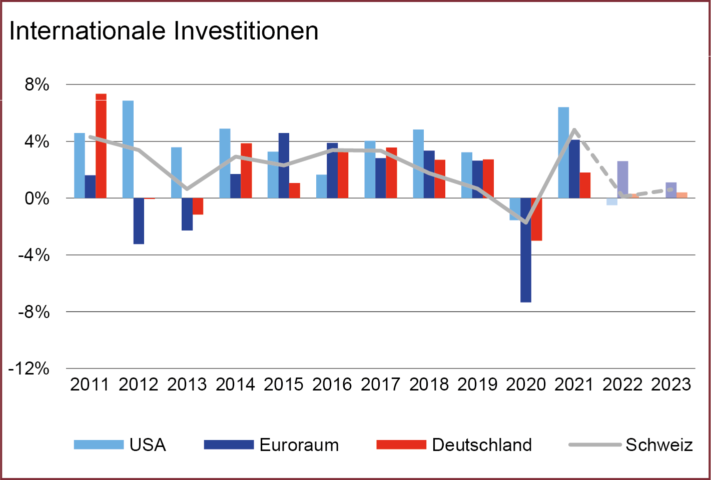
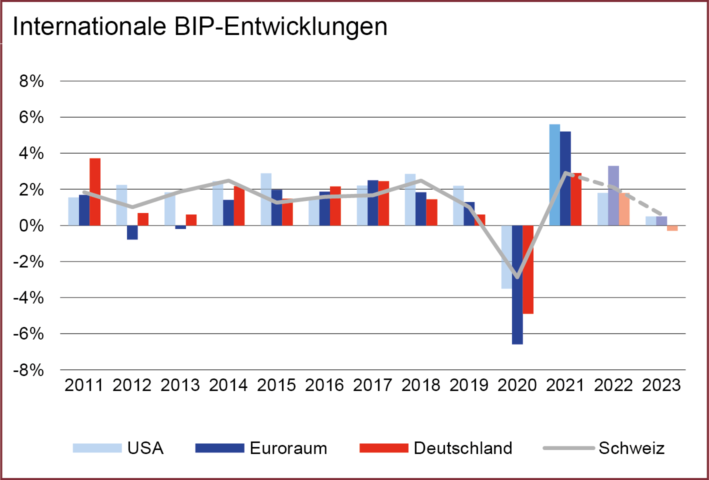
    International GDP development as well as investments have recovered excellently in 2021. However, the latest developments
    show that investment volumes are currently subdued and GDP development is cooling down worldwide. Economic analysts’ forecasts predict a slowdown in 2024 and a possible downward trend.

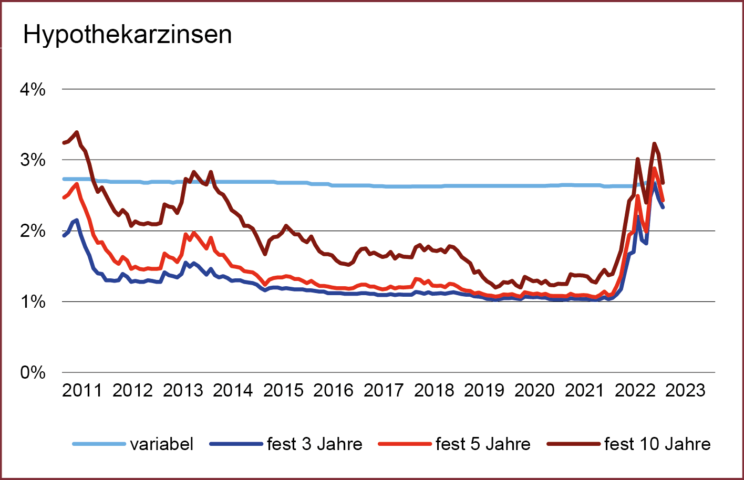
    The pandemic hardly plays a role in the media any more, but its consequences continue to be felt. In addition, rising energy and food prices as a result of the war in Ukraine, Corona measures by major economic players and supply chain problems have led to uncertainty, which is reflected in rising inflation rates. With the interest rate hike, the SNB was able to calm things down and is slightly above target. The forecasts of a slowdown in economic growth are reflected in a restrained development.

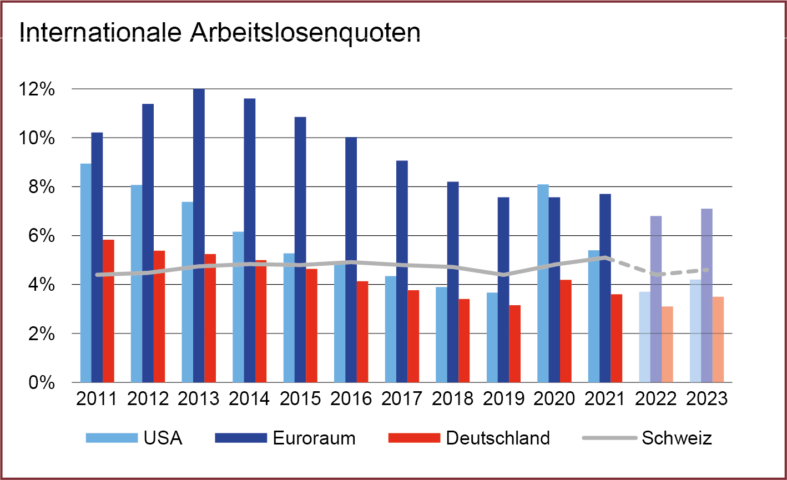
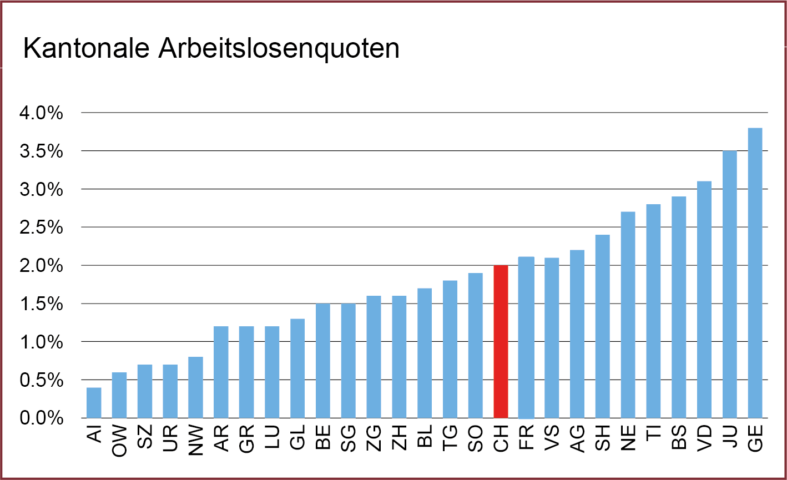
    Real incomes in Switzerland have fallen slightly, which, together with the pandemic-related pent-up demand in the consumer sector, is having a positive effect on the economy. The outlook for the labour market is good and an upswing is possible by 2024.

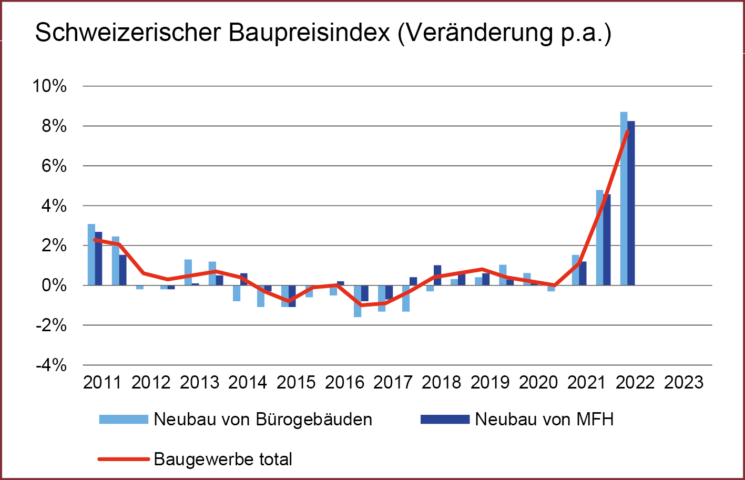
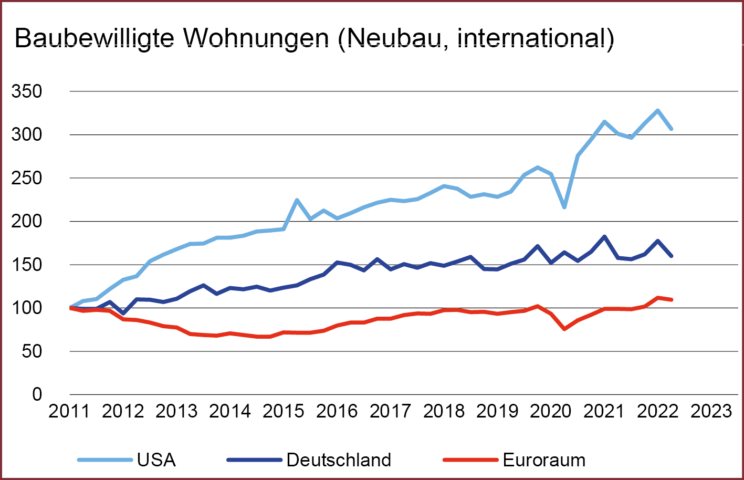
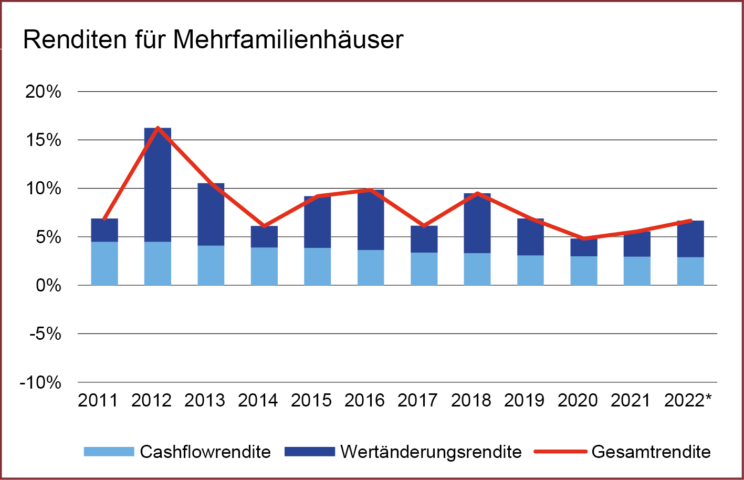
    The residential real estate market is robust and could not be affected by the financial crisis, the Corona pandemic or the war in Ukraine. The Swiss office market is unimpressed by the negative news from the global economy.

    Further interest rate steps by the SNB are expected and yields could rise slightly. However, due to immigration, vacancies in the periphery are falling and demand for space in the centres remains high, leading to rising market rents.

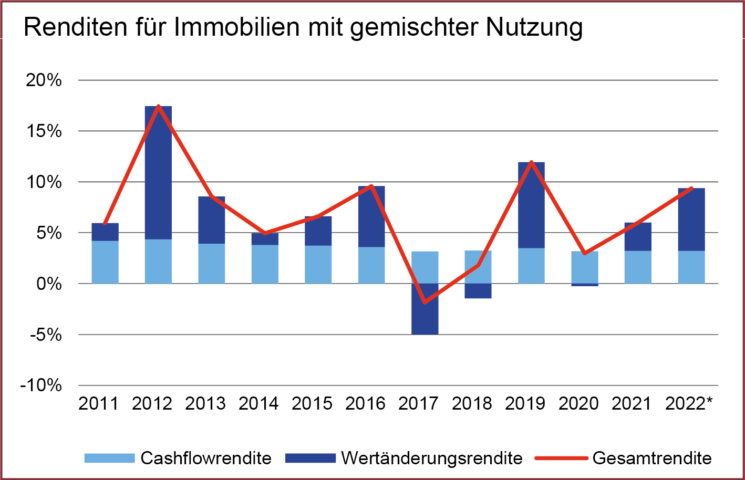
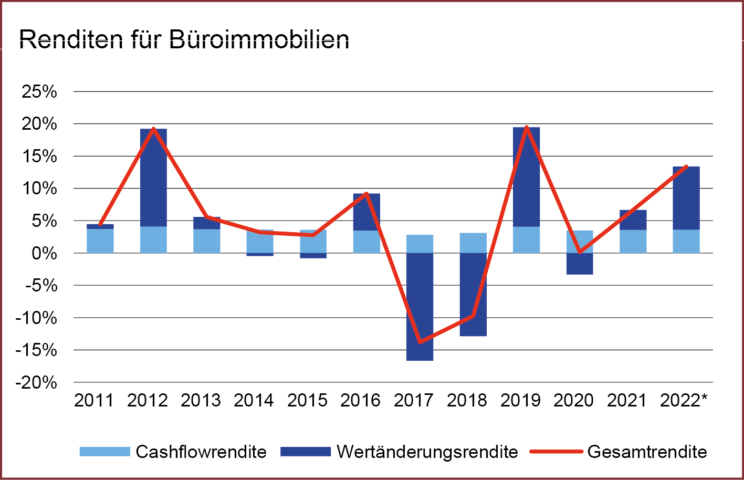
    In the area of commercial real estate, yields are not expected to rise in the near future, as interest rates could rise. There is a tendency for market values to fall, which could be cushioned by investors’ investment pressure.

  • Super core residential real estate for return and sustainability

    Super core residential real estate for return and sustainability

    In order to limit global warming to 1.5 degrees, the world must become climate-neutral by 2050 according to the Paris climate agreement. Real estate investors play an important role in reducing CO 2 emissions. According to the World Green Building Council, buildings cause around 40 percent of global CO 2 emissions during operation and construction.

    The 2050 climate goal represents a major challenge because it requires far-reaching measures in the building sector. At the same time, however, it also offers opportunities, especially when it comes to sustainable living space in popular cities. Based on particularly low-risk real estate in a prime location (core assets), in combination with the sustainability factor, one can speak of an up-and-coming “super core” asset class.

    Investment decisions are increasingly being made not only on the basis of expected returns, but also on the basis of environmental, social and corporate governance aspects (ESG criteria). Therefore, fund managers go to great lengths to meet sustainability criteria and to communicate transparently. A lot of money goes into optimizing the ESG profiles of potential investments, for example in the form of green building certifications or the climate neutralization of entire funds.

    But it is also clear that the industry as a whole needs clear rules if it is to fully exploit its potential to deal with the climate crisis. A corresponding legal framework offers a solid basis to support professional investors on their way to more sustainable decision-making processes.

    Financial and social returns

    This development also creates new investment opportunities, not least with the new asset class Super-Core. Residential properties in established urban regions with a strong ESG profile are sustainable per se – ecologically, socially and economically. They are also inherently low-risk, as sought-after residential areas in attractive cities have historically proven to be extremely crisis-proof.

    Super-Core also offers the opportunity to generate a social return. Large investors are able to manage large housing stocks efficiently and professionally with digital support. This increases the residents' quality of life. They like to live in the neighborhood and move less often. This is all the more true when social infrastructure such as day-care centers, green spaces and local amenities are already firmly integrated during the construction phase. Investors, in turn, benefit from lower tenant fluctuation, a higher occupancy rate and a more sustainable environment overall.

    Super-Core also means constructing buildings according to modern sustainability criteria. New near-natural materials and increasingly popular methods such as modular construction can massively reduce both CO 2 emissions and construction time and costs. The components are manufactured in factories and then assembled on site.

    It's not just about ESG

    It would, however, be wrong to restrict the view to new buildings. Most of the houses that we will live in in the next 50 years have already been built. The sustainable renovation of existing buildings is therefore becoming increasingly important. While every building is different, there are many ways to achieve significant results at relatively low cost. The simple measures include changing the lighting, ventilation and insulation, modern heat and water supply and photovoltaic systems. Greenwashing and redevelopment just for the sake of rent increases must be avoided at all costs. Investors and tenants would rightly rebel.

    As important as sustainability is, the appeal of super-core residential real estate lies just as much in its financial security. Aside from logistics, no other real estate market segment has proven as resilient in terms of cash flow and valuations as residential real estate over the past several years. The new Super-Core asset class is a real asset for real estate investors.