Tag: Stadtklima

  • Plane trees cool cities even in extreme heat

    Plane trees cool cities even in extreme heat

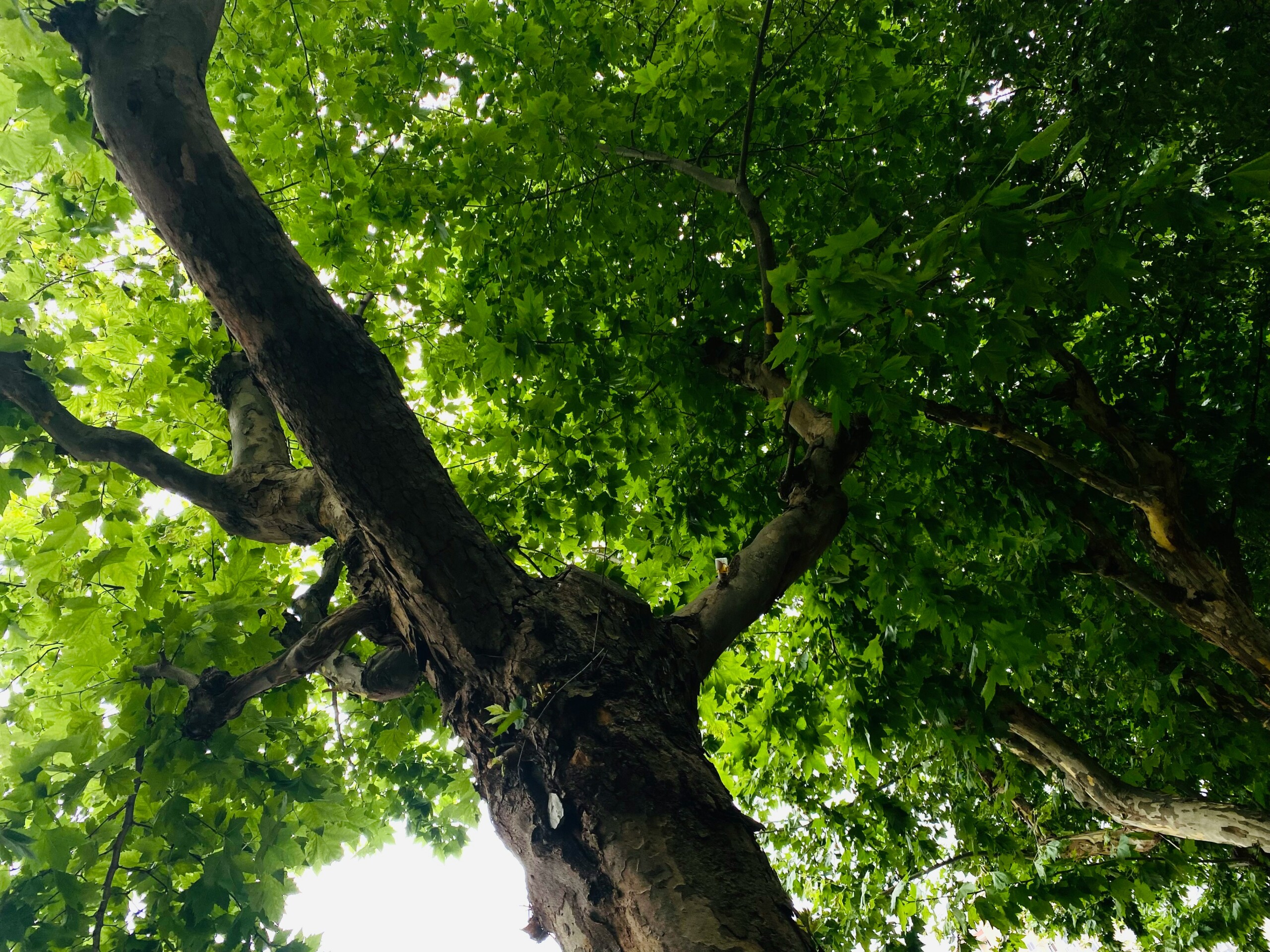
    Even in extreme heat of over 39 degrees, plane trees evaporate water and cool their surroundings. These are the findings of a study conducted by the Swiss Federal Institute for Forest, Snow and Landscape Research(WSL) based in Birmensdorf and the Swiss Federal Institute of Technology Lausanne(EPFL). According to a press release, the study was conducted in spring and summer 2023 in Lancy in the canton of Geneva. This experienced two heatwaves of up to almost 40 degrees during the measurement period.

    The researchers measured the sap flow on eight sycamore tree trunks. This allows conclusions to be drawn about the amount of water evaporated and thus the cooling capacity of the trees. The water flow increased despite increasing heat and dry air. The researchers assume that deep-lying water reserves in the soil enabled the increasing water flow.

    The study disproves the assumption that trees close their leaf pores from a temperature of 30 to 35 degrees in order to prevent water loss, meaning that the cooling effect is lost. Previous models used to determine the future distribution of heat in cities would therefore be inaccurate, according to the press release.

    The persistent cooling effect of the plane trees is good news for the urban climate. “Days with temperatures above 30 degrees Celsius are becoming more frequent,” explains study leader Dr Christoph Bachofen.

    “Obviously, we have not yet fully understood how trees react to extreme conditions,” says Bachofen. In future, the researchers want to measure the transpiration behaviour of other urban trees in extreme heat. In this way, they hope to find out which tree species are able to cope with heat and best fulfil their cooling function in cities.
  • Choice of materials to combat the urban heat

    Choice of materials to combat the urban heat

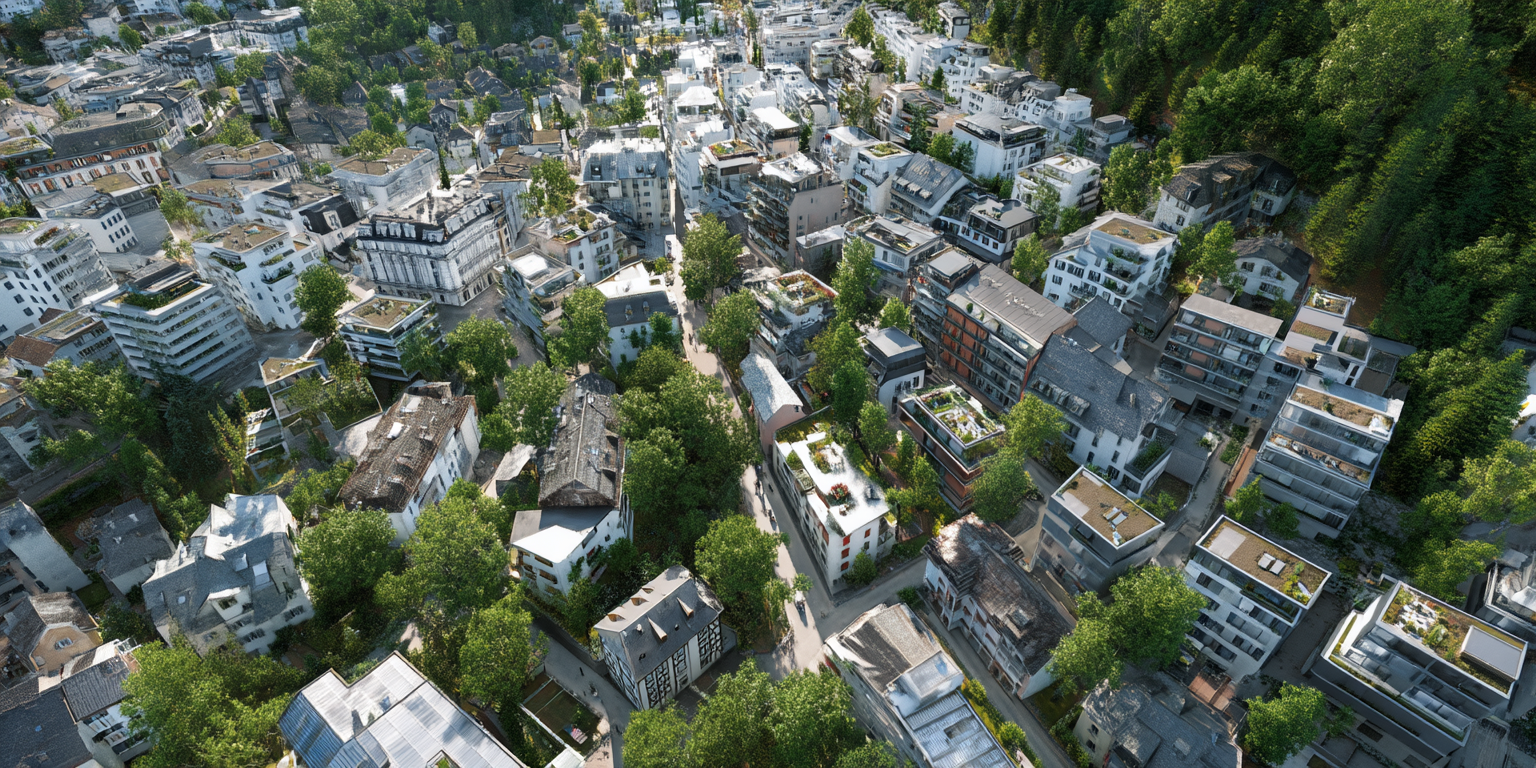
    Switzerland is heading for hotter summers, more hot days and more frequent extreme weather events. Cities and densely populated areas in particular heat up more than their surrounding areas and cool down more slowly at night – the well-known heat island effect. It is directly related to the way buildings are constructed; dense sealing, dark surfaces and solid structures store heat and only release it again with a delay.

    Because buildings and infrastructures stand for decades, the materials used today shape the microclimate of tomorrow. This makes the choice of materials a strategic decision. It influences not only energy requirements and comfort in the building, but also health and quality of stay in public spaces.

    What the new edition does
    This is where the second, expanded edition of the materials catalog comes in. The reference work from the Federal Office for Housing shows how different building materials influence the outside temperature and what contribution they make to a heat-resilient urban climate.

    The catalog compares common outdoor materials such as floor coverings, facades and now also roofs and greenery in dry and wet conditions. In addition to the effect on the ambient temperature, it takes into account additional properties such as reflection of solar radiation, durability and, in the case of coverings, infiltration capacity. This creates an overall picture that combines thermal, functional and water management aspects.

    Updated method, comparable results
    The new edition is based on simulations carried out by the University of Applied Sciences Northwestern Switzerland on behalf of the Swiss Federal Office of Energy and the BWO. The materials already included in the first edition were also recalculated using improved simulation software.

    As a result, all results are based on a uniform methodological standard and can be directly compared with each other. For planners, this means that they can compare variants qualitatively and quantitatively and better justify their decisions to clients and authorities.

    Tool for planning and implementation
    The material catalog is designed as a practice-oriented reference work for new buildings and renovations in densely built-up areas. It supports specialist planners and property developers in integrating the effect of material selection on heat development into their processes at an early stage, from the project idea to detailed planning.

    In combination with other instruments for climate-adapted urban development, the catalog becomes a building block for heat-resilient districts. It helps to brighten surfaces in a targeted manner, utilize evaporation capacity, improve infiltration and thus gradually make the urban climate more robust in the face of climate change.

  • Basel-Stadt tests CO2-neutral concrete in pedestrian zones

    Basel-Stadt tests CO2-neutral concrete in pedestrian zones

    The Department of Construction and Transport of the Canton of Basel-Stadt is currently trialling new furniture for Basel’s pedestrian zones in Birkenstrasse and Göschenenstrasse. According to a press release, CO2-neutral and cement-reduced concrete is being tested for their production. The new benches are also equipped with small tables and mounting options for awnings, while the plant troughs for large shrubs will provide shade in future. During the one-year test phase, residents will be able to provide ongoing feedback.

    As the furniture in the meeting zones needs to be both robust and durable, it has so far mainly been made of concrete. However, the cement binder usually contained in concrete causes high CO2 emissions during production. The new materials currently being developed are intended to solve this problem. On the one hand, a CO2-neutral concrete mixed with biochar is being used. This stores CO2 and thus permanently removes it from the atmosphere. On the other hand, a mixture of conventional and cement-free concrete is being tested. A mineral binder made from crushed concrete and clinker rubble is intended to reduce the proportion of cement and thus also CO2 emissions.

    There is also enough space in the new plant troughs for shrubs up to five metres high or larger climbing plants. For example, an ironwood tree and a wisteria, both of which are considered climate-resistant, are now being planted. The rest of the troughs can be planted by the residents themselves.

    Since 2002, over 90 meeting zones have been set up in Basel’s residential neighbourhoods. The background to the new furniture is the residents’ desire for more opportunities for greenery and shade as well as a better quality of life in the zones.

  • Dietikon presents new building and zoning regulations

    Dietikon presents new building and zoning regulations

    The building and zoning regulations of the town of Dietikon are undergoing a complete revision. On 31 October 2024, the town presented the overall revision to the population. The BZO regulates what, where and how can be built in Dietikon in the future. According to a press release, the draft revision is open to the public until 23 December. During this period, all interested parties are invited to submit written comments and suggestions, according to the city’s press release.

    The municipal building and zoning regulations date back to 1987, and Dietikon’s binding municipal structure plan was approved in autumn 2022. This and requirements such as the new planning and building law of the canton of Zurich were the impetus for the revision.

    With this overall revision of the BZO, the city is creating the strategic and building law framework for the renewal and further development of the current settlement structure, according to the city’s press release. Increasing the building density and thus changing the settlement structure in the outer residential neighbourhoods will be avoided in order to protect the green and uniform structures. Instead, the focus is on the development of central areas that are accessible by public transport, such as the city centre or the city boulevard.

    According to the city, the desired development should not simply offer more space for residents and employees, but also contribute to a higher quality of settlement. There are various specifications for private open and recreational spaces as well as measures to promote biodiversity and improve the urban climate.

  • Sursee makes solar systems and green roofs standard

    Sursee makes solar systems and green roofs standard

    In future, the roofs of new buildings or roof renovations in the municipality of Sursee are to be fitted with solar panels. For flat roofs, the aim is also to green them. This was decided by the Sursee municipal council on 14 October with the majority approval of a counter-proposal to the municipal initiative for an independent and ecological energy supply (solar initiative). The initiative committee had withdrawn the solar initiative after the city council had drafted the counter-proposal.

    The counter-proposal is in line with the new cantonal energy law, which will come into force on 1 March 2025, subject to a referendum. New buildings will then have to be equipped with 60 per cent solar panels, and 30 per cent for roof renovations. If the requirements are not met, a replacement levy of CHF 1,000 per kilowatt will be due. In deviation from cantonal law, this levy will only be possible in Sursee if the construction and operation of the solar system is economically unreasonable.

    The new cantonal energy law does not specify any requirements for the greening of roofs. However, Sursee wants to use green roofs to improve the urban climate and as a substitute habitat for plants and animals. For this reason, a combination of green roofs and solar panels is being sought as standard on flat roofs.

    The solar utilisation of façades called for in the solar initiative is not provided for in the counter-proposal. The city council feared that this would have a negative impact on the townscape. In addition, the cost-benefit ratio of façade systems is currently even worse than that of roof systems.

  • University of Bern makes Postgasse even greener

    University of Bern makes Postgasse even greener

    The University of Bern launched the project “The greenest alley in the world” in 2023 with a greening campaign in Postgasse. A second planting day took place on 25 May. “Our aim was and is to increase biodiversity, improve the urban climate locally and enhance the quality of life of residents with the minimum possible structural measures,” said Matthias Erb, initiator of the project and professor at the Institute of Plant Sciences at the University of Bern, in a press release.

    The project is supported by the City of Bern and partners from Bern’s business community, which means that the residents of Postgasse can design their neighbourhood largely free of charge. in 2023, eight trees, 23 small shrubs and over 300 seedlings were planted. This year, plants, soil and pots were delivered to Postgasse to continue the greening process. All residents were invited to take part in the gardening work. Boum, a spin-off company from the University of Bern, provided plant pots with an irrigation function.

    After planting in 2023, the Institute of Geography at the University of Bern carried out measurements that showed a localised drop in surface temperature. In order to have a noticeable impact on the air temperature, the greening would have to be significantly advanced, according to the press release. “I am confident that with further greening we can counteract the loss of biodiversity and, at least locally, the effects of extreme heat,” Adrian Métry, head of the project, is quoted as saying. A survey showed that 78 per cent of residents perceive the alley to be significantly greener after the first greening campaign, which improves the quality of life. According to the survey, a third of respondents had noticed a positive climate effect. 53 per cent said the project had prompted them to think about issues such as climate change and community. 94 per cent agreed to further greening with communal gardening.