Tag: Ständerat

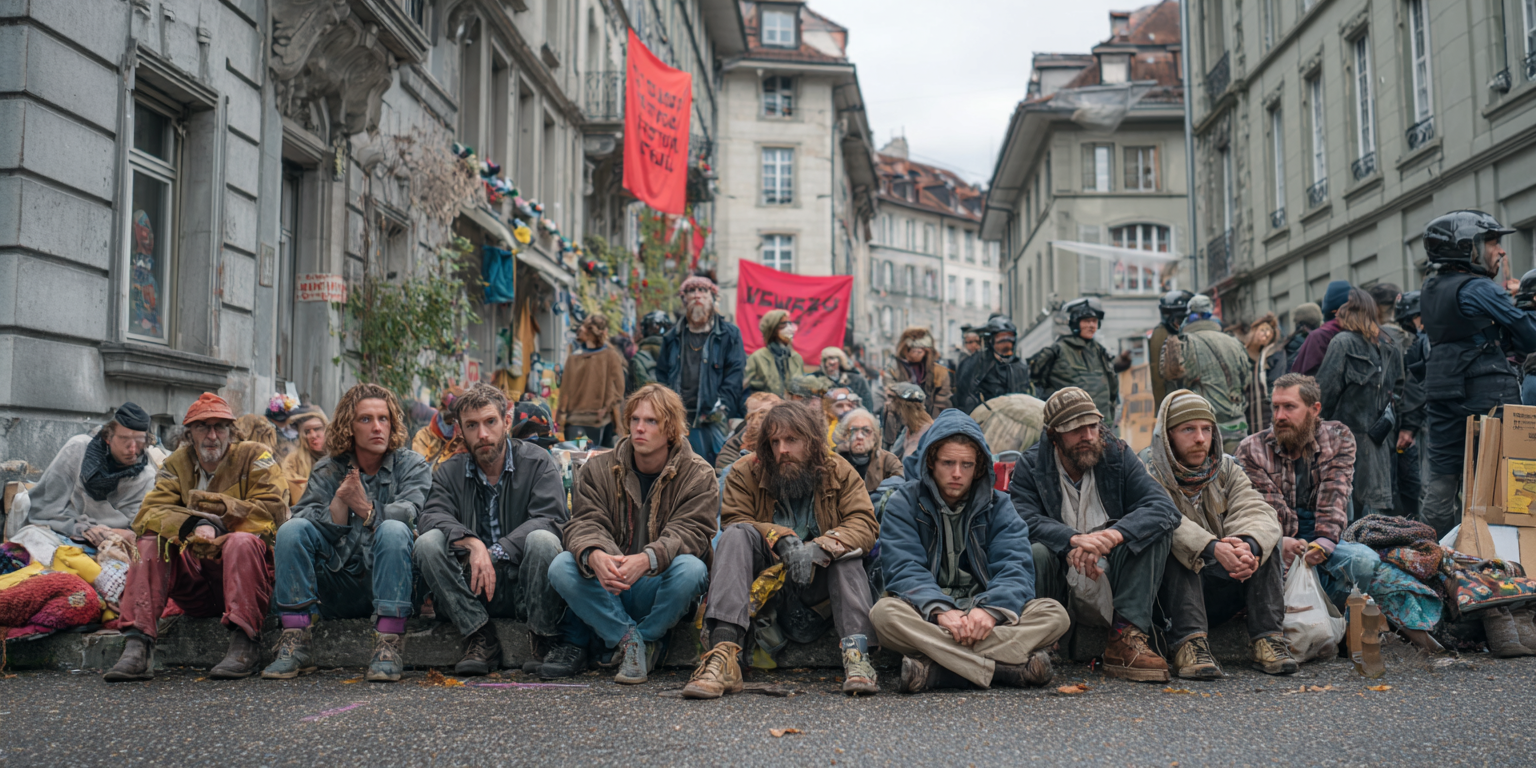
  • Protect property more effectively against squatters

    Protect property more effectively against squatters

    On Monday, the Council of States adopted the Federal Council’s proposal to amend the Civil Code by a large majority. Owners should now be able to reclaim their property themselves within a “reasonable period” after becoming aware of an occupation. Previously, the condition “immediately” applied. This change gives owners more flexibility and room for maneuver in the event of unlawful occupation.

    Rapid eviction even in the case of unknown squatters
    The second key amendment to the law is also intended to enable homeowners to obtain an eviction more quickly, especially if the number or identity of the squatters is unclear. This should prevent unlawful occupations from continuing in the long term and owners from having to bear high follow-up costs.

    Controversial voices from the Council of States
    However, the bill was not uncontroversial. Carlo Sommaruga, SP member of the Council of States from Geneva, criticized the tightening of the law as superfluous, as many squats are regulated by interim use agreements anyway. According to Sommaruga, rising rents and the housing shortage are much more relevant in this context.

    Further process in parliament
    Although there is still a small difference of opinion between the two chambers, the way has basically been paved for a stronger position for owners in the case of squatting. The bill now returns to the National Council for finalization.

  • Legal need for action in the event of construction defects

    Legal need for action in the event of construction defects

    The current legal situation is proving to be disadvantageous for buyers of new builds and private developers. Problematic contractual clauses that have developed in practice put them at a considerable disadvantage. The existing law assumes two equally strong negotiating partners, which is not the case in reality. Professional contractors and sellers dictate the terms of the contract, while private developers have no negotiating power due to the high demand in the real estate market. This “eat or die” mentality puts them under massive pressure.

    The National Council’s proposals: Abolition of the separatenotice period
    The National Council has created a practicable proposal, the core of which is the abolition of the separate notice period for defects. Currently, buyers and builders have to observe two deadlines: the notice period and the limitation period. The notice period requires a detailed notification of defects to the right person within a short period of time. If this deadline is missed, buyers and builders lose all warranty rights. The limitation period is the second requirement. The abolition of the notice period would solve the main problem that many lose their statutory liability claims because they are unable to give notice of construction defects in good time. HEV Switzerland supported this decision by the National Council.

    The position of the Council of States: Extension of the notice period, but no abolition
    The Council of States recognizes the need for action to improve liability for construction defects, but maintains the notice period, albeit extended to 60 days. However, this extension does not solve the fundamental problem that private buyers and builders lose their rights in the event of defects if they do not comply with the legal requirements of a notice of defects within the deadline.

    No extension of the limitation period
    The Council of States is also adamant about the limitation period. The existing period of five years remains in place and can be shortened further by contract. The National Council had called for this period to be extended to ten years in order to do justice to the buyer’s claims for defects. For homeowners and condominium owners, the onset of the limitation period means that they can no longer enforce their rights in the event of construction defects and must bear the costs themselves. In view of the long service life of many building components, this short limitation period is problematic. HEV Switzerland is disappointed that private lay purchasers and building owners continue to be disadvantaged.

    Referral back to the National Council
    The bill will now be referred back to the National Council. HEV Switzerland remains committed to improving the legal situation of private home and condominium owners in the event of construction defects. The hope remains that further discussions and adjustments will lead to a solution that meets the needs and rights of private builders and property buyers.

  • Councils agree on CHF 646 million for location promotion

    Councils agree on CHF 646 million for location promotion

    In the years 2024 to 2027, a total of around CHF 646 million is to flow into the promotion of the location. The two chambers of parliament have agreed on this, the parliamentary services inform in a press release. Specifically, the Council of States withdrew its vote for an increase in funding for tourism promotion and the contribution to the Regional Development Fund. Both areas are to receive the same amount of funding for the coming years as for the expiring period.

    The Federal Council had already set out the goals for location promotion for the years 2024 to 2027 in January. According to these, the framework conditions for SMEs are to be improved, the regions strengthened and the opportunities of digitalisation exploited. Furthermore, location promotion should contribute to sustainable development and strengthen the attractiveness of business and tourism.

    The Swiss Tourism Association(STV) has mixed feelings about the agreement of the councils. On the one hand, the stakeholders of the tourism sector were relieved “that the proposals of the Federal Council regarding the financial means for the tourism promotion instruments could be maintained”, according to a corresponding statement of the STV. On the other hand, it is feared that planned commitment to sustainability and digitalisation in particular will fall victim to the red pencil. Due to high inflation in some source markets, the unchanged funding level also means “a substantial reduction in funds for foreign marketing”, the association writes.

  • Council of States approves Real Estate Message 2023

    Council of States approves Real Estate Message 2023

    the Federal Council wants to invest 29.5 million francs in the expansion and renovation of the Agroscope research centre in Zurich-Reckenholz. The underground connecting level of the federal administration and laboratory buildings in Liebefeld (municipality of Köniz BE) is to be expanded at a cost of CHF 21.1 million.

    For 27.5 million Swiss francs, the Federal Council wants to have a new building and a new office built for the Swiss representation in Cameroon’s capital. The two buildings are to be constructed on the grounds of the Swiss Embassy and replace rented buildings.

    The Real Estate Dispatch also includes expenditure of CHF 140 million for projects not individually specified below an amount of ten million francs. The Council of States unanimously adopted the federal resolution on the real estate message on Monday. It still goes to the National Council.

  • Compulsory solar on buildings rejected by Energy Commission

    Compulsory solar on buildings rejected by Energy Commission

    In intensive discussions, the Energy Commission of the Council of States dealt with the differences regarding the Federal Act on a Secure Electricity Supply with Renewable Energies (21.047). It introduced new proposals on numerous points in order to find an appropriate balance between protection and use interests and thus create a broadly supported bill. By 8 votes to 5, the Commission proposes the deletion of the article on the suspension of residual flow regulations for existing hydropower plants, as decided by the National Council. It emphasises that the proposed provision is constitutionally questionable. Moreover, there would be enough time to find a balanced solution to the problem of impending production losses at existing hydropower plants. A minority would like to follow the National Council’s lead, since without the full preservation of existing electricity production from hydropower, the targeted expansion of renewable energies could not be achieved.

    The Commission is also in favour of identifying suitable areas for the use of solar and wind energy in the cantonal structure plans. Conservation interests should also be taken into account in this planning. In the defined areas, the need for facilities for the use of renewable energies should be identified and the facilities should be site-specific. In addition, they are to take precedence over other national interests in a balancing of interests. The condition for this is that the installations are not realised in inventory objects according to Art. 5 NHG. In addition, the “Chlus” project should benefit from the same facilitations as the 15 selected projects for storage hydropower. A minority rejects this amendment.

    NATIONAL INTEREST IN FACILITIES FOR THE USE OF RENEWABLE ENERG IES
    The Commission also dealt with the framework conditions for facilities for the use of renewable energies in the national interest. As decided by the National Council, these should continue to be excluded in biotopes of national importance as well as in waterbird and migratory bird reserves, but in newly emerging glacier forelands and alpine alluvial plains they should in principle be eligible. This exclusion should not apply to hydropower plants that serve ecological restoration. In addition, it should now be possible for the residual flow to run through these protected areas during the construction of hydropower plants; a minority wants to adhere to the National Council’s decision here. By 9 votes to 3, the Commission would like to maintain that electrolysers and methanisation plants above a certain size and importance should also be considered of national interest in terms of nature and cultural heritage protection (NHG).

    COMPULSORYUSE OF SOLAR ENERGY
    The Commission rejects the National Council’s decision to make solarenergy compulsory for all new buildings as well as significant conversion and renovation projects as too strong an encroachment on private property and the sovereignty of the cantons. Instead, it proposes by 6 votes to 4 with 2 abstentions that the mandatory use of solar energy on buildings with an area of 300 m2 or more, as decided by the “Federal Act on Urgent Measures for the Short-Term Provision of a Secure Electricity Supply in Winter” (21.501, draft 4), be transferred into the applicable law for an unlimited period. A minority calls for a solar obligation in accordance with the National Council, but this should only apply to new buildings and roof renovations. In addition, the Commission supports, by 7 votes to 3, an obligation to roof vehicle parking spaces of a certain size with solar elements. This obligation should apply immediately to new parking spaces of 250 m2 or more, and to existing parking spaces of 500 m2 or more with a transitional period of 5 years. A minority wants to abolish this obligation completely; according to another minority, it should only apply to new parking spaces from 500 m2 and to existing parking spaces from 1000 m2.

    In the area of the promotion of renewable energies, the Commission proposes that the Federal Council be given the authority to set minimum remuneration for the return to the grid operator for installations up to 150 kW. This should also create investment security for smaller and thus more expensive plants. In return, the transitional provisions with fixed remuneration adopted by the National Council are to be deleted, as they place too great a burden on grid operators and tied electricity consumers. In addition, the UREK-S would like to retain the creation of a special incentive for winter electricity production within the framework of the sliding market premium. If the reference market price for electricity in the winter months exceeds the guaranteed remuneration, the plant operator should receive a share of between 10 and 40 % of the surplus, to be determined by the Federal Council.

    CREATION OF A MARKET FOR EFFICIENCY SERVICES
    The Commission supports the programme for the creation of a market for efficiency services adopted by the National Council by 6 votes to 5 with one abstention. This programme stipulates that the energy supply companies (EVU) must prove annually that they have provided a certain amount of measures to increase electricity efficiency for end consumers or that they have commissioned these measures from third parties, so-called efficiency service providers. Whether the target is met or not is not measured by the electricity sales of the energy supply company: the efficiency services represent a new, independent business field. The measures are also not limited to the grid area of the respective utility. This means that the most favourable measures can be taken first throughout Switzerland. A minority rejects this efficiency programme, pointing to the enforcement effort, conflicting goals of the RUs and the existing measures to increase efficiency.

    On the question of the energy reserve pursuant to Art. 8a StromVG, the Commission basically follows the decision of the National Council. Operators of storage hydropower plants should be able to be obliged to set up a reserve. However, certain framework conditions are to be changed; for example, the obligation should only be possible for operators of plants with a capacity of 10 GWh or more. In addition, the compensation for the water held in reserve should also take into account the current market situation.

    FRAMEWORK CONDITIONS FOR THE ELECTRICITY NETWORKS OF THE FUTURE
    By 11 votes to 1 with 1 abstention, the Commission is in favour of all grid reinforcements necessary for the feed-in of renewable energy being passed on to electricity consumers throughout Switzerland on a solidarity basis. For expansions at the lowest grid level, a lump sum should be paid to the grid operator without requiring approval from Elcom. Like the National Council, the Commission also proposes that the costs for the reinforcement of certain connection lines be allocated for at the national level. Lines between the boundary of the property on which a renewable energy production facility is located and the grid connection point are to benefit from this support.

    In the area of the basic supply of electricity (Art. 6 StromVG), the Commission proposes to retain the current law and thus the average price method. The amendment adopted by the National Council was not convincing. However, the Commission supports the introduction of a standard electricity product, which should be based in particular on renewable domestic energy.

    The Commission proposes to refrain from opening the market in the area of metering and thus adheres to the decision of the Council of States. However, the data collected by the grid operators should be better available. Furthermore, it follows the decision of the National Council, according to which storage facilities with end consumption should also be relieved of the grid usage fee: It should be possible to reimburse the grid fee for the electricity fed back into the grid. A minority proposes to adhere to the decisions of the Council of States. Furthermore, the use of flexibility in electricity consumption should only be possible with the express consent of the owner.

    In view of the complex differences regarding the overcoat decree (21.047), the Commission was unable to conclude the detailed discussion on the CO2 Act (22.061) in time for it to be dealt with in the summer session. It will bring this bill into the autumn session.

    The Commission met in Bern on 11/12 May 2023 under the chairmanship of Councillor of States Adèle Thorens Goumaz (G, VD) and partly in the presence of Federal Councillor Albert Rösti.
  • The federal government wants to develop a concept for energy-efficient measures in buildings

    The federal government wants to develop a concept for energy-efficient measures in buildings

    In his motion of September 26, 2019, the then National Councilor Christoph Eymann (LDP/BS) asked the Federal Council to “submit an implementation concept for energy-efficient Minergie-P measures to reduce the 80 percent energy losses in the building sector and also the use of roof and facade surfaces for solar energy production”. The National Council approved the initiative in June last year. At its meeting on May 31, the Council of States also approved the motion, the parliamentary services inform in a statement .

    However, because the Council of States has made an addition to the text, the motion will first go back to the National Council, is explained further in the communication. Specifically, the cantons should be involved in the development of the concept. This was recommended by the State Council Commission for the Environment, Spatial Planning and Energy ( Urek-S ) due to major cantonal differences in the existing building program.

    The Federal Council supports Eymann’s motion. “In view of the increased energy prices, for example because of the Ukraine war, the concern is not only important in terms of climate policy, but also economically,” quoted the Parliamentary Services Environment Minister Simonetta Sommaruga. “The population can be relieved in this way.”