In response to global tax developments, the canton of Lucerne is planning a package of measures from 2026 to improve the framework conditions for companies and the quality of life of the population. According to a press release, the investment package comprises 250 million francs in the first year and 300 million francs annually from 2027 and is to be channelled into “a broad range of measures”.
According to the press release, global developments could lead to massive losses in competitive advantage. Developments such as the OECD minimum taxation could lead to the canton losing its advantage in the form of low corporate profit taxes. This could lead to large international corporations no longer investing in Lucerne – at the expense of local jobs and tax revenue. There is talk of a loss of fiscal revenue totalling CHF 1100 million for the federal government, canton and municipalities.
By promoting innovation, improving the tax burden, increasing digitalisation, developing economic areas, the availability of commercial and residential space and a customer-oriented administration, the aim is to create more attractive conditions for large global companies based here.
The population should benefit from a lower tax burden, a better work-life balance, culture and digitalisation. The vote of the electorate is due to take place in September 2026.
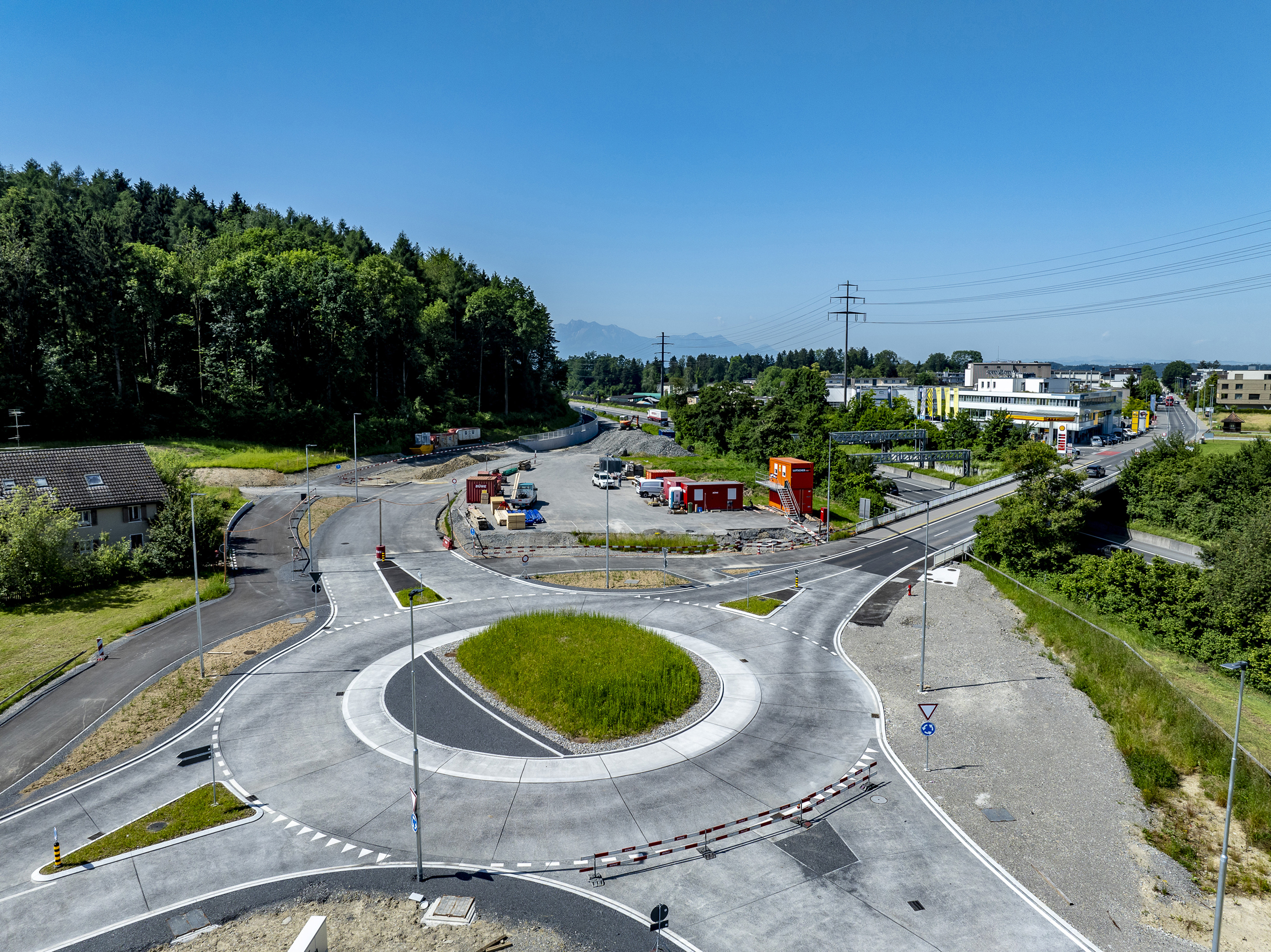
The Cham-Hünenberg bypass (UCH) is more than just a new road. It is the last big piece of the puzzle in the transport planning of the Canton of Zug, which not only serves to bundle transit traffic, but also to free the centre of Cham from through traffic. This ambitious project, which is being implemented by the Canton of Zug’s Department of Construction in collaboration with the Ennetsee municipalities, aims to enhance living and economic areas and improve mobility for all road users.
Construction and location Construction of the UCH has already begun and is scheduled for completion in 2027. The route runs predominantly parallel to the A4 motorway, which allows for minimal land consumption and efficient use of space. This aspect is particularly important in order not to jeopardise the planned settlement and landscape development in the Ennetsee municipalities.
Tunnelling and construction work The main work on the Städtlerwald road tunnel began in March 2024 with the construction of the pumping stations and settling basins. The tunnel operations centre is also being built, while the pre-cut for the Stumpen tunnel portal is being constructed in parallel. The tunnel itself will have a total length of 543 metres, the majority of which will be created underground using a roadheader.
Progress of the preliminary work Preliminary construction work has been taking place along the future UCH route since 2022 and has now been completed. The first ground works along the western UCH perimeter and neighbouring N4 national roads are already in full swing. Neighbouring woodland areas have already been cleared, with the standing tree trunks being handed over to the hydraulic engineering department for later projects.
A benefit for all road users The Cham-Hünenberg bypass not only promises improvements for road traffic, but also positive effects on the quality of life of local residents. By relieving the congestion in the villages of Cham and Hünenberg, a quieter and safer living environment will be created, offering space for additional leisure and recreational activities. The improved transport links will also encourage companies to settle in the region, which in turn will strengthen Zug as a business location.
The challenges of urban growth, from the climate crisis to transport logistics and urban densification, call for holistic approaches. Zug is focusing on digitalisation as a key strategy. With its strong technological basis and the active involvement of all urban stakeholders, the Smart City Strategy Zug offers innovative answers to the questions of the future.
Intelligent administration and citizen-centred services The city of Zug is striving for an efficient, citizen-centred administration that facilitates access to services and promotes transparency. Digital technologies, such as open data and smart administrative processes, offer citizens access to municipal services regardless of time and place. This customer-friendly approach strengthens the dialogue between the city and the population and makes Zug a pioneer for modern city administration.
Strengthening social participation and digital skills With its smart city strategy, Zug is creating new platforms for the participation of all social groups. Digital channels expand dialogue and promote the right to have a say, especially for younger generations and less mobile people. Educational programmes are designed to improve the digital skills of both the population and the administration and prepare the people of Zug for the opportunities and challenges of the digital transformation.
Smart mobility for sustainable mobility and quality of life Smart mobility is a central pillar of the strategy. Innovative technologies and alternative forms of transport are intended to reduce commuter traffic, cut emissions and improve the quality of life. Zug is focussing on real-time data, intermodal mobility and the expansion of emission-free modes of transport. The goal: clean, safe and sustainable mobility that enriches city life.
Innovative business location With its dynamic start-up scene and innovative sectors such as fintech and blockchain, Zug creates an attractive environment for high-tech companies and qualified specialists. The Smart City strategy strengthens the location’s profile and connects companies that are committed to a sustainable economy and circular processes. In this way, Zug is not only positioned for the future as a place to live, but also as a business location.
Sustainability and environmental protection through smart technologies Promoting energy efficiency and CO2 reduction is a key objective of the strategy. Digital applications such as “smart metering” enable a transparent presentation of energy consumption and promote the conscious use of resources. The city is focussing on the expansion of renewable energies and the intelligent use of existing infrastructure – a clear commitment to climate protection and sustainable urban development.
The new high-rise buildings on the former Alusuisse site in Neuhausen am Rheinfall came to life at the beginning of 2024. The flats are occupied, the shops are open and work is underway in the 7000m2 of office and laboratory space. 100 years ago, an aluminium plant stood on what is now the Rhyfall Village. After the Second World War, a research centre for materials technology was established. Decades later, plans grew for new living and working space – which have now been realised. The Schaffhausen steel foundry has also undergone a similar transformation process: instead of heavy industry, there are flats, a school, commercial space and offices. Strategies are developed, patents are managed and markets are cultivated all over the world. Today, people and companies are once again putting down roots in the canton of Schaffhausen. At the end of the 1990s, the reality was different.
Joining forces to emerge from the crisis Structural change hit the industrial canton of Schaffhausen with full force: Within just a few years, the corporate landscape changed drastically and tax revenues collapsed. Eleven per cent of all jobs were lost – more than in any other canton. Those who could, moved away. To turn the tide, the business associations launched the WERS project – Economic Development Region Schaffhausen. The city and canton supported it. 150 demands served as the basis for groundbreaking decisions in Schaffhausen politics in 1997.
Active location promotion as the key One central measure was the creation of a cantonal economic development agency. The mission was clear and still applies today: to publicise the business location, attract new companies and support existing companies in maintaining jobs. In addition to providing impetus for the continuous improvement of the framework conditions for the economic development of the canton, the Economic Development Agency is the central point of contact and information centre between business, politics and administration. The goal: competitive industrial companies and SMEs, globally orientated service providers, more tax revenue.
The companies came. The first production company, Wunder-Baum, was founded in 1998 and Tyco was the first US multinational with a headquarters. To date, more than 600 other companies have settled here. They have created around 2,800 new jobs and, thanks to a lot of additional tax revenue, scope for investment in favour of the location.
Improving the “Schaffhausen product” Particularly in the early days, some companies decided against Schaffhausen because the location did not fulfil their requirements. There was a lack of centralised offices, generous living space, an international school and good transport links to the airport. In order to change this, the “Schaffhausen product” was gradually improved and the attractiveness of the location was promoted with the help of business development. This includes the establishment of the ISSH international school, the ITS Industry and Technology Centre to promote innovation and technology among SMEs, the go-tec! Laboratory for future STEM specialists. The introduction of the half-hourly service to Zurich main station, the direct connection to the airport and the expansion of the A4 motorway were also supported. In the canton, the regional S-Bahn railway between Trasadingen and Thayngen was expanded to complement the regional buses. The gradual reduction in taxes for individuals and companies was another key factor in favour of the location. Many projects have been successfully realised. Others are still under discussion. These include a university programme tailored to the needs of industry and a campus for innovation and technology.
From product development to supply development On the property side, these developments in the canton have led to an increasing demand for offices, commercial space and living space. Various central sites have been developed over the last two decades. These include the Landhaus and Urba(h)n developments near the railway station in the town of Schaffhausen and the transformation of the former steel foundry into a residential and working quarter close to the town centre. In Neuhausen am Rheinfall, the development along Zentralstrasse, combined with the residential construction activity around the Industrieplatz and the gradual opening up of the SIG site, were decisive factors. While this area is still in the process of transformation, the Rhyfall Village has been filling with life since the beginning of 2024 – thanks to jobs and new residents.
25 years of joint efforts 25 years ago, the course was set jointly in the canton of Schaffhausen: Business and politics joined forces and began an active location development policy with common objectives. After WERS came the visions for Schaffhausen in 2008 and the “next.” development strategy in 2022. It is clear that the canton is developing dynamically as a location. Today, not only are the windows of the new flats in converted factories illuminated, but the entire business location and living space shines in a different light. In an intercantonal comparison, Schaffhausen has undergone a unique development: no other canton has improved so much in the comparison of competitiveness indicators (UBS 2023). Schaffhausen has not only become a popular location for international companies, but also for people from Switzerland, as the intercantonal migration balance shows. This is no coincidence, but the result of targeted measures and joint efforts. Continuing this success story is both a mission and a motivation for the committed forces in the canton.
A significant milestone has been reached at Roche’s headquarters in Basel. The inauguration of the new Pharma Research and Early Development Centre (pRED). The centre, which offers 1,800 state-of-the-art workstations for laboratory and office work, brings together experts from various fields of research. The aim is to increase the efficiency of research and development through close collaboration. Federal Councillor Guy Parmelin also attended the opening ceremony, which emphasises the national importance of this project.
With the new pRED Centre, Roche is pursuing a clear vision of pooling expertise from areas such as chemistry, biology and data science in order to drive forward pioneering innovations. Thomas Schinecker, CEO of the Roche Group, emphasised the central role of the centre in the company’s global innovation network. “This centre will not only improve the efficiency of our research, but also help us to achieve the greatest possible benefit for patients worldwide.”
Investing billions in the future The investment in the pRED Centre is part of Roche’s long-term commitment to the Basel site. Since 2009, the company has invested 4.6 billion Swiss francs in the expansion of the site. With the new four buildings – including two high-rise laboratory buildings, an office complex and a congress centre – Roche is sending another strong signal for the future.
And this is just the beginning: a further 1.2 billion Swiss francs are being invested in modernising and expanding the site, which will strengthen Basel’s role as a global centre for pharmaceutical research and development in the long term.
With the opening of the new pRED Centre, Roche is not only investing in its own innovative strength, but also in strengthening Basel as a business location. This billion-euro investment is a clear signal that the pharmaceutical company intends to further expand its leading role in global research and development – a significant step both for the industry and for the region.
Wincasa wants to break new ground in property management. The property service provider, which is part of Implenia, is splitting its corresponding services into the residential and commercial divisions, Wincasa announced in a press release. Employees will be trained in newly created functions and job profiles.
The new Target Operating Model (TOM) is intended to professionalise the two areas and enable even more needs-oriented and use-oriented management of different properties. “The aim of the TOM project is to implement an operating model that covers today’s management requirements,” says Philipp Schoch, Head of Property Management at Wincasa, in the press release.
As part of the project, Wincasa will set up 18 physical locations throughout Switzerland by the end of 2025 for the management of residential tenants and eight locations for the management of commercial tenants. The so-called walk-in locations in the residential sector can be used, for example, to clarify questions about the tenancy agreement or to report damage. In the commercial sector, on the other hand, “it’s about more complex properties, long-term tenancy agreements and vacancies that are more significant,” explains Schoch. Here, Wincasa wants to deploy qualified specialists “who provide highly professional support to commercial tenants in all phases of the management process”. Real-time monitoring of important key figures such as vacancy rates at the locations should show property owners the measurable success of the new management model.
The second production site has been opened at 3S Swiss Solar Solutions AG. In Worb, the Thun-based manufacturer of solar modules is focussing on the production of TeraSlate systems. According to a press release, the G12 cells installed in these systems deliver more power, are more efficient and have improved aesthetically. Delivery of the first modules is planned for the end of January 2024.
The company has invested over 10 million Swiss francs for further growth. At the heart of “Europe’s most modern solar module production” is a 200-tonne laminator in which glass, solar cell strings and special plastic films are pressed into robust modules under heat, according to the press release. This production step is carried out under vacuum and plays a key role in creating a durable, bubble-free encapsulation.
“The highest quality, the best service, sustainable solutions – that’s what makes the Swiss location possible for us and at the same time we have a very central location in Europe,” owner and CEO Patrick Hofer-Noser is quoted as saying. According to the press release, the new production plant is a further step towards the future generation of 3S solar modules. The plant is geared towards larger quantities and the use of larger cell formats. The nominal capacity is estimated at 250 megawatts per year.
In future, the new site will also be used for training and education programmes as well as for company representation in order to relieve the pressure on the bursting headquarters. “Due to the enormous growth in recent years, our possibilities in Gwatt are more than exhausted and the premises are no longer sufficient for the current number of employees,” says Patrick Hofer-Noser.
The town of Rorschach, the canton of St.Gallen and the Spitalanlagegesellschaft des Kantonsspitals St.Gallen have reached an agreement on the construction of a new outpatient centre. After a long search, a suitable property has now been found. According to a press release, the complex in the Neuseeland/Rorschacherberg area – directly on the border with Rorschach – will be fully operational from the end of 2024. Until then, outpatient service providers with a focus on oncology outpatient clinics, gastroenterology and cardiology will be relocated to the new site. Outpatient consultations will also be offered by the Clinics for General, Visceral, Endocrine and Transplant Surgery, Orthopaedics and Traumatology, Urology and the Clinic for Plastic Surgery and Hand Surgery.
As there would be insufficient space for haemodialysis at the new outpatient clinic, the decision-makers have decided to integrate these treatments into the haemodialysis unit at the St.Gallen site. According to the press release, this will take place by the end of the first quarter of 2024.
The Radiology Network of the Clinic for Radiology and Nuclear Medicine at St.Gallen Cantonal Hospital in Rorschach offers a comprehensive range of radiological diagnostic services at the Regatron Centre. In addition to the existing MR and PET-CT examinations, computerised tomography and fully digital conventional X-ray diagnostics are now also offered.
The Cantonal Hospital of St.Gallen is currently still using the property of the former Rorschach Hospital. The use of this building from 2025 is still open and is still being discussed by the canton, the town of Rorschach and the hospital investment company of the cantonal hospital.
Formerly an industrial stronghold, Winterthur has now developed into an important technology location and a true birthplace for innovative start-ups. The economy is broadly diversified and employment figures are increasing every year. Today, industrial software is written and sensors for smart factories are developed in the brick halls of yesteryear. Today, the former industrial city of Winterthur is home to an enormous amount of technical know-how. It began professionally training technical specialists at an early stage. The Sulzer industrial group, for example, founded its first in-house vocational school as early as 1870, and shortly afterwards the Technikum, today’s Zurich University of Applied Sciences ZHAW, was established. Other vocational schools and universities followed. Today, the Winterthur region is a hotspot for practice-oriented education and research, which favoured its transformation into a technology city.
ZHAWfuels the innovation system The ZHAW, Switzerland’s largest university of applied sciences with around 11,000 students, engages in close research cooperation with the private sector, so that the enormous amount of knowledge produced every day at the ZHAW flows into companies and fuels the innovation system. This is why the location marketing organisation House of Winterthur networks local companies with the ZHAW or refers to specific innovation support programmes when visiting companies. Its core task is also to promote the strengthening of the regional innovation system.
Focus on health, energy and machinery Companies choose a location primarily on the basis of its innovation potential. House of Winterthur makes these innovation systems visible and shows their development potential. In the case of relocations, the extent to which a new company enriches the innovation system is always central. As cooperation between companies is becoming increasingly important in the innovation process, House of Winterthur organises various networking events, such as tech lunches or specific smart health events. To strengthen the region’s most important innovation ecosystems, House of Winterthur, Technopark Winterthur and the Winterthur Chamber of Commerce and Employers’ Association launched a cluster initiative focusing on health, energy and machinery. The mix of industry, a lively start-up scene, cultural and leisure activities ensures that Winterthur is and remains attractive for workers as well as for residents and families.
Testimonials
Christian Fehrlin Owner and CEO DEEPIMPACT
“As a long-time resident and business owner, I can count on competent, reliable support from the city. The location promotion offers valuable advice and information on the development of our company in Winterthur. An ideal location for software development, with more favourable prices and a pleasant working atmosphere, in close proximity to Zurich.”
Dr Suzanne Thoma CEO and VRP Sulzer
“Sulzer has been rooted in Winterthur since 1834. The same innovative and pioneering spirit that established Sulzer as a technology leader back then still drives us today. Our technologies sustainably solve urgent problems of our society, and we continue to invest where we started – just as we did two centuries ago.”
Bernhard Winter CEO Scewo AG
“We are very satisfied with the Winterthur location. Not only the development of our stair climbing wheelchair takes place here, but also the production, which we moved here a few weeks ago.”
Fabrice Billard CEO Burckhardt Compression AG
“Winterthur is convincing as an attractive business location due to its location in the Zurich economic area, its well-trained workforce and the high quality of life for employees.”
Mr Roth, you are qualified to practise law, were head of department at the Financial Intelligence Unit of the Principality of Liechtenstein in Vaduz and managed the Musikkollegium Winterthur. What prompted you to accept the position of Director of the House of Winterthur in 2020? Samuel Roth: I found it very exciting to be working at the interface between business, education, tourism and culture and to be so committed to the Winterthur region.
What have you been able to achieve in the almost three years since you took office? Roth: It was important to me to focus our activities on our core competences of communication and networking. This enables us to raise the region’s profile as a technology location, education centre and cultural city. To this end, we have put together an attractive programme of around 40 events per year. The “Tech Lunches” are particularly popular: our guests can visit production companies or attend the events on the topic of “House Culture”, where we visit the Winterthur Music Festival with our members, for example.
Ms Lomoro, House of Winterthur was created in 2017 from the two associations Winterthur Tourismus and Standortförderung Region Winterthur. The city is thus operating a special model: topics such as business, tourism, education and culture are united under one roof. What are the advantages? Antonietta Lomoro: The various stakeholders now only have one point of contact for location promotion issues instead of two, as was previously the case. Marketing for the region now comes from a single source. We also promote mutual networking between the various stakeholder groups.
What synergies have been achieved through the joint presence? Lomoro: Today’s workforce attaches more importance to a good work-life balance. They appreciate the great leisure and cultural activities on offer in the Winterthur region. Employers make sure that their employees can work in an attractive location where the quality of life is right as well as the economic conditions. It therefore makes sense to promote these locational advantages from a single source.
How many people does House of Winterthur employ? What is the budget? Lomoro: House of Winterthur currently employs 20 people in full-time equivalents. The budget is CHF 3.5 million.
Winterthur has a diverse economy, a lively old town, a high-calibre cultural offering and a prestigious university of applied sciences. Why is it necessary to market a city that has so much to offer? Roth: Winterthur may be the sixth largest city in Switzerland, but it is often underestimated. It is therefore important that House of Winterthur showcases the region’s qualities as an outstanding technology location, practice-oriented education centre and great cultural city.
How is House of Winterthur being received by the population and companies? Lomoro: The population of Winterthur approved the establishment of House of Winterthur by a clear majority in 2017. After the original subsidy agreement with the city expired, the city parliament extended the agreement for a further five years without a dissenting vote. The activities of House of Winterthur have met with a positive response from companies, as evidenced by the lively participation in our events.
How have House of Winterthur’s membership figures developed over the last three years? Lomoro: Since the beginning of 2020, the number of members has risen by 20 per cent to a total of 420.
“Tourism has recovered almost completely since corona “
How attractive is Winterthur as a business location? Roth: Every year, we conduct a business survey in which over 300 companies take part. The last survey showed that almost 87 per cent of companies are fairly or very satisfied with the general conditions in Winterthur. This is due to the proximity to universities and the good availability of skilled labour. the city is also attractive for start-ups. For example, the “Start-up Nights”, Switzerland’s largest start-up event, takes place in Winterthur every year. What measures are you taking to further increase its attractiveness? Lomoro: With “Winterthur 2040”, the city council has defined how it wants to make Winterthur fit for the future. Our task is to emphasise the advantages and opportunities of the entire region.
Which sites, properties and locations are currently most sought after by companies? Lomoro: We have received many enquiries – namely for the Sulzer site in the city centre and The Valley in Kemptthal. We are currently seeing a strong increase in interest in space in Neuhegi and in the centre of Effretikon.
Which regulations are in urgent need of adjustment? Roth: For the economy, any regulation is one too many. Sometimes, however, regulations are needed to promote the interaction between living and working, to enable short distances and to revitalise public spaces and achieve a high level of diversity of use.
How do you expect Winterthur as a business location to develop over the next 10 years? Roth: The number of jobs has developed in proportion to the population growth of around one per cent per year in recent years. We therefore assume that not only construction activity will contribute to further economic growth, but also that new technology companies will settle in Winterthur. In addition, our company survey has shown that almost half of the companies surveyed are planning to invest in the coming years. The Winterthur region can therefore look forward to rosy times.
How is the city positioned in terms of tourism and where is it today? Lomoro: Tourism has almost completely recovered since coronavirus and – measured by the number of overnight stays – is only 15 per cent below the record year of 2019. The most important tourist attractions in the region include the Rhine Falls and Technorama, followed surprisingly by the Skills Park in third place. FC Winterthur and Pfadi Winterthur are also crowd-pullers. The city of culture scores with the international appeal of its museums, the wide variety of festivals and the International Short Film Festival, as well as the Casino Theatre and the Musikkollegium Winterthur.
Last year, House of Winterthur reduced the number of board members. What were the reasons for this? Roth: With the previous 15 to 16 board members, the board was too large. This meant that the individual Board members were not able to contribute enough. According to the Articles of Association, the Board may now only have a maximum of 9 members, which greatly increases the efficiency of the Board’s activities.
Are further internal changes planned in the coming years? Roth: House of Winterthur is basically on track. The Annual General Meeting will elect a new Board of Directors on 25 May. It will review the strategy and make any necessary adjustments.
The industrial area in Hombrechtikon’s Eichtal Park is taking its next step in site development: from 2024, the Avobis Group and its two companies Avobis and Rimaplan will build the new OakTec business location there. Around 29,000 square metres of land and 20,000 square metres of usable space will be available for commercial and production operations. An information event will be held on 15 June in Hombrechtikon’s small community hall.
According to a press release, the concept is based on the idea of offering companies attractive, well-lit and flexibly divisible space. Access and deliveries are possible from an inner courtyard on two accessible levels. This is evidence of a “particularly economical use of land”.
In general, the building is planned in a sustainable manner, according to David Belart, the client’s representative: “By carefully embedding the building in the terrain, the excavation volume is reduced, all roof surfaces are either greened or use solar energy, the entire energy concept is based on renewable energies, and the green belt in which the site is integrated promotes biodiversity
Municipal President Rainer Odermatt is behind the project: “We support ‘OakTec’ and would like to further strengthen the Eichtal Park as an important generator of jobs in the region. To this end, we offer an attractive infrastructure and, together with the VZO, very good transport connections.”
According to information, the project planning work for the building application is currently underway. In addition, according to Avobis, there are currently considerations for a further investment programme on the sub-areas further to the east with the striking existing buildings. They are to be further developed in a sustainable manner.
The construction company Strabag AG from Schlieren is expanding into western Switzerland. A new site was opened in Morges on the northern shore of Lake Geneva on Wednesday, 12 April. According to a press release, the company will offer special civil engineering services, including excavation work, large and small-scale drilling, sheet piling, dewatering and well construction.
The first project to be realised is the Viaduc de Malley tramway project for Tramway Lausannois. Strabag is laying the foundations for the piers and abutments of the rail track. For this, 32 large bore piles with a diameter of 130 centimetres and a depth of up to 17 metres are being installed.
“With the expansion of our special civil engineering to Morges, we are extending our reach and competencies to western Switzerland. Close local cooperation with clients and partners is planned,” Günter Moser, technical director of Strabag AG, is quoted as saying. The construction company already has 20 locations in German-speaking Switzerland. The parent company Strabag SE is active worldwide, with a focus on Europe, Saudi Arabia and the Gulf region, Africa and Australia.
Enquiries from French-speaking Switzerland have increased recently, according to Strabag. “We have already carried out a number of projects in the region in the past and have positioned ourselves successfully,” Mike Albinus, commercial division manager for special civil engineering, is quoted as saying.
Merz Gruppe Holding AG, based in Gebenstorf and active in the earthworks, building materials, logistics and recycling business, is to be incorporated into Eberhard Holding in Kloten. According to a media release from both companies, the takeover at Merz was prepared for a long time. Two years ago, the owner family decided to look for a future-oriented succession solution. A preferred partner was found in the family-owned company Eberhard.
The takeover will take place on 1 April 2023 and the Merz name will remain within the Eberhard Group. The 70 employees will continue to be employed. Eberhard is “convinced of the potential of the Merz Group and will continue to invest in the proven locations”, CEO Martin Eberhard is quoted as saying.
The modern site in Kloten offers ideal conditions for the expansion of the circular economy, which is one of Eberhard’s core competencies, the statement said. The plant in Gebenstorf will play an important role in supplying the region with ecologically beneficial building materials.
In Eberhard, Merz has found a new owner who shares the principles and culture of the family business, according to Thomas Merz. The previous owner and chairman of the board of directors will be available to Eberhard Unternehmungen in a new capacity. “The closing of ranks enables a healthy further development of our locations, which is also good news for our employees and customers.”
The Hilcona Group has installed a photovoltaic system at its Landquart site. The international food producer invested CHF 920,000 in this. The almost 4,000 square meter solar power plant produces up to 830 megawatt hours of electricity per year, which according to a press release is sufficient for around 165 households.
The head of quality management and sustainability, Oliver Bindel, is quoted as saying that the Hilcona catchment area already uses 100 percent hydropower. "Our electricity is already 100 percent renewable today." Hilcona wants to further expand its own electricity production and gradually reduce the proportion of purchased electricity.
"Lighthouse projects such as the current one at the Hilcona site in Landquart show that Hilcona is not too big a project to have net zero CO2 emissions in the long term. It is important to us to make a positive contribution to achieving global climate goals.”
Roche has opened a new office building with 3,200 jobs at its headquarters in Basel. At 205 meters, Building 2 is currently the tallest building in Switzerland. The new building has 50 floors.
With the construction, the pharmaceutical company is once again committed to its headquarters in Basel. "Building 2 is another visible commitment by Roche to the Basel site, where Roche was founded over 125 years ago," CEO Severin Schwan is quoted as saying in the statement. "It is another milestone in our site development, which creates a highly attractive, modern location for our headquarters."
Roche has invested 550 million Swiss francs in Building 2. Employees who were previously housed in various buildings across Basel are to come together at the new location. The building allows modern forms of collaboration, from teamwork to concentrated forms of work to a combination of distance and office work.
According to the announcement, the building is "one of the world's most sustainable office towers". It is heated with waste heat from the area and cooled with groundwater. It also has an energy-efficient facade with 50 percent glass and provides a bicycle cellar with 400 parking spaces.
Another building is expected to open on the site in autumn 2024: Roche is currently building a new research and development center for 1.2 billion Swiss francs.
Basel Area Business & Innovation , the agency for location promotion and innovation promotion, has reached a new milestone. With LifeMine Therapeutics , the 200th company has now been supported in settling in the Basel area. The biotechnology company has its headquarters in Cambridge in the US state of Massachusetts and is now establishing its European headquarters in the Basel Area, which consists of the three cantons of Basel-Stadt, Basel-Landschaft and Jura.
“Having LifeMine Therapeutics as our 200th customer is very exciting for our team and the region,” said Christof Klöpper, CEO of Basel Area Business & Innovation. “The fact that LifeMine Therapeutics comes from the Boston Area – one of the world’s largest life sciences centers – underscores the opportunities that the Basel Area offers international biotech companies.”
LifeMine develops drugs based on genetically encoded small molecules and will now also drive this work from Basel. “We are very pleased to be able to expand our activities to Basel and settle in a region full of innovative companies,” says co-founder and Chief Operating Officer (COO) WeiQing Zhou. “Basel Area Business & Innovation gave us fantastic support and made the process as smooth as we could have wished for.”
Of the 200 companies supported by Basel Area since 2016, 164 are not from Switzerland. A total of 122 work in the life sciences. In the meantime, however, more and more companies from the production and process technology sectors are deciding to settle in the Basel area.
Company settlements are increasing again after the Corona dip. The Greater Zurich Area AG (GZA), as the location marketing organization for nine cantons, was able to settle a total of 125 companies in 2021, an increase of 36 companies compared to the first Corona year 2020. According to a statement by the GZA, 42 companies came from the USA (+20 ), 19 from Germany (+4), ten from Italy (+5) and five each from China (-6), Great Britain and Singapore.
Overall, the companies created 582 jobs in the economic area, an increase of 11 percent compared to the previous year. In the next five years there should be a total of 1843 jobs.
The ICT sectors are most strongly represented with 42 companies, followed by the life sciences with 25 companies and the machine industry with 18 and financial services with 13 companies. The life sciences companies created 235 jobs, followed by the ICT companies with 154 jobs.
However, the importance of the companies for the location goes beyond the number of new jobs. “We specifically address those companies that achieve high added value and strengthen the existing ecosystem,” said GZA Managing Director Sonja Wollkopf Walt at a digital media conference.
One of the newly settled companies is Benchling . The American provider of cloud solutions for life sciences wants to create up to 150 jobs in the Circle at Zurich Airport. The Chinese pharmaceutical company Hengrui already has its European headquarters in Basel and is now setting up a research and development site in Zurich.
The German RegTech company targens will sell its software for compliance solutions to banks in Switzerland and Liechtenstein from Schwanden GL. Ruedi Becker, the Swiss head of the Landesbank Baden-Württemberg subsidiary, was able to convince his superiors of the advantages of Glarus together with the GZA.
That pleases the Glarner location promoter Christian Zehnder. So far, Glarus has been strong in manufacturing and food production. “We want to get away from our traditional image,” he said. “When companies settle here, however, we depend on the strong partner GZA, who markets the location internationally.”
Sonja Wollkopf Walt sees it similarly: the settlement of targens strengthens the ecosystem as a whole and sends the signal that the economic area extends beyond Zurich and Zug. “In the Greater Zurich Area there is the ideal location for every company.”
The Greater Zurich Area includes the cantons of Glarus, Graubünden, Schaffhausen, Schwyz, Solothurn, Ticino, Uri, Zug and Zurich.
The municipality of Bachenbülach has decided to join the business and location development Zurich Airport Region ( FRZ ). This increases the number of participating cities and municipalities to 14, according to a press release . Most recently, Volketswil joined the FRZ network.
According to the press release, the municipal council considers membership of the FRZ to be “beneficial for the municipality, the population of Bachenbülach and the entire economic region around Zurich Airport”. The community has “grown a lot” in recent years, to 4221 inhabitants.
In addition to the cities and municipalities and their total of 185,000 inhabitants, around 750 companies belong to the FRZ network. They have around 250,000 jobs. The FRZ is celebrating its tenth anniversary this year.
The Swiss Association for Location Management ( SVSM ) invites you to a specialist conference on Thursday, March 31, as part of the SVSM Dialog event series. According to the media release , the event from 3.30 p.m. to 6 p.m. will take place on site in the Villa Boveri in Baden or virtually via the Veertly platform. At the spring event of the SVSM there are practical presentations from Upper Valais, the city of Baden and the Wil region. Case studies would be used to show practical solutions and strategies and then discuss current challenges. Those who are connected virtually can join the discussion via the interactive platform. The event is free for members of the SVSM, non-members pay a fee of 50 francs.
In addition to the dialogue event, the ordinary general assembly of the SVSM also takes place in the Villa Boveri. Non-members participating in the dialogue are also welcome, according to the association’s statement.
Regarding the program, it is said that the head of location promotion for the city of Baden, Thomas Lütolf, will present the regional economic vision of the Baden Nord city district. Anne Rombach-Jung, Managing Director REGIO WIL, talks about the future of WILWEST. Esther Schlumpf, project manager at the Upper Valais regional and economic center, will address the question of whether governance can be a success factor for regional development.
IKEA is opening new locations in Switzerland after ten years. There will be a planning studio for customers in Chur and a furniture store of the usual size in Riddes. According to the press release , the 565 square meter planning studio with various model rooms is to open in autumn in the Steinbock shopping center in Chur. It should become a kind of mini-IKEA, it is said. The focus is on the consulting and planning service for visitors and business customers.
At the same time, Spreitbach-based IKEA Schweiz AG will soon be submitting the building permit for its tenth store in the Valais municipality of Riddes. After the announcement of a so-called plan and order point in Bern, the expansion of the two locations is the next step in IKEA Switzerland’s expansion strategy. The most modern and greenest IKEA furniture store in Switzerland is to be built in Riddes. The opening is planned for autumn 2023. The shop will offer a wide range of sustainable products and services on around 23,000 square meters with lots of green space.
“It’s now ten years since we opened the last IKEA store in Switzerland in Rothenburg and thus opened up Central Switzerland. With the planning studio in Chur and the store in Riddes, we are opening up two new markets in Switzerland outside of the cities,” Jessica Anderen, CEO and strategy manager at IKEA Switzerland, is quoted as saying. Today, IKEA has nine furniture stores in all parts of the country and a distribution center in Itingen BL, which handles most of the online sales.
According to the press release, the IKEA planning studio is the first format of its kind in Switzerland. Comparable service points are only available in London, Berlin and Oslo. “We are both pleased and proud that IKEA is now offering its new service format based on selected world cities here in Chur of all places,” Frederick Widl, Head of Real Estate at AXA , is quoted as saying as the landlord.
As a first step, Elektron AG is making around 1,100 square meters available to the Wädenswil start-up organization grow . Two fast-growing life science start-ups will move in there: Araris Biotech AG , a spin-off from the Swiss Federal Institute of Technology Zurich ( ETH ) and the Paul Scherrer Institute ( PSI ), and Nemis Technologies AG . This is already a fourth location for ambitious young companies in the local area of Wädenswil.
The technology company Elektron will finance the conversion to laboratory and office space. “The cooperation with grow fits perfectly with our philosophy of combining modern technologies and sustainability,” Elektron CEO Enrico Baumann is quoted as saying in a statement from grow. “For us, the settlement of the two start-ups is an investment in the future and a commitment to the Wädenswil workplace.”
Araris Biotech is researching novel anti-cancer antibody compounds. Nemis develops diagnostic solutions to detect pathogenic bacteria in food. Both have completed successful financing rounds. Araris was able to earn over 15 million francs in October 2020, Nemis only recently 7.75 million francs.
“In the past five years, growth has accelerated significantly,” says Wädenswil Mayor Philipp Kutter. He is also a member of the board of trustees of grow. Despite the corona pandemic, there are signs of further growth, “which is extremely positive for research and business in and around Wädenswil”.
The Swiss real estate market will remain attractive for investors in 2022, writes EY Switzerland in a statement on the real estate trend barometer 2022 from the consulting firm. According to the EY surveys, the real estate market is currently being determined by the three factors of sustainability, digitization and the pandemic. The vast majority of investors are also of the opinion that the overall investment volume will remain at the level of the previous year.
Last year, the pandemic increased the focus of investors on residential real estate. "This clear preference is also clearly evident for the year 2022, because the residential segment is still clearly favored over other types of use," says Tizian Scheidegger, Senior Consultant Real Estate Switzerland, in the statement. "Like last year, logistics and healthcare properties are also very popular."
Almost nine out of ten people surveyed for the study believe that sustainability criteria are decisive in the purchasing decisions of institutional investors. Three quarters of investors have observed price premiums for sustainable real estate. At the same time, more than nine out of ten respondents believe that the implementation of sustainability strategies in the real estate sector is still in its infancy. Just as many investors are in favor of creating CO2 balance sheets for buildings or real estate portfolios. 97 percent of investors attach great importance to an intelligent infrastructure with charging stations, connectivity and intelligent energy concepts.
According to a media release , Stefan Metzger will take over the management of digitalswitzerland from January 2022. The previous managing director, Nicolas Bürer, is stepping down at his own request. Bürer led the initiative for around five years. Last year he was also responsible for the operational merger with the ICTswitzerland association.
“I would like to thank Nicolas for his commitment to digitalswitzerland,” said President Sascha Zahnd. Bürer has “successfully further developed the initiative and transformed the once regional vision for Zurich into a nationwide and now even global movement,” he adds. According to Marc Walder, digitalswitzerland founder and Ringier CEO, digitalswitzerland has grown to become “the most relevant location initiative in Switzerland” under the leadership of Bürer.
With Metzger, digitalswitzerland is gaining “a proven expert in the field of digital transformation” with global experience, according to Walder. The press release describes Metzger as a digital expert. For 13 years he served the Swiss business of the global IT consulting firm Cognizant as Country Managing Director. Metzger has been committed to digitalswitzerland for a year and was also a member of the Executive Committee.
Diana Engetschwiler, head of the Swiss Digital Day launched five years ago, will also become the deputy managing director of digitalswitzerland from the beginning of 2022. She succeeds Sébastien Kulling, who is moving to the digitalswitzerland foundation as managing director.
The aim of digitalswitzerland is to position Switzerland as the world’s leading, digital innovation location. The initiative currently has 240 organizations among its partners.
At the beginning of this year you took over the management of location promotion. What measures have you taken to settle in well and quickly? Fabian Streiff: An important point for me was networking with cantonal actors, representatives from business and science. Due to the circumstances, this first had to be done virtually. But even more relevant for me was the question of how we can support companies – especially during the pandemic. The companies’ need for information was enormous. Especially in times when instruments such as short-time work and hardship aid were used.
What exactly have you done to support the companies? The Office for Economy and Labor sought an intensive exchange with entrepreneurs early on in order to find out which issues we need to address at national level and which we can solve within the canton. We have also set up a hotline for companies and continuously updated various websites. Now we are looking to the future and addressing the question of how we can positively influence the attractiveness of Zurich as a business location.
What is this plan like? Discussions with Zurich-based companies confirmed that we should focus even more on an attractive innovation location. Innovations are increasingly emerging in networks, which is why strong innovation ecosystems make a significant contribution to the future success of Zurich’s economy. This needs to be strengthened. A central theme are new hybrid forms of work such as home offices or working from co-working spaces. We have to ask ourselves what this means for the location and its development. It is also exciting to see how Zurich can remain an attractive business location for companies. Are there opportunities to improve access to talent and specialists, especially in the context of mobile working? What role can the state play in making a contribution here? These are all open questions – we are already seeing trends, but of course also the consequences of them, such as the discussion about making labor law more flexible.
Is Zurich really losing its attractiveness as a business location? Many companies answer this question with a resounding no. But shifts are becoming apparent. Large companies are forecasting a concentration on individual locations within the next two years. This means that certain properties could become vacant. On the other hand, these could quickly be used again for new forms of work such as co-working spaces. Rural centers are likely to be revitalized thanks to home office options. The business location Zurich is also strengthened by the universities, which do a great job with their successful spin-offs and research work and are right at the top of the rankings. The companies in the canton of Zurich were also able to attract risk capital on a large scale last year, which is very gratifying.
How did this positive development come about despite the pandemic? Zurich has positioned itself well in recent years, especially with a view to digital transformation. Top talent is needed here and can be found at the Zurich location. This is thanks to the universities and the talent pool, which has been able to develop significantly in recent years. At first the banks had a magnetic effect, now it is the large companies from the information and communication technology sector. The interaction of the various industries is very promising for the future. We are also registering positive developments in the area of research. The points mentioned are becoming more and more relevant in the location competition. But other locations don’t sleep and have positioned themselves very well nationally and internationally, which is why the leading position of the Canton of Zurich cannot be taken for granted. It must continue to be strengthened in the area of innovation.
The canton of Zurich is Switzerland’s leading business location. Why? The attractiveness of Zurich is based on various factors. Starting with education, through a highly qualified workforce, to strong sectors from the financial sector and increasingly from the areas of life science technology, cleantech and information and communication technology. This diversity of competencies enables strong ecosystems, which strengthen cross-industry learning and innovation. The quality of life per se also speaks in favor of Zurich as a location.
What are you doing to secure this status in the future? Our new strategy has three focal points: The first is the strong focus on innovation topics in the areas of financial technology, digital health, biotech, cleantech and new mobility. Here we want to create more networking and opportunities for cooperation. The second focus is on cooperation with regional location subsidies in order to strengthen the diversity of the industry. The size of the Canton of Zurich requires networked work in order to do justice to the diversity of the individual regions. In this way, we can also support exciting regional projects, such as was the case with the Bio-Technopark in Schlieren. We are currently also seeing this at the Digital Health Center in Bülach. The third focus is on creating attractive framework conditions, especially in the area of innovation. Here we can work to ensure that the regulations at federal level are adapted for specific innovation topics.
Which regulations are in urgent need of adjustment? With Zurich as a strong innovation location, the focus is currently on the consequences and solutions following the failed framework agreement with the EU. The exclusion from Horizon Europe weighs heavily. Adjustments to labor law due to changed needs must also be checked – such as when working on the move.
Which areas are companies currently looking for the most? From the customer side, we see a need for space in well-developed locations that are integrated into an ecosystem. Connections to universities are being sought more and more. Biotech laboratories are also becoming increasingly important. Schlieren was able to develop enormously in this area. Nevertheless, we are registering a demand here that cannot yet be satisfied nationwide.
What is the problem? In the biotech sector, the space that comes onto the market is occupied again very quickly. More and more investors are needed who are willing to invest in laboratories. Such a project usually takes two years or more to develop. Appropriate foresighted planning is imperative.
How do you see the future for the office buildings in the canton of Zurich in light of the changing work models? We are currently grappling with this question. In general, employers want to become even more attractive. The demands on an office workplace will therefore increase. But whether that means that more space is required for each employee, or whether there will be mergers, we will only see in one or two years. But we believe that co-working will become even more important. However, in a more comprehensive form than today – in the sense of a meeting place where an in-depth exchange with science, the authorities and other actors in the ecosystem can take place. Quasi a co-working plus.
Which locations are most desirable? The city of Zurich and the airport region remain very attractive. At the airport, we are seeing high demand for the newly built The Circle. And the Limmattal has become even more attractive with the Limmattalbahn and the Bio-Technopark. The city of Winterthur and the Zimmerberg region are also popular locations thanks to the ZHAW.
Which companies are interested in The Circle? The Circle not only attracts companies from the information and communication technology sector such as Microsoft or Oracle, but also from the life sciences sector. Digital health is an important topic here. After a difficult start-up phase caused by Corona, the business on the Circle is now picking up, and 85 percent of the space is already rented.
What are the most important source markets for the Canton of Zurich? The USA is still by far the strongest market. Europe, especially Germany, as well as China and Japan are also important. We are now concentrating on Korea and Israel. Companies are increasingly thinking in terms of research and development hubs. For many companies, Zurich is not only an international business location, but also such a hub. Marketing abroad is handled by the Greater Zurich Area location marketing organization for us.
How should Zurich as a business location develop over the next 10 years? It should become even stronger as an innovation location. Zurich has a long history and is well known as a financial center. That is important – also with a view to future settlements in the area of financial technology. Zurich should also distinguish itself in the areas of artificial intelligence and new mobility, such as the development of autonomous systems. We believe in a move away from the traditional Zurich financial center towards a business location that will be very strong in the new topics mentioned and in digitization. The Zurich economy is already well positioned and is resistant to crises – but in the future Zurich should become even more innovative, attractive and thus even stronger.
Generis AG will continue to run the economic development agency for the canton of Schaffhausen until 2024. The same applies to the office for the promotion of regional and location development. The government council decided this at its meeting on Tuesday.
The service contract currently runs until the end of 2022. After that, it can be extended for a further two years for the last time. At the beginning of 2015, Generis AG was awarded the contract to manage both facilities.
As stated in a communication from the government council, Generis AG has “so far fulfilled its mandate very well. The results achieved to date in the field of business development represent a real success story. ”That is why the service contract is now being extended.
The results of the first working phase of the model city project were noted and discussed by the representatives of the 13 participating municipalities. According to a media release from the city of Baden , the municipalities' figures and data compiled in four working groups were analyzed and assessed. The further procedure in the 2nd project phase was also decided.
The 13 municipalities of the model city include Baden, Birmenstorf, Ehrendingen, Ennetbaden, Fislisbach, Gibstorf, Mägenwil, Mellingen, Neuenhof, Oberrohrdorf, Obersiggenthal, Turgi and Wettingen.
In the discussion on authorities, administration and organization, considerable differences between the municipalities were found, according to the press release. In the area of finance, it was determined, among other things, that the tax income per inhabitant in the model city in 2019 was 14 percent above the Aargau average. It is also assumed that the debt in the model city communities will increase significantly on average in the financial planning period up to 2025 due to high investments.
In the case of health, society and social affairs, simple and immediate reorganization or reorganization are hardly possible due to the complexity. But cooperation is feasible. The analysis of settlement development, spatial planning and mobility showed that the consolidation of the municipalities would not contribute to a cost reduction overall. Increased efficiency is also possible today.
For the second phase of the project, it was decided to continue working on three topics from phase 1. In cooperation with the University of Applied Sciences and Arts Northwestern Switzerland (FHNW), a “talent pool” is to be developed which enables learners to continue to be employed in one of the 13 model communities after completing their apprenticeship. The other projects are regionalization of tax offices and the development of a joint solution for refugee care. In the second phase, there will be a joint IT infrastructure, model planning for a sub-area of land use planning, and coordination of the development prognoses for the number of pupils as well as school space planning and school buildings.
The Aargau government council has presented the task and financial plan for the years 2022 to 2025. It also provides for measures to increase the attractiveness of the business location, including the settlement of new companies. According to the government's embassy, Aargau and its advantages should be made better known to companies abroad. "That is why additional measures should be examined and implemented in this area in order to increase the density of companies in Aargau in the long term."
When it comes to settling in, the canton wants to concentrate primarily on the sectors in which it is already strong today, namely the life sciences and the energy industry. The focus is on industrial companies and industry-related service providers who rely on a highly qualified workforce. The aim is to locate between twelve and 14 companies each year, including six to eight in the two focus industries. In the past year five companies were relocated, three of them in the focus industries. The acquisition strategy is to be developed next year and applied in a selected market from 2023.
According to the embassy, it will be checked as early as 2022 whether the canton should join an existing cross-cantonal organization of location marketing. The canton was one of the founders of the Greater Zurich Area (GZA) in 1999, but later left it. Today, GZA is the largest location marketing organization with nine German and Italian-speaking member cantons, including the three neighboring cantons of Aargau: Solothurn, Zug and Zurich. Aargau also borders the Basel Area Business & Innovation , to which the two Basel cantons and the Jura belong.
With Lucerne, Nidwalden and Obwalden, the Aargau is only one of four cantons that do not belong to any cross-cantonal organization of location marketing. Western Switzerland is organized in the Greater Geneva Bern area , the four cantons of Eastern Switzerland in the St.GallenBodenseeArea .
Together with the City of Lucerne,the Lucerne University of Applied Sciences and Arts is testing the potential of augmented reality (AR) in urban planning. To this end, the university has developed an AR visualization of possible redesign measures in Bahnhofstrasse and Theaterplatz. For example, the projected second row of trees, the new Velostation and the mobile seating including planting could be experienced visually, according to a press release from the university.
The research groups Visual Narrative from the Department of Design & Art and Immersive Realities Research Lab from the Department of Computer Science as well as the Civil Engineering Department of the City of Lucerne were involved in the joint project. It has now been presented to the media. Presentations for the general public will follow on three days in September.
The AR visualization can be used on common tablets. The real environment appears on the display with virtual objects projected over it. Planned structural interventions can be viewed three-dimensionally and spatially. “Users can experience on site how Bahnhofstrasse could be designed and used in the future without any real structural or other interventions being necessary,” project manager Tobias Matter is quoted in the press release.
This would give all decision-makers from different areas the opportunity to take an uncomplicated and active part in the planning. In contrast, plans, models and specialist vocabulary are not immediately understandable for everyone. “The immersive visualization technology of augmented reality can thus be an effective tool to inform the public more transparently about construction and renovation projects, to encourage their participation in the planning and ultimately to create more acceptance for such projects among all those involved,” said Matter .
Die Gebäudeautomation der Hälg Group mit Sitz in St.Gallen eröffnet in Freiburg-Givisiez einen neuen Standort und baut damit ihr Netzwerk in diesem Geschäftsfeld aus. Laut Medienmitteilung ist Freiburg der siebte Standort. Bisher war die Hälg Gebäudeautomation mit eigenen Standorten in St.Gallen, Luzern, Zürich, Basel, Chur und Genf vertreten.
Vom neuen Standort aus soll der Anlagenbau in der Region Freiburg, Neuenburg und Lausanne betrieben werden. Zusammen mit dem bisherigen Standort Genf sei damit die Hälg Gebäudeautomation in der ganzen Westschweiz vertreten. Ab dem 1. September sei ein vierköpfiges Team vor Ort. Der erste Mitarbeitende habe bereits jetzt seine Arbeit aufgenommen.
Hälg hebt in der Medienmitteilung hervor, dass das Team in Freiburg-Givisiez in das Netz der Gebäudeautomation Schweiz eingebettet sei. Die Mitarbeitenden in den einzelnen Standorten tauschten sich aus. Damit könne die Hälg & Co. AG Gebäudeautomation neben dem Team vor Ort auch auf das schweizweite Team der Gebäudeautomation zurückgreifen.
Das Familienunternehmen Hälg werde in vierter Generation durch die Inhaber geführt, heisst es in der Mitteilung. Unternehmensziel sei, die Hälg Group zum führenden Schweizer Dienstleistungsunternehmen für Gebäudetechnik im Bereich Heizung, Lüftung, Klima, Kälte und Sanitär über den ganzen Lebenszyklus einer Anlage zu machen.
Die Unternehmensgruppe beschäftigt nach eigenen Angaben an 22 Standorten in der Schweiz 1125 Mitarbeitende und erzielte 2020 einen Umsatz von 312 Millionen Franken.
MoneyPark is growing in Winterthur. Last year, the company's team there was expanded from three to six consultants. Accordingly, MoneyPark has now moved into new premises. The location is at Metzggasse 20 and, according to a report, comprises six consultation rooms.
"Now we want to continue to grow and provide our customers with intensive support on everything to do with mortgages, provisioning and buying and selling real estate," Flavian Scheidegger is quoted as saying. In June he took over the management of the Winterthur branch from Andreas Leu.
Not only the branch in Winterthur is expanding. MoneyPark also recently expanded its business. In this way, customers can get advice not only on financing and provision, but also on questions relating to property searches, buying, owning and selling.
Wir verwenden Cookies zur Unterstützung und Verbesserung unserer Dienste. Mit der Nutzung dieser Website erklären Sie sich mit der Verwendung von Cookies einverstanden. Weitere Informationen finden Sie in unserer Datenschutzerklärung.