Tag: Standortpolitik

  • 2000 jobs are on the line in Wettingen

    2000 jobs are on the line in Wettingen

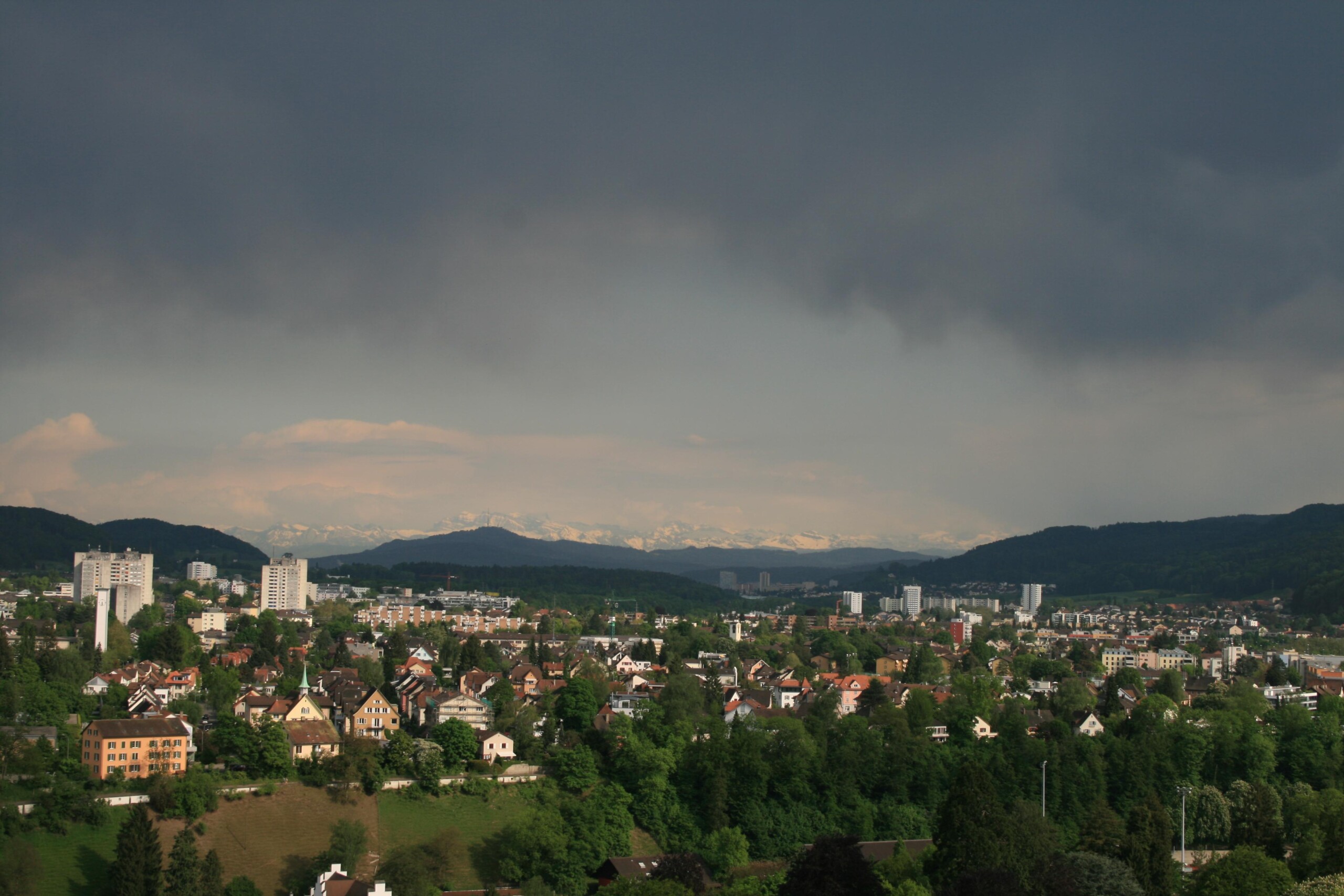
    Wettingen has moved to the centre of an economic policy decision. The Aargau cantonal council wants to amend the structure plan in the Tägerhardächer area and thus create the planning conditions for a possible Hitachi Energy campus.

    This is a big step. Because it is not just about a single building project. It is about the question of whether Aargau can retain and at the same time expand its industrial substance. In the best-case scenario, around 1000 existing jobs will remain in the canton and up to 2000 new jobs could be created.

    Why Tägerhardächer
    The location is no coincidence. Hitachi Energy is looking at several options for expanding its capacities and relocating current jobs. The Tägerhardächer area is one of the favoured options.

    From a location promotion perspective, there are many arguments in favour of Wettingen. The site is located in the Zurich, Limmattal and Baden area, has good transport links and enables a coherent, expandable campus solution. It is also close to an existing cluster of companies from the energy sector. This increases the appeal of the location far beyond the municipal boundaries.

    The price of progress
    Wherever development becomes possible, conflicts arise. 10.7 hectares of settlement area would have to be designated for the project. The area is currently located in an agricultural area and is partially overlaid by a settlement separation belt.

    This is precisely where the criticism arises. In the consultation process, the loss of cultivated land, the reduction of crop rotation areas, encroachment on the settlement separation belt and traffic issues were criticised in particular. Nevertheless, the cantonal government maintains that the project is appropriate and spatially harmonised from a cantonal perspective. At the same time, attempts should be made to upgrade agricultural land elsewhere so that the loss remains limited.

    The region is thinking further ahead than the
    factory buildingThe
    decisive factor now is whether growth and quality of life can go hand in hand. After all, a campus of this size not only has an impact on the labour market. It changes traffic flows, settlement areas and expectations of the infrastructure.

    That is why accessibility should not only work for cars. Public transport as well as pedestrian and cycle connections should be designed in such a way that the impact on neighbouring communities remains as low as possible. This is more than just background music. It is a prerequisite for economic dynamism to be accepted regionally.

    Nothing has been decided yet
    The political will is visible. Wettingen and Baden Regio also support the amendment to the structure plan. However, the company has yet to make a final decision on the location. If it decides against Wettingen, the corresponding resolutions will become null and void.

    This is the real message of this dossier. The future does not just fall from the sky. It must be planned, politically supported and regionally balanced. Wettingen now has the chance to prove just that.


  • New head of department to drive strategic development in the economy and labour market

    New head of department to drive strategic development in the economy and labour market

    According to a press release, the government of the Canton of St. Gallen has appointed Daniel Müller as the new head of the Office for Economic Affairs and Labour, effective 1 May. He succeeds Karin Jung, who has led the office since 2018 and announced her resignation at the start of the year. Müller is currently carrying out her duties on an interim basis.

    The 50-year-old has been working for the canton since 2018. Until now, he was head of business development. A qualified audio and video electronics technician and IT specialist, he studied business administration at OST– the University of Applied Sciences of Eastern Switzerland. Before joining the Department of Economic Affairs, he worked for the University of St. Gallen, amongst other roles.

  • First consultation on location promotion

    First consultation on location promotion

    For the first time, the dispatch on location promotion will be submitted to a consultation procedure, which will run until 1 June 2026. For the years 2028-2031, the Federal Council is requesting five financing decisions amounting to CHF 392.21 million, compared to CHF 428.83 million in the period 2024-2027. The instruments remain the same: SME policy, tourism policy, regional policy, export promotion and location promotion. The bottom line is that the budget, adjusted for special Covid payments and the 2027 relief package, will fall by around 5.2 percent.

    Easing the digital burden on SMEs
    One focus is on easing the administrative burden on SMEs by expanding digital government services. The core component is Easy-Gov.swiss, which is to be further developed into a marketplace for digital services from the federal government and cantons and positioned as a standard infrastructure for a “digital government” for companies. The aim is to simplify procedures, reduce duplication and ensure more efficient cooperation between the administration and business.

    Access to international markets
    Export promotion should provide SMEs with targeted support when entering new foreign markets and expanding existing ones. In an environment with increasing export hurdles and volatile framework conditions, there is a greater focus on information, advice, risk diversification and export risk insurance. At the same time, SMEs should be able to make better use of the opportunities offered by new and existing trade agreements.

    Strengthening regions as economic and living spaces
    The federal government wants to support economic development in all parts of the country with its location promotion. It promotes tourism destinations and economically oriented projects in rural and border regions. This enables them to remain attractive places to live and work. In this way, the Federal Council combines growth impulses for SMEs with balanced regional development.

  • Canton Zurich creates interface with innovation park

    Canton Zurich creates interface with innovation park

    According to a statement, the canton of Zurich has created the Zurich Innovation Park specialist unit. This implements a decision by the cantonal government in April 2025 to transform the coordination unit, which was previously managed by an external mandate, into a regular organisation. The specialist unit is based in the Office for Economic Affairs and began operations at the start of the year.

    The centre is responsible for ensuring the division of tasks between the Department of Economic Affairs, the Innovation Park Foundation, IPZ Property AG and IPZ Operations AG. It coordinates cantonal projects and involves various stakeholders in the local communities, the federal government, the business community and other partners.

    In addition to the Innovation Park as the most important area development project in the canton, the specialist unit will also focus on the active development of commercial space as a key location factor. This involves space for the growth, transformation and establishment of companies, particularly in or around the Innovation Park, but also throughout the canton.

    Benjamin Grimm is the first head of the specialist unit. The geographer has a Master’s degree in Spatial Development and Infrastructure Systems from the Swiss Federal Institute of Technology Zurich and a Master of Advanced Studies in Real Estate from the University of Zurich. He has worked for the Federal Office for Spatial Development and the Office for Spatial Development of the Canton of Zurich, among others.

  • Protectionism as a location risk

    Protectionism as a location risk

    What began as US customs policy under Donald Trump is developing into a global threat to open economies. For export-dependent Switzerland, this development is more than just a geopolitical disturbance. It affects the core of the business model, international networking, stable framework conditions and reliable markets.

    According to a representative survey of 800 Swiss companies involved in foreign trade, 70 percent expect a negative impact on their own business. Export-oriented sectors such as the pharmaceutical, watch and machinery industries as well as suppliers in the real estate, construction and logistics sectors are particularly affected.

    Location strategies under pressure
    The reactions of companies show that protectionism is no longer an abstract risk. Over 60 percent of those surveyed expect higher costs and bottlenecks in the supply chain. Every second company is planning price increases in order to pass on the additional costs. At the same time, many are focusing on increasing efficiency and searching for new sales markets.

    Large companies in particular are rethinking their strategy. 40 percent are considering setting up their own sites abroad in order to circumvent trade barriers. This creates new requirements for location development, real estate projects and investment planning, both domestically and internationally.

    Clear demands on politicians
    The Swiss economy is calling for an active and future-oriented economic policy. The focus is on free trade agreements, particularly with the USA, to ensure competitiveness, the reduction of regulations and tax relief to strengthen the willingness to invest domestically.

    Research and innovation as key
    There is also broad support for the further development of bilateral agreements with the EU, particularly in the energy sector. More than 60% of companies see this as an opportunity to strengthen security of supply and integration into central European markets.

    Securing future technologies – together with Europe
    With growing protectionism, there is also growing concern about being left behind when it comes to access to key technologies such as AI, quantum computing or high-performance chips. Three quarters of the companies surveyed see an acute need for action here.

    Entrepreneurs recommend building up their own capacities in cooperation with European partners. In technology-intensive sectors in particular, companies are calling for government stimulus, even if this would mean a paradigm shift in Swiss industrial policy.