Tag: Start-ups

  • Financial reality puts an end to visionary spatial concept

    Financial reality puts an end to visionary spatial concept

    “This is the post we never wanted to make,” Tadah introduces a post on LinkedIn in which the founders Klara Zuercher, Diana Wick Rossi, Sarah Steiner and Julia Cebreros announce the closure of their coworking and kids space. According to them, the business model “could not meet the financial requirements” despite high demand and positive feedback. Operations will therefore cease at the end of June.

    Tadah at Albisriederstrasse 253 in Zurich was designed as a “sustainably furnished coworking space for parents, teams and start-ups”, according to Tadah’s self-description. “With full flexibility, including childcare.” With Tadah, the four founders wanted to make a contribution to making Switzerland more family-friendly.

    Tadah has already found a new tenant for the coworking space. The premises will be taken over by Norm Technologies AG as a start-up hub. New tenants have yet to be found for the Kids Space.

  • New start-up centre promotes entrepreneurship in Uzwil

    New start-up centre promotes entrepreneurship in Uzwil

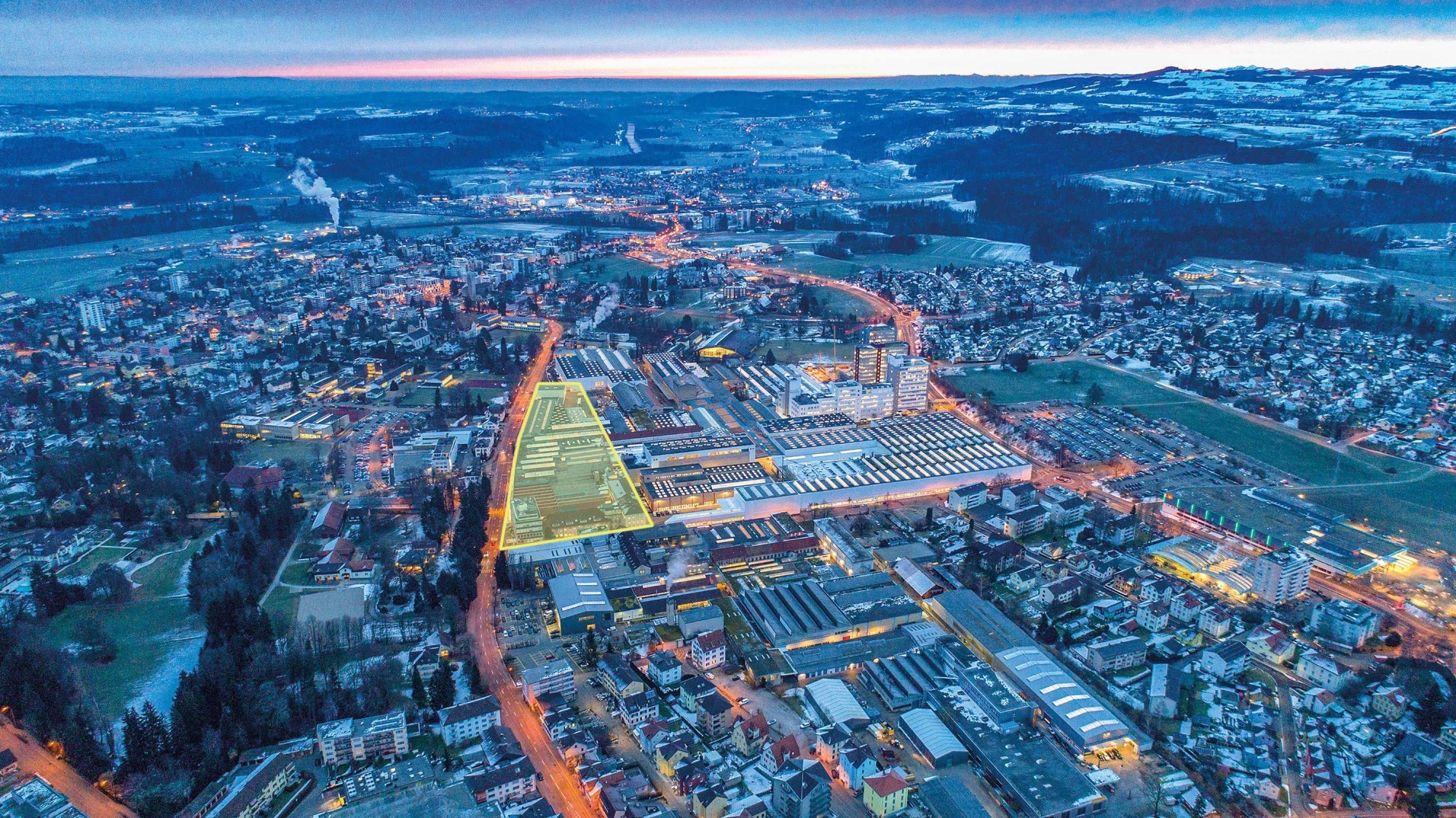
    A second startup space of the IFJ Institute for Young Entrepreneurs will be built on the site of the Uzwil grinding plant, which is located on the Bühler Group premises. Uze AG, the Bühler Group’s property and family office, is working with the IFJ to develop this part of the site on the Spickel between Bahnhofstrasse and Fabrikstrasse into an innovation hub. The IFJ has already been operating its first centre of this kind in Schlieren for ten years.

    According to Uze AG, the Mahlwerk in Uzwil will be a “lively place for start-ups, entrepreneurs and creative minds” from 2027, “with modern office & engineer spaces, events & meetings and plenty of room for innovation”. According to a statement from the IFJ, construction will begin on 12 June 2025.

    As part of the densification and renovation of properties, the Bühler Group relocated the space it used to the neighbouring main site. This freed up 18,680 square metres for something new. “Uze AG is opening a new chapter here with the Mahlwerk and continuing the industrial tradition with entrepreneurial vision, innovative strength and international networking,” says the IFJ.

    The Mahlwerk creates “space for growth, encounters and movement – and above all for visibility and strong connections to companies, experts, organisations and investors”. In addition to the space for start-ups and SMEs, there will also be premises for industrial and commercial enterprises.

  • New technologies for sustainable building tested in practice

    New technologies for sustainable building tested in practice

    Swiss Prime Site (SPS) has identified promising start-ups in the fields of cleantech, PropTech, EnterpriseTech and other sectors relevant to the real estate industry together with the Schlieren-based start-up promoter Venturelab. According to a statement from Venturelab, the real estate company headquartered in Zug has completed the 25th edition of its Start-up Accelerator program. In collaboration with Venturelab, SPS’s initiative aims to connect with start-ups developing solutions that can be integrated into the company, focusing on areas such as smart buildings, healthy architecture, smart materials and circular economy, it added.

    Ten start-ups were selected from the 70 applicants to present their solutions in a virtual pitch session at the end of March. From this group, four were invited to take part in the acceleration program to present their business models to the SPS Board of Directors. The “innovative approach to sustainability and alignment with the environmental priorities of SPS” was highlighted for three start-ups. These are ecoLocked, based in Berlin, which focuses on solutions for building with climate-neutral concrete, Vunanexus in Küsnacht ZH, which specializes in water purification, and Quanthome in Lausanne, which offers data-driven intelligence for investment decisions. They will hold further talks with SPS for upcoming projects and tests of the solution, the press release states.

    “It’s rare to find a pitch competition where the organizers go out of their way to make it easy and advise you throughout the process,” Ruth Beniermann from ecoLocked is quoted as saying about the selection process.

  • Private investors drive innovation in Zurich

    Private investors drive innovation in Zurich

    The Zurich financial centre is not only an important centre for banks and insurance companies, but also a key factor for the development of young companies. Private investors such as private equity and venture capital companies, multi and single family offices as well as foundations support start-ups with targeted investments that promote innovation and economic growth.

    According to the new study “Zurich Financial Centre 2025/2026”, which was commissioned by the cantonal Office of Economic Affairs and the city’s Urban Development Department, 208 private equity and venture capital companies and over 2,800 foundations are active in the Zurich region. They employ a total of around 3800 people and have made a significant contribution to the development of Zurich as a centre of innovation over the last ten years.

    Growth and financing gaps in the start-up ecosystem
    Between 2014 and 2024, over 900 start-ups were founded in the Zurich region, raising a total of CHF 9.6 billion in various financing rounds. Almost half of the total financing volume of start-ups in Switzerland. In the case of companies whose investor structure is known, around one third of the funds come from regional investors.

    However, the study shows that many start-ups encounter financing hurdles in the next growth phase after initial support from accelerators, incubators and foundations. While private equity and venture capital companies are increasingly getting involved in expansion financing, a financing gap remains. This can lead to young companies moving abroad in order to secure capital for scaling up.

    Zurich as an attractive location for venture capital
    The Zurich region offers ideal conditions for investors thanks to its strong market environment, international network and the availability of highly qualified specialists. Single family offices in particular are playing a growing role, as they enable long-term investments in innovative projects. Swiss single family offices invest an average of 12 per cent of their assets under management in venture capital, of which around CHF 24 billion flows into projects within Switzerland.

    According to Michael Grass from BAK Economics, which conducted the study, it is crucial to close the financing gap in the growth phase of start-ups. This would not only secure the region’s innovative strength, but also reduce the risk of emigration.

    “Strengthening the investor location” initiative launched
    Based on the results of the study, the canton of Zurich is launching the “Strengthening the investor location” sub-project as part of the “Innovation Location 2030” initiative. The Department of Economic Affairs has been tasked with developing targeted measures to improve the attractiveness of the location for venture capitalists. The aim is to optimise the investment conditions for start-ups and scale-ups and expand financing opportunities in the region.

    Concrete strategies are to be developed through dialogue between politics, business and investors in order to further strengthen Zurich as a leading location for venture capital. The city of Zurich is already actively involved in promoting start-ups, including with incubators such as BlueLion and Startzentrum Zürich as well as the city’s KlimUp programme for sustainable innovations.

    The results of the initiative should help to further develop Zurich as a dynamic and competitive investment location and secure the business centre in the long term.

  • Europe needs more capital for start-ups

    Europe needs more capital for start-ups

    Europe’s economic strength depends to a large extent on technological innovation. However, access to capital remains a challenge for many start-ups in the growth phase. The new study “Mapping investors for European innovators”, published by the EPO’s Patent and Technology Observatory, shows that private and public investors play a crucial role in promoting new technologies. Compared to the USA, however, there is a lack of capital in Europe for later financing phases, which hinders the growth of innovative companies.

    Technology Investor Score as a guide
    To make it easier for technology-oriented companies to find investors, the EPO is introducing the Technology Investor Score. This new indicator shows the proportion of companies with patent applications in an investor’s portfolio. The TIS helps start-ups to identify suitable partners and promotes targeted investment in technological innovations.

    The study analysed over 6100 investors in Europe and 8000 investors in the USA and shows that 88% of European investors have companies with patents in their portfolio. However, only 8% of these investors focus primarily on start-ups with patents. A clear sign of restrained capital flows into innovative growth companies.

    Europe needs to invest in scaling
    A key problem in the European innovation ecosystem is insufficient funding in the late stages of development. While public investors such as the European Innovation Council, the European Investment Bank or national innovation agencies strongly support early-stage financing, there is a lack of private investors for scalable start-ups in Europe.

    The analysis shows that 62% of the 100 largest European private investors focus on early-stage financing, while only 22% invest in later stages. In comparison, 98 of the top 100 investors in the US are private investors, of which more than half invest specifically in scaling start-ups. This funding gap in Europe means that promising technology companies are moving abroad to find better conditions for growth.

    Targeted solutions for more access to capital
    To overcome these challenges, the EPO has added a new filter function to its Deep Tech Finder. The free online tool enables start-ups to conduct a targeted search for investors based on criteria such as financing phase, location and technology focus. This enables technology-driven companies to efficiently find investors who specialise in their specific needs.

    In addition, the Observatory for Patents and Technology offers a new information platform that provides detailed insights into financing strategies, investor profiles and the use of patents to raise capital. The aim is to support start-ups and SMEs so that they can realise their full innovation potential.

    Strengthening Europe’s innovative power
    The results of the study underline the need to optimise financing structures in Europe. Public funding alone is not enough to ensure the transition from idea to market maturity. More private capital is needed for later growth phases in order to keep innovative companies in Europe and remain competitive in the long term.

  • The Ypsomed Innovation Award 2025 was presented

    The Ypsomed Innovation Award 2025 was presented

    Yuon Control AG from Oberburg and based in Technopark Zurich has been awarded first place in the Ypsomed Innovation Prize 2025, which is endowed with 50,000 Swiss francs, Ypsomed announced in a press release. The spin-off from Bern University of Applied Sciences develops technologies for building automation and energy management. Yuon Control’s systems enable data from various sources to be used to analyse and optimise energy flows and building functions.

    Two other young companies were each honoured with a second prize of 25,000 Swiss francs. One of these is Santella. The start-up project at the University of Bern aims to reduce the use of antibiotics in animal husbandry. As a first step, Santella is developing vaccines for the poultry industry.

    The other second prize went to Xemperia from Bulle FR. The spin-off from the University of Fribourg aims to improve the early detection and monitoring of cancer. To this end, Xemperia is developing technologies that combine molecular diagnostics with data analysis and pattern recognition based on artificial intelligence.

    A total of 34 projects competed for the innovation prize. “We are delighted to be able to spotlight three outstanding projects again this year,” said Simon Michel, President of the Ypsomed Innovation Fund, in the press release from his speech at the award ceremony. They have “the potential to have a lasting impact on our economy and society – provided they find their way into practical application”. The Ypsomed Innovation Award aims to make a contribution to this.

  • Strengthening Europe’s innovation financing

    Strengthening Europe’s innovation financing

    Technology start-ups are crucial for the progress of disruptive innovations. However, financial hurdles are hampering their growth, as a new study by the EPO makes clear. A comparison with the USA shows that there is a lack of private capital in Europe, particularly in the later financing phases. This forces many innovative companies to look outside Europe for investors.

    A new evaluation system
    With the TIS, the EPO has developed a precise indicator to evaluate the specialisation of investors in patented technologies. The TIS is based on over 1000 individual values and indicates the proportion of patent-active companies in an investor’s portfolio. This enables start-ups to search specifically for investors who are particularly innovation-friendly.

    Public investors as a central pillar
    The study shows that public institutions play a key role in promoting innovation. Programmes such as the European Innovation Council, national funding agencies such as Innosuisse or Bpifrance and the European Investment Bank offer essential support in the early financing phases. However, there is a lack of seamless follow-up financing from private investors, which makes it difficult to scale up innovative technologies.

    A comparison of European and US financing models
    While 62% of private investors in Europe focus on early-stage financing, the proportion is significantly higher among the 100 largest US investors with a later-stage financing focus. 98 of the top 100 investors in the US are private, over half of whom specialise in growth financing. These differences illustrate the gap in the European capital structure.

    New digital tools for finding investors
    The EPO is expanding its digital tools to make it easier for start-ups to access capital. A filter has been added to the Deep Tech Finder that allows investors to be found specifically according to financing phase, location and technology field. This enables start-ups to efficiently identify suitable investors and improve their financing opportunities.

    Paths to a stronger innovation ecosystem
    The study emphasises the need for action to improve the networking of public and private innovation financing in Europe. With new digital tools such as the TIS and the Deep Tech Finder, the EPO is providing decisive impetus to close the financing gap and keep start-ups in the European market in the long term.

  • “The city of Winterthur is often underestimated”

    “The city of Winterthur is often underestimated”

    Mr Roth, you are qualified to practise law, were head of department at the Financial Intelligence Unit of the Principality of Liechtenstein in Vaduz and managed the Musikkollegium Winterthur. What prompted you to accept the position of Director of the House of Winterthur in 2020?
    Samuel Roth: I found it very exciting to be working at the interface between business, education, tourism and culture and to be so committed to the Winterthur region.

    What have you been able to achieve in the almost three years since you took office?
    Roth: It was important to me to focus our activities on our core competences of communication and networking. This enables us to raise the region’s profile as a technology location, education centre and cultural city. To this end, we have put together an attractive programme of around 40 events per year. The “Tech Lunches” are particularly popular: our guests can visit production companies or attend the events on the topic of “House Culture”, where we visit the Winterthur Music Festival with our members, for example.

    Ms Lomoro, House of Winterthur was created in 2017 from the two associations Winterthur Tourismus and Standortförderung Region Winterthur. The city is thus operating a special model: topics such as business, tourism, education and culture are united under one roof. What are the advantages?
    Antonietta Lomoro: The various stakeholders now only have one point of contact for location promotion issues instead of two, as was previously the case. Marketing for the region now comes from a single source. We also promote mutual networking between the various stakeholder groups.

    What synergies have been achieved through the joint presence?
    Lomoro: Today’s workforce attaches more importance to a good work-life balance. They appreciate the great leisure and cultural activities on offer in the Winterthur region. Employers make sure that their employees can work in an attractive location where the quality of life is right as well as the economic conditions. It therefore makes sense to promote these locational advantages from a single source.

    How many people does House of Winterthur employ? What is the budget?
    Lomoro: House of Winterthur currently employs 20 people in full-time equivalents. The budget is CHF 3.5 million.

    Winterthur has a diverse economy, a lively old town, a high-calibre cultural offering and a prestigious university of applied sciences. Why is it necessary to market a city that has so much to offer?
    Roth: Winterthur may be the sixth largest city in Switzerland, but it is often underestimated. It is therefore important that House of Winterthur showcases the region’s qualities as an outstanding technology location, practice-oriented education centre and great cultural city.

    How is House of Winterthur being received by the population and companies?
    Lomoro: The population of Winterthur approved the establishment of House of Winterthur by a clear majority in 2017. After the original subsidy agreement with the city expired, the city parliament extended the agreement for a further five years without a dissenting vote. The activities of House of Winterthur have met with a positive response from companies, as evidenced by the lively participation in our events.

    How have House of Winterthur’s membership figures developed over the last three years?
    Lomoro: Since the beginning of 2020, the number of members has risen by 20 per cent to a total of 420.

    “Tourism has recovered almost completely since corona

    How attractive is Winterthur as a business location?
    Roth: Every year, we conduct a business survey in which over 300 companies take part. The last survey showed that almost 87 per cent of companies are fairly or very satisfied with the general conditions in Winterthur. This is due to the proximity to universities and the good availability of skilled labour. the city is also attractive for start-ups. For example, the “Start-up Nights”, Switzerland’s largest start-up event, takes place in Winterthur every year.
    What measures are you taking to further increase its attractiveness?
    Lomoro: With “Winterthur 2040”, the city council has defined how it wants to make Winterthur fit for the future. Our task is to emphasise the advantages and opportunities of the entire region.

    Which sites, properties and locations are currently most sought after by companies?
    Lomoro: We have received many enquiries – namely for the Sulzer site in the city centre and The Valley in Kemptthal. We are currently seeing a strong increase in interest in space in Neuhegi and in the centre of Effretikon.

    Which regulations are in urgent need of adjustment?
    Roth: For the economy, any regulation is one too many. Sometimes, however, regulations are needed to promote the interaction between living and working, to enable short distances and to revitalise public spaces and achieve a high level of diversity of use.

    How do you expect Winterthur as a business location to develop over the next 10 years?
    Roth: The number of jobs has developed in proportion to the population growth of around one per cent per year in recent years. We therefore assume that not only construction activity will contribute to further economic growth, but also that new technology companies will settle in Winterthur. In addition, our company survey has shown that almost half of the companies surveyed are planning to invest in the coming years. The Winterthur region can therefore look forward to rosy times.

    How is the city positioned in terms of tourism and where is it today?
    Lomoro: Tourism has almost completely recovered since coronavirus and – measured by the number of overnight stays – is only 15 per cent below the record year of 2019. The most important tourist attractions in the region include the Rhine Falls and Technorama, followed surprisingly by the Skills Park in third place. FC Winterthur and Pfadi Winterthur are also crowd-pullers. The city of culture scores with the international appeal of its museums, the wide variety of festivals and the International Short Film Festival, as well as the Casino Theatre and the Musikkollegium Winterthur.

    Last year, House of Winterthur reduced the number of board members. What were the reasons for this?
    Roth: With the previous 15 to 16 board members, the board was too large. This meant that the individual Board members were not able to contribute enough. According to the Articles of Association, the Board may now only have a maximum of 9 members, which greatly increases the efficiency of the Board’s activities.

    Are further internal changes planned in the coming years?
    Roth: House of Winterthur is basically on track. The Annual General Meeting will elect a new Board of Directors on 25 May. It will review the strategy and make any necessary adjustments.

  • Switzerland Innovation Tech4Impact supports six start-ups

    Switzerland Innovation Tech4Impact supports six start-ups

    The Switzerland Innovation Tech4Impact program was carried out for the third time this year. Six sustainability-focused young companies are being supported with funding of CHF 85,000 each and access to a network of industrial partners.

    The winners include two start-ups from the canton of Zurich, Openversum and Aseptuva . Openversum from the city of Zurich is developing new types of filters for drinking water. Aseptuva from Winterthur is developing a device that protects the skin from infections thanks to special UV rays. It wants to reduce the risk of hospital infection.

    The company Gaia Technologies from Bern has also won. The start-up is developing a novel technology for recycling agricultural waste into biocomponents and other resources. These are to be used, for example, in cosmetics or in the food sector.

    Rematter AG from Zug, TOSA swisstech SA from Courroux JU and a project at the Swiss Federal Institute of Technology in Lausanne ( EPFL ) also received awards.

    Rematter develops recyclable floor tiles for use in apartment buildings. TOSA swisstech is working on a new type of device that converts hydrogen into electricity particularly efficiently. The EPFL project is developing a graphene-based nanoporous membrane for use in the capture of CO2 in combustion processes.

    Switzerland Innovation Tech4Impact is a joint initiative of Bern-based Switzerland Innovation , E4S Tech4Impact and collaboratio helvetica .

  • Microsoft kauft CO2-Zertifikate von neustark

    Microsoft kauft CO2-Zertifikate von neustark

    Der Technologieriese Microsoft setzt bei der Reduzierung seines CO2-Fussabdrucks auf das Jungunternehmen neustark. Die Ausgliederung der Eidgenössischen Technischen Hochschule Zürich (ETH) mit Sitz in Bern hat eine Technologie entwickelt, mit der CO2 aus der Atmosphäre dauerhaft in Recyclingbeton gespeichert werden kann. Dafür wird flüssiges CO2 in Abbruchmaterial eingeleitet. Die Technologie der Firma ist bereits mehrfach in einer Pilotanlage getestet worden.

    Neustark setzt im Rahmen seines Geschäftsmodells auch auf den Verkauf von CO2-Zertifikaten. Damit können Unternehmen ihren CO2-Ausstoss kompensieren. Microsoft wird einer Medienmitteilung zufolge solche Zertifikate von neustark beziehen. Das Technologieunternehmen will bis 2030 mehr CO2 aus der Atmosphäre entfernen als es selbst ausstösst.

    „Microsoft hat sich für neustarks technologiebasierte Lösung für Carbon Removal entschieden, weil die Leistung bereits 2022 erbracht werden kann und ein erhebliches Skalierungspotenzial hat“, heisst es in der Mitteilung.

    Weiter wird Microsoft neustark auch im Rahmen seines Förderprogramms für Schweizer Start-ups unterstützen. Dabei erhält das Jungunternehmen kostenlosen Zugriff auf verschiedene Software-Lösungen von Microsoft.

  • Holcim drives innovation from start-ups

    Holcim drives innovation from start-ups

    The Zug-based cement giant Holcim is teaming up with three young Swiss companies, according to a media release . The aim is to advance innovative technologies in the construction sector and promote sustainability.

    In cooperation with the Freiburg start-up Mobbot , for example, the integration of recycled building materials into 3D printing technology is to be promoted. Mobbot has developed the necessary 3D printing technology. Together with Holcim, it now wants to develop a concrete recipe that enables the use of recycled material in 3D printing.

    Holcim has entered into another cooperation with the Bern-based company Neuustark . The spin-off from the Swiss Federal Institute of Technology Zurich ( ETH ) is developing a technology with which CO2 from the atmosphere can be permanently stored in recycled concrete. For this purpose, liquid CO2 is introduced into the demolition material. As part of the collaboration, neustark is investigating the CO2 conversion potential of the demolition concrete recycled by Holcim. In turn, Holcim is optimizing the concrete produced by Neustark. Holcim believes it is possible to integrate the neustark solution into its recycling process in the future.

    The third collaboration between Holcim and the Ticino start-up company HeatNeutral has been agreed. This has developed an innovative combustion system that is intended to promote the decarbonization of production facilities. According to the information, the heating system works particularly efficiently and achieves an almost 100 percent combustion of fuels. This means that less fuel is required for the same output. In addition, the HeatNeutral system can also burn CO2-neutral oils such as vegetable oils, used cooking oils and biodiesel. Holcim is testing the solution in its concrete plant in Birsfelden BL.