Tag: Strategie

  • Ramon J. Kälin becomes a partner

    Ramon J. Kälin becomes a partner

    Since joining the company in September 2023, Ramon J. Kälin has provided decisive impetus. He is responsible for developing a Group-wide People & Culture strategy, modernizing the IT and collaboration infrastructure and central business development topics. An important milestone is the establishment of the new Pfäffikon SZ site as the third hub alongside Zurich and Zug. This growth in regional presence is in line with his entrepreneurial approach and strengthens Property One’s long-term position.

    Future-oriented leadership and commitment
    Kevin Hinder, Co-Founder and CEO of Property One, praises Ramon’s structured, solution-oriented approach and his excellent network as the cornerstones of the company’s future-oriented approach. Ramon J. Kälin also emphasizes the value of the joint commitment. The partnership offers him new opportunities to actively support the next development steps and shape the future of Property One.

    Industry expertise with responsibility
    He holds an MAS ZFH in Real Estate Management and is a federally certified real estate trustee. His commitment to the industry is reflected in his role as Vice President of SVIT Zurich, as a trustee of the Domicil Foundation and in various advisory board mandates. He also supports the next generation of the industry as an audit expert. He has been a Member of the Royal Institution of Chartered Surveyors since 2021.

  • New growth momentum through strategic partnership

    New growth momentum through strategic partnership

    With the strategic participation of an entrepreneurial investor, the company is setting the course for the next stage of growth. The new partnership combines capital strength with technological and operational expertise. The aim is to consolidate the company’s market presence in its home market and expand internationally, particularly in the key areas of digitalisation, sustainability and artificial intelligence.

    Future-oriented strategy with a clear focus
    The new growth strategy focuses on three structural drivers: the digital transformation of the property sector, the industry’s growing role in climate protection and the increasing demand for sustainable, connected living spaces. At the same time, the proven corporate DNA remains intact, with the operational team and all partners staying on board and continuing to run the business.

    Technological scaling and international expansion
    Internationalisation will begin with the existing presence in Germany and will be expanded through targeted acquisitions. At the same time, the digital service portfolio will be expanded through the development of proprietary products, the automation of customer processes with “Agentic AI” and the strengthening of the team. The strategic partnership creates the necessary room for manoeuvre in terms of technology, personnel and geography.

    New opportunities for the German site
    There are also new opportunities for the team in Germany. As an agile location within the Group, it benefits from the stability of the company and the opportunities offered by a strategic growth partner. The combination of a proven structure and fresh dynamism should pave the way for successful expansion in a rapidly changing market environment.

  • Aargau shapes the future with a development model

    Aargau shapes the future with a development model

    The canton of Aargau is a dynamic region with a high quality of life and economic attractiveness. In order to secure this strength in the long term, the cantonal government has adopted the 2025-2034 development model (ELB). This formulates clear goals and lines of action that respond to the key challenges of our time: population growth, climate change, digitalisation and a shortage of skilled workers.

    The focus is on actively shaping the further development of the canton in close cooperation with municipalities, companies, research institutions and the population. The guiding principle “Together for Aargau” summarises this collaborative approach. The ambitions in the areas of economy, society, environment and administration can only be successfully realised by working together.

    Three strategic priorities for a strong region
    Think holistically and intensify economic development
    Aargau wants to continue to position itself as an attractive location for companies, research and innovation. To this end, targeted framework conditions are being created to maintain and expand value creation and employment in the canton.

    Shaping space, securing foundations
    In the area of conflict between living, working, mobility and nature, intelligent spatial planning is essential. The aim is to proactively manage conflicts of use and protect natural resources.

    Strengthening efficient municipal structures
    The public sector should act in an efficient, cooperative and citizen-centred manner. Municipal mergers, inter-municipal cooperation and digitally supported services form the basis for this.

    These priorities are underpinned by 30 specific areas of focus that are integrated into the task and finance plan and are reviewed annually.

    Sustainability requires room for manoeuvre
    The financial framework for implementing the strategy is secure. Even if structural deficits are expected from 2026, the well-filled equalisation reserve will allow the continuation of all planned measures until 2034. Tax relief will be reviewed depending on the situation and with a view to the overall financial situation. This ensures that the canton’s room for manoeuvre is also maintained in the long term.

    From vision to implementation
    The EFA will be implemented in stages and is closely linked to medium-term planning. Numerous projects are already underway as part of the existing development agenda, from energy-efficient construction and innovation promotion to integrative housing models. New projects will be initiated, prioritised and provided with suitable resources in future.

    Progress will be reported transparently on an annual basis. This is an important step towards a fact-based and trustworthy location policy. The cantonal government is thus committed to agile, dialogue-oriented management of cantonal development in close coordination with all relevant stakeholders.

    The 2025-2034 development model is much more than a political planning instrument. It is a powerful promise to a population that prioritises quality of life. To companies that are looking for reliability and innovation and to municipalities that want to help shape their future with confidence. Aargau is thus positioning itself as a modern canton with a clear compass. Economically strong, ecologically responsible and socially anchored.

  • Zurich and Aargau plan mobile network

    Zurich and Aargau plan mobile network

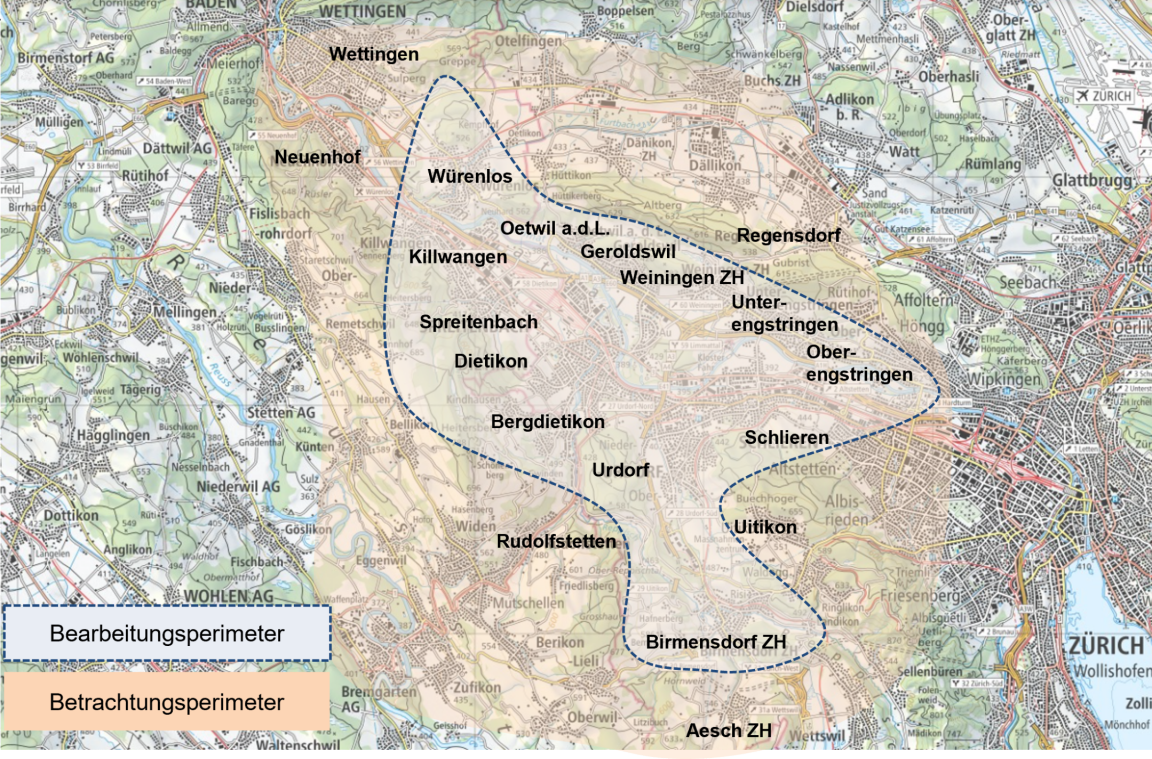
    The Limmat Valley is developing rapidly, not least thanks to new transport projects. In order to strategically address this dynamic, the cantons of Zurich and Aargau, together with three regional planning associations, are launching a cross-cantonal planning instrument:. The Limmattal regional overall transport concept.

    The concept follows the guiding principle “The Limmat Valley is fit for the future” and aims to create a sustainable, efficient and environmentally friendly balance between settlement and transport development. The planning horizon extends to the year 2050.

    Multimodal networking as a guideline
    The focus is on improving regional networking, promoting multimodal solutions and integrating logistics concepts. Neighbouring regions such as the Furttal or the city of Zurich are also included.

    The results of the concept will form the basis for future agglomeration programmes and will flow into concrete implementation in the municipalities and cantons from 2027/2028. Objectives, strategies and measures will be developed in several phases by the end of 2026.

    Structured process with regional participation
    The project will be managed by a steering group with representatives from the cantons and regional planning associations. Broad participation by the municipalities and public information events ensure transparency and acceptance.

    Project manager Sarah Hug (Canton of Zurich) and project manager Dominik Kramer (Canton of Aargau) are coordinating the participatory process. Public information events are planned on 5 November 2025 and 13 May 2026, among other dates.

    Mobility strategy with a signalling effect
    The rGVK Limmattal is a model project for intercantonal cooperation in one of Switzerland’s most economically significant development areas. It shows how regional and supra-regional interests can be united in a joint strategy for sustainable mobility.

  • Smart City Aarau Strategy 2034

    Smart City Aarau Strategy 2034

    With “Smart Aarau 2034”, the city is pursuing a forward-looking approach. The strategy does not rely on technological impetus alone, but sees digitalisation as a tool for solving complex challenges. The focus is on the needs of the population, cooperation between departments and resource-efficient implementation. Aarau is orientated towards the city’s existing development goals and integrates smart thinking into all urban projects.

    A methodological framework for real progress
    The change in strategy also means a rethink in terms of implementation. In future, projects will no longer be planned in secret, but developed in dialogue with those affected. A municipal team will provide methodical support to employees. From the initial idea to the actual tested project. Experience from the Smart City period to date shows that this approach is effective if it is applied consistently.

    Smart means networked and usable
    The new strategy puts an end to isolated islands of innovation. Instead, projects should be systemically conceived and networked across the city in future. The goal is a city that utilises its resources efficiently, can react to changes and introduces new solutions where they are actually needed. Digital tools will only be used if they contribute to quality of life or efficiency.

    Effectiveness instead of symbolic politics
    Aarau measures success not by the number of digital projects, but by their impact. The new strategic framework focuses on measurable progress. This applies to implementation, behaviour, awareness and everyday use. This makes smart thinking the new basis for urban development – comprehensible, user-centred and climate-friendly.

  • Canton of Zurich calls on Federal Council to act

    Canton of Zurich calls on Federal Council to act

    The pressure on the housing market is enormous. Demand is constantly rising, while supply is lagging behind. The canton of Zurich is particularly affected, where construction projects are increasingly being delayed or prevented by appeals. The consequences are rising rents, social tensions and growing political pressure to act. Five cantonal popular initiatives show how much the issue of housing concerns the population.

    Improvements are unnecessarily delayed
    Although new noise protection regulations have already been adopted, their implementation is still a long time coming. The Zurich cantonal government is calling on the Federal Council to bring the changes to the law into force quickly. This is because protection interests must not be allowed to block the expansion of urgently needed living space. A clear legal basis is essential for planning security and accelerated procedures.

    Protection instrument or strategic objection tool?
    The Government Council is particularly critical of the increasing direct application of the federal inventory ISOS, which actually serves to protect important sites. However, the inventory is increasingly being used to object to new construction projects. With serious consequences for inner densification. This problem is already very noticeable in Zurich, but it is increasingly spreading to other cantons.

    Although the cantonal government supports the announced round table on the ISOS issue, it is calling for concrete and timely solutions that must be developed together with the federal government, cantons and municipalities.

    Call for political prioritisation
    According to the cantonal government, the provision of housing is a key concern for the population and the economy. The federal government must strike a new balance between protection interests and structural development so that urgently needed housing construction is not blocked any further. The responsibility for this now lies with the relevant federal authorities.

  • Successful financing round enables expansion of concrete sensor technology

    Successful financing round enables expansion of concrete sensor technology

    Dietikon-based DuraMon AG successfully completed a financing round totalling 1.6 million Swiss francs for the seed extension in February, according to a press release. The round was led by venture capital and private equity investor QBIT Capital in Zurich, which had already led DuraMon’s seed financing round in June 2023. Sika in Baar, a key investor since June 2023, has extended its commitment by rejoining as a strategic partner alongside Helbling Equities and others, it added. The fresh capital creates the conditions for scaling and expansion beyond the DACH region.

    DuraMon is a spin-off of the Swiss Federal Institute of Technology in Zurich(ETH) that specialises in a new type of sensor technology that ensures long-term stable corrosion monitoring of concrete infrastructure such as bridges, tunnels, multi-storey car parks and parking garages. This enables the early detection and understanding of deterioration processes in concrete structures, according to the press release. This means that the right type of repair can be determined at the right time and in the right place in the structure, allowing building owners to optimise their maintenance strategies and reduce repair costs.

    The newly secured funding will enable DuraMon to automate and optimise key internal processes, namely automated data analysis and sensor installation, according to the press release. There will also be a strong focus on customer development and expanding DuraMon’s market reach beyond the DACH region into other European countries.

  • Renewables hold a high share of electricity and heat

    Renewables hold a high share of electricity and heat

    The conversion of the Swiss energy supply to renewable sources is only making slow progress. This is shown by the seventh benchmark study by the Swiss Federal Office of Energy(SFOE), in which 111 energy suppliers from all over Switzerland took part this time.

    According to the study, the share of renewables has stagnated compared to the sixth study in 2021/22 for the participating suppliers at just over 80 per cent for electricity, slightly below that for heat and just under 10 per cent for gas. Four suppliers have already met the targets for electricity with over 90 per cent, including Energie Wasser Bern(ewb) and Services Industriels de Genève with 95 per cent and Eniwa in Aarau and EWZ in Zurich with 94 per cent. In the heat sector, EWZ is ahead with 95 per cent and Energie Uster and Eniwa with 92 per cent target fulfilment each. In the gas supply sector, only ewb with 88 per cent and Technische Betriebe Glarus with 84 per cent are above 80 per cent target fulfilment.

    Digitalisation is a major challenge for small suppliers in particular. A quarter of them do not even have a strategy for this. Just under half have a strategy, but no specific targets.

    Energy efficiency measures are also lagging behind. Only 45 per cent of the participating electricity suppliers already have a strategy with quantified targets.

    According to a BfE press release on the study, the benchmarking itself has contributed to knowledge transfer in the sector with webinars, events and information material.

  • Smart City Strategy Zug

    Smart City Strategy Zug

    The challenges of urban growth, from the climate crisis to transport logistics and urban densification, call for holistic approaches. Zug is focusing on digitalisation as a key strategy. With its strong technological basis and the active involvement of all urban stakeholders, the Smart City Strategy Zug offers innovative answers to the questions of the future.

    Intelligent administration and citizen-centred services
    The city of Zug is striving for an efficient, citizen-centred administration that facilitates access to services and promotes transparency. Digital technologies, such as open data and smart administrative processes, offer citizens access to municipal services regardless of time and place. This customer-friendly approach strengthens the dialogue between the city and the population and makes Zug a pioneer for modern city administration.

    Strengthening social participation and digital skills
    With its smart city strategy, Zug is creating new platforms for the participation of all social groups. Digital channels expand dialogue and promote the right to have a say, especially for younger generations and less mobile people. Educational programmes are designed to improve the digital skills of both the population and the administration and prepare the people of Zug for the opportunities and challenges of the digital transformation.

    Smart mobility for sustainable mobility and quality of life
    Smart mobility is a central pillar of the strategy. Innovative technologies and alternative forms of transport are intended to reduce commuter traffic, cut emissions and improve the quality of life. Zug is focussing on real-time data, intermodal mobility and the expansion of emission-free modes of transport. The goal: clean, safe and sustainable mobility that enriches city life.

    Innovative business location
    With its dynamic start-up scene and innovative sectors such as fintech and blockchain, Zug creates an attractive environment for high-tech companies and qualified specialists. The Smart City strategy strengthens the location’s profile and connects companies that are committed to a sustainable economy and circular processes. In this way, Zug is not only positioned for the future as a place to live, but also as a business location.

    Sustainability and environmental protection through smart technologies
    Promoting energy efficiency and CO2 reduction is a key objective of the strategy. Digital applications such as “smart metering” enable a transparent presentation of energy consumption and promote the conscious use of resources. The city is focussing on the expansion of renewable energies and the intelligent use of existing infrastructure – a clear commitment to climate protection and sustainable urban development.

  • Smart City Winterthur 2030

    Smart City Winterthur 2030

    Since the first smart city strategy in 2018, Winterthur has established itself as one of the most progressive cities in Switzerland. At that time, the focus was on quality of life and resource efficiency, supplemented by topics such as energy, mobility, education and health. With the revision of the strategy towards Smart City Winterthur 2030, the City Council is now focussing on new cross-cutting topics such as innovation, needs orientation and co-creation. These topics are crucial to meeting the requirements of a changing society.

    Two programmes are driving implementation
    The new strategy is being implemented through two programmes, the Innovation Programme and WinLab. The innovation programme supports employees of the city administration in the development and implementation of innovative projects. The aim is to strengthen the culture of innovation within the administration.

    The WinLab, on the other hand, acts as an urban real-world laboratory in which representatives from business, science, civil society and municipal institutions work together. In this creative space, forward-looking solutions for the city are developed and tested. Both programmes create scope for experimentation and promote sustainable innovations that meet the needs of citizens.

    A strategy for the future
    The Smart City Winterthur 2030 strategy comes into force on 1 January 2025 and is part of the long-term goal of shaping Winterthur as a sustainable and adaptable city. The strategy will be reviewed after five years at the latest to ensure that it continues to meet the needs of the city and its population.

  • Strategy presented for increasing operating result by 2030

    Strategy presented for increasing operating result by 2030

    BKW presented its Solutions 2030 strategy on 8 November. According to a press release, this strategy aims to increase the operating result before interest and taxes to CHF 1 billion by 2030. according to the annual report, the operating result in 2023 was CHF 620.3 billion.

    The operating result for the Energy Solutions division is set to rise to CHF 650 million. in 2023 it was 534.6 million. The result for the Grids division is expected to be CHF 150 million in 2030 (2023: CHF 146.7 million). The strongest growth is targeted in the area of infrastructure and building solutions. in 2023, the result should be CHF 200 million, with a loss of CHF 40 million in 2023. General planning in infrastructure and building construction as well as building technology solutions are to be expanded and profitability steadily increased.

    The Bern-based energy supplier plans to invest CHF 4 billion to achieve this, at least half of it in Switzerland. The investments are to be financed from free cash flow, which is expected to total over CHF 5 billion during this period.

    “With the comprehensive further development of the strategy, BKW is supporting its customers even more strongly in the transformation of the energy system with forward-looking solutions”, BKW Chairman of the Board of Directors Roger Baillod is quoted as saying in the press release. CEO Robert Itschner emphasises the breadth of the targeted growth: “All of BKW’s business areas will contribute to achieving these goals. BKW is investing in its strong Swiss base and growing in other European countries in a targeted manner.”

    BKW aims to reduce its net greenhouse gas emissions to zero by 2040.

  • New Board of Directors of SBB André Wyss

    New Board of Directors of SBB André Wyss

    André Wyss will join the Board of Directors of Swiss Federal Railways. The Federal Council approved Wyss’ election at its meeting on August 21, 2024. His new role will be officially confirmed at the SBB Annual General Meeting in April 2025. Wyss, a renowned Swiss business leader and CEO of construction and real estate services provider Implenia, is set to take over as Chairman of the Board of Directors from Monika Ribar in 2026.

    Wyss has an impressive career that has prepared him excellently for this task. After training as a chemical technician, he completed a degree in economics and continued his education at the renowned Harvard Business School. Before joining Implenia, he gained extensive international experience at Novartis, where he most recently headed up global production and central services with over 40,000 employees. His involvement on various boards of directors and as President of the Basel Statistical and Economic Society also underline his wide-ranging expertise. In addition to his business experience, Wyss was a major and commander in the Swiss army, which gave him a deep understanding of the political and economic environment in Switzerland.

    A well thought-out election procedure
    The members of the SBB Board of Directors are traditionally elected at the Annual General Meeting for a term of office of two years. As the sole shareholder, the Confederation exercises the right to vote at the General Meeting. Monika Ribar, who has served as Chair of the SBB Board of Directors for twelve years, will step down in 2026 due to the term limit. The current member of the Board of Directors, Véronique Gigon, will step down at the 2025 Annual General Meeting.

    To ensure a seamless succession at the top of SBB, a comprehensive search process was initiated by the federal government at an early stage. The SBB Board of Directors then decided at an extraordinary meeting in August 2024 to propose the election of André Wyss to the Federal Council. Wyss’ previous experience and his extensive network in the Swiss economy make him the ideal choice for this challenging task.

    A clear transition at Implenia and SBB
    Wyss will end his role as CEO of Implenia at the end of March 2025. He will then concentrate fully on his new role on the SBB Board of Directors. For one year, he will serve on the Board of Directors together with the current Chairwoman Monika Ribar and prepare intensively for taking over the chairmanship. This smooth transition will ensure continuous and stable leadership at SBB and safeguard the strategic direction of the company in the future.

    With the election of André Wyss, SBB is relying on a strong leader who is up to the challenges of the future and can successfully develop the company further

  • Implenia announces management change

    Implenia announces management change

    Implenia, the leading Swiss construction and real estate services provider, will have a new CEO at the helm in spring 2025. André Wyss, who has led the company through a far-reaching transformation since October 2018, has decided to step back from operational activities. Wyss explains: “After six and a half years at Implenia, it’s time for me to focus on existing and new mandates. Implenia is in an excellent position following the transformation and is ready for the next strategic phase.” The successful handover to Jens Vollmar, who has played a key role in shaping the company’s development, is an important step for Wyss.

    Hans Ulrich Meister, Chairman of Implenia’s Board of Directors, praised Wyss’ achievements: “With far-sighted and courageous action, he has shaped Implenia into a financially sound, integrated multinational construction and real estate services provider.” The company is now optimally positioned to continue to grow profitably in the long term.

    Jens Vollmar to take over from April 2025
    The Board of Directors has appointed Jens Vollmar, currently Head Division Buildings, as the new CEO. Vollmar has been with Implenia since 2013 and has made a decisive contribution to the company’s positive development through his role in the Buildings Division and as Country President Switzerland. Meister is convinced that Vollmar will successfully lead the Group into the future with his expertise.

    Vollmar’s successor as Head Division Buildings will be announced at a later date.

    Change in the Civil Engineering division
    In addition to the change in CEO, there will also be a new appointment in the Civil Engineering division. Christian Späth, who has successfully led this division through challenging times, will leave the company at the end of August 2024. Erwin Scherer, previously Global Head Tunnelling, will take over the management of the division from September. Scherer, who has been responsible for tunnel construction at Implenia since 2019, is a proven leader with extensive experience in international tunnel construction. Wyss and the management team are convinced that Scherer will continue to lead the division successfully and make an excellent addition to Implenia’s Executive Committee.

    This comprehensive change of leadership marks an important milestone in Implenia’s future development and sets the course for the continuation of its successful growth trajectory.

  • Meyer Burger Technology Ltd plans capital increase to support US expansion

    Meyer Burger Technology Ltd plans capital increase to support US expansion

    In response to the continued losses in Europe and the attractive opportunities in the US market, Meyer Burger has undertaken a strategic realignment. This realignment includes a capital increase to close a financing gap of CHF 450 million and to achieve a positive cash flow in the medium term. The planned rights issue is intended to help finance the completion of the plants in the USA, which will significantly increase production capacity.

    In addition to the planned rights issue, Meyer Burger has received an export credit guarantee from the German government of up to USD 95 million and is seeking further financing through an Advanced Manufacturing Production Tax Credit of up to USD 300 million. In addition, the company is pursuing the possibility of a loan guaranteed by the US Department of Energy to support the completion of its manufacturing facilities in Colorado Springs and Goodyear.

    These financing measures underscore Meyer Burger’s commitment to expanding its presence in the United States and capitalising on market opportunities there. The investment in the US manufacturing facilities is a key step in strengthening the company’s global competitiveness and securing long-term growth.

    Gunter Erfurt, CEO of Meyer Burger, emphasises the importance of the rights issue and other sources of financing for the expansion plans in the USA. Franz Richter, Chairman of the Board of Directors, emphasises that the implementation of these plans will enable Meyer Burger to leverage its technological leadership position to drive commercial success and generate investor returns.

    Meyer Burger’s strategic actions, including the planned capital increase and diversification of funding sources, are aimed at expanding production capacity in the United States and positioning the company for a profitable future. These developments are of critical importance to property management professionals as they have a direct impact on global supply chains and the availability of photovoltaic technologies.

  • HRS strengthens regional development competence

    HRS strengthens regional development competence

    In line with the new organisational structure, the HRS Executive Board will be expanded. Four Executive Board members are now responsible for the area of site and real estate development in the top operational management body: Michael Breitenmoser for Eastern Switzerland and Ticino; Yves Diacon for Central Eastern and Northwestern Switzerland; Herbert Zaugg, who has just joined HRS, for Central Western Switzerland; and Thierry Müller, as before, for Western Switzerland.

    The rest of the Executive Board remains unchanged. As before, the strategic management of the company is carried out by CEO/owner Martin Kull and COO/owner Rebecca Kull. Peter Keller will continue to be responsible for the finances as CFO.

    Separate Managing Director for IPZ Property AG
    The Generation Project Innovation Park Zurich on the site of the former military airfield in Dübendorf, which is being driven forward by IPZ Property AG and in which HRS is a shareholder, will now be managed as a separate unit by Andrea C. Thöny as Managing Director. He was already responsible for the project as development manager for HRS.

    “We are convinced that this strategically conscious harmonisation will enable us to significantly strengthen our already extensive development competencies in all regions of Switzerland. This offers great advantages for the building owners. It generates synergies in development and construction projects at an early stage and creates more security and speed in the increasingly complex planning and approval processes,” CEO and owner Martin Kull is convinced.

    Michael Breitenmoser, born in 1980, is an architect FH and holds a Master’s degree in Real Estate Management. After working in two architecture firms, he joined HRS in 2011 as project manager for real estate development and, from 2015, head of the real estate development department. In addition to competition management, he is responsible for the development of the Saurer WerkZwei site in Arbon, the “Chez Fritz” high-rise in Buchs, Wankdorfcity 3 in Bern, Bundesplatz in Lucerne, the Stadler Rail Competence Centre in St. Margrethen and centre development on the Gschwend site in Steffisburg.

    Yves Diacon, born in 1986, is a construction economist FH and holds a Master’s degree in Real Estate Management. After three years with another real estate development company, he joined HRS in 2011 as a project manager for real estate development and became head of department for real estate development in 2015, where he was responsible for all investor and overall performance competitions in the Central-East region. His portfolio includes the Ensemble project on the Hardturm site in Zurich, the Rosentalturm in Basel, the Nova Brunnen site development in Ingenbohl, Aere in Aesch and Reinach, the C+D building sites in Regensdorf and Am Schänzli in Muttenz.

    Andrea Claudio Thöny, born 1985, is an architect ETH. After working as an architect and in real estate consulting, he joined HRS in 2018 and has been Head of Real Estate Development since 2020. His focus is on the development of special projects in the field of research and development, commercial and special uses, as well as business development, M&A and restructuring. Since 2019, he has been responsible for the Zurich Innovation Park as overall project manager. Other important projects at HRS were the New Festival Hall at BERNEXPO and the Baden East high-rise.

    Herbert Zaugg, born in 1972, is an HF architecture technician and has completed further training in real estate trusteeship and business administration. He has many years of experience in project development, realisation, refurbishment and the acquisition of development projects up to total service contracts. In his last function of many years, he developed visions and strategies and was responsible with his team on a conceptual and structural level for many acquisitions, real estate and business developments in the Bern Mittelland region. He has been heavily involved in the area of non-profit housing, but also in site development, and is particularly interested in forward-looking forms of living and working.

    Source: www.hrs.ch

  • Capital raising of the “Vertina Wohnen” investment group

    Capital raising of the “Vertina Wohnen” investment group

    The foundation, which was established in March 2022, was able to notarise 6 properties within a year. The portfolio, which focuses primarily on new buildings, has a market value of around CHF 60 million as of 31 December 2023. After completion of the projects, the market value will be around CHF 117 million. The new capital will be used for the focused expansion of the portfolio. Two real estate projects with an investment volume of CHF 70 million were secured for this purpose.

    With its strategy, the Vertina Investment Foundation reconciles the requirements of investors and the needs of tenants. It has the knowledge and experience to combine high-yield real estate with responsibility for the environment. With its focus on future-oriented residential buildings in well-developed locations, the foundation aims for maximum sustainability.

    Details on capital raising

    Target volumeCHF 50 million
    Subscription volumeMinimum CHF 0.5 million
    Issuing premium1.0% (in favour of assets) Relevant NAV as of payment date
    Security number / ISIN116 503 599 / CHE116 503 599 4
    Allocation processSubscriptions up to CHF 20 million will receive a full allotment. The remaining subscriptions may be reduced proportionally in case of oversubscription.
    Subscription periodStart: 20 March 2023, End: 26 May 2023


    Existing and new investors who are permitted to invest in tax-exempt foundations in accordance with Swiss legislation and the Articles of Association of Vertina Investment Foundation may participate in the capital raising.

    Detailed information on the investment foundation and the “Vertina Wohnen” investment group can be found at: www.vertina.ch

  • Hilti wants to lead transformation in the construction industry

    Hilti wants to lead transformation in the construction industry

    Hilti launched its new Lead 2030 strategy at the beginning of 2023, the Schaan-based global tool manufacturing group said in a statement. It is intended to put Hilti in a position to lead the transformation in the construction industry. To this end, the group is continuously investing in product innovations.

    In the 2022 financial year, Hilti has already increased spending on research and development by 17.2 per cent year-on-year to CHF 437 million. In the same year, the tool manufacturer also made “the most extensive product launch in the company’s history”, according to the statement. Specifically, the new Nuron battery platform was launched with more than 70 tools.

    The higher investments, combined with increased costs and the strong franc, had a negative impact on Hilti’s profits. At 731 million, operating profit in 2022 was 13.7 per cent lower than in the previous year. At the same time, net profit fell by 16.3 percent to CHF 565 million. In contrast, sales generated worldwide increased by 10.0 per cent in local currencies to 6.35 billion Swiss francs.

    “2022 was a challenging year, which inevitably left its mark on our profitability,” CEO Jahangir Doongaji is quoted as saying in the statement. “Nevertheless, we achieved our growth target in local currencies and continued to invest massively in the future of our company.”

  • Biochar makes the Swiss more sustainable

    Biochar makes the Swiss more sustainable

    The Swiss Wrestling and Alpine Festival ( ESAF ), which is held every three years, will take place in Pratteln from August 26th to 28th this year. Subsequently, Industrielle Werke Basel ( IWB ) will process the 245 cubic meters of sawdust used for the sawdust rings and the wood chips from other areas of the festival site into around 8 tons of biochar, IWB informed in a statement . Around 20 tons of CO2 are stored long-term in this biochar. The project is part of the federal government's sustainability strategy.

    Sawdust is in itself a climate-friendly material because it is CO2-neutral, explains IWB. However, the conversion into biochar further improves the CO2 balance. Because the biochar obtained in the pyrolysis process in the absence of oxygen and at temperatures of 600 degrees Celsius removes the CO2 from the atmosphere over the long term. As a "welcome by-product", the pyrolysis also produces waste heat, which IWB feeds into the district heating network.

  • Implenia wins complex real estate projects in western Switzerland

    Implenia wins complex real estate projects in western Switzerland

    Alternatives beyond the results of last year's strategy review should be considered, particularly given the changed economic and market environment. The goal of the review is to create a more focused, agile group with a significantly lower absolute cost base that can deliver sustainable returns to all stakeholders and provide superior service to clients.

    Renovation of the headquarters of an international organization in Geneva
    Implenia has had the privilege of completely renovating the historic headquarters in Geneva for an important international organisation. The project will last about two and a half years. The work includes, among other things, the adaptation of the facades and the security installations to the current standards, a complete redesign of the general rooms and the 1,200 workplaces and the modernization of the technical equipment and installations.

    Implenia won the project as general contractor in a competition based on a previous mandate as overall planner and a new building that had already been built for this international organization. The aim of the project is to preserve the historical heritage while maintaining high architectural quality. The refurbished building is designed to meet strict sustainability requirements and was planned using BIM. The execution is done with Lean Construction.

    PULSE – two new buildings for production and research in Cheseaux-sur-Lausanne
    As total contractor, Implenia is constructing two new four-storey buildings for production and research in bio-pharmaceuticals, life sciences and other sectors in Cheseaux-sur-Lausanne for the client, which belongs to the EPIC Suisse AG group. The two buildings are connected by two shared basements. They are being built as a shell and the areas will be partially fitted out according to the wishes of the future tenants. The new buildings will be built to the Minergie standard and BREEAM-good certification is being sought. The project was planned with BIM and executed with Lean Construction. The work, which will start in the summer of 2022, will take around two and a half years. You can find more information about the project at discover.pulse.swiss.

  • Implenia wins two large and complex real estate projects in western Switzerland

    Implenia wins two large and complex real estate projects in western Switzerland

    New Kyoto office building in the Green Village in Geneva

    The Swiss Life Investment Foundation has commissioned Implenia as general contractor to construct the Kyoto office building in the new Green Village district on the grounds of the World Council of Churches in Geneva. The project has a total volume of more than CHF 60 million and will be around
    take two years. Implenia's Real Estate Division has been commissioned to develop the Green Village district, and Implenia's Buildings Division has already realized the Montreal residential building. The Kyoto office building has ten floors, including the ground floor, which will be partially converted at the request of the future tenant. Sustainability plays into the development of the Green
    Village plays a central role, so the new building is aiming for SNBS certification. The project was planned with BIM and executed with Lean Construction.

    New residential and commercial building on Alleestrasse in Biel

    As the general contractor, Implenia is constructing two new replacement buildings with five full floors in the Brühlstrasse Süd area in Biel for the client Meili Unternehmungen AG. A total of 105 rental apartments and service areas on the ground floor facing the street are planned to a high architectural standard. The project resulted from a study commissioned by Meili Unternehmungen AG and won by the architects Bart & Buchhofer AG. The solid construction with a rear-ventilated wooden facade is created with geothermal probes, a heat pump and a large-scale photovoltaic system. The project has a total volume of CHF 42 million and will last around two and a half years.