Tag: Strukturwandel

  • Swiss industry under stress test

    Swiss industry under stress test

    There are many reasons for this development. External shocks such as the strong franc, US tariffs and declining demand in China have been hitting Swiss industry with full force since spring 2025. In the machinery and technology base, incoming orders and production capacities are slumping noticeably. According to Swissmem, the order volume of the MEM industries fell by over 13 per cent in the second quarter, and industry turnover has fallen for nine consecutive quarters. Swiss companies’ dependence on exports makes them particularly vulnerable, as competitors in the EU pay significantly lower customs duties

    Job cuts among the big players and the consequences
    Sika is cutting 1,500 jobs worldwide, mainly in the construction sector and production sites in China. The restructuring is a reaction to double-digit sales losses and a weakening construction market. At the same time, Sika is focusing on investments in digitalisation and automation

    Kühne Nagel also announced up to 1,500 job losses following a slump in profits and pressure on margins. The market is heavily burdened by overcapacity and US tariffs. Efficiency improvements and automation are leading to the loss of many logistics jobs

    SFS Group cuts 110 jobs with the closure of the Flawil plant. The dramatic slump in the automotive industry, the switch to electromobility and competitive pressure from Asia lead to the relocation of production and the reduction of skilled assembly jobs

    Schindler rationalised 1,200 jobs in the third quarter because the global new installations business for lifts, particularly in China, collapsed. This resulted in rationalisations in the back office and production

    Other industry giants such as Rieter (mechanical engineering) and Helvetia (insurance) are also reporting hundreds of impending job losses, often citing declining orders and relocation abroad

    Blue-collar jobs and the risk of a location crisis
    Classic blue-collar jobs – i.e. jobs in production, assembly, logistics or maintenance – are particularly affected. Technology-driven rationalisation, the switch to electromobility in the automotive sector and efficiency programmes in logistics and back office are causing processes to be relocated abroad or automated. According to surveys, more than one in three CFOs in Switzerland currently expects further job cuts in their own company

    The consequences extend far beyond individual companies. Regionally, there is a threat of the desertification of industrial locations, social decline scenarios and risks to social stability. Labour market researchers also warn that even the strong pharmaceutical industry may not be spared further waves of rationalisation.

    Society and politics in dialogue
    Public discussions and economic forums are struggling to find answers. Location promotion, targeted further training and qualifications, accompanying socio-political measures and innovation promotion are the key issues. This is because the downsizing is an expression of a twofold structural change. It is the result of a fluctuating global economy, but also of the rapid progress of digitalisation and AI, and will not be solved by pure market logic.

  • New Regional Policy NRP in Switzerland

    New Regional Policy NRP in Switzerland

    Holistic support for structural change
    The economic importance of tourism in the target regions is strengthened with innovative product and infrastructure developments. Co-operations and new, strategically positioned products increase regional added value and open up additional sources of income. The aim is to optimally utilise the potential of individual destinations and provide new impetus for sustainable development.

    Digitalisation as the key to competitiveness
    Digitalisation is now an integral part of every funding strategy. The NRP supports projects in the area of digital transformation, promotes strategies to raise awareness and networking and thus strengthens the connectivity of even remote regions. This ensures that innovation and value creation are increasingly possible regardless of geographical location disadvantages.

    Partnership and synergy as a success factor
    Targeted interaction with other federal funding policies is a prerequisite for the effectiveness of the NRP. The partnership-based implementation of projects and the harmonisation of different development strategies promote added value and contribute to the sustainable solution of regional challenges. In this way, location promotion is promoted in a comprehensive and forward-looking manner.

    Financial incentives for sustainable growth
    The NRP provides extensive structural and financial impetus through global contributions and targeted funding, thereby increasing the competitiveness and attractiveness of regions and opening up new development opportunities.

    The New Regional Policy is more than just a funding instrument. It creates future prospects for regions that were previously overshadowed by the major centres. Its programmes and strategies are the key to sustainable structural change and the development of strong, resilient locations in Switzerland.

  • Winterthur: The location for innovation and entrepreneurship

    Winterthur: The location for innovation and entrepreneurship

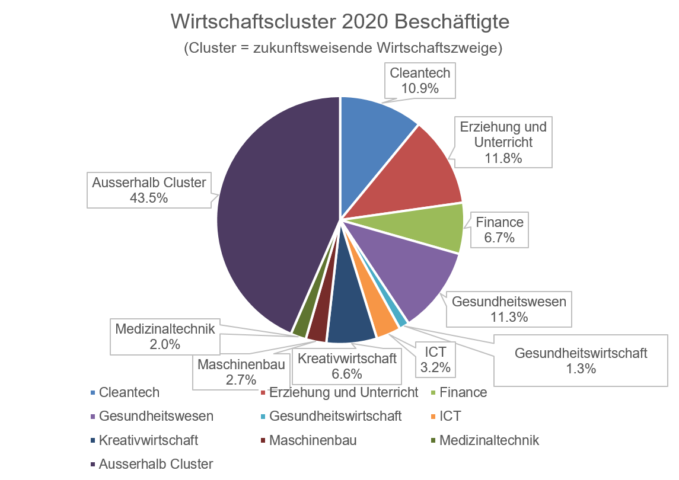
    Formerly an industrial stronghold, Winterthur has now developed into an important technology location and a true birthplace for innovative start-ups. The economy is broadly diversified and employment figures are increasing every year. Today, industrial software is written and sensors for smart factories are developed in the brick halls of yesteryear. Today, the former industrial city of Winterthur is home to an enormous amount of technical know-how. It began professionally training technical specialists at an early stage. The Sulzer industrial group, for example, founded its first in-house vocational school as early as 1870, and shortly afterwards the Technikum, today’s Zurich University of Applied Sciences ZHAW, was established. Other vocational schools and universities followed. Today, the Winterthur region is a hotspot for practice-oriented education and research, which favoured its transformation into a technology city.

    ZHAWfuels the innovation system
    The ZHAW, Switzerland’s largest university of applied sciences with around 11,000 students, engages in close research cooperation with the private sector, so that the enormous amount of knowledge produced every day at the ZHAW flows into companies and fuels the innovation system. This is why the location marketing organisation House of Winterthur networks local companies with the ZHAW or refers to specific innovation support programmes when visiting companies. Its core task is also to promote the strengthening of the regional innovation system.

    Focus on health, energy and machinery
    Companies choose a location primarily on the basis of its innovation potential. House of Winterthur makes these innovation systems visible and shows their development potential. In the case of relocations, the extent to which a new company enriches the innovation system is always central. As cooperation between companies is becoming increasingly important in the innovation process, House of Winterthur organises various networking events, such as tech lunches or specific smart health events. To strengthen the region’s most important innovation ecosystems, House of Winterthur, Technopark Winterthur and the Winterthur Chamber of Commerce and Employers’ Association launched a cluster initiative focusing on health, energy and machinery. The mix of industry, a lively start-up scene, cultural and leisure activities ensures that Winterthur is and remains attractive for workers as well as for residents and families.

    Testimonials

    Christian Fehrlin
    Owner and CEO DEEPIMPACT


    “As a long-time resident and business owner, I can count on competent, reliable support from the city. The location promotion offers valuable advice and information on the development of our company in Winterthur. An ideal location for software development, with more favourable prices and a pleasant working atmosphere, in close proximity to Zurich.”

    Dr Suzanne Thoma
    CEO and VRP Sulzer


    “Sulzer has been rooted in Winterthur since 1834. The same innovative and pioneering spirit that established Sulzer as a technology leader back then still drives us today. Our technologies sustainably solve urgent problems of our society, and we continue to invest where we started – just as we did two centuries ago.”

    Bernhard Winter
    CEO Scewo AG

    “We are very satisfied with the Winterthur location. Not only the development of our stair climbing wheelchair takes place here, but also the production, which we moved here a few weeks ago.”

    Fabrice Billard
    CEO Burckhardt Compression AG

    “Winterthur is convincing as an attractive business location due to its location in the Zurich economic area, its well-trained workforce and the high quality of life for employees.”

    Business Cluster 2020