Tag: Technik

  • Ticino is one of Europe’s most innovative regions

    Ticino is one of Europe’s most innovative regions

    According to the European Commission’s Regional Innovation Scoreboard 2025, the canton of Ticino is one of the ten most innovative regions in Europe. In Switzerland, it is in second place directly behind Zurich. The high proportion of small and medium-sized companies that introduce process or product innovations is particularly noteworthy. The canton also occupies a top position nationally in terms of trade mark registration.

    University excellence with international networking
    The Università della Svizzera italiana (USI) strengthens the region’s academic innovative power with over 20 specialised research institutes. It specialises in areas such as biomedicine, computational science and finance. Its close integration into national and international funding networks makes the USI a key player in Ticino’s innovation system.

    Practice-orientated research for companies
    The University of Applied Sciences of Southern Switzerland (SUPSI) is also a key player in the innovation landscape. It has a high level of expertise in industrial automation, robotics and materials science and is characterised by the highest success rate in accessing European funding of all Swiss universities of applied sciences. Companies benefit from practical co-operation in applied research projects.

    Statutory innovation promotion with a broad impact
    The canton provides targeted support for innovation through the Economic Innovation Act. This offers comprehensive funding opportunities, from support for research programmes and investment projects to participation in trade fairs and internationalisation projects. It is implemented by the Office for Economic Development.

    Switzerland Innovation Park Ticino as a hub
    With the Switzerland Innovation Park Ticino, the canton is promoting the transfer between business and science. The emerging centres of excellence focus on key areas such as life sciences, ICT, drone technologies and the leisure industry. The aim is to develop technical and technological solutions that are highly relevant to the canton’s economy.


    https://projects.research-and-innovation.ec.europa.eu/en/statistics/performance-indicators/european-innovation-scoreboard/eis#/ris?compare_year=2025&year=2025
  • ETH uncovers vulnerability in Intel architecture

    ETH uncovers vulnerability in Intel architecture

    Modern site development is based on digital infrastructures whose security is taken for granted. However, with the discovery of the “Branch Privilege Injection” vulnerability by ETH researchers, it has become clear that the risks in speculative CPU technologies are more serious than previously assumed. The vulnerability allows attackers to read privileged memory areas on shared processors. Byte by byte and at high speed. Millions of systems in private and public data centres worldwide are affected.

    A boon for performance, a risk for security
    The vulnerability originates from a concept that was originally introduced to increase efficiency. Speculative execution. The processor calculates computing steps in advance, a mechanism that can lead to authorisation errors at nanosecond intervals. Attackers use a so-called race condition in the branch predictor and thus overcome protection mechanisms between different users.

    Cloud environments are particularly exposed
    The threat is not limited to individual devices. The vulnerability is particularly critical in cloud computing, where different customers share the same hardware resources. The attack scenario makes it possible to access the storage areas of other users. A nightmare for anyone who relies on secure data storage. This means that the choice of location for digital companies also becomes a question of IT security architecture.

    Architectural weakness with system
    Ever since Spectre and Meltdown were discovered in 2017, it has been clear that speculative execution is a security minefield. The current gap is part of a series of systematic design problems. ETH professor Kaveh Razavi speaks of a fundamental architectural flaw. New avenues of attack are regularly discovered and have to be rectified via complex microcode updates.

  • EPFL shows new gripping technology with potential

    EPFL shows new gripping technology with potential

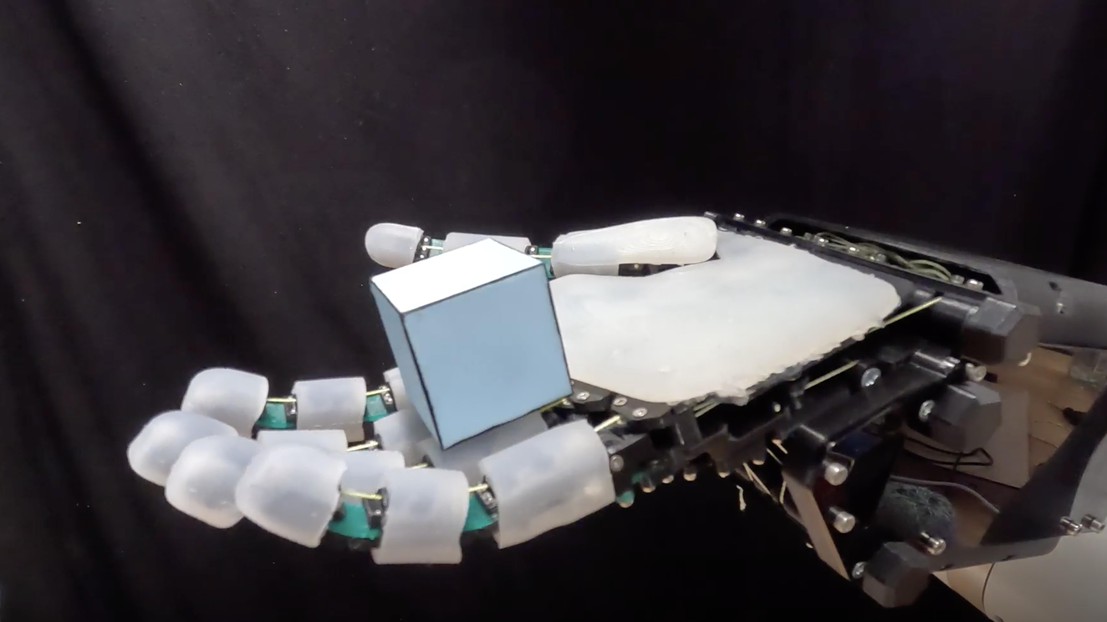
    In everyday life, people instinctively reach for objects without knowing their exact position. Robots, on the other hand, usually require precise environmental information and complex calculations. The newly developed robotic hand from EPFL dispenses with this computational burden. Instead, the robotic hand uses soft materials, spring mechanisms and an intelligent design that enables human-like gripping without high-resolution sensors.

    Self-organising movements with a93% success rate
    The hand uses silicone straps, mechanical springs and a foldable robotic joint, supplemented by just 12 motors instead of the usual 20. Thanks to this reduced but optimally distributed control, ADAPT achieved a gripping success rate of 93% in tests with 24 objects, with a similarity of 68% to human movements. The interaction between material, mould and environment partially replaces classic programming, a form of mechanical intelligence.

    From rigid machines to adaptive systems
    Instead of controlling each joint separately, the robot hand follows only four main points of movement. Everything else is determined by physical interactions with the object. This not only reduces computational effort, but also creates robust systems that can deal with uncertainties and unknown shapes. In future, this flexibility will be supplemented by sensory feedback and AI algorithms. A hybrid approach that combines precision and adaptability.

    New perspectives for robotics and locations with a future
    The findings of the EPFL researchers are not only important for research, but also for industrial applications in unstructured environments – such as logistics, care, agriculture or urban service systems. Robots that act flexibly without permanent reprogramming open up new possibilities for automation and relieve the burden on skilled workers in specific areas where conventional systems reach their limits.

    The ADAPT hand shows that intelligent robotics is not only created in the code, but also in the material. Investing in adaptive systems opens up new markets, from collaborative manufacturing to human-centred assistance systems. The EPFL project sends a strong signal about the role of research and site development in a world where machines will have to act autonomously and safely in the future.

  • 69 million dollars secured for CO2 storage technology

    69 million dollars secured for CO2 storage technology

    Neustark has secured financing totalling 69 million dollars. According to a press release, the ClimateTech company from Bern was supported by the Decarbonisation Partners financing fund, a partnership between BlackRock and Temasek, with the backing of Blume Equity. UBS initiated debt financing. Existing financiers Siemens Financial Services, Verve Ventures, ACE Ventures and Holcim also participated in the new capital round.

    Neustark intends to use the acquired funds to strengthen its position in Europe and gain new markets in America and Asia.

    Neustark, a spin-off from the Swiss Federal Institute of Technology in Zurich(ETH), has developed a process in which CO2 is converted into limestone, which is bound to the pores and surface of the concrete granulate. The carbonated granulate can then be used in road construction or for the production of recycled concrete. According to the company, Neustark currently operates 19 plants with this technology in Germany, Liechtenstein, Austria and Switzerland. The company aims to store 1 million tonnes of carbon dioxide from the air by 2030.

  • Zug sets standards in global blockchain research

    Zug sets standards in global blockchain research

    With the support of the Canton of Zug, an interdisciplinary research centre is being established that will focus on the diverse applications and effects of blockchain technology. The initiative, which is being realised in cooperation with the University of Lucerne and Lucerne University of Applied Sciences and Arts, will not only research the technological aspects of blockchain, but also the social, economic and political aspects. Finance Director Heinz Tännler emphasises that the project not only promotes scientific research, but also strengthens Zug as a business location, particularly in light of the new OECD minimum taxation that was introduced at the beginning of 2024.

    Globally unique research initiative
    The newly founded Zug Institute for Blockchain Research at the University of Lucerne will focus on the challenges and opportunities of this disruptive technology. Nine new chairs will be created to address the various facets of blockchain technology. The research will pursue a holistic approach that encompasses technological innovations as well as the associated social, economic and political issues. The aim is to develop an in-depth understanding of blockchain technology and its potential impact on society.

    Strengthening research capacities at the Lucerne University of Applied Sciencesand Arts
    The Lucerne University of Applied Sciences and Arts will significantly expand its existing activities in blockchain research through the new initiative. The university is contributing its expertise in the fields of computer science, finance and technology to the project and is working closely with the University of Lucerne to create a comprehensive research environment. This cooperation forms the basis for the hub, a platform for collaboration and communication that promotes exchange between the participating researchers and the global blockchain community.


    Sustainable funding and long-term goals
    Following the initial start-up funding from the canton, it is planned that the project will switch to sustainable sources of funding. An external evaluation after three years will assess the effectiveness and progress of the research initiative. These measures will ensure that the “Blockchain Zug – Joint Research Initiative” becomes a permanent fixture in the global research landscape in the long term and establishes Zug as a leading centre for blockchain technology.

  • Corentin Fivet becomes the new head of the Smart Living Labs

    Corentin Fivet becomes the new head of the Smart Living Labs

    Corentin Fivet will take over as head of the Smart Living Lab at the Fribourg branch of the Swiss Federal Institute of Technology Lausanne(EPFL) in spring. He has been a professor at EPFL since 2016 and, according to a press release, has developed pioneering methods for the reuse of concrete slabs, walls and beams made of wood or steel. The Smart Living Lab celebrates its tenth anniversary in 2024.

    When Fivet took up an assistant professorship at the EPFL in Fribourg, his field of research was still in its infancy, according to the press release. “It was easy to review the literature, as hardly anything had been published,” he is quoted as saying. At that time, the reuse of load-bearing structures was not as widespread as it is today. And the Smart Living Lab itself was also in its early stages. The Smart Living Lab is a joint initiative of three Swiss universities – EPFL, the School of Engineering and Architecture Fribourg(HEIA-FR) and the University of Fribourg.

    “We now have around a dozen research groups that have achieved numerous successes – including some that have been recognised internationally. My appointment as academic director of the centre marks the beginning of the next phase,” Fivet is quoted as saying.

    Fivet will take over as Academic Director of the Smart Living Lab on 1 April 2024 and will work alongside Martin Gonzenbach, who will continue as Operational Director. Fivet will continue to pursue the Smart Living Lab’s goal of serving as a catalyst for sustainability and well-being in the built environment, according to the press release. One of its first goals will be to expand the centre’s training courses for architects, civil engineers, construction managers and property managers.

  • Hamilton Bonaduz AG is making targeted investments in its future development

    Hamilton Bonaduz AG is making targeted investments in its future development

    The renowned Domenig Architekten have once again been commissioned to design and realise the project. Construction work is in full swing along the A13 motorway and in the immediate vicinity of the “1.0” building, which went into operation in 2018. The nine-storey building will be connected to the existing complex by a four-storey intermediate wing. The outstanding component of this new building is the 40 metre high-bay warehouse, which offers space for a total of 12,000 Euro pallets. The existing fully automated, rail-guided transport system will be expanded and the intralogistics will be seamlessly linked to the existing systems of building “1.0”.

    The modern appearance of this high-tech building is characterised by intelligent glass with an electrochromic coating. This glass, together with metal and photovoltaic panels, emphasises the vision of the Hamilton brand. The innovative glass façade darkens independently when exposed to direct or indirect sunlight and only allows 1% of the light energy to pass through when completely darkened. In order to generate and utilise electricity independently, a total of 5,400 m² of photovoltaic panels are installed on the roof and façade. In addition, heat energy and moisture from the ventilation system are recovered by a heat exchanger. The modern energy concept is rounded off by the use of a groundwater heat pump, which is operated by a heating network in Domat/Ems. The building will receive the coveted Minergie A certification.

    In keeping with the “Hamilton 1.0” project, the new building is being planned in detail from start to finish with the help of Building Information Modelling (BIM). BIM is a holistic working method for the integrated planning, construction and management of buildings. All relevant data is modelled digitally and all parties involved work synchronously with the same information.

    With “Hamilton 2.0 “, the BIM process is even continued consistently in the implementation phase: For the first time, the digital 3D BIM model is used exclusively, making conventional paper plans on the construction site obsolete.

  • BKW makes the start house on the Matterhorn energy self-sufficient

    BKW makes the start house on the Matterhorn energy self-sufficient

    This year’s Ski World Cup season starts on the weekends of 11/12 and 18/19 November with cross-border races in Zermatt and Cervinia. According to a press release, BKW has erected a mobile start house on the Theodul Glacier above Zermatt that does not require an external power supply.

    The starting house measures 15 by 8 metres and is inflatable. It weighs 600 kilograms and is designed to withstand wind speeds of up to 200 kilometres per hour. Power is supplied by 40 integrated solar cells with a total output of 11 kilowatts peak.

    The system was installed by companies from the Bern-based energy service provider’s network. These included BKW Engingeering for the project management, ingenhoven architects based in Düsseldorf for the building planning and enerpeak based in Dübendorf for the electrics and photovoltaics.

    BKW is an official premium and sustainability partner of the event organiser Swiss-Ski. “We are using the partnership with Swiss-Ski to bring sustainable solutions to snow sports,” said Michael Morgenthaler, Head of Brand Experience, Partnerships & Campaigns at BKW, in the press release. “At the same time, we can show the public our broad expertise in the areas of energy, buildings and infrastructure.”

  • Rhenus Switzerland puts solar roof into operation in Schaffhausen

    Rhenus Switzerland puts solar roof into operation in Schaffhausen

    Rhenus Switzerland is putting a total of 2511 photovoltaic modules into operation on the roof of the logistics building in Schaffhausen, which has been fitted with a special film. This system is expected to generate around 1,100,000 kilowatt hours of electricity. According to a press release, this is roughly equivalent to the consumption of 220 households.

    The building was renovated in just under four months. The solar power generated on 6700 square metres will be fed directly into the Rhenus grid. Rhenus intends to use this to operate three buildings with office, warehouse and rental space. This will ensure that the logistics areas with a total of 23 loading bays and over 15,000 pallet spaces as well as block storage and picking areas are supplied with energy.

    “When it comes to sustainable logistics, we at the Rhenus Group prefer to be two steps ahead,” said Andreas Stöckli, CEO of Rhenus Alpina. “We are laying the foundations for more efficient and climate-friendly goods handling with the latest addition to our photovoltaic system in Schaffhausen and also at logistics centres in Basel and Spreitenbach. We need innovative solutions that not only benefit the environment and society, but also our customers.”

    The German Rhenus Group is one of the world’s leading logistics service providers with 39,000 employees at 1120 sites and an annual turnover of EUR 8.6 billion. The company has 15 sites in Switzerland.

  • Im Proptech-Bereich von PriceHubble erfolgreich übernommen

    Im Proptech-Bereich von PriceHubble erfolgreich übernommen

    Die Übernahme ist bereits die zweite Akquisition von PriceHubble in Grossbritannien innerhalb eines Jahres, nach der Übernahme von Dataloft im März 2023. Durch die Integration der Produkt- und Datenstärke stärkt das Unternehmen seine Position als lokaler Marktführer und wird zum unangefochtenen globalen Spitzenreiter bei Performance-Datenlösungen, die einen Mehrwert für die Banken-, Versicherungs-, Vermögensverwaltungs- und Immobilienbranche weltweit bieten.

    Im Jahr 2012 gegründet, bietet WhenFresh Zugang zu über 200 erstklassigen, proprietären, privaten und öffentlichen Datensätzen über eine einfache API-Integration an, einschliesslich wichtiger ESG-bezogener Informationen. Die Lösungen ermöglichen es Kunden, schnellere und fundiertere Entscheidungen im Zusammenhang mit Immobilienrisiken zu treffen.

    Dr. Stefan Heitmann, Gründer und Vorstand, äusserte sich erfreut über die erfolgreiche Übernahme: «Wir haben uns als führender B2B SaaS-Anbieter von Performance-Datenlösungen im Immobilienbereich für Banken, Versicherungen und Vermögensverwalter weltweit etabliert. Die Vollendung unserer sechsten Übernahme und die Erweiterung unserer einzigartigen Fähigkeiten im grössten Banken- und Immobilienmarkt Europas und darüber hinaus erfüllen uns mit Stolz.»

    Alexis Radjabi, Vertriebsvorstand Westeuropa, betonte die Bedeutung der Zusammenarbeit mit dem Team: «Durch die Verschmelzung unserer Lösungen mit dem Fachwissen im Bankwesen, bei Versicherungen, in Versorgungsunternehmen und im öffentlichen Sektor sowie der Expertise im Bereich Marktinformationen für Wohnimmobilien können wir einzigartige Performance-Datenlösungen entwickeln und unsere Position als europäischer Marktführer weiter stärken.»

    Die übernommene Firma wird eine hundertprozentige Tochtergesellschaft von PriceHubble UK unter der Leitung von Mark Cunningham, Mitgründer und Direktor. Cunningham äusserte sich begeistert: «Wir sind sehr aufgeregt, Teil der expandierenden Familie zu werden. Die Zusammenführung unseres umfangreichen Immobiliendatenbestands, unserer technologischen Exzellenz und unseres datenwissenschaftlichen Know-hows wird es uns ermöglichen, die Produkt- und Serviceentwicklung zu beschleunigen und unser Geschäft im grossen Massstab auszubauen.»

    Alan Dean, Mitgründer und Technischer Direktor, wird Group Innovation Director und wird die Wachstumsagenda des Unternehmens in Grossbritannien und international weiter vorantreiben. Dean betonte: «Diese Übernahme eröffnet beiden Unternehmen die Möglichkeit, ihre Technologien zu teilen, um die Entwicklung neuer Produkte zu beschleunigen. Sie bietet eine enorme Chance, unseren Erfolg in Grossbritannien als Teil der Group auf den internationalen Markt zu bringen.»

  • Holder companies increasingly act as a group

    Holder companies increasingly act as a group

    Schlierem-based real estate developer Halter AG is reorganising its management structure. According to a statement, an ecosystem of sister companies with different construction and real estate services has grown up around the company over the past ten years. This has resulted in the need for further development at the top. Halter Holding has so far hardly appeared in public as a “silent” holding company.

    In future, they will position themselves more strongly in the market. The construction and real estate industry’s path to a circular economy can only be successfully implemented with integrated value-added processes and models of cooperation in planning, execution and operation. This is linked to the use of digitalisation and digital technologies.

    In the course of the organisational development, there will be personnel changes from 1 January 2024, according to the company’s statement. Maik Neuhaus will take over from Markus Mettler as CEO of Halter AG. Mettler will now become Chairman of the Board of Directors of Halter AG and Delegate of the Board of Directors of Halter Group. Balz Halter remains Chairman of the Board of Directors of Halter Group. Alexandra Stamou joins the Board of Directors of Halter AG and becomes Head of Innovation and Products of Halter Group.

    The business unit Total Services of Halter AG, which is the largest unit with more than 200 employees, will be split up. From January 2024, there will be Halter Total Services German-speaking Switzerland and Halter Total Services French-speaking Switzerland. The new managing directors will be Diego Frey for German-speaking Switzerland and Fréderic Boy for French-speaking Switzerland. Both will then be part of the Halter AG Executive Board.

  • dhp brings its largest folding solar roof to Stuttgart

    dhp brings its largest folding solar roof to Stuttgart

    Zizers-based dhp Technology is building its largest folding solar roof to date for the main sewage treatment plant in Stuttgart-Mühlhausen. By spring 2026, 5280 modules are to be installed on an area of 17,000 square metres. According to a statement, the system with an output of 2745 kilowatts peak is the largest folding solar roof installed by dhp.

    With the Bündner technology, the sewage treatment plant in Baden-Württemberg’s state capital can generate up to 11 per cent of its annual consumption itself. In the medium term, a value of 18 percent is targeted.

    According to the plans of the Stuttgart municipal wastewater treatment plant(SES), solar modules will be installed not only in the aeration basin in the north of the 25-hectare plant, but also in the area to the south, which is of a similar size. According to SES, the investment will save more than 900 tonnes of carbon dioxide.

  • Crowdlending, a new source of real estate financing

    Crowdlending, a new source of real estate financing

    Investors benefit from fixed interest rates in Swiss francs. Unlike traditional savings accounts, which often offer negligible returns, real estate crowdfunding offers attractive returns and is therefore an interesting alternative for those who want to maximise their income. In addition, the minimum investment required is affordable. This widens the circle of investors and allows them to diversify their real estate portfolios by investing in different short- and medium-term projects while avoiding the volatility of the equity markets.

    Optimise financing structures
    Real estate crowdfunding is not a substitute for banks, but complements the equity of real estate developers. The loans granted by investors are subordinated and secured by real estate, which provides security in case of default. This approach allows developers to focus on developing existing and new projects without tying up a large part of their capital in ongoing projects. This allows them to complete their financing quickly and avoid diluting future profits from their businesses by using external financing partners.

    Property owners now have access to an additional source of financing to add value to their assets. They can use the funds received for renovations and improvements to their properties and thus optimise the financial structure of their property portfolios. This financial flexibility is a great advantage for owners who want to increase the value of their properties while maximising returns.

    Apart from the individual benefits, real estate crowdlending also contributes to Switzerland’s economic and social dynamism. By encouraging the creation of new housing and the renovation of existing assets, it meets the housing needs of the local population. The increasing demand for housing in Switzerland, especially in urban areas, requires high investments in the real estate sector. Real estate crowdfunding offers an innovative solution for financing these projects and thus contributes to the country’s economic growth. Furthermore, by supporting real estate projects, real estate crowdlending creates employment opportunities in the construction industry and related service sectors.

    Conclusion
    In summary, real estate crowdlending is an innovative source of financing for the real estate sector in Switzerland. With undeniable benefits for investors, developers and property owners, it opens up new perspectives and appeals to a growing number of people in Switzerland with a
    growth of over 400% in six years and a volume of CHF 142 million1 by 2022. This model offers an interesting alternative to traditional investments and contributes to the democratisation of real estate investments in Switzerland.

  • Neuer Campus Horw schafft Synergien

    Neuer Campus Horw schafft Synergien

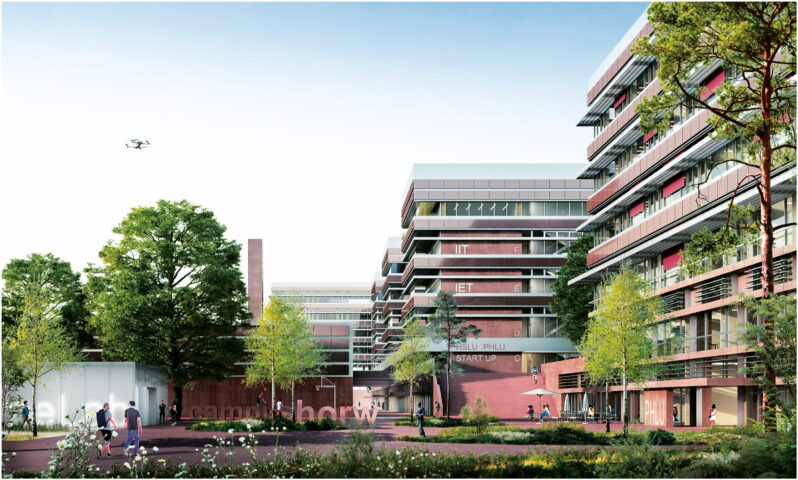
    Der Kanton Luzern zählt immer mehr Studierende – die bestehende Infrastruktur auf dem jetzigen Campus Horw hat ihre Kapazitätsgrenzen aber bereits erreicht und einige Gebäudeteile sind zudem veraltet. Dank den Erneuerungen und Erweiterungen des Hochschulcampus in Horw sollen nach Fertigstellung ab dem Jahr 2029 rund 4000 Studierende und 1000 Mitarbeitende des HSLU-Departements Technik und Architektur sowie der Pädagogischen Hochschule Luzern Platz finden.

    Die beiden Institutionen bleiben dabei eigenständige Organisationen mit einer je eigenen Identität und mit unterschiedlichen Kulturen. Der Campus lässt diese Diversität zu und ermöglicht eigenständige Auftritte. Trotzdem prägt ihn Gemeinsamkeit nach innen und aussen. Die gemeinsame Nutzung von Räumen und Einrichtungen, überschneidende und komplementäre Lehr-, Forschungs- und Dienstleistungsangebote sowie die zentrale Bewirtschaftung der Campusanlage basieren auf gemeinsamen Abmachungen und bewirken Synergien. Dadurch entsteht für die Pädagogische Hochschule wie auch Technik & Architektur ein qualitativer und ökonomischer Mehrwert.Geplant sind zwei neue Baukörper: Im Norden ein sechsgeschossiges Hauptgebäude der PH Luzern und im Süden ein siebengeschossiger Bau des Departements Technik & Architektur der Hochschule Luzern. Die bestehenden Trakte II, III und IV werden saniert und um ein Geschoss erweitert. Die leicht versetzte Anordnung der neuen Bauvolumen sorgt für eine spannungsvolle Gesamtkomposition auf dem Areal. Den Zuschlag für das Projekt erhielt das Architekturbüro Penzel Valier AG aus Zürich.

    Die neuen Bauvolumen werden leicht versetzt angeordnet.

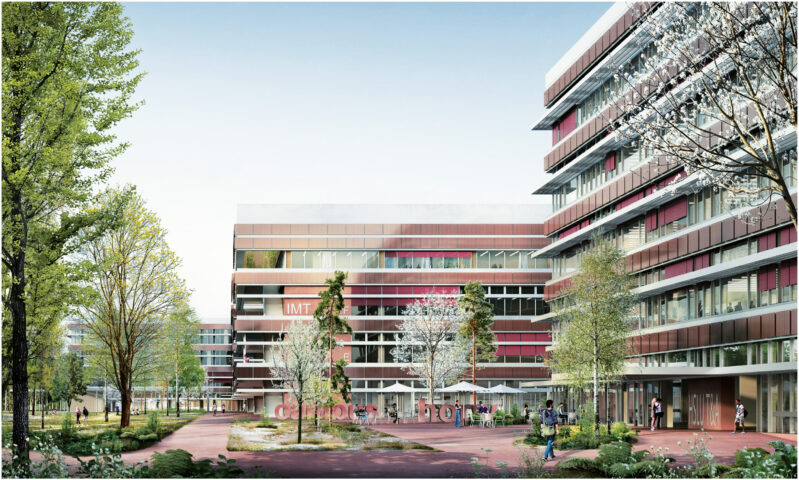
    Die Architekten haben sich für eine Hybridbauweise aus Beton und Holz entschieden. Für die Erweiterung der Bestandesbauten sowie für die aussenliegenden Raumschichten der Neubauten soll unter anderem heimisches Holz zur Verarbeitung kommen. Dieses verleiht den Unterrichtsräumen eine angenehme und warme Atmosphäre. Die innenliegenden grossen Raumbereiche werden aus Recyclingbeton konstruiert.

    Die Unterrichts- und Büroräume der beiden Neubauten entstehen rund um zentrale Atriumfiguren. Die Räumlichkeiten werden flexibel und an sich verändernde Bedürfnisse anpassbar gebaut. Die Atrien vernetzen die Institute der jeweiligen Schulen untereinander sowie mit den übergeordnet genutzten Sockelgeschossen. Diese sehen gemeinsame Nutzungen für den Gesamtcampus wie Bibliothek, Mensa, Audimax oder Campusaula vor.

    Die rötliche Farbgebung der verschiedenen Fassaden-Elemente setzt die bestehende Tradition und Identität des Campus Horw fort.

    Für die Realisierung des rund 365 Millionen kostenden Projekts sowie für den späteren Betrieb des Campus ist eine eigens dafür gegründete Aktiengesellschaft, die Immobilien Campus Luzern-Horw AG, verantwortlich. Die Realisierung ist ab 2026 vorgesehen. Die etappierte Inbetriebnahme ab 2029.

    Der neue Campus Horw entsteht in Hybridbauweise aus Beton und Holz.
  • Artwork produces solar power

    Artwork produces solar power

    Solar cells can also decorate buildings as objects of art. This is shown by a project that has now been implemented at the NEST research building of the Eidgenössische Materialprüfungs- und Forschungsanstalt ( Empa ) and the EAWAG water research institute. The facades of the building have been fitted with photovoltaic modules, which together result in a work of art.

    To this end, Empa implemented the project called Glasklar, on which it worked together with Zug Estates and students and lecturers from the two departments of Design & Art and Technology & Architecture at the Lucerne University of Applied Sciences and Arts. The latter designed photovoltaic modules in a two-week block event, which visually match the NEST building as design objects. The design was implemented by textile design student Lynn Balli. It was selected for use in the NEST building in an interdisciplinary design competition.

    “If we can arouse the interest of designers in the design of building-integrated photovoltaic modules, we will make an important contribution to greater acceptance of photovoltaic facades and thus promote the expansion of renewable electricity production in Switzerland,” says Björn Niesen, NEST innovation manager Message from Empa quoted.