Tag: Technologie

  • Opening of the Innovaare innovation park

    Opening of the Innovaare innovation park

    The Innovaare Park, the largest innovation hub of its kind, was officially opened on 25 April 2024. Federal Councillor Guy Parmelin and other prominent figures from politics, business and research, including Dieter Egli, Vice President of the Aargau cantonal government, and PSI Director Prof Dr Christian Rüegg, attended the ceremony. The park, which is already 80 per cent let, serves as a strategic hub and is the largest tenant of the neighbouring Paul Scherrer Institute.

    Dr Christian Brönnimann, CEO of Park Innovaare, emphasised the importance of this facility: “The official opening of Park Innovaare is the result of a collaborative effort by many stakeholders, including shareholders, the canton, the federal government, investors and PSI. This collaboration has created a pioneering meeting place for industry and cutting-edge research.”

    Thanks to its direct neighbourhood to the PSI and the use of its research infrastructure, the Innovaare Park offers ideal conditions for technology transfer from science to industry. It focuses on key technologies in the fields of photonics and quantum technologies, life sciences, advanced manufacturing technologies, energy and sustainability.

    Andreas Rickenbacher, President of Switzerland Innovation, explains the overarching vision: “Switzerland is recognised worldwide for its innovative strength. Park Innovaare plays a central role in optimally networking our academic institutions with the economy and thus translating research results into marketable products and services.”

    Park Innovaare has already met with a high level of acceptance: “We have attracted 21 companies so far, including 15 spin-offs from PSI, ETH or FHNW, two technology transfer centres and several large international companies”, says Robert Rudolph, CEO of Park Innovaare. With a current occupancy rate of around 80 per cent, the park is already showing its best side shortly after opening and is optimistic about the future.

  • Alternative location for energy centre in Zurich

    Alternative location for energy centre in Zurich

    The feasibility study conducted by the Swiss Center of Applied Underground Technologies in collaboration with Amberg Engineering AG, Rapp AG and experts from ETH Zurich and Lucerne University of Applied Sciences and Arts has confirmed that there are underground locations in Zurich that are suitable for an energy centre. The focus is particularly on the construction of a cavern beneath the ETH machine laboratory. The disused Latentunnel could be used as an access shaft to ensure access without serious emissions.

    It would also be possible to use the Latvian tunnel as a location for a heat storage facility. According to the HSLU experts, all of CoolCity’s CO2 emissions could be avoided in this way. This would enable the city to achieve its climate targets more effectively than with the Selnau site, where the combustion of gas is planned to compensate for peak loads and excess heat would have to be discharged into the Limmat.

    An underground site also has advantages in terms of rapid realisation and costs. In contrast to the Selnau site, the location under the ETH does not require any permits from the monument protection authorities and minimises the impact on the groundwater. The SCAUT engineers estimate the additional costs for the construction of an energy centre at CHF 15 to 30 million compared to the Selnau substation, plus around CHF 20 million for a heat storage facility. However, this is offset by the advantages of a large above-ground building that can be used for decades, as well as the climatic and environmental benefits of an underground structure.

  • Digital standstill in the property industry

    Digital standstill in the property industry

    The sixth edition of the “Digital Real Estate Index” shows a slight decline in the digital maturity of the industry for the first time since 2020, with a rating of 4.6 on a scale of 1 to 10. Despite progress made by planners and construction companies through Building Information Modelling (BIM), the development among owners and investors is lagging behind expectations.

    Although two thirds of the companies surveyed invest more than one percent of their turnover in digitalisation, there is a downward trend among larger companies. External factors such as interest rate changes and supply chain problems appear to be hampering digital transformation, while regulatory requirements in the area of sustainability are acting as a catalyst for digitalisation efforts.

    While AI and machine learning are still lagging behind expectations in terms of their applicability and integration into the industry, BIM is consolidating itself as an important technology for the entire life cycle of buildings. The use of smart building technologies is increasing, with the focus on resource conservation and other benefits such as user experience and comfort initially taking a back seat.

    The study shows that the property industry is at a critical point in its digital evolution. Despite the obvious potential of digital technologies and the need for greater integration to increase efficiency and sustainability, concrete measures and investments are needed to drive the digital transformation forward. The study provides important insights and serves as a guideline for future developments in the digital landscape of the property industry.

  • Swiss economy facing global challenges

    Swiss economy facing global challenges

    Europe, including Switzerland, is lagging behind in terms of global economic growth, partly due to increasing bureaucratisation, which is slowing down innovation. Yu points out that technology giants based in the USA and China in particular, such as Google and Nvidia, contribute significantly to the economic growth of their regions. In contrast, Europe tends to lag behind in the digital transformation, which leads to a dangerous dependence on traditional industries.

    Although Switzerland has successful global market leaders in the pharmaceutical, banking and food industries, the increasing focus on compliance and regulations has fostered a risk-averse culture that prevents innovation, according to Yu. To counteract this, Swiss companies need to align themselves more closely with innovation centres such as Silicon Valley or the Chinese technology market.

    One concrete example of such an orientation is Novartis, which is expanding its research centre in the USA. Yu argues that although Switzerland is geographically located in Europe, its companies should think and act globally in order to remain competitive.

    For Swiss economic policy, this means making Switzerland a more attractive location for investment in start-ups and technology, reducing bureaucracy and not repeating the same mistakes as other countries. By diversifying and controlling risk in all markets, Swiss companies can strengthen their position and prevent a loss of prosperity.

  • Integration of photovoltaics in building façades

    Integration of photovoltaics in building façades

    The German government has set itself the goal of drastically increasing the share of solar energy in energy consumption by 2030, which is only possible by utilising innovative technologies and tapping into new PV potential. A key element of this strategy is the effective utilisation of building façades for photovoltaics. Despite the obvious benefits, the potential of façade PV has so far remained largely untapped, mainly due to the challenges of cost, complexity and aesthetics.

    To overcome these hurdles, the Center project, funded by the German Federal Ministry for Economic Affairs and Climate Protection and coordinated by the Fraunhofer Institute for Solar Energy Systems ISE, brings together the expertise of leading industrial companies and research centres. The aim is to develop practicable and cost-efficient standard solutions for the integration of photovoltaic systems into building envelopes. This initiative promises to remove the technical and economic barriers that stand in the way of the widespread use of façade PV.

    Successful examples of the integration of PV into building façades, such as the town hall in Freiburg and the OWP 12 office building in Stuttgart, already demonstrate the potential of this technology. These projects demonstrate that PV elements not only contribute to electricity generation, but can also offer other benefits such as sound insulation, weather protection and climate regulation within the buildings.

    The centre aims to deliver ground-breaking results within the next two years and plans to publish its findings in the form of a VDI guideline. This should promote the use of building-integrated photovoltaics and make a significant contribution to achieving the German government’s climate targets. The participation of experts from all areas of the solar industry and the construction sector underlines the holistic approach of the project, which aims to accelerate the solarisation of the building envelope and thus take a decisive step towards a more sustainable future.

  • Miljan Gutovic becomes new CEO of Holcim

    Miljan Gutovic becomes new CEO of Holcim

    The Board of Directors of Holcim has appointed Miljan Gutovic as Chief Executive Officer (CEO) of Holcim with effect from 1 May, according to a press release. He will succeed Jan Jenisch, who wishes to concentrate on his role as Chairman of the Board of Directors and is standing for re-election at the Annual General Meeting in May. The Board of Directors has also appointed Jenisch to lead the planned IPO of Holcim’s North American business in the USA.

    Gutovic has been a member of Holcim’s Executive Committee since 2018. The Australian holds a bachelor’s degree in civil engineering and a doctorate in materials science and engineering from the University of Technology in Sydney. He was Head of the Middle East and Africa region, then of the Europe region and was responsible for Operational Excellence. Under his leadership, Holcim has strengthened its market positions, achieved industry-leading margins and turned decarbonisation into a driver of profitable growth, according to the press release.

    Miljan Gutovic is “a highly qualified colleague who has made a decisive contribution to the successful transformation of Holcim into the leading company for innovative and sustainable construction solutions”, the still acting CEO Jenisch is quoted as saying. “Miljan has increased our profitability in Europe to a record level, successfully executed strategic transactions and built excellent teams.”

    “As a passionate civil engineer, there is no more exciting company for me than Holcim – especially at a time when decarbonisation and advanced technologies are changing the way we build. I look forward to working with the Holcim teams worldwide,” future CEO Gutovic is quoted as saying.

    Holcim, based in Zug, is one of the largest producers of building materials in the world. The company produces concrete, gravel and cement at 55 sites across Switzerland and turns demolition materials into resource-saving products.

  • Shaping Zurich’s future: First location day sets new accents

    Shaping Zurich’s future: First location day sets new accents

    On “Location Day”, an initiative of the Zurich Department of Economic Affairs, leading figures from business, science and the Zurich government came together to formulate joint visions for the future direction of Zurich as a business location. The aim of the event was to identify innovative ideas and measures through constructive dialogue in order to strengthen Zurich as a business location in the long term.

    The discussions focussed on the canton’s core strengths, such as its dynamic entrepreneurial landscape, cutting-edge research and education as well as its high-quality infrastructure. In a series of panels and workshops, topics such as technology, skills shortages, business development, mobility and sustainability were explored in greater depth. The workshops generated a large number of proposals that are now to be developed further in order to realise practical solutions for Zurich as a business location.

    A study on the attractiveness of the Canton of Zurich as a business location, prepared especially for the “Location Day”, served as a basis for discussion. It analysed key factors influencing the business location and identified both the canton’s strengths and areas with potential for improvement. Based on these findings, the participants were able to address specific areas requiring action and channel them into productive channels.

    Due to the positive response and the recognisable need for ongoing exchange between the various sectors, the Department of Economic Affairs has already announced that it will establish the “Location Day” as an annual event. This emphasises the Canton of Zurich’s commitment to further positioning and strengthening itself as an innovative and future-oriented business location.

  • AQUA4D has been treating water for 20 years

    AQUA4D has been treating water for 20 years

    The Valais-based water treatment specialist Planet Horizons Technologies is presenting the seventh generation of its AQUA4D water management system to mark the 20th anniversary of its launch, according to a press release. AQUA4D was first launched in September 2004 by the company based at the Ecoparc de Daval in Sierre in the canton of Valais. The latest product generation is the result of extensive research and innovation aimed at optimising water management in various sectors, according to the press release.

    “From Daval Ecopark, we continue to develop, test and assemble our products dedicated to the protection of water pipes in Switzerland and the optimisation of irrigation around the world,” the press release continues. “Thanks to in-house manufacturing at our Swiss headquarters, we can fully control our production processes and ensure optimal quality and efficiency,” said Nicolas Masserey, Production Manager at AQUA4D.

    Planet Horizons Technologies has equipped more than 100 public buildings in Switzerland with its sustainable AQUA4D water treatment system. The innovative technology can also be used to improve the water quality of hospitals and schools. The technology utilises electromagnetism using a patented method to remove limescale deposits and protect against corrosion and bacteria. The system can be used primarily in old buildings with long-standing pipework and in areas with high levels of limescale in the water. This not only improves the quality of drinking water, but also reduces maintenance and servicing costs.

    With experience from more than 5,000 systems installed in 45 countries, the company says it is also finding increasing favour in Switzerland.

  • Wingtra’s mapping drones support the French construction industry

    Wingtra’s mapping drones support the French construction industry

    Wintgra and SITECH France, a digital construction and digital solutions company owned by Trimble, have entered into a partnership. According to an announcement from Wingtra, this collaboration brings together its own mapping drones as a supplier of valuable geodata with SITECH’s expertise in the use of digital technologies for earthworks, road and linear projects, topographical measures, quarries and technical landfills. The French company is based in the Île-de-France region.

    As SITECH enables the seamless integration of Wingtra’s reliable data acquisition, this partnership will advance the industry with improved geodata. This will serve to model construction sites more efficiently, improve project planning and optimise processes.

    According to the press release, both partners are supporting proactive companies in building smarter. This emphasises their commitment to innovation, productivity and reducing the carbon footprint in the construction industry.

  • Ein erfolgreicher Treffpunkt der Baubranche

    Ein erfolgreicher Treffpunkt der Baubranche

    Die Swissbau 2024 zog in diesem Jahr mit ihrer beeindruckenden 85’000 m² großen Ausstellungsfläche 52’486 Besucherinnen und Besucher an. Die Messe bot eine einzigartige Gelegenheit für Fachleute aus der Bau- und Immobilienbranche, sich über aktuelle Innovationen und Trends zu informieren und wertvolle Kontakte zu knüpfen. Im Fokus der Veranstaltung stand der Wissenstransfer, angereichert durch Diskussionen und praktische Demonstrationen auf den Plattformen Swissbau Focus und Lab.

    Die Messe, die traditionell alle zwei Jahre stattfindet, war in diesem Jahr von einer besonderen Dynamik geprägt. Im Zentrum stand der persönliche Austausch, der angesichts der zunehmenden Digitalisierung und der Beliebtheit von Videokonferenzen eine neue Qualität erlangte. Unter dem Motto “Den Wandel gemeinsam gestalten” bot die Swissbau vielfältige Plattformen für Produkterlebnisse, Informationsaustausch und Networking.

    Erstmals entschieden sich die Veranstalter, die Messe auf vier Tage zu verkürzen und den wenig geschätzten Samstag aus dem Programm zu nehmen. Dieser Schritt wurde von Ausstellern und Besuchern positiv aufgenommen, da die Qualität der Gespräche und die Bereitschaft zur Auftragsvergabe gesteigert wurden. Die Messe zog Expertinnen und Experten aus verschiedenen Fachbereichen wie Architektur, Planungswesen, Immobilien und Handwerk an.

    Rudolf Pfander, Messeleiter der Swissbau, unterstrich die Bedeutung der Messe als Plattform für neue Angebote und die Entwicklung innovativer Konzepte. Die diesjährige Messe beinhaltete neu geschaffene Marktplätze für Begegnungen und die Designbühne Swissbau Inside, die das Fachpublikum und private Bauinteressierte gleichermaßen begeisterten.

    Die Leitthemen der Swissbau, wie Kreislaufwirtschaft, Energie, Digitalisierung und Lebensraum, spiegelten die aktuellen Herausforderungen der Branche wider. Die Kollaborations-Plattformen Swissbau Focus und Lab boten in intensiver Vorarbeit ein hochkarätiges Programm, das diese Themen adressierte.

    Namhafte Partnerschaften mit Organisationen wie dem SIA, Schweizerischer Ingenieur- und Architektenverein sowie Bauen digital Schweiz / buildingSMART Switzerland zeigten die anhaltende Relevanz der Swissbau. Ebenso zufrieden zeigten sich die Themenpartner Hörmann, Laufen und Siemens mit dem Messeverlauf.

    Die nächste Swissbau wird vom 20. bis 23. Januar 2026 stattfinden. Bis dahin bleibt die Swissbau-Website eine wichtige Informationsquelle für die Branche, mit Fachwissen, Standpunkten und Neuheiten aus der Bau- und Immobilienwelt.

  • The industrial revolution in the digital age

    The industrial revolution in the digital age

    The vision of parallel digital universes, known as the metaverse, is increasingly becoming a real possibility for industrial companies. The concept, coined by Neal Stephenson, is no longer just a science fiction scenario, but is taking shape in initiatives such as the iguversum from igus, which is building a bridge to a new way of selling and engineering. This advanced technology, supported by artificial intelligence and big data, could reach a market value of several trillion dollars by 2030.

    The Industrial Metaverse enables companies to transfer physical technologies into 3D models and bring international teams together in virtual spaces. This allows them to plan and simulate plants and machines more efficiently than ever before. Siemens’ Digital Native Factory in Nanjing is a pioneer with its digital twin approach, which has significantly improved the accuracy of factory planning and productivity. Similarly, igus uses the iguversum to guide customers and sales staff through virtual worlds in which products and solutions can be experienced interactively.

    The future of the industrial metaverse promises collaboration without geographical boundaries, where global teams carry out entire projects as avatars in the digital world, eliminating the need for physical meetings and traditional means of communication. This not only leads to a more vivid visualisation of projects, but also to faster and more efficient project implementation.

    In addition to optimising product development processes, the metaverse also enables innovative after-sales service concepts. Technical training could take place in an immersive environment that allows lifelike learning and interaction with digital twins of real objects.

    Augmented reality, familiar from games such as Pokémon Go, represents the next stage of development. This technology allows engineers to project 3D models from the metaverse into their real environment and thus assess the compatibility of planned machines with their surroundings.

    However, the challenge remains to increase awareness and understanding of the industrial metaverse. A survey by TeamViewer shows that many people are not yet informed about the technology. Further education is therefore needed to realise the full potential of this revolutionary digital transformation.

  • Memox acquires 2.8 million euros

    Memox acquires 2.8 million euros

    Proptech company Memox has successfully closed a Series A financing round, raising €2.8 million in capital. According to a media release, the financing round was led by Swiss Prime Site and 41 Group as well as other key players from the real estate, technology and investment banking sectors. Zurich-based Memox intends to use the sum raised to expand its positions in the so-called DACH region.

    Memox specialises in the design of meeting and conference rooms as well as the organisation of conferences in the business world. In doing so, experience as well as innovations after the Corona pandemic have been incorporated into Memox’s offers. Following the successful launch of 14 new rooms in the first half of 2023, Memox’s portfolio now comprises a total of 31 rooms in six locations in three cities. Memox is now active in Zurich, Basel and Frankfurt. The company’s operations currently generate annual revenues of €7 million, Memox announced in the statement.

    “Memox is already preparing a second round of financing to fund further market entries in Germany and Switzerland,” Dirk Reiner, CEO at Memox, is quoted as saying in the release. “With the current trends in the working world and in the real estate environment, Memox is ideally positioned to conquer the market.”

  • LEDCity wins Green Business Award

    LEDCity wins Green Business Award

    LEDCity has won the Green Business Award 2023. The Zurich-based company, founded in 2017, has developed an intelligent lighting system that uses around 50 percent less energy than conventional LED lighting with motion sensors. This year, 28 applicants competed for the most important sustainability prize in Switzerland. In addition to LEDCity, Haelixa with its DNA marker for raw materials and namuk with its high-quality children’s outdoor label also reached the final, the organisers of the Green Business Award informed in a statement.

    “LEDCity’s solution convinced us because it shows how we can use technology and artificial intelligence to tackle the challenges in the energy industry,” jury president Doris Leuthard is quoted as saying in the release. For LEDCity CEO Patrik Deuss, the award shows “that we are on the right track with our energy-saving and at the same time quickly amortisable lighting system”. In addition, the win underlines “our commitment to sustainable innovations”.

    LEDCity uses up to five sensors per light source. In addition to brightness and movement, humidity, temperature and CO2 concentration are measured. The data obtained can be used, for example, by security systems or for planning cleaning work.

    The Green Business Award is being presented for the fifth year by the cooperation Green Business Switzerland. It honours “solutions that combine ecological innovation with economic success”, according to the press release. Green Business Switzerland is made up of actors from business and environmental protection. The cooperation was initiated by the Swiss Environmental Foundation and the Go for Impact association.

  • 10 million Swiss francs in funding for concrete recycling technology

    10 million Swiss francs in funding for concrete recycling technology

    Almost 40% of global CO2 emissions are attributable to the construction and building sector. Around 30 billion tonnes of concrete are produced worldwide every year and demand continues to rise. The binding agent cement and the composite material concrete are important building materials – but their production contributes to climate change. Estimates suggest that the cement industry alone is responsible for more than 8% of global greenhouse gas emissions. With reCO2ver® Sika has developed an innovative technology that enables complete recycling of concrete demolition material and is unique in the concrete industry.

    17,000 tonnes of CO2 storage in concrete demolition material by the end of 2030

    Sikas not only processes old concrete into the high-quality individual components gravel, sand and cement stone, but can also bind additional CO2 thanks to a chemical process. Approximately 15 kilogrammes of CO2 can be permanently stored per tonne of demolition material. In addition, the performance of the cement paste powder produced in the process is optimised by Sika additives

    Additives and can thus be used again as a cement substitute in concrete production. A pilot plant has been in operation in Switzerland since October 2021 – the test phase has now been successfully completed.

    In order to be able to provide standardised proof of the plants’ added climate value, Sika is developing a climate protection programme together with South Pole in accordance with the specifications of the Swiss Federal Office for the Environment (BAFU). A significant milestone has now been reached with regard to the implementation and use of this technology for CO2 capture and storage: the Swiss Climate Cent Foundation guarantees the purchase of CO2 certificates from this programme of initially CHF 10 million until the end of 2030.

    The implementation of the industrial plants is a central component of the certified climate protection programme. By the end of 2030, around 17,000 tonnes of CO2 are to be stored in concrete demolition material. This is roughly equivalent to the amount of CO2 released during the construction of 850 single-family houses made of concrete. Philippe Jost, Head Construction Sika: “With our innovative strength and our sustainable technologies, we enable our customers in the construction and automotive industries to reduce their ecological footprint and make the transition to more sustainability. We are very pleased that the reCO2ver® technology is being specifically promoted. We are convinced that through the programme we are creating great added value for the construction industry, the environment and for future generations.”

  • BlackRock’s investment and Switzerland as an emerging blockchain hub

    BlackRock’s investment and Switzerland as an emerging blockchain hub

    Switzerland, already known as a leading blockchain hub and home to major players in blockchain and cryptocurrencies, also recognises the potential that these technologies offer. Switzerland has an open attitude towards digital assets and blockchain technology in general. This could help establish the country as a preferred destination for companies looking for new locations to benefit from the emerging industry.

    In light of recent challenges in the crypto space, such as the collapse of the crypto exchange FTX in the US, many companies are considering alternative locations. Here, Switzerland offers a promising opportunity by positioning itself as a safe and attractive location for the crypto industry. However, other countries, most notably France, are already actively attracting crypto companies and developing regulatory solutions to provide them with an optimal environment.

    Switzerland, as a respected blockchain hub, should not underestimate the competition in this dynamic sector. It is crucial that Switzerland continues to build on its pioneering role in order to position itself optimally for digital financial products and blockchain technology in the future. In the coming months, the Swiss Blockchain Federation will continue to work to raise awareness of these developments among policymakers, regulators, the media and other key players.

  • Limmattal should actively shape its urbanisation

    Limmattal should actively shape its urbanisation

    Urbanist Thomas Sevcik assumes that the region between Schlieren and Turgi will increasingly become a city. In his publication “Limmattalstadt – Impulse für die Region entlang der Limmat” (Limmat Valley City – Impulses for the Region along the Limmat), he proposes to shape this urbanisation “actively and strategically”. “The Limmattal city will come anyway. But we should make it as good as we can,” he writes.

    Among other things, Sevcik proposes so-called neo-areas. These should close gaps between settlement areas. For example, a campus on part of the marshalling yard could offer space for a Hochschule Limmat, a computer centre, but also a congress and entertainment centre. A new residential quarter could be built between Neuenhof and Killwangen, and a future-oriented quarter for new forms of living and working in the Tägerhard to the east of Wettingen. In the Hard in Siggenthal, too, a new district could combine work, living and leisure.

    Sevcik points out that the Limmat has so far had little presence in the region. He suggests upgrading the river landscape in Dietikon to a riviera.

    Economically, the future Limmat Valley city should rely on its strengths in applied technology and design, logistics and trade, as well as medtech and biotech. Mobility in the region should be facilitated by the extension of the Limmattalbahn, the use of the railway line between Dättwil and Wettingen, cable cars and the bicycle network. Sevcik also proposes a take-off site for vertical take-off electric helicopters at the Würenlos motorway service station.

    Sevcik developed the strategy ideas on the initiative of the Limmatstadt Location Promotion Agency and presented them at the general meeting of Limmatstadt AG on 15 August. 20 companies, mainly from the region, supported the project. The publication can be ordered digitally.

  • Neustark inaugurates its largest CO2 storage facility

    Neustark inaugurates its largest CO2 storage facility

    Neustark, a pioneer in the permanent removal of carbon from the atmosphere, is launching its largest ever facility for storing CO2 in demolition concrete. It has been built in Biberist on the demolition site of a paper mill and was planned together with the two demolition recycling and concrete production companies Alluvia AG and Vigier Beton, according to a media release. The two companies operate the facility.

    The Bern-based company, which was spun out of the Swiss Federal Institute of Technology Zurich in 2019, is tackling the world’s largest waste stream with its technology: Neustark has developed a technology and a value chain that transforms demolition concrete into a carbon sink.

    To do this, the company works with biogas plants to capture CO2 there. It is then transported to nearby storage facilities where the CO2 is injected into the granules of demolition concrete. This triggers a mineralisation process. In the process, the CO2 is converted into limestone and thus permanently bound to the granulate. Recyclers can reuse the granulate enriched in this way according to the usual process.

    “Neustark was the first company to demonstrate in practice that permanent CO2 storage through mineralisation in concrete demolition makes economic and ecological sense,” founder and co-CEO Johannes Tiefenthaler is quoted as saying. In its first months of operation, Neustark says it has already permanently removed more than 300 tonnes of CO2. The goal is to reach at least 1 million by 2030. Further plants are currently being built in Germany, Austria and France. Clients include UBS, Microsoft and Verdane.

  • The Swiss Bitcoin expert with a top international reputation in the Moneycast

    The Swiss Bitcoin expert with a top international reputation in the Moneycast

    It is a highly political question what our monetary system will look like, says Fabian Schär. The professor of financial market infrastructure is one of the most sought-after experts internationally when it comes to cryptocurrencies and blockchain technologies. He has even been invited to speak at the G-20 meetings, most recently at the invitation of the Indian Ministry of Economic Affairs.

    Bitcoin as a “store of value”
    For him, it was a tremendous experience, says Schär. “The atmosphere at such a meeting is very impressive This is also because the most powerful of the powerful come together there: The G-20 is a loose association of the most important economic nations in the world. At these meetings, international regulations are regularly discussed in advance, often behind closed doors.

    Currently a hot topic is Schär’s area of expertise: “FinTech”. This means everything that has to do with financial market infrastructure. For example, the question of how payments are processed. Cryptocurrencies are important drivers of innovation here: for example, payments with Bitcoin no longer need a central counterparty – the money can be sent directly from the buyer to the seller. This is not the case with standard bank transfers: in most cases, payments go through a third party, often a bank.

    So will Bitcoin become established as a new currency? Schär is very cautious about making predictions. He says: “If everything develops the way the original idea was, then Bitcoin can possibly become a store of value in the future.” Bitcoin, on the other hand, is unlikely to establish itself as a means of payment.

    “I was extremely sceptical”
    Nevertheless, Schär says he finds the innovations of cryptocurrencies extremely exciting. One reason for this lies in the hobby of his youth: back then, he spent a lot of time playing video games and thus developed an interest in computer science. Later, when he was studying economics, he began to look into cryptocurrencies.

    “At first I was extremely sceptical,” says Schär, “but the more I looked into it, the more it fascinated me.” Bitcoin is highly exciting, he says today, a fantastic innovation. “The system is incredibly well thought out.” But Schär also warns of the risks: “The high fluctuations in value are a problem.” One should be careful when investing in cryptocurrencies, he says. He recommends rather investing in one’s own education and in a better understanding of cryptocurrencies.

    What will banks do in the future?
    Schär does the same in his role as a professor for cryptocurrencies. What he likes most about his job is the versatility. As a professor, he can exchange ideas with many exciting people from politics and the private sector and pass on input from his research. This also involves the financial infrastructure of the future and the role of intermediaries such as banks. Much is still unclear, says Schär, but one thing can already be said: “The roles will change

    Source: www.swissinfo.ch

  • Planet Horizons equips 100 public buildings with Aqua4D

    Planet Horizons equips 100 public buildings with Aqua4D

    The Valais-based water treatment specialist Planet Horizons Technologies has equipped 100 public buildings with its sustainable water treatment system called AQUA4D. According to its media release, the company from Sierre has so far been active in the cantons of Basel, Bern, St.Gallen and Valais. According to another statement, these systems have been installed in 50 buildings in Valais alone.

    The technology uses electromagnetism according to a patented method to remove limescale deposits and protect against corrosion and bacteria. The system can be used especially in old buildings with long existing pipelines and in areas with high lime content in the water.

    With the experience of more than 5,000 installed systems in 45 countries, the company says it is now also finding increasing resonance in Switzerland. The systems have been installed in schools, barracks, clinics and administrative buildings. Not only has the drinking water quality been improved, but also the costs for maintenance and servicing have been reduced. The company is now counting on the support of the city of Sierre, the canton of Valais and the Federal Office for the Environment to be able to further distribute its innovative project throughout the country.

  • Holcim acquires Polish HM Factory

    Holcim acquires Polish HM Factory

    Holcim has acquired HM Factory, a Polish manufacturer of prefabricated building elements. According to a media release, the Zug-based company intends to benefit from the Polish company’s technological and sustainable solutions in the field of residential and industrial construction. With the company acquisition, Holcim is also taking over HM Factory’s Polish and Scandinavian markets as well as the Polish company’s 70 employees.

    HM Factory is a company located near Warsaw with annual net sales of CHF 18 million. Its production profile includes prefabricated walls, staircases and balconies. Economical use of materials and innovative designs using 3D printing technology reportedly enable sustainable production.

    “HM Factory is a perfect complement to our existing operations and offers numerous technological and raw material synergies,” Miljan Gutovic, Holcim regional head for Europe, is quoted as saying in the statement. Holcim will benefit from the green experience and highly effective modular technology of HM Factory employees, he said.

  • Digital operators: A perspective for future property management

    Digital operators: A perspective for future property management

    The digital challenge in real estate portfolios
    Digitalisation has fully arrived in the real estate industry. Great potential is seen in particular in management. Regulatory requirements, e.g. from the sustainability/ESG environment, pressure for efficiency and new user requirements or utilisation concepts really only lead to one conclusion: in the future, it will no longer be possible to operate real estate the way it was done in the last century.

    Digital solutions promise relief in very different areas of management. However, these potentials are not easy to realise: Property portfolios are acquired over years and decades. Accordingly, the process and software landscape for operating these portfolios also grows over years. Moreover, this spans numerous process steps: Systematically digitising the operation of real estate is therefore a challenge whose solution is becoming increasingly urgent.

    Instead of building more applications step by step and trying to patch up a grown overall system, various real estate owners and managers have taken a different approach in the past two years, namely that of a “greenfield approach”: How would one design a maximally digitised real estate operation if one could start all over again – on a greenfield site?

    Against this background, the first thing to consider was which “jobs” will actually have to be done in the future. It can be assumed that some traditional jobs will continue to exist, some will be eliminated by digitalisation and some will be added. The aim was to identify individual large blocks of tasks that can be understood in themselves.

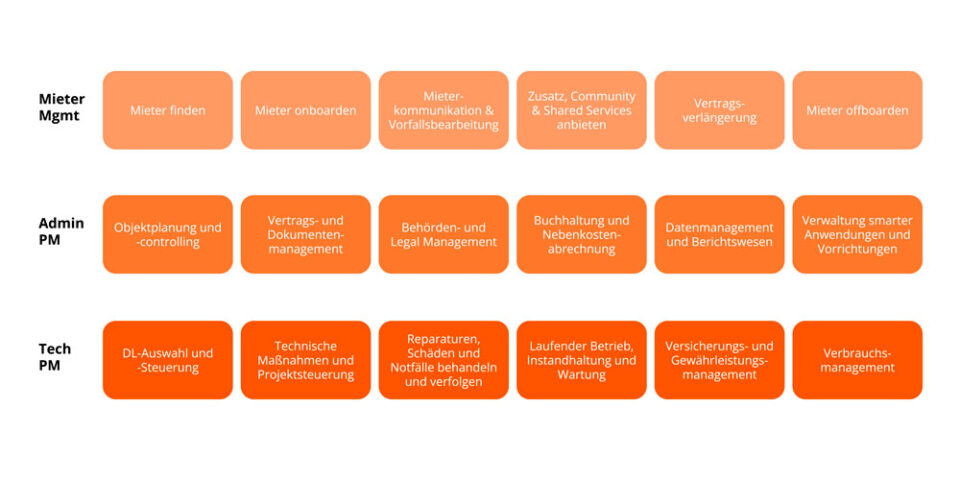
    It is helpful to divide the jobs into three large categories: Tenant management, commercial property management and technical property management. It has been shown that all essential jobs-to-be-done in real estate operations can be mapped in a 3×6 matrix.

    Building a digital operator on a greenfield site then follows the logic of supporting these individual jobs-to-bedone FIRST with modern software components in such a way that a seamless platform is created in which as many processes as possible are automated. Only THEN is it considered for which activities employees are deployed, who can then achieve all the greater added value for the users of these properties. The goal is therefore not primarily to increase efficiency, but to use the increasingly scarce personnel in management for those activities that really create added value.

    Of course, the potential benefits are not equally large in all process steps and implementation is therefore not equally urgent everywhere. Prioritisation along the dimensions of efficiency and revenue impact, influence on sustainability dimensions, tenant satisfaction and transparency is important. A toolbox that shows the possible tools in all process steps and allows prioritisation according to different functions helps to create an actual roadmap.

    It is equally important to have suitable tools at hand that connect the different systems with each other, for example an integration or orchestration platform like the one from Allthings. The goal is precisely to prevent the separate use of isolated solutions. If you make the right choice of partners capable of integration at an early stage, you establish a networked ecosystem.

    Pragmatic implementation using the example of UBS
    But how do you put this into practice? Once the vision is clear – to establish a maximum digital operator with an integrated platform via various software components – then a step-by-step approach is suitable for implementation. A whole series of real estate owners and service providers have embarked on this path in recent years.
    UBS, one of the largest real estate investors in Switzerland, is also pursuing such approaches in its digital innovation projects in real estate operations.

    UBS has chosen the path of first testing and validating individual jobs-to-be-done via individual new construction projects, which will play an essential role for an integrated platform in the future.

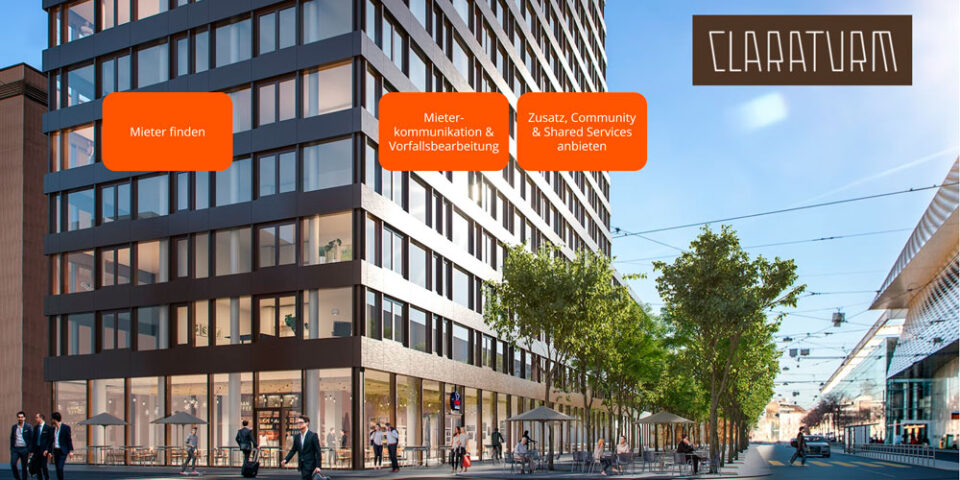
    For example, the processes “finding tenants”, “tenant communication”, “incident processing” and offering additional community services were tested on the Claraturm in Basel.

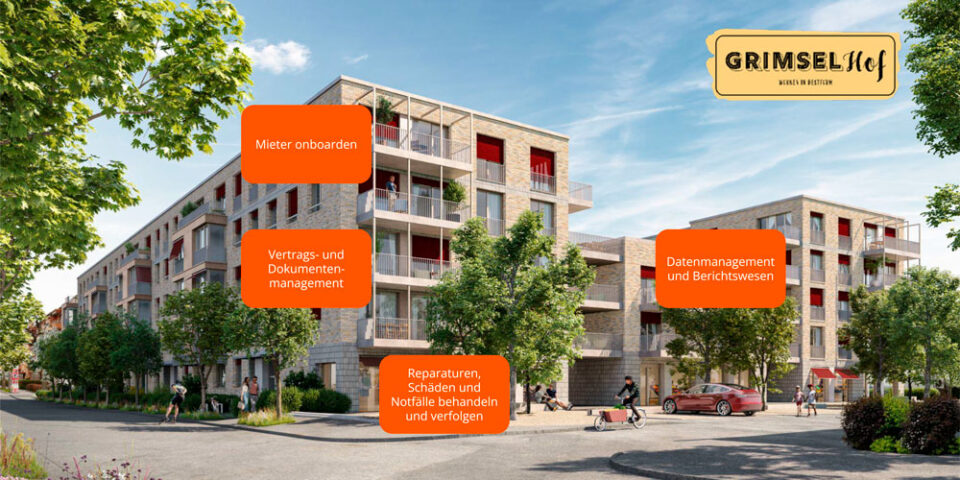
    On the combined renovation/new construction project Grimselhof in Altstetten, on the other hand, the processes “onboarding”, “contract and data management”, “document management and reporting” and new ways of processing repairs and damages were to be implemented. In this way, the various jobs-to-be-done can be validated over time and combined into an overall platform.

    The design of a plan to build digital operators is usually easy to map out in a series of 3-4 workshops. The process depicted in the diagram shows an ideal-typical sequence of a planning project for establishing a digital operator.

    Previous experience with greenfield approaches shows that a systematic implementation of a digital operator in cooperation with real estate owners and service providers makes the operation of real estate up to 30% more efficient, 100% more tenant-centred, and sustainability-oriented from day 1 – and also eliminates a lot of classic conflicting goals that result from conventional business models.

  • Axpo spins off battery innovation

    Axpo spins off battery innovation

    A team from Axpo has been working on an environmentally friendly generator for four years in collaboration with regional construction companies. The result is a battery storage solution that can replace diesel generators at construction sites. The technology called emost (electric mobile storage) can also be used at events or in emergencies. It has already been awarded the IDEE SUISSE Innovation Prize in spring 2021.

    Now Axpo has decided to sell the technology to a consortium of the project’s existing management and several Swiss entrepreneurs. This will ensure optimal management continuity and knowledge transfer, Axpo writes in a media release. All relevant rights and contracts have been transferred to the newly founded emost AG, headquartered in Dietikon, as of the end of October 2022.

    The founding team reportedly consists of the entire management team that has developed the technology over the past several years. Benedikt Domke becomes CEO of emost AG. Christoph Sutter, who previously headed Axpo’s Renewables Division, will become Chairman of the Board of Directors. He intends to focus in particular on international expansion.

  • Wooden buildings get CO2 certificates

    Wooden buildings get CO2 certificates

    The Swiss competence center Timber Finance Initiative and the Seattle, Washington-based company for construction technology, real estate development and fund management, Green Canopy NODE , are working together with the Zurich-based project developer South Pole and the consulting firm Gordian Knot Strategies from Portland, Oregon the development of a methodology for issuing CO2 certificates for wooden buildings, the partners inform in a communication . In concrete terms, the methodology should make it possible to measure the carbon stored in timber construction and monetize it via CO2 certificates. As a result, wooden buildings could be recognized as a negative emission technology and wood could be established as a low-emission building material.

    The globally recognized program for awarding so-called carbon credits, Verified Carbon Standard , will serve as the standard for the globally applicable methodology. "The UN Climate Change Council has recently officially recognized the storage potential and benefits of wood," Thomas Fedrizzi, co-founder of the Timber Finance Initiative, is quoted as saying in the release. "Wood is not only a carbon sink, but as a building material it also achieves emission reductions by replacing emission-intensive building materials."

    As a renewable, low-emission alternative to concrete and steel, wood can protect the environment twice, according to the statement. On the one hand, by trees removing CO2 from the atmosphere and on the other hand, by timber storing the carbon in buildings in the long term. "Houses made of solid wood are more durable and can be less expensive," explains Aaron Fairchild, co-CEO of Green Canopy NODE. "This makes climate-friendly houses accessible to people of all income levels."

  • Carrier invests in Archilogic

    Carrier invests in Archilogic

    Carrier has invested in three start-ups through its newly created venture capital fund. According to a media release , one of these is a Swiss company, Archilogic .

    The spin-off from the Swiss Federal Institute of Technology Zurich ( ETH ) convinced Carrier with their specially developed software. With this, the floor plans of buildings can be converted into 3D models. For example, users can see how a floor plan affects the visual reference, incidence of light or noise pollution. This makes it easy to compare different floor plans.

    Carrier also wants to integrate the Zurich development into its own digital cloud platform. This should enable users to visualize buildings better, which should ultimately enable the planning of “healthier and more efficient rooms”.

    Carrier has launched its venture capital fund, Carrier Venture 2022. The company, based in Palm Beach Gardens in the US state of Florida, wants to promote sustainable innovations in the building sector.

  • Sika and PERI invest in Zurich construction robots

    Sika and PERI invest in Zurich construction robots

    The Zug-based building materials manufacturer Sika and the German company PERI , which specializes in formwork and scaffolding technology, are investing in Mesh AG . The start-up is behind a new robotic technology for the construction industry. This can be used to produce steel grids for different concrete shapes based on a computer model. This makes it possible to construct buildings with unusual shapes efficiently and cost-effectively. Until now, such special lattice structures had to be manufactured by hand. According to a statement from PERI, Mesh technology is the first of its kind in the world.

    The method is based on many years of research at the Swiss Federal Institute of Technology Zurich ( ETH ), from which Mesh was spun off. In 2018, the Zurich researchers also successfully realized a curved concrete wall in NEST, the modular research and innovation building of the Swiss Federal Laboratories for Materials Research and Testing ( Empa ) in Dübendorf ZH. In cooperation with PERI and Sika, the technology has been transferred to an industrial construction process since 2019. Mesh AG was founded only recently.

    "Through our cooperation with Mesh AG and PERI, a new type of construction method is being established on the market that enables the production of complex geometries and is more cost-effective than conventional methods," said Philippe Jost, Head Construction Sika, in the press release. The entire construction industry benefits from this.

  • New GLC research building, ETH Zurich: Today's facade technology for tomorrow's health sciences

    New GLC research building, ETH Zurich: Today's facade technology for tomorrow's health sciences

    With the new building in Gloriarank (GLC), ETH Zurich is creating a modern development and laboratory building at the interface between health sciences and technology in the university district of Zurich Zentrum. Together with partners, ETH Zurich would like to set a milestone in medical technology research and application. Research groups will meet in the new building and work more closely together on research projects with industry, the University of Zurich, the University Hospital Zurich and other university hospitals. ETH Zurich is also making an architectural statement with the new building. The attractive connection of the structure to the existing ETZ building creates a central courtyard, the heart of which is the listed Scherrer lecture hall. The inner courtyard created in this way becomes the center around which the main entrances and public facilities are grouped.

    When it comes to architecture, “Everything is Roger” here.
    He speaks of "Maison de Verre", but in this case he does not mean the famous 1930s glass house in Paris – the Zurich architect Roger Boltshauser. Rather, with the GLC research building, he created a sensational building that, with its glass facade made of glass block elements assembled in a cassette-like manner and the ventilation wings staggered in depth, creates a sublime heaviness that does justice to its representative character. Since the use of glass blocks as a façade material in contemporary industrial and university buildings has a long tradition, the architect redesigned the material for this project in terms of design, technology and energy. It not only meets today's enormously high demands on energy and sustainability. Rather, through the combination of reduction and robustness of the elements used, the design corresponds to the basic urban planning attitude of the quarter.

    Thinking together means thinking ahead.
    3,866 m² of steel facade, 22,550 m² of floor space, 1,875 mm high casement windows with a projection of 2,800 mm, the strictest environmental and fire protection standards and much more: the new GLC building was a challenge in every respect, which was mastered thanks to the open and constructive exchange of ideas between the companies involved was mastered. A good example of this are the particularly heavy cleaning blades. Due to its complex geometry, Aepli Metallbau – in cooperation with Jansen AG – subjected it to an endurance test beforehand. A prototype was specially built for this purpose. Exactly 1250 problem-free openings and closings later, it was clear: everything works perfectly!

    Contact:
    Matthew Elmer
    Aepli Metallbau AG
    Direct phone +41 71 388 82 38
    matthias.elmer@aepli.ch
    www.aepli.ch

  • Betterhomes joins SwissPropTech

    Betterhomes joins SwissPropTech

    SwissPropTech has a new member. At the beginning of 2022, Betterhomes joined the innovation network of the Swiss real estate and construction industry, the Zurich-based brokerage firm announced in a statement. As part of its membership, Betterhomes wants to pass on knowledge and promote a planned expansion. So far, Betterhomes has been active with its technology platform for broker and customer software in Switzerland, Germany and Austria.

    “We are pursuing the ambitious goal of opening up 30 countries in Europe over the next eight years,” Betterhomes CEO Cyrill Lanz is quoted as saying in the statement. “I don’t count the technology so much as the biggest challenges, but rather the organic growth in sales and the cultural differences in the different countries.” The company is currently preparing a new website and a new learning management system for its technology platform Betternet 3.0 before.

    For SwissPropTech, the entry of Betterhomes is “a strong signal for our industry,” explains Lars Sommerer, Managing Director of SwissPropTech, in the press release. “A digital ‘real estate fair broker’ from the very beginning recognizes the importance of innovation and digitization and now wants to pass on his experience and expertise.”

  • Schindler setzt Installationsroboter erstmals in Asien ein

    Schindler setzt Installationsroboter erstmals in Asien ein

    Aufzugbauer Schindler bringt seinen Installationsroboter R.I.S.E. jetzt auch im Asien-Pazifik-Raum zum Einsatz. In Schanghai bohrte er unzählige Löcher für die Installation von fünf Fahrstühlen in einem der grössten Geschäftskomplexe der Innenstadt. Auch im Singapurer Wohnbauprojekt Avenue South Residence nahm R.I.S.E. Monteuren diesen Teil der Arbeiten ab. Dort wurden laut einer Medienmitteilung weitere zehn Fahrstühle installiert.

    „Mit Schindler R.I.S.E. machen wir Hochbaustellen sicherer und effizienter“, so Schindlers COO Paolo Compagna. „Der Roboter übernimmt das Bohren von Tausenden Ankerbolzen, die für die Installation von Aufzügen erforderlich sind und trägt so zu mehr Arbeitssicherheit bei. Monteure können ihre Zeit so für anspruchsvollere Tätigkeiten nutzen.“ Dies garantiere eine schnellere und effizientere Projektabwicklung, „was in einer Zeit, in der weltweit viele mit Verzögerungen auf Baustellen konfrontiert sind, noch wichtiger geworden ist“.

    Schindler verweist darauf, dass es diese „bahnbrechende“ Innovation in der Kategorie Innovation Leaders in die engere Auswahl für den Swiss Technology Award geschafft habe. Er gilt als der bedeutendste Innovations- und Technologiepreis der Schweiz.

  • Tech Cluster Zug: More than just hot air

    Tech Cluster Zug: More than just hot air

    V-Zug employs around 2000 people at the Zug location. A few years ago, the former subsidiary of Metall Zug – Metall Zug is still the largest shareholder – was faced with an all the more serious decision: Where should production be in the future? The choices were a land reserve in Risch-Rotkreuz or moving abroad. In the end, the decision was made in favor of the previous location in Zug; a strong commitment with a vision: on the 80,000 m2 site, the production of V-Zug and other Metall Zug subsidiaries will be concentrated on around a third of the total area. In the coming years, a tech cluster is to be built on the free space. When completed, the area will offer around 3,000 jobs and living space for 300 people. The goal is an actual ecosystem of innovative technologies and services. The future users should come from areas such as cleantech, simulation technology or sensor technology or be related to the core competencies of Metall Zug – i.e. building technology, kitchen, food and cleaning.

    Climate neutrality as a goal
    Now the idea of such a cluster is neither new nor groundbreaking. On the other hand, the goal that Metall Zug has set itself for the realization is innovative: the area should be largely energy self-sufficient. Therefore, together with the local energy supplier, a separate energy system, the so-called Multi Energy Hub, is being implemented. The various areas of the energy sector and industry are linked – a holistic approach in which the areas interact and are connected to one another. Thanks to this sector coupling, the Tech Cluster Zug is not only supplied with energy, but also generates some of it itself. The area will have its own power grid for medium and low voltage. Several water networks with different temperatures enable the generation of cold and heat from the groundwater. The waste heat from industrial production is used to heat the apartments on the one hand and the seasonal groundwater and earth storage tanks on the other. In addition, comprehensive photovoltaics ensure a further step towards CO2 neutrality. Incidentally, the Tech Cluster Zug will be car-free: An intelligent mobility and parking system – the Mobility Hub Zug Nord – is intended to create sustainable solutions for urban areas.

  • Daiwa House Modular Europe names four trends that will be essential for the real estate industry in 2022

    Daiwa House Modular Europe names four trends that will be essential for the real estate industry in 2022

    Global scarcity of resources
    The prices of many building materials are currently skyrocketing. This will not change this year either – insulating materials, steel, everything will become more expensive and scarce. Construction prices are rising accordingly and threaten to make many projects unprofitable. In addition, the emerging countries in particular are currently asking for a lot of material and are buying the market empty. So the situation will continue to worsen. In the long term, only improved project planning with a greater focus on reusability can help, because circular economy and resource protection already begin in the planning phase. If entire buildings, parts of buildings and building materials can be recycled or found a subsequent use, this not only reduces the material requirement, but also contributes to greater sustainability at the same time. It is important to think big about Cradle to Cradle in the future.

    Sustainability not only through energy savings in the usage phase
    The German construction industry in particular has an urgent need to catch up when it comes to sustainability. In the Netherlands there is already a CO 2 cap per square meter of new construction. With the new government with green participation, it is quite conceivable that such a cap will also become the new guideline in Germany. In addition, disposal costs will remain a major issue and will increase proportionately. Due to the still immature framework conditions for recycling processes and the low landfill capacities, waste is becoming a further driver of construction costs. This shows how important it will be in the future to use building materials and building parts for a long time and to reuse them later – as is already possible in modular construction by refurbishing reused modules. The circular economy should therefore be the focus of the project early on in the planning.

    Digitization and AI also in construction
    In order to increase sustainability across the entire industry and to counteract the scarcity of resources, both planning and production must be optimized. Both must become more intelligent overall and network. The use of “artificial intelligence” is ideal for this. It supports construction projects, for example, through generative design, proactive problem detection and the avoidance of delays and cost overruns. But it also has to be used in production. An example: Digitizing the cut leads to less offcuts and waste. Thanks to good advance planning and the use of an AI, the remaining material from a cut can be used for further use in other future projects. This not only saves material, but also additional work steps and thus increases the efficiency of the entire production process. After all, residual materials are also resources.

    Industrialized manufacturing as in the automotive industry
    The advance of digitization within the construction industry also enables the use of semi- or fully automated processes. They reduce sources of error and make production more efficient. Affordable living space can be optimally realized with robot-supported construction processes in connection with the necessary digital management of the construction data – from planning to construction site. In view of the acute shortage of skilled workers, which will not be solved in the next few years, this development is the logical consequence. Daiwa House Modular Europe will also rely on automated processes in the already planned German gigafactory.

    These four trends should encourage the construction industry to rethink. In addition, there are a number of other changes such as a generational change in the ranks of managers as well as political and social change. Builders are now open to standardized building solutions. Modularly planned and built buildings offer a short construction time and high quality thanks to around 90 percent prefabrication in the factory. In the residential, care, hotel and education segments in particular, there are similar needs despite the different locations – so not every building has to be a prototype.