Tag: Tessin

  • Ticino at a glance – opportunities, pressure and dynamics

    Ticino at a glance – opportunities, pressure and dynamics

    The canton, with around 360,000 inhabitants, 100 municipalities and an area of 2,812 square kilometres, has positioned itself as a research and innovation-oriented region. In the EU’s Regional Innovation Scoreboard 2025, Ticino ranks 6th out of 241 European regions, just behind Zurich in Switzerland. According to BAK Economics, the cantonal GDP grew by 0.6 per cent in 2024. An increase of around 1.1 per cent is expected for 2025. The unemployment rate as at January 2026 was 3.3 per cent, slightly above the Swiss average of 3.2 per cent.

    This development is important for the property industry because innovation alone does not guarantee a location’s attractiveness. The decisive factor is whether research, entrepreneurship and urban quality come together spatially. With USI, SUPSI, the Switzerland Innovation Park Ticino and the Boldbrain accelerator, the canton has a solid innovation infrastructure. At the same time, the construction industry and market development are under pressure. Construction output fell by 0.2 per cent across Switzerland in December 2025, with an above-average decline in Ticino. Rising construction costs, political uncertainties and complex authorisation procedures are exacerbating the pressure on supply and project calculations in the medium term.

    The property market presents a varied picture. The vacancy rate in Ticino fell from 2.08 per cent in 2024 to 1.92 per cent in June 2025, the sharpest decline of all the major regions, but still almost twice as high as the Swiss average of 1.0 per cent. At the same time, asking rents fell by 5.6 per cent in 2024/2025 according to ReMPA. The only region in Switzerland to see a decline, while the national average rose by 2.4 per cent.

    The spatial structure remains a challenge. Lugano with 63,600 inhabitants, Bellinzona with 45,300, Locarno with 16,400 and Mendrisio with 15,100 form different sub-regions with their own profiles. Topography, scarce space and demographic pressure also play a role. The FSO forecasts a decline in the labour force of 45,000 people by 2050. The approximately 78,800 cross-border commuters support the labour market, but their number has fallen slightly for the first time. Against the national trend of 411,000 cross-border commuters throughout Switzerland. If you want to invest in Ticino, you won’t get far by simply analysing from afar from Zurich or Basel. You need local partners, market knowledge and an understanding of the specific sub-regions.

    At the same time, this mixed situation offers potential. The proximity to northern Italy, the Gotthard Base Tunnel, the role as the southern portal of the Gotthard corridor and the high quality of life. At 85.2 years, Ticino has the second-highest life expectancy in Europe, creating conditions that are rarely found elsewhere. If innovation strategy, land policy, mobility and project development can be coordinated more closely, Ticino can significantly strengthen its position as an economic and property region. It is not whether the potential is there, but how consistently it is translated into reality.

  • From a retreat to a strategic residence

    From a retreat to a strategic residence

    The mixture of Mediterranean joie de vivre and Swiss order is unique. Sunny days, Italian cuisine, lakes and mountains offer a quality of life that goes far beyond lifestyle. Families, those seeking peace and quiet and retirees are discovering a second home in Ticino, with a stable infrastructure and safe environment.

    Digitalisation is changing housing decisions
    The wave of working from home since the pandemic has revolutionised the choice of location. People who no longer have to commute every day are increasingly opting for quality of life. Ticino, with its good digital connections and attractive properties, is the clear winner.

    Property prices in comparison
    While living space is hardly affordable in Zurich, Zug or Geneva, Ticino offers more space at more favourable conditions. Particularly outside of Lugano or Locarno, dream homes can be realised that remain out of reach in other regions.

    Expats discover the south
    More and more international professionals, entrepreneurs and wealthy families are looking southwards. Zurich remains a financial centre, Geneva a hub of diplomacy, but Ticino impresses with efficiency, accessibility and a strong balance of cost, quality and lifestyle. Lugano is also developing into a hotspot for private banking, fintech and crypto initiatives.

    Tax clarity and human access
    A decisive advantage lies in cantonal practice. Lump-sum taxation in Ticino is not only attractive, but is also handled transparently and efficiently. The dialogue with the authorities is personal and solution-oriented. A decisive difference to the often more complex procedures in Zurich or Geneva.

    Integration through openness
    Italian cordiality meets Swiss structure, a combination that facilitates integration. Language skills remain important, but the open culture and short decision-making channels create closeness. For many expats and returnees, Ticino is not just their place of residence, but their home.

    Opportunities and challenges
    The boom also brings challenges, such as increasing demand for housing, schools and infrastructure. Municipalities are faced with the challenge of managing growth sustainably without losing their identity. But it is precisely the interplay of tradition, innovation and quality of life that makes Ticino a model of a region that wants to shape the future.

  • The future of the Ticino real estate market at the heart of immoTable Ticino

    The future of the Ticino real estate market at the heart of immoTable Ticino

    Under the moderation of Natascia Valenta, Michele Bertini (La Mobiliare), Nicolas Daldini (SVIT Ticino), Gian-Luca Lardi (Swiss Association of Building Contractors) and Sandro Montorfani (Private Construction Department, City of Lugano) spoke.

    The debate touched on key issues such as the replanning and densification of the territory, the simplification of procedures for building permits and the need to streamline legislation in order to speed up decision-making processes.

    It was also emphasized that investments in Ticino are positive today, thanks to the decrease in vacancies, which are mainly concentrated in obsolete properties.

    Future challenges also included the issue of PPPs (public-private partnerships) and shrinking funds for renovation in the context of an ageing population and the building stock in need of renewal. This is an issue that will be of crucial importance in the coming years.

    The strategic role of Italy as an economic partner and source of skilled labor was also mentioned, as well as the effects of the recent votes on the imputed rental value, which will have a significant impact on the finances of the canton and the municipalities.

    Despite the challenges, the Sonnenstube remains a dynamic and attractive region for real estate investment, ready to take advantage of the opportunities offered by a changing market.

    [smartslider3 slider=”50″]
  • Ground-breaking ceremony for SBB plant in Arbedo-Castione

    Ground-breaking ceremony for SBB plant in Arbedo-Castione

    The new SBB plant, officially called Nuovo stabilimento industriale ferroviario (NSIF), replaces the existing plant in Bellinzona, which no longer meets the maintenance requirements of modern multiple units. The new facility creates space for 360 full-time jobs and 80 apprenticeships and specializes in the future maintenance and repair of Giruno, ETR and FLIRT-TILO multiple units. The high degree of automation and the focus on electromechanical work make the facility the most modern SBB industrial plant in Europe.

    SBB CEO Vincent Ducrot was particularly proud at the ground-breaking ceremony. The canton of Ticino is an extremely important region for SBB, which is investing in jobs, expertise and technology with this project. The new site covers an area of 150,000 square meters, equivalent to more than 20 football pitches, and also sets an example for sustainability with a green roof and integrated solar panels.

    Sustainability and major construction progress
    Work began back in June 2025 with the establishment of the construction site, excavation and foundation work as well as initial measures for the future train washing facility. The expansion of the railroad infrastructure is running in parallel. New points, additional tracks and modern control technology will ensure an optimal connection to the network. SBB attaches great importance to ecological compensation; 8.4 hectares of high-quality crop rotation areas are being compensated for at alternative locations in Ticino.

    The new plant will go into operation in stages from mid-2028. The relocation of the existing Bellinzona plant to Arbedo-Castione will give the region and its employees a sustainable future. The new SBB plant stands for innovation, growth and sustainable development in a strategically important region for Switzerland.

  • Ticino is one of Europe’s most innovative regions

    Ticino is one of Europe’s most innovative regions

    According to the European Commission’s Regional Innovation Scoreboard 2025, the canton of Ticino is one of the ten most innovative regions in Europe. In Switzerland, it is in second place directly behind Zurich. The high proportion of small and medium-sized companies that introduce process or product innovations is particularly noteworthy. The canton also occupies a top position nationally in terms of trade mark registration.

    University excellence with international networking
    The Università della Svizzera italiana (USI) strengthens the region’s academic innovative power with over 20 specialised research institutes. It specialises in areas such as biomedicine, computational science and finance. Its close integration into national and international funding networks makes the USI a key player in Ticino’s innovation system.

    Practice-orientated research for companies
    The University of Applied Sciences of Southern Switzerland (SUPSI) is also a key player in the innovation landscape. It has a high level of expertise in industrial automation, robotics and materials science and is characterised by the highest success rate in accessing European funding of all Swiss universities of applied sciences. Companies benefit from practical co-operation in applied research projects.

    Statutory innovation promotion with a broad impact
    The canton provides targeted support for innovation through the Economic Innovation Act. This offers comprehensive funding opportunities, from support for research programmes and investment projects to participation in trade fairs and internationalisation projects. It is implemented by the Office for Economic Development.

    Switzerland Innovation Park Ticino as a hub
    With the Switzerland Innovation Park Ticino, the canton is promoting the transfer between business and science. The emerging centres of excellence focus on key areas such as life sciences, ICT, drone technologies and the leisure industry. The aim is to develop technical and technological solutions that are highly relevant to the canton’s economy.

    https://projects.research-and-innovation.ec.europa.eu/en/statistics/performance-indicators/european-innovation-scoreboard/eis#/ris?compare_year=2025&year=2025
  • Innovative sun shading for modern hotel project in Locarno

    Innovative sun shading for modern hotel project in Locarno

    The Dorint Resort & Spa in Locarno/Riazzino opened in late summer this year after a three-year construction period, Griesser announced in a press release. The internationally active developer of sun protection for buildings from Aadorf contributed the façade awnings to the four-star hotel. Specifically, the Griesser products Solozip II and Soloscreen IV were installed.

    “In addition to reliability and low maintenance, I decided in favour of the Solozip façade awnings because of their elegance,” Simone Garofoli from TIGESTIM, the architectural firm responsible for the project, is quoted as saying in the press release. “This product also fits perfectly with the architectural linearity of the façade.” When choosing the Soloscreen, the vertical awning from Griesser impressed with its colour scheme and discreet structure: “The option of black wire ropes makes the support structure almost invisible, bringing the fabric’s weave to the fore,” explains Garofoli.

  • Uri and Ticino to jointly operate the Lucendro power plant in future

    Uri and Ticino to jointly operate the Lucendro power plant in future

    The Lucendro power plant in the Gotthard region on the territory of the municipality of Airolo will be jointly operated by the cantons of Uri and Ticino in future. According to a press release, this is the result of an agreement reached on 1 November. The agreement was reached thanks to mediation by the Federal Office for the Environment, Transport, Energy and Communications, which has been ongoing since 2022. According to the agreement, both cantons will each hold a 50 per cent stake in the future company, which will be based in Airolo. Uri will receive a majority share of the electricity. Technical operation and maintenance will continue to be ensured by Azienda Elettrica Ticinese(AET). Uri will take over the commercial management.

    The power plant was built between 1942 and 1948 by the former Atel, which was later merged into Alpiq. in 2013, the two cantons decided not to renew Alpiq’s licence after the reversion. aET acquired the plant in 2015.

    The power plant utilises water from the Gotthardreuss and Ticino rivers, which is collected in the Lucendro and Sella reservoirs. It produces around 103 gigawatt hours per year.

  • Largest charging park for electric cars with 18 new fast-charging stations

    Largest charging park for electric cars with 18 new fast-charging stations

    Energie 360° has opened the largest charging park for electric cars in the canton of Ticino at the Serfontana shopping centre. The park comprises a total of 38 charging points, 18 of which are newly added fast-charging points. These allow electric car drivers to charge their vehicles from 10% to 80% within 20 to 40 minutes while they shop or take a break. With this expansion, Energie 360° is setting another milestone in the promotion of electromobility in the region.

    Fast charging with green electricity
    The new fast charging stations at Centro Shopping offer an impressive charging capacity of up to 400 kilowatts, powered by 100% green electricity. Jörg Wild, CEO and Head of Mobility at Energie 360°, emphasises the importance of this expansion: “Our aim is to rapidly promote electromobility throughout Switzerland. With the new charging park, we are offering our customers one of the largest and most efficient charging parks in Switzerland.”

    Over 300 charging locations in Switzerland
    Energie 360° already operates over 300 charging locations throughout Switzerland and plans, builds and maintains them in collaboration with partners such as Coop, SBB and the Swiss Finance & Property Group. The company pursues the goal of creating sustainable energy and mobility solutions and making electromobility available nationwide. With the new charging park in Chiasso, Energie 360° is sending a clear signal in favour of the future of mobility and the expansion of the charging infrastructure in Switzerland.

  • Zurich remains at the top of the Swiss city ranking

    Zurich remains at the top of the Swiss city ranking

    The magazine “ Bilanz ” has published this year’s ranking of the quality of life in Swiss cities. Zurich took first place again and, according to the report , has been the undisputed leader for eleven years. The cities of Zug and Bern took second and third place, followed by Winterthur, Basel and Geneva.

    The city ranking was created by the real estate experts from Wüest Partner for the business magazine “Bilanz” based on several indicators for the quality of life in cities, for example in the areas of the job market, education, leisure and shopping. A total of 162 cities were rated in this way.

    According to the article by “Bilanz”, it hardly seems possible for other cities to break into the absolute top group. In the top 10, only the canton’s capital, Aarau, lost two places and fell from 6th to 8th place. When asked whether other cities even had a chance of making it into the top group, Patrick Schnorf from Wüest Partner was quoted as saying: “It’s impossible It doesn’t.” For example, St.Gallen, which currently ranks 11th, has a chance if the city could increase its educational and cultural offerings as well as its population growth.

    According to Schnorf, Bassersdorf ZH is a counter-example, which has slipped back eleven places. “Compared to other cities, Bassersdorf has not developed as quickly, for example in terms of education and culture,” Schnorf is quoted as saying. According to the ranking, the two economic regions of Zurich and Lake Geneva are the most liveable.

    Since there are only four cities in the top 30 from western Switzerland and Lugano, one in Ticino, it must be said that the overall quality of life in German-speaking Switzerland is higher.

  • Wincasa expands west and south

    Wincasa expands west and south

    After the positive experiences that were made with the combined CMSM location “Mittelland”, the opening of another hub was the logical consequence, as Thomas Hinderling, Head of CMSM Wincasa says: “That retail specialists look after and further develop different types of property together with area experts , is a recipe for success. On the one hand, everyone involved benefits from the great know-how of the other, and the cooperation also gives rise to exciting new ideas that need to be implemented. »

    Philippe Schroff is regional manager
    The management of the CMSM Western Switzerland & Ticino is in the hands of Philippe Schroff, who, as a retail expert and former head of the Signy Center for many years, is well connected in the region. The team at the CMSM Hub Romandie in Signy is primarily responsible for two major projects: the Signy shopping center and its upcoming revitalization project, and the A-One Business Center in Rolle. Two different properties in which the specialists with their different skills complement each other perfectly.
    For Philippe Schroff, the hub is the ideal form of organization: “In the hub, we have combined the complete expertise of both areas locally. This creates efficiencies and synergies, saves resources and strengthens our market position. In addition, there is still a lot of potential in French-speaking Switzerland that needs to be exploited. Numerous projects are being developed or are imminent in several regions of western Switzerland. The agile hub organization is therefore ideal for enabling rapid adjustment to new customer needs. »

    Ticino closes the circle
    The strategic expansion of the area will continue to be actively promoted. With the acquisition of the Centro Lugano Sud, the first center mandate in Ticino, Wincasa is now represented in all language regions in the CMSM. The existing team on site will be taken over by Wincasa and led by Philippe Schroff. The center was acquired by the Swiss Prime Site Solutions Investment Fund Commercial on May 9, 2022. Philippe Schroff sees the expansion course towards Ticino very positively: “By taking over this experienced team, we now have the opportunity to implement Wincasa’s great competence and strong network in the Ticino region as well. We are very pleased to be present in southern Switzerland, as we can also see major growth opportunities here. »

  • No end to the boom in the Swiss real estate market

    No end to the boom in the Swiss real estate market

    Tenants who wish to move must be prepared for higher rents when looking for an apartment. After several months with practically unchanged values, landlords raised their price expectations by an average of 0.7 percent in May. The correction is almost as large as the change registered over the last twelve months (0.9 percent). This is shown by the Swiss Real Estate Offer Index, which is collected by the SMG Swiss Marketplace Group in cooperation with the real estate consulting company IAZI.

    However, the development of rents differs depending on the region. Apartment seekers in the greater Zurich region (1.8 percent) and in central Switzerland (1.2 percent) are confronted with a significant increase in asking rents. The surcharges are lower in the Lake Geneva region (0.5 percent) and in north-western Switzerland (0.4 percent), while in the central region (0.1 percent) and in eastern Switzerland (0.1 percent) there are practically no changes. In contrast, rents have fallen in Ticino (−0.8 percent).

    Home ownership: The boom is not over
    The real estate market is currently in focus mainly because of the high prices for residential property. Against the background of rising mortgage interest rates, many observers expect the situation to cool down soon. However, the asking prices are still on the rise, as the analysis of the advertisements in May shows.

    “For single-family houses, 1.0 percent higher values were required than in the previous month, for condominiums the price growth is 0.2 percent. The interest-related increase in financing costs does not seem to bother prospective buyers much. At least sellers are still assuming an increasing willingness to pay,” says Martin Waeber, Managing Director Real Estate, SMG Swiss Marketplace Group.

    As of May 31, 2022
    The Swiss Real Estate Offer Index is published on the websites of ImmoScout24 and IAZI AG.
    www.immoscout24.ch/immobilienindex
    www.iazi.ch/angeboteindexes

  • New service and commercial arena planned in Werkmatt Uri

    New service and commercial arena planned in Werkmatt Uri

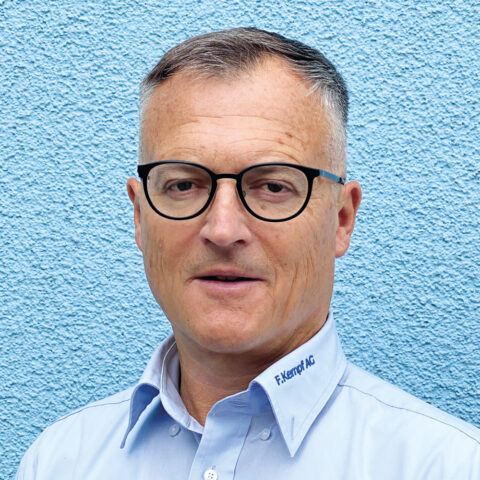
    Franz Kempf AG wants to move its activities to a new building in Werkmatt Uri, which it intends to build. However, since she will only use a small part of the building on the 7,000 square meter plot, managing director and company owner Franz Kempf is looking for companies that have a need for property or rental space.

    The company for plaster, stucco and panel work has too little space at its current location. Kempf also sees great potential in the new location. It is well developed and offers employees a workplace with a high quality of life close to nature. Cooperation with other companies also creates new jobs in the canton of Uri.
    In order to address interested parties from all over Switzerland, Kempf advertised in various media in Basel, Zurich, Central Switzerland, Aargau and Ticino. At the moment he is evaluating the interested parties who have contacted us. He doesn’t want to reveal what kind of company they are: “It’s very exciting, but for reasons of discretion I can’t give any information about it yet.”

    The new building is to be developed according to the needs of the interested parties. Kempf hopes that the project will start soon and that the commercial space will be available from 2024. The plot in which Kempf would like to build its service and commercial arena is the southernmost one in the Werkmatt. It is located right next to the new motorway junction.

    Franz Kempf, Managing Director and owner of Franz Kempf AG.
  • Demand for condominiums is highly dependent on region and price

    Demand for condominiums is highly dependent on region and price

    The latest edition of the Online Home Market Analysis from the real estate portal Homegate and the Swiss Real Estate Institute (SwissREI) examines the advertisement data for condominiums for 2020 and 2021. The evaluated advertisements come from the four largest Swiss Internet portals and thus comprise around 85 percent of all online advertisements during the period under review. Detailed reports on the study for all regions can be found here in the online media release .

    For Martin Waeber, Managing Director Real Estate, SMG Swiss Marketplace Group, the latest online home market analysis shows how heterogeneous the Swiss condominium market is: “Overall, the demand for condominiums throughout Switzerland developed somewhat less dynamically last year due to the corona. However, certain market segments have seen lively demand over the past year, particularly in cities.” On average, the duration of advertisements in the low price segment has increased significantly in the cities examined, while it has remained practically unchanged in the higher price segment, although the number of advertisements has increased. “Similar to the rental apartment market, preferences in the condominium market have shifted away from smaller and cheaper to larger and more expensive properties during the Covid19 pandemic,” said Waeber, summarizing the study results.

    Longer advertisement duration despite smaller offer
    The significant increase in the average tendering period for condominiums from 61 to 84 days in 2020 compared to 2019 due to the Covid19 pandemic was confirmed at a high level in 2021 with 85 days. In comparison, the length of listings for single-family homes has fallen from just over 61 days in 2019 to pre-pandemic levels.

    On the other hand, around 20 percent fewer condominiums were offered online across Switzerland in 2021 than in the previous year. With such a severe shortage of offers, one would expect that the average duration of advertisements would also be correspondingly shorter. However, the fact that this has not shortened, but actually lengthened slightly, is evidence of a declining demand for condominiums across Switzerland for 2021.

    Prof. Dr. Peter Ilg, head of the SwissREI institute, sees several reasons for the weaker demand for condominiums: “Condominium prices in Switzerland rose by more than 8 percent on average in 2021. This is the strongest price increase in ten years. Such a significant increase in prices is likely to have had a dampening effect on demand in general. Increasing demand can only be seen in selected regions and in individual upper price segments, in which the buyers were probably able to increasingly resort to advance inheritances». This can be deduced, for example, from the distribution of taxable assets and homebuyers by age group. In the canton of Zurich, for example, the over-54s have more than half of the taxable assets, while across Switzerland the majority of home buyers are under the age of 55, Ilg continues. 

    Regional differences in the duration of advertisements are increasing
    From a regional perspective, the differences in the duration of advertisements in the eight major regions examined in 2021 have become more pronounced. In the Zurich region, where sellers have to advertise a condominium for the shortest time in Switzerland, the duration of the advertisement was reduced significantly by around a quarter to just 43 days (minus 14 days). In the two regions with the longest average duration of advertisements for a condominium, on the other hand, they continued to rise significantly, each at around 22 percent; the Vaud/Valais region recorded an increase of 18 to 98 days, Ticino by 25 to 139 days.

    In absolute terms, the greatest reduction in the length of advertisements was seen in the Central Switzerland region. After a decline of 19 days (minus 27 percent) for 2021 with 51 days, this region now has the second shortest advertisement duration of all eight regions surveyed, right after the Zurich region. The Geneva region, on the other hand, which still had the shortest advertisement duration in Switzerland at 52 days in 2020, fell back to third place in 2021 after an increase of 12 percent (plus 6 days).

    Increasing demand only in three out of eight regions examined
    The combination of the change in the duration of advertisements and the change in the number of advertisements allows conclusions to be drawn about the change in demand in the regions examined. In the three regions of Ticino, Vaud/Valais and Geneva, for the year 2021, despite a shortage of supply (i.e. a declining number of advertisements), there has been a significant increase in the duration of advertisements in some cases and thus a shrinking demand for condominiums. For the three regions of Central Switzerland, Northwestern Switzerland and Zurich, on the other hand, increasing demand (larger percentage decline in the length of advertisements than in the number of advertisements) can be observed. The other two regions (Eastern Switzerland and Espace Mittelland) show constant demand for 2021.

    Growth in demand for city apartments, especially in the upper price segment
    In addition to the eight regions, the Online Home Market Analysis also examines eight Swiss cities. When analyzing the demand for condominiums, a closer look at the price segment shows that demand in Basel, Lausanne, Geneva and Lugano in particular has increased. Both in the high price segment (CHF 1.5 million – CHF 3.0 million) and in the low price segment (CHF 0.3 million – CHF 0.5 million). In the high price segment, demand increased overall in six of the eight cities surveyed – in addition to Basel, Lausanne, Geneva, also in St. Gallen and Lucerne – while in the low price segment, the remaining four cities recorded constant or falling demand. This increased demand in the high price segment is now taking very different forms; While in Basel the declining length of advertisements in particular led to higher demand, in Geneva a much higher increase in the number of properties on offer compared to the length of advertisements indicated this conclusion.

  • Settlements reach pre-corona level

    Settlements reach pre-corona level

    Company settlements are increasing again after the Corona dip. The Greater Zurich Area AG (GZA), as the location marketing organization for nine cantons, was able to settle a total of 125 companies in 2021, an increase of 36 companies compared to the first Corona year 2020. According to a statement by the GZA, 42 companies came from the USA (+20 ), 19 from Germany (+4), ten from Italy (+5) and five each from China (-6), Great Britain and Singapore.

    Overall, the companies created 582 jobs in the economic area, an increase of 11 percent compared to the previous year. In the next five years there should be a total of 1843 jobs.

    The ICT sectors are most strongly represented with 42 companies, followed by the life sciences with 25 companies and the machine industry with 18 and financial services with 13 companies. The life sciences companies created 235 jobs, followed by the ICT companies with 154 jobs.

    However, the importance of the companies for the location goes beyond the number of new jobs. “We specifically address those companies that achieve high added value and strengthen the existing ecosystem,” said GZA Managing Director Sonja Wollkopf Walt at a digital media conference.

    One of the newly settled companies is Benchling . The American provider of cloud solutions for life sciences wants to create up to 150 jobs in the Circle at Zurich Airport. The Chinese pharmaceutical company Hengrui already has its European headquarters in Basel and is now setting up a research and development site in Zurich.

    The German RegTech company targens will sell its software for compliance solutions to banks in Switzerland and Liechtenstein from Schwanden GL. Ruedi Becker, the Swiss head of the Landesbank Baden-Württemberg subsidiary, was able to convince his superiors of the advantages of Glarus together with the GZA.

    That pleases the Glarner location promoter Christian Zehnder. So far, Glarus has been strong in manufacturing and food production. “We want to get away from our traditional image,” he said. “When companies settle here, however, we depend on the strong partner GZA, who markets the location internationally.”

    Sonja Wollkopf Walt sees it similarly: the settlement of targens strengthens the ecosystem as a whole and sends the signal that the economic area extends beyond Zurich and Zug. “In the Greater Zurich Area there is the ideal location for every company.”

    The Greater Zurich Area includes the cantons of Glarus, Graubünden, Schaffhausen, Schwyz, Solothurn, Ticino, Uri, Zug and Zurich.

  • Finalists for the Enterprize have been determined

    Finalists for the Enterprize have been determined

    The three projects Holzbau-LAB, Swiss Mobility Program and Entrepreneurial Thinking and Acting at Vocational Schools in Switzerland are in the final of this year’s Enterprize , the SVC Foundation for Entrepreneurship and the Swiss Federal College for Vocational Training ( SFIVET ) inform in a statement . With the Enterprize, they honor outstanding projects in professional training and further education every year. Around 30 projects applied for the prize this year.

    Finalist Holzbau-LAB imparts practice-oriented knowledge and activities in the timber construction industry. The digital learning and theme worlds of the project of the Swiss timber construction industry association are open to learners, management employees, entrepreneurs, educational providers and teachers alike.

    The Swiss Mobility Program was launched in 2015 by the cantons of Lucerne and Ticino. Here, apprentices in all professions can complete an internship in the partner canton. The canton of Vaud has also been a partner since 2018.

    With the project Entrepreneurial Thinking and Acting at Vocational Schools in Switzerland, the Swiss Directors’ Conference of Vocational Schools wants to anchor the myidea.ch program in general education classes. Myidea.ch imparts entrepreneurial skills for learners at vocational schools. The program is currently being implemented by the four pilot cantons of Bern, Solothurn, Valais (French-speaking part) and Ticino.

    The winning project will be able to receive the Enterprize on May 31 at the EMS anniversary conference. The award ceremony takes place under the patronage of Federal Councilor Guy Parmelin.

  • Fewer apartments are empty

    Fewer apartments are empty

    As of June 1, 2021, Switzerland had a total of 71,365 vacant apartments, including single-family houses, according to the Federal Statistical Office ( FSO ) in a message . Compared to the previous year, this corresponds to a decrease of 9.5 percent. The corresponding vacancy rate fell in the same period by 0.18 percentage points to 1.54 percent. It fell for the first time in twelve years, according to the announcement.

    The FSO analysts observed a decline in vacant apartments in six of the seven major regions. Only in the greater Ticino area did the vacancy rate rise by 0.12 percentage points to 2.83 percent. Within the cantons, the analysts found the lowest vacancy rates in Zug (0.34 percent), Geneva (0.51 percent) and Zurich (0.72 percent). The highest vacancy rates were observed in the cantons of Solothurn (3.15 percent), Ticino (2.83 percent) and Appenzell Innerrhoden (2.59 percent).

    The analysts have noted a particularly high decline in vacancies for new apartments and single-family homes. As of the reporting date, 7,066 vacant properties were offered for long-term rent or for sale across Switzerland, 24.2 percent fewer than in the previous year. The number of vacant single-family houses offered for long-term rent or purchase decreased by 18.8 percent to 5940 properties in the same period.

  • Edilgroup #unitipercostruire

    Edilgroup #unitipercostruire

    Tradition and innovation are the two basic concepts of the project that led to the founding of Edilgroup, the most important retailer for building products and materials in Ticino. With eight operational offices, a commercial and administrative headquarters distributed throughout the canton and around eighty employees, the new player in the regional construction scene is recognized as a competent and reliable partner of architects, companies and craftsmen in the industry.

    Most impressive, however, is the 230 years of experience on construction sites, which the three companies from which the Edilgroup emerged brought with them as dowries: Ghielmimport SA, Taiana SA and Wullschleger SA. Until a few months ago, competitors decided with foresight and realism to contribute with the best know-how to the success of an unprecedented entrepreneurial initiative in order to meet the challenges of a competitive and demanding market in the market which there will be opportunities to be seized.

    Between tradition and innovation
    Innovative, of course, but how? The warehouses are set up to ensure the necessary visibility of the products. Customers can rely on professional advice. An important contribution is also expected from the marketing office, whose strategies include the use of the most important modern communication tools.

    “We have defined new goals between ecological sustainability and technological innovation and integrated digital, financial and planning tools. It’s not just about competitiveness – says Oliviero Milani, CEO of Edilgroup – but also about diversifying the offer, expanding skills and specializing in offering excellent solutions in order to find the balance between quality and price. The person is at the center of our thoughts and actions, because only with strong, competent human capital can it be shown that we believe in the values that identify us and that we can really achieve our goals. Our motto #unitipercostruire not only represents the union of three historical companies in the cantonal panorama, but above all means to bundle forces and work together with customers and suppliers in order to offer the best professional advice, excellent service and innovative quality solutions. “. ■