Tag: Tourismus

  • Young adults help shape the future of a central area

    Young adults help shape the future of a central area

    In the municipality of Adelboden, young adults can contribute to the future use of the car park area. The municipality is organising a creative workshop in the Adelboden leisure and sports arena in cooperation with the Adelboden-Lenk-Kandersteg tourism organisation, Parkhaus AG and Hotel Adler AG to find ideas. On 19 June 2026, 80 young adults up to the age of 35 are invited to develop concrete proposals for a structural redesign. Interested parties can register until 5 June.

    According to a press release, approaches that go beyond the “classic planning logic” are in demand. The municipality is keen to make young people’s opinions on the future of their living environment visible. After all, “they make a valuable contribution to the long-term development of the village as a liveable residential and attractive tourist destination”. Before feasibility studies are commissioned, a “broad range of ideas” is required.

    Two options will be actively included and discussed in the “transparent, democratically supported” process: a panorama square with a view of the mountains and an adventure pool with existing development plans. There is also room for further and new concepts. The best project ideas will be professionally visualised, publicly exhibited and then examined in consultation with the local population and tourism stakeholders.

  • New hotel project strengthens tourism in Scuol

    New hotel project strengthens tourism in Scuol

    Halter AG and Bergbahnen Scuol SA have signed a purchase agreement for the land of the former Engadinerhof in Scuol. The two partners intend to establish a hotel business with 130 rooms there, as detailed in a press release. Additional added value is to be brought into the region through the annual occupancy rate. In addition, staff flats, tourist flats as well as first and second homes are to be built to meet local demand.

    “The hotel complex will give visitors unforgettable moments and at the same time help to further consolidate Scuol as a lively and attractive tourist destination,” comments Roman Kummer, project manager at Schlieren-based Halter AG, in the press release. The project aims to strengthen Scuol as a holiday and recreation destination in the long term. Bergbahnen Scuol is contributing its local roots and tourism experience to the collaboration.

    The current plan is to submit the planning application in mid-2028.

  • Lucerne is voted the most beautiful old town in Switzerland

    Lucerne is voted the most beautiful old town in Switzerland

    Lucerne has won the TRAVELBOOK AWARD 2025 for the most beautiful old town in Switzerland. According to the press release, the award ceremony on 23 September in Berlin was the fourth time that trend destinations in various categories were honoured. The award is organised by TRAVELBOOK, the largest online travel magazine, which is part of the BOOK Family of the Berlin-based Axel Springer publishing house. For the first time in 2025, it was mainly TRAVELBOOK readers who determined the winning destinations. In an online vote, 150,000 votes were cast across all categories.

    The accompanying text on Lucerne emphasises that the city centre with its sights and impressive mountain panorama is easy to explore on foot. The highlight of a visit is not just the world-famous Chapel Bridge, which connects the old and new town centres. Visitors can discover several spacious squares such as the wine market with its fountain or historic paintings on the facades of houses.

    Bad Wimpfen in Baden-Württemberg was chosen as the most beautiful old town in Germany, while Salzburg can claim the title for Austria. According to the 2025 poll, Greece is the most hospitable country in the world. Other prizes went to Auvergne in France as the best camping region in Europe and to the Okavango Delta in Botswana as the best destination for a sustainable safari. This year’s insider tip region in Europe is the High Tatras in the Polish-Slovakian border region.

    “The results not only reflect the knowledge and desires of our readers, but also provide interesting impulses for the industry,” says BOOK Family Editor-in-Chief Nuno Alves. TRAVELBOOK has been inspiring millions of people to discover new places for years.

  • Innovation campus in the heart of the Engadin

    Innovation campus in the heart of the Engadin

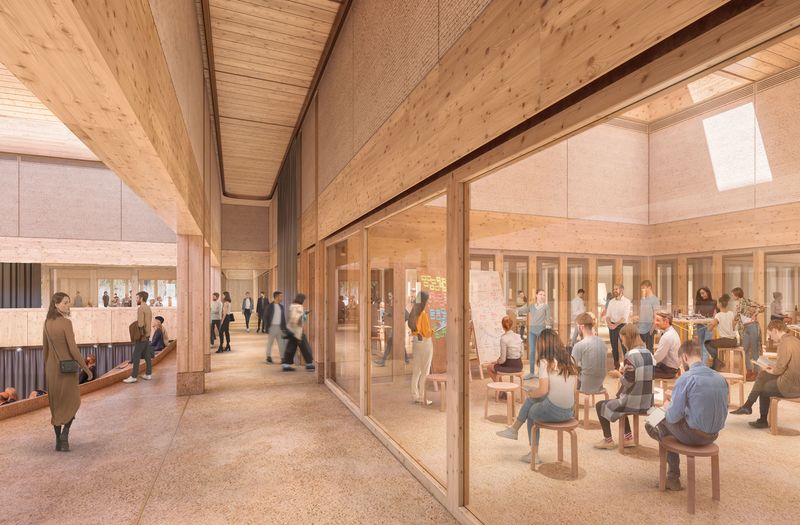
    The Engadin is known for its cultural diversity and breathtaking nature. At the same time, the region is increasingly focussing on innovation and sustainable development. The InnHub La Punt is a place where research, entrepreneurship and education come together.

    The centre offers a wide range of uses over an area of 7,700 square metres. These include workshop and classrooms, coworking workspaces, an auditorium with 250 seats, a sports training infrastructure, a spa, a restaurant with bar and lounge, a sports shop, a tourist information centre, 44 hotel rooms and 8 tourist flats. The multifunctional premises create a dynamic environment for innovation and interdisciplinary dialogue.

    Construction begins in spring 2025
    Following a comprehensive planning phase in which the concept was further refined, construction of the InnHub La Punt will begin in spring 2025. The municipality issued the building permit in autumn 2023. The existing buildings will be demolished first, followed by the excavation and construction of the underground car park by summer 2026. The shell will be completed by mid-2027 before the interior work begins. The opening is scheduled for the end of 2028.

    In parallel with the municipality of La Punt Chamues-ch’s future projects, including the road bypass and the renaturation of the Chamuerabach stream, the InnHub will create a new centre that will revitalise the town and provide new impetus.

    Sustainability as a central building block
    A key component of the project is its sustainable approach. The building is being constructed from local wood, granite and lime mortar and is an example of the circular economy and ecologically responsible construction. “The InnHub is a matter close to my heart, as I have lived in the Engadin for years. It is an example of sustainability and innovative construction methods,” emphasised architect Norman Foster in a video message.

    The operation of the campus is also designed to be sustainable. The initiators, including Caspar Copetti, are not focussing on short-term profits, but on long-term positive effects for the region. The InnHub is intended to create new jobs, promote year-round tourism and establish an innovation ecosystem in the Engadin.

    New impetus for the economy and the community
    The InnHub La Punt will not only attract companies, start-ups and skilled workers, but also facilitate strong networking with the local population. The municipality of La Punt Chamues-ch sees the project as an important step for the further development of the region. “The campus will create a cultural and social meeting point in our village. The projects that are being created here will inspire future generations to come to La Punt,” says mayor Peter Tomaschett.

    In addition to the long-term effects for the region, the InnHub offers an InnHub PopUp even before its completion, which can be used as a co-working and event venue for locals, holiday guests and professionals until it opens.

    A milestone for the Engadin
    The InnHub La Punt combines innovation, sustainability and community in a unique way. With a clear focus on responsible development, it will radiate far beyond the Engadin and serve as a model for sustainable innovation centres in the Alpine region. The combination of state-of-the-art architecture, innovative working environments and regional roots makes the InnHub a forward-looking project that will provide new impetus for the Grisons as a business location.

  • Tourism forum sheds light on changes in hospitality

    Tourism forum sheds light on changes in hospitality

    This year’s Bernese Oberland Tourism Forum was held under the motto “Hospitality in transition”, the Bernese Oberland economy announced in a press release. It organized the industry event on 2 April at the Thun Culture and Convention Centre together with the Bernese Oberland Hoteliers Association and Made in Bern AG. Around 150 participants, mainly from the tourism and hotel industry, discussed theoretical and practical issues relating to hospitality.

    In the theoretical part, Adrian Müller from the Tourism Research Center at the University of Bern presented the project Monitoring and Strengthening the Quality of Interaction in Swiss Tourism. Here, artificial intelligence is used to analyze the quality of interactions between guests and hosts. Specifically, content, moods and topics in posts on review portals are to be recognized and evaluated using natural language recognition.

    In the more practical part, David Romanto from Hauenstein Hotels presented the hotel group’s approach to the topic. For the General Manager of the hotels, hospitality is a competence that needs to be trained. Alice Leu from the Thun College of Tourism explained the extent to which this also includes the teaching of cultural skills.

    The panel discussion at the forum dealt with the involvement of the population. It was shown “that a differentiated approach to this topic is necessary and that the concerns and fears of the local population with regard to tourism development must be taken seriously”, according to the press release.

  • Standstill in the owner-occupied rental value debate

    Standstill in the owner-occupied rental value debate

    The abolition of the imputed rental value, a tax that is unique in Europe, is in danger of failing once again. There is broad agreement in both councils that the system needs to be reformed. However, its implementation remains highly controversial. The issues of property tax for second homes and the debt interest deduction in particular are causing conflict.

    In its third deliberation on Thursday, the Council of States maintained the abolition of the imputed rental value for primary residences only. It also maintained its position on the debt interest deduction. In future, deductions of up to 70 per cent of taxable property income should remain permitted. The National Council, on the other hand, is calling for a complete system change and also wants to exempt second homes from tax.

    Tourism cantons put the brakes on
    The majority rejection in the Council of States is primarily due to the concerns of the tourism cantons. They fear a considerable loss of revenue due to the abolition of the imputed rental value for second homes. The proposal of a property tax to compensate for this has met with resistance there. “We need to focus on primary residences,” emphasised Martin Schmid (FDP/GR). The introduction of a property tax would present “extremely high hurdles”, as it would require a constitutional amendment with a double majority.

    Realistic collapse of the bill
    The collapse of the bill seems increasingly likely. Even the abolition of the imputed rental value for primary residences is facing headwinds. The tenants’ association has already announced a referendum. Its president, Carlo Sommaruga (SP/GE), criticised the bill as a “tax giveaway for rich homeowners” that does not solve the inequality between tenants and owners.

    Doubts are also growing within the centre-right parties. Pascal Broulis (FDP/VD) warned that the bill would unnecessarily complicate the tax system. The National Council must first decide on the bill again before a possible conciliation conference could follow. However, there is currently no majority solution in sight.

  • A new landmark at the Rhine Falls with great potential

    A new landmark at the Rhine Falls with great potential

    The goal was clearly defined. A third of the 900,000 annual Rhine Falls tourists were to be lured to the other side of the river and attracted to the “Rhyfall Village” area. “Rhyfall Village”, or “RIVI” for short, is the name of the new neighbourhood. With a mix of gastronomy, art and shopping, the area will become a centre of attraction – not only for tourists, but also for the local population.

    The site and its future
    The “RIVI”, once the site of industrial production, is undergoing a reorganisation. The neighbourhood is characterised by two striking high-rise buildings, one of which was acquired by Helvetia. These offer living space with impressive views and space for catering, office and retail areas.

    Potential and challenges
    The visionary project met with broad approval in the region. Beat Hedinger, Managing Director of Schaffhauserland Tourismus, saw the village at the time as a “colourful mosaic piece” in the overall tourism picture. The rooftop restaurant with a view of the Alps in particular promised to be a special highlight. Hedinger also recognised the challenge of skilfully bridging the distance between the Rhine Falls basin and the site.

    Felix Tenger, Mayor of Neuhausen, is optimistic that the “RIVI” will revitalise the centre of Neuhausen and also strengthen the retail trade. Building director Martin Kessler also saw great potential to turn the site into a meeting place that creates synergies with existing facilities and increases the attractiveness of the entire region.

    Good connections and creative solutions
    The site’s location scored highly thanks to its proximity to the Rhine Falls and good public transport connections. The Badische Bahnhof Neuhausen railway station is located directly next to the site and numerous bus connections and over 200 parking spaces are available to visitors. Visitors can travel in comfort between the Rhine Falls basin and the Rhyfall Village on the Rhyfall Express tourist train.

    A project with vision
    Rhyfall Village is more than just another residential neighbourhood in Neuhausen. Whether rooftop restaurant, promenade or art gallery – the RhyTech site stands for a modern, versatile and vibrant future in the immediate vicinity of one of Switzerland’s most impressive natural wonders.

  • A new landmark at the Rhine Falls with great potential

    A new landmark at the Rhine Falls with great potential

    The goal was clearly defined. A third of the 900,000 annual Rhine Falls tourists were to be lured to the other side of the river and attracted to the “Rhyfall Village” area. “Rhyfall Village”, or “RIVI” for short, is the name of the new neighbourhood. With a mix of gastronomy, art and shopping, the area will become a centre of attraction – not only for tourists, but also for the local population.

    The site and its future
    The “RIVI”, once the site of industrial production, is undergoing a reorganisation. The neighbourhood is characterised by two striking high-rise buildings, one of which was acquired by Helvetia. These offer living space with impressive views and space for catering, office and retail areas.

    Potential and challenges
    The visionary project met with broad approval in the region. Beat Hedinger, Managing Director of Schaffhauserland Tourismus, saw the village at the time as a “colourful mosaic piece” in the overall tourism picture. The rooftop restaurant with a view of the Alps in particular promised to be a special highlight. Hedinger also recognised the challenge of skilfully bridging the distance between the Rhine Falls basin and the site.

    Felix Tenger, Mayor of Neuhausen, is optimistic that the “RIVI” will revitalise the centre of Neuhausen and also strengthen the retail trade. Building director Martin Kessler also saw great potential to turn the site into a meeting place that creates synergies with existing facilities and increases the attractiveness of the entire region.

    Good connections and creative solutions
    The site’s location scored highly thanks to its proximity to the Rhine Falls and good public transport connections. The Badische Bahnhof Neuhausen railway station is located directly next to the site and numerous bus connections and over 200 parking spaces are available to visitors. Visitors can travel in comfort between the Rhine Falls basin and the Rhyfall Village on the Rhyfall Express tourist train.

    A project with vision
    Rhyfall Village is more than just another residential neighbourhood in Neuhausen. Whether rooftop restaurant, promenade or art gallery – the RhyTech site stands for a modern, versatile and vibrant future in the immediate vicinity of one of Switzerland’s most impressive natural wonders.

  • Gutundgut organises specialist tourism meeting

    Gutundgut organises specialist tourism meeting

    Gutundgut, a project developer based in Lenzburg, organised the fourth ERFA experience meeting within the Destination Lab. According to a press release, the exchange of ideas took place on 9 and 10 April at Nendaz Tourisme. In Nendaz, 63 participants from 36 Swiss tourism destinations exchanged views on the topic of gamification in tourism.

    They discussed the question of how playful elements can be used to achieve greater guest loyalty. Topics such as the better alignment of tourism services and sustainable behaviour in tourism were discussed in workshops. Nendaz Tourisme also presented the locomotive search game, which can be used to explore the village. Gutundgut summarised the event positively, saying that all participants gained a better understanding of the possibilities of gamification in tourism.

    The next ERFA meeting will be held as part of the Destination Lab on 22 and 23 October 2024 in Arbon TG.

  • ewz abandons solar project above Splügen

    ewz abandons solar project above Splügen

    ewz is not going ahead with its plans for a high-alpine solar plant on the Tanatzhöhi in the municipality of Rheinwald. According to a press release from the Zurich-based energy supplier, the plans had been pushed forward together with the municipal council. “Unfortunately, the key players and investors in tourism were increasingly vocal in their opposition to the Tambo-Solar project,” Philippe Heinzer, Head of ewz’s Energy division, is quoted as saying in the press release.

    Municipal president Christian Simmen justifies the reservations with tourism projects to sustainably strengthen the regional economy. “A solar plant of this size is unfortunately not compatible with the planned future tourism plans.” However, Simmen leaves the door open for further cooperation with ewz. “We would welcome the opportunity to examine further solar potential in the municipality together with ewz.”

    ewz wanted to build a plant with an annual production of up to 12 gigawatt hours at the Splügen-Tambo ski resort.

    Voters in the Grisons municipality of Surses rejected a plant in Val Nandro in January. Ewz had planned a solar plant there with a production of 66 gigawatt hours per year.

  • Guests from overseas drive hotel industry to new record

    Guests from overseas drive hotel industry to new record

    The Swiss hotel industry has had a record year. The number of overnight stays increased by 9.2 per cent to 41.8 million, according to a statement from the Federal Statistical Office. This growth was solely due to demand from abroad.

    Demand from Asia grew by 56.4 per cent to 4.1 million overnight stays. Overnight stays by Chinese guests increased by 314.2 per cent, demand from South Korea by 150.5 per cent and from India by 58.6 per cent.

    Demand from America reached a new record of 4.0 million overnight stays, while demand from Europe grew by 9.0 per cent to 12.1 million overnight stays.

    Domestic demand fell slightly by 1.1 per cent to 20.8 million overnight stays.

    The city regions of Zurich, Bern and Geneva achieved the highest growth rates of 17.2, 14.1 and 19.8 per cent respectively. The region around Lucerne and Lake Lucerne as well as Valais and Vaud also recorded strong growth. Graubünden and Ticino recorded slight declines of 2.5 and 3.8 per cent respectively.

    Foreign demand grew in all months of the year, even in the low season. The month of April even saw an increase of 40.6 per cent.

    Switzerland Tourism (ST) wants to strengthen this trend. “We are bringing the right guests to the right destinations at the right time,” Director Martin Nydegger is quoted as saying in an ST press release. “Steering and promoting is the magic formula.” In particular, guests from overseas “we don’t want to further promote their numbers, but above all steer them, not only across the whole country, but also seasonally throughout the year”. In Europe, ST primarily wants to promote travelling by train.

  • ETH Zurich starts construction of the digitally printed “White Tower” in Mulegns

    ETH Zurich starts construction of the digitally printed “White Tower” in Mulegns

    ETH Zurich has completed the construction of the first columns for the 30 metre high “White Tower” in Mulegns, a project that pays tribute to the historic emigration of the Graubünden confectioners. The tower will not only be an architectural masterpiece, but also an important cultural venue.

    The use of revolutionary robotic manufacturing technology will halve the amount of concrete used and offer an unprecedented variety of shapes. This modular construction method allows the tower to be erected and dismantled several times.

    The tower, which will redefine the silhouette of the village of Mulegns, is a symbol of hope for the small village on the old Julier Pass route. Mulegns, which currently has only 14 inhabitants and belongs to Savognin, is to be revitalised and protected from extinction through this project.

    The column components will be manufactured at the ETH in Zurich before being assembled in Savognin. The ground-breaking ceremony is planned for April, and the official opening by Federal Councillor Guy Parmelin and ETH President Joël Mesot is scheduled for 25 June.

    The project, which will cost CHF 4.1 million, is being financed by public funds, foundations and private sponsors. Once completed, the “White Tower” will not only be an impressive example of progressive architecture, but also a driving force for culture and tourism in the region.

  • Communities can strengthen Alpine destinations

    Communities can strengthen Alpine destinations

    Community building is an approach that can be used to minimise seasonal fluctuations in Alpine destinations and combine tourism with living space, Andermat Swiss Alps AG explains in a press release. Together with Bregaglia Engadin Turismo and the Graubünden University of Applied Sciences, it has launched a research project funded by Innotour to explore ways of building resilient communities. The research partners have now presented their initial findings in a recent report.

    In the report, communities are understood as networks with a group identity. In mountain regions, they form in different compositions of locals, second home residents, guests, employees and employers. According to the researchers’ findings, three areas are crucial for the development of communities. Firstly, the understanding of identity at the centre of each of these communities. The second and third areas are collective experience and structure.

    According to the press release, building and expanding resilient communities is time-consuming and costly. The communities “require coordination, maintenance and moderation, which in turn emphasises the targeted activation of individual community members”.

  • New 4-star resort “La Sassa” impresses in Münstertal

    New 4-star resort “La Sassa” impresses in Münstertal

    Val Müstair is currently experiencing an increase in overnight stays and has no hotels in the upmarket 4-star segment. “La Sassa” aims to fill this market niche and both preserve existing jobs and create new ones.

    The resort is to be realised in three stages. It will offer hotel rooms, serviced holiday flats, a reception, a restaurant, a public spa and wellness area and a sports equipment shop. Once all stages have been completed, 320 beds are planned in six buildings.

    In contrast to other resorts, “La Sassa” is focussing on nature-based tourism. The resort is primarily intended for active people and families who appreciate the nature of the Swiss nature park and are prepared to make a longer journey for this experience.

    The architecture is based on the characteristics of Val Müstair. Regional, high-quality building materials will be used, which should ensure authenticity and a high quality of stay.

    Domenig Immobilien AG is investing CHF 30 million in the project in the first construction phase. The flats will be sold as managed second homes that can only be occupied by the owner for a limited period of time. The rest of the time they will be rented out, with the owners receiving a return.

    A village square in the centre of the resort will serve as a meeting zone for guests and locals. This will create an authentic and dynamic public space with a high quality of stay.

    “La Sassa” offers an ideal base for discovering Val Müstair and neighbouring areas such as the Engadin and South Tyrol. The region is characterised by its diverse nature, fresh mountain air and unique local culture.

  • Councils agree on CHF 646 million for location promotion

    Councils agree on CHF 646 million for location promotion

    In the years 2024 to 2027, a total of around CHF 646 million is to flow into the promotion of the location. The two chambers of parliament have agreed on this, the parliamentary services inform in a press release. Specifically, the Council of States withdrew its vote for an increase in funding for tourism promotion and the contribution to the Regional Development Fund. Both areas are to receive the same amount of funding for the coming years as for the expiring period.

    The Federal Council had already set out the goals for location promotion for the years 2024 to 2027 in January. According to these, the framework conditions for SMEs are to be improved, the regions strengthened and the opportunities of digitalisation exploited. Furthermore, location promotion should contribute to sustainable development and strengthen the attractiveness of business and tourism.

    The Swiss Tourism Association(STV) has mixed feelings about the agreement of the councils. On the one hand, the stakeholders of the tourism sector were relieved “that the proposals of the Federal Council regarding the financial means for the tourism promotion instruments could be maintained”, according to a corresponding statement of the STV. On the other hand, it is feared that planned commitment to sustainability and digitalisation in particular will fall victim to the red pencil. Due to high inflation in some source markets, the unchanged funding level also means “a substantial reduction in funds for foreign marketing”, the association writes.

  • Castlewood Hotels & Resorts takes over Hotel Royal in Lucerne

    Castlewood Hotels & Resorts takes over Hotel Royal in Lucerne

    Castlewood Hotels & Resorts takes over the Hotel Royal in Lucerne. The Beckenried-based company has so far managed castle and country hotels exclusively in Germany. With the Hotel Royal, built in 1910 in Art Nouveau style, Castlewood is expanding into Switzerland for the first time. The Hotel Royal has 46 rooms and a terrace.

    For Castlewood Hotels & Resorts, the house on Lake Lucerne represents “an impressive addition to its collection of exclusive country houses and historic buildings”, according to a media release. “Switzerland is an important pillar in our expansion strategy,” Castlewood CEO Kateryna Smura is quoted as saying. It also stands for “hospitality, timeless elegance and tradition – values that perfectly fit our brand”.

    The Hotel Royal is a new member of the Swiss Hospitality Collection, an association for the individual hotel industry. This membership offers a strong partnership as well as more visibility, Castlewood said.

    After a strong period of growth from its inception in 2017 to 2019, the company already counted 13 properties among its portfolio. Earlier this year, there were seven, and with the addition of Hotel Royal, there are now nine. “In 2023, we want to grow to 11 hotels. And by 2024, we would like to have 20 hotels,” Smura outlines the ambitious plans to the Zurich hospitality trade portal Hotelinside.

  • Canton of Zurich initiates further promotion of mountain regions and wine-growing areas

    Canton of Zurich initiates further promotion of mountain regions and wine-growing areas

    The Canton of Zurich wants to further promote the Zurich mountain region and the wine country within the framework of the federal government’s New Regional Policy, informs the Cantonal Office for Landscape and Nature in a statement. A corresponding implementation programme focuses on sustainable tourism, the marketing of regional products and the promotion of innovation by SMEs. A total of 6.2 million Swiss francs are to be spent on this between 2024 and 2027.

    The Zurich cantonal government has already approved an amount of around 3.3 million Swiss francs. Further funding of CHF 2.4 million is being requested from the federal government. The remaining funds will be provided by the cantons of Thurgau and St.Gallen and the municipalities in the two regions. For the implementation of the projects, the Canton of Zurich is working together with the Zürioberland location promotion agency and ProWeinland. Corresponding service agreements are to be concluded “as soon as the federal government has approved the programme”, according to the statement.

    To promote sustainable tourism, the canton wants to position the mountain region and the wine country even more strongly as an excursion and local recreation area. In the marketing of regional products, it is also planned to explore “in the sense of the circular economy” “how material cycles can be closed in the regions”.

    SMEs in the Zurich mountain region already have access to innovation promotion, coaching and networking through a supracantonal programme. SMEs in Weinland should also be able to take advantage of these funding opportunities from 2028. The Office for Landscape and Nature explains that the Weinland is working on the corresponding basics.

  • New hotel harry’s home invites to open day

    New hotel harry’s home invites to open day

    The hotel harry’s home at Industriestrasse 160 in Spreitenbach has been in operation since Monday, 3 July. The opening on Wednesday, 5 July was attended by numerous guests from business and politics as well as the founder of the international hotel chain of the same name, Harald Ultsch. The hotel operates under the name harry’s home Zurich-Limmattal. For Saturday, 8 July, the hotel invites guests to visit the facility at an open day.

    On the website of the new Spreitenbach hotel, the location is highlighted as an asset. In the middle of the beautiful Limmattal and only a few metres away from the largest shopping centre in Switzerland, the harry’s home Zurich-Limmattal is located, it says. This is a reference to the Shoppi Tivoli shopping centre with 150 shops and restaurants right next door. The Umwelt Arena is also in the immediate vicinity.

    Thanks to the Limmattalbahn, the centre of Zurich is easily accessible directly from the hotel. The operators also advertise the region: green valleys, rolling hills, the Limmat river and numerous wellness oases in the spa canton of Aargau form the perfect destination for nature lovers, excursions, hikes or relaxation around the hotel, they say.

    Harald Ultsch from Innsbruck is the inventor and founder of the hotel chain harry’s home and flats. His family has been in the hotel business for five generations, according to the hotel’s website. The concept is based on individualisation and allows for a flexible living experience in the studios. As is usual in modern hotels, there is Wi-Fi, a private parking space and the possibility to bring pets. “Spreitenbach is going through a major phase of renewal in terms of urban development, infrastructure and mobility, and we are pleased to be part of this process,” said Harald Utsch at the opening.

    The harry’s home chain says it comprises ten hotels in Austria, Germany and Switzerland with a total of 729 studios and over 1500 beds. At the new hotel in the Limmat Valley, sustainability and cooperation with companies from the region are also very important. This can be seen, for example, in the cooperation with bakery pioneer Fredy Hiestand’s baked goods provider Fredy dä Beck in the area of baked goods and catering. The company also operates a branch in Schlieren ZH.

  • “The city of Winterthur is often underestimated”

    “The city of Winterthur is often underestimated”

    Mr Roth, you are qualified to practise law, were head of department at the Financial Intelligence Unit of the Principality of Liechtenstein in Vaduz and managed the Musikkollegium Winterthur. What prompted you to accept the position of Director of the House of Winterthur in 2020?
    Samuel Roth: I found it very exciting to be working at the interface between business, education, tourism and culture and to be so committed to the Winterthur region.

    What have you been able to achieve in the almost three years since you took office?
    Roth: It was important to me to focus our activities on our core competences of communication and networking. This enables us to raise the region’s profile as a technology location, education centre and cultural city. To this end, we have put together an attractive programme of around 40 events per year. The “Tech Lunches” are particularly popular: our guests can visit production companies or attend the events on the topic of “House Culture”, where we visit the Winterthur Music Festival with our members, for example.

    Ms Lomoro, House of Winterthur was created in 2017 from the two associations Winterthur Tourismus and Standortförderung Region Winterthur. The city is thus operating a special model: topics such as business, tourism, education and culture are united under one roof. What are the advantages?
    Antonietta Lomoro: The various stakeholders now only have one point of contact for location promotion issues instead of two, as was previously the case. Marketing for the region now comes from a single source. We also promote mutual networking between the various stakeholder groups.

    What synergies have been achieved through the joint presence?
    Lomoro: Today’s workforce attaches more importance to a good work-life balance. They appreciate the great leisure and cultural activities on offer in the Winterthur region. Employers make sure that their employees can work in an attractive location where the quality of life is right as well as the economic conditions. It therefore makes sense to promote these locational advantages from a single source.

    How many people does House of Winterthur employ? What is the budget?
    Lomoro: House of Winterthur currently employs 20 people in full-time equivalents. The budget is CHF 3.5 million.

    Winterthur has a diverse economy, a lively old town, a high-calibre cultural offering and a prestigious university of applied sciences. Why is it necessary to market a city that has so much to offer?
    Roth: Winterthur may be the sixth largest city in Switzerland, but it is often underestimated. It is therefore important that House of Winterthur showcases the region’s qualities as an outstanding technology location, practice-oriented education centre and great cultural city.

    How is House of Winterthur being received by the population and companies?
    Lomoro: The population of Winterthur approved the establishment of House of Winterthur by a clear majority in 2017. After the original subsidy agreement with the city expired, the city parliament extended the agreement for a further five years without a dissenting vote. The activities of House of Winterthur have met with a positive response from companies, as evidenced by the lively participation in our events.

    How have House of Winterthur’s membership figures developed over the last three years?
    Lomoro: Since the beginning of 2020, the number of members has risen by 20 per cent to a total of 420.

    “Tourism has recovered almost completely since corona

    How attractive is Winterthur as a business location?
    Roth: Every year, we conduct a business survey in which over 300 companies take part. The last survey showed that almost 87 per cent of companies are fairly or very satisfied with the general conditions in Winterthur. This is due to the proximity to universities and the good availability of skilled labour. the city is also attractive for start-ups. For example, the “Start-up Nights”, Switzerland’s largest start-up event, takes place in Winterthur every year.
    What measures are you taking to further increase its attractiveness?
    Lomoro: With “Winterthur 2040”, the city council has defined how it wants to make Winterthur fit for the future. Our task is to emphasise the advantages and opportunities of the entire region.

    Which sites, properties and locations are currently most sought after by companies?
    Lomoro: We have received many enquiries – namely for the Sulzer site in the city centre and The Valley in Kemptthal. We are currently seeing a strong increase in interest in space in Neuhegi and in the centre of Effretikon.

    Which regulations are in urgent need of adjustment?
    Roth: For the economy, any regulation is one too many. Sometimes, however, regulations are needed to promote the interaction between living and working, to enable short distances and to revitalise public spaces and achieve a high level of diversity of use.

    How do you expect Winterthur as a business location to develop over the next 10 years?
    Roth: The number of jobs has developed in proportion to the population growth of around one per cent per year in recent years. We therefore assume that not only construction activity will contribute to further economic growth, but also that new technology companies will settle in Winterthur. In addition, our company survey has shown that almost half of the companies surveyed are planning to invest in the coming years. The Winterthur region can therefore look forward to rosy times.

    How is the city positioned in terms of tourism and where is it today?
    Lomoro: Tourism has almost completely recovered since coronavirus and – measured by the number of overnight stays – is only 15 per cent below the record year of 2019. The most important tourist attractions in the region include the Rhine Falls and Technorama, followed surprisingly by the Skills Park in third place. FC Winterthur and Pfadi Winterthur are also crowd-pullers. The city of culture scores with the international appeal of its museums, the wide variety of festivals and the International Short Film Festival, as well as the Casino Theatre and the Musikkollegium Winterthur.

    Last year, House of Winterthur reduced the number of board members. What were the reasons for this?
    Roth: With the previous 15 to 16 board members, the board was too large. This meant that the individual Board members were not able to contribute enough. According to the Articles of Association, the Board may now only have a maximum of 9 members, which greatly increases the efficiency of the Board’s activities.

    Are further internal changes planned in the coming years?
    Roth: House of Winterthur is basically on track. The Annual General Meeting will elect a new Board of Directors on 25 May. It will review the strategy and make any necessary adjustments.

  • Arbon gets two b-smart hotels

    Arbon gets two b-smart hotels

    B_smart selection, with locations in Liechtenstein, Austria and Switzerland, will become the new operator of the Müllers self check-in hotel in Arbon and will also open another self check-in hotel. The Müllers brand is to remain, according to Heinrich Toldo, CEO of b_smart selection, who was quoted in an announcement about the change of operator.

    By continuing to operate the Müllers at the same time as the additional new hotel building, the demand for overnight stays in the canton of Thurgau can be served with two different accommodation options in the future.

    Hotel operations at the new b_smart hotel Arbon are scheduled to start in August 2023. The new hotel building was built within walking distance of the Müllers and offers 63 rooms and suites as well as a restaurant and bar. On the top floor, guests can use a fitness and wellness area with a view over Lake Constance.

    The hotel takeover does not involve any changes for guests. For existing and new bookings, coffee to go is included as before, breakfast and other catering must be organised elsewhere. The Schifflände Bar on the ground floor, operated by Schifflände GmbH, will remain open, it says.

    The change of operator of the Hotel Müllers in Arbon has been announced for 1 May. The cooperation between Hotel Müllers and b_smart services AG has already existed since the reopening in autumn 2022, it says. Since then, the service provider for accommodation businesses based in Liechtenstein has been handling the booking management and is responsible for 24-hour availability.

  • Andermatt Swiss Alps makes progress in sustainability

    Andermatt Swiss Alps makes progress in sustainability

    The Andermatt Swiss Alps Group and Andermatt-Sedrun Sport AG have defined sustainability goals for 2021. The “AndermattResponsible 2022 Progress Report” now provides a first interim status. For the report, the two companies had their greenhouse gas footprint calculated for the third time.

    In absolute terms, the emissions of the two companies in 2022 were 44.4 percent higher than in the previous year, informs the Andermatt Swiss Alps Group in a statement about the report. The company attributes the increase to the ongoing construction work in Andermatt Reuss and higher guest numbers. On the other hand, the average emissions per guest in the business have “mostly decreased, as the partly fixed greenhouse gas emissions of the skiing area, hotel business and gastronomy accrue to a larger number of guests”.

    Indirect emissions from the provision of energy were very low in 2022, as electricity and heat for the new buildings and the operation of the mountain railways are supplied with regional and climate-neutral electricity. In addition, energy consumption was reduced by 10 per cent compared to the previous year. In the reporting year, several projects were also carried out to reduce waste and combat food waste.

    In the reduction of waste, the two companies have already exceeded their set target of reducing the amount by 20 per cent. Specifically, 28.3 per cent less waste was generated in the reporting year than in the 2019 reference year. At 40 per cent, the rate of local staffing in catering was also already above the target of 35 per cent.

  • Mandarin Oriental Palace is newly opened

    Mandarin Oriental Palace is newly opened

    The five-star hotel Mandarin Oriental Palace from the Belle Epoque has been open again since the end of September. It was closed for five years. After three years of extensive renovation work, guests can now stay again in this exclusive house on the shore of Lake Lucerne.

    According to a press release , the mezzo-soprano Cecilia Bartoli attended the ceremonial reopening, as did the general manager of the hotel, Christian Wildhaber, and the Chinese ambassador, Shi Ting Wang. Also present were Lucerne City Councilor Franziska Bitzi and high-ranking representatives of the Hong Kong-based Mandarin Oriental Hotel Group , which operates the hotel.

    The owner is the Chinese entrepreneur Yunfeng Gao. The representative house, built in 1906, is also intended to attract the important group of Asian travelers. According to the operators, the hotel is "well on the way to becoming Lucerne's most exclusive place".

    The Mandarin Oriental Palace was renovated and furnished by Iwan Bühler Architects from Lucerne and the London interior architects Jestico Whiles in coordination with the monument protection. It features 136 guest rooms, including 48 of the city's largest suites, as well as a spa and function rooms. It also houses four restaurants and bars under the direction of Michelin-starred chef Gilad Peled.

  • Study sees opportunities for Graubünden tourism in Flexlodges

    Study sees opportunities for Graubünden tourism in Flexlodges

    Flexible forms of accommodation, so-called flexlodges, could strengthen Graubünden tourism. However, the opportunities that the niche segment offers in addition to the classic accommodation in hotels and holiday apartments have so far hardly been used. According to a press release , scientists from the Institute for Tourism and Leisure at the University of Applied Sciences in Graubünden discovered this on behalf of the Office for Economy and Tourism in Graubünden .

    The new forms of accommodation include safari tents and yurts, trailers and buses, as well as sleeping barrels, houseboats and tree houses. They are characterized by their closeness to nature. Compared to hotels and holiday apartments, they offer a better cost/income ratio due to lower investment costs. They also enable operators to react more flexibly to peaks in demand. In addition, Flexlodges appeal to a wide range of target groups. Furthermore, they often provide spectacular and thus particularly media-effective image material for communication and marketing measures.

    However, the basic study also shows that the opportunities for innovative business ideas in this area have hardly been exploited to date. Reasons include a lack of orientation for providers and complicated legislation regarding spatial planning. In addition, due to the lack of uniform terms and platforms, the offers are often difficult to find or can only be found by chance. All in all, flexlodges are still not well known.

    The scientists therefore recommend the "creation of framework conditions, the promotion of cooperation between the actors involved, the provision of information and the marketing of offers".

  • Luxury hotel Mandarin Oriental Palace newly opened in Lucerne

    Luxury hotel Mandarin Oriental Palace newly opened in Lucerne

    The former Hotel Palace Luzern reopens as the Mandarin Oriental Palace on September 24 after extensive renovations. The international hotel group Mandarin Oriental Hotel from Hong Kong operates the building on the shore of Lake Lucerne as a luxurious 5-star hotel, according to a press release . It then has 136 rooms and suites.

    Accordingly, the company renovated the listed Belle Époque building together with the Lucerne architects Iwan Bühler Architekten and the London-based interior designers Jestico + Whiles .

    "The breathtaking overall result is also a homage to the Swiss entrepreneur Franz Josef Bucher, who realized his dream of a Mediterranean retreat by building the house in 1906," says the press release. Accordingly, the surrounding landscape and Mediterranean colors are reflected in the interior design.

    The hotel has two suites with panoramic roof terraces from which guests have a 360-degree view of the lake and the Alps. There is also a 133 square meter presidential suite and numerous guest rooms with a balcony or terrace.

    The guests are fed in one of four restaurants, for which the chef Giland Peled, who has been awarded a Michelin star, is responsible. Two of the restaurants will open a little later, in the first quarter of 2023.

    In addition to a spa area, the hotel also offers spacious rooms such as the Salon Alpine with original Belle Époque decor from 1906 and the Edelweiss ballroom with a view of the lake and garden for celebrations, conferences and other events.

  • Silvio Denz and Peter Spuhler acquire the Hotel Florhof

    Silvio Denz and Peter Spuhler acquire the Hotel Florhof

    In a press release , the Lalique Group has informed about the purchase of the Hotel Florhof by shareholder and Chairman of the Board of Directors Silvio Denz and the entrepreneur and CEO ad interim of Stadler Rail , Peter Spuhler . The new owners want to continue the historic building as the Lalique Hotel-Restaurant under the name Villa Florhof.

    After several months of renovation, 15 suites and hotel rooms are planned on the upper floors, a restaurant on the first floor and a bar with terrace, lounge and smoking room as a central meeting place on the ground floor. The historic vaulted wine cellar is also to be continued as the foundation of the Florhof. The name of the villa evokes memories of silk production and silk trading, which flourished in the area in the 16th century.

    For the Spuhler quoted in the media release, the purchase is an affair of the heart. The property is predestined for the design of a unique hotel environment that "combines tradition and future and meets all the requirements of upscale hospitality". Denz emphasizes the great potential of the Villa Florhof, which has been used as a hotel since 1908, as a "hotel-restaurant for the people of Zurich and visitors from all over the world".

    The owners, who have owned the house for almost 100 years, have announced that operations will end at the end of July 2022. Lalique Group SA will be the new tenant and will be responsible for ongoing operations.

  • Eberli is building a new Lucerne city hotel

    Eberli is building a new Lucerne city hotel

    The new city hotel Tribschen is to be built in the Tribschen quarter of Lucerne by 2025. The office building of the owners HG Commerciale ( HGC ) and the Central Swiss Builders Association ( ZBV ) that has existed since 1975 will be replaced by a new building.

    Eberli AG from Sarnen will be responsible for the overall project management, construction supervision and construction management, according to a message on LinkedIn. The Lucerne architects Lütolf und Scheuner Architekten GmbH had already won the architectural competition last year.

    A business and holiday hotel with around 140 rooms in the three-star superior class is to be built. The hotel will be operated by Luzerner Tavolago AG . The subsidiary of the shipping company SGV already runs numerous restaurants in the region.

    Eberli AG recently completed another hotel project. She worked as a total contractor at the Kempinski Palace Engelberg. The Obwaldner Hotel started operations last summer.

  • Europe's largest capsule hotel opens at Zurich Airport

    Europe's largest capsule hotel opens at Zurich Airport

    Capsule hotel opened a new capsule hotel at Zurich Airport on February 12, the Lucerne-based hotel company announced in a statement. The new hotel, named Alpine Garden, is the company’s third capsule hotel after the hotels in Lucerne and Basel. The capsule hotel at the airport directly opposite Check-in 1 has 144 beds on around 1100 square meters and is the largest hotel of this concept in Europe, according to the announcement.

    Prices for an overnight stay in one of the lockable, soundproof sleeping capsules with individual fresh air conditioning start at 65 francs. Six of the sleeping pods are barrier-free, one sleeping pod is wheelchair accessible. Meeting zones, a small wellness area, co-working spaces and a bar with breakfast options are also available to guests.

    For the inner workings of the hotel, capsule hotel cooperated with the Swiss nature photographer Fabio Zingg . His images give the sleeping pods and common areas an Alpine Garden theme. “With the design of this innovative hotel, I can bring travelers closer to the most beautiful aspects of Swiss nature and at the same time give them an unforgettable experience,” Zingg said in the statement.

    Flughafen Zürich AG is also pleased with the opening of the new capsule hotel. “The capsule hotel directly opposite Check-in 1 ideally complements the existing accommodation options at the airport,” explains Lydia Naef, Head of Property & Portfolio Management at Flughafen Zürich AG, in the press release. Peter Schiffhauer, VRP capsule services AG, relies on being able to meet the needs of national and international guests “with the unique design concept, vibe and overnight prices from 65 francs”.

  • SV Hotel is planning two concepts in a new building in Hamburg

    SV Hotel is planning two concepts in a new building in Hamburg

    SV Hotel is continuing its growth strategy in one of the most important and strongest hotel markets in Germany. In the Hamburg city center, directly on the famous Mönckebergstrasse, SV Hotel will implement two concepts in a new building. "It is a unique project that we were able to develop in this prominent location with our partner Redevco," Beat Kuhn, Managing Director of SV Hotel, is quoted in a press release.

    The real estate investment manager Redevco is replacing the current C&A building with a climate-neutral new building with mixed use for hotels, retail and catering. It was designed by the renowned London architecture firm Sergison Bates . It had won the architecture competition announced by Redevco and the city of Hamburg.

    On eight floors, the building combines a Hyatt Centric boutique hotel with the so-called Stay KooooK extended stay concept developed by SV Hotel itself. The Hyatt Centric's 185 elegant rooms and suites will occupy the second through eighth floors. The roof terrace and hotel bar offer a view of the harbor. To this end, SV Hotel becomes the new franchisee of the Hyatt Hotels Corporation . Beat Kuhn sees this as an “ideal addition” to the SV Hotel portfolio: “We share common values with Hyatt and the understanding that good hospitality can be experienced through the quality of design and service.”

    The 85 studios of the Stay KoooK concept are located on the fifth to eighth floors. Long-term guests as well as business and leisure travelers will find a sharing solution with the service of a good hotel, including a roof terrace with a view of the town hall and the Inner Alster.

    According to Volker Thamm, Director Business Development SV Hotel, the cooperation with all those involved was so “professional and efficient” that SV Hotel could “very well” imagine “developing further projects together”.

  • SV Hotel opens new Courtyard by Marriott hotel

    SV Hotel opens new Courtyard by Marriott hotel

    The catering and hotel management group SV Group , based in Dübendorf, has been operating a new hotel under the Courtyard by Marriott brand since July 5th. It is located in a new building designed by Hadi Teherani on Bismarckallee in Freiburg and will in future offer families, individual and business travelers overnight and stay opportunities on 5000 square meters, according to a media release .

    It is the first Courtyard by Marriott hotel in the Black Forest region and the fourth of this brand after hotels in Zurich, Basel and Munich. With an interior design inspired by the Black Forest region, the hotel differs from the others. "Starting with the lighting in the entrance, through the carpets in the hallways to wall wallpapers with subtle tree patterns, our guests keep coming across our topic", Johannes Frank, hotel manager at SV Hotel, is quoted in the press release.

    In the hotel's restaurant, international cuisine with seasonal and regional products from the Black Forest is served all day. There is also a fitness room and lobby that are open around the clock. The rooms have WiFi, flat-screen TVs, ergonomic work areas and Marriott beds.

    The SV Group has been working as a franchisee with Marriott International since 2004. She also teamed up with Volksbank Freiburg to run the hotel in the new building project on Bismarckallee. "With SV Hotel we have found an experienced and reliable partner with whom we can use the commercial space of the area attractively", Uwe Barth, spokesman for the board of Volksbank Freiburg, is quoted in the media release.

  • House of Winterthur wants to support tourism in the region

    House of Winterthur wants to support tourism in the region

    After an outstanding 2019, tourism was hit hard by the pandemic last year, explained House of Winterthur in a communication to the General Assembly on June 24th. The promotion of the location has also felt this: its income from city taxes and the sale of city guides and other services was 518,000 francs lower than the previous year, writes House of Winterthur. With income of around 2.9 million Swiss francs and the reversal of a provision of 200,000 Swiss francs, the location support posted a loss of 147,000 Swiss francs in the year under review.

    The work of the location promotion is ensured by cantonal funds, explains House of Winterthur in the communication. Specifically, the cantonal council has decided to make a total of 840,000 francs available for location funding over a period of three years. The money is to be used for the recovery of tourism in the Winterthur region.

    "Even during the crisis it became clear: Winterthur is full of surprising success stories – thanks to creativity, adaptability and confidence", House of Winterthur director Samuel Roth is quoted in the press release. "One of the tasks of the House of Winterthur is to track down these stories and tell them on."

    Samuel Roth took over the management of House of Winterthur on August 1st last year after founding director Michael Domeisen left. With Roger Graber and Catherine Zimpfer, two more new members joined the management of House of Winterthur in 2020.