Albert Schweizer has been shaping the economic development of the city of Schlieren since 1998, i.e. for over 27 years. During this time, he has not only located companies and organized space, but also led dialogues between business, politics and administration. Always with a clear philosophy, networks and trust instead of blind optimization of figures.
“Schlieren has grown rapidly, but in a controlled manner, with location promotion that is not just based on figures, but on networks and trust,” is an apt description of Albert Schweizer’s approach. A classic industrial city has become a dynamic technology location.
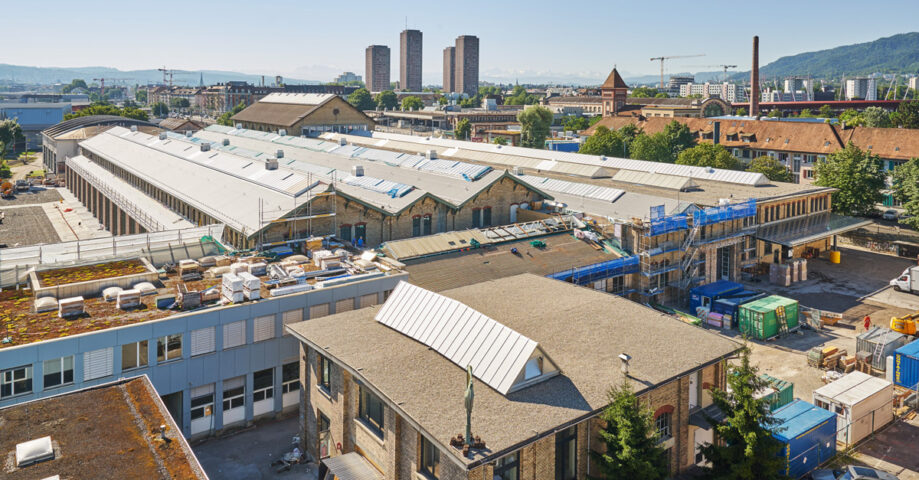
From industry to biotechnology Schweizer’s ability to consistently turn opportunities into projects made all the difference. He organized spaces, untied knots, launched festivals and created the conditions for companies to settle and grow in Schlieren. The transformation of former industrial wasteland into centers of biotechnology and medical technology is particularly impressive. A strategic change that repositioned Schlieren.
Well-deserved retirement Albert Schweizer will take his well-deserved retirement next spring 2026. This will mark the end of an era for the city of Schlieren, but his mark will remain – in the networks he has built up, in the projects he has initiated and in the culture of location promotion that he has helped to shape.
“We are proud of how Schlieren has developed,” says Mayor Markus Bärtschiger, paying tribute to Albert Schweizer’s achievements.
Albert Schweizer’s retirement marks the departure of not only an experienced location promoter, but also the architect of modern Schlieren. His award is a well-deserved finale to an influential career that shows that sustainable development comes from people – people who not only manage the economy, but also build trust.
La Rasude is one of Lausanne’s six urban transformation poles and is located directly next to the train station and one of the most important public transport hubs in French-speaking Switzerland. From the city’s point of view, this is the ideal location for densification that combines short distances, high density of use and a better quality of life. The plan d’affectation defines the permitted uses, building volumes and requirements for the environment, mobility and monument protection
Building on existing buildings instead of tabula rasa Around 70 percent of the existing buildings will be preserved, including the striking building on Avenue de la Gare designed by Alphonse Laverrière, whose protection was explicitly secured in a revised project following criticism from the federal government and experts. Individual buildings such as “Gare 45” and “Horizon” may be raised by two storeys, and two new structures will be added. One along the tracks and one in the district center, the heights of which are defined in such a way that the existing skyline and visual references are respected and the Edipresse tower is not towered over
Living, working and social mix Around 30 percent of the floor space is earmarked for housing, at least 20 percent of which will be logements d’utilité publique, i.e. non-profit apartments. In total, almost 500 people will be able to live in a district that is currently uninhabited. At the same time, a diverse mix of uses will be created, including offices, a hotel, stores, early childhood care, cultural and leisure spaces and neighborhood services. Around 500 square meters will be reserved for cultural professionals and public uses at controlled, affordable rents
Public space, greenery and mobility The currently closed, heavily sealed complex will be transformed into an open, pedestrian-oriented quarter. Around half of the site will be available as public space in future, much of it with trees and green areas, supplemented by green roofs, photovoltaic systems and a connection to renewable heat sources to significantly improve the carbon footprint. Access on the surface is primarily on foot and by bicycle, while an underground garage with around 275 car parking spaces and around 1,200 bicycle parking spaces bundles the necessary mobility options underground
Political process and outlook The plan is available for public inspection until December 18. Objections and objections will be incorporated into the further revision before the decision is taken by the municipal council to the canton. In parallel, competitions for architecture and public spaces with participatory formats are planned to ensure the quality of implementation. Construction is currently scheduled to begin around 2029, with the new district coming into operation in stages between 2031 and 2033, provided that any political referendums do not change the timetable.
The results of the study contract for the Gewerbestrasse site development in Döttingen will be exhibited in Döttingen on 18 and 19 October. The winning entry was submitted by fsp Architekten from Spreitenbach, together with LAND Suisse from Lugano and ASTOC Architects and Planners from Cologne. In the DOT project, a new neighbourhood is being created on the Birchmeier Hess Immobilien site. An area of 75,000 square metres will be home to 550 flats, while 15,000 square metres are earmarked for commercial use, as detailed in a press release.
“With the transformation of the site, industry will become a neighbourhood. Halls become home, traces become identity. The industrial heritage is being transformed – sustainable, future-proof, mixed,” says Ivo Lenherr from fsp Architekten about the DOT project. The jury’s unanimous vote in favour of the winning project was based, among other things, on the “sophisticated urban planning strategy in dealing with the specifications of the landowner, the current building stock and the approved structure plan”. The project represents “a considerate approach to the neighbourhood and public needs and promises a harmonious and rich living and working environment for future users.”
The 27,636 square metre site near Zofingen railway station was home to the traditional Swissprinters print shop until 2024. Following its closure, Ringier Areal AG sold the western section to Turidomus, while the eastern section remains in Ringier’s ownership. In recent years, Ringier, together with the town of Zofingen and the Basel architectural firm Christ & Gantenbein, had already developed the strategic basis for the conversion. The development is now building on this.
Diversity and sustainability in the centre The “Areal West” is a site of strategic importance. The location opposite the old town and directly behind the railway station offers ideal conditions for a new, urban residential district. Over 300 flats for different lifestyles and household sizes are to be built on five building plots. From compact flats to family flats.
The project development is based on the Swiss Sustainable Building Standard. A climate-friendly neighbourhood square, green open spaces that reduce heat islands and photovoltaic systems are planned. District heating is also planned in order to keep the neighbourhood’s carbon footprint low from the outset.
Study commission to specify A study commission is planned for 2026 to specify the urban integration and the specific design of the housing on offer. The aim is to create a lively neighbourhood that not only provides housing, but also creates a sense of community and identity. Depending on the process, construction could start from 2028, with first occupancy from 2030.
Experience with transformations Reference projects such as the Ziegeleipark in Horw/Kriens, the Reitmen neighbourhood in Schlieren and Zwhatt in Regensdorf show that the Group understands complex transformation processes. With the “Areal West” in Zofingen, the group is continuing in this vein. The aim is to transform the industrial past into a future-proof, sustainable neighbourhood.
After twelve years, INNOArchitects AG is opening a new chapter: since the beginning of September, the consulting firm from Wabern has been operating under the name Fuil, Pierre-Yves Caboussat, founding partner and strategy consultant, announced in a press release from Fuil AG. The name INNOArchitects was too closely associated with new products and ideas. The new name, on the other hand, is intended to symbolise the current focus of the consultancy offering on the sustainable transformation of companies.
Fiul is based on the English term fuel. It means “energy, drive, speed, but also food, in other words something that nourishes and enables growth”, explains Cabussat. The new name thus stands for the company’s aspiration to shape change with impact.
For Nora Blaesy, Lead Rebranding and Business Development Consultant, the new brand identity emphasises “who we really are”. According to her, Fuil wants to differentiate itself from other consultancies by the way it tackles things. “We don’t just want to advise organisations, we want to empower them to shape change with confidence and move into the future with energy,” Blaesy is quoted as saying.
Fiul offers companies consulting services in the areas of strategy, business development, organisational development and collaboration, the development of people and teams and the use of artificial intelligence. Fiul also provides rooms for seminars and collaboration in the converted Gurtenbrauerei brewery in Wabern. According to a statement, the company has already completed over 3,000 contracts under the old INNOArchitects brand.
Prof Nora Dainton takes on dual responsibility as interim head of the institute. She heads the Institute of Digital Construction and at the same time remains head of the MSc in Virtual Design and Construction programme. This combination enables a close integration of research, teaching and strategic development. “I look forward to actively shaping the future of digital construction together with our students and colleagues,” she emphasises.
Prof. Dainton has been working at the institute since 2021 and is shaping the content and strategic direction of the VDC Master’s programme. A degree programme that focuses on digital processes in construction and real estate.
Bridging the gap between research and practice One of Prof. Dainton’s key concerns is applied research in close collaboration with practice partners. As a link between industry, teaching and research, she wants to actively support the digital transformation in the construction industry. The focus here is on new planning and construction processes, innovative forms of organisation and digital tools that increase efficiency, sustainability and quality in the construction process.
Her cross-institutional role within the university also enables her to contribute to the further development of the departments and university development at a strategic level.
Handover with perspective Prof. Dainton succeeds Prof. Manfred Huber, who has built up and shaped the Institute of Digital Construction with great commitment over eight years. From August 2025, Prof Huber will take on a new management role as Director of the Department of Engineering & Architecture at Lucerne University of Applied Sciences and Arts.
The transition marks a new phase for the institute, which is positioning itself as a regional, national and international driving force for digital transformation in the construction industry.
The Swiss construction sector is undergoing a transformation towards a circular economy. Currently, around 21% of companies have integrated circular business activities into their model. These measures aim primarily to reduce the consumption of materials and the environmental impact of the production process. An in-depth study shows that Switzerland is particularly well placed, thanks to its capacity for innovation, to successfully implement circular measures and thereby secure clear competitive advantages.
Although progress in the circular economy varies from sector to sector, the electronics, pharmaceutical and automotive industries in particular are pioneers in Switzerland. However, the construction sector faces specific challenges: Implementation is complex from an organisational point of view and very different from one region to another in terms of the availability of financial resources and demand. Another obstacle is the often low level of awareness and concerns about the cost-effectiveness of such measures.
Yet the ecological benefits of the circular economy in the construction industry are obvious. In Switzerland, this sector generates more than 80% of all waste and is responsible for around half the CO² emissions of an average building. These negative effects can be significantly minimised by early planning measures. This includes taking into account the life cycle of materials and their deconstruction, using recyclable and modular materials.
The economic benefits are also beginning to be felt. Despite initially higher costs, the market value of these buildings exceeds that of comparable objects. Policy initiatives such as parliamentary initiatives are supporting the circular economy in building design and deconstruction. Strategic planning by building owners, the use of recyclable products and technological innovations such as CO²-absorbing concrete are essential to promote this sustainable practice. Innosuisse’s Circular Building Initiative (CBI) Booster is playing a key role in bringing together different stakeholders and encouraging circular projects.
This global approach will be decisive in transforming the construction sector in a sustainable way and further strengthening Switzerland as a model region for the circular economy in construction.
At its annual meeting in Geneva on 18 June, the Davos Baukultur Alliance set the course for a sustainable transformation of the built environment. At the conference, which was opened by Federal Councillor Elisabeth Baume-Schneider, relevant approaches and successful models from practice were discussed, the Federal Office of Culture reported in a press release. Founded in 2023 in partnership with the World Economic Forum(WEF), the alliance is convinced that sustainable, circular and affordable construction is worthwhile from a social, environmental and economic perspective.
The Davos Baukultur Alliance currently comprises 27 countries, 21 international construction and real estate companies and a number of civil society and international organisations. “The Davos Baukultur Alliance stands for the need to tackle the diverse challenges of the present and future together,” says Alois Zwinggi, Managing Director of the WEF, in the press release from his speech at the conference. “With its cross-sectoral structure, the Alliance is a role model for the effective and efficient creation of better living spaces for all.”
One of the Swiss founding partners is the globally active building materials group Holcim. “Our built environment must be designed with people at the centre and in successful collaboration between the private and public sectors and civil society,” said Cédric De Meeûs, Head of Public Affairs & Government Relations at Holcim, at the conference.
The study conducted by Sotomo shows that Basel has experienced subdued growth momentum over the last ten years, particularly in comparison with cities such as Zurich, Geneva and Bern. With only six per cent growth in the housing stock since 2012, Basel brings up the rear among the eight largest Swiss cities. Only a small proportion of flats were built after 1990, which suggests a delayed development dynamic.
Demographic challenges and opportunities The study also emphasises that Basel is the only city in the study that does not have a birth surplus, which indicates a weak population dynamic. The comparatively low proportion of young adults and families and the high proportion of older households reflect a demographic challenge that also influences the development of the labour market.
Despite these challenges, the study emphasises that new-build flats do not necessarily lead to higher rents in existing flats. On the contrary, they could even revitalise the market for affordable flats in older buildings. This points to untapped opportunities in urban planning and development.
The potential of “Klybeck Plus“ One particularly striking example of untapped potential is the planned “Klybeck Plus” urban quarter. This area is to be built on a former industrial site and offers space for flats for 8,500 people and 7,500 jobs. similar to Basel’s Gundeli or Geneva’s Le Pâquis neighbourhood, “Klybeck Plus” could offer a lively mix of living and working and at the same time be as green as Basel’s Gellert district.
The study emphasises that, despite current challenges, Basel has considerable potential that can be exploited through strategic planning and innovative development concepts. The results are a wake-up call for urban planners, developers and political decision-makers to mobilise the available resources and reposition Basel as a dynamic and future-oriented city.
The Wipkingen church is a remarkable example of adaptive space utilisation. No longer used for church services since 2019, it is now intended to meet the space requirements of the neighbouring Waidhalde school complex. A concept developed by Vécsey Schmidt Architekten BSA SIA in collaboration with Anderegg Partner AG won the architectural competition and promises a cautious yet future-oriented transformation. A newly installed ceiling allows for the creation of a multi-purpose room, a library and catering facilities at ground floor level, while the upper floor offers flexible usage options under the historic church vault.
André Odermatt, Head of Building Construction, emphasises the importance of this initiative: “The intelligent conversion of existing buildings is essential in order to meet current challenges in urban areas.” The project not only provides solutions to the urgent need for school space, but also strengthens cooperation between the city and the church. Thanks to this conversion, the necessary rooms for six to eight additional classes will be created by the 2031/32 school year. Filippo Leutenegger, Head of School, sees this as an example of the effective utilisation of creative solutions.
The cooperation with the Reformed parish of Zurich has already borne fruit and plans to open up further church buildings for charitable purposes. The project in Wipkingen is just the beginning of a series of initiatives that prioritise community benefit.
The estimated construction costs amount to CHF 7.5 million, with completion planned for 2026, in time for the start of school in 2026/27. This project marks an important step in Zurich’s evolutionary urban development by showing how historical substance can be meaningfully brought into the future.
According to a press release, the competition aims to stimulate the transformation to a circular economy in the region and make an active contribution to the sustainable reorganisation of companies. At the same time, the aim is to position the greater Bern region as an important location for the circular economy.
The jury voted the Scrimber project into first place. Its high-quality load-bearing construction products made of wood can replace concrete and steel and thus CO2 emissions in the construction industry. The wooden panels are made from low-grade wood assortments such as smaller, irregular log cross-sections or side timber from sawmills and waste wood. After an initial utilisation phase in a building, the parts can be reused.
Second place went to Mymyio‘s upcycling furniture, which is made from discarded office materials, although this is not recognisable. Mymyio can even offer customised product and project solutions from stocks of valuable raw materials.
In third place was the Second Life Battery Recharger project, a system that allows old e-bike batteries to be reused. It was developed by the training and adventure platform Swiss Bike Park Oberried, together with partners such as Gustoil, Petrusso, Thömus, Twinner, Stromer and the GVB Kulturstiftung.
The sixth edition of the “Digital Real Estate Index” shows a slight decline in the digital maturity of the industry for the first time since 2020, with a rating of 4.6 on a scale of 1 to 10. Despite progress made by planners and construction companies through Building Information Modelling (BIM), the development among owners and investors is lagging behind expectations.
Although two thirds of the companies surveyed invest more than one percent of their turnover in digitalisation, there is a downward trend among larger companies. External factors such as interest rate changes and supply chain problems appear to be hampering digital transformation, while regulatory requirements in the area of sustainability are acting as a catalyst for digitalisation efforts.
While AI and machine learning are still lagging behind expectations in terms of their applicability and integration into the industry, BIM is consolidating itself as an important technology for the entire life cycle of buildings. The use of smart building technologies is increasing, with the focus on resource conservation and other benefits such as user experience and comfort initially taking a back seat.
The study shows that the property industry is at a critical point in its digital evolution. Despite the obvious potential of digital technologies and the need for greater integration to increase efficiency and sustainability, concrete measures and investments are needed to drive the digital transformation forward. The study provides important insights and serves as a guideline for future developments in the digital landscape of the property industry.
In the centre of Lucerne, on the shores of Lake Lucerne, the KKL will serve as the venue for the Bauen+Wohnen 2024 trade fair. The KKL designed by Jean Nouvel, which harmoniously combines nature and architecture, symbolises the progressive orientation of the trade fair. This reorientation focuses on a high-quality exhibition with informative specialist presentations and offers the ideal setting for visitors to successfully realise their construction projects.
The trade fair organisers have responded to feedback from visitors and exhibitors and developed a compact concept that focuses on efficiency and benefits. Exhibitors benefit from optimised logistics and attractive packages that promote customer contact. In addition, Friday will be specially designed for planning, architecture and property management professionals, enabling a valuable exchange of knowledge and networking.
Marco Biland, trade fair organiser, is delighted with the full booking and the positive response to the new concept. In addition to the exhibition, the programme for the three-day event also includes lectures, advisory services and panel discussions, which offer both experts and the general public important insights and suggestions. The special energy show, organised in collaboration with the canton and city of Lucerne and other partners, will be a key highlight.
Overall, the Bauen+Wohnen Messe Luzern 2024 represents a significant step towards future-proof and sustainable construction practices and is establishing itself as an indispensable meeting place for the property sector in Central Switzerland.
The vision of parallel digital universes, known as the metaverse, is increasingly becoming a real possibility for industrial companies. The concept, coined by Neal Stephenson, is no longer just a science fiction scenario, but is taking shape in initiatives such as the iguversum from igus, which is building a bridge to a new way of selling and engineering. This advanced technology, supported by artificial intelligence and big data, could reach a market value of several trillion dollars by 2030.
The Industrial Metaverse enables companies to transfer physical technologies into 3D models and bring international teams together in virtual spaces. This allows them to plan and simulate plants and machines more efficiently than ever before. Siemens’ Digital Native Factory in Nanjing is a pioneer with its digital twin approach, which has significantly improved the accuracy of factory planning and productivity. Similarly, igus uses the iguversum to guide customers and sales staff through virtual worlds in which products and solutions can be experienced interactively.
The future of the industrial metaverse promises collaboration without geographical boundaries, where global teams carry out entire projects as avatars in the digital world, eliminating the need for physical meetings and traditional means of communication. This not only leads to a more vivid visualisation of projects, but also to faster and more efficient project implementation.
In addition to optimising product development processes, the metaverse also enables innovative after-sales service concepts. Technical training could take place in an immersive environment that allows lifelike learning and interaction with digital twins of real objects.
Augmented reality, familiar from games such as Pokémon Go, represents the next stage of development. This technology allows engineers to project 3D models from the metaverse into their real environment and thus assess the compatibility of planned machines with their surroundings.
However, the challenge remains to increase awareness and understanding of the industrial metaverse. A survey by TeamViewer shows that many people are not yet informed about the technology. Further education is therefore needed to realise the full potential of this revolutionary digital transformation.
The Chair of Building Technology and Construction(BUK ETHZ) at ETH Zurich and the Swiss Climate Foundation will be working together in future on climate-friendly building materials and methods. According to a joint press release, the cooperation includes the assessment of funding applications received by the Swiss Climate Foundation as well as publicising the funding opportunities and the innovations being supported.
New climate-friendly materials and construction methods are necessary for the climate adaptation of the property sector. Innovative solutions need to be tested and demonstrated in pilot projects in order to make them marketable and publicised. The BUK ETHZ will assess the practicability of innovations in addition to the Swiss Climate Foundation and thus help to minimise the residual risk. The Climate Foundation could compensate for financial weaknesses.
“Initial applications in the construction sector are always a difficult and risky phase for new products and methods,” the two lecturers Daniel Studer and Daniel Mettler from BUK ETHZ are quoted as saying. “With this collaboration, we can make an important contribution to the transformation of the construction industry. This is demonstrated by spin-offs such as FenX or Oxara from the ETH environment, which were supported by the Climate Foundation.”
FenX transforms mineral waste into high-performance and sustainable insulating materials for the construction industry. Oxara develops cement-free admixtures and binder technology that enables the upcycling of construction waste and excavated materials in a variety of concrete and block applications.
The young Baar-based cleantech company enshift offers owners of large commercial properties a complete digital solution for the path to net zero. According to a media release, it is designed to automate and simplify the entire transformation process towards local and renewable energies.
Its toolset reportedly includes everything needed for design, contracting, financing, implementation and performance optimisation. It spans the life cycle of all currently available renewable energy technologies.
“We have set our 2050 net-zero targets, but the path to get there is completely unclear for the construction and real estate sector,” founder and CEO Pierre Bi is quoted as saying. “We believe our solution can accelerate the transformation and increase energy retrofits in Europe by a factor of 3.” As a sign of its “strong will” to make a positive contribution to change, enshift offers free property and potential analyses to commercial building owners in Switzerland.
Bi had already launched Aeris Cleantech. The company, which focuses on air purification, was acquired by iRobot, a North American specialist in cleaning robots, in November 2021.
In the first stage of a seed financing round, Bis new company enshift raised 3.5 million Swiss francs. International investors such as Israel’s Sarona Ventures, Vevey VD-based OneCreation and, via Berlin-based Global Founders Capital, the founder of start-up accelerator Rocket Internet, Oliver Samwer, participated. Meanwhile, 20 engineers and developers reportedly work at enshift, while the first green energy projects are already entering the implementation phase.
The range of information and services in the Dietikon city app has been expanded, according to a press release from the city of Dietikon. The population now has access to numerous local real-time data in the areas of traffic, temperature, air quality or noise. Interested parties can also set up personalised notifications in the app, it continues.
As part of the Smart City Dietikon, data in the areas of traffic, temperature or air quality are collected via sensors at various locations in the city. Until now, this data has primarily been collected internally, according to the statement. Now this data is also available to the general population and the economy in the app.
The modified city app is a newly developed module that was created in close cooperation with the app provider Anthrazit and the Electricity Works of the City of Zurich(EKZ). Dietikon is the first city to use the module, according to the statement.
“I see the presentation of this data as a great benefit for the population,” Jörg Haller, the head of Smart City and Public Lighting at EKZ, who drove the project together with the city of Dietikon, is quoted as saying.
“The city council has set itself the goal of actively driving forward the digital transformation. An internal process is currently underway to further develop the smart city strategy, and other projects are being implemented in parallel,” city president Roger Bachmann is quoted as saying. As an example, he mentions street cleaning with the support of artificial intelligence. The Smart City Dietikon won the main prize at the Smart City Innovation Challenge of the Swiss Federal Office of Energy(SFOE) 2020.
Word has spread about the high quality of life in the city of Winterthur. More and more people live, work and study here. The city in the Zurich economic region currently has over 120,000 inhabitants, around 75,000 employees, almost 11,000 university students and around 11,000 students at vocational schools. The municipal forecast predicts a population growth to around 135,000 people by 2040. Winterthur wants to use this growth as an opportunity to develop existing urban qualities by setting spatial priorities.
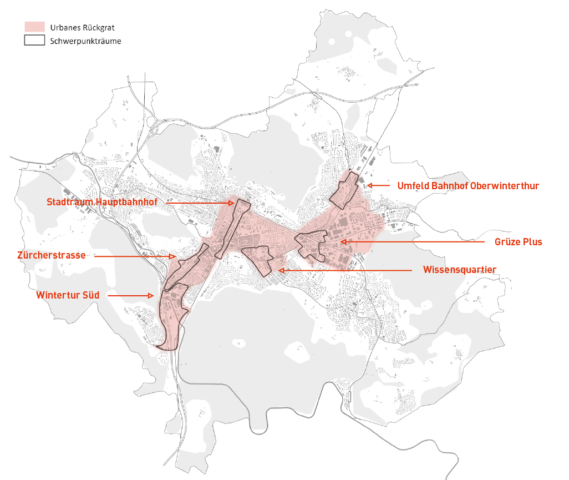
The majority of this development is to be driven and directed within Winterthur’s already very dynamic urban backbone (see diagram), complementing the existing settlement structure. The city is to be densified along the main traffic axes from Töss in the southwest to Oberwinterthur in the northeast and the diversity of uses is to be increased.
Densification along the urban spine From an urban planning perspective, there are six areas with enormous growth and densification potential. The city concentrates on six priority areas along the urban spine (cf. diagram): Winterthur South, Zürcherstrasse, Main Station Urban Area, Knowledge Quarter, Grüze Plus and the surroundings of Oberwinterthur railway station. Here, more living space, new jobs, and additional recreational and cultural spaces are to be created. Attention will be paid to a high quality of supply that enables short distances and thus also contributes to net zero by 2040.
Careful development of the neighbourhoods The existing neighbourhoods will not be forgotten – on the contrary. The spatial focus on high-quality inner development along the urban spine relieves them of the pressure of densification. Selective densification remains possible in suitable locations, so that the residential offer there can also be developed in a diverse manner and the qualities of the outdoor spaces can be improved. The objective set out in the “Spatial Development Perspective Winterthur 2040” to promote so-called “5-minute neighbourhoods” is an important concern of the city and contributes to a sustainable interplay of living, working and open space and thus to maintaining the high quality of life so highly valued today.
In future, Inventx customers will benefit from specific certified expertise around Microsoft Azure solutions and the strengthened partnership between the two companies. Inventx strategically relies on a hybrid approach in the accompaniment of projects in the empowerment of their customers to exploit the full potential of multi-cloud ecosystems. This enables Inventx customers to deliver services in a more agile, efficient, resilient and scalable way, while accelerating their digital transformation. The specific cloud mix in each case ensures that customers are and remain optimally positioned for their needs in the long term.
“We are proud of the confirmation of our expertise. Inventx has maintained an intensive collaboration with Microsoft since 2015. Now the way is clear to expand the Community Cloud we have built up with the Azure Cloud and thus to use the full potential of the cloud,” says Markus Stutz, Cluster Leader Multi-Cloud & PaaS at Inventx.
in 2022, the Microsoft Partner Network (MPN) became a differentiated Microsoft Cloud Partner Program (MCPP). The new programme allows end customers a more detailed and transparent assessment of their service provider’s competencies.
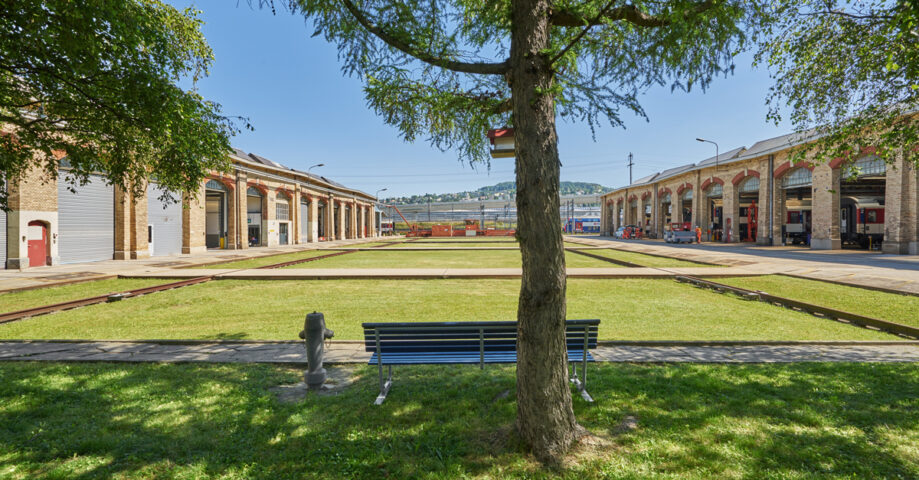
SBB is transforming the 42,000-square-metre Werkstadt site in Zurich into a vibrant urban space, to be completed by 2035. This will preserve the fabric of its historic buildings, which will one day be joined by both new buildings and extensions to create an exciting cluster. The transformation of the former SBB workshops will be exceptionally sustainable, featuring climate-conscious building measures, circular economy elements and an innovative energy concept.
Developing existing buildings In close coordination with the monument preservation authorities, the existing buildings will be gradually renovated and joined by new buildings and extensions in the coming years. At the heart of the site, the former carriage workshop ‘Building Q’ will allow for a diverse usage mix under one roof from 2023. The development will offer an exciting interplay between the fabric of historic buildings, structural densification and public use of outdoor space.
Environmentally friendly construction ‘SBB wants to be climate-neutral by 2030, and climate-compatible construction is an important factor in achieving this objective,’ said Gabriele Bühler, Project Manager at SBB. Various climate-conscious building measures have been incorporated into the planning of the site. That includes configuring the new buildings to promote the circulation of cool air currents. Where possible, the roof water will be allowed to seep into an above-ground system for further cooling. Surfaces will remain unsealed where possible. The transformation follows a systemic approach that considers the building along its entire life cycle. The aim is to keep CO2 emissions as low as possible. To ensure circularity, all construction components are recorded on the Madaster platform. There is also a particular focus on reusing components.
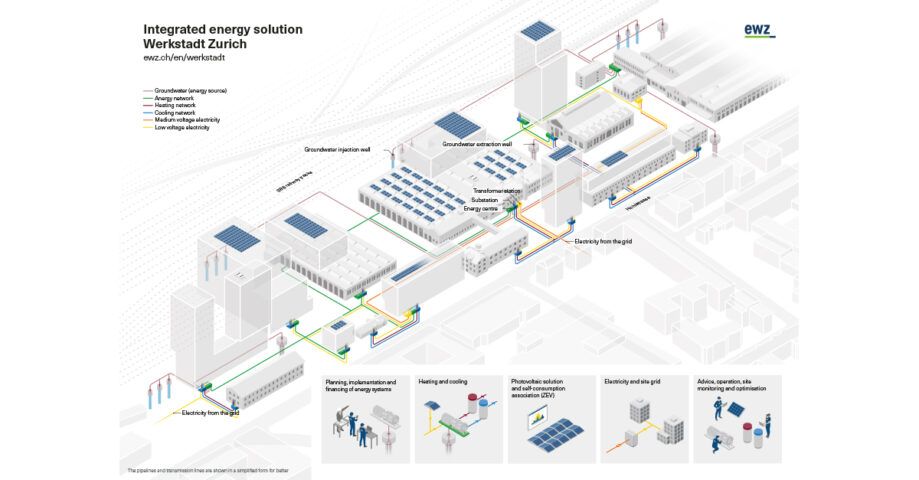
Energy concept: 100% renewable ewz was able to win SBB’s public tender with an energy solution based on 100 per cent renewable energies. Groundwater, which is collected in four wells on the site, serves as a source of heating and cooling. From these wells, the water flows to the energy centres in the larger buildings, which house heat pumps and cooling machines that bring the water to the required temperature. An anergy network connects all the buildings and ensures that excess energy is exchanged between the building groups. For example, excess heat or cold in one building can be used in another. This system also has the advantage of not requiring groundwater boreholes in every building: the smaller buildings are connected to the energy centres via a local heating network. Heating and cooling is generated without any CO₂ emissions, as the rest of the electricity also comes from renewable sources. The use of a monovalent energy system will ultimately lead to a CO2 reduction of over 2,100 tonnes per year.
High self-consumption of solar power ewz also plans, finances, creates and operates the transformer systems and medium-voltage lines to supply the site with electrical energy. ‘Some of the electricity that the people in the Werkstadt use on the site is produced there using photovoltaics,’ explains Markus Fischer, Head of Sales at ewz Energy Solutions. To this end, SBB and ewz want to make the best possible use of the roof areas for solar power production. Both the roof of Building Q, at the centre of the site, and the roofs of other buildings with a suitable structure and orientation for generating solar power are to be kitted out with photovoltaic systems. SBB requires its tenants on the site to form a self-consumption association (ZEV). ‘When completed, the ZEV will consist of around 300 parties that will use locally produced electricity on the site. This allows us to achieve a high self-consumption rate, which, in turn, makes a significant contribution to the cost-effectiveness of the photovoltaic systems,’ says Markus Fischer. He expects self-consumption on the Werkstadt site to be almost 100 per cent when completed.
The benefits of contracting For the owner, this form of collaboration has various benefits, including keeping financial risks and management costs very low. If a system fails, ewz makes sure it gets back into operation as quickly as possible. To ensure that the system can be operated efficiently, ewz will start undertaking energy-related operational optimisations shortly after commissioning. As part of an ongoing process, the systems will be optimised and adapted to the actual needs relating to their use. By extension, this ensures that they consume as little energy as possible, generate minimal costs and offer maximum convenience for users.
Werkstadt Zürich is a successful example of a forward-looking approach to repurposing a historic industrial site. With the targeted renovation and expansion of existing buildings and a ground-breaking energy concept, the developers – together with the planners and ewz – are creating added value for future users and the environment alike. Find out more about the Werkstadt site’s innovative energy concept here.
Hilti launched its new Lead 2030 strategy at the beginning of 2023, the Schaan-based global tool manufacturing group said in a statement. It is intended to put Hilti in a position to lead the transformation in the construction industry. To this end, the group is continuously investing in product innovations.
In the 2022 financial year, Hilti has already increased spending on research and development by 17.2 per cent year-on-year to CHF 437 million. In the same year, the tool manufacturer also made “the most extensive product launch in the company’s history”, according to the statement. Specifically, the new Nuron battery platform was launched with more than 70 tools.
The higher investments, combined with increased costs and the strong franc, had a negative impact on Hilti’s profits. At 731 million, operating profit in 2022 was 13.7 per cent lower than in the previous year. At the same time, net profit fell by 16.3 percent to CHF 565 million. In contrast, sales generated worldwide increased by 10.0 per cent in local currencies to 6.35 billion Swiss francs.
“2022 was a challenging year, which inevitably left its mark on our profitability,” CEO Jahangir Doongaji is quoted as saying in the statement. “Nevertheless, we achieved our growth target in local currencies and continued to invest massively in the future of our company.”
In 2022, the “SVIT Digital Day” was held in parallel to the aforementioned real estate trade fair at the Zurich Congress Centre. With the discontinuation of this platform, the association has decided to return to the original location “Kosmos Zurich” with the “SVIT Digital Day” in 2023. Unfortunately, the news reached us in December 2022 – and you have certainly also read it in the press – that the operation of “Kosmos Zürich” was discontinued with immediate effect and the balance sheet was deposited with the bankruptcy court because the debt burden and costs were too high. It was no longer possible to put the operation on a sound footing.
The message also has drastic consequences for the “SVIT Digital Day”, because the acquisition of an adequate infrastructure at the same cost and in the same time frame is very difficult and challenging. The time factor in particular has contributed to SVIT Zurich suspending the trade fair day for 2023. In parallel, ideas have emerged in the “SVIT Digital Commission” to create a new networking platform for 2024 in a clean and orderly manner. The event is to be launched in the first half of 2024 and include various topics relating to business. We are convinced that we will be able to create another forward-looking and attractive platform. We would be happy to inform you about the planned intentions and contents if you are interested.
Wir verwenden Cookies zur Unterstützung und Verbesserung unserer Dienste. Mit der Nutzung dieser Website erklären Sie sich mit der Verwendung von Cookies einverstanden. Weitere Informationen finden Sie in unserer Datenschutzerklärung.