Tag: Trinkwasserversorgung

  • Riet II makes the supply more crisis-proof

    Riet II makes the supply more crisis-proof

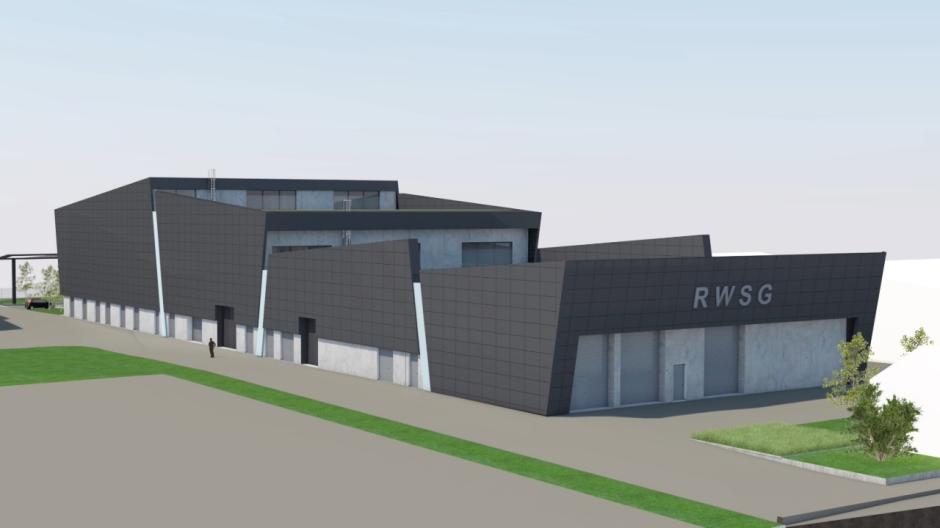
    The St.Gallen region is making its drinking water supply fit for the coming decades. With the decision in favour of the new Riet II lake water plant in Goldach, the existing plant in Frasnacht is being given a second pillar of equal value. Today, the supply of the twelve participating municipalities in Eastern Switzerland depends largely on this one source of supply in the event of an emergency. A risk that no longer fulfils the federal requirements for severe shortages. Riet II is intended to close precisely this gap and ensure supplies even if a plant fails or Lake Constance can only be used to a limited extent at times.

    The new plant will be realised on the site of the existing Riet high-pressure pumping station in Goldach. Around 60 million Swiss francs have been budgeted for construction and equipment. The costs will be borne by the twelve shareholder partners of RWSG Regionale Wasserversorgung St.Gallen AG in accordance with a new distribution model, which will be passed on to end customers via the water prices in future. The fact that all partner municipalities are unanimously in favour of the project and financing shows the high strategic importance: drinking water is treated as a critical infrastructure that must function just as robustly in the event of a crisis as it does in everyday life.

    With Riet II, the RWSG is expanding its role as the backbone of the regional water infrastructure. It is responsible for collecting raw water, treating it and transporting it to the municipal networks and supplies more than 150,000 people with drinking, process and extinguishing water. In future, it will operate two lake water works, Frasnacht and Goldach, as well as the Riet high-pressure pumping station and the associated transport pipelines. This will benefit urban centres such as St.Gallen and Arbon as well as smaller partner communities from Abtwil-St.Josefen to Teufen. The new plant is therefore more than just a construction project: it is a long-term promise of security for an entire region.

  • Modernisation of the drinking water supply in Kopfholz

    Modernisation of the drinking water supply in Kopfholz

    The Schlieren-based construction company STRABAG has begun dismantling and rebuilding the Kopfholz reservoir on behalf of the municipalities of Horgen, Thalwil, Rüschlikon and Kilchberg. According to a statement from STRABAG, the modernisation project is intended to secure the local drinking water supply until 2050. In order to ensure a continuous supply of water, three construction phases are planned for the planned replacement construction. The first construction phase is to be completed by February 2026, with the project scheduled for completion in March 2027.

    According to the press release, the municipalities have been operating a joint water supply since 1905. The connection will be continued with the project, which the municipalities believe sends a “strong signal for a sustainable, safe and future-oriented water supply”. Rüschlikon’s storage capacity is expected to increase from 1000 to 1600 cubic metres, and Kilchberg’s from 1500 to 2800 cubic metres.

    The press release emphasises the particular challenge faced by the construction teams from the four clients in building the reservoir during ongoing operations. “The reservoir supplies more than 6,000 households with drinking water and the supply must be guaranteed at all times,” Beat Spörndli, Construction Manager, Civil Engineering and Road Construction North-East, is quoted as saying. He also emphasised the “high demands on coordination and hygiene on the construction site”. In addition to compliance with SIA standards (Swiss Society of Engineers and Architects), the use of a special drinking water concrete is a prerequisite. As the construction is subject to the Foodstuffs Act, germ-free water storage must be ensured. The close cooperation between the municipalities enables coordinated planning, minimises interference with the forest area and triggers synergies in tenders and construction processes.