Tag: umwelt

  • Life cycle assessment calculator supports sustainable building

    Life cycle assessment calculator supports sustainable building

    The environmental product declarations (EPD) in accordance with SN EN 15804 make it possible to transparently present the ecological impact of a building material over its entire life cycle. This provides building owners with a sound basis for making decisions on sustainable construction that goes beyond individual environmental parameters and allows a comprehensive assessment.

    Baustoff Kreislauf Schweiz provides its members with independently verified average EPDs for various types of concrete and aggregates. This data forms a reliable basis for sustainable construction projects.

    Life cycle assessment calculator as a digital tool
    An industry-specific life cycle assessment calculator has been developed to calculate CO₂ emissions, energy consumption and other environmental indicators. This verified calculation tool offers the construction industry a practical way to determine and optimise environmental product declarations.

    The online tool at oekobilanz-rechner.ch enables an orientating analysis, but does not replace a complete EPD preparation. On request, the data entered can be further processed to create an officially verified environmental product declaration.

    Transparency and optimisation for the construction industry
    The life cycle assessment calculator provides the construction industry with a valuable tool for making sustainable material decisions based on data. By optimising the recording and evaluation of environmental impacts, the tool contributes to reducing the ecological footprint in the construction industry and supports a resource-conserving circular economy.

  • Climate Charter Zug : Support for SMEs in the canton of Zug

    Climate Charter Zug : Support for SMEs in the canton of Zug

    Around 50% of CO2 emissions in the canton of Zug come from the economy, which emphasises the urgent need for action in this area. The Zug Chamber of Commerce, the WERZ Institute (OST), the Technology Forum Zug and the Switzerland Innovation Park Central have founded the Climate Charter Zug together with the Canton of Zug to support SMEs in particular in implementing climate-friendly and economical measures.

    Consultancy, CO2 footprint and measures
    The advisory services offered by the Climate Charter provide support and tools for recognising and reducing CO2 emissions in your own company. The canton of Zug covers 50% of the consultancy costs and has pledged CHF 1.6 million for this, around 60 per cent of the budget. The remaining funds come from the private sector. The initiative’s office, based at the Zug Environmental Institute WERZ, offers expertise and advice, from energy savings and emission reductions to practical solutions for specific challenges in companies.

    Climate protection as a locational advantage
    Climate protection has long been more than just a trend – it is becoming an important advantage for companies and locations. The Climate Charter Zug supports SMEs in reducing emissions and setting sustainable standards. At the same time, a growing charter community is emerging in which committed Zug companies can exchange experiences and learn from each other. The willingness to invest in climate-friendly innovations strengthens the competitiveness of the company and the canton in the long term.

    Concrete support for SMEs
    Alex Beck, co-leader of the initiative, emphasises: “As a business community, we have a duty,
    to create an intact environment for future generations.” The Climate Charter provides companies that want to reduce their CO2 emissions with customised and practical solutions – from sustainable heating systems to the provision of solar power for e-charging stations.

    Sustainable investments for a climate-friendly future
    As part of the Klima Charta Zug, companies fulfil the increasing requirements in climate protection and position themselves as responsible players. Alex Beck emphasises that the exemplary effect of individual companies creates a “momentum of its own” that has an impact beyond the company itself. The pioneering role in climate protection promotes a culture of commitment that enables sustainable development for the canton of Zug.

  • Innovative approaches to property management

    Innovative approaches to property management

    Focus on sustainability
    The morning is all about “Sustainable properties”. Here you will discover how you can not only manage your properties efficiently, but also organise them in an environmentally conscious way. Our experts will show you which optional services you can integrate to minimise the ecological footprint of your properties and at the same time create value for your customers.

    Socially responsible de-tenancy processes
    In the afternoon session, we will focus on the sensitive topic of “Socially responsible de-tenancy processes”. In this section, you will learn how to implement a variety of letting strategies that take both legal and ethical aspects into account. Discuss with our expert speakers how you can promote relaxed dialogue and fair solutions to gain the trust of your tenants and build long-term relationships.

    Specialist speakers

    • Dr Joëlle Zimmerli, Zimraum GmbH
    • Dr Christian Brütsch, Stratcraft GmbH
    • Pascal Stutz, CEO SVIT Zurich

    Take this opportunity to exchange ideas with other leaders and gain valuable inspiration for your own practice. Be part of a movement that aims not only for economic success, but also for sustainable and socially responsible property management.

    Register today and actively shape the future of the sector!

  • Five companies are in the final of the Prix SVC Zurich Economic Area

    Five companies are in the final of the Prix SVC Zurich Economic Area

    The finalists for the Prix SVC Zurich Economic Area 2024 have been announced. An independent jury of experts with strong regional roots has decided in favour of Hauenstein AG, Hawa Sliding Solutions AG, Luzi AG, RepRisk AG and Schneider Umweltservices AG, the SVC announced in a press release.

    “I am very much looking forward to the Prix SVC and believe the decision as to who will win the prize has never been as challenging as this year,” said jury president Christopher Blaufelder, Partner at McKinsey & Company Switzerland, in the press release. “We have consistently high-quality companies from a wide range of industries in the final selection.” According to Blaufelder, all of them are characterised by a focus on quality and innovation.

    Hauenstein AG from Rafz ZH relies on the sustainable in-house production of native, hardy plants in its tree nursery and garden centres. Hawa Sliding Solutions AG from Mettmenstetten ZH specialises in sliding solutions for rooms, furniture and façades. Globally active Luzi AG from Dietlikon ZH develops and produces fragrance creations.

    RepRisk AG from Zurich specialises in the identification of business and ESG risks. Schneider Umweltservice AG from Meilen ZH specialises in innovative and environmentally friendly solutions for reuse and recycling.

    The Swiss Venture Club is one of the largest entrepreneurial networks in Switzerland. It awards the Prix SVC in eight regions every two years. The prize honours innovative companies in the region for outstanding achievements that enable sustainable economic success to be realised.

  • Easier building in noisy areas

    Easier building in noisy areas

    As part of the revision of the Environmental Protection Act, the UREK-N would like to simplify building in noise-polluted areas. In principle, at least half of the noise-sensitive rooms in new homes should have a window that complies with the noise limits. Relaxations are possible if controlled ventilation systems are installed or a quiet, private outdoor space is available. These regulations are intended to create a balance between densification and noise protection.

    Positions of the National Council and the Council of States
    The Council of States proposes that the limit values no longer have to be complied with at any open window in flats with controlled ventilation. However, the UREK-N considers the National Council’s version to be more balanced, as it offers a pragmatic solution to the housing shortage. The committee emphasises that building permits will only be granted if the buildings meet stricter noise protection requirements and measures to limit noise emissions are still prescribed.

    No reduction in noise protection regulations in aircraft noise areas
    The UREK-N dispenses with specific aircraft noise limits and agrees with the Council of States. This means that no further legal amendments should be necessary to allow construction near airports. The Commission does not envisage any additional restrictions for municipalities with regard to lowering the speed limit.

    Remediation of contaminated sites and VOC steering levy
    In the area of remediation of contaminated sites, the UREK-N maintains that owners must pay for the costs of investigating and remediating private playgrounds and gardens. The committee also requests that alternatives to the VOC incentive tax be examined and calls for an in-depth analysis by the Federal Council.

    Geoinformation Act and energy research
    The UREK-N has decided to refer the draft amendment to the Geoinformation Act back to the Federal Council for a thorough review. In the area of energy research, the aim is to harmonise the credit period of the SWEETER programme with the four-year period of validity of the ERI Dispatch.

    Approval of the electricity reserve
    The Commission supports the amendment to the Electricity Supply Act without a dissenting vote and emphasises the importance of a secure electricity supply even in extreme situations. It will examine the concept of the electricity reserve in depth and analyse various options in order to guarantee security of supply while minimising the environmental impact and costs.

    The UREK-N also recommends that the Federal Council provide stronger incentives for the formation of local electricity communities and relieve them of grid utilisation fees. The meeting took place under the chairmanship of National Councillor Christian Imark and partly in the presence of Federal Councillor Albert Rösti.

  • Davos Baukultur discusses sustainable transformation of the built environment

    Davos Baukultur discusses sustainable transformation of the built environment

    At its annual meeting in Geneva on 18 June, the Davos Baukultur Alliance set the course for a sustainable transformation of the built environment. At the conference, which was opened by Federal Councillor Elisabeth Baume-Schneider, relevant approaches and successful models from practice were discussed, the Federal Office of Culture reported in a press release. Founded in 2023 in partnership with the World Economic Forum(WEF), the alliance is convinced that sustainable, circular and affordable construction is worthwhile from a social, environmental and economic perspective.

    The Davos Baukultur Alliance currently comprises 27 countries, 21 international construction and real estate companies and a number of civil society and international organisations. “The Davos Baukultur Alliance stands for the need to tackle the diverse challenges of the present and future together,” says Alois Zwinggi, Managing Director of the WEF, in the press release from his speech at the conference. “With its cross-sectoral structure, the Alliance is a role model for the effective and efficient creation of better living spaces for all.”

    One of the Swiss founding partners is the globally active building materials group Holcim. “Our built environment must be designed with people at the centre and in successful collaboration between the private and public sectors and civil society,” said Cédric De Meeûs, Head of Public Affairs & Government Relations at Holcim, at the conference.

  • Federal Council supports restriction of the right of appeal for associations

    Federal Council supports restriction of the right of appeal for associations

    The National Council’s Committee for the Environment, Spatial Planning and Energy has drafted a proposal to restrict the right of environmental organisations to lodge complaints about smaller residential buildings within the building zone. This initiative aims to simplify the bureaucratic process of planning permission, particularly for small-scale construction projects.

    The Federal Council issued its opinion on this proposal on 27 March 2024 and supports the proposals of the UREK-N. It is in favour of restricting the right of appeal for residential buildings with a floor area of up to 400 m2 within building zones. This step should help to make the construction process more efficient for private developers and at the same time ensure the protection of important environmental and cultural heritage sites.

    In addition, the Federal Council agrees with the exceptions proposed by the UREK-N. In particular, the right of appeal by associations should remain in place for construction projects that affect important sites, historical sites and cultural monuments, as well as for buildings in sensitive areas such as biotopes or water areas.

    The bill is expected to be discussed by the National Council in the special session in April. This development illustrates the ongoing efforts to ensure a balanced approach between economic development and environmental protection in the construction industry.

  • This wall paint cleans itself and breaks down harmful substances

    This wall paint cleans itself and breaks down harmful substances

    Researchers at the Vienna University of Technology have developed a wall paint that cleans itself through exposure to sunlight and can chemically break down pollutants from the air. It is common knowledge that wall paints get dirty quickly and need to be replaced regularly. In addition, we are still struggling with air pollutants in our interiors. The need to renew paint regularly is at odds with sustainable living and environmental principles. The research team from the Vienna University of Technology and the Università Politecnica delle Marche in Italy has developed a solution to this problem: A wall paint that cleans itself under the influence of sunlight and can also break down air pollutants.

    Nano titanium oxide particles enable new breakthroughs
    Many people dream of a wall paint that cleans itself. This dream could now finally become a reality. The key to this groundbreaking innovation lies in the integration of specially modified titanium oxide nanoparticles into the paint. These tiny particles utilise the catalytic power of light to not only attract pollutants from the air, but also effectively break them down. This not only keeps the air cleaner, but the wall colour also retains its beauty and purity over a longer period of time. “For years, people have been trying to use special wall paints to purify the air,” explains Prof Günther Rupprechter from the Institute of Materials Chemistry at TU Wien. “Titanium oxide nanoparticles are particularly promising here, as they can bind and break down a variety of pollutants.” The pollutants that can be removed include household chemicals or emissions from building materials and furniture. Until now, conventional titanium oxide particles had to be activated with UV light in order to develop their cleaning effect – a requirement that is difficult to fulfil indoors. The research team has succeeded in modifying the particles so that they can already be activated by the broader spectrum of visible sunlight. This was achieved by adding phosphorus, nitrogen and carbon to the titanium oxide particles, which enables them to break down pollutants even without direct UV irradiation.

  • National Council sets new priorities for the environment, spatial planning and energy

    National Council sets new priorities for the environment, spatial planning and energy

    The National Council’s Committee for the Environment, Spatial Planning and Energy (UREK-N) has decided to restrict the right of appeal of environmental protection organisations in smaller residential construction projects. The amendment to the Federal Act on the Protection of Nature and Cultural Heritage aims to adapt the legal framework for small and medium-sized residential construction projects in order to equalise unequal financial resources between parties.

    In addition, the Commission has begun discussing the Federal Act on Supervision and Transparency in Wholesale Energy Markets in order to ensure appropriate supervision and transparency. As part of the discussion on an electricity market agreement with the EU, the Commission discussed the economic importance of a secure electricity supply and the need to harmonise Swiss regulations with those of the EU.

    In the area of the circular economy, the Commission resolved most of the differences with the Council of States, particularly with regard to the relaxation of the municipal waste monopoly. However, there is still disagreement on the question of whether unsold biogenic products should be unpackaged.

    Further discussions by the committee included the partial revision of the Environmental Protection Act, which focuses on noise protection and the remediation of contaminated sites. The motion “Combating the housing shortage with densification and non-profit housing construction” was rejected by the committee, as it is of the opinion that the existing legal basis is already sufficient. A postulate on optimising the use of energy wood was also submitted.

    The committee meetings on 22 and 23 January 2024 were chaired by National Councillor Christian Imark and were partly held in the presence of Federal Councillor Albert Rösti in Bern.

  • Nationalrat setzt neue Akzente für Umwelt, Raumplanung und Energie

    Nationalrat setzt neue Akzente für Umwelt, Raumplanung und Energie

    Die nationalrätliche Kommission für Umwelt, Raumplanung und Energie (UREK-N) hat beschlossen, das Beschwerderecht von Umweltschutzorganisationen bei kleineren Wohnbauprojekten einzuschränken. Die Änderung des Bundesgesetzes über den Natur- und Heimatschutz zielt darauf ab, den Rechtsrahmen für kleinere und mittlere Wohnbauprojekte anzupassen, um ungleiche finanzielle Mittel zwischen Parteien auszugleichen.

    Darüber hinaus hat die Kommission die Beratung des Bundesgesetzes über die Aufsicht und Transparenz in den Energiegrosshandelsmärkten begonnen, um eine angemessene Aufsicht und Transparenz sicherzustellen. Im Zuge der Diskussion über ein Strommarkt-Abkommen mit der EU erörterte die Kommission die volkswirtschaftliche Bedeutung einer sicheren Stromversorgung und die Notwendigkeit, die Schweizer Regelungen mit denen der EU in Einklang zu bringen.

    Im Bereich der Kreislaufwirtschaft hat die Kommission die meisten Differenzen mit dem Ständerat ausgeräumt, insbesondere bezüglich der Lockerung des Siedlungsabfallmonopols. Es bleibt jedoch noch Uneinigkeit in der Frage, ob unverkaufte biogene Produkte entpackt werden sollen.

    Weitere Diskussionen der Kommission umfassten die Teilrevision des Umweltschutzgesetzes, die sich auf den Lärmschutz und Altlastensanierungen konzentriert. Die Motion «Mit Verdichtung und gemeinnützigem Wohnungsbau gegen die Wohnungsnot» wurde von der Kommission abgelehnt, da sie der Meinung ist, dass die bestehenden gesetzlichen Grundlagen bereits ausreichend sind. Zudem wurde ein Postulat zur Optimierung der Nutzung von Energieholz eingereicht.

    Die Sitzungen der Kommission am 22. und 23. Januar 2024 standen unter der Leitung von Nationalrat Christian Imark und wurden teilweise in Anwesenheit von Bundesrat Albert Rösti in Bern abgehalten.

  • Building Envelope Forum comes to the Umwelt Arena

    Building Envelope Forum comes to the Umwelt Arena

    Building Envelope Switzerland invites you to the Management and Entrepreneurs’ Forum – all about craftsmanship 2024 on 24 April 2024. The all-day event will take place at the Umwelt Arena Schweiz in Spreitenbach. According to an announcement, the motto of the forum is “Healthy growth with and thanks to the energy transition”.

    “We are in the midst of the energy transition,” reads the invitation from the Association of Swiss Building Envelope Companies. This poses various challenges for players in the construction industry in particular. Full order books, a lack of skilled labour, time pressure and strong price fluctuations at all levels are buzzwords that can be added to at will.

    The management and entrepreneur forum will provide practice-orientated impetus in the form of specialist presentations and a panel discussion. According to the invitation, the aim is to convey how to keep a company fit and position it successfully on the market.

    According to the Swiss Building Envelope Association, it has been the centre of excellence for the building envelope industry since it was founded in 1907. Together with other professional associations, it offers basic and advanced training in all aspects of the building envelope profession at its two locations at Polybau in Uzwil and Polybat in Les Paccots FR. Innovative, forward-looking solutions and products are developed in collaboration with product manufacturers, building envelope specialists, science, research, technology, architecture and planning.

  • Swiss Cobra reduces environmental impact of fireplaces

    Swiss Cobra reduces environmental impact of fireplaces

    Swiss Cobra wants to revolutionize fireplaces with a patented stainless steel stand. With its product called Cheminée Cobra, the woods can be positioned parallel to each other in a targeted manner. This allows the air-gas mixture to flow around the woods. The stand “not only makes lighting easier and beautifies the flame pattern, but also makes an impressive contribution to environmental protection,” as Christian Schmid, managing director of Swiss Cobra, explains in a statement.

    The contribution of Cheminée Cobra to environmental protection has now also been proven in a study supported by the Federal Office for the Environment(FOEN). According to the statement, the study attests to a reduction in pollutants of up to 40 percent. Schmid also explains the study results in detail. According to the study, Cheminée Cobra can reduce methane gas (OGC) by up to 64 percent, carbon monoxide (CO) by up to 38 percent and soot and particulate matter by 24 percent.

    The study, supported by the FOEN as part of its Environmental Technology Funding (UTF) program, was conducted by the accredited Swiss Testing Laboratory for Wood Combustion at the University of Applied Sciences Northwestern Switzerland in Windisch AG. The detailed results can be viewed online.

  • EPFL and uHoo want to improve indoor environmental quality

    EPFL and uHoo want to improve indoor environmental quality

    EPFL is working on better indoor environmental quality (IEQ) standards as part of the EU INPERSO project. The aim is to develop a new approach to IEQ assessment that can then be used across Europe. This should help in particular with the refurbishment of residential and educational buildings.

    Sarah Crosby, EPFL researcher and leader of the project, and her team have evaluated several solution providers who could supply the necessary environmental data for the project. According to a media release, they have now chosen the company uHoo from Singapore as their partner. The company can measure 13 indoor parameters with various sensors and display the data on a digital platform.

    Dustin Jefferson Onghanseng, CEO and co-founder of uHoo, welcomes the collaboration with EPFL. “Our solution is designed to make a significant impact on the built environment by raising awareness for a healthier, greener and more conscious approach to indoor spaces,” he explains.

    According to the company, uHoo’s environmental platform is used by private and public organisations worldwide for commercial, residential, industrial, healthcare and airport buildings. In addition to its headquarters in Singapore, the company also has locations in Hong Kong and the USA.

  • Parlament einigt sich bei Solarpflicht für Gebäude

    Parlament einigt sich bei Solarpflicht für Gebäude

    Der Nationalrat entschied am Montag wie der Ständerat, auf Antrag einer Minderheit bei der Bereinigung des Energie-Mantelerlasses. Die Mehrheit der Kommission für Umwelt, Raumplanung und Energie (Urek-N) hatte indes auf der generellen Solarpflicht für Dächer und Fassaden bestanden, unterlag aber knapp.

    Energieminister Albert Rösti hatte vor dieser Formulierung gewarnt und gemahnt, die Vorlage mehrheitsfähig zu halten. Noch nicht einig sind sich die Räte bei der Solarpflicht für Parkplätze. Der Nationalrat will sie für grosse Flächen, der Ständerat nicht. Er hat nun wieder das Wort zur Vorlage.

  • Zum umweltfreundlichen Spital mit «Best Practices»

    Zum umweltfreundlichen Spital mit «Best Practices»

    Im Gesundheitssektor wurde der Umweltaspekt bisher oft vernachlässigt. Das Forschungsprojekt „Green Hospital – Ressourceneffizienz bei Schweizer Spitälern“ hat dazu beigetragen, das Bewusstsein für umweltrelevante Prozesse in Schweizer Spitälern zu schärfen. Im Rahmen des Nationalen Forschungsprogramms „Nachhaltige Wirtschaft: ressourcenschonend, zukunftsfähig, innovativ“ (NFP 73) wurde eine Liste von praxisorientierten Maßnahmen veröffentlicht, um Spitäler in ihrer Nachhaltigkeitsstrategie zu unterstützen.

    Die Studie, geleitet von Matthias Stucki am ZHAW-Institut für Umwelt und Natürliche Ressourcen, hat ergeben, dass insbesondere die Bereiche Wärme, Catering, Gebäudeinfrastruktur und Medikamente für den Großteil der Umweltbelastung durch Spitäler verantwortlich sind. Aber auch andere Faktoren wie Stromverbrauch, Abfallmanagement und die Verwendung von medizinischen Produkten spielen eine Rolle.

    Die aus der Studie abgeleiteten „Best Practices“ wurden aus einer Vielzahl von Literaturquellen und Praxisbeispielen zusammengestellt. Diese Massnahmen zielen darauf ab, die Umweltauswirkungen bei gleichbleibender Qualität der Gesundheitsdienstleistungen zu minimieren. Dabei wurde besonderer Wert auf die Auswahl von Maßnahmen mit hoher Klimarelevanz und großer Umsetzbarkeit gelegt.

    Insgesamt zeigt die Studie, dass die größten Chancen für eine Verbesserung der Umweltbilanz in der Konstruktion von langlebigen und ressourceneffizienten Gebäuden, der Nutzung erneuerbarer Energien und der Einführung von pflanzenbasierten Gerichten im Verpflegungsangebot liegen.

    Dieses Forschungsprojekt stellt einen wichtigen Schritt dar, um die schweizerische Krankenhauslandschaft nachhaltiger zu gestalten und setzt einen Meilenstein für zukünftige Initiativen in diesem Bereich.

  • ZHAW wins bid for SWEET funding programme

    ZHAW wins bid for SWEET funding programme

    The tender on the topic of “Sustainable Fuels and Platform Chemicals” of the SWEET funding programme has been decided: The ZHAW, as part of the ReFuel.ch consortium, has been awarded the contract. The main objective of reFuel.ch (Renewable Fuels and Chemicals for Switzerland) is to improve sustainability and reduce the cost of sustainable fuels and platform chemicals by increasing the efficiency, selectivity and load flexibility of production plants in line with long-term climate policy goals.

    The consortium will explore how closing the knowledge gaps on technical and non-technical aspects of sustainable fuels can increase investment certainty. Robust and practical pathways for the introduction of sustainable fuels and platform chemicals into the different markets and into the Swiss energy system will be developed. To this end, contributions from the social, natural and engineering sciences as well as findings from the dialogue with relevant stakeholders will be taken into account. Another goal is to strengthen innovative technologies that currently have a low level of technological maturity. The Centre for Aviation Engineering at the ZHAW School of Engineering will specifically address aviation fuel logistics in order to enable the lowest possible emission transport of operating materials from their production site to the aircraft. Estimates will also be made of the climate impact of alternative aviation fuels at high altitudes. The Center for Energy and the Environment at the ZHAW School of Management and Law, in addition to co-leading the consortium, will specifically investigate the framework conditions that would be necessary for investments along the identified sustainable pathways. This includes an assessment of distribution effects as well as framework conditions for the most efficient integration of new plants into the Swiss electricity market. The call for proposals “Sustainable Fuels and Platform Chemicals” was developed in cooperation with the Federal Office of Civil Aviation (FOCA) and the Federal Office of Armament (armasuisse). The reFuel.ch consortium was selected in a two-stage procedure. The funding is 15 million Swiss francs.

  • Landis and swr+ merge

    Landis and swr+ merge

    The long-standing partner companies swr+ and Landis will in future operate under the joint umbrella of Landis AG. According to a media release, the newly established planning and engineering company with its 50 employees is based at Landis’ previous main location in Geroldswil. All employees from both companies will be integrated into the newly created competence network. Nothing will change for customers: the contact persons will remain the same.

    As part of a management buyout at swr+, Managing Directors Thomas Brocker, Serge Bütler, Roger Hersche, Samuel Lienhart and André Wenzinger took over the shares from sole owner Peter Rauch on July 1. In a second step, all employees will be enabled to participate in the company and its development.

    In addition to its headquarters in Landis, Landis previously had branch offices in Brüttisellen in the Glattal and in St.Gallen. The planning and engineering firm specializes in infrastructure construction, real estate and spatial development, and building law. Founded in 1948, swr+ had its headquarters in Dietikon and a branch office in Aarau. It saw itself as an interdisciplinary construction office for real estate and spatial development, infrastructure, mobility, water as well as environment and climate. In the future, this range of services and the corresponding competencies will be available from a single source.

  • Spatial planning, the measure of all things?

    Spatial planning, the measure of all things?

    Source: Swiss Confederation

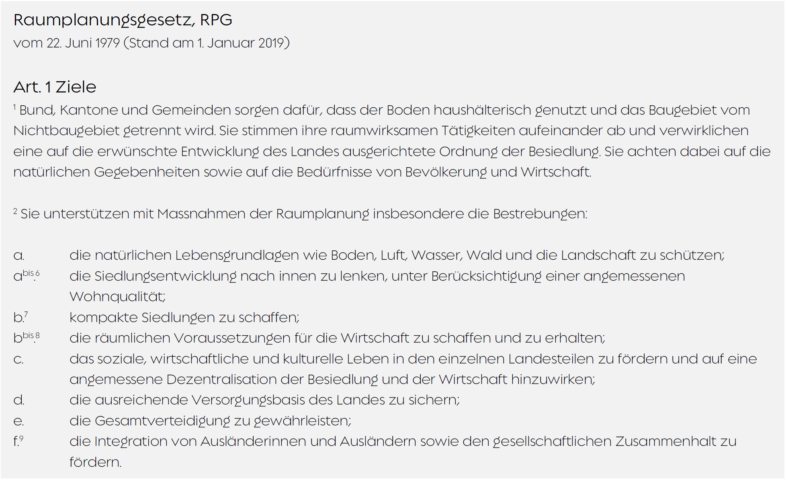
    In reality, however, the cantonal and municipal planning instruments are incomplete, rigid, purely quantitative and do not pursue a three-dimensionally developed picture of the future. The consequences are well known: Inconsistent cityscapes, insufficient densification potential, growing traffic volumes, uncoordinated infrastructural facilities and, finally, a dissatisfied population.

    Forward-looking spatial planning with new concepts is indispensable, because the current sluggish planning instruments of spatial planning are obviously at odds with the dynamic process of urban planning and to date fail to achieve the goals defined in the RPG.

    With the use of the already existing GIS data, the potential impacts on all relevant topics such as interior densification, land use, transport, energy consumption, greenhouse gas emissions and many others could be visualised, evaluated and communicated in a participatory manner throughout Switzerland on the basis of qualitative future scenarios – and beyond the cantonal borders.

    Buildings in the context of spatial planning
    Spatial planning also creates the framework conditions for the development of neighbourhoods and ultimately of the building stock. When we talk about sustainable buildings, it is not enough to look at them in isolation and focus solely on their substance. Buildings are to be understood in their context and thus in consideration of their contribution to the reduction of traffic volume, to densification and to social integration. Following this logic, the two standards SNBS Building Construction for Building and SSREI for Existing Buildings have been developed in Switzerland. In terms of their content, both are unique in an international comparison.

    Source www.ssrei.ch

  • IWB tests alpine solar plant on Melchsee-Frutt

    IWB tests alpine solar plant on Melchsee-Frutt

    IWB has concluded a cooperation agreement with the Kerns Alpine Cooperative outside the stone bridge. According to a press release, the agreement provides for the feasibility of a solar plant on the Melchsee-Frutt plateau to be examined. In addition to the technical details, the effects of a photovoltaic system on the existing management and the environment will also be analysed.

    The good accessibility, the high altitude and the snow favour the production of electricity, especially in winter, according to the statement. The plant would be connected to the Obwalden electricity company.

    The two contract partners have already begun talks with the municipality of Kerns and the canton of Obwalden. Other stakeholders and environmental organisations are also to be included in the talks.

    Markus Ettlin-Niederberger, president of the Kerns Alpine Cooperative, welcomes the expansion of the project. “We can make an active contribution to a renewable and secure energy supply and even increase local added value,” he is quoted as saying in the press release. Pascal Semlitsch also sees great potential in the project. “Melchsee-Frutt offers very good conditions for an alpine solar plant,” the head of investments at IWB is quoted as saying. “We have the goal that more renewable, domestic solar power can be produced very locally and in an environmentally friendly way.”

    IWB has already built an alpine solar plant at the Muttsee dam in the canton of Glarus together with Axpo.

  • Aargau department receives award for mediation

    Aargau department receives award for mediation

    For the first time, the Mediation Award of the Swiss Mediation Association (SDM) goes to a canton. The Aargau Department of Construction, Transport and the Environment(BVU) is being honoured for its consensus-oriented procedures in infrastructure projects. The procedure of the BVU shows “that living democracy with mediation and mediation-like participatory interests offers various forms that go far beyond majority decisions”, according to the SDM’s statement of reasons. Where controversies and different interests emerged, the possibilities of mediation were used. BVU, under its Secretary General Markus Büsser, plays a pioneering role in mediation in the public sector.

    The BVU is delighted with the award. “In the BVU’s areas of responsibility, conflicting goals, differences and differing perspectives are part of daily business,” Büsser is quoted as saying in a statement from the canton. “The department management therefore regularly considers how it can promote a culture of communication and conflict that enables dialogue-oriented and sustainable cooperation.” The BVU refers, for example, to the round tables on the expansion of the Mellikon quarry, the floodplains in the Rietheimer Feld and the settlement of grid usage prices for electricity.

    The Swiss Mediation Prize will be awarded for the third time in 2023. The Haus Tabea retirement centre in Horgen ZH also received an award. The prize will be presented at the SDM Congress, which will take place in Lausanne on 16 and 17 June.

  • Ecospeed develops software for CO2 balancing of hospitals

    Ecospeed develops software for CO2 balancing of hospitals

    Ecospeed AG will soon begin the so-called roll-out of its software for CO2 balancing of hospitals. According to a media release, the development work is almost complete. “Our goal is to provide hospitals and their operating companies with a very easy-to-use software for the overall balancing of greenhouse gas emissions,” Ecospeed CEO Christoph Hartmann is quoted as saying. “We are building an industry-specific platform for this task.”

    As Hartmann further explains, each hospital will be able to use the software “to determine its individual ‘Corporate Carbon Footprint’. This will enable hospitals to identify fields of action and plan paths for gradual decarbonisation.” It can also be used to document successes. In addition, the hospitals would comply with the future CSR reporting obligation, with which companies in the EU must disclose from 1 January 2024 how and to what extent they fulfil their responsibility with regard to their impact on society and the environment.

    The first pilot customer is a hospital association with 17 clinics in the German state of North Rhine-Westphalia. Initial results are already available. “In terms of direct emissions, there are big differences that can be attributed to the condition of the building envelope and the age and condition of the heating systems,” says Hartmann. “Scope 3 emissions, however, are significantly higher, caused in particular by purchased materials and transport. The collected and processed data give the clinics clear indications of where there is potential for improvement.”

  • Strüby builds new production hall for Trox Hesco

    Strüby builds new production hall for Trox Hesco

    Strüby from Seewen is building a new production hall with offices for Trox Hesco in Rüti. According to a press release, Trox Hesco is aiming to increase efficiency and modernise production and logistics. The new building is also linked to plans to consolidate the previously outsourced powder coating production at a central location. The new hall will offer additional space for offices, a cafeteria and a modern showroom.

    Trox Hesco manufactures and supplies components and systems for ventilation systems from a single source. Its strengths include system solutions adapted to the type of building. Products for ventilation and air-conditioning systems are manufactured in Rüti.

    After extensive preparations, the groundbreaking ceremony for the new production hall took place on 23 March 2023. The timber construction company Strüby Unternehmungen is realising the architecture, project development, engineering, production, realisation, customer service, building maintenance and carpentry work as a total service provider.

    The building stands on a foundation and a base plate made of reinforced concrete, above which a modern building in timber element construction is being built from the ground floor upwards. By using 2500 cubic metres of construction timber and a photovoltaic system with an annual output of 590,000 kilowatts to generate electricity for heating and hot water, Trox Hexo emphasises “the connection to nature and to the renewable raw material” and meets all energy requirements.

  • Cantonal Council committee approves extension of airport runways

    Cantonal Council committee approves extension of airport runways

    The Zurich Cantonal Council ‘s Commission for Energy, Transport and the Environment is in favour of the planned extension of Runways 28 and 32 at Zurich Airport by eight votes to seven, the Zurich Cantonal Council informs in a statement. According to the eight commission members from SVP, FDP, Mitte and EVP, an extension of the two runways will only lead to the consolidation of flight operations during peak times and bad weather conditions. Among other things, the communication cites greater reliability and punctuality.

    The minority of SP, GLP and Greens, on the other hand, fears that an extension of the runways will also be used to expand capacities at Zurich Airport. However, they reject any growth at the airport “due to the pressing climate problems”, the statement says.

    The airport is “pleased to note” the decision, it writes in a statement. The extension of the runways was an important measure to increase the safety margin and stabilise operations. They do not lead to an increase in capacity. There is no correlation between the length of the runways and the number of aircraft landing and taking off.

    The Zurich Chamber of Commerce(ZHK) also welcomes the Commission’s decision. The existing system has proven to be “not stable enough”. Increased delays endanger “the function of Zurich Airport as Switzerland’s only intercontinental air traffic hub”, the ZHK writes in a commentary. “The runway extensions already demanded by the federal government enable the airport to function reliably and stably in all weather conditions.”

    The next step is for the cantonal council to decide. The project is subject to an optional referendum.

  • Holcim sets itself more ambitious climate targets

    Holcim sets itself more ambitious climate targets

    Holcim documents the progress it has made on its climate strategy in its second climate report, which has just been published. With this report, the company, one of the world’s largest producers of building materials, also announces its accelerated climate targets, according to a media release.

    These have been updated in line with the 1.5 degree framework of the Scienced Based Targets Initiative, according to sustainability and innovation chief Magali Anderson. Holcim wants to be “a pioneer in low-carbon and circular construction”.

    According to the report, Holcim has increased its investment in green technologies by 15 per cent to 403 million Swiss francs in 2022. As a result, the group reportedly reduced its CO2 emissions per unit of net sales by 21 per cent. this is expected to increase by a further 10 percent in 2023.

    Furthermore, Holcim commits to invest a cumulative CHF 2 billion in mature technologies for capturing CO2 from the air by 2030. This should remove more than 5 million tonnes of CO2 from the atmosphere per year.

    6.8 million tonnes of construction and demolition waste recycled into new buildings. With this interim result, the company is expected to exceed its target of achieving around 10 million tonnes by 2025. “We are committed,” says CEO Jan Jenisch, “to driving low-carbon and circular construction and using buildings more sustainably to build cities that work for people and the planet.”

    This second climate report will be submitted to the General Assembly for a vote on 4 May. According to the statement, this reflects Holcim’s commitment to giving its shareholders a say in its climate strategy.

  • Sustainability Days 2023 show it’s time to act

    Sustainability Days 2023 show it’s time to act

    Under the motto “Get things done”, the Sustainability Days presented trends, concrete solutions in the form of innovative products and services as well as strategies and outlooks in the four congress and exhibition formats SmartSuisse, Re’ Summit, Future-Proof Infrastructure and MUT – Environmental Technology Exhibition during 28 and 29 March 2023. “We are delighted that the Sustainability Days, with their 15 thematic focal points around sustainability, have been so well received. In the future, our goal is to establish ourselves as the central platform for a sustainable future in the areas of smart city, corporate sustainability,
    environmental technology and infrastructure,” says Julien Rousseau, Brand Director of the Sustainability Days, with satisfaction.


    Food for thought from national and international voices
    On 28 March, Marco Lambertini, Special Representative and former Director General of WWF International, was among those who kicked off the congress series with a total of over 170 speakers. He pleads for the initiation of a profound change of our economic model in order to become a nature-friendly society and to decouple development from environmental destruction. Keynote speaker and architect Thomas Rau also emphasises the need for change as quickly as possible. For him, one important way to do this is the circular economy. In his opinion, we have to rethink the value chain, towards a value preservation chain. In a finite world, material must be seen as something that is only used temporarily and then returned to the cycle of things.


    The political perspective on the topic of sustainability also played a major role. For example, the Swiss city presidents Stefanie Ingold (Solothurn), Beat Jans (Basel), Michael Künzle (Winterthur), Barbara Thalmann (Uster) and Beat Züsli (Lucerne) discussed the goal of climate-neutral cities. There was agreement that climate protection in this context was not an alibi exercise. This shows, among other things, what measures and considerations are already underway or being considered. Cities certainly have a role model function, as they often have more resources at their disposal. Regula Rytz, former member of the National Council
    and President of the Green Party of Switzerland, took a look at the topic “Sustainable Technology: between real transformation and progress myths” as a historian. According to her, new challenges in environmental policy need new forms of sustainable
    technology – and it needs pioneering spirit for real transformation. In his keynote speech, Pekka Timonen, Mayor of Lahti, presented the success story of the traditional industrial city. This is how Lahti has become Finland’s leading green city and a pioneer among Europe’s sustainable cities.


    Other keynotes and sessions focused on climate change as such. The Secretary General of the UN organisation WMO, Petteri Taalas, gave an impressive presentation on climate change and the associated climate catastrophes and future scenarios with a global impact. He said that action must be taken now if the worst effects of climate change are to be prevented in this century. And Prof. Dr. Reto Knutti, Professor of Climate Physics at the ETH Zurich and speaker at the Re’ Summit, organised jointly with sun21, shares this view. According to him, only a complete shift away from fossil fuels and net zero emissions before 2050 can limit climate change. The obstacles are not primarily of a technical and economic nature, but a collision of identities and the question of how to respond to the challenges. A new feature of SmartSuisse was the expansion of the main topics to include health, which met with lively interest. At the Health Podium, for example, experts from the field discussed whether health data is the new gold under the aspect of data security vs. data use.


    Cross-sectoral meetings
    Another highlight was the networking dinner party on Tuesday evening. Over a three-course meal in a relaxed atmosphere, participants of all formats came together to talk to each other across sectors, to exchange ideas and to discuss. They were guided through the evening in an entertaining way by stand-up comedian and magician Michel Gammenthaler and by “The Blackouts”, who showed with their LED show how art and technology can be used to convey a message and inspire people. Also a guest was the Swiss adventurer and visionary
    Bertrand Piccard, who told of his round-the-world flight in a solar plane without fuel during his appearance. A pioneer in viewing ecology through the lens of profitability, he is now an advocate for renewable energies and clean technologies.


    Concrete solutions to touch and try out
    The accompanying exhibition offered ample opportunity for professional exchange as well as networking. 72 suppliers presented their solutions and innovations and were able to make important contacts with visitors as well as other participants. “SmartSuisse is an important meeting place for SBB to exchange ideas with other experts, to further develop our projects and to generate new ideas. This is entirely in keeping with the Smart City Lab Basel motto ‘network, develop, test, experience’”,
    says Smart City Lab Basel, SBB AG.


    There were also exciting things to experience at the exhibition: The exhibitor SAAM (Swiss Association for Autonomous Mobility) presented the teleoperated driving project initiated by SwissMoves as part of SmartSuisse and offered visitors the opportunity to ride in a vehicle controlled from Fribourg on a test track. Also part of the exhibition was the MUT – Environmental Technology Exhibition, which catered to the professional audience of the Swiss environmental technology sector. “The meeting of the cleantech industry at the MUT shows the need to promote ecological and pragmatic solutions,” says Andreas Knecht of Mokesa AG, which was an exhibitor at the Environmental Technology Fair.

    Virtual discussion: sustainable infrastructure projects
    On 28 March, the Future-Proof Infrastructure virtually discussed the challenges that infrastructure projects have to face in order to achieve sustainability, such as financial and political resilience. For this, the virtual congress brought together key international stakeholders, investors and infrastructure experts. The discussions made clear that there is a huge inancing deficit in infrastructure investments in all sectors and that there is an urgent need to tackle climate change by improving sustainable infrastructure outcomes. Solutions for financing infrastructure were addressed by the FAST-Infra panel, among others, which aims to unlock private investment in valuable infrastructure. Also discussed was how project preparation institutions can bring to light important infrastructure projects in countries with limited access to financial and technical resources. The partner of the format is the Global Infrastructure Basel Foundation (GIB). The second edition of the Sustainability Days is scheduled to take place in Basel from 9 to 11 April 2024.

  • Solar module return rate is close to 100 per cent

    Solar module return rate is close to 100 per cent

    Photovoltaic modules installed in Switzerland are almost all recycled at the end of their service life, informs SENS eRecycling in a press release. The foundation, which is organised in the private sector, relieves its partners at manufacturers and importers of the associated work. According to SENS eRecycling, this system benefits manufacturers, importers, homeowners and the environment.

    The price of a solar system already includes an advance recycling fee. This is currently 40 francs per tonne, explains SENS eRecycling. However, the foundation itself currently spends around 440 francs per tonne on collection, transport and recycling. “The financing of the system only works because the current quantities of installed photovoltaic systems still significantly exceed the quantity of discarded material and thus the fund continues to accumulate from year to year,” the statement says. For 2035, SENS eRecycling expects to have to dispose of 70,000 tonnes of photovoltaic modules.

    According to the foundation, the current quantities are too small to make recycling worthwhile for disposal companies in Switzerland. SENS eRecycling is therefore currently working with KWB Plan Real GmbH. The German company has the modules dismantled at a recycling plant near the Swiss border. Metals can be completely recycled, and the glass is used together with the silicon to produce glass wool. In this way, around three quarters of the raw materials can currently be returned to the cycle, according to SENS eRecycling.

  • EPFL develops concept for city-river balance on the Rhône

    EPFL develops concept for city-river balance on the Rhône

    The redevelopment of brownfield sites along the Rhône should balance the needs and constraints of a city and its river. Based on this guideline, a group of architects from the Laboratory for Architecture and Sustainable Technologies at the EPFL has developed a corresponding handbook for those with political responsibility.

    According to a press release, the group selected two locations in Switzerland, Sion VS and Geneva, and two in France, Givors and Avignon, for their study. For each district, they developed three customised and architecturally different visions. In total, the team identified more than 1400 neighbourhoods in transition along the Rhône. It sees enormous potential in this for the development of derelict areas that were abandoned by companies, for example, when they abandoned the waterways.

    The study did not look at urban areas as a whole, as is usually the case. “Our approach is different because we tackle urban development and planning issues on a smaller scale and focus on individual river neighbourhoods,” lab and study leader Emmanuel Rey is quoted as saying. “Our tool provides a more detailed, entirely local picture of what the river can do and how it interacts with the city,” Rey says. “In that sense, it’s an argument against traditional, generic planning.”

    This new assessment method with its 18 indicators was applied as an example to one of the case studies, the La Jonction neighbourhood in Geneva. For example, the indicator for the energy transition shows whether a particular vision is in line with the canton’s overall strategy. At the city level, it can be used to evaluate plans for shuttles, pedestrian bridges or other aspects of river transport. And at the neighbourhood level, for example, it provides information on whether river water could be used to heat or cool buildings.

  • AKB Green Mortgage finances climate buildings

    AKB Green Mortgage finances climate buildings

    The Aargauische Kantonalbank ( AKB ) is expanding its mortgage product to include all environmentally friendly properties. According to the press release , since May 2nd it has been financing not only owner-occupied residential properties but also all thermally regulated investment properties as well as business and commercial properties with the certified AKB Green Mortgage. From the perspective of the cantonal bank, this is particularly interesting for small and medium-sized enterprises (SMEs). “With the product expansion to business and commercial properties, we now also offer a sustainable, attractive financing solution for SMEs,” Patrick Küng, Head of Corporate Customers & Institutional Banking at AKB, is quoted as saying.

    With the AKB Green Mortgage, AKB promotes environmentally friendly construction activity and in this way supports the reduction of greenhouse gas emissions from buildings, according to the cantonal bank. With terms of two to ten years, the AKB Green mortgage offers a significant interest rate advantage over the standard interest rates of conventional fixed-rate mortgages. AKB is expected to launch another Green Bond to finance the AKB Green Mortgage over the course of the year.

    The report on the effect of the Green Bond states that in 2020 and 2021 a reduction of around 490 tons of CO2 was achieved with the sustainable mortgage offer for owner-occupied residential property. That corresponds to the annual CO2 emissions of around 393 new, commercially available passenger cars.

  • First SNBS certification level platinum for timber construction in St. Gallen

    First SNBS certification level platinum for timber construction in St. Gallen

    On April 21, Stefanie Steiner from the certification organization SNBS presented the certificate at a certification ceremony in the Tröckneturm St. Gallen and thanked the builder Previs Vorsorge for the good work and handling of the certification.

    The Waldacker development is made up of two long, kinked rows of buildings that hug the natural terrain lengthways. Together they form an interior space that serves as a meeting and communication space for the residents. From the upper edge of the basement, the buildings were almost entirely built using timber system construction with closed, rear-ventilated spruce wood formwork, including the lift shafts. The timber construction was inspired by the historic Tröckneturm, which is located directly next to the superstructure.

    The living room has external areas on both sides in the form of a veranda and an integrated winter garden. The apartments are accessed via a continuous arcade; Access is via external, covered stairwells. Photovoltaic systems were installed on the roofs and the heat supply is ensured by the district heating network of the city of St. Gallen. Between the two rows of buildings, a continuously green inner space with a playground and seating areas invites you to linger. The neighborhood should be kept car-free as much as possible. There is a large number of bicycle parking spaces and charging stations for e-bikes and e-cars. There are also Mobility vehicles that can be used by tenants.

  • Whitepaper: Energetic renovations as an opportunity

    Whitepaper: Energetic renovations as an opportunity

    Knowing that the building sector is responsible for around a quarter of emissions, there is an urgent need to renovate the building stock. Because the few climate-friendly and energy-efficient new buildings will not have a major effect on the entire sector. At the moment we are in a renovation backlog. The current renovation rate of one percent must be doubled in order to achieve the climate targets.

    Practical experience shows that during renewal processes, too little attention is paid to energy-related refurbishment compared to replacement new buildings. The landowners often lack basic information that shows them the economic, ecological and social potential of energy-related renovations. The whitepaper is intended to make a contribution to precisely this. There is a basic overview of the urgency, legal framework, benefits, opportunities and possible strategies of energy-related renovations.

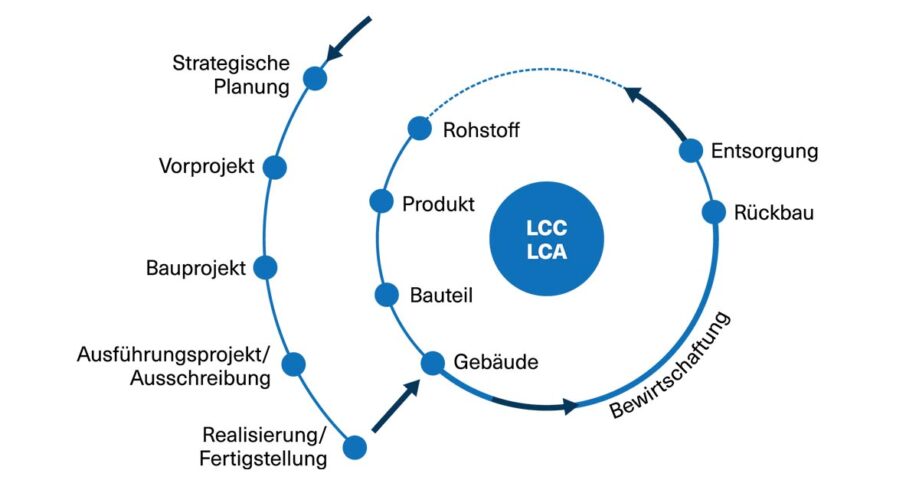
    The results of an ecological balance sheet (life cycle analysis, LCA) and an analysis of the life cycle costs (LCC), for example, form an excellent basis for decision-making. These quantitative assessment methods take into account the entire building life cycle.

    To the white paper

    Comprehensive redevelopment of the Webermühle housing estate
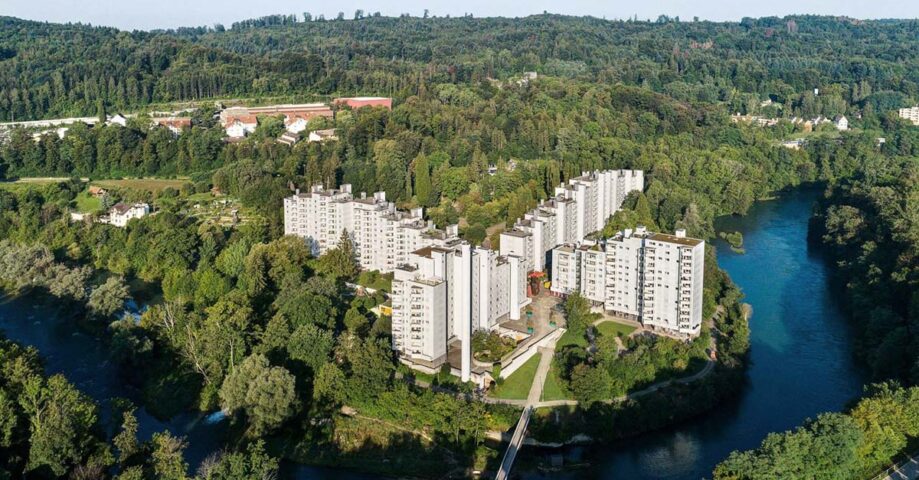
    One example of a successful renovation is the large Webermühle development in Neuenhof. The former Göhner settlement, which was occupied in 1984 and has been owned by a real estate fund from Credit Suisse Asset Management since 2008, houses 368 rental apartments with around 1,500 residents.

    The core of the energetic renovation of the Webermühle is the reorientation of the heat supply. To this end, the client defined a clear goal right from the start: in the future, the heat supply should be at least 70% CO₂-free. Due to the size of the facility, Credit Suisse Asset Management wanted to have the heating system replaced by a contractor instead of producing heat itself. The sustainability of the solution proposed by ewz with a river water heat pump convinced the client.

    Find out more